
In lithium-ion battery manufacturing, drying is not a simple moisture-removal step. For precursor cathode active material (pCAM), NMC intermediates, LFP-related materials and certain anode powders, the dryer must deliver controlled residual moisture while protecting particle morphology, purity and, in many cases, oxidation state.
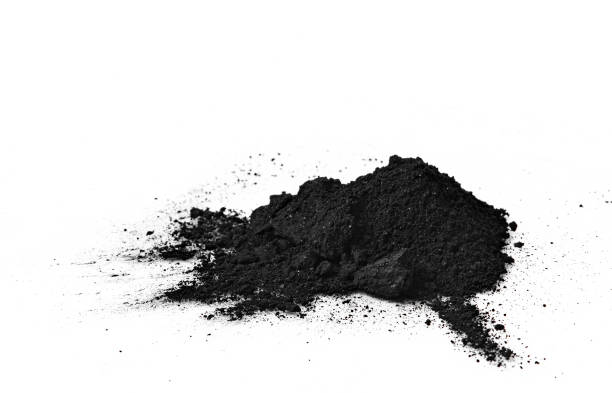
Selecting the wrong dryer can introduce metallic contamination, collapse or agglomerate particles, leave residual moisture that interferes with lithiation, or create handling and dust problems downstream. This guide provides a practical, stage-by-stage framework for choosing drying technology for the main battery-material families.
1. Start with the Exact Material and Process Stage
“Battery materials” is not one feed. The correct dryer depends on where the material sits in the process.
| Material / stage | Typical feed form | Primary drying objectives |
|---|---|---|
| pCAM (NMC precursor – mixed Ni/Co/Mn hydroxide) | Wet filter cake after precipitation, ageing, filtration and washing | Remove process moisture, preserve particle morphology and purity, control oxidation risk |
| NMC cathode active material (post-calcination or intermediate) | Powder or conditioned particulate | Final residual-moisture control, handling properties |
| LFP-related precursors or intermediates | Slurry, precipitate, filter cake or powder | Achieve target intermediate moisture and physical form |
| LFP cathode powder | Slurry or particulate | Powder formation or final moisture adjustment with controlled particle characteristics |
| Anode materials (e.g., certain graphite or silicon-containing powders) | Wet or damp particulate / slurry (process-dependent) | Residual moisture, particle integrity, contamination control |
Always identify the exact chemistry and the step immediately before and after drying before comparing equipment.
2. Critical Requirements Shared Across Battery Materials
Regardless of chemistry, battery-material drying typically demands:
- Tight residual-moisture control — excess moisture can affect downstream mixing, calcination or electrode processing.
- Particle morphology preservation — especially for pCAM, where secondary-particle structure influences final CAM performance.
- High purity / low contamination — metallic wear, process-gas impurities or cross-contamination must be minimised.
- Atmosphere management — Ni-rich compositions and some intermediates are sensitive to oxidation; inert or controlled atmospheres may be required.
- Dust containment and product recovery — high-value powders justify efficient collection systems.
- Traceability and process documentation — increasingly expected in battery-supply-chain quality systems.
These requirements narrow the acceptable technology list far more than capacity alone.
3. Dryer Technologies Commonly Evaluated
Paddle / Indirect Contact Dryers
Indirect conductive heating with mechanical agitation. Heat is transferred through heated shafts and paddles; process-gas volume is low.
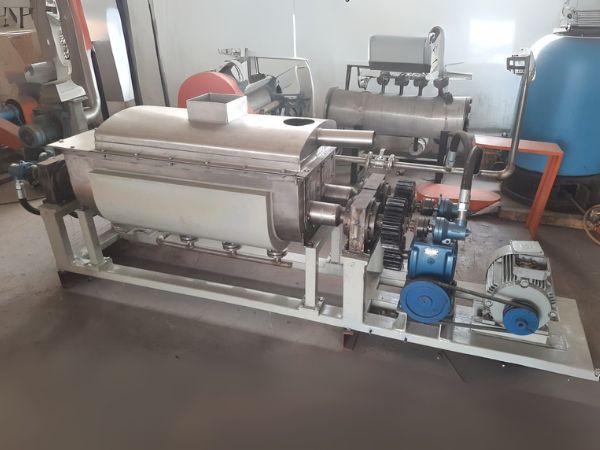
Why frequently evaluated for pCAM filter cake
- Handles sticky, cohesive hydroxide cakes well
- Enclosed operation supports atmosphere control and containment
- Good temperature control and relatively low gas volume
- Continuous or semi-continuous operation possible
Flash / Spin-Flash Dryers
Rapid dispersion of wet cake into a hot gas stream with short residence time.
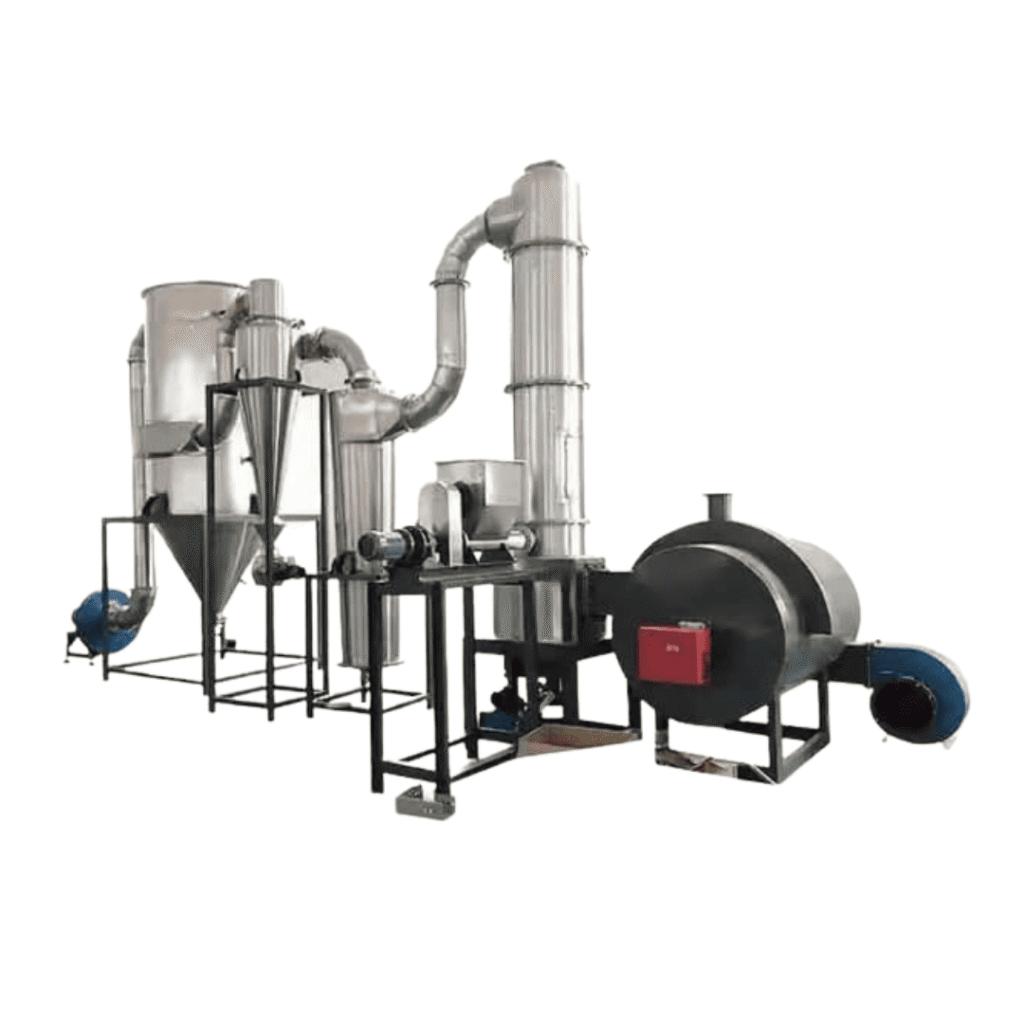
When considered
- High-moisture cakes that can be mechanically dispersed
- Need for continuous high throughput and free-flowing powder
- Particle integrity must still be verified for the specific grade
Spray Dryers
Atomisation of a pumpable slurry or suspension into hot gas.
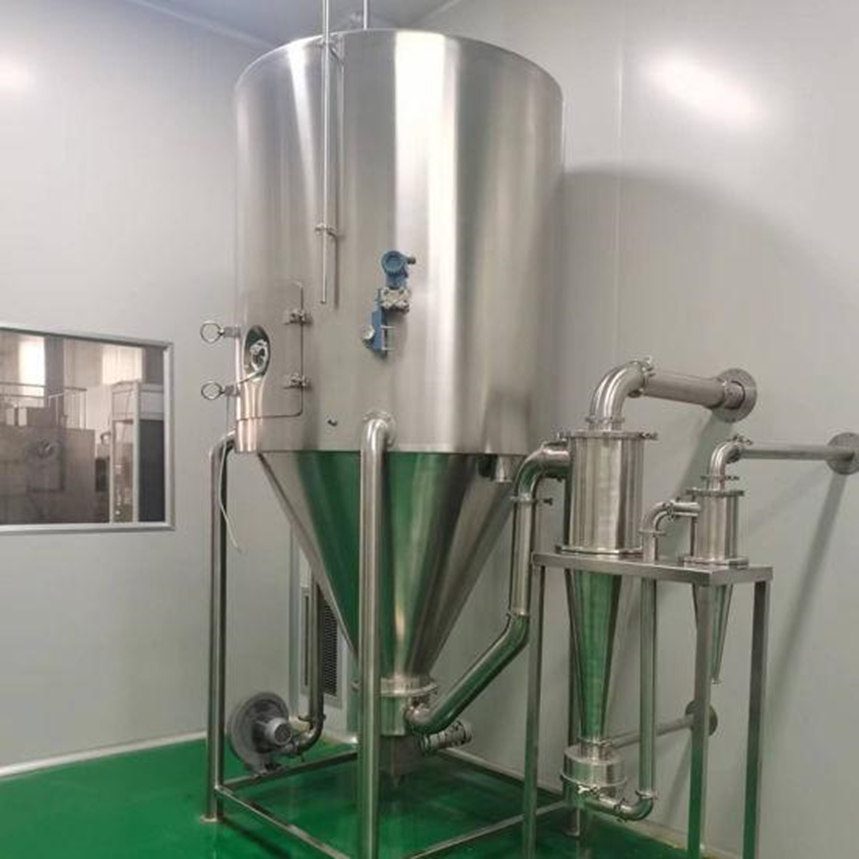
When considered
- LFP or other routes that operate with a stable slurry
- Need for controlled particle formation from liquid feed
- Downstream process accepts or requires spray-dried morphology
Fluid-Bed Dryers
Gas–solid contact in a fluidised bed; useful for free-flowing or conditioned powders needing final moisture adjustment or cooling.
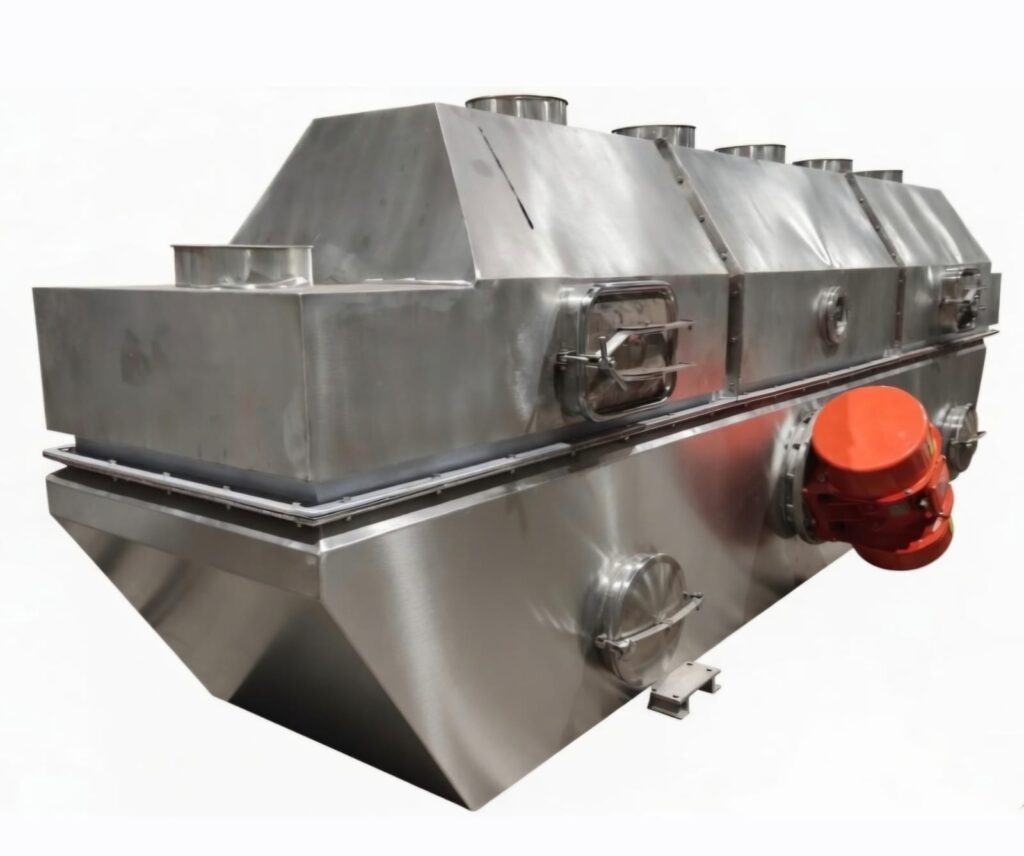
When considered
- Material is already particulate and fluidisable
- Secondary drying or cooling after primary drying
- Uniform residual moisture is critical
Vacuum or Controlled-Atmosphere Systems
Used when very low residual moisture, solvent removal or strict oxidation control is required and the material justifies the more complex system.
Note: Standard open rotary dryers are less commonly first choice for high-purity pCAM because of contamination and atmosphere-control limitations, although specialised configurations can be evaluated for robust intermediates.
4. Material-Specific Selection Guidance
pCAM (NMC Precursor Filter Cake)
pCAM typically leaves filtration as a wet, cohesive mixed-hydroxide cake. The dryer must remove moisture without damaging the carefully engineered secondary particles or introducing impurities that affect later lithiation and cell performance.
Primary technologies to evaluate: Paddle / indirect contact systems; spin-flash / flash systems when dispersion and short residence time are advantageous; vacuum or controlled-atmosphere options when oxidation or residual-moisture targets are especially stringent.
Key risks: Oxidation of Ni-rich compositions, particle breakage or agglomeration, metallic contamination, uneven residual moisture.
LFP-Related Materials
LFP routes vary. Some processes handle slurries that can be spray-dried; others produce precipitates or filter cakes closer to the pCAM case.
Primary technologies to evaluate: Spray drying for suitable pumpable slurries; paddle or flash systems for cake-like intermediates; fluid-bed for final particulate conditioning.
Key risks: Particle-size control, residual moisture consistency, and any process-specific purity requirements.
Anode Materials
Anode drying requirements depend heavily on the specific chemistry (natural/synthetic graphite, silicon blends, etc.) and whether the feed is a slurry, damp powder or washed intermediate.
Primary technologies to evaluate: Determined by feed form — spray for suitable slurries, fluid-bed or contact systems for particulates, with strong emphasis on contamination control and residual moisture.
5. Practical Decision Path
- Identify the exact material and process stage (pCAM cake, LFP slurry, anode intermediate, etc.).
- Determine feed form (filter cake, slurry, free-flowing powder).
- Define maximum product temperature and any atmosphere requirements (air, nitrogen, controlled oxygen).
- State target residual moisture and particle-size / morphology specifications.
- Shortlist technologies that can accept the feed form while meeting purity and temperature constraints.
- Evaluate total process risk (contamination, oxidation, particle damage) alongside capacity and operating cost.
- Confirm with representative-feed testing where morphology or residual moisture is critical.
6. Common Mistakes in Battery-Material Dryer Selection
- Treating pCAM filter cake like a generic inorganic cake and applying a high-attrition or open-atmosphere system.
- Selecting solely on evaporation capacity without checking particle-integrity or oxidation data.
- Ignoring the difference between precursor drying and finished CAM or electrode-coating drying.
- Under-specifying dust collection and product-recovery systems for high-value powders.
- Skipping pilot or representative-feed trials when morphology or residual-moisture specifications are tight.
7. Data Required for a Reliable Recommendation
- Exact chemistry and process stage (pCAM grade, LFP intermediate, anode type, etc.)
- Feed form and approximate moisture content
- Target residual moisture
- Maximum allowable product temperature
- Atmosphere requirements (air / inert / controlled)
- Particle-size and morphology specifications
- Required throughput
- Contamination and materials-of-construction constraints
- Downstream process (lithiation, mixing, electrode coating, etc.)
Geographic Note
Battery-material production is expanding in India, East Asia, Europe and North America. The engineering requirements — morphology control, purity, residual moisture and atmosphere management — are essentially the same. Local differences appear mainly in scale, available utilities, regulatory documentation and supply-chain quality expectations. Technology selection should still begin with the material and process stage, not with regional equipment preferences.
How GTI Dryers Approaches Battery-Material Drying
GTI Dryers designs industrial drying systems for battery-related materials, including pCAM filter cake and related inorganic intermediates. The engineering approach is:
- Treat the material as morphology- and purity-critical, not as a generic wet solid
- Match technology (paddle, spin-flash/flash, spray, fluid-bed or controlled-atmosphere options) to the actual feed form and process constraints
- Prioritise contamination control, temperature management and residual-moisture capability
- Support process-data review and representative-feed evaluation when particle integrity or oxidation behaviour is critical
There is no single “best” dryer for all battery materials. The correct system is the one that reliably delivers the required residual moisture and powder quality for the specific chemistry and process stage.
Frequently Asked Questions
What is the best dryer for pCAM filter cake?
Paddle / indirect contact systems and spin-flash systems are among the technologies most frequently evaluated. The final choice depends on cake rheology, oxidation sensitivity, residual-moisture target and particle-integrity requirements.
Can a spray dryer be used for battery materials?
Yes for suitable pumpable slurries (certain LFP or precursor routes). It is not the default for cohesive pCAM filter cake unless the process is deliberately designed around a slurry feed.
Why is atmosphere control important for Ni-rich pCAM?
Ni-rich compositions can be sensitive to oxidation. Controlled or inert atmospheres help protect the material during drying when the process chemistry requires it.
Is residual moisture the only specification that matters?
No. Particle morphology, purity, bulk density and handling properties are equally important because they affect downstream lithiation, mixing and electrode performance.
What information does GTI need for an assessment?
Material type and stage, feed form and moisture, target residual moisture, temperature and atmosphere limits, capacity and particle specifications.
Next Step
If you are developing or scaling production of pCAM, NMC, LFP or anode materials and need a drying system that protects product quality, share your material data, feed form and residual-moisture targets. GTI can review the requirements and recommend a suitable dryer configuration for technical discussion.
Request a battery-materials dryer assessment with your process data.
Contact the GTI Technical Team:
Website: gtidryers.com
Email: mktg@gtidryers.com
Phone / WhatsApp: +91 9330077417