
API & Bulk Drug Drying: Where Pharmaceutical Manufacturing Meets Process Engineering
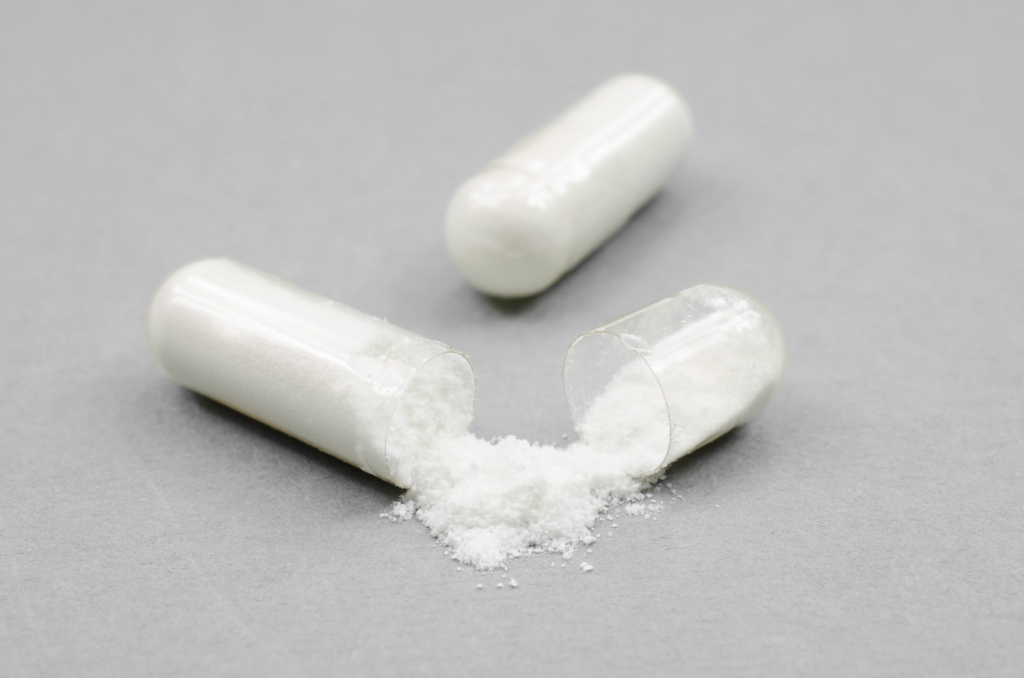
Active Pharmaceutical Ingredients (APIs) and bulk drugs are among the highest-value and most process-sensitive applications for industrial drying technology.
After synthesis, crystallization, filtration or centrifugation, many APIs do not leave the process as a ready-to-pack powder. Instead, they may emerge as a wet cake, damp solid, slurry-derived material or solvent-containing intermediate.
The drying stage must then remove the required moisture or residual solvent while maintaining the desired:
- Purity
- Assay
- Crystal form
- Particle characteristics
- Chemical stability
- Residual-solvent specification
- Product yield
- Batch consistency
This is why an API dryer should not be selected simply on the basis of evaporation capacity.
The dryer becomes part of the pharmaceutical process.
GTI Dryers designs customized drying systems for pharmaceutical and bulk-drug applications, including vacuum tray, vacuum paddle, conical vacuum, fluid-bed and other application-specific drying technologies.
GTI Dryers — Engineered Drying Solutions from India for Global Pharmaceutical Industries.
Why API Drying Is Different from Conventional Industrial Drying
Drying coal, minerals or biomass is primarily a bulk thermal-processing challenge.
API drying is different.
The product may have:
- High value per kilogram
- Low permissible degradation
- Temperature sensitivity
- Solvent residues
- Strict purity requirements
- Controlled particle characteristics
- Specific polymorphic requirements
- Batch-to-batch consistency requirements
- Contamination and cross-contamination concerns
Therefore, the question is not:
“How quickly can we remove the water?”
The better question is:
“How can we achieve the required drying endpoint without compromising the API’s critical quality attributes?”
This shift in thinking is central to pharmaceutical dryer selection.
Where Does Drying Occur in API Manufacturing?
A simplified API process can look like:
Raw Materials → Chemical Reaction / Synthesis → Crystallization → Filtration / Centrifugation → Wet Cake → Drying → Milling → Blending / Sieving → Packaging
The dryer is therefore positioned between solid-liquid separation and final API finishing in many manufacturing routes.
The incoming material may contain:
- Surface moisture
- Entrained mother liquor
- Water
- Organic solvents
- Solvent-water mixtures
- Residual process liquids
The final drying requirement depends on the API, solvent system, process route and specification.
1. API Wet Cake Drying
Wet-cake drying is one of the most important pharmaceutical drying applications.
Following filtration or centrifugation, the API can retain liquid within the cake structure.
The dryer must remove this liquid while controlling:
- Product temperature
- Vacuum level
- Drying time
- Agitation
- Heat-transfer rate
- Solvent recovery
- Exhaust conditions
For many sensitive APIs, vacuum drying is particularly attractive because lowering the operating pressure can allow evaporation at lower product temperatures than atmospheric drying.
The actual operating conditions must be established through process development and product-specific studies.
2. Drying APIs After Crystallization
Crystallization is widely used to isolate and purify pharmaceutical compounds.
The resulting crystals are commonly separated from the mother liquor through filtration or centrifugation.
At this stage, the product can still contain residual liquid.
Drying must therefore accomplish two things:
Remove the remaining liquid
while
Protecting the desired product characteristics.
This can be particularly important where drying conditions could influence:
- Crystal morphology
- Polymorphic form
- Particle size
- Agglomeration
- Color
- Chemical stability
Consequently, the drying cycle is often developed as part of the overall API process rather than treated as an independent operation.
3. APIs Containing Residual Solvents
Some pharmaceutical processes use organic solvents during synthesis or crystallization.
The resulting wet cake may therefore contain residual solvents rather than only water.
This changes the dryer-design requirements.
The system may need to consider:
- Solvent boiling point
- Vacuum level
- Solvent compatibility
- Condensation
- Solvent recovery
- Inerting requirements
- Explosion protection
- Material of construction
- Sealing
- Emission control
Where flammable solvents are involved, the dryer system must be engineered according to the applicable plant safety, hazardous-area and process requirements.
The presence of a solvent is therefore a major input to dryer selection.
4. Antibiotic API Drying
Antibiotics represent an important API category.
Examples include:
- Penicillin-related APIs
- Streptomycin
- Tetracycline
- Other antibiotic intermediates and APIs
Fermentation-derived and chemically synthesized pharmaceutical products can have very different drying characteristics.
The appropriate dryer depends on:
- Product sensitivity
- Feed form
- Moisture/solvent content
- Required final specification
- Batch size
- Heat sensitivity
- Particle characteristics
For sensitive pharmaceutical products, controlled vacuum drying may be considered to reduce thermal exposure.
5. Paracetamol API Drying
Paracetamol is one of the most widely recognized pharmaceutical active ingredients.
API manufacturing may involve crystallization followed by filtration/centrifugation and drying.
The dryer must be selected around the actual:
Wet cake → drying → final API powder
process.
Depending on the manufacturing route and product requirements, vacuum or other controlled drying technologies may be evaluated.
GTI’s role is not to prescribe one standard dryer for every API, but to engineer the drying system around the specific product and process data.
6. Ibuprofen & Other Pharmaceutical APIs
Ibuprofen and numerous other small-molecule APIs can similarly require controlled drying after solid-liquid separation.
Other potential applications include APIs for:
- Cardiovascular medicines
- Gastrointestinal medicines
- Anti-diabetic medicines
- Anti-inflammatory drugs
- Neurological medicines
- Respiratory medicines
- Anti-infective products
India’s pharmaceutical industry has substantial exposure to these therapeutic categories and maintains a large domestic and export manufacturing base.
7. Steroids & Hormonal APIs
Steroid and hormonal APIs can present additional process challenges because of:
- High product value
- Sensitivity to processing conditions
- Low-to-moderate production quantities
- Solvent use
- Tight product specifications
For such products, controlled vacuum drying can be particularly relevant where the process requires low-temperature solvent/moisture removal.
Dryer design may need to emphasize:
- Containment
- Cleanability
- Product recovery
- Controlled heating
- Vacuum integrity
- Batch reproducibility
8. Oncology & High-Value APIs
Oncology APIs and highly potent pharmaceutical compounds require particularly careful equipment and containment strategies.
The drying system may need to be integrated into a process architecture addressing:
- Operator protection
- Product containment
- Cross-contamination prevention
- Cleaning validation
- Dust control
- Closed material transfer
For high-potency products, dryer selection should therefore be evaluated together with the plant’s containment strategy.
A high-value API demands more than a high-efficiency dryer—it demands controlled pharmaceutical process engineering.
9. Cardiovascular & Chronic-Disease APIs
The growing production of medicines for cardiovascular, metabolic and chronic diseases creates continuing demand for API manufacturing capacity.
Drying applications can include wet cakes generated after crystallization and filtration of:
- Cardiovascular APIs
- Anti-diabetic APIs
- Hypertension APIs
- Lipid-management APIs
- Gastrointestinal APIs
India’s pharmaceutical market is particularly strong in cardiac, gastrointestinal and anti-diabetic segments.
This provides an important commercial GEO opportunity for pharmaceutical dryer manufacturers.
Which Dryer Is Suitable for API Manufacturing?
There is no single universal API dryer.
However, several technologies are commonly considered.
| Dryer | Typical API Application | Major Advantage |
| Vacuum Tray Dryer | Sensitive wet cakes and batch APIs | Controlled low-temperature drying |
| Vacuum Paddle Dryer | Wet cakes, pastes, solvent-containing products | Agitation + efficient heat transfer |
| Conical Vacuum Dryer | Pharmaceutical powders/wet cakes | Closed, gentle batch drying |
| Fluid Bed Dryer | Suitable free-flowing particles/granules | Efficient gas-solid heat transfer |
| Spray Dryer | Solutions, emulsions and suitable slurries | Produces powder directly |
| Rotary Dryer | Selected bulk pharmaceutical materials | Continuous drying for suitable applications |
The correct technology depends on the product and process.
Vacuum Tray Dryer for APIs
The vacuum tray dryer is one of the established technologies for batch pharmaceutical drying.
The API is loaded onto trays, and controlled heat is supplied while vacuum lowers the operating pressure.
Potential advantages include:
- Lower-temperature drying
- Batch operation
- Suitable for heat-sensitive products
- Controlled drying environment
- Applicability to wet cakes
- Suitability for solvent-containing products when properly engineered
The final design depends on:
- Batch size
- Tray loading
- Heat-transfer method
- Vacuum level
- Solvent characteristics
- Drying time
- Product temperature
Vacuum Paddle Dryer for Pharmaceutical Wet Cakes
A vacuum paddle dryer can be considered where the product benefits from:
- Agitation
- Indirect heating
- Controlled vacuum
- Efficient contact between product and heated surfaces
The paddles continuously move the product through the heated vessel.
This can improve heat transfer and help expose fresh product surfaces during drying.
It can be particularly attractive for:
- Wet cakes
- Pastes
- Sticky materials
- Solvent-containing pharmaceutical products
- Products requiring controlled batch drying
For suitable products, the closed design can also support containment and solvent-recovery strategies.
Conical Vacuum Dryer
Conical vacuum dryers are another option for pharmaceutical and fine-chemical applications.
Their geometry and controlled agitation can support:
- Gentle product movement
- Vacuum drying
- Heat transfer through vessel surfaces
- Reduced mechanical stress
- Closed processing
They may be considered where product handling and containment are important.
Fluid Bed Dryer for APIs
Fluid bed drying can be highly effective for suitable free-flowing pharmaceutical particles and granules.
The process uses heated air flowing through a product bed.
Potential advantages include:
- High heat-transfer efficiency
- Relatively rapid drying
- Good gas-solid contact
- Uniform drying for suitable materials
However, fluid bed drying is not automatically appropriate for every API wet cake.
If the incoming material is sticky, cohesive, very fine or highly temperature-sensitive, another technology may be more suitable.
Spray Drying for Pharmaceutical Products
Spray drying converts a liquid feed such as a solution, suspension or emulsion into a dried powder.
It may be considered for:
- API solutions
- Pharmaceutical intermediates
- Specialty formulations
- Certain heat-sensitive products where rapid drying is advantageous
Because the droplets have a very large surface area, moisture/solvent evaporation can occur rapidly.
However, spray drying requires careful control of:
- Feed concentration
- Atomization
- Inlet/outlet temperatures
- Solvent characteristics
- Particle morphology
- Powder recovery
API Dryer Selection Should Start With the Feed
Before selecting a pharmaceutical dryer, GTI recommends defining the actual feed.
Feed Form
Is it:
- Wet cake?
- Powder?
- Slurry?
- Solution?
- Paste?
- Granules?
Liquid Phase
Is the retained liquid:
- Water?
- Ethanol?
- Methanol?
- Acetone?
- IPA?
- Mixed solvent?
- Mother liquor?
Product Sensitivity
Does the API have:
- Thermal sensitivity?
- Oxidation sensitivity?
- Moisture sensitivity?
- Polymorphic sensitivity?
Final Requirement
What is the:
- Final moisture?
- Residual solvent specification?
- Product temperature limit?
- Batch size?
- Drying time?
These inputs are more important than simply saying:
“We need an API dryer.”
GMP & Pharmaceutical Dryer Design
API drying is performed in an environment where contamination, mix-ups and cleaning requirements are important.
ICH Q7 guidance specifically highlights drying, milling, weighing and packaging as stages where increased product protection is expected as the process approaches the final API. It also emphasizes facility design and controls to avoid contamination and mix-ups.
Therefore, pharmaceutical dryer engineering should consider:
- Appropriate material of construction
- Product-contact surface finish
- Cleanability
- Drainability where applicable
- Sealing
- Containment
- Cleaning procedures
- Cross-contamination control
- Instrumentation
- Temperature monitoring
- Vacuum monitoring
- Batch traceability
- Applicable GMP requirements
The exact GMP design should be established according to the API, facility, regulatory market and validation strategy.
Solvent-Containing API Drying: A Critical Engineering Area
When the wet cake contains organic solvent, dryer selection becomes significantly more complex.
A suitable system may require integration with:
Vacuum → Condenser → Solvent Recovery → Collection → Exhaust / Safety System
The design may also need to address:
- Flammability
- Oxygen concentration
- Static electricity
- Explosion risk
- Solvent compatibility
- Vacuum-system design
- Condenser duty
- Recovery efficiency
For solvent-containing products, GTI can evaluate the complete drying and solvent-recovery process rather than treating the dryer as an isolated machine.
Why Vacuum Drying Is Attractive for Sensitive APIs
Vacuum drying can reduce the boiling temperature of liquids compared with atmospheric operation.
This creates an opportunity to remove moisture or solvent while keeping the product at a controlled temperature.
That can be valuable for APIs where excessive thermal exposure could affect product quality.
However:
Vacuum does not automatically make every product safe or suitable for low-temperature drying.
The actual drying cycle must be established from the product’s physical and chemical behavior.
API Dryer Manufacturing: What GTI Can Engineer
GTI Dryers approaches pharmaceutical drying as a custom process-engineering requirement.
Depending on the application, GTI can engineer systems around:
Vacuum Drying
For temperature-sensitive wet cakes and solvent-containing products.
Agitated Drying
For products requiring improved heat transfer and controlled mixing.
Fluid Bed Drying
For suitable free-flowing pharmaceutical materials.
Spray Drying
For appropriate liquid feeds requiring direct powder formation.
Integrated Solvent Recovery
Where solvent removal is part of the process.
Automation
For controlled monitoring of:
- Temperature
- Vacuum
- Drying time
- Product conditions
- Process parameters
Where Are API Dryers Mostly Used?
For GTI’s, “API dryer manufacturer” should not be treated as a single global keyword.
The strongest opportunity comes from combining:
API + Dryer + Country + Pharma Cluster + Application
India is particularly important.
The Government of India’s pharma-cluster survey identifies major pharmaceutical manufacturing clusters across Maharashtra, Gujarat, Andhra Pradesh, Himachal Pradesh, Rajasthan, Telangana, Uttar Pradesh, Goa, Karnataka, Tamil Nadu, Haryana and Uttarakhand. Major hubs include Ahmedabad, Vadodara, Mumbai, Aurangabad, Pune, Hyderabad, Chennai, Mysore, Bengaluru, Baddi, Lucknow and Visakhapatnam.
India — Major Market for API Drying Equipment
India is one of the strongest markets to target for pharmaceutical drying equipment.
The country manufactures 500+ different APIs and has more than 500 API producers, according to IBEF. India is also described as the world’s third-largest pharmaceutical producer by volume.
1. Hyderabad & Telangana
Hyderabad is one of India’s most important pharmaceutical and API manufacturing clusters.
Potential applications include:
- API drying
- Bulk drug drying
- Intermediate drying
- Solvent recovery
- Pharmaceutical vacuum drying
- CDMO manufacturing
Targets:
- API Dryer Manufacturer Hyderabad
- Pharmaceutical Dryer Manufacturer Hyderabad
- Bulk Drug Dryer Telangana
- Vacuum Dryer for API Hyderabad
Gujarat — Ahmedabad, Vadodara & Ankleshwar Region
Gujarat is one of India’s strongest chemical and pharmaceutical manufacturing regions.
Important industrial locations include:
- Ahmedabad
- Vadodara
- Ankleshwar
- Bharuch
- Vapi
The region provides a strong market for:
- APIs
- Bulk drugs
- Pharmaceutical intermediates
- Specialty chemicals
- Contract manufacturing
Targets:
- API Dryer Manufacturer Gujarat
- Pharmaceutical Dryer Ahmedabad
- Bulk Drug Dryer Vadodara
- API Vacuum Dryer Ankleshwar
- Pharmaceutical Drying System Gujarat
Maharashtra — Mumbai, Pune & Aurangabad
Maharashtra has long been one of India’s major pharmaceutical manufacturing states.
Potential drying applications include:
- APIs
- Bulk drugs
- Pharmaceutical intermediates
- Specialty pharmaceutical products
- Contract manufacturing
Targets:
- API Dryer Manufacturer Maharashtra
- Pharmaceutical Dryer Mumbai
- API Drying System Pune
- Bulk Drug Dryer Aurangabad
Himachal Pradesh — Baddi Pharma Cluster
Baddi and the surrounding industrial area represent an important pharmaceutical manufacturing cluster.
The region is particularly relevant for:
- Pharmaceutical manufacturing
- Formulations
- Bulk drugs
- Contract manufacturing
Targets:
- API Dryer Manufacturer Baddi
- Pharmaceutical Dryer Himachal Pradesh
- Bulk Drug Drying System Baddi
- Pharma Vacuum Dryer India
Andhra Pradesh — Visakhapatnam & Pharma Manufacturing
Visakhapatnam is identified among India’s major pharmaceutical manufacturing hubs.
Potential applications include:
- API manufacturing
- Bulk drugs
- Pharmaceutical intermediates
- Chemical processing
Targets:
- API Dryer Manufacturer Visakhapatnam
- Pharmaceutical Dryer Andhra Pradesh
- Bulk Drug Dryer Vizag
- API Vacuum Dryer Vizag
Tamil Nadu & Karnataka
Other important pharmaceutical manufacturing regions include:
Tamil Nadu
- Chennai
- surrounding industrial clusters
Karnataka
- Bengaluru
- Mysuru
The Indian government’s cluster survey identifies Chennai, Mysore and Bengaluru among the country’s major pharmaceutical hubs.
Global Markets for API Dryers
Global opportunities include:
United States
Strong demand for:
- API manufacturing
- CDMO
- Specialty pharmaceuticals
- High-value APIs
- Oncology products
- Advanced pharmaceutical processing
Target keywords:
- API Dryer Manufacturer USA
- Pharmaceutical Vacuum Dryer USA
- Bulk Drug Dryer USA
- API Drying System
Europe
Potential markets include:
- Germany
- Italy
- Spain
- France
- Switzerland
- Ireland
- Belgium
European pharmaceutical manufacturing is particularly relevant for high-value APIs, specialty medicines, CDMO and regulated production.
China
China remains a major pharmaceutical and chemical manufacturing base and an important competitor/supplier in API production.
Japan & South Korea
Strong markets for:
- High-purity pharmaceutical products
- Specialty APIs
- Advanced manufacturing
- High-value pharmaceutical processing
Southeast Asia
Growing pharmaceutical manufacturing opportunities can be targeted in:
- Singapore
- Malaysia
- Indonesia
- Thailand
- Vietnam
Middle East
Emerging pharmaceutical manufacturing markets include:
- Saudi Arabia
- UAE
- Jordan
Why India Is a Strategic API Manufacturing Market
India’s API manufacturing sector is receiving continued policy support.
The Economic Survey 2025–26 reports that the PLI scheme for bulk drugs had mobilized ₹4,763 crore in investment by September 2025 and created approximately 55,000 tonnes/year of capacity for 26 critical products.
India’s pharmaceutical exports also remain substantial, with drugs and pharmaceutical exports reaching about US$30.47 billion in FY2024–25, according to IBEF. Bulk drugs and drug intermediates represented a significant portion of the export mix.
For GTI, this means the commercial opportunity is not restricted to pharmaceutical companies buying dryers for existing plants.
Potential customers also include:
- New API plants
- Bulk drug parks
- CDMOs
- Contract manufacturers
- Expansion projects
- Capacity-upgradation projects
- Solvent-recovery projects
- Existing plants replacing older dryers
GTI’s Sales-Oriented API Dryer Proposition
A pharmaceutical manufacturer does not need a generic dryer.
They need a system that fits the process, product and regulatory requirements.
GTI can position its offering around:
Product Protection
Controlled drying conditions for sensitive pharmaceutical products.
Vacuum Capability
Suitable for applications where lower-temperature evaporation is desirable.
Batch Processing
Appropriate for many wet-cake and API manufacturing processes.
Solvent Handling
Drying-system engineering can account for solvent-containing feeds and associated recovery requirements.
Customized Design
Dryer configuration based on actual product and process data.
Pharmaceutical Engineering
Consideration of product-contact surfaces, containment, cleanability and applicable GMP requirements.
Industrial Manufacturing Capability
GTI combines equipment manufacturing with process-focused engineering for industrial drying applications.
What Data Does GTI Need to Design an API Dryer?
For an accurate technical proposal, send:
Product Information
- API name
- Product form
- Particle size
- Bulk density
- Thermal sensitivity
- Hygroscopicity
Feed Information
- Wet cake/slurry/powder
- Feed quantity per batch
- Initial moisture
- Solvent type
- Solvent concentration
- Feed temperature
Product Requirement
- Final moisture
- Residual solvent specification
- Maximum product temperature
- Required drying time
- Batch size
Process Information
- Upstream filtration/centrifugation
- Downstream milling
- Packaging requirements
- Available utilities
- Vacuum requirements
Plant Information
- Installation location
- Hazardous-area classification, where applicable
- GMP requirements
- Automation requirements
- Existing equipment
The more complete the data, the more accurately GTI can evaluate the drying technology.
API Dryer Project Example — The Right Way to Define the Requirement
Instead of sending:
“We need a pharmaceutical dryer for 100 kg.”
A better RFQ would be:
API wet cake: 100 kg/batch
Initial moisture: XX%
Residual solvent: XX%
Required final moisture: XX%
Maximum product temperature: XX°C
Drying time: XX hours
Solvent: XX
Operating pressure: XX
Downstream process: milling/sieving/packing
This gives the dryer manufacturer enough information to evaluate:
Heat Load → Vacuum Requirement → Condenser Duty → Dryer Size → Drying Cycle → Material of Construction → Automation
Why Choose GTI Dryers for API & Bulk Drug Drying?
GTI Dryers approaches pharmaceutical drying from a process-engineering perspective.
The objective is not simply to supply a vessel that heats a product.
The objective is to engineer a drying system that integrates with the manufacturer’s:
- API process
- Wet-cake characteristics
- Drying endpoint
- Solvent system
- Product temperature limits
- Containment strategy
- Utility availability
- GMP requirements
- Production capacity
GTI can support projects involving:
Vacuum Tray Dryers
Vacuum Paddle Dryers
Conical Vacuum Dryers
Customized Pharmaceutical Drying Systems
Solvent Recovery Integration
Automation & Process Controls
Frequently Asked Questions
What is an API dryer?
An API dryer is pharmaceutical process equipment used to remove moisture, solvents or other volatile liquids from active pharmaceutical ingredients after processes such as crystallization, filtration or centrifugation.
Which dryer is best for APIs?
There is no universal best dryer. Vacuum tray, vacuum paddle, conical vacuum, fluid bed and spray dryers can all be appropriate for different API processes. Selection depends on product sensitivity, feed form, solvent, capacity and final specification.
Why are vacuum dryers used for APIs?
Vacuum can reduce the boiling temperature of liquids, potentially allowing drying at lower product temperatures. This can be useful for suitable heat-sensitive pharmaceutical products.
Can GTI dry API wet cake?
Yes. GTI can evaluate wet-cake drying applications and select an appropriate vacuum or other drying configuration based on product and process characteristics.
Can pharmaceutical dryers handle organic solvents?
Potentially, yes, provided the complete system is appropriately engineered for the specific solvent, process and applicable safety requirements. Solvent recovery, condensation, inerting and hazardous-area considerations may be required.
Does GTI manufacture GMP pharmaceutical dryers?
GTI can engineer pharmaceutical drying equipment with appropriate product-contact materials, surface finishes, cleanability, containment and instrumentation according to the project requirements and applicable GMP expectations.
Can fluid bed dryers be used for APIs?
Yes, for suitable free-flowing pharmaceutical particles or granules. They are not automatically suitable for every wet cake or temperature-sensitive API.
Can GTI provide a customized API dryer?
Yes. GTI’s pharmaceutical drying systems can be engineered according to batch size, product characteristics, moisture/solvent content, final specification, heat sensitivity and plant requirements.
Get an API Dryer Designed Around Your Process
Your API is not a generic powder. Your dryer should not be a generic machine.
Whether you are manufacturing:
- Antibiotic APIs
- Paracetamol
- Ibuprofen
- Steroids
- Hormones
- Oncology APIs
- Cardiovascular APIs
- Anti-diabetic APIs
- Specialty APIs
- Pharmaceutical intermediates
- Bulk drugs
GTI Dryers can evaluate the appropriate drying technology based on your wet-cake characteristics, solvent/moisture load, temperature sensitivity, batch size and final product specification.
Send GTI your process data:
API / Product:
Batch Size:
Wet Cake Weight:
Initial Moisture:
Solvent:
Final Moisture / Residual Solvent:
Maximum Product Temperature:
Required Drying Time:
Plant Location:
From wet cake to finished API, GTI can help engineer the drying stage around your pharmaceutical process.
GTI Dryers
Engineered in India. Designed for the World.
Customized Pharmaceutical Drying Systems | API Dryers | Bulk Drug Dryers | Vacuum Drying Solutions