
Aluminium hydroxide (Al(OH)₃), also widely known in industry as alumina trihydrate (ATH), is produced primarily via the Bayer process as a precipitated solid. After filtration or centrifugation it typically arrives as a wet filter cake or moist powder that must be dried to a free-flowing, specification-compliant product before packaging, surface treatment or downstream use as a flame retardant, filler or chemical intermediate.
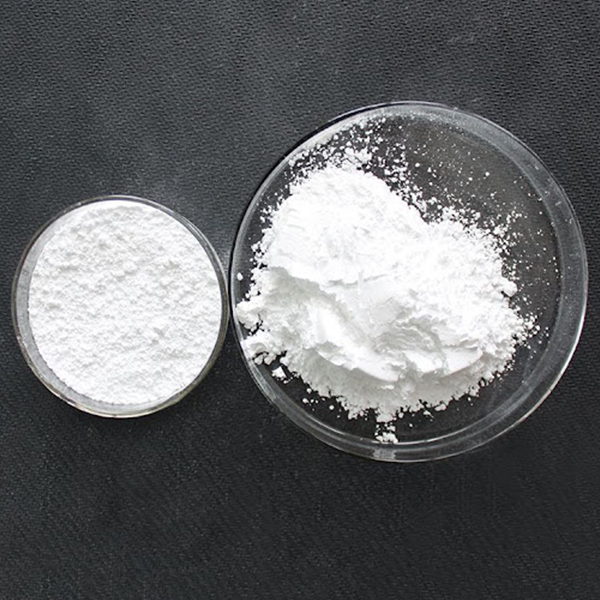
Drying is not a simple moisture-removal step. The material can be cohesive when wet, generate fines when over-dried or over-agitated, and begins to lose water of constitution at elevated temperatures. Exceeding the appropriate product-temperature window risks partial dehydroxylation — a change that is desirable only when calcination is the intentional next process, not when the target product is aluminium hydroxide itself.
This page focuses on the engineering decision for aluminium hydroxide drying, with the rotary dryer positioned as the primary technology for continuous, high-throughput bulk production, while noting when alternative systems may be evaluated.
Why Drying Aluminium Hydroxide Is a Process-Engineering Problem
Typical challenges include:
- High residual moisture after mechanical dewatering
- Tendency of wet cake to form lumps or stick
- Need for consistent low residual moisture (often <1 % or tighter depending on grade)
- Control of product temperature to stay below the onset of significant dehydroxylation
- Dust generation and recovery of fine particles
- Integration with upstream filtration and downstream classification, coating or packing
An incorrectly selected or operated dryer can produce variable moisture, hard agglomerates, excessive fines or unintended thermal transformation of the product.
Feed Forms and Their Implications
| Feed form | Typical origin | Drying implications |
|---|---|---|
| Wet filter cake | Precipitation + filtration | Cohesion, need for dispersion or robust conveying |
| Moist powder / granules | Partially dewatered or conditioned material | Easier fluidisation or tumbling; still requires temperature control |
| Fine precipitated solids | Specialty or high-purity grades | Dust handling and gentle thermal profile become critical |
The physical state of the feed is the first selection criterion, not the chemical name alone.
Rotary Dryer as the Primary Technology for Aluminium Hydroxide
A rotary dryer is a continuous industrial system in which the material tumbles inside a rotating cylindrical drum while contacting hot gas (direct) or heated surfaces (indirect). For bulk aluminium hydroxide it offers:
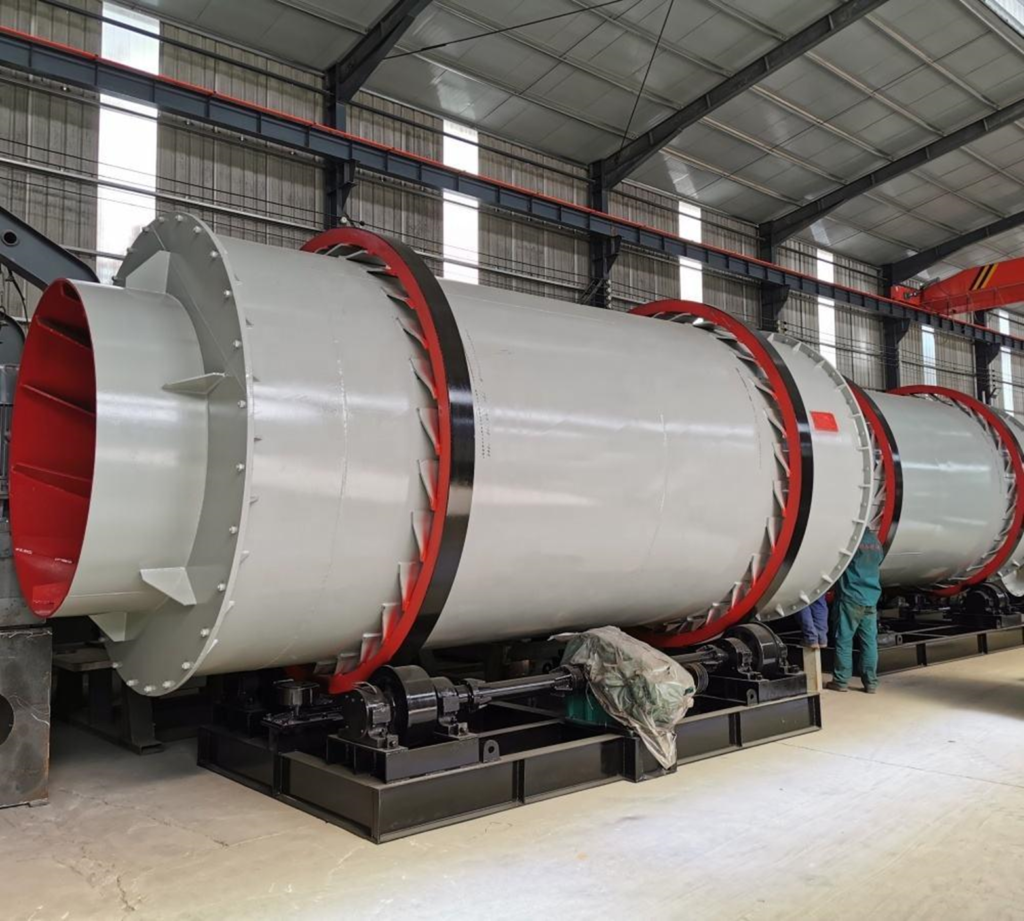
- High continuous throughput
- Robust mechanical design suitable for industrial duty
- Controllable residence time via drum length, slope and rotation speed
- Flexibility in co-current or counter-current gas flow
- Established integration with feeding, dust collection and product handling
Why rotary is frequently preferred for bulk Al(OH)₃
- Handles the transition from moist cake/powder to dry free-flowing product at commercial scale
- Allows engineering of flight design and gas temperature profile to manage stickiness and product temperature
- Supports the high evaporation loads typical of filter-cake feeds when properly sized
Important design considerations specific to aluminium hydroxide
- Product temperature must be controlled; inlet gas temperature is not the same as product temperature
- Avoid conditions that drive significant dehydroxylation if the target product remains Al(OH)₃ / ATH
- Dust collection and fine-particle recovery are essential
- Flighting and internal design should promote good gas–solid contact without excessive attrition for the required particle-size distribution
GTI Dryers evaluates rotary configurations for aluminium hydroxide and related inorganic precipitates as part of its bulk-solids and specialty-chemical drying portfolio.
When Alternative Technologies May Be Evaluated
| Technology | Typical consideration for Al(OH)₃ |
|---|---|
| Rotary dryer | Primary choice for continuous high-throughput bulk production |
| Flash / spin-flash | Fine wet cake or when rapid dispersion and short residence time are advantageous |
| Paddle (indirect) | Sticky cake, lower process-air volume, or tighter temperature control preferred |
| Tray / disc | Smaller capacities or specialty high-purity grades |
| Fluid-bed / VFBD | Free-flowing particulate form after conditioning |
There is no universal “best” dryer. Selection follows feed form, capacity, temperature sensitivity and final product specification.
Common Process Problems and Engineering Responses
| Problem | Likely causes | Practical response |
|---|---|---|
| Residual moisture above specification | Insufficient evaporation duty, short-circuiting, uneven feed | Recalculate mass balance; improve feed distribution; verify residence time and gas temperature profile |
| Agglomerates / hard lumps | Sticky intermediate moisture phase, inadequate mixing or dispersion | Optimise flight design or pre-conditioning; evaluate indirect agitated systems if needed |
| Excessive fines or dust | Over-attrition or high gas velocity | Review rotation speed, flighting and gas velocity; robust dust-collection design |
| Unintended partial dehydroxylation | Product temperature too high | Lower inlet gas temperature or improve heat-transfer control; monitor actual product temperature |
| Wall buildup | Sticky feed or local cold spots | Surface materials, flight design, temperature profiling |
| High energy use | High inlet moisture, poor heat recovery, excess air | Maximise upstream dewatering; evaluate heat recovery and air–solids ratio |
Pilot testing with representative filter cake remains the most reliable method to confirm drying rate, product temperature behaviour and final quality.
Key Data Required for Rotary Dryer Selection and Sizing
Provide the following for a meaningful technical assessment:
- Exact material grade (standard ATH, high-purity, specific particle-size target)
- Feed form (filter cake, moist powder) and bulk density
- Incoming moisture (wet basis) and target residual moisture
- Required throughput (dry solids basis)
- Maximum allowable product temperature
- Particle-size distribution requirements
- Available heat source and utilities
- Dust-emission or recovery expectations
- Downstream process (coating, packing, further thermal treatment)
Illustrative mass-balance thinking (example only):
If 2 000 kg/h of wet cake at 40 % moisture must reach 0.5 % residual moisture, approximately 795 kg/h of water must be evaporated. Actual drum size, gas flow and energy demand depend on heat-transfer rate, residence time and system efficiency — all material-specific.
Geographic Considerations & How GTI Evaluates Markets
Aluminium hydroxide production and consumption are global. Market conditions influence technology emphasis and system design:
- India: Growing specialty chemical and flame-retardant filler demand; focus on robust continuous systems integrated with local utilities and emission norms. GTI evaluates capacity, heat-source availability and compliance requirements typical of Indian inorganic chemical plants.
- China & East Asia: Large-scale ATH production; high-throughput rotary and specialised dispersion dryers are common. GTI assesses project scale and product-specification tightness.
- Europe & North America: Emphasis on product consistency, energy efficiency, dust control and documentation. Indirect or tightly controlled direct systems may be preferred for certain high-value grades.
- Other markets (Middle East, Southeast Asia, Latin America): Project-specific evaluation of energy costs, climate effects on open handling, and logistics of bulk inorganic chemicals.
In every region GTI follows the same sequence: characterise the actual feed, define the residual-moisture and temperature targets, map utilities and constraints, then select and size the rotary (or alternative) system that matches those conditions.
How GTI Dryers Approaches Aluminium Hydroxide Drying
GTI Dryers designs and manufactures industrial rotary dryers and complementary systems for bulk inorganic chemicals and metal-hydroxide precipitates, including aluminium hydroxide applications. The approach is process-led:
- Rotary dryer as the core technology for continuous bulk duty
- Evaluation of flash, paddle or other configurations when feed form or temperature control demands it
- Attention to product-temperature limits so that drying remains distinct from calcination
- Integration of feeding, dust collection, cooling and product handling
GTI does not treat every aluminium hydroxide stream as identical. Systems are engineered from the specific cake properties, capacity and quality targets supplied by the customer.
Frequently Asked Questions
What is the difference between drying and calcining aluminium hydroxide?
Drying removes free and surface moisture while keeping the chemical identity as Al(OH)₃. Calcination drives off structural water at higher temperature to form alumina (Al₂O₃). The two processes have different temperature regimes and product specifications; they should not be confused.
What residual moisture is typically required?
Many commercial ATH grades target residual moisture below 1 % or tighter. The exact specification depends on the end use (flame retardant, filler, chemical intermediate) and must be confirmed for each grade.
Why is product temperature control so important?
Aluminium hydroxide begins to lose water of constitution at elevated temperatures. Exceeding the safe product-temperature window causes partial dehydroxylation and changes product properties. Inlet gas temperature alone is not a reliable control variable.
Is a rotary dryer always the best choice?
It is the most common technology for continuous high-throughput bulk production. Flash, paddle or other systems may be better when the feed is very fine, extremely sticky, or when very short residence time or low process-air volume is required. Selection must follow actual feed characteristics.
Can GTI test my aluminium hydroxide filter cake?
Yes. Representative-feed testing is recommended to confirm drying rate, product-temperature behaviour, dust generation and final moisture before full-scale design.
What information do I need to provide for a quotation?
Feed form and moisture, target residual moisture, required capacity, maximum product temperature, available heat source, and any particle-size or purity constraints. The more complete the data, the more accurate the technical proposal.
Contact the GTI Technical Team:
Website: gtidryers.com
Email: mktg@gtidryers.com
Phone / WhatsApp: +91 9330077417