
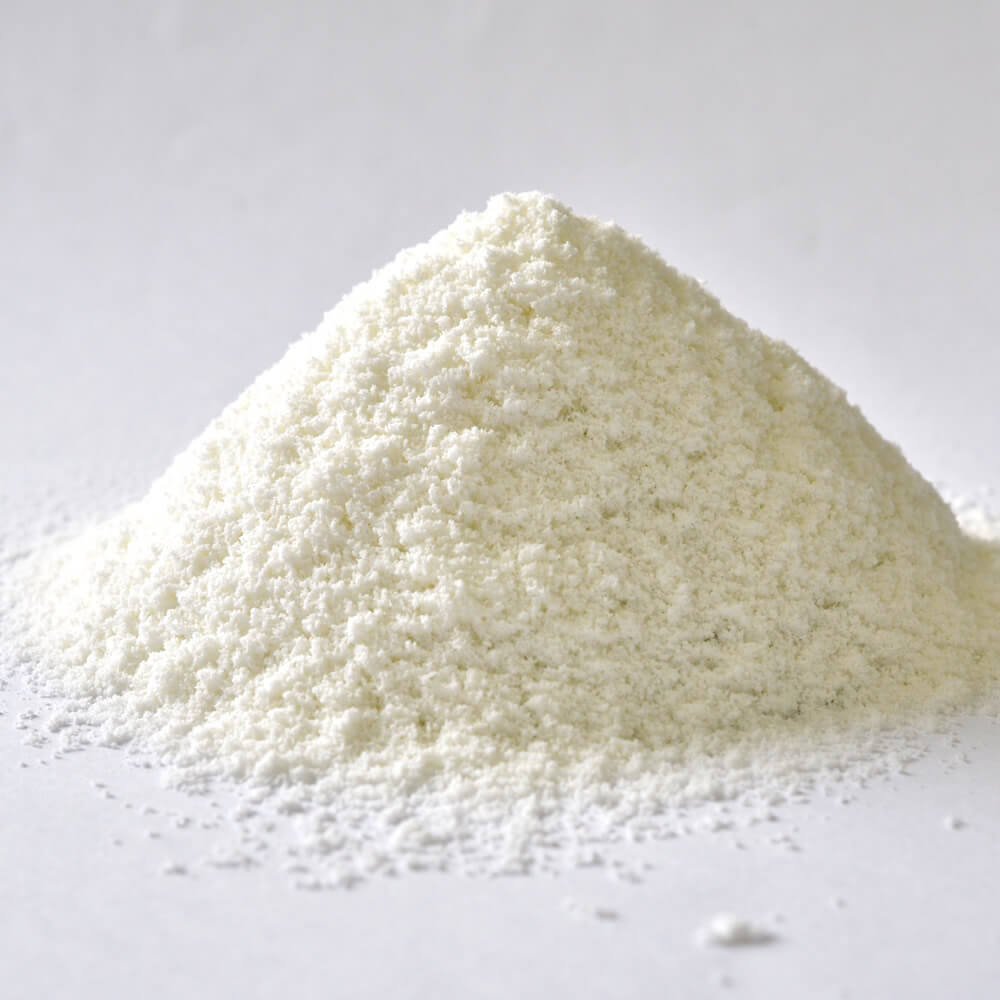
Casein ingredients are not one drying duty. Acid casein and rennet casein are usually produced as washed curd particles that must be dried without destroying grindability and colour. Caseinates (sodium, calcium, etc.) are typically dissolved or dispersed and spray-dried to functional powders.
Choosing the wrong dryer family — for example specifying only a milk-powder spray dryer for acid casein curd — creates capacity, moisture and quality failures. This guide separates the routes and shows how to specify industrial casein drying systems.
Quick answer: Dry acid/rennet casein curd with systems designed for wet particulate solids (often flash/pneumatic, fluid bed, or staged combinations). Dry caseinate solutions with spray drying, often plus fluid bed finish/cool. Define product type, feed form and residual moisture before requesting quotations.
1. Three Products, Three Process Realities
| Product | Typical form entering dryer | Primary drying approach |
|---|---|---|
| Acid casein | Washed, dewatered curd particles | Particulate drying (flash / fluid bed / staged) |
| Rennet casein | Washed, dewatered curd particles | Particulate drying similar family; functional targets differ |
| Caseinate (Na, Ca, etc.) | Aqueous solution / dispersion | Spray drying (± fluid bed) |
Upstream coagulation, washing and dewatering quality dominate dryer success for casein curd. For caseinate, dissolving/conversion completeness and solids % dominate spray performance.
2. Acid Casein & Rennet Casein — Curd Drying
Process context
After precipitation/coagulation and washing, casein is mechanically dewatered (presses, decanters, or similar). The wet curd still holds substantial moisture that must be reduced to a stable powder/granule specification for milling, storage and sale.
What the dryer must achieve
| Goal | Why it matters |
|---|---|
| Target residual moisture | Storage, milling, microbial risk |
| Controlled product temperature | Colour and protein quality |
| Limited fines over-generation | Yield and dust |
| Continuous capacity | Match curd production rate |
| Hygienic contact surfaces | Food ingredient markets |
Technology options for casein curd
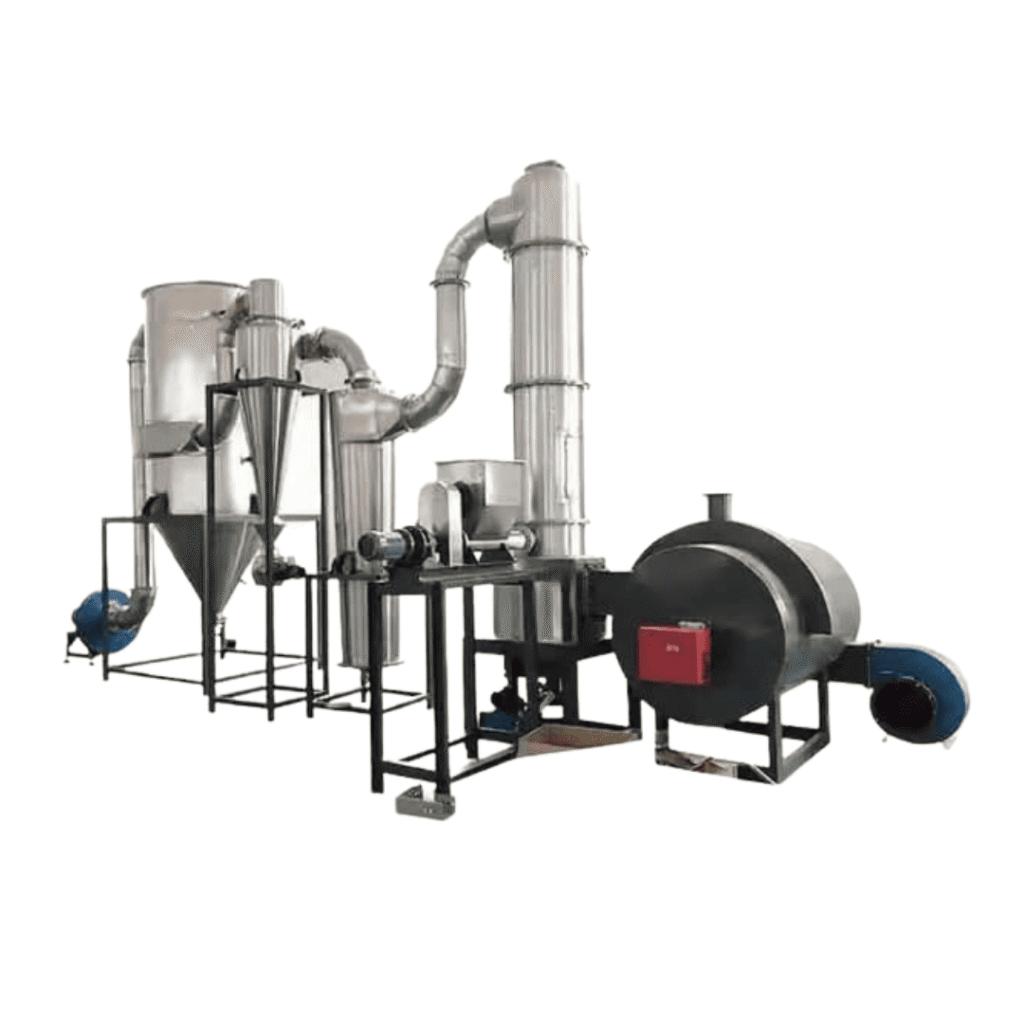
- Disperse wet curd into a hot air stream for rapid moisture removal
- Common industrial approach for particulate casein
- Requires attention to particle size, duct wear and temperature control
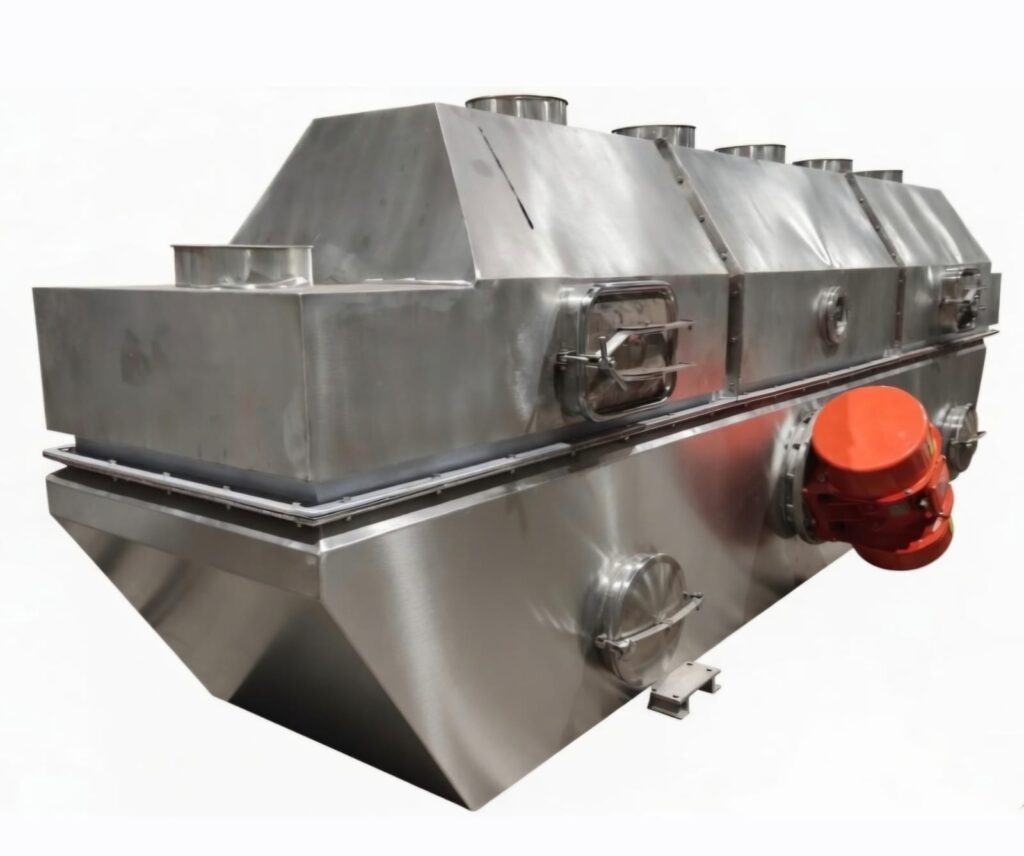
- Strong when curd particles fluidise after partial drying or conditioning
- Good moisture uniformity and finish drying
- May be used as second stage after flash or mechanical pre-dry
Staged systems
- Flash for bulk water → fluid bed for finish moisture and cooling
- Improves control versus forcing one stage to do everything
- Only when curd is formed into a permeable layer; less common as primary casein curd dryer than flash/FB routes
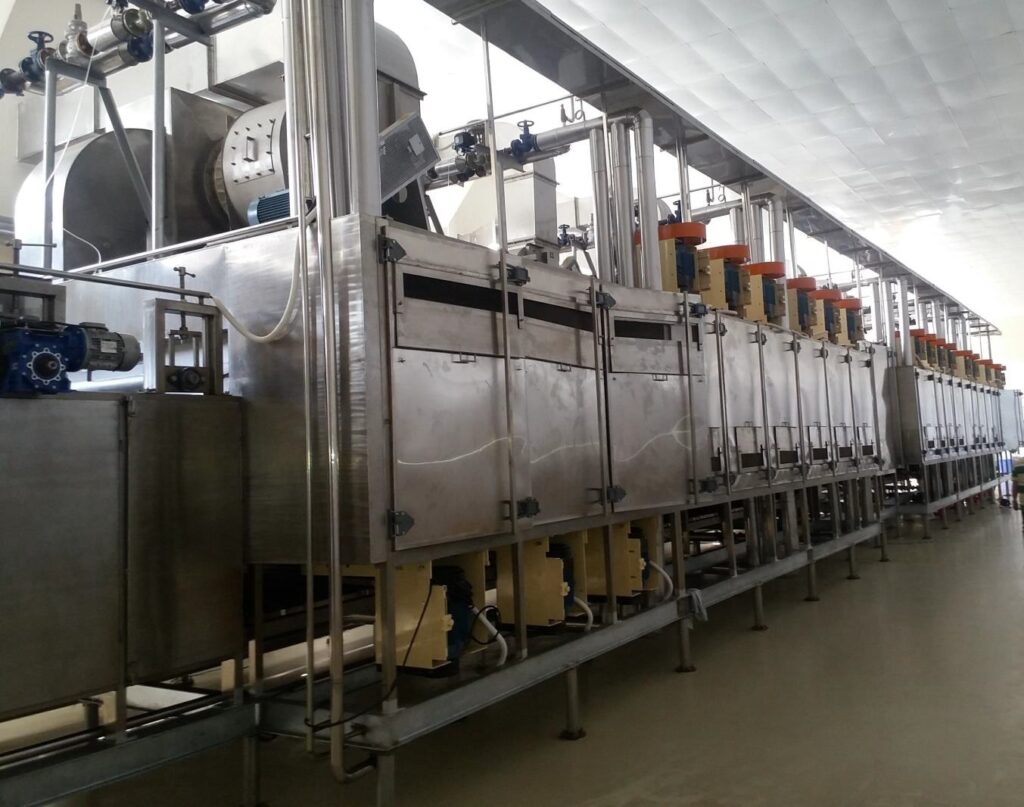
- Not the natural fit for pressed casein curd unless the process intentionally re-slurries (usually undesirable)
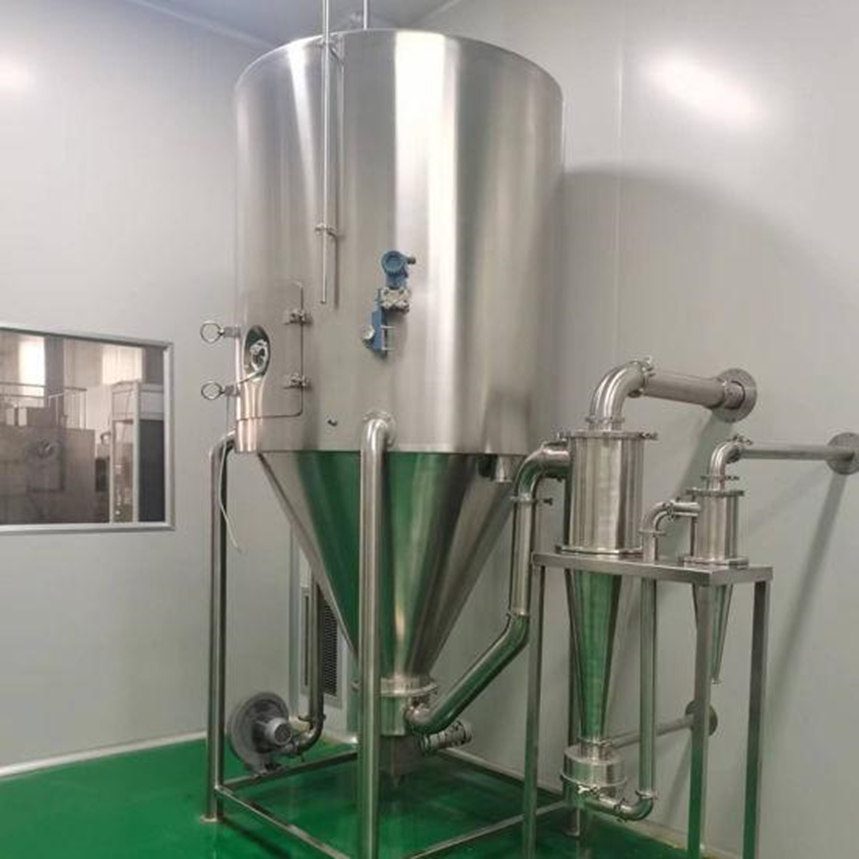
3. Caseinate — Solution to Powder
Process context
Casein is converted to caseinate (e.g. sodium or calcium caseinate) in solution, concentrated as required, then dried to a functional powder for food applications.
Preferred drying system
- Spray dryer for particle formation from solution
- Fluid bed after-dry/cool when final moisture, packing temperature or agglomeration is required
Quality priorities for caseinate powders
| Attribute | Drying influence |
|---|---|
| Solubility / dispersibility | Thermal history + particle structure |
| Colour / flavour | Avoid excessive product temperature |
| Residual moisture | Caking and storage stability |
| Bulk density | Atomisation and chamber conditions |
Caseinate spray drying follows many of the same engineering rules as other high-protein dairy sprays, with product-specific stickiness and cleaning behaviour.
4. Decision Guide
| You produce… | Feed to dryer | Shortlist |
|---|---|---|
| Acid casein | Wet curd particles | Flash ± fluid bed |
| Rennet casein | Wet curd particles | Flash ± fluid bed |
| Sodium/calcium caseinate | Solution | Spray ± fluid bed |
| Mixed casein factory | Multiple feeds | Separate lines or carefully scheduled dual systems — do not assume one machine |
5. Problem–Solution Map
| Problem | Typical cause | Direction |
|---|---|---|
| Wet casein after dryer | Peak curd moisture ignored; short residence | Redesign on peak evaporation load |
| Darkened casein | Product temperature too high | Lower gas/product T; staged drying |
| Excess fines | Over-dispersion, attrition | Softer handling; classify and recycle logic |
| Caseinate insolubles | Overheating in spray chamber | Multi-stage; lower outlet severity |
| Caking in storage | Residual moisture high; humid packing | Finish dry + cool; packaging |
| Capacity bottleneck at dryer | Curd press rate > dryer design | Buffer + dryer upsizing on wet basis |
| Contamination between products | Shared path, weak cleaning | Hygienic design; campaign planning |
6. Moisture, Milling and Storage
Dried acid/rennet casein is often milled to a customer particle size. Residual moisture must suit:
- Milling behaviour (too wet → smearing; too dry → excess dust)
- Storage in the plant’s climate
- Customer specification
For caseinate powders, moisture targets align with functional food ingredient specs and packaging barriers.
Always write numeric residual moisture + test method into the RFQ.
7. Hygienic and Materials Considerations
Casein is a food protein ingredient. Systems should address:
- Stainless food contact surfaces appropriate to dairy duty
- Cleanable ducts, cyclones and chambers
- Drainage and access for wet curd areas
- Dust control (protein dust handling and combustible dust assessment as required)
- Allergen/labelling segregation when multiple proteins are processed on site
8. Sizing Basis (All Casein Types)
Evaporation load (wet basis):W=F×100−MfMi−Mf
- For curd: F is wet casein after dewatering; use peak press output
- For caseinate: express feed as solution solids % and water rate clearly
Never compare vendor capacities unless moisture/solids bases match.
9. RFQ Checklist for Industrial Casein Drying Systems
Acid / rennet casein
- Product — acid or rennet
- Curd moisture range after dewatering
- Target residual moisture
- Particle size after dewatering / before drying
- Capacity kg/h wet and dry (state basis)
- Max product temperature
- Prefer flash, fluid bed, or staged
- Milling downstream requirements
- Hygiene and utilities
Caseinate
- Type — sodium, calcium, other
- Solution solids %
- Target moisture and solubility needs
- Capacity kg powder/h
- Spray ± fluid bed expectation
- Cleaning/CIP requirements
- Packaging temperature limits
10. How to Evaluate Suppliers
| Check | Positive signal |
|---|---|
| Separates casein curd from caseinate solution duties | Real dairy ingredient knowledge |
| Asks dewatering moisture range | Correct evaporation basis |
| Offers staged particulate drying when needed | Process depth |
| Addresses protein dust and hygiene | Suitable for food ingredients |
| Clear scope (dryer vs milling vs packing) | Fewer interface gaps |
Red flags: One spray-dryer quote for pressed acid casein curd without re-slurry discussion; capacity without moisture basis; no temperature limit discussion.
11. How GTI Dryers Supports Casein Drying Projects
GTI Dryers designs continuous industrial drying systems including flash/spin-flash, fluid bed/VFBD, and spray-related configurations for food and protein solids.
For casein projects we:
- Distinguish curd drying from caseinate spray drying at the first step
- Size from real wet-basis moisture and peak rate
- Propose flash and/or fluid bed concepts for acid/rennet casein particles
- Propose spray ± fluid bed concepts for caseinate solutions
- Document assumptions on residual moisture and utilities
Geographic Note
Casein and caseinate plants supply food and nutritional markets worldwide, with production in traditional dairy regions and growing ingredient hubs. Export buyers often specify tight moisture and solubility; dryer design must match those specs. Local engineering support improves uptime on continuous protein lines.
Frequently Asked Questions
What dryer is used for acid casein?
Industrial flash/pneumatic dryers and fluid bed systems (often staged) are commonly used for washed, dewatered casein curd.
Is rennet casein dried the same way as acid casein?
Generally the same particulate drying family, but functional and customer specs differ — confirm moisture and temperature limits per product.
How is caseinate dried?
Typically by spray drying from solution, frequently with a fluid bed finish/cool stage.
Can one dryer do acid casein and caseinate?
Not optimally. Curd particles and protein solutions need different equipment. Mixed plants usually separate lines or campaigns with strict cleaning.
What should I send GTI?
Product type (acid/rennet/caseinate), feed form and moisture or solids, target moisture, capacity and hygiene requirements.
Next Step
If you are specifying industrial casein drying systems for acid casein, rennet casein or caseinate, share your product and feed data. GTI will recommend a flash, fluid bed or spray-based system matched to the correct duty.
Request a casein drying system assessment with your process data.
Contact the GTI Technical Team:
Website: gtidryers.com
Email: mktg@gtidryers.com
Phone / WhatsApp: +91 9330077417