
Industrial and food-grade salt (NaCl) leaves centrifuges or washers with surface moisture that quickly causes caking in silos, jumbo bags and consumer packs. A properly specified salt dryer — typically a fluid bed or rotary dryer, often with cooling — drives residual moisture into a band where crystals remain free-flowing.

This guide explains why salt cakes, how fluid bed and rotary systems solve it, and what buyers should demand from a manufacturer.
Quick answer: Dry centrifuged salt to a controlled residual moisture, then cool before storage or packing. Fluid bed dryers give excellent moisture uniformity for free-flowing crystals; rotary dryers suit higher tonnages of robust salt beds. Caking control is moisture + temperature + storage humidity — not dryer branding alone.
1. Why Wet Salt Cakes
| Factor | Effect |
|---|---|
| Surface moisture | Dissolves microscopic salt; recrystallises as bridges between crystals |
| Warm product packed | “Sweating” in bags as it cools → local rewetting |
| Humid storage air | Hygroscopic pickup on crystal surfaces |
| Compression in silos | Pressure consolidates moist crystals |
| Fine crystal fraction | More surface area → faster bridging |
Drying reduces free moisture. Cooling and packaging limit re-wetting. Anti-caking additives help some grades but do not replace proper drying.
2. What a Salt Dryer Must Achieve
| Goal | Business impact |
|---|---|
| Target residual moisture | Free flow, customer specs |
| Uniform moisture | No wet pockets that seed caking |
| Controlled product temperature | Safe packing/storage |
| Continuous capacity | Match crystalliser/centrifuge output |
| Corrosion-resistant design | Uptime in chloride service |
| Dust control | Yield and workplace conditions |
3. Fluid Bed Salt Dryers
How they work
Heated air fluidises a bed of salt crystals. Each particle contacts drying air, giving fast, even moisture removal. A second zone or separate machine often cools the salt.
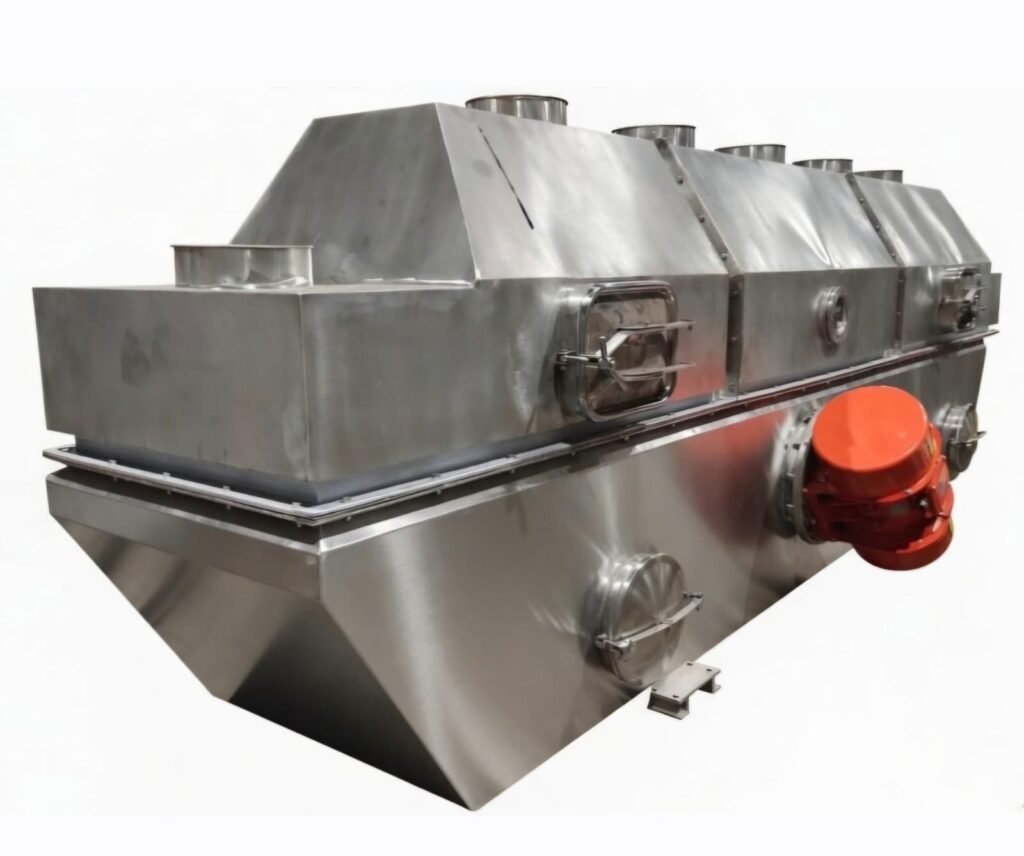
Why fluid beds produce free-flowing salt
| Feature | Benefit |
|---|---|
| High gas–solid contact | Uniform residual moisture |
| Adjustable residence time | Dial-in moisture band |
| Zoned dry + cool | Moisture and temperature both controlled |
| Gentle relative to heavy tumbling | Crystal breakage can be limited with correct velocity |
Best when
- Crystals are relatively uniform and free-flowing
- Moisture uniformity and product quality are critical (including many food-grade lines)
- Medium to high continuous rates with good fluidization
Watch-outs
- Sticky, highly wet cake may need back-mix or pre-conditioning
- Excess velocity increases dust and attrition
- Chloride corrosion on carbon steel components if materials are wrong
4. Rotary Salt Dryers
How they work
Salt tumbles through a rotating drum in contact with hot air (direct) or through a heated shell path (indirect — less common for standard salt). Flights lift and shower product for contact with gas.
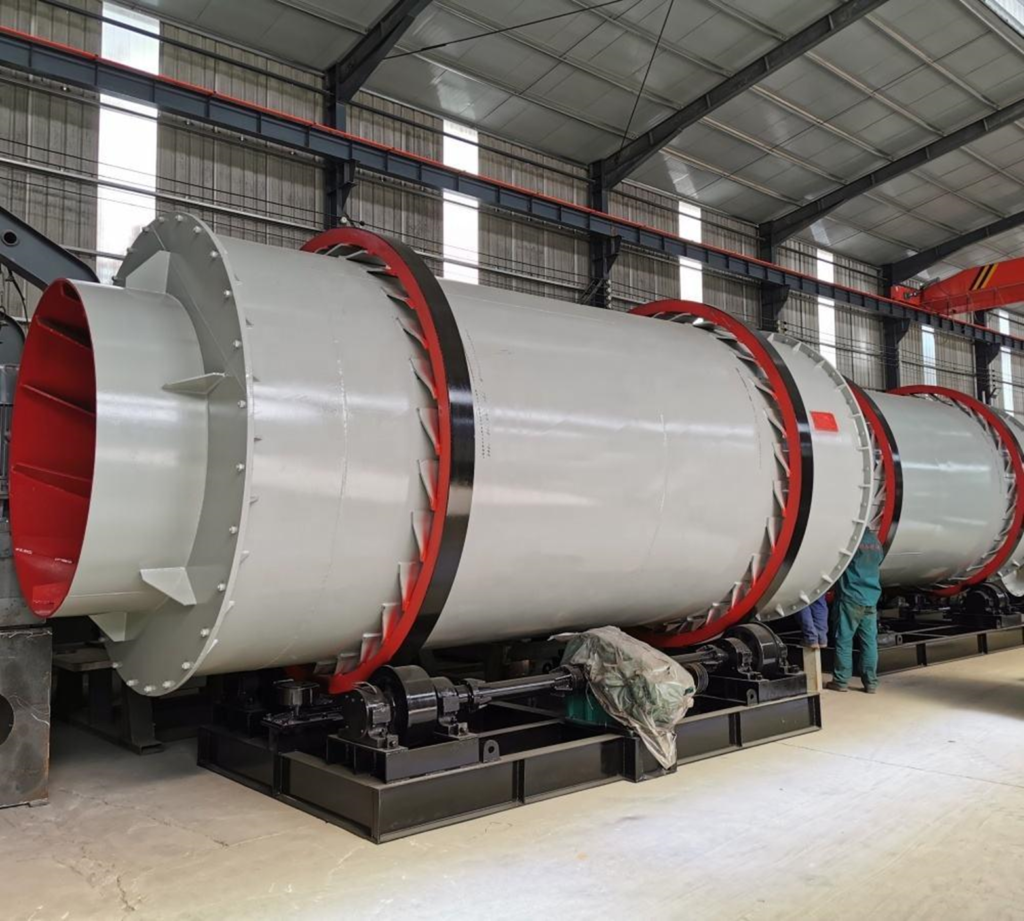
Why rotary dryers are used on salt
| Feature | Benefit |
|---|---|
| High continuous tonnage | Fits large vacuum salt / sea salt plants |
| Robust with coarser beds | Handles a range of crystal sizes |
| Proven industrial duty | Long operating history on inorganic salts |
Best when
- High t/h capacity is the priority
- Product is robust enough for tumbling
- Plant standardisation favours rotary trains
Watch-outs
- Moisture uniformity depends on flights, seals and residence time
- Attrition and dust must be managed
- Direct-fired gas quality and product purity requirements must align
- Still needs cooling/storage discipline to prevent caking after discharge
5. Fluid Bed vs Rotary for Salt
| Criterion | Fluid bed | Rotary |
|---|---|---|
| Moisture uniformity | Excellent when fluidised | Good if well designed |
| Crystal attrition | Controllable with velocity | Tumbling attrition higher |
| Capacity | High | Very high |
| Footprint | Compact for duty | Larger drum train |
| Sticky feed tolerance | Needs free-flowing behaviour | Often more tolerant of variation |
| Typical buyer driver | Quality free-flow, food-grade focus | Bulk industrial tonnage |
Many modern plants use dryer + cooler (fluid bed dry/cool or rotary dryer + cooler) rather than a dryer alone.
6. Cooling — The Missing Half of Free-Flow
Hot salt sent to bags or silos often cakes even if moisture met specification at the dryer outlet.
| After-dryer step | Purpose |
|---|---|
| Cooler (fluid bed or other) | Bring product toward ambient packing temperature |
| Screening | Remove lumps and control fines |
| Conditioned storage | Limit humid air ingress |
| Anti-caking dosing (if used) | Grade-specific commercial requirement |
Specify outlet moisture and outlet temperature in the RFQ.
7. Problem–Solution Map
| Problem | Likely cause | Direction |
|---|---|---|
| Caking in bags within days | Residual moisture high; packed hot; humid storage | Tighten moisture; add/cool properly; packaging |
| Caking only in monsoon | Ambient humidity on cooler/storage | Air design; storage protection |
| Wet lumps in free-flowing bulk | Uneven drying; centrifuge swings | Peak moisture design; better fluidization/flights |
| Excess dust | Over-drying; high gas velocity; attrition | Moisture band; velocity/flight tuning |
| Corrosion failures | Wrong MOC in wet chloride zones | Stainless/appropriate materials |
| Capacity shortfall | Sized on average centrifuge moisture | Redesign on peak wet-basis load |
8. Sizing the Salt Dryer
Evaporation load (wet basis):W=F×100−MfMi−Mf
- F = wet salt kg/h from centrifuge
- Mi = inlet moisture %
- Mf = target residual moisture %
Use peak centrifuge rate and peak moisture. Food-grade and industrial-grade targets differ by customer — write the number into the enquiry.
9. Materials, Hygiene and Emissions
- Chloride service demands deliberate materials of construction
- Food-grade salt requires hygienic contact surfaces and cleanable access
- Fine salt dust needs cyclones/filters and housekeeping design
- Wash-water and purge streams must fit plant effluent practice
10. RFQ Checklist for Salt Dryers
- Salt type — vacuum, sea, rock-derived, iodised, industrial grades
- Crystal size distribution
- Inlet moisture range after centrifuge
- Target residual moisture
- Target product temperature to packing
- Capacity continuous and peak
- Fluid bed vs rotary preference (or ask for recommendation)
- Cooler in scope?
- Food-grade vs industrial requirements
- Heat source
- Dust emission limits
- Materials of construction expectations
11. Evaluating Salt Dryer Manufacturers
| Check | Positive signal |
|---|---|
| Asks moisture in/out and caking history | Process-led design |
| Discusses dryer + cooler as a system | Understands free-flow |
| Addresses chloride corrosion | Suitable materials |
| Capacity on wet-basis peak load | Honest sizing |
| Includes dust separation in scope talk | Complete line thinking |
Red flags: Dryer-only quote when caking is a packing-temperature problem; carbon steel everywhere in wet salt duty; capacity without moisture basis.
12. How GTI Dryers Supports Salt Drying Projects
GTI Dryers designs continuous fluid bed / VFBD and rotary drying systems for inorganic salts and bulk solids.
For salt projects we:
- Target free-flow through residual moisture and temperature control
- Select fluid bed or rotary from crystal size, capacity and grade
- Integrate cooling and dust recovery in system discussions
- Size from real centrifuge moisture peaks
- Specify materials appropriate to chloride service and hygiene needs
Geographic Note
Salt production spans vacuum salt plants, sea-salt works and rock-salt processing across India and global markets. Coastal humidity increases caking risk after drying — cooler performance and packaging design are part of the solution. Local manufacturing supports continuous plant service and spares.
Frequently Asked Questions
What is the best dryer for free-flowing salt?
Fluid bed dryers excel at uniform moisture for quality free-flow; rotary dryers excel at high tonnage. Many plants combine drying with cooling.
Why does salt still cake after drying?
Often residual moisture is still high, product is packed hot, or storage air is humid. Check all three — not only the dryer nameplate.
Do we need a cooler as well as a salt dryer?
Usually yes for bagging and silo stability, especially in warm climates.
What residual moisture should salt have?
Follow your grade specification and customer requirements. Put the target in the RFQ.
What should I send GTI?
Salt grade, crystal size, inlet moisture range, target moisture and temperature, capacity and food vs industrial duty.
Next Step
If caking and poor flow are driving customer complaints or rework, review residual moisture and packing temperature together. Share your centrifuge and capacity data with GTI for a salt dryer assessment using fluid bed or rotary technology aimed at free-flowing product.
Request a salt drying assessment with your process data.
Contact the GTI Technical Team:
Website: gtidryers.com
Email: mktg@gtidryers.com
Phone / WhatsApp: +91 9330077417