
Herbal and botanical extracts are valued for marker compounds — polyphenols, glycosides, alkaloids, essential-oil fractions, bitters and other actives — not only for bulk powder. Aggressive drying can darken product, flatten aroma and cut assayed potency even when residual moisture looks acceptable.
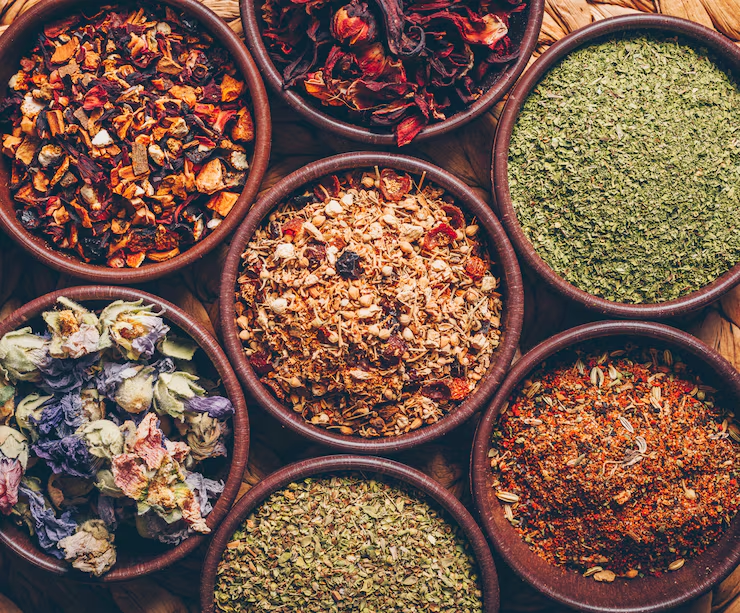
A fit-for-purpose herbal extract dryer strategy uses spray drying and/or vacuum technology to reach storage-stable moisture while limiting product temperature, oxygen exposure and time-at-temperature.
Quick answer: Use spray drying when the extract is a pumpable liquid/concentrate and powder morphology is required — with controlled outlet temperature and, where needed, carriers. Use vacuum drying (tray, paddle or other contact vacuum systems) when the feed is a paste/concentrate that is highly heat-sensitive or when lower boiling temperature is needed to protect actives. Always specify maximum product temperature and marker-assay acceptance criteria.
1. What Must Be Preserved
| Quality attribute | Drying risk |
|---|---|
| Marker assay / actives | Thermal degradation, oxidation |
| Colour | Browning at high product temperature |
| Aroma / volatile notes | Stripping into exhaust air |
| Solubility / dispersibility | Particle structure and carriers |
| Residual moisture | Mould/caking if high; over-dry if driven too low |
| Bulk density & flow | Affects encapsulation, tableting, sachets |
Preservation means controlling product temperature × time × oxygen, not maximising air temperature for speed.
2. Upstream Decisions That Decide Dryer Success
Before choosing a dryer:
- Extract form — clarified liquid, concentrated liquor, viscous paste, or resinous mass
- Solvent system — water, ethanol/water, other solvents (drives vacuum and explosion-risk design)
- Solids % — dilute feeds make spray drying expensive and thermally harder per kg dry product
- Target product — fine powder, agglomerated powder, dry extract granules
- Label constraints — carriers allowed or “carrier-free” claims
Concentrating extract before drying is often the highest-ROI quality and energy move.
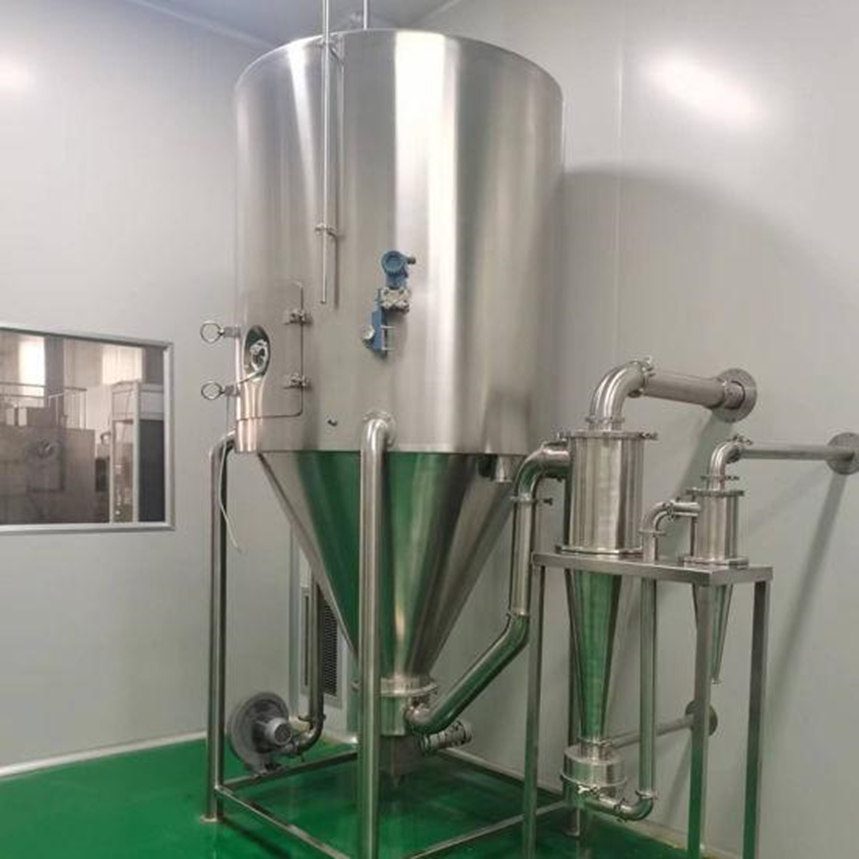
3. Spray Drying for Herbal Extracts
How spray drying helps preserve actives
- Short particle residence time in the hot zone when the system is correctly set
- Rapid conversion of liquid extract to powder for continuous plants
- Ability to co-spray with carriers that raise glass transition temperature and protect sensitive fractions
Critical controls for active retention
| Parameter | Role in preservation |
|---|---|
| Feed solids % | Higher solids → less water to evaporate → milder overall duty |
| Inlet / outlet temperature | Outlet and product temperature correlate with damage more than inlet alone |
| Atomisation | Droplet size affects drying time and residual moisture uniformity |
| Carrier selection (maltodextrin, gum, protein, etc.) | Stickiness control and some protective matrix effects |
| Oxygen / humidity in process air | Oxidation and stickiness management |
| Powder residence in chamber/cyclone | Avoid long hot hold after dry |
When spray drying is the right herbal extract dryer
- Extract is pumpable after concentration
- Commercial form is powder
- Continuous capacity is required
- Formulation allows carriers if stickiness demands them
Common spray-drying problems on botanicals
| Problem | Direction |
|---|---|
| Sticky deposits / low yield | Raise solids; adjust carriers; chamber wall management |
| Low assay vs liquid extract | Lower thermal severity; optimise solids; minimise hot residence |
| Poor colour | Reduce outlet severity; review concentration browning upstream |
| Caking in storage | Residual moisture + packaging barrier; cool powder before pack |
4. Vacuum Technology for Herbal Extracts
How vacuum drying protects actives
Vacuum lowers the boiling point of water and solvents, so moisture/solvent can leave at lower product temperature. Contact vacuum dryers (tray, paddle, rotary cone, etc.) suit pastes and concentrates that are difficult to atomise or too heat-sensitive for aggressive atmospheric spray conditions.
Strengths
- Lower temperature solvent/moisture removal
- Closed system — better for solvent recovery and reduced oxygen exposure when inerted
- Handles viscous concentrates and semi-solids
- Strong option when “carrier-free” dry extract is required and spray stickiness is unmanageable
Limits
| Limit | Impact |
|---|---|
| Often batch | Scheduling vs continuous spray lines |
| Heat transfer in viscous pastes | Cycle time depends on agitation/film thickness |
| Throughput per footprint | May need multiple units for large output |
| Still requires residual moisture discipline | Vacuum ≠ automatic quality |
When vacuum is the better herbal extract dryer path
- High-value, highly heat-sensitive actives
- Ethanol-rich extracts needing controlled solvent removal
- Paste/concentrate not suitable for stable atomisation
- Product temperature limits below practical atmospheric spray windows
5. Spray vs Vacuum — Buyer Comparison
| Criterion | Spray drying | Vacuum contact drying |
|---|---|---|
| Feed | Pumpable liquid/concentrate | Paste, concentrate, semi-solid |
| Product form | Powder (direct) | Cake/granules → mill to powder |
| Typical thermal profile | Short, controlled convective | Lower boiling T under vacuum |
| Continuous capacity | Excellent | Batch / semi-batch orientation |
| Carriers | Often used | Often optional depending on product |
| Solvent recovery | Possible with specialised design | Natural fit with condensers |
| Best quality use-case | Scalable instant powders | Maximum thermal gentleness on pastes |
Many plants use both: vacuum or evaporation to concentrate, then spray dry; or vacuum dry specialty lines while spray handles volume SKUs.
6. Other Options Sometimes Combined
| Technology | Role |
|---|---|
| Belt / multi-zone dryers | For plant pieces or layered purees before milling — not classic thin extract liquors |
| Refractance window-type thin film | Gentle puree drying for colour-critical products (specialised) |
| Freeze drying | Maximum gentleness, highest cost — niche actives |
| Fluid bed after-dry | Finish moisture/cooling after spray for some powders |
7. Practical Preservation Rules (Any Herbal Extract Dryer)
- Set a maximum product temperature tied to marker stability data where available
- Concentrate before thermal drying when possible
- Dry to the specified residual moisture, not far below
- Minimise time product sits hot after reaching target moisture
- Use inerting when oxidation is a proven loss pathway
- Validate assay, colour and sensory on production-representative trials
- Pack cool, dry powder in barrier packaging
8. Problem–Solution Map
| Problem | Likely cause | Direction |
|---|---|---|
| Assay drop after drying | Excessive product T or oxidation | Milder profile; vacuum route; inerting |
| Brown extract powder | Overheating; upstream concentrate damage | Zone/outlet control; review evaporator |
| Sticky spray chamber | Low solids; low glass transition | Carriers; solids; humidity control |
| Residual solvent high | Insufficient vacuum/time or poor mass transfer | Vacuum recipe; condenser capacity |
| Caking in drums | Moisture + humid fill | Finish moisture; cool; liners |
| Customer rejects on flavour | Volatile loss | Lower severity; closed vacuum path for some extracts |
9. RFQ Checklist for Herbal Extract Dryers
- Botanical / extract type and key marker compounds
- Feed form — liquid, concentrate solids %, paste
- Solvent system (water / ethanol / other)
- Target residual moisture (and residual solvent if applicable)
- Maximum product temperature or known stability limits
- Carrier policy (allowed types / “no carrier”)
- Capacity (kg dry extract/h or batch size)
- Preferred route — spray, vacuum, or evaluation of both
- Hygiene / food or pharma-adjacent requirements
- Packaging and oxygen sensitivity
- Pilot sample availability
10. How GTI Dryers Supports Herbal Extract Projects
GTI Dryers designs continuous drying systems used for heat-sensitive food and botanical materials, including spray-related configurations and multi-zone belt systems, and discusses vacuum/contact routes where paste and solvent conditions require them.
For herbal extract drying we focus on:
- Feed form and marker-preservation priorities
- Spray drying concepts with realistic solids and outlet-temperature discipline
- When vacuum technology is the more rational protective path
- Hygienic construction and cleanable powder paths for extract powders
- Pilot recommendations before locking capacity
Geographic Note
Herbal extract production is strong across India, China, Southeast Asia and export-oriented nutraceutical hubs. Buyers in regulated export markets increasingly ask for assay retention evidence after drying — process data and pilot results matter more than generic “low temperature” claims. Local dryer engineering supports seasonal botanical campaigns.
Frequently Asked Questions
What is the best herbal extract dryer?
Spray drying for pumpable concentrates to powder at scale; vacuum contact drying for heat-sensitive pastes and solvent-rich extracts. Choice follows feed form and active stability limits.
Does spray drying always destroy actives?
No. Poorly controlled spray drying can damage actives; optimised solids, outlet temperature and carriers often retain commercially acceptable assays. Validate on your extract.
When should we use vacuum drying?
When product temperature limits are tight, feed is a paste, or solvents must be removed in a closed low-boiling system.
Are carriers mandatory in spray-dried extracts?
Not always, but many sticky botanical concentrates require them for yield and stability unless an alternative dry route is used.
What should I send GTI?
Extract type, feed solids/viscosity, solvents, marker priorities, target moisture, capacity and carrier policy.
Next Step
If you need a herbal extract dryer strategy to preserve active compounds, share your extract form and quality limits. GTI will help compare spray drying and vacuum technology routes and outline a practical system concept based on process data.
Request a herbal extract drying assessment with your process data.
Contact the GTI Technical Team:
Website: gtidryers.com
Email: mktg@gtidryers.com
Phone / WhatsApp: +91 9330077417