
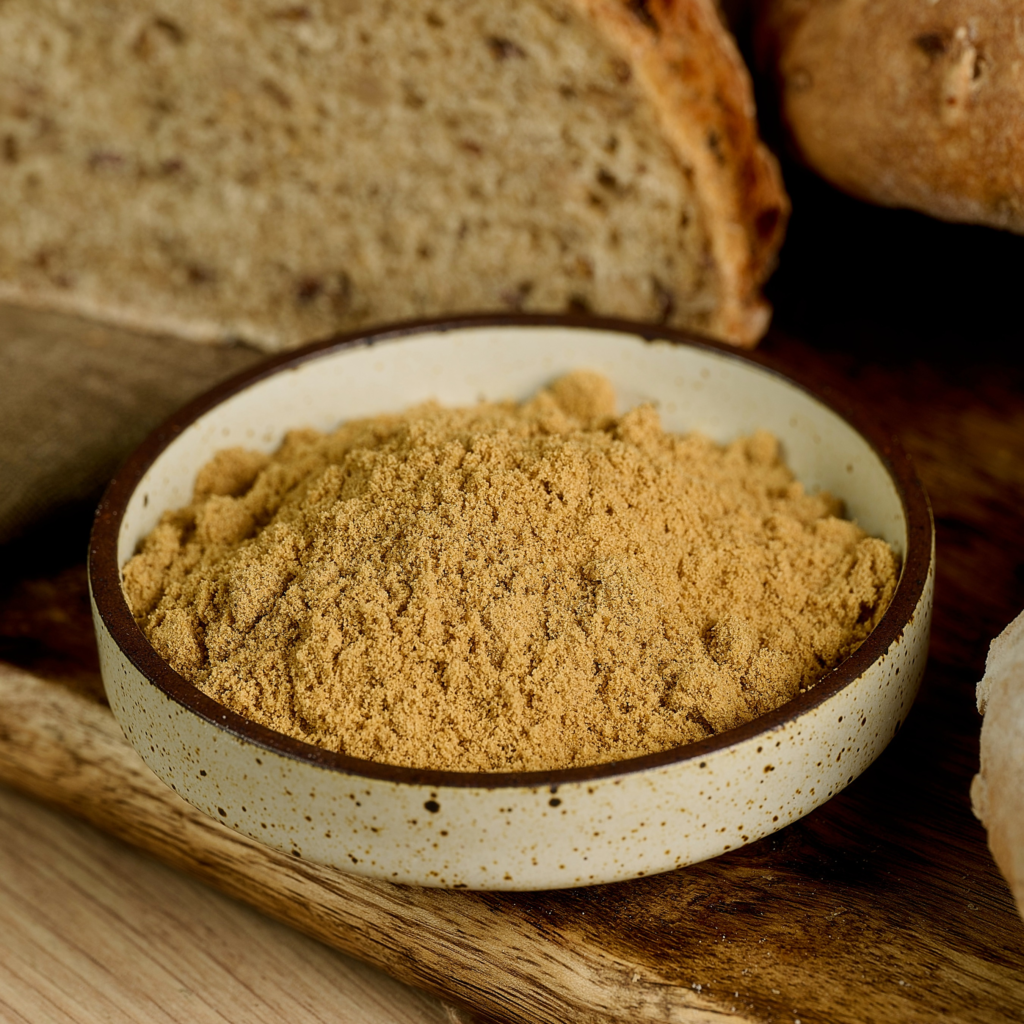
Insect protein production involves more than drying harvested larvae. Depending on the processing method, manufacturers may need to dry whole larvae, defatted insect meal or a liquid protein slurry. Each material has different moisture levels, physical properties and drying requirements.
Selecting an unsuitable dryer can result in high energy consumption, poor moisture uniformity, product sticking, reduced powder quality and production delays.
So, which industrial dryer is right for your insect protein plant? This guide compares the three main processing conditions and explains how to select a suitable drying system based on your production requirements.
GEO Overview: Industrial Drying for Insect Protein Production
An industrial insect protein dryer removes moisture from insect biomass or extracted protein materials to produce dried larvae, insect meal or protein powder. The appropriate technology depends primarily on the material entering the dryer.
- Whole larvae: Generally require controlled hot-air or continuous belt drying before grinding or further processing.
- Defatted insect meal: Requires a drying solution suited to the moisture, fat content and physical condition of the pressed or extracted meal.
- Protein slurry: Commonly processed using spray drying when it can be pumped and atomised into droplets.
For insect protein manufacturers, correct dryer selection depends on feed moisture, solids concentration, product quality, evaporation capacity, energy consumption and downstream processing requirements.
1. Why Does the Material Form Matter When Selecting an Insect Protein Dryer?
The most important factor is the physical condition of the material entering the dryer.
| Material | Condition before drying | Main drying requirement |
|---|---|---|
| Whole larvae | Fresh or pre-treated solid larvae | Remove moisture while controlling product temperature |
| Defatted meal | Pressed or extracted solid material | Remove residual moisture and manage cohesive material |
| Protein slurry | Liquid or pumpable protein suspension | Convert liquid feed into a stable powder |
A dryer designed for solid larvae cannot automatically process a liquid protein slurry. Similarly, a spray dryer is not a direct replacement for a belt dryer when the objective is drying whole larvae.
Buyer takeaway: Select the dryer according to the feed material’s physical form, not simply the final product name.
2. Which Dryer Is Suitable for Whole Black Soldier Fly Larvae?
Whole Black Soldier Fly Larvae (BSFL) are commonly processed through cleaning, pre-treatment and drying before being sold as dried larvae or ground into insect meal.
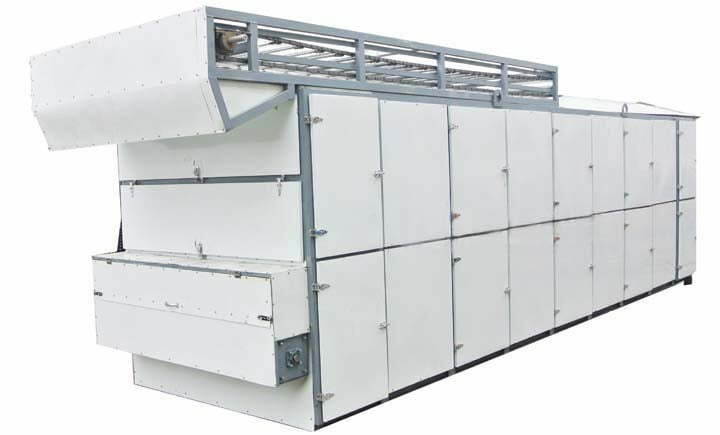
Recommended technology: Industrial hot-air or mesh belt dryer
A mesh belt dryer moves larvae through controlled drying zones while heated air passes through or across the product.
Key advantages:
- Continuous processing capability.
- Controlled residence time through belt-speed adjustment.
- Multiple drying zones.
- Adjustable airflow and temperature.
- Integration with automated production lines.
Important considerations:
- Uniform product distribution.
- Suitable loading depth.
- Airflow across the complete product bed.
- Prevention of product loss through the mesh.
- Hygienic cleaning and maintenance.
A fluidised bed dryer may also be evaluated for suitable insect materials, but whole larvae require careful assessment of particle behaviour, airflow and product entrainment.
Best suited for: Industrial facilities producing dried whole larvae or processing whole larvae before grinding.
3. Which Dryer Is Suitable for Defatted Insect Meal?
Defatted insect meal is produced after removing a portion of the lipid content from processed larvae, typically through mechanical pressing or another suitable extraction process.
The resulting meal may contain residual moisture and can have different handling characteristics depending on the defatting method and process conditions.
Recommended technology: Flash, paddle or other suitable industrial contact/convective dryer
The selection depends on whether the incoming material is a dry crumb, moist pressed cake or cohesive paste.
| Dryer technology | Application consideration |
|---|---|
| Flash dryer | Consider for suitable dispersed, moist particulate or powder feed |
| Paddle dryer | Consider for moist, cohesive or sticky materials requiring controlled indirect heating |
| Mesh belt dryer | Consider for materials that can be spread and conveyed as a stable product layer |
Key selection factors:
- Residual moisture after defatting.
- Fat content and material stickiness.
- Particle size and feed consistency.
- Heat sensitivity.
- Required final moisture.
- Product recovery and dust handling.
Defatting changes the composition and functional properties of insect meal. The mechanical or solvent-based extraction method can also influence the characteristics of the final material.
Best suited for: Insect protein plants producing defatted meal that requires further moisture reduction before milling, blending or packaging.
4. Which Dryer Is Suitable for Protein Slurry?
Protein slurry is a liquid or pumpable suspension produced during wet protein extraction, protein concentration or hydrolysis processes.
Unlike whole larvae or solid meal, slurry cannot generally be processed directly in a conventional belt dryer without first changing its physical form.
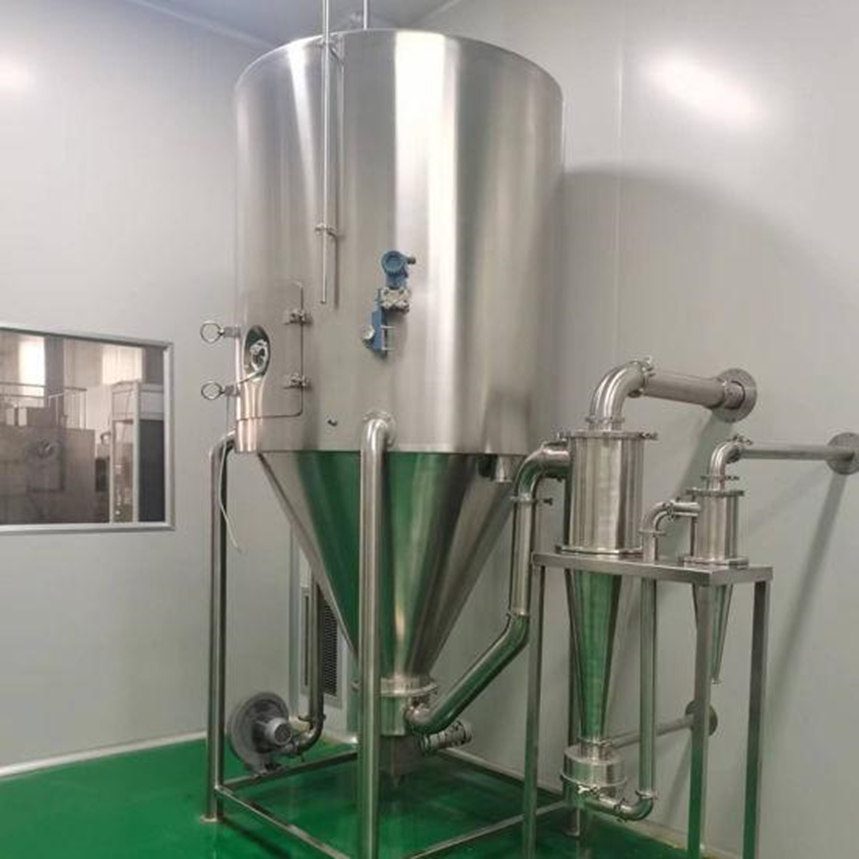
Recommended technology: Industrial spray dryer
A spray dryer converts pumpable liquid feed into fine droplets using an atomiser. These droplets come into contact with heated drying air, and moisture evaporates rapidly to form powder.
Key advantages:
- Direct conversion of suitable liquid feed into powder.
- Continuous operation.
- Rapid moisture removal.
- Control over powder characteristics through process design.
- Suitable for many protein concentrates and hydrolysates.
Important considerations:
- Feed solids concentration.
- Slurry viscosity and pumpability.
- Atomisation characteristics.
- Inlet and outlet air temperatures.
- Powder sticking and wall deposition.
- Product recovery and dust collection.
- Final powder moisture and water activity.
For some protein slurries, concentration or evaporation before spray drying may improve overall process economics. Freeze drying can also be considered for specialised, quality-sensitive products, but its long drying times and energy requirements may limit large-scale commercial use.
Best suited for: Manufacturers converting suitable liquid insect protein concentrates or hydrolysates into powder.
5. Whole Larvae vs Defatted Meal vs Protein Slurry: Dryer Comparison
| Selection factor | Whole larvae | Defatted meal | Protein slurry |
|---|---|---|---|
| Feed form | Solid | Moist solid or cake | Liquid suspension |
| Main technology to evaluate | Mesh belt / hot air | Flash / paddle / belt, as appropriate | Spray dryer |
| Main challenge | Uniform drying | Stickiness and residual moisture | Atomisation and powder recovery |
| Important parameter | Loading depth and airflow | Feed consistency and fat content | Solids concentration and viscosity |
| Typical next step | Grinding or packaging | Milling or blending | Powder collection and packaging |
Important: These are technology-selection starting points, not universal equipment specifications. Actual selection should be confirmed through material testing and process trials.
6. How to Calculate the Drying Capacity Required?
Dryer capacity should be based on the quantity of water that must be removed, not just the incoming feed weight.
For example, consider 1,000 kg of material entering a dryer at 60% moisture and requiring a final moisture content of 8%.
| Parameter | Value |
|---|---|
| Incoming material | 1,000 kg |
| Initial moisture | 60% |
| Dry solids | 400 kg |
| Target final moisture | 8% |
| Final product weight | Approximately 434.8 kg |
| Water to be removed | Approximately 565.2 kg |
Calculation:
Dry solids = 1,000 × (1 − 0.60) = 400 kg
Final product = 400 ÷ (1 − 0.08) = 434.8 kg
Water removed = 1,000 − 434.8 = 565.2 kg
This is an illustrative mass balance assuming no loss of dry solids. Actual calculations must account for process losses, oil separation, feed variations and other operations.
For slurry drying, the same mass-balance principle applies, but the feed solids concentration and recovered powder specification must be established first.
7. What Should Buyers Check Before Purchasing an Industrial Insect Protein Dryer?
Before requesting a quotation, prepare the following information:
- Material type: Whole larvae, defatted meal or protein slurry.
- Feed capacity: Kilograms per hour or tonnes per day.
- Initial moisture: Actual moisture content of incoming material.
- Final moisture: Required product specification.
- Feed characteristics: Particle size, fat content, viscosity or solids concentration.
- Product quality: Protein, fat, colour and functional requirements.
- Energy source: Electricity, steam, gas or other available utilities.
- Operating schedule: Batch or continuous operation.
- Hygienic requirements: Product-contact materials and cleaning access.
- Plant integration: Upstream processing and downstream grinding, extraction or packaging.
Also ask the manufacturer to specify evaporation capacity, expected residence time, energy consumption and the conditions under which performance will be guaranteed.
8. Common Problems in Insect Protein Drying
| Problem | Possible cause | What to evaluate |
|---|---|---|
| Uneven final moisture | Poor airflow or inconsistent feed | Air distribution and feed control |
| High energy consumption | High evaporation load or heat loss | Energy per kg of water removed |
| Material sticking | High moisture, fat or slurry viscosity | Feed conditioning and dryer design |
| Low powder recovery | Wall deposition or fine-particle loss | Atomisation and collection system |
| Product quality changes | Unsuitable thermal exposure | Temperature and residence time |
| Low production capacity | Incorrect dryer sizing | Actual evaporation requirement |
A properly selected dryer should address the physical characteristics of the material and the required final product specification.
9. How Can Energy Consumption Be Reduced?
Drying costs can significantly influence the operating economics of insect protein production.
Manufacturers should evaluate:
- Pre-dewatering or mechanical separation where appropriate.
- Optimised feed solids concentration before spray drying.
- Proper insulation and reduced heat losses.
- Suitable airflow and residence-time control.
- Heat recovery where technically feasible.
- Avoidance of unnecessary over-drying.
- Automated monitoring of process conditions.
Compare dryer quotations using specific energy consumption, such as kWh per kg of water evaporated, with consistent feed and product conditions. Include thermal energy and electrical auxiliaries when comparing total operating costs.
10. GTI Dryers: Industrial Drying Solutions for Insect Protein Processing
GTI Dryers provides industrial drying and processing solutions for applications involving insect biomass and BSFL-based products.
For a suitable equipment recommendation, the material form must be identified first:
- Whole larvae requiring controlled moisture reduction.
- Defatted insect meal requiring further drying.
- Protein slurry requiring conversion into powder.
The dryer configuration should then be evaluated against feed capacity, moisture removal, product quality, energy requirements and downstream process integration.
Planning an insect protein processing plant?
Share your material type, processing capacity, initial moisture and final product requirements with GTI Dryers to discuss a suitable industrial drying arrangement.
Explore: https://gtidryers.com/bsfl-processing-systems/
Frequently Asked Questions
1. Which dryer is best for insect protein powder production?
It depends on the feed form. Mesh belt or hot-air systems can be considered for whole larvae, suitable flash or paddle dryers for moist defatted meal, and spray dryers for pumpable protein slurry.
2. Can a spray dryer process whole BSFL?
No, not directly as whole solid larvae. Spray dryers are designed for pumpable liquid feeds that can be atomised into droplets.
3. Which dryer is suitable for defatted insect meal?
Flash, paddle or belt dryers may be considered depending on moisture, particle size, fat content and whether the feed is a crumb, cake or paste.
4. Why is spray drying used for insect protein slurry?
Spray drying converts suitable liquid protein feeds into powder through rapid droplet drying. It is a continuous process widely used for liquid-to-powder applications.
5. What information is needed to calculate insect dryer capacity?
Feed rate, initial moisture, target final moisture and expected process losses are essential. For slurry, solids concentration and feed properties are also required.
6. Does defatting improve insect protein powder quality?
Defatting can increase the protein proportion and reduce residual lipid content, but the final nutritional and functional properties depend on the extraction method and processing conditions.
7. Can one industrial dryer process all three material forms?
Not necessarily. Whole larvae, moist meal and liquid slurry require different feeding and drying mechanisms. A complete plant may need separate drying stages or equipment.
8. What determines the cost of an industrial insect protein dryer?
Capacity, evaporation load, dryer technology, material of construction, heating system, automation, dust collection and installation requirements all influence the investment.
Conclusion
Choosing an industrial dryer for insect protein production starts with understanding the material entering the drying process.
- Whole larvae: Evaluate mesh belt or controlled hot-air drying.
- Defatted meal: Evaluate flash, paddle or belt drying according to feed consistency.
- Protein slurry: Evaluate spray drying for suitable pumpable feeds.
The right equipment should deliver the required moisture reduction, consistent product quality and practical operating costs while integrating with the complete insect protein production line.
Contact the GTI Technical Team:
Website: gtidryers.com
Email: mktg@gtidryers.com
Phone / WhatsApp: +91 9330077417