
Fruit powder quality is judged on colour, aroma, solubility, residual moisture and storage behaviour. Those outcomes are set largely in the dryer: too much heat drives browning and volatile loss; too little drying leaves powders that cake and spoil.

Three technologies appear most often in quality-focused fruit projects:
- Refractance Window (RW) drying — thin-film, low-temperature contact-style drying
- Spray drying — atomised puree/concentrate to powder
- Belt / band drying — continuous through-air drying of pieces or purees on a belt (often followed by milling)
This guide explains how each improves quality, when each fits, and how buyers should choose.
Quick answer: Match dryer to feed form and quality priority. Spray drying suits pumpable purees when powder morphology is required. Belt drying suits slices, flakes or layered purees with multi-zone control. Refractance Window-type thin-film systems are chosen when very gentle thermal treatment and colour retention are critical at suitable capacities. No single dryer is best for every fruit powder.
1. What “Quality” Means for Fruit Powders
| Attribute | What goes wrong in drying |
|---|---|
| Colour | Non-enzymatic browning, pigment degradation from high product temperature |
| Aroma / flavour | Loss of volatiles at high temperature or long hot residence |
| Nutrients / bioactives | Heat- and oxidation-sensitive compounds decline with thermal dose |
| Solubility / dispersibility | Particle structure and surface properties set in the dryer |
| Residual moisture | Too high → caking/mould; too low → unnecessary heat damage |
| Bulk density & flow | Affects packing, dosing and instant properties |
Quality improves when product temperature and time are controlled — not when air temperature is maximised for speed.
2. Spray Drying and Fruit Powder Quality
How it works
Fruit puree or concentrate is atomised into hot air. Droplets dry into powder particles in seconds.
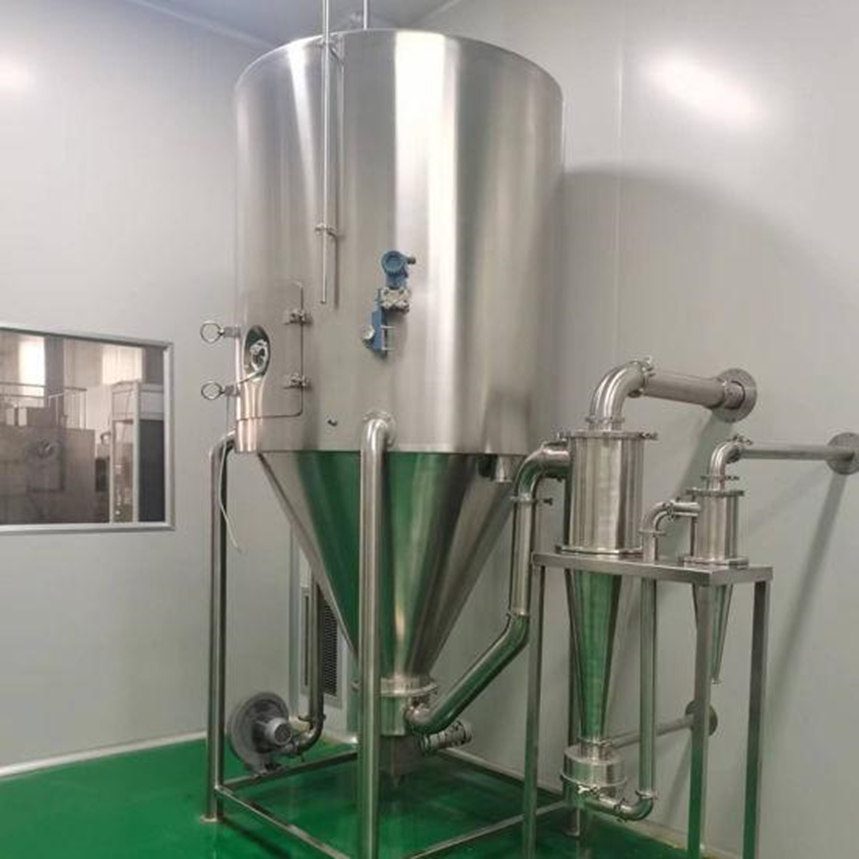
Quality strengths
- Fast drying → short thermal exposure for each particle when outlet conditions are controlled
- Direct powder production from liquid feed
- Scalable continuous output for industrial powder brands
- Particle size can be influenced by atomisation and slurry formulation (carriers/maltodextrin often used)
Quality risks
| Risk | Control direction |
|---|---|
| High outlet temperature browning | Optimise solids, inlet/outlet setpoints, residence |
| Aroma stripping | Milder thermal profile; encapsulation strategies in formulation |
| Stickiness / wall deposits | Carriers, chamber design, humidity control |
| Over-dilute feed | Concentrate first — less water to evaporate, less heat duty |
Best when
- Feed is a stable pumpable puree or concentrate
- Commercial product is powder
- Capacity and continuous operation are priorities
- Formulation allows carriers if needed for glass transition / stickiness control
3. Belt (Band / Conveyor) Drying and Fruit Powder Quality
How it works
Fruit pieces, flakes or spread purees move on a mesh belt through multi-zone heated air. Dry product may be sold as flakes or milled to powder.
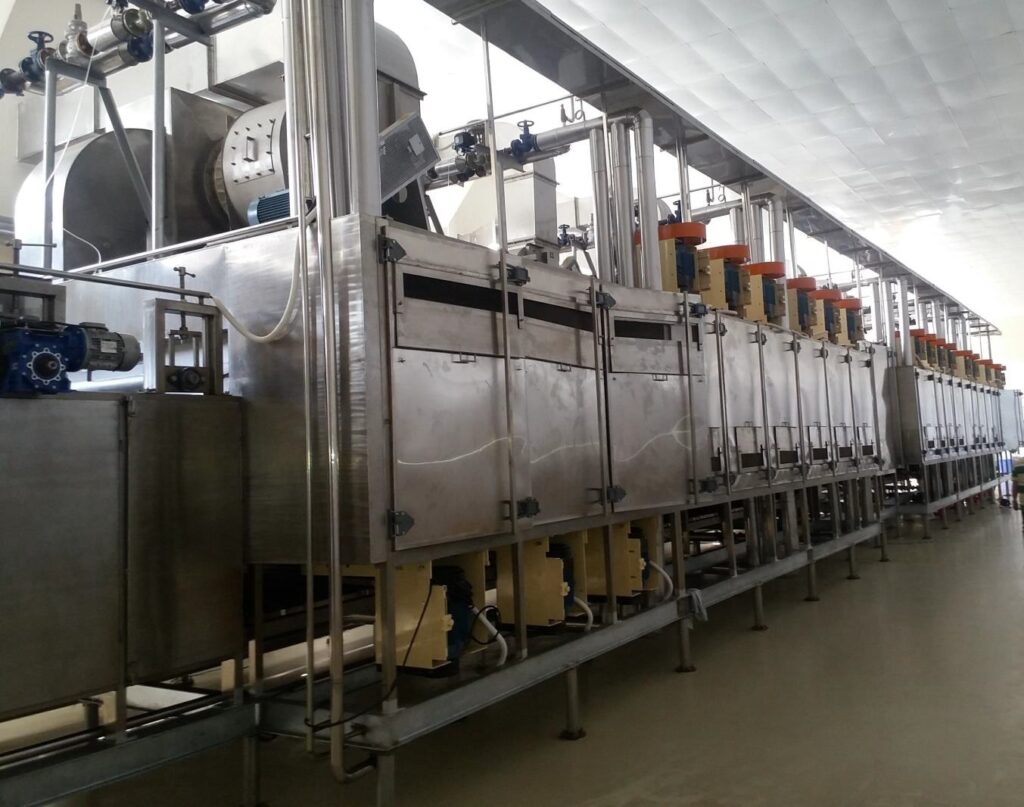
Quality strengths
- Independent zone temperatures — aggressive early moisture removal, cooler finish for colour
- Gentle mechanical handling (no atomisation shear)
- Excellent for slices and pieces that spray drying cannot accept
- Transparent process control for colour-critical fruits
Quality risks
| Risk | Control direction |
|---|---|
| Uneven moisture | Uniform spreading and slice thickness |
| Long residence if overloaded | Correct belt area and bed depth |
| Milling damage after drying | Mill settings; don’t over-dry before milling |
| Case-hardening | Balanced zone profile |
Best when
- Product starts as pieces or layered puree
- Flake appearance or post-mill powder is acceptable
- Multi-zone colour protection is a selling point
- Spray stickiness or carrier limits are a concern
4. Refractance Window Drying and Fruit Powder Quality
How it works (process concept)
A thin film of puree is dried on a transparent plastic conveyor in contact with warm water beneath. Infrared energy transfers through the “window” while product temperatures remain relatively low compared with many hot-air systems. Dry product is typically flaked and can be milled to powder.
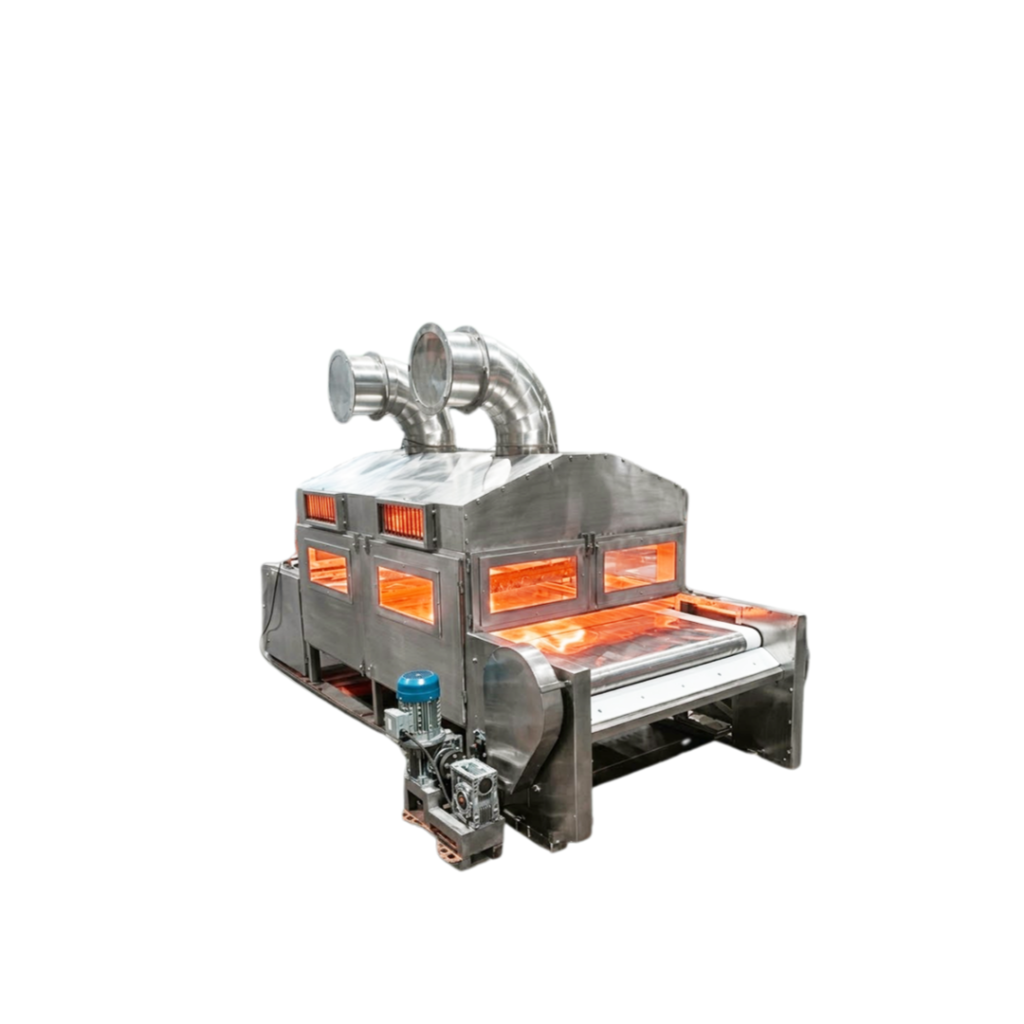
Quality strengths
- Low product temperature profile → strong reputation for colour and nutrient retention on sensitive purees
- Suitable for high-value fruit and vegetable purees
- Continuous thin-film operation (equipment-specific designs)
Practical limits buyers must weigh
| Limit | Implication |
|---|---|
| Capacity per footprint | May need multiple modules for large tonnages |
| Feed must form a controlled thin film | Not for whole slices without pureeing |
| Capital and specialised supply | Different cost structure vs standard belt/spray |
| Still requires residual moisture discipline | Low temperature ≠ optional moisture control |
Best when
- Puree route is fixed
- Maximum colour/bioactive retention justifies technology choice
- Capacity and budget align with thin-film systems
Note: Refractance Window is a specialised thin-film drying category. Buyers should evaluate it on pilot data for their fruit, alongside spray and belt options.
5. Side-by-Side Comparison for Buyers
| Criterion | Spray dryer | Belt / band dryer | Refractance Window-type |
|---|---|---|---|
| Feed form | Pumpable puree/concentrate | Pieces, flakes, layered puree | Thin puree film |
| Typical product | Powder | Flakes or milled powder | Flakes / milled powder |
| Thermal severity (relative) | Medium–high if poorly set; can be moderated | Controllable via zones | Generally low product T |
| Colour retention potential | Good if optimised; formulation helps | Strong with cool finish zones | Often excellent on purees |
| Carriers often needed? | Frequently for sticky fruits | Less dependent on carriers for pieces | Formulation still product-specific |
| Industrial capacity | Very high possible | High with sufficient belt area | Scale by module/line design |
| Stickiness management | Critical design issue | Bed/zone management | Film and residence management |
6. Problem–Solution Map (Fruit Powder Quality)
| Quality problem | Likely drying-related cause | Direction |
|---|---|---|
| Brown powder | High product temperature; long hot finish | Lower finish T; RW or optimised belt/spray profile |
| Flat aroma | Volatile loss | Milder thermal dose; faster dry at safe T |
| Caking in storage | High residual moisture; humid packing | Moisture target + barrier packaging |
| Poor solubility | Particle structure / overheating | Adjust atomisation (spray) or mill settings (belt/RW flakes) |
| High cost per kg powder | Dilute feed to spray dryer | Concentrate upstream |
| Capacity shortfall | Undersized evaporation area/time | Peak-load redesign |
7. How to Choose a Route for Your Fruit
| Your situation | Lean toward |
|---|---|
| Industrial powder from concentrate, high t/h | Spray drying |
| Slices/flakes brand, or mill-after-dry powder | Belt / band drying |
| Premium puree powder, colour is the product story | Evaluate Refractance Window-type thin-film drying |
| Extreme stickiness without wanting high carriers | Belt flakes or RW; spray needs formulation work |
| Mixed product portfolio | Multi-technology plant or flexible belt + separate spray |
Always pilot your puree or slices. Fruit sugars and glass transition behaviour differ widely (e.g. banana vs berry vs mango).
8. Shared Rules That Improve Quality on Any Dryer
- Define maximum product temperature, not only air temperature
- Set residual moisture to the commercial specification — do not over-dry
- Improve upstream solids (concentrate, dewater) before thermal drying
- Cool before packing; use moisture-barrier packaging
- Control oxidation when relevant (nitrogen, packaging)
- Validate colour and sensory with production-scale trials
9. RFQ Checklist for Fruit Powder Projects
- Fruit type and product form (powder, flakes)
- Feed form — puree solids %, slices, concentrate
- Target residual moisture
- Colour / sensory / bioactive priorities
- Max product temperature if known
- Capacity kg dry powder per hour (peak)
- Carrier policy (allowed / restricted)
- Hygiene (SS, cleanability)
- Heat source and utilities
- Willingness to pilot
10. How GTI Dryers Supports Fruit Powder Quality Goals
GTI Dryers designs continuous multi-zone belt/band dryers and spray-related drying solutions for food and heat-sensitive products.
For fruit powder projects we:
- Separate puree-to-powder (spray) routes from piece/flake (belt) routes
- Engineer multi-zone belt profiles aimed at colour and moisture uniformity
- Discuss spray drying only when feed is truly pumpable and powder morphology is required
- Help buyers frame pilot criteria when specialised low-temperature thin-film (RW-type) options are under evaluation
- Document assumptions on capacity and residual moisture
Geographic Note
Fruit powder production for domestic and export markets is growing across India, Southeast Asia, Latin America and Africa. Ambient humidity after drying makes packaging design part of quality. Local belt and spray engineering support helps seasonal fruit campaigns run without colour-destroying temperature shortcuts.
Frequently Asked Questions
Which dryer gives the best fruit powder quality?
The one that matches feed form and keeps product temperature within limits for that fruit. RW-type thin-film systems are often strong on puree colour; optimised spray and multi-zone belt systems also produce excellent powders when correctly engineered.
Can belt-dried fruit become powder?
Yes. Dry flakes or chips are milled and sieved. Many commercial powders use this route.
Is spray drying always bad for colour?
No. Poorly controlled spray drying damages colour; well-optimised spray lines with proper solids and outlet conditions produce high-quality powders at scale.
What residual moisture should fruit powder have?
Follow your product specification and packaging system. Put the target in the RFQ.
What should I send GTI?
Fruit type, puree vs pieces, target product form, capacity, colour priorities and residual moisture target.
Next Step
If fruit powder colour, aroma or caking is driving customer complaints — or you are selecting between refractance window, spray and belt drying — share your feed form and quality targets. GTI will help map a practical drying route and belt or spray system concept based on process data.
Request a fruit powder drying route assessment with your process data.
Contact the GTI Technical Team:
Website: gtidryers.com
Email: mktg@gtidryers.com
Phone / WhatsApp: +91 9330077417