
In poultry feed mills, pellet durability and storage stability decide how much product arrives intact at the farm — and how long it stays safe in bins. Presses and dies set pellet shape; moisture and temperature after the press often decide whether pellets survive conveying, bagging and storage.
Industrial dryers and coolers are the process tools that bring pellets to a stable residual moisture and safe handling temperature. This page explains the mechanisms, the equipment options and what feed buyers should specify.
Quick answer: Hot, moist pellets from the press are mechanically weak and prone to mould and caking. Controlled drying and cooling lower residual moisture and product temperature, which improves durability index, reduces fines and supports storage stability — when targets match formulation and climate.
1. What “Durability” and “Storage Stability” Mean in Feed Mills
| Term | Practical meaning |
|---|---|
| Pellet durability | Resistance to breakage and fines during handling (often checked with a durability tester / PDI-type method) |
| Fines % | Broken material that hurts feed conversion perception and causes customer complaints |
| Storage stability | Resistance to mould, caking, nutrient loss and heating in silos/bags over time |
| Residual moisture | Water left in the pellet — central to both durability and microbial risk |
| Product temperature at packing | Hot pellets sweat in bags and cake more readily |
Durability is not only a press problem. It is a press + conditioning + drying/cooling + handling system result.
2. Why Moisture and Temperature Break Pellets
After the pellet press
Pellets typically leave the die hot and at a moisture level influenced by mash moisture, steam conditioning and friction. If they are conveyed or bagged in that state:
- Structure is still soft → abrasion creates fines
- Moisture migrates in bags → surface stickiness and caking
- Warm + moist conditions favour mould growth in storage
- Temperature gradients in bins cause condensation risk
What drying/cooling changes
| Controlled variable | Effect on pellets |
|---|---|
| Lower residual moisture (to target) | Stronger physical matrix; less microbial water activity risk |
| Lower product temperature | Less sweating in packaging; better bag and bin behaviour |
| More uniform moisture | Fewer soft cores that collapse in handling |
| Stable process setpoints | Consistent PDI and fewer customer returns |
Important: Over-drying can also hurt — pellets may become brittle, energy cost rises, and some formulations lose quality. Target the specification band, not the lowest moisture imaginable.
3. Where Industrial Dryers and Coolers Sit in the Poultry Feed Line
Typical flow:
Text
Dosing → Grinding → Mixing → Conditioning → Pelleting
        ↓
Dryer and/or cooler (horizontal cooler, counterflow cooler, fluid bed cooler/dryer)
        ↓
Screening (fines return) → Coating (if any) → Storage / bagging
Depending on formulation and climate, plants use:
- Cooler only (when moisture is already near target after press)
- Dryer + cooler (when extra moisture must be removed for durability and storage)
- Combined conditioning dryer-cooler concepts (equipment-specific)
Poultry feed is sensitive to heat damage of nutrients and enzymes if product temperature or residence time is excessive — another reason for controlled, not aggressive, thermal treatment.
4. Equipment Options That Affect Durability and Stability
Counterflow / horizontal pellet coolers
- Primary job: Reduce pellet temperature with ambient or conditioned air
- Moisture effect: Some moisture leaves with exhaust air (limited “drying”)
- Durability link: Cool, handleable pellets generate fewer fines than hot soft pellets
Dedicated pellet dryers / dryer-coolers
- Primary job: Remove additional moisture when press discharge moisture is too high for storage
- Durability link: Brings residual moisture into the band where pellets harden properly
- Design focus: Gentle air temperatures, even bed or column flow, fines management
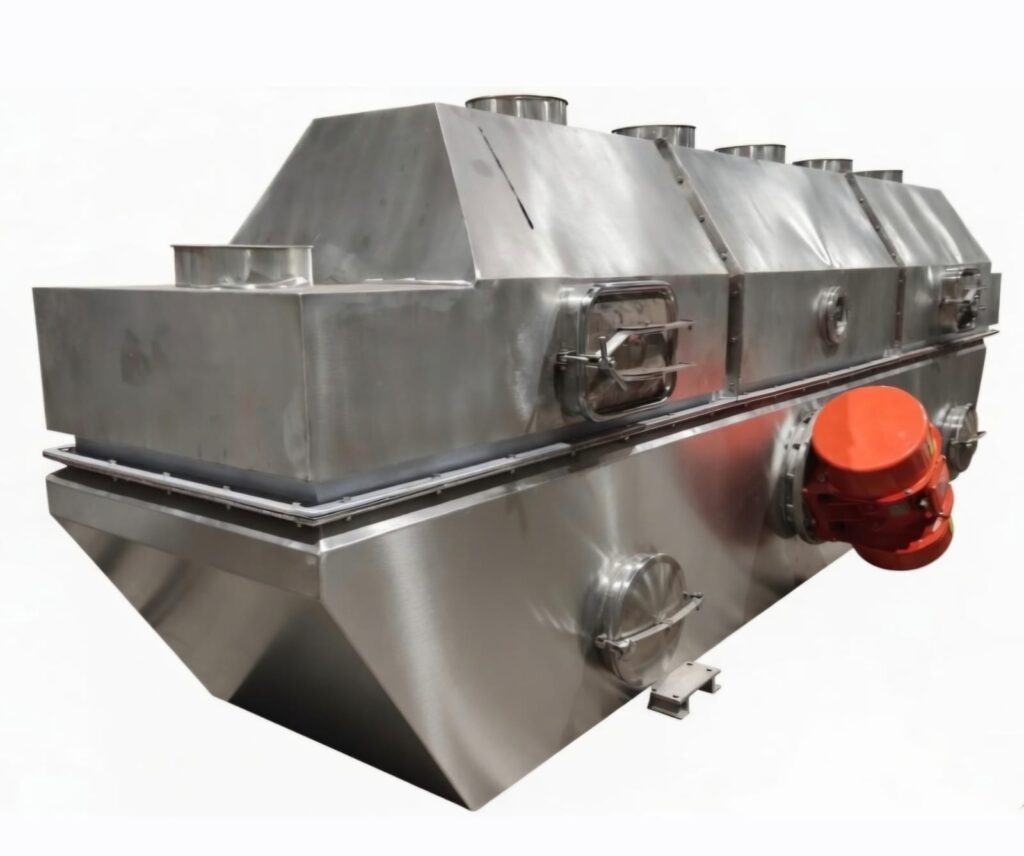
Fluid bed coolers / conditioners
- Role: Uniform gas–solid contact for cooling and light moisture polish on granules/pellets that fluidise suitably
- Watch: Attrition — velocity must protect pellet surface
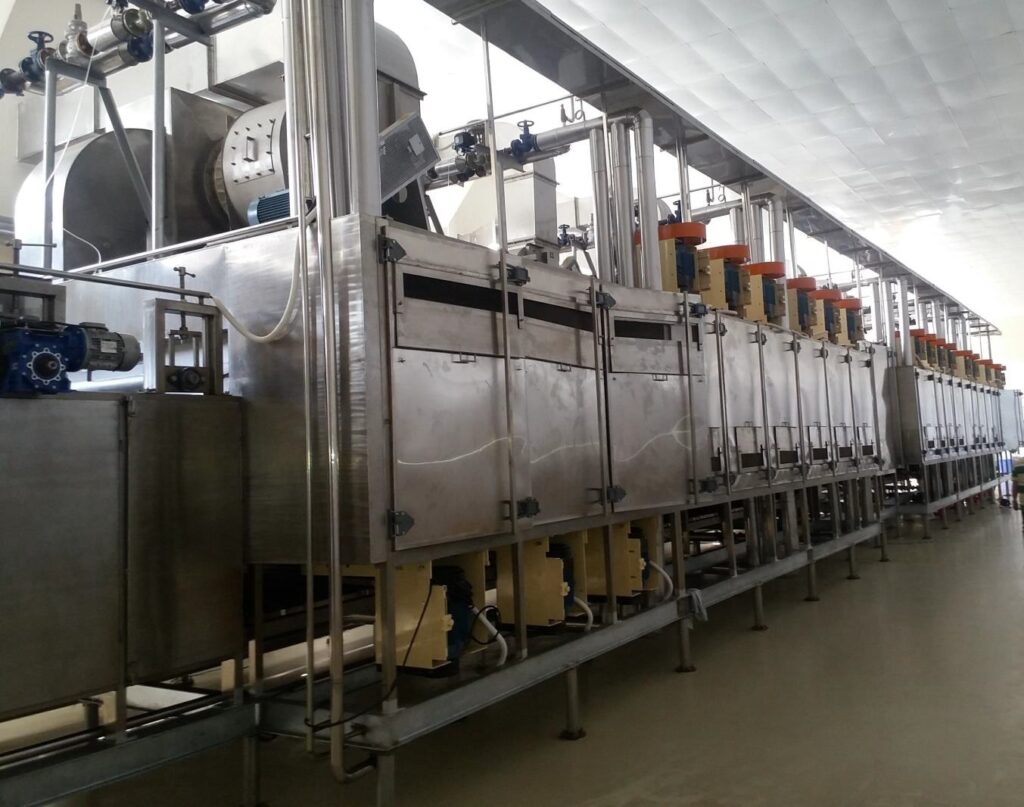
Belt / conveyor dryers (selected feed duties)
- Used where product form and capacity fit through-circulation drying; more common in specialty or non-standard feeds than classic high-volume pellet columns
Buyer takeaway: Nameplate “cooler” capacity is not the same as a validated moisture-removal duty. If storage mould is the issue, verify residual moisture capability, not only outlet temperature.
5. Problem–Solution Map
| Problem | Likely cause | Dryer/cooler direction |
|---|---|---|
| Low durability / high fines | Hot soft pellets; high moisture; rough handling | Adequate cooling; moisture to target; screen fines return |
| Mould in storage | Residual moisture high; warm packing; humid air ingress | Controlled drying to spec; cool before bin/bag |
| Caking in silos | Moisture + temperature + pressure | Outlet moisture & temperature windows; bin design |
| Nutrient / enzyme complaints | Excessive thermal history | Lower product temperature; shorter aggressive exposure |
| Unstable quality between shifts | Ambient air swings on cooler | Air conditioning strategy in hot-humid climates |
| Energy waste | Over-drying | Enforce moisture band; maintain seals and airflow balance |
6. Climate and Poultry Feed Mills
In humid regions, ambient air coolers remove less moisture and may even risk surface re-wetting if not engineered carefully. Buyers should state:
- Design ambient dry-bulb and humidity
- Peak production rate in worst climate months
- Whether chilled or dehumidified air is available
Storage stability problems that appear only in monsoon months are often cooler/dryer ambient design problems, not formulation alone.
7. How to Specify Drying/Cooling for Durability Outcomes
| Specification item | Why it matters |
|---|---|
| Pellet diameter and formulation type (broiler, layer, etc.) | Airflow and residence behaviour |
| Press discharge moisture range | Defines drying load |
| Target residual moisture band | Durability + storage |
| Target product temperature to packing/bin | Caking and bag quality |
| Capacity t/h continuous and peak | Sizing |
| Durability test method used on site | Aligns success criteria |
| Fines return philosophy | System yield |
| Heat source / air heating need | If true drying duty exists |
| Hygiene and cleaning access | Feed safety |
8. Integration with Screening and Coating
- Screening: Removes fines that would otherwise lower measured durability in the bag; fines usually return to the mixer/press circuit
- Fat / enzyme coating: Often applied after cooling so additives are not heat-damaged and pellets are firm enough to coat evenly
A dryer/cooler project should define the interface temperature to coating and storage.
9. What Industrial Dryers Do Not Fix Alone
- Wrong grind size or poor conditioning steam quality
- Worn dies and incorrect press settings
- Formulation lacking binding capability
- Leaking roofs, wet bins, or poor bag barriers
Thermal equipment stabilises moisture and temperature. It cannot replace press discipline or storage hygiene.
10. RFQ Checklist for Feed Mill Buyers
- Species line — poultry feed pellet type
- t/h pellet rate (peak)
- Pellet size
- Moisture after press (range)
- Target moisture and temperature after cooler/dryer
- Ambient design conditions
- Durability issue description (fines %, customer complaints, mould)
- Space and layout constraints
- Prefer cooler-only vs dryer-cooler
- Scope: fans, ducts, cyclones/filters, controls
11. How GTI Dryers Supports Feed Pellet Drying & Cooling Duties
GTI Dryers designs continuous drying and thermal processing systems, including fluid bed and other industrial configurations used for solids cooling, conditioning and moisture control in chemical and agro-related industries.
For poultry feed pellet projects we:
- Clarify whether the duty is primarily cooling, moisture removal, or both
- Size from real press discharge moisture and peak t/h
- Discuss outlet temperature/moisture windows that support durability and storage
- Integrate dust separation and practical control setpoints
- Document assumptions so feed mill comparisons are fair
Geographic Note
Poultry feed mills across India and other warm-humid regions face seasonal durability and mould complaints when coolers are undersized for monsoon air. Design ambient conditions should be written into equipment offers. Local engineering support helps maintain continuous mill uptime.
Frequently Asked Questions
How do industrial dryers improve pellet durability?
By bringing residual moisture and product temperature into a range where pellets harden and resist breakage during handling — supporting higher durability and lower fines when the press and formulation are sound.
Is a pellet cooler enough, or do we need a dryer?
If press discharge moisture is already within the storage band, a well-designed cooler may suffice. If moisture remains high for climate and shelf life, dedicated drying capacity is required.
Can over-drying damage feed pellets?
Yes. Excess heat or very low moisture can increase brittleness and harm heat-sensitive components. Use specification bands.
What residual moisture should poultry pellets have?
Follow your formulation and market specification. Put the target and test method in the RFQ.
What should I send GTI?
Pellet t/h, size, moisture after press, target moisture/temperature, ambient conditions and the main quality complaint (fines, mould, caking).
Next Step
If poultry feed pellets are generating fines, caking or storage mould, review moisture and temperature after the press — not only die settings. Share your line data with GTI for an assessment of industrial drying and cooling options that support durability and storage stability.
Request a poultry feed pellet drying/cooling assessment with your process data.
Contact the GTI Technical Team:
Website: gtidryers.com
Email: mktg@gtidryers.com
Phone / WhatsApp: +91 9330077417