
Rubber wood (rubberwood) sawdust is a valuable residue from plantation timber processing. Before it can be used for wood pellets, particle board, briquettes or biomass fuel, moisture must be reduced to a stable, process-ready level. Drying is usually the bottleneck — and the highest fire-risk step — in the line.
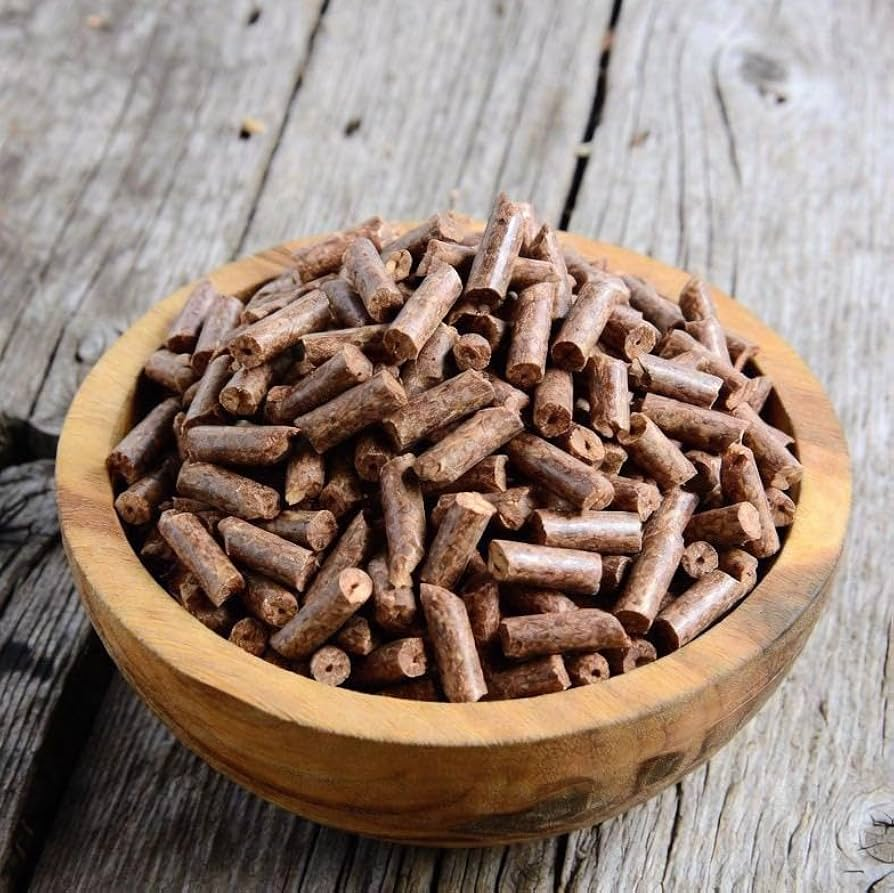
This page is a practical guide for buyers evaluating a rubber wood sawdust dryer manufacturer: target moisture by end use, technology choices, safety checkpoints and what to put in an RFQ.
Quick answer: Rubber wood sawdust is typically dried in continuous rotary dryers (high tonnage) or flash-type systems (finer, dispersible particles). Size the dryer on peak wet sawdust rate and inlet moisture, set outlet moisture for the downstream process, and design for dust and fire control from day one.
1. Why Rubber Wood Sawdust Needs Controlled Drying
| Driver | Impact if ignored |
|---|---|
| High green moisture | Extra fuel in pellets; poor board pressing; mould in storage |
| Variable particle size | Uneven drying; fines overheat while coarse stays wet |
| Combustible dust | Fire and explosion hazard in dryer and ducts |
| Resin / extractive content | Odour, deposits, fouling of heat surfaces (process-dependent) |
| Continuous mill output | Dryer must match sawing/sanding peaks |
Rubber wood is processed widely in Southeast Asia and other plantation regions; the drying physics matches other woody biomass, with plant-specific moisture and particle distributions.
2. Match Outlet Moisture to End Use
| End use | Why moisture target matters |
|---|---|
| Wood pellets | Binding, durability, combustion efficiency, storage stability |
| Particle / MDF-type furnish | Press behaviour, emissions, board quality |
| Briquettes / fuel | Calorific value, smoke, handling |
| Storage before further processing | Mould and spontaneous heating risk |
Do not copy a single “standard %” from another plant without confirming your customer or process specification. Put the numeric target and test method in the RFQ.
3. Feed Characterisation Buyers Must Provide
| Data | Why the manufacturer needs it |
|---|---|
| Inlet moisture range (min / normal / peak) | Evaporation load |
| Particle size distribution (fines vs coarse) | Technology and air velocity |
| Bulk density | Hold-up and capacity |
| Bark / grit / contamination level | Wear and fire load |
| Continuous kg/h or t/h wet sawdust | Sizing basis |
| Heat source available | Furnace, gas, hot air generator, biomass burner integration |
| Final product moisture target | Design outlet |
Sawdust from green rubber wood can be much wetter than dry-mill sanding dust — design on the real stream, not a lab ideal.
4. Dryer Technologies for Rubber Wood Sawdust
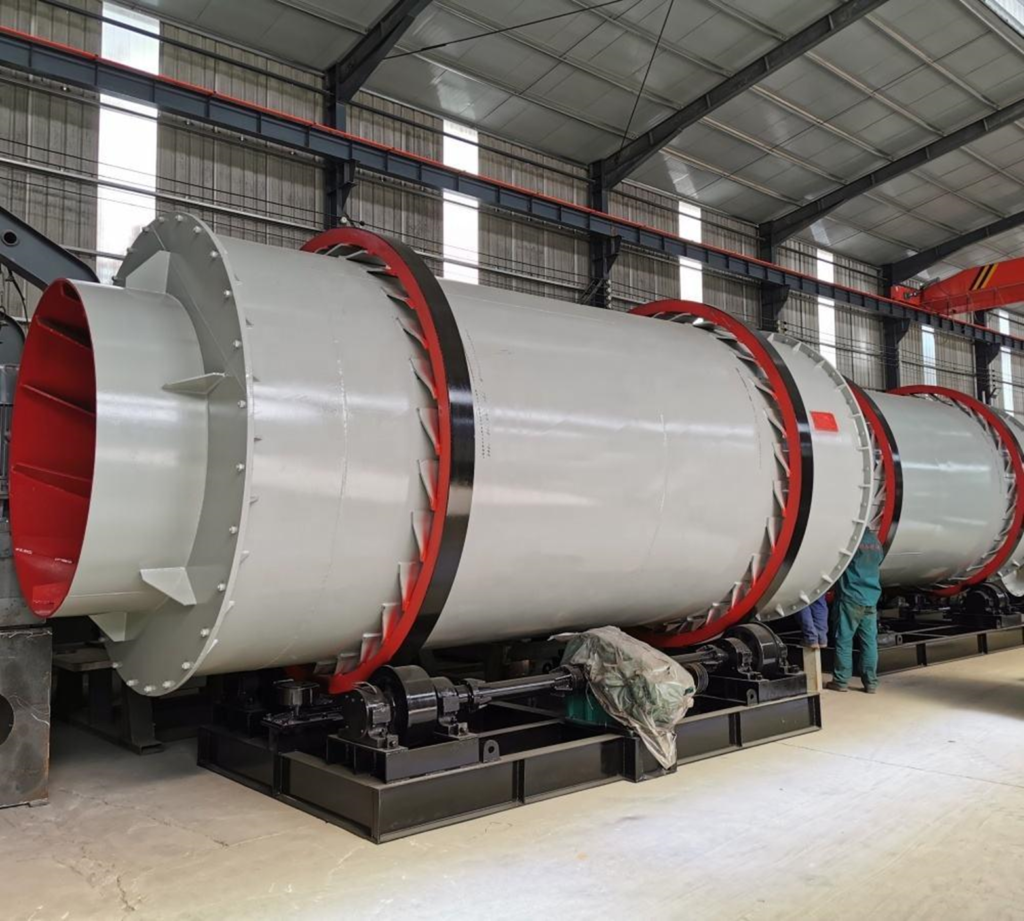
Rotary dryers (most common industrial choice)
- Fit: Medium to high continuous tonnage mixed sawdust
- Strengths: Robust, handles a range of particle sizes, proven on woody biomass
- Design focus: Flight arrangement, co-current flow (common for heat-sensitive biomass control), residence time, discharge moisture control, spark/fire management
- Watch: Fines carryover, drum seals, insulation, and inlet temperature limits to reduce fire risk
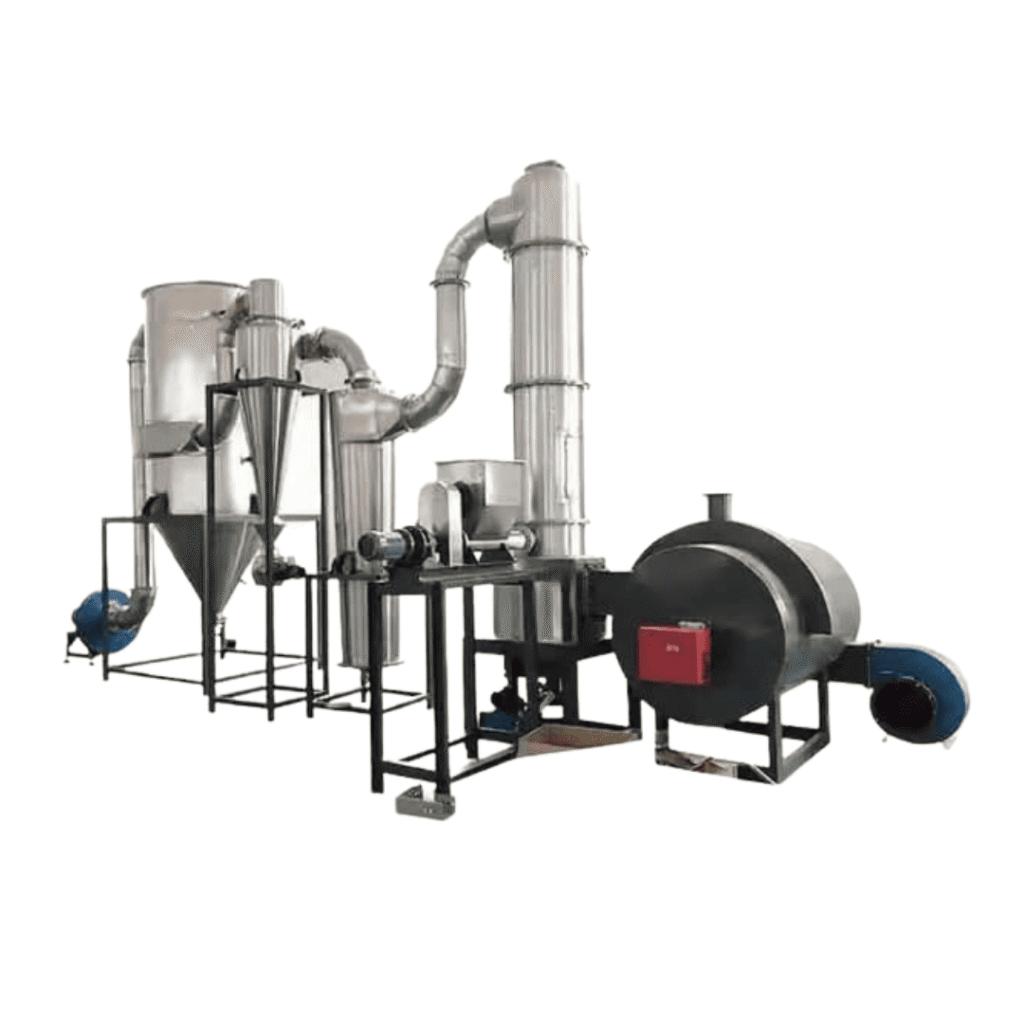
Flash / pneumatic dryers
- Fit: Finer, more uniform, dispersible sawdust with shorter residence need
- Strengths: Fast drying, compact footprint for suitable feeds
- Watch: Particle size consistency; abrasion; high gas volumes; careful temperature control
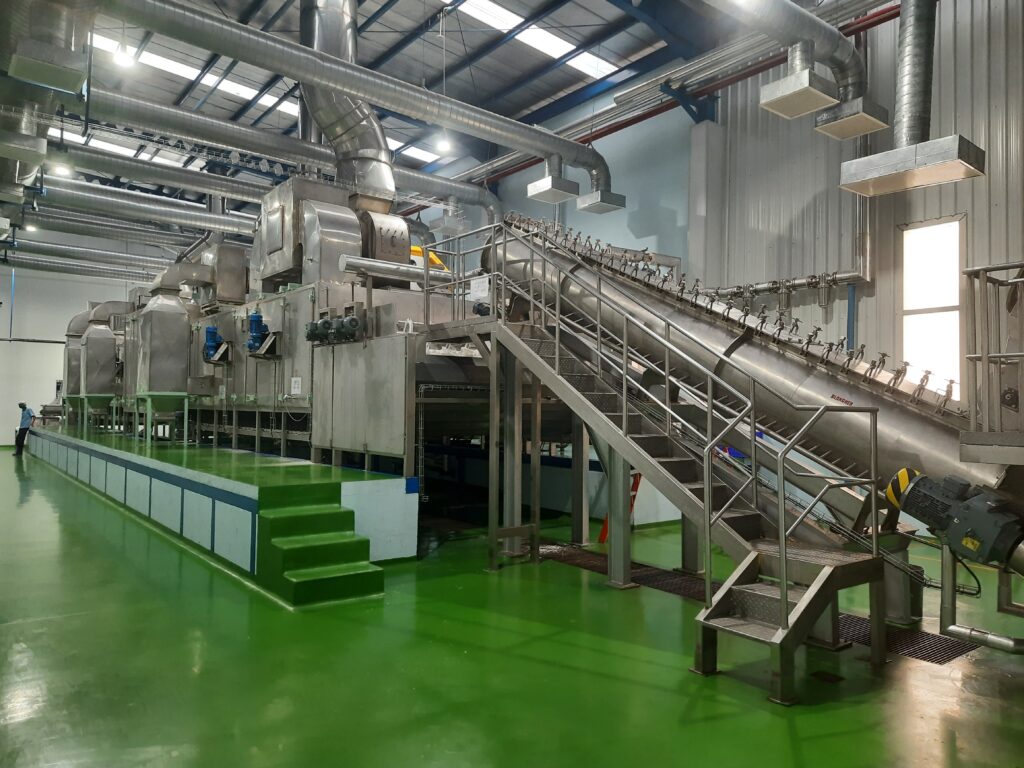
Belt / conveyor dryers
- Fit: Coarser chips or when very gentle, lower-temperature drying is required
- Watch: Fine sawdust may fall through mesh; capacity vs area; fire housekeeping on beds
Hybrid arrangements
- Coarse fraction on one system, fines on another — only when screening economics justify it
Manufacturer guidance: For classic mixed rubber wood sawdust to pellet moisture, rotary is usually the first shortlist; flash is evaluated when the particle size and layout fit.
5. Fire & Explosion Risk — Non-Negotiable Design Topics
Woody dust drying is a known combustible-dust application. Buyers should require discussion of:
| Topic | Practical expectation |
|---|---|
| Inlet temperature limits | Avoid continuous operation in unsafe ranges for the material |
| Detection & suppression concept | Spark detection, deluge/suppression where specified |
| Interlocks | Stop feed/heat on fan failure, high stack temp, etc. |
| Housekeeping access | Clean ducts, cyclones, drop-out points |
| Inerting / oxygen management | Only where process risk assessment requires it |
| Grounding & electrical classification | Per site hazard assessment |
A dryer quote that never mentions fire risk is incomplete for sawdust service.
6. Problem–Solution Map
| Problem | Likely cause | Direction |
|---|---|---|
| Wet sawdust to pellet mill | Undersized evaporation, short residence, peak moisture ignored | Redesign on peak load |
| Scorched or darkened product | Inlet temperature too high, fines overheated | Lower gas temperature; improve mixing |
| Dryer fires | Dust accumulations, hot embers, poor interlocks | Cleaning regime + safety package |
| High fuel cost | Over-drying, leakage, very wet feed | Moisture target discipline; upstream draining/storage practice |
| Unstable pellet quality | Moisture swing hour to hour | Better feed blending; dryer control loop |
| Excessive exhaust particulate | Weak cyclone/bag design | Upgrade separation |
7. Sizing Logic
Evaporation load (wet basis):W=F×100−MfMi−Mf
- W = kg water/h
- F = wet sawdust kg/h
- Mi = inlet moisture %
- Mf = outlet moisture %
Example structure (illustrative only): If wet feed rate and moisture both rise in monsoon or peak sawing shifts, W rises sharply — that peak sizes the drum, furnace and fans.
8. RFQ Checklist for Rubber Wood Sawdust Dryer Manufacturers
- Species / source — rubber wood sawdust (green mill vs dry mill)
- Inlet moisture range
- Target outlet moisture + method
- Capacity continuous and peak (t/h wet or dry — state basis)
- Particle size distribution
- End use — pellets, board, fuel
- Heat source — biomass furnace, gas, coal, hot air generator
- Emission limits (dust, opacity)
- Fire safety requirements and standards expected
- Layout limits and integration with hammer mill / pellet mill
- Installation and commissioning scope
9. How to Evaluate Manufacturers
| Check | Positive signal |
|---|---|
| Asks end use and moisture band | Process-led design |
| Designs on peak wet-basis load | Fewer capacity shortfalls |
| Discusses fire/dust safety | Serious biomass experience |
| Includes cyclones / filtration in system talk | Complete line, not only a drum |
| States assumptions clearly | Comparable bids |
| References woody biomass / sawdust duties | Relevant mechanical practice |
Red flags: Agricultural dryer drawings reused without dust-fire discussion; capacity in “t/h” with no moisture basis; no exhaust treatment in scope dialogue.
10. Energy Levers That Matter
- Avoid over-drying past the process target
- Improve yard drainage and covered storage to cut inlet moisture peaks
- Maintain flights, seals and insulation
- Control excess air
- Consider waste-wood furnace integration only with proper combustion and spark control
11. How GTI Dryers Supports Rubber Wood Sawdust Projects
GTI Dryers designs continuous industrial dryers for biomass and bulk solids, including rotary and flash-type configurations used for sawdust and wood-residue duties.
For rubber wood sawdust we focus on:
- Evaporation load from real inlet moisture and peak rate
- Technology fit (rotary vs flash) from particle size and capacity
- Integration of exhaust separation and practical safety interlocks
- Clear design basis for pellet, board or fuel moisture targets
Geographic Note
Rubber wood processing is significant in India (e.g. Kerala and other rubber-growing regions), Vietnam, Thailand, Indonesia, Malaysia and other plantation economies. Ambient humidity and monsoon moisture spikes should be built into dryer capacity. Local fabrication supports installation and service for continuous biomass lines; emission and safety rules remain site-specific.
Frequently Asked Questions
What dryer is best for rubber wood sawdust?
Continuous rotary dryers are the usual industrial choice for mixed sawdust at scale. Flash dryers suit finer, uniform, dispersible fractions.
What moisture should sawdust be dried to?
Use the pellet mill, board plant or fuel specification you must meet. State the number in the RFQ; do not rely on a generic internet value.
Is sawdust drying a fire hazard?
Yes. Combustible dust and hot air systems require deliberate design, interlocks and housekeeping — not optional extras.
Can we use a belt dryer?
Possible for coarser material or lower-temperature duties; fine sawdust often prefers rotary or flash for capacity and containment.
What should I send GTI?
Inlet moisture range, target moisture, t/h capacity, particle size, end use and heat source.
Next Step
If you need a rubber wood sawdust dryer manufacturer for pellet, board or biomass fuel production, share your moisture and capacity data. GTI will recommend a rotary or flash drying approach with a clear evaporation basis and system scope discussion.
Request a rubber wood sawdust drying assessment with your process data.
Contact the GTI Technical Team:
Website: gtidryers.com
Email: mktg@gtidryers.com
Phone / WhatsApp: +91 9330077417