
A modern detergent powder line is more than a spray-drying tower. Powder moisture, bulk density, solubility, dust and packaging behaviour are set by the combined system:

- Spray-drying tower — slurry to hot powder
- Fluid bed cooler / after-dryer — finish moisture and temperature
- Fines recycle — return of fine particles into slurry or tower circuit for yield and particle build-up
If your project scope includes a powder line, specify these blocks together. Buying a tower without after-treatment and recycle logic is a common source of off-spec bulk density, high dust and unstable moisture.
Quick answer: The spray tower removes the bulk of water from detergent slurry. A fluid bed cooler/after-dryer brings powder to target residual moisture and safe packing temperature. Fines recycle improves yield and helps control particle size distribution. Design the three as one powder loop.
1. Why Detergent Powder Needs an Integrated Line
| Quality / plant goal | Role of integrated design |
|---|---|
| Target residual moisture | Tower alone often leaves powder hot and not fully on final moisture band |
| Bulk density | Particle structure from spray + attrition/agglomeration in handling + fines policy |
| Low dust in packing | Fines capture and recycle; cooler stabilisation |
| Solubility / bead integrity | Avoid over-drying and mechanical destruction of hollow beads |
| Energy use | After-dryer duty should be small if tower is well controlled |
| Yield | Fines not lost to exhaust or scrap |
2. Block 1 — Spray-Drying Tower
Function
Detergent slurry (surfactants, builders, fillers, actives as formulated) is atomised into a hot-air tower. Droplets dry into powder beads while falling.
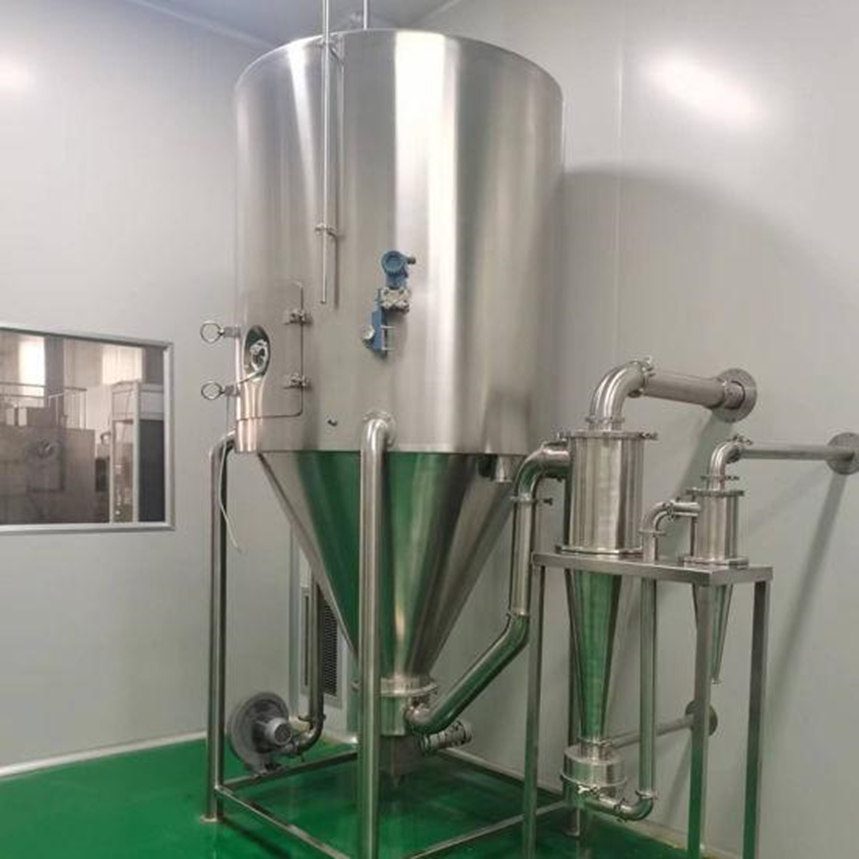
Buyer control points
| Parameter | Why it matters |
|---|---|
| Slurry solids % and rheology | Evaporation load, atomisation, throughput |
| Atomiser type (nozzles / rotary) | Particle size, density, reliability |
| Inlet air temperature & distribution | Capacity vs thermal damage / deposits |
| Tower residence time & geometry | Moisture uniformity, wall buildup |
| Exhaust powder separation | Primary cyclones / filters — yield and emissions |
Typical problems originating in the tower
- Wall deposits and lumps from unstable slurry or wrong temperatures
- Hollow beads too fragile → dust downstream
- High exhaust losses if separation is weak
- Moisture still above final packing target at tower discharge
3. Block 2 — Fluid Bed Cooler / After-Dryer
Function
Powder leaving the tower is usually hot and may still be slightly above final moisture. A fluid bed stage:
- After-dries gently to residual moisture specification
- Cools powder for conveying, sieving, perfume addition (if applicable) and packing
- Can provide limited surface conditioning depending on design
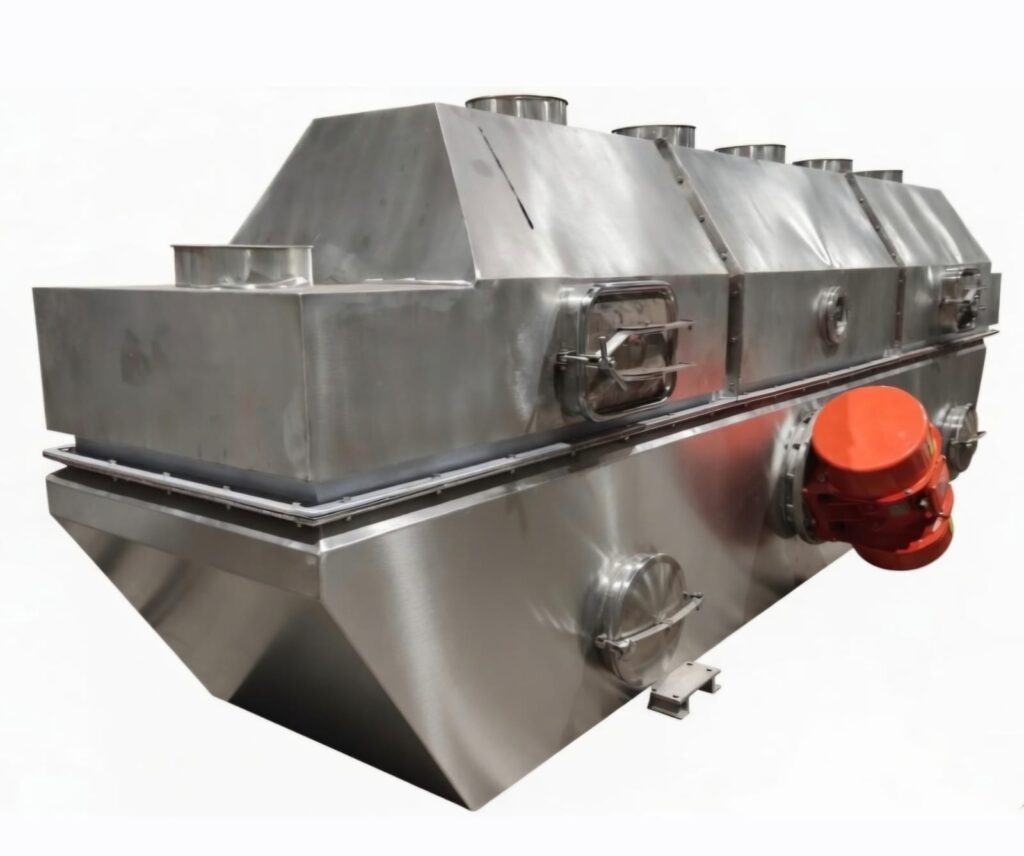
Why not skip it?
| Without fluid bed after-stage | With properly designed cooler/after-dryer |
|---|---|
| Packing hot powder → caking, bag issues | Powder enters packing near target temperature |
| Moisture correction forced in tower with extra heat | Tower optimised for bulk evaporation; finish is controlled |
| More breakage if tower is run aggressively | Gentler split of duty |
Design notes for buyers
- Airflow and perforated plate design for detergent bead fluidization without excessive attrition
- Separate drying zone and cooling zone when both duties are required
- Filter / cyclone on fluid bed exhaust tied into the same powder recovery philosophy
- Easy cleaning access for formulation changeovers
4. Block 3 — Fines Recycle
What counts as fines?
Particles below the useful product cut — from tower exhaust, fluid bed exhaust, screening, and sometimes bag-filter returns.
Why recycle fines?
| Benefit | Explanation |
|---|---|
| Yield | Detergent solids are valuable; exhaust fines are product |
| Particle build-up | Controlled return of fines into slurry or spray zone can support denser/more robust particles (process-specific) |
| Dust reduction in finished product | Fines managed in a loop rather than left in packed powder |
| Process stability | Steady fines balance avoids random quality swings |
Recycle path options (conceptual)
- Fines → slurry tank (most common integrated approach)
- Fines → tower feed zone (design-specific)
- Fines → agglomeration / post-treatment unit if the plant has one
Buyer caution: Uncontrolled fines recycle can overload slurry viscosity, foul atomisers or swing bulk density. Metered recycle with measurement is part of good design.
5. Process Flow (Buyer-Level)
Text
Slurry preparation → Filtration/homogenising (as required)
        ↓
Spray-drying tower (bulk moisture removal)
        ↓
Fluid bed after-dryer / cooler (final moisture + temperature)
        ↓
Screening → Product to post-treatment / packing
        ↓
Fines from cyclones/filters/screens → metered recycle to slurry (or designated return point)
Post-additions (enzymes, perfume, specialities) often occur after cooling — heat-sensitive additives should not see tower temperatures.
6. Common Line Problems and Practical Fixes
| Problem | Likely cause | Direction |
|---|---|---|
| High residual moisture in bags | Weak after-dry duty; wet slurry; overloaded tower | Balance tower vs fluid bed; check slurry solids |
| Caking in storage | Hot packing; moisture variation; fines excess | Cooler performance; tighten moisture band; fines policy |
| Too much dust | Fragile beads; excess attrition in FB; poor recycle balance | Softer fluidization; review atomisation; improve recycle |
| Unstable bulk density | Variable slurry solids, fines recycle swings, air temperatures | Meter recycle; stabilise slurry; control recipes |
| Tower wall buildup | Feed instability, local wet deposits, temperature profile | Slurry quality; air distribution; cleaning SOP |
| High energy cost | Low slurry solids; over-drying; leakage; excess air | Solids maximisation; moisture targets; maintenance |
7. What to Specify When Powder Line Is in Scope
Do not RFQ “one spray dryer” only. Include:
- Powder capacity (t/day or kg/h) at stated residual moisture
- Slurry solids % range and known formulation constraints
- Target bulk density band (if specified by brand)
- Target residual moisture and packing temperature
- Tower + fluid bed cooler/after-dryer as integrated scope
- Fines recycle philosophy and metering
- Exhaust emission limits and powder recovery efficiency
- Cleaning / changeover requirements (if multiple brands)
- Utilities: fuel/gas/steam, power, compressed air
- Downstream: screens, conveying, post-blender, packing
8. Scope Split That Avoids Project Disputes
| Package | Typical contents |
|---|---|
| Wet end | Slurry tanks, pumps, filtration, atomiser feed |
| Spray tower | Chamber, air heater, atomising system, primary cyclones |
| Fluid bed | After-dry/cool zones, fans, ducts, filters |
| Fines loop | Conveying, intermediate bin, metered return |
| Utilities & controls | Combustion/steam, PLC recipes, interlocks |
| Safety | Dust hazard assessment, relief/venting philosophy as applicable |
Ask each bidder what is included vs excluded — especially fines recycle and fluid bed exhaust treatment.
9. How GTI Dryers Supports Detergent Powder Projects
GTI Dryers designs continuous drying and powder-handling related systems, including spray drying stages, fluid bed cooler/after-dryer concepts and integrated process thinking for powder lines.
For detergent powder projects we focus on:
- Matching tower duty with after-dry/cool requirements
- Moisture and temperature targets for packing
- Fines recovery and recycle as a controlled loop
- Clear capacity basis (slurry solids, residual moisture, throughput)
- Practical utilities and maintenance assumptions for continuous FMCG duty
Geographic Note
Detergent powder spray towers operate across India, Middle East, Africa and Asia with different fuel and emission rules. Ambient humidity affects packing and caking risk — cooler and moisture control become more important in humid climates. Local engineering support helps with uptime on continuous consumer-goods lines.
Frequently Asked Questions
Why add a fluid bed after a detergent spray tower?
To finish residual moisture and cool powder so packing and bulk handling stay on specification without over-stressing the tower.
What is fines recycle in detergent powder plants?
Returning fine powder from cyclones, filters and screens into the slurry or process loop to improve yield and help stabilise particle quality.
Can the tower alone meet final moisture?
Sometimes, but many lines achieve better stability by splitting bulk drying (tower) and finish drying/cooling (fluid bed).
What causes high dust in detergent powder?
Fragile beads, excess attrition, weak fines recovery, or unbalanced recycle. Address atomisation, fluid bed velocity and fines loop together.
What should I send GTI?
Target powder rate, slurry solids range, residual moisture, packing temperature, bulk density target if any, and whether fines recycle and fluid bed are in scope.
Next Step
If your project includes a detergent powder spray-drying tower with fluid bed cooler/after-dryer and fines recycle, share capacity and quality targets. GTI can help structure the powder-line drying and cooling concept as an integrated scope rather than isolated machines.
Request a detergent powder line drying assessment with your process data.
Contact the GTI Technical Team:
Website: gtidryers.com
Email: mktg@gtidryers.com
Phone / WhatsApp: +91 9330077417