
Zinc chemicals are not one drying duty. Zinc sulphate and many zinc derivatives are typically crystalline salts or centrifuge cakes. Fine and pharma-grade zinc oxide often comes from wet or precipitated routes that need careful powder drying with tight purity and particle control.
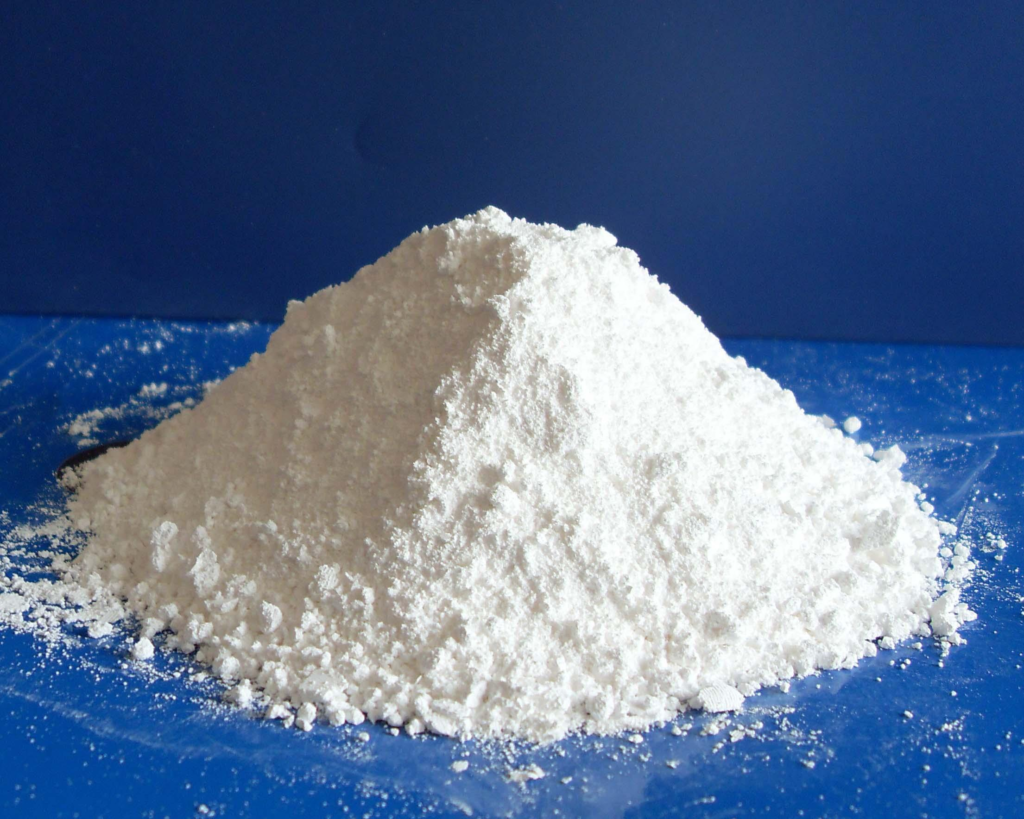
This guide helps buyers choose between rotary or fluid bed dryers for zinc sulphate / derivatives and flash or spray dryers for fine/pharma ZnO — and what to demand from a manufacturer.
Quick answer:
- ZnSO₄ / zinc salt cakes or crystals → evaluate rotary (tonnage) or fluid bed (free-flowing crystals).
- Fine / pharma-grade ZnO → evaluate flash (damp solids/cake) or spray (pumpable slurry) based on feed form.
Never specify a single “zinc dryer” without product identity and feed form.
Part A — Zinc Sulphate & Zinc Derivatives (Rotary / Fluid Bed)
A1. Typical feeds
- Centrifuge or filter cake from crystallisation
- Washed crystals of ZnSO₄ hydrates (heptahydrate and other forms depending on process)
- Related zinc salts and intermediate derivatives in crystalline bulk form
A2. Process goals
| Goal | Practical note |
|---|---|
| Residual moisture on spec | Storage, caking, customer limits |
| Controlled hydrate form (if relevant) | Temperature profile must match product identity |
| Free-flowing crystals | Screening, packing, dissolving performance |
| Corrosion management | Acidic sulphate liquors attack wrong materials |
| Continuous capacity | Match crystalliser output including peaks |
A3. Rotary dryers for zinc sulphate
Best when: high continuous tonnage, robust crystal beds, industrial fertilizer/chemical grades.
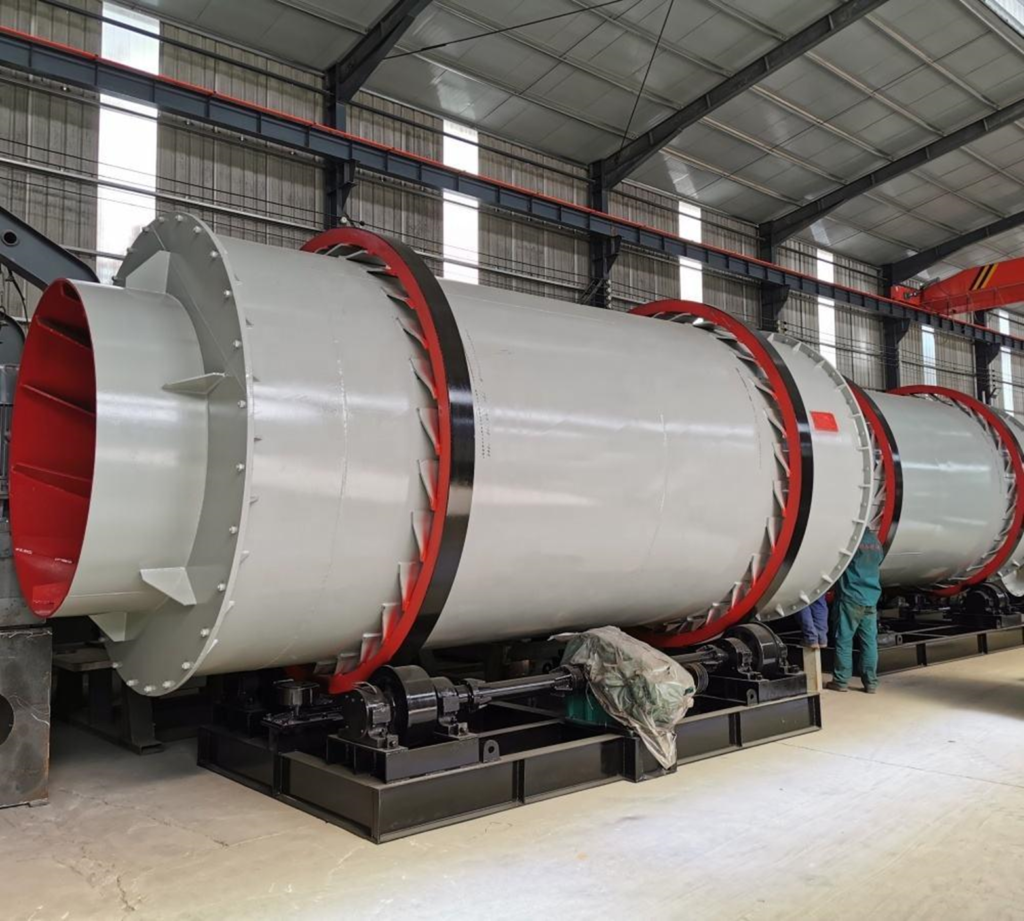
Design focus:
- Flight arrangement and residence time
- Co-current vs counter-current gas flow
- Seal quality and dust pickup
- Materials of construction for wet sulphate service
- Integration with cooler if product is packed warm
Watch-outs: overheating that damages required hydrate form; excess fines; undersizing on optimistic cake moisture.
A4. Fluid bed dryers for zinc sulphate
Best when: crystals are free-flowing and relatively uniform; good moisture uniformity is required.
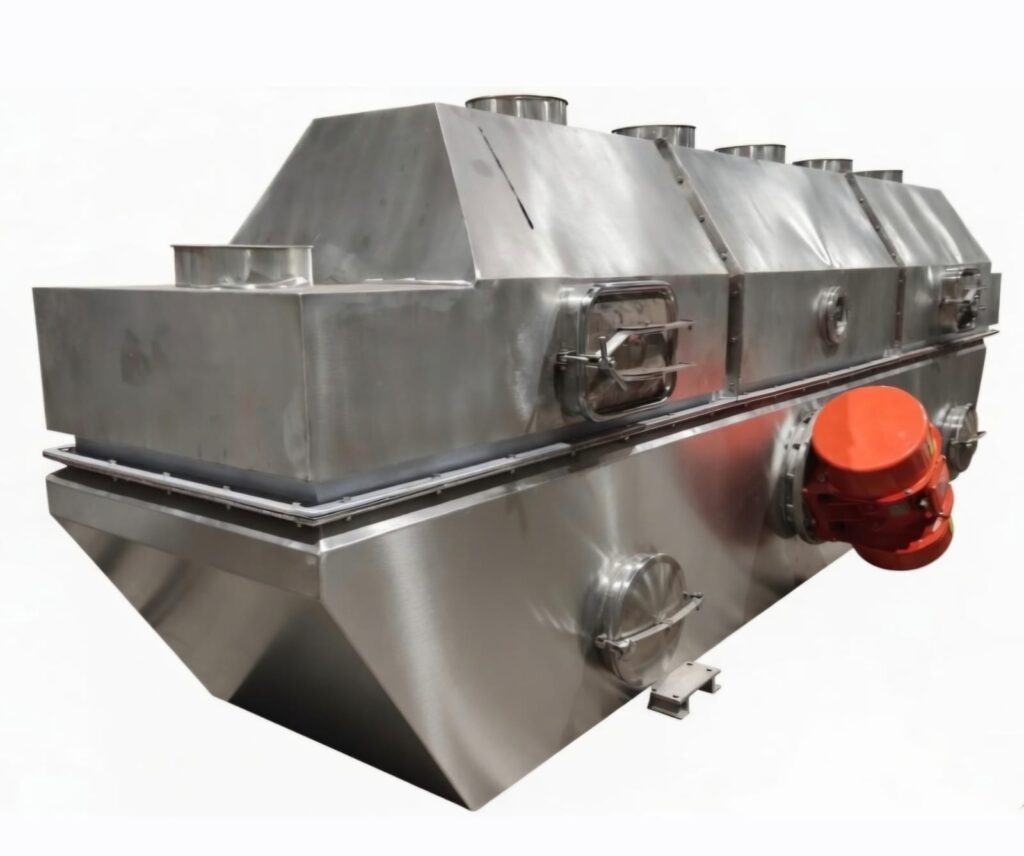
Design focus:
- Fluidization velocity vs elutriation of fines
- Bed temperature control
- Distributor design and possible vibration assistance if mildly cohesive
- Exhaust powder recovery
Watch-outs: sticky high-moisture cake that will not fluidise without conditioning; corrosion in humid sulphate vapour paths.
A5. ZnSO₄ problem map
| Problem | Direction |
|---|---|
| Caking after packing | Residual moisture + humidity — tighten moisture; improve packaging |
| Off-spec hydrate / assay | Temperature-residence review |
| Corrosion | MOC upgrade; condensate management |
| Capacity shortfall | Redesign on peak cake moisture × rate |
Part B — Fine & Pharma-Grade Zinc Oxide (Flash / Spray)
B1. Why ZnO is a different dryer problem
Pharma and fine ZnO grades are judged on:
- Assay and impurity profile
- Particle size / surface area (grade-dependent)
- Residual moisture
- Whiteness / appearance
- Cross-contamination and cleanability
Thermal history and contamination from wear metals or dirty gas paths are commercial risks.
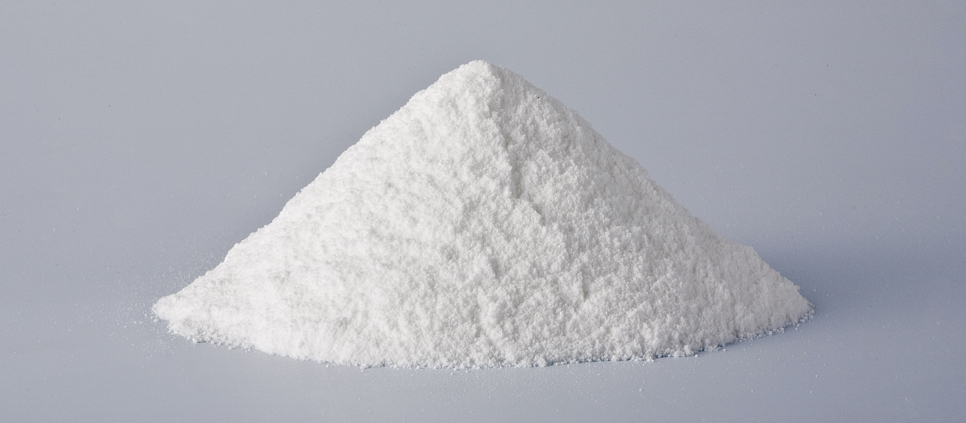
B2. Flash / spin-flash dryers for ZnO
Best when: feed is a damp cake or paste that should not be fully re-slurried.
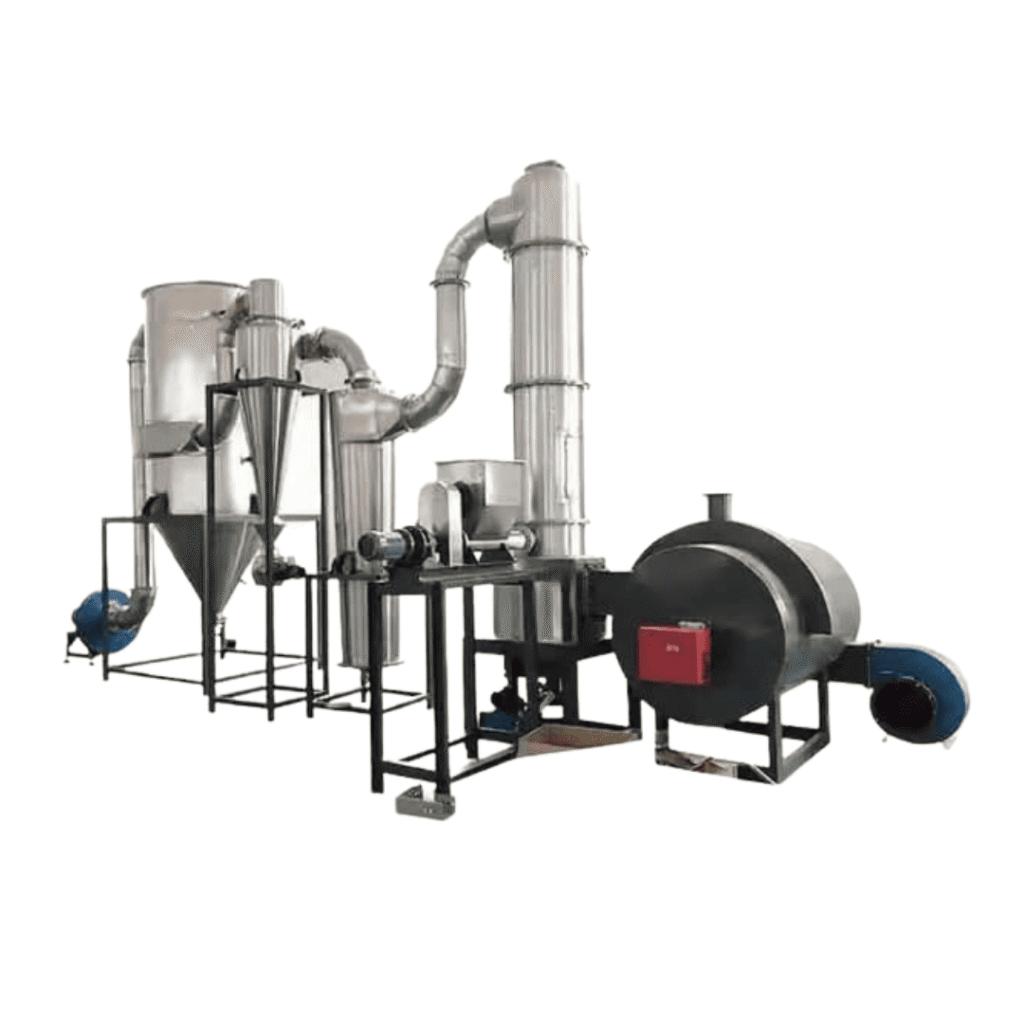
Strengths:
- Continuous cake-to-powder drying
- Short residence time
- Mechanical dispersion of cohesive wet solids
Watch-outs:
- Abrasion and wear particle contamination (critical for pharma)
- Over-dispersion creating excess fines
- Temperature control vs surface chemistry targets
- High-efficiency powder recovery
B3. Spray dryers for ZnO
Best when: feed is a stable pumpable slurry and spray-derived particle formation is required.
Strengths:
- Controlled droplet-to-particle route
- Continuous fine powder production
- Good fit for some purified wet-process oxides
Watch-outs:
- Low solids % → high energy and large chamber
- Nozzle/atomiser wear and metallic contamination risk
- Chamber deposits and cleaning validation for pharma
- Exhaust treatment and product recovery efficiency
B4. Flash vs spray for fine ZnO
| Criterion | Flash / spin-flash | Spray |
|---|---|---|
| Feed | Cake / paste | Pumpable slurry |
| Re-slurry needed? | No | Yes (if starting from cake) |
| Particle formation | Dispersion of existing solids | From droplets |
| Pharma cleanability | Must be designed in | Must be designed in |
| Energy structure | Based on cake moisture | Dominated by slurry water load |
Decision Guide (Zinc Product Family)
| Your product situation | First shortlist |
|---|---|
| ZnSO₄ crystals, high tonnage | Rotary dryer |
| ZnSO₄ free-flowing crystals, uniform PSD | Fluid bed / VFBD |
| Zn derivative sticky cake | Spin-flash or contact evaluation |
| Fine ZnO from filter cake | Flash / spin-flash |
| Fine/pharma ZnO from purified slurry | Spray dryer |
| Pharma ZnO with strict metals limits | Any of above plus wear-metal and MOC control plan |
Shared Engineering Rules
- Feed form first — cake, crystals or slurry
- Peak moisture × peak rate sizes the dryer
- Product temperature limits beat copied “standard” setpoints
- Dust recovery is part of yield for fine ZnO
- Materials & wear are quality issues, not only maintenance issues
- Cleaning regime must match grade (technical vs pharma)
Evaporation load
W=F×100−MfMi−Mf
Use consistent wet-basis moistures and state whether capacity is wet feed or dry product.
RFQ Checklist
Zinc sulphate / derivatives
- Hydrate form / assay target
- Crystal size and cake moisture range
- Residual moisture target
- Capacity peak/normal
- Rotary vs fluid bed preference (or ask for recommendation)
- MOC requirements
- Cooler / packing temperature limits
Fine / pharma zinc oxide
- Feed: slurry solids % or cake moisture
- Target residual moisture and PSD / BET if specified
- Max product temperature
- Allowed contact materials and wear-metal limits
- Cleaning/validation expectations
- Flash vs spray preference based on feed form
- Containment and dust explosion assessment needs
How to Evaluate Manufacturers
| Check | Positive signal |
|---|---|
| Separates ZnSO₄ salt drying from fine ZnO powder drying | Process literacy |
| Asks hydrate vs anhydrous / assay goals | Correct thermal profile |
| Addresses contamination for pharma ZnO | Grade-appropriate design |
| Capacity tied to moisture/solids | Comparable bids |
| Includes powder separation and materials in scope | Operable, in-spec line |
Red flags: One rotary quoted for pharma ZnO slurry; no contamination discussion; capacity without moisture basis.
How GTI Dryers Supports Zinc Product Drying
GTI Dryers designs continuous systems including rotary, fluid bed/VFBD, flash/spin-flash and spray-related drying configurations for inorganic chemicals.
For zinc sulphate, zinc derivatives and zinc oxide projects we:
- Map technology to feed form and grade (technical vs fine/pharma)
- Size from real evaporation load
- Address dust recovery, MOC and temperature limits
- Document assumptions for transparent comparison
Geographic Note
Zinc salt and zinc oxide plants operate across India, Asia and global chemical hubs. Pharma-grade ZnO demands stricter documentation and contamination control than fertilizer-grade ZnSO₄. Local fabrication supports domestic projects; export pharma duties need clear material certificates and cleanability design.
Frequently Asked Questions
Which dryer is best for zinc sulphate?
Rotary for high-tonnage crystalline cake; fluid bed when crystals fluidise cleanly and uniformity is critical.
Can I dry pharma zinc oxide in a standard rotary dryer?
Usually not preferred for fine/pharma grades — flash or spray routes with contamination control are typically evaluated instead, depending on feed form.
When is spray drying used for ZnO?
When the feed is a pumpable slurry and spray particle formation is part of the product strategy.
When is flash drying used for ZnO?
When you have a damp cake/paste and want continuous drying without full re-slurry.
What should I send GTI?
Product identity (ZnSO₄ grade or ZnO grade), feed form, moisture/solids, capacity, temperature limits and purity requirements.
Next Step
If you need dryers for zinc sulphate / zinc derivatives or fine/pharma-grade zinc oxide, share your feed form and grade requirements. GTI will recommend rotary, fluid bed, flash or spray configurations on process data — not a one-size zinc dryer.
Request a zinc sulphate / zinc oxide drying assessment with your process data.
Contact the GTI Technical Team:
Website: gtidryers.com
Email: mktg@gtidryers.com
Phone / WhatsApp: +91 9330077417