
In lithium iron phosphate (LFP) and precursor value chains, drying is not a single unit operation. Plants handle:
- Pumpable LFP (or related) slurries that can be atomised — typically evaluated for spray drying
- Ferric phosphate (FePO₄) filter cakes and similar wet solids that should not be re-slurried without a strong reason — typically evaluated for spin-flash / flash or paddle (contact) drying
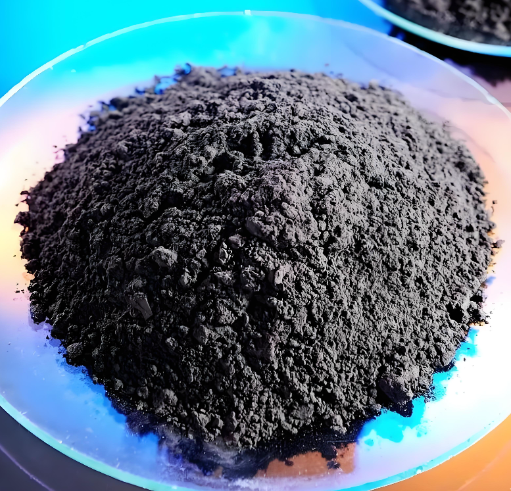
This guide is written for buyers who must choose the right dryer family, protect purity and residual-moisture specs, and avoid expensive technology mismatches.
Quick answer: Use spray drying when the feed is a stable, atomisable slurry and powder morphology from spray is required. Use spin-flash / flash or paddle dryers when the feed is a sticky filter cake. Decision driver is feed form, not the product name alone.
1. Two Feeds, Two Drying Logics
| Feed | Typical origin | Preferred drying direction |
|---|---|---|
| LFP slurry | Milling / mixing / wet process suspension | Spray dryer (if pumpable and process allows) |
| Ferric phosphate filter cake | Precipitation + filtration | Spin-flash / flash or paddle / contact dryer |
| Hybrid plant flows | Multiple intermediates | Stage-wise selection; do not force one machine for all |
Re-slurrying a filter cake only to spray-dry it adds water that must be evaporated again — energy, capacity and contamination risk increase unless spray particle form is mandatory.
2. Spray Dryers for LFP Slurry
When spray drying fits
- Feed is homogeneous and pumpable
- Product must be a powder with controlled particle formation from droplets
- Solids content is high enough for acceptable specific energy
- Plant can manage powder recovery, exhaust and hygiene/contamination controls
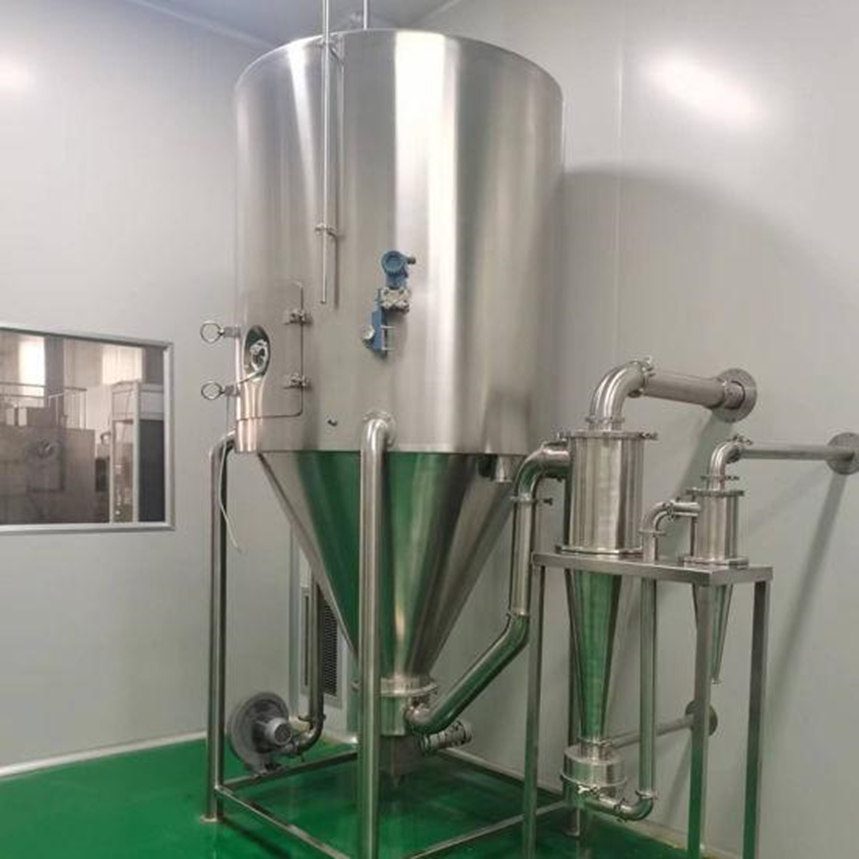
Key spray-drying controls for battery materials
| Parameter | Why it matters |
|---|---|
| Feed solids % | Dominates evaporation load and cost |
| Atomisation stability | Particle size, moisture uniformity, deposits |
| Inlet / outlet temperature window | Residual moisture vs thermal history of active material |
| Residence time and chamber design | Wall deposits, under-dry cores |
| Powder separation | Cyclone/bag filter recovery, losses, cross-contamination |
| Contact materials & cleaning | Purity specifications for cathode materials |
Buyer risks unique to slurry spray drying
- Low solids → oversized dryer and high energy
- Unstable slurry (settling, viscosity swing) → moisture variation and nozzle issues
- Over-hot outlet conditions → quality drift (validate against your spec, not generic rules)
- Inadequate cleaning design → batch-to-batch contamination
RFQ must include: solids %, rheology notes, target residual moisture, max product temperature, capacity, and cleaning/contamination requirements.
3. Spin-Flash / Flash Dryers for Ferric Phosphate Filter Cake
When spin-flash / flash fits
- Feed is wet cake or paste from a filter/centrifuge
- Goal is continuous powder without re-slurry
- Short residence time is acceptable or preferred
- Mechanical dispersion can break the cake into dryable particles
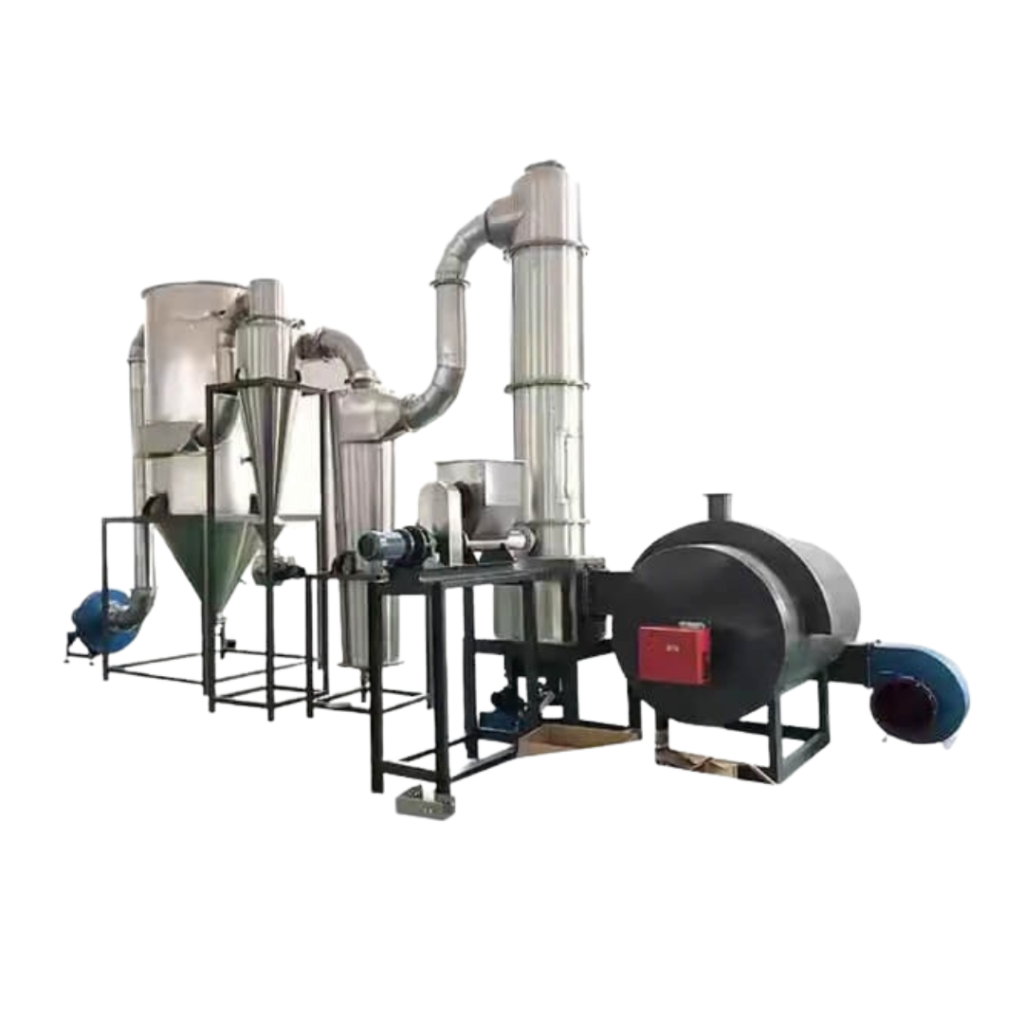
How the process works (buyer view)
Cake is mechanically dispersed into a hot air stream; moisture evaporates rapidly; powder is recovered in cyclones/filters. Spin-flash designs add intense agitation at the feed zone to handle stickier cakes than a simple flash duct.
Critical success factors
| Factor | Practical note |
|---|---|
| Cake moisture range | Design on peak, not best-day samples |
| Stickiness through the drying trajectory | May need back-mixing or staged conditions |
| Dispersion intensity vs particle breakage | Balance throughput against fines |
| Air temperature vs product temperature | Protect material limits while achieving moisture |
| Wear | Inorganic cakes can be abrasive |
| Exhaust powder recovery | High value solids — losses matter |
4. Paddle (Contact) Dryers for Ferric Phosphate Cake
When paddle / contact drying fits
- Indirect heating is preferred (limited process-gas contact)
- Longer residence time and controlled temperature are needed
- Solvent traces or special atmosphere control may apply (duty-specific)
- Cake is cohesive and benefits from continuous agitation against heated surfaces
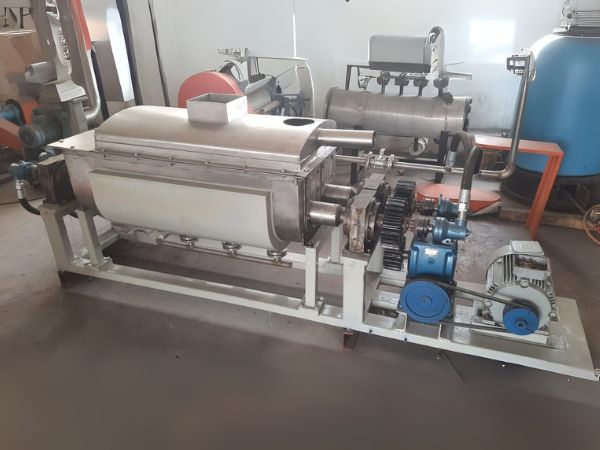
Strengths
- Low carrier-gas volume vs large convective dryers
- Good temperature control via jacket/paddle medium
- Handles cohesive phases better than static beds
Watch-outs
- Torque and drive design for sticky phases
- Discharge consistency at target moisture
- Materials of construction and cleanability for purity-sensitive products
- Throughput vs heat-transfer area (not “vessel volume” alone)
5. Decision Guide: Spray vs Spin-Flash vs Paddle
| Question | If yes → lean toward |
|---|---|
| Is feed a stable pumpable slurry and powder from spray is required? | Spray dryer |
| Is feed a filter cake and re-slurry is undesirable? | Spin-flash / flash or paddle |
| Is minimal gas contact / indirect heat a process requirement? | Paddle / contact |
| Is short residence and high continuous cake throughput the priority? | Spin-flash / flash |
| Is contamination control between products extreme? | Prioritise cleanable design in whichever family fits feed form |
6. Quality & Compliance Themes for Battery-Related Solids
Battery-material buyers typically care about:
- Residual moisture (tight bands for downstream steps)
- Particle size distribution and agglomeration
- Metallic / cross-contamination control
- Trace impurity management from wear parts and utilities
- Batch identity and cleaning validation between grades
State these requirements explicitly. A fertilizer-style dryer specification is not sufficient.
7. Shared Sizing Logic
Evaporation load still governs capacity:W=F×100−MfMi−Mf
For slurry spray dryers, express feed on solids % and water rate clearly.
For cakes, use peak cake rate × peak moisture.
Never compare vendor capacities unless moisture basis and product basis are identical.
8. RFQ Checklist (Copy into Your Enquiry)
For LFP / related slurry spray drying
- Solids % and viscosity / stability notes
- Target residual moisture
- Max product temperature
- PSD / morphology targets if any
- Capacity (kg dry solid/h)
- Cleaning and contamination requirements
- Contact materials
- Utilities (inlet air heat source, power)
For ferric phosphate (FePO₄) cake
- Filter cake moisture range
- Target residual moisture
- Max product temperature
- Capacity peak/normal
- Preference: spin-flash vs paddle (or ask for recommendation)
- Abrasiveness / corrosion notes
- Purity and cleaning requirements
- Exhaust and powder recovery expectations
9. How GTI Dryers Approaches These Duties
GTI Dryers designs continuous drying systems including spray-related, spin-flash / flash, paddle/contact, fluid-bed and other industrial configurations.
For LFP slurry and ferric phosphate cake projects we:
- Separate slurry duties from cake duties at the first step
- Avoid unnecessary re-slurry routes
- Align temperature, moisture and cleanability with battery-material expectations
- Document assumptions on evaporation load and capacity basis
Geographic Note
LFP and precursor manufacturing capacity is expanding in India, China and other battery-supply-chain regions. Dryer selection follows the same feed-form physics everywhere; local fabrication and service support help with continuous plant uptime. Export equipment projects require clear documentation of materials, controls and residual-moisture basis.
Frequently Asked Questions
Can one dryer handle both LFP slurry and FePO₄ cake?
Not optimally. Slurry spray drying and cake dispersion/contact drying are different unit operations. Plants often install dedicated lines.
Why not spray-dry ferric phosphate cake?
Only if you deliberately re-slurry and need spray morphology. Otherwise you evaporate water twice and add process complexity.
Is paddle drying better than spin-flash for FePO₄?
Paddle suits indirect heat and longer controlled residence; spin-flash suits rapid continuous dispersion of cakes. Choose from temperature limits, capacity and gas-contact rules.
What residual moisture should we target?
Use your downstream process and quality specification. Put the numeric target and test method in the RFQ.
What should I send GTI?
Whether feed is slurry or cake, moisture/solids data, target moisture, capacity, max product temperature and purity/cleaning needs.
Next Step
If you are specifying spray dryers for LFP slurry or spin-flash / paddle dryers for ferric phosphate filter cake, share your feed-form data and quality limits. GTI will recommend the appropriate continuous drying route and a clear proposal basis.
Request an LFP slurry / ferric phosphate cake drying assessment with your process data.
Contact the GTI Technical Team:
Website: gtidryers.com
Email: mktg@gtidryers.com
Phone / WhatsApp: +91 9330077417