
Buyers planning a new drying line in India almost always ask the same first question: What will the dryer cost?
There is no single price for a “spray dryer” or “rotary dryer.” Capital cost varies widely with capacity, material of construction, design pressure/temperature, automation, explosion protection, utilities and how much process engineering is included. This 2026 guide explains the main cost drivers for four common continuous technologies — spray, rotary, fluid bed and flash (including spin-flash) — and how to use price ranges responsibly when budgeting.
Important disclaimer
Any figures below are illustrative order-of-magnitude ranges for discussion only. They are not quotations, not GTI list prices, and not guarantees. Actual project cost can fall outside these bands once capacity, metallurgy, codes and scope are defined. Always request a written proposal based on your process data.
1. What Determines Industrial Dryer Cost in India
| Cost driver | Impact on price |
| Evaporation capacity / throughput | Primary size driver; higher water removal → larger chamber, fan, heater, bag filter |
| Material of construction | MS vs SS304 vs SS316 vs higher alloys; food/pharma hygiene finishes add cost |
| Product contact & hygiene design | CIP, polished surfaces, FDA/cGMP-oriented detail for food and pharma |
| Heating system | Steam coil, thermic fluid, direct/indirect gas, electric — and burner or boiler interface |
| Air handling & emission control | Bag filters, cyclones, scrubbers, explosion vents/suppression |
| Automation & instrumentation | Basic starters vs PLC/SCADA, recipe control, data logging |
| Hazardous area / ATEX-type requirements | Dust or solvent → significant cost increase |
| Feed system | Atomiser type (spray), screw/rotor (flash), back-mix, pumps, filters |
| Scope of supply | Dryer only vs turnkey with ducting, structures, installation, commissioning |
| Indian vs imported content | Local fabrication often reduces capital cost vs fully imported packages; documentation and support models differ |
Labour, steel and component prices also move with the market; 2026 budgets should allow contingency and avoid treating old quotations as current.
2. Illustrative Capital Cost Context by Dryer Type (India, 2026)
Ranges below refer to typical industrial supply scope (dryer system with basic air handling and controls), expressed as broad bands to help early budgeting. Final price depends on the drivers in Section 1.
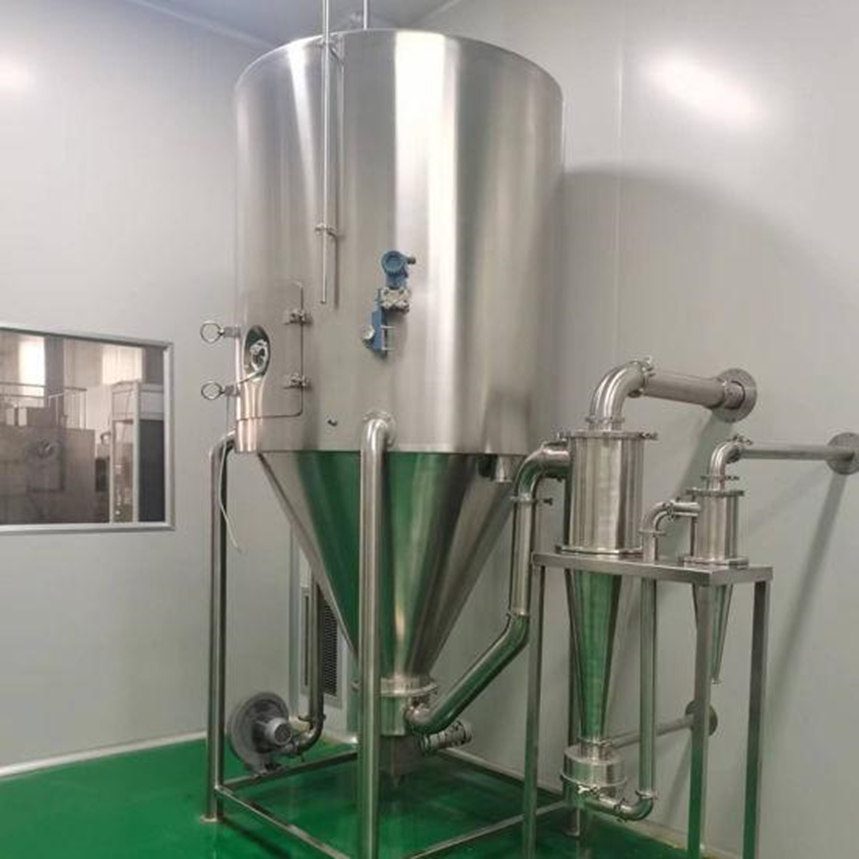
- Typical use: Pumpable liquids and slurries (milk derivatives, food extracts, chemicals, ceramics, detergents, etc.).
- Cost behaviour: Chamber size and atomiser type dominate; food/pharma and solvent duties cost more.
- Illustrative budgetary band: From the lower tens of lakhs INR for small pilot/production units to several crores INR for large industrial food or chemical lines. High-end pharmaceutical or explosion-protected systems sit at the upper end or above.
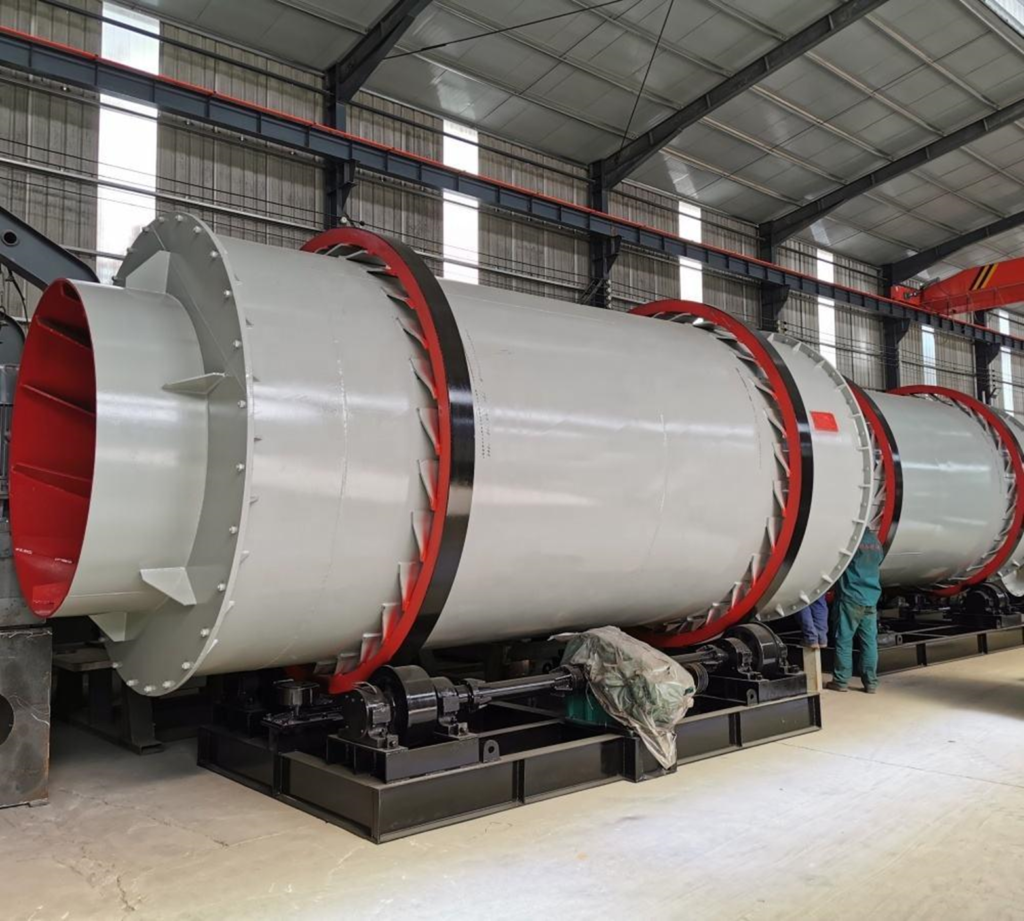
- Typical use: Bulk solids, minerals, biomass, sludge, fertilizers, robust agro products.
- Cost behaviour: Shell diameter/length, drive, flights, seals, and direct vs indirect heating drive price; refractory or special alloys add cost.
- Illustrative budgetary band: Often from several tens of lakhs INR for smaller industrial units into multiple crores INR for large mineral or sludge installations.
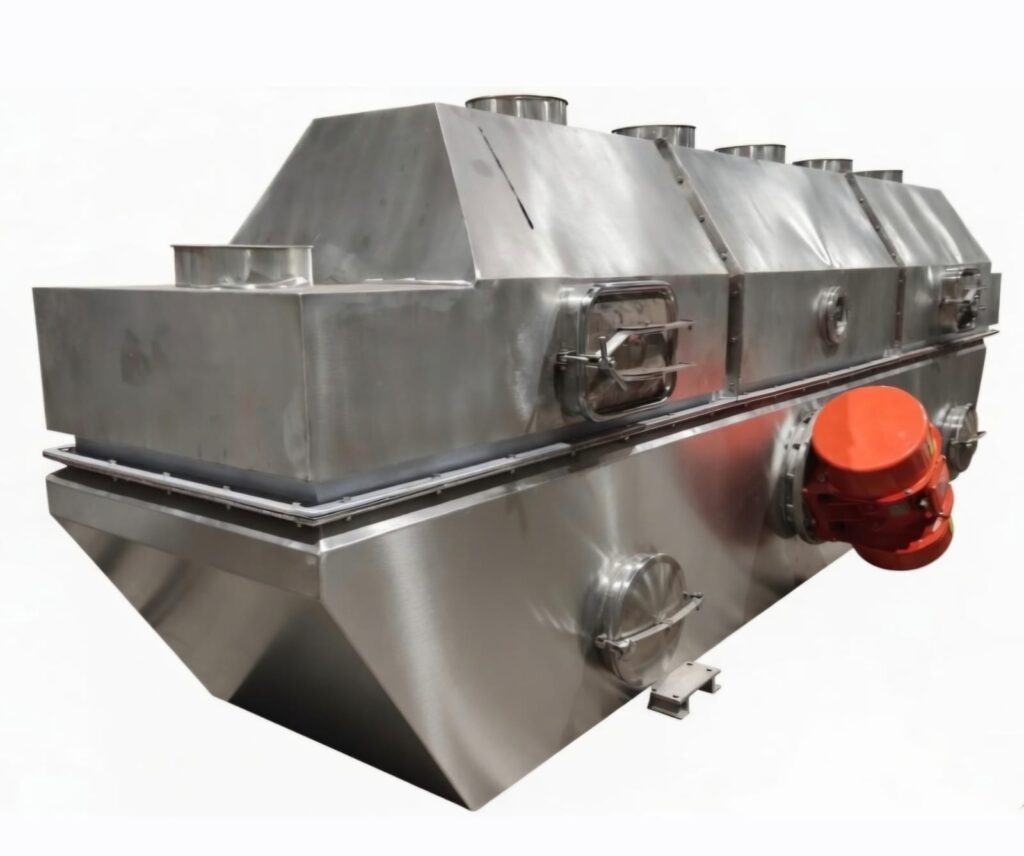
Fluid Bed / Vibratory Fluid Bed Dryer (VFBD)
- Typical use: Free-flowing granules, crystals, pellets, some food and chemical products that fluidise well.
- Cost behaviour: Bed area, distributor design, vibration system (if VFBD), multi-zone layout and bag filter size matter; sanitary designs cost more.
- Illustrative budgetary band: Commonly from the mid-tens of lakhs INR upward into crore+ territory for large or multi-zone sanitary systems.
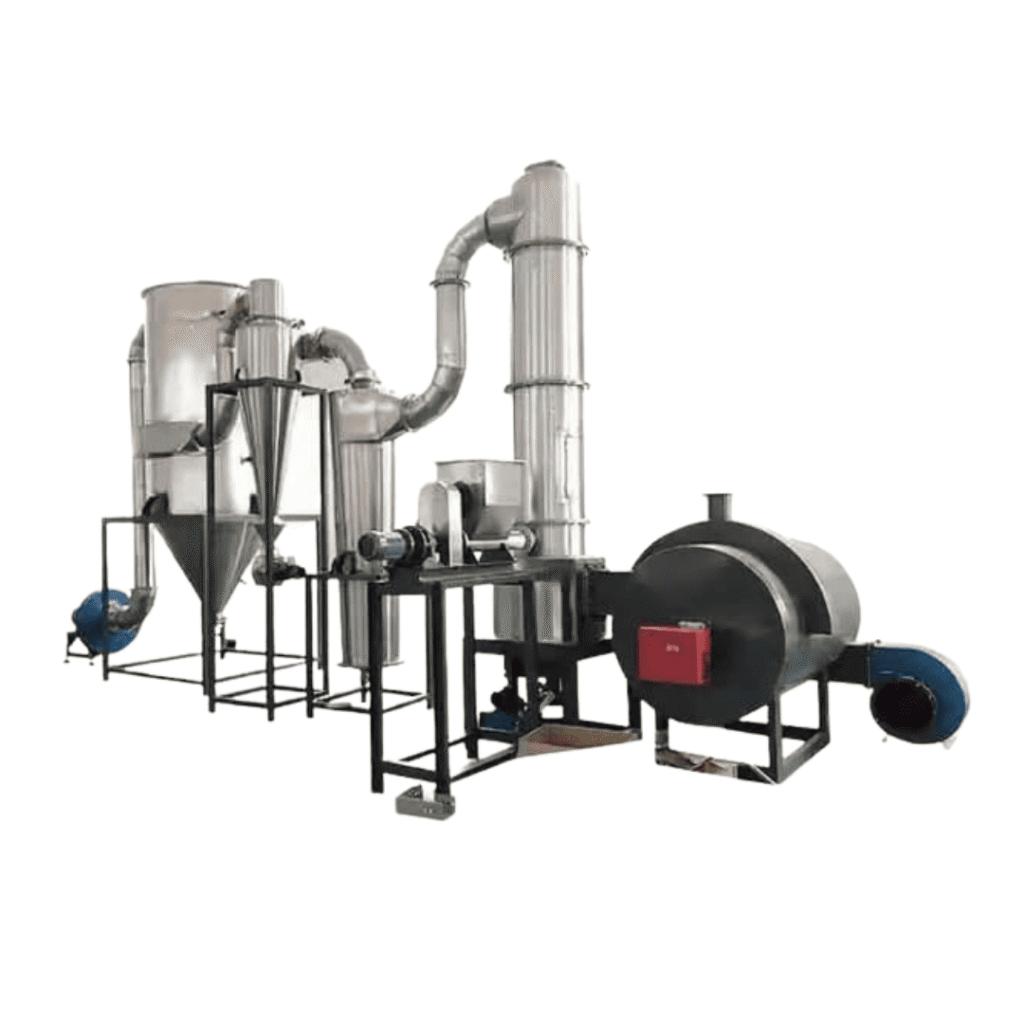
Flash Dryer / Spin-Flash Dryer
- Typical use: Wet cakes, pastes and dispersible solids (spin-flash especially for sticky filter cakes); some chemical and mineral duties.
- Cost behaviour: Gas volume, disperser/rotor design, ducting, cyclone/bag filter and heat source; abrasive or corrosive products raise metallurgy cost.
- Illustrative budgetary band: Often from several tens of lakhs INR for moderate duties to significantly higher for large, alloy or fully engineered spin-flash packages.
Again: these bands are for orientation only. A small SS316 food spray dryer can cost more than a large MS rotary dryer. Specification beats “type average.”
3. Operating Cost vs Capital Cost
Buyers who only compare purchase price often underestimate total cost of ownership (TCO):
- Fuel / steam / electricity — usually the largest lifetime cost
- Labour and cleaning
- Spare parts (atomiser wheels, belts, rotor parts, seals, bags)
- Downtime from poor reliability or wrong technology fit
- Product loss from degradation, fines or rejects
A cheaper dryer that over-dries, damages product or needs constant cleaning can cost more per year than a correctly specified system. Energy discipline (residual-moisture control, zone profiling, heat recovery where viable) often matters more than a small difference in capital cost.
4. How to Use Price Ranges Without Getting Misled
- Define capacity in process terms — kg water evaporated per hour, or kg product at stated inlet and outlet moisture — not only “kg/h dryer.”
- Fix material of construction and hygiene level early.
- State utilities (steam pressure, gas, power) and emission limits.
- Clarify scope — battery limits, ducting, steel structure, installation, commissioning.
- Compare quotations on the same basis — identical capacity basis, metallurgy and scope.
- Ask for assumptions behind any “from ₹ X” figure.
- Allow contingency for engineering changes, civil works and inflation.
5. Technology Choice Affects Cost More Than Negotiation Alone
| If your feed is… | Technology often evaluated first | Cost implication |
| Pumpable liquid/slurry | Spray dryer | Chamber and atomiser dominate; high solids reduce size/cost |
| Sticky filter cake / paste | Spin-flash or contact systems | Avoids re-slurry penalty; rotor/dispersion design is key cost item |
| Free-flowing granules | Fluid bed / VFBD | Efficient when fluidization is stable; sanitary multi-zone adds cost |
| Robust bulk solids | Rotary dryer | Often favourable ₹ per ton for high tonnage; quality limits for fragile foods |
| Slices / flakes (onion, garlic, spices, coconut) | Band / mesh-belt dryer | Different cost structure (belt area, zones); not covered in the four types above but often the correct choice |
Choosing the wrong family to “save capital” frequently increases operating cost and reject rates.
6. Hidden and Easy-to-Miss Cost Items
- Civil foundations and building height (especially spray chambers)
- Boiler or thermic fluid heater capacity upgrade
- Dust collection beyond a basic cyclone
- Explosion protection and electrical classification
- Insulation, cladding and access platforms
- Interconnecting ducting and dampers
- PLC/SCADA, sensors and validation documentation (pharma/food)
- Trial charges, freight, taxes and installation supervision
Request a scope matrix so these items are visible in every quote.
7. Budgeting Process Recommended for 2026 Projects
- Freeze product, moisture in/out and required capacity.
- Select technology family on process fit (not price alone).
- Issue the same process data pack to shortlisted manufacturers.
- Obtain budgetary quotes with stated assumptions.
- Refine to a preferred specification and firm offer.
- Include energy and maintenance in the investment decision.
- Plan spares and operator training in the initial budget.
8. How GTI Dryers Supports Cost-Transparent Projects
GTI Dryers designs and manufactures industrial drying systems (including spray, rotary, fluid-bed/VFBD, flash/spin-flash and band systems) for Indian and export projects. For cost discussions GTI:
- Starts from your feed form, moisture and capacity
- Clarifies technology fit before talking numbers
- Provides budgetary guidance tied to stated assumptions
- Distinguishes dryer supply scope from turnkey extras
- Avoids publishing fixed “price lists” that ignore specification
Any figure discussed is subject to detailed engineering and a formal proposal.
Geographic Note
Fabrication and component costs in India remain competitive for many industrial dryer classes compared with fully imported packages. Export projects may add costs for packaging, documentation, destination codes and overseas commissioning. Energy prices (gas, coal, biomass, electricity, steam) vary by state and strongly influence TCO even when capital cost is similar.
Frequently Asked Questions
What is the price of a spray dryer in India in 2026?
There is no single price. Small units and large food/chemical lines differ by orders of magnitude. Provide capacity, feed solids, material of construction and hygiene requirements for a meaningful budgetary range.
Why do two quotes for the “same” rotary dryer differ so much?
Different diameter/length, drive, metallurgy, heating method, seals, emission control and scope of supply. Align the specification before comparing numbers.
Is a cheaper dryer always lower cost over 5–10 years?
No. Fuel, rejects, cleaning time and downtime often dominate. Technology fit and energy use matter as much as capital cost.
Do fluid bed and flash dryers cost less than spray dryers?
Sometimes, for a given water-evaporation duty — but only if the feed form suits them. A spray dryer is not interchangeable with a flash dryer for a filter cake without process change.
What should I send to get a realistic budget from GTI?
Product and feed form, inlet and target moisture, required capacity, heat source, material/hygiene needs and any hazard or emission constraints.
Next Step
If you are budgeting an industrial dryer project in India in 2026, share your product, capacity and process constraints. GTI can indicate a suitable technology direction and a budgetary cost band based on clear assumptions — then refine to a formal proposal when the specification is firm.
Request a budgetary industrial dryer cost assessment with your process data.
Contact the GTI Technical Team:
Website: gtidryers.com
Email: mktg@gtidryers.com
Phone / WhatsApp: +91 9330077417