
Buyers specifying continuous dryers for spices, onion, garlic, ginger and other vegetables frequently shortlist three technologies: band (mesh-belt) dryers, fluid-bed / vibratory fluid-bed dryers, and rotary dryers. All three can remove moisture continuously. They do not treat the product the same way.
This guide compares them on the criteria that matter for these products — shape retention, colour and flavour protection, moisture uniformity, capacity and operating practicality — so you can choose on process fit rather than brochure claims.
1. Start With the Product, Not the Machine
Onion, garlic, ginger, many spices and cut vegetables are typically dried as slices, flakes, pieces or layered material. Quality priorities usually include:
- Retaining recognisable shape and size
- Minimising colour darkening and browning
- Preserving characteristic flavour and aroma
- Achieving uniform residual moisture for storage or milling
- Avoiding excessive fines and breakage
Any comparison that ignores these priorities will recommend the wrong dryer.
2. How Each Dryer Moves and Heats the Product
| Technology | How product moves | Heat / mass transfer style | Typical residence-time control |
|---|---|---|---|
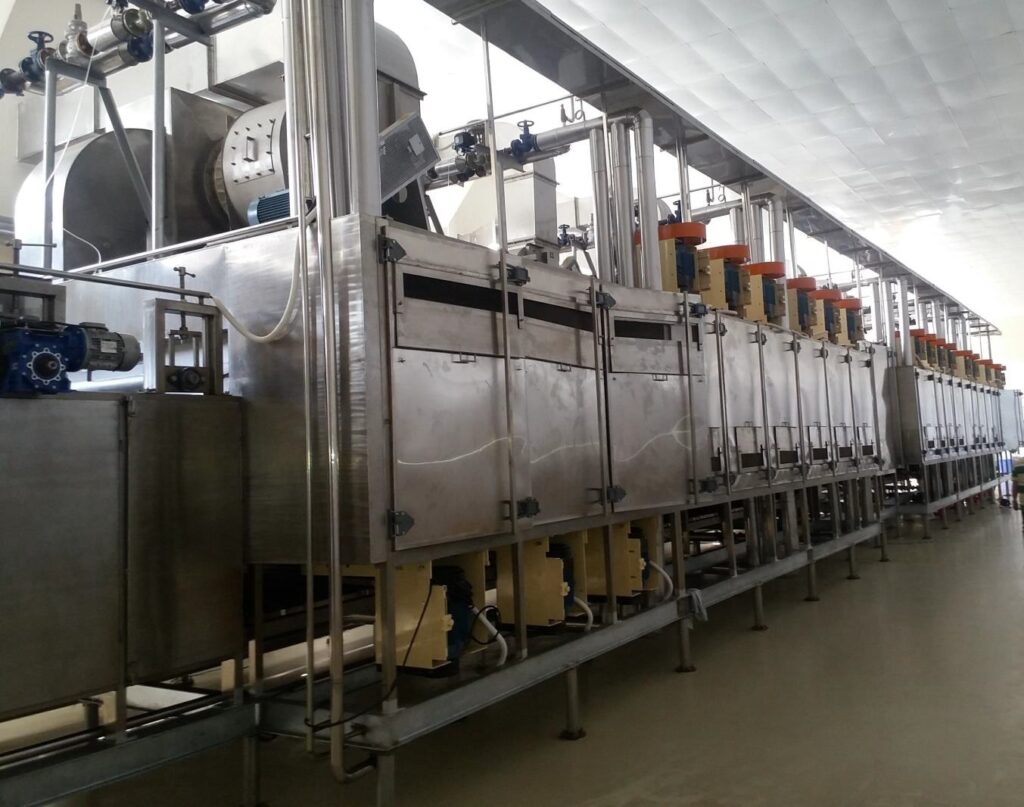
| Band / mesh-belt dryer | Carried as a static or gently agitated layer on a moving perforated belt | Air through or over the bed in one or more zones | Belt speed + number of zones / passes |
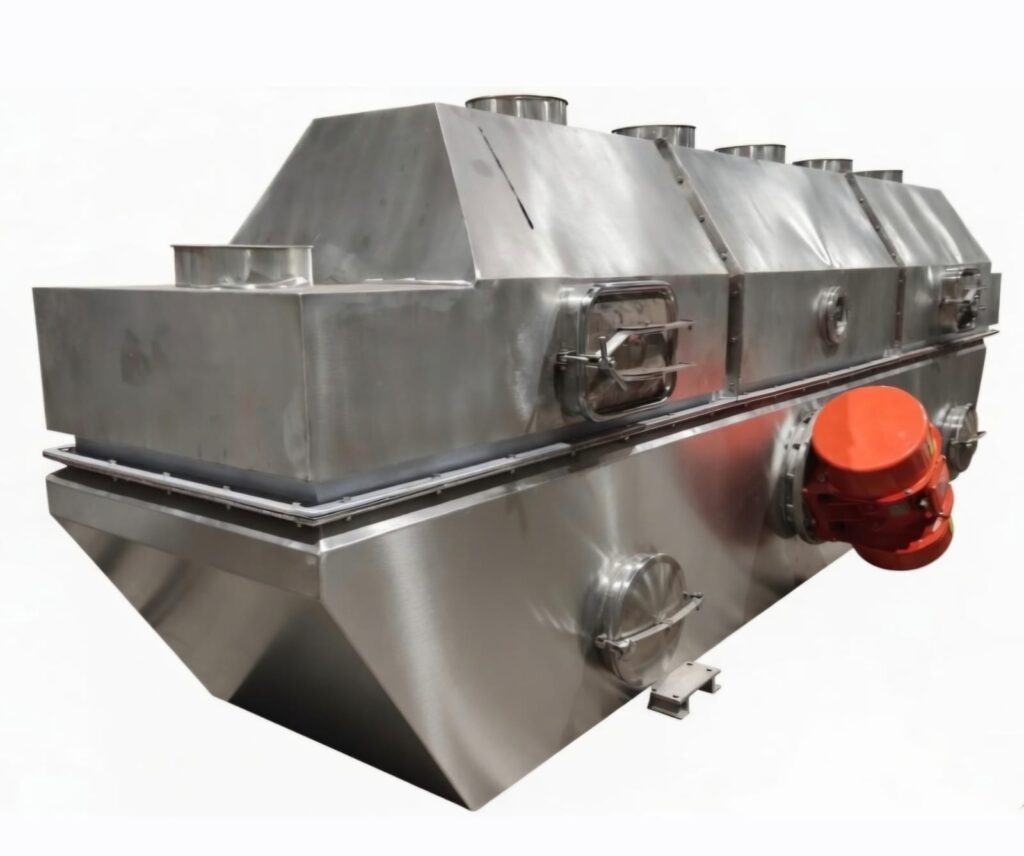
| Fluid-bed / VFBD | Suspended and mixed by upward air (vibration optional) | High gas–solid contact while fluidised | Bed length, air velocity, weirs, vibration |
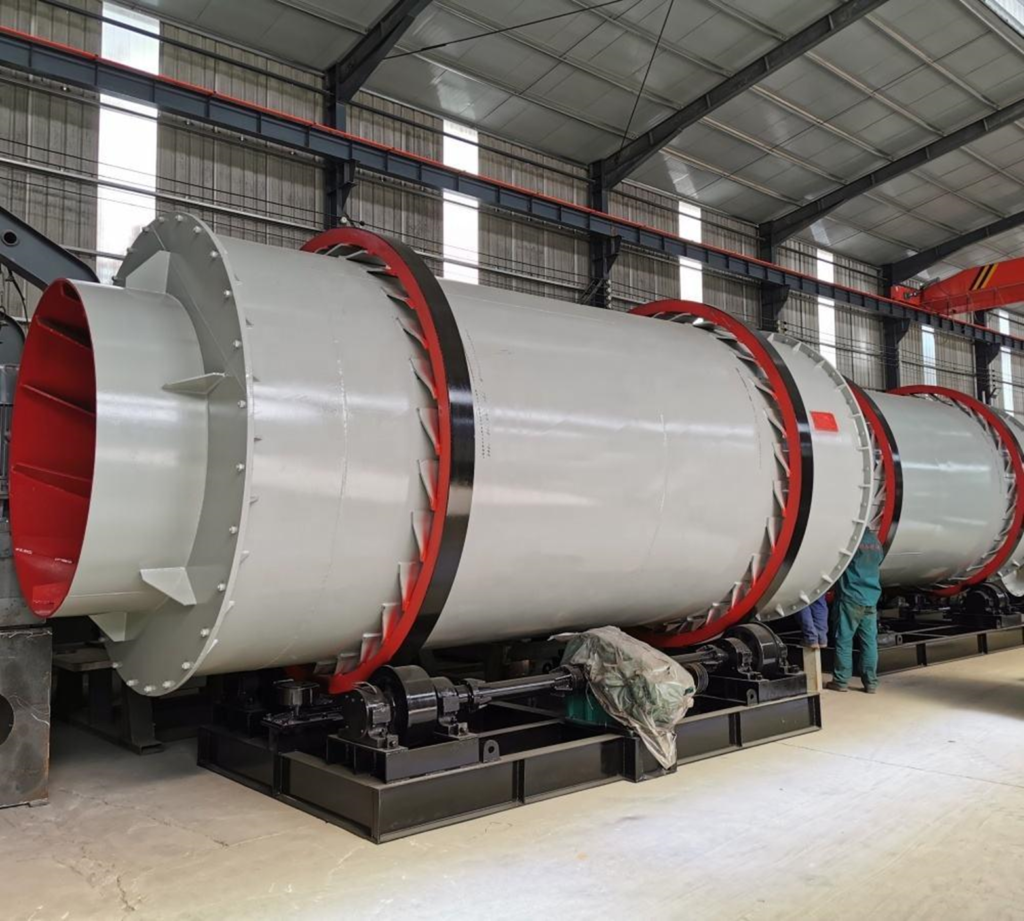
| Rotary dryer | Tumbling inside a rotating drum with internal flights | Direct or indirect gas contact while cascading | Drum speed, length, slope, gas flow |
3. Side-by-Side Comparison for Spices, Onion, Garlic & Vegetables
| Criterion | Band / Mesh-Belt Dryer | Fluid-Bed / VFBD | Rotary Dryer |
|---|---|---|---|
| Shape retention | Strong — product rests on the belt; minimal tumbling | Moderate to weak — fluidization and collisions can break slices/flakes | Weak — continuous cascading and flights cause attrition |
| Colour & flavour protection | Strong when multi-zone temperature profiling is used | Good if temperature and residence time are tightly controlled; risk if over-fluidised or overheated | Higher risk — longer exposure and temperature gradients common |
| Suitability for slices / flakes | High | Low to moderate (better for granules than large slices) | Low for quality-sensitive slices |
| Moisture uniformity | Good with even loading and multi-zone control | Very good when fully fluidised and stable | Can be good for robust bulk solids; more variable for fragile produce |
| Fines generation | Low | Moderate (depends on velocity and product) | Higher due to mechanical action |
| Capacity range | Wide; multi-layer designs increase capacity in limited footprint | Wide for free-flowing granules | Very high tonnage possible for bulk materials |
| Energy flexibility | Multi-zone control + optional heat recovery | Efficient heat transfer when fluidization is correct | Depends on co-/counter-current design and seals |
| Cleaning & hygiene (food) | Accessible belt and zones; food-grade construction common | Good access on many designs; plate cleaning important | More complex internals; hygiene design varies |
| Typical best-fit products | Onion, garlic, ginger, spices, herbs, coconut chips/flakes, cut vegetables | Free-flowing granules, pellets, some crystalline or uniform particles | Minerals, biomass, robust bulk solids, some industrial chemicals |
4. Decision Guide by Product Goal
Primary goal: keep slice/flake shape and protect colour & flavour
→ Multi-zone band / mesh-belt dryer is usually the first technology to evaluate. Product travels as a layer; temperature can be stepped down along the dryer; mechanical stress is low.
Primary goal: dry free-flowing granules or small uniform particles at high heat-transfer rate
→ Fluid-bed or vibratory fluid-bed is often appropriate — provided the material fluidises cleanly and is not a large fragile slice.
Primary goal: high-tonnage drying of robust, non-fragile bulk solids
→ Rotary dryer is frequently the economic choice. It is rarely the preferred option when appearance and low attrition are commercial requirements for onion, garlic or premium spices.
Mixed or changing product slate
→ Map each product to the dryer family that matches its form. One machine type rarely optimises both delicate slices and hard bulk granules.
5. Why Multi-Zone Band Dryers Are Frequently Selected for These Crops
For onion, garlic, ginger and many spices:
- Gentle handling — No cascading or high-velocity particle collisions that break slices.
- Temperature profiling — Early zones remove surface moisture; later zones finish at lower temperature to limit browning and volatile loss.
- Residence time control — Belt speed sets time under each condition without depending on fluidization behaviour.
- Layered loading — Natural fit for sliced and flaked feeds that form a permeable bed.
- Integration — Straightforward linking to upstream slicing and downstream cooling, milling or packing.
These advantages explain why band/mesh-belt systems are the standard shortlist item for quality-focused vegetable and spice dehydration lines. They are not automatically “best” for every solid — only for products whose form and quality priorities match the technology.
6. When Fluid-Bed or Rotary Still Make Sense in the Same Plant
- Fluid-bed / VFBD: Secondary products that are granular (e.g. certain spice granules, pellets, or free-flowing intermediates), or where very rapid, uniform drying of small particles is required and attrition is acceptable.
- Rotary: Co-products or waste streams that are robust (peels, some biomass, bulk agro-residues) where shape and colour are not sold as product attributes.
Using the wrong dryer for the premium slice/flake line to “standardise” on one technology usually costs more in quality claims and rework than it saves in spare parts.
7. Common Selection Mistakes
| Mistake | Consequence |
|---|---|
| Choosing rotary for onion/garlic slices because of high catalogue capacity | Broken product, colour loss, customer rejection |
| Choosing fluid-bed for large fragile slices | Poor fluidization, breakage, uneven moisture |
| Choosing a single-zone band dryer and running high temperature throughout | Browning, case-hardening, flavour loss |
| Ignoring residual-moisture uniformity | Caking in storage or variable powder quality after milling |
| Sizing only on average capacity, not peak harvest | Bottleneck in season |
8. What to Provide for a Technology Recommendation
- Product list (onion, garlic, ginger, which spices, etc.) and prepared form (slice thickness, flake size)
- Inlet moisture range and target residual moisture
- Quality priorities (shape, colour, flavour, fines limit)
- Required continuous capacity and seasonal peak
- Available heat source and utilities
- Hygiene / food-grade requirements
- Space constraints
With this data, a manufacturer can recommend band, fluid-bed, rotary or a combination — and avoid forcing every product into one machine.
9. How GTI Dryers Approaches the Choice
GTI Dryers designs and manufactures:
- Band / mesh-belt dryers with multi-zone temperature and airflow control for spices, onion, garlic, ginger and similar products
- Fluid-bed and vibratory fluid-bed systems for feeds that fluidise well
- Rotary dryers for robust bulk solids and selected industrial duties
Selection starts from feed form and quality targets. For sliced and flaked vegetables and spices where shape, colour and flavour matter, multi-zone band systems are typically evaluated first. Other technologies are recommended when the product behaviour supports them.
Geographic Note
Onion, garlic, spice and vegetable dehydration is active across India, China, Southeast Asia, the Middle East, Africa and other producing regions. Energy cost, labour and export quality standards differ, but the technology logic — match dryer to slice/flake form and protect temperature-sensitive quality — remains the same.
Frequently Asked Questions
Is the band dryer always better for onion and garlic?
For sliced and flaked product where appearance and flavour are sold, multi-zone band dryers are usually the preferred starting point. Granular or very different co-products may suit other dryers.
Can a fluid-bed dryer dry onion slices?
Large fragile slices generally do not fluidise well and are prone to breakage. Fluid-bed is better suited to smaller, free-flowing particles.
Why not use a rotary dryer for spices?
Rotary action causes attrition and makes tight temperature profiling harder. It is better reserved for robust materials where particle appearance is secondary.
Do we need multi-zone control on a band dryer?
For colour- and flavour-sensitive crops, yes. A single high-temperature zone increases browning and quality risk.
What should we send for a comparison assessment?
Product forms, moisture targets, capacity, quality priorities and utilities. GTI can map these to band, fluid-bed or rotary options.
Next Step
If you are comparing band, fluid-bed and rotary dryers for spices, onion, garlic or vegetables, share your product forms, capacity and quality requirements. GTI can provide a clear technology recommendation based on process fit.
Request a band vs fluid-bed vs rotary selection assessment with your process data.
Contact the GTI Technical Team:
Website: gtidryers.com
Email: mktg@gtidryers.com
Phone / WhatsApp: +91 9330077417