
In tea manufacturing, drying is the stage that arrests oxidation (or completes enzyme deactivation in green tea), reduces moisture to a stable level, and locks in the colour, aroma and liquor characteristics expected by buyers. Typical final moisture targets for made tea are in the region of 2–3 %, but the exact specification depends on the factory, grade and market.
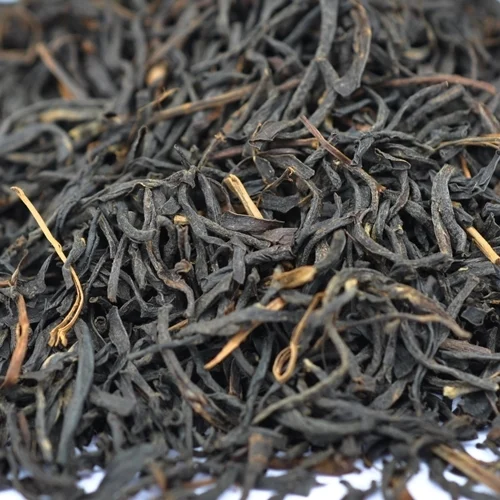
CTC (Crush, Tear, Curl) tea and orthodox (whole or broken leaf) tea leave the preceding process stages in very different physical forms. The correct dryer must match that form while delivering uniform residual moisture without damaging the leaf or granule.
This guide provides a practical framework for selecting industrial tea dryers.
1. Why One Dryer Does Not Suit Every Tea Type
| Tea type | Typical physical form entering the dryer | Primary drying priority |
|---|---|---|
| CTC black tea | Small, relatively uniform granules after oxidation | Rapid, uniform moisture removal; high continuous throughput |
| Orthodox black tea | Whole, twisted or broken leaf of variable size | Protect leaf appearance; controlled, staged drying |
| Green tea | Leaf after enzyme deactivation (fixation) | Gentle drying to preserve colour and fresh character |
| Specialty / white / oolong | Delicate leaf or partially oxidised leaf | Low-stress, controlled temperature profiles |
| Instant tea / extract powder | Liquid extract or concentrate | Atomisation and powder formation (spray drying) |
Using a high-velocity system designed for CTC granules on delicate orthodox leaf, or a slow batch system on high-volume CTC, creates quality or capacity problems.
2. Core Dryer Technologies for Tea
Vibratory Fluid Bed Dryer (VFBD) / Fluid-Bed Dryer
Heated air fluidises the tea particles while vibration assists continuous movement along the bed. Widely used for CTC tea.
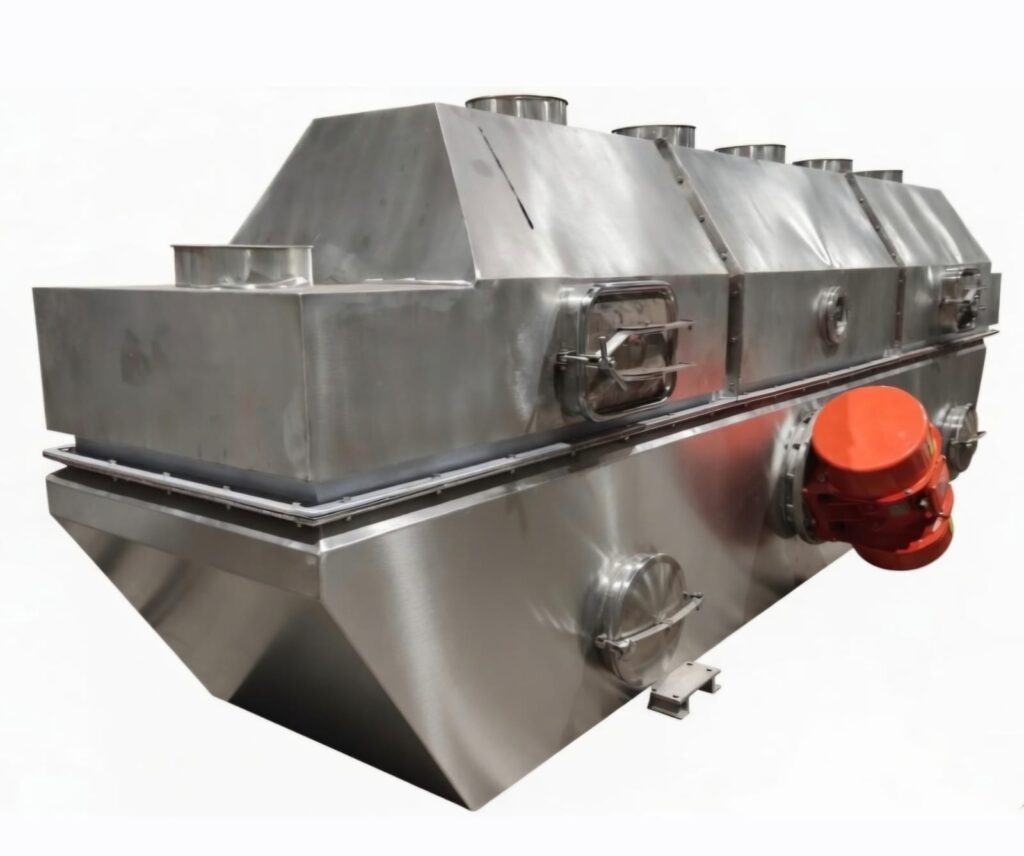
Why it suits CTC
- Granular particles fluidise well
- Rapid, uniform heat and mass transfer
- Continuous operation matched to high-volume factories
- Integrated cooling zones are common
Combination / Multi-Stage Fluid-Bed or Band Systems
Staged temperature and airflow zones with gentler product movement. Preferred for orthodox, green and specialty leaf.
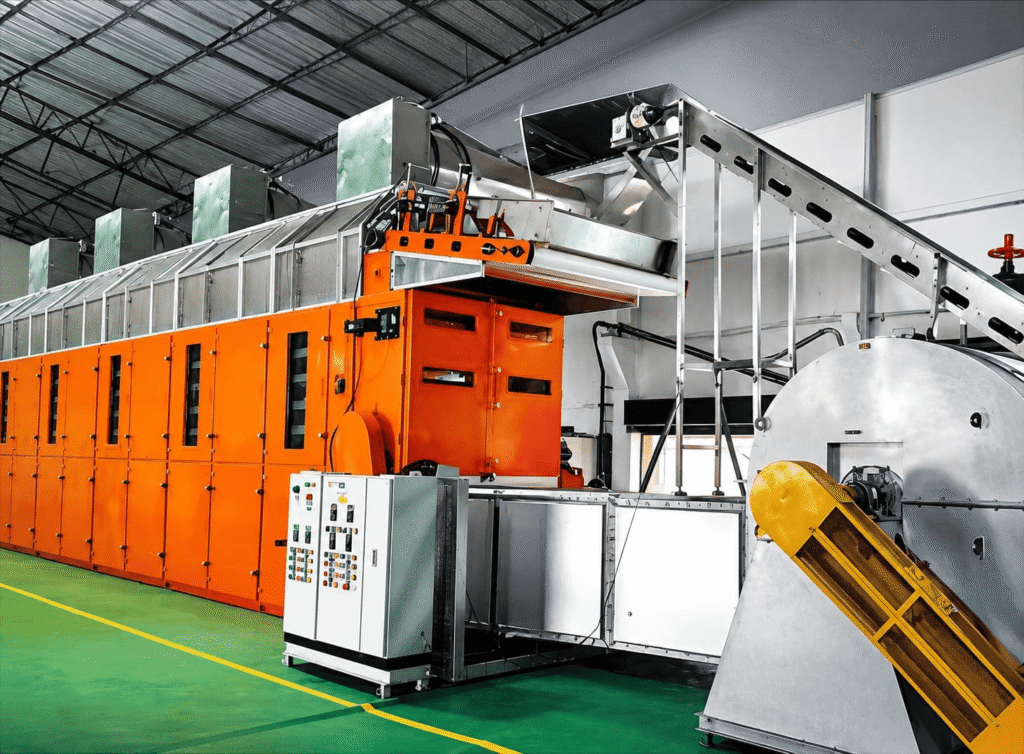
Why it suits orthodox and green tea
- Multi-zone control protects leaf structure and colour
- Residence time and temperature can be profiled
- Lower mechanical stress on whole or twisted leaf
Tray / Batch Dryers
Still used for small-scale or highly specialty production where continuous systems are not justified.
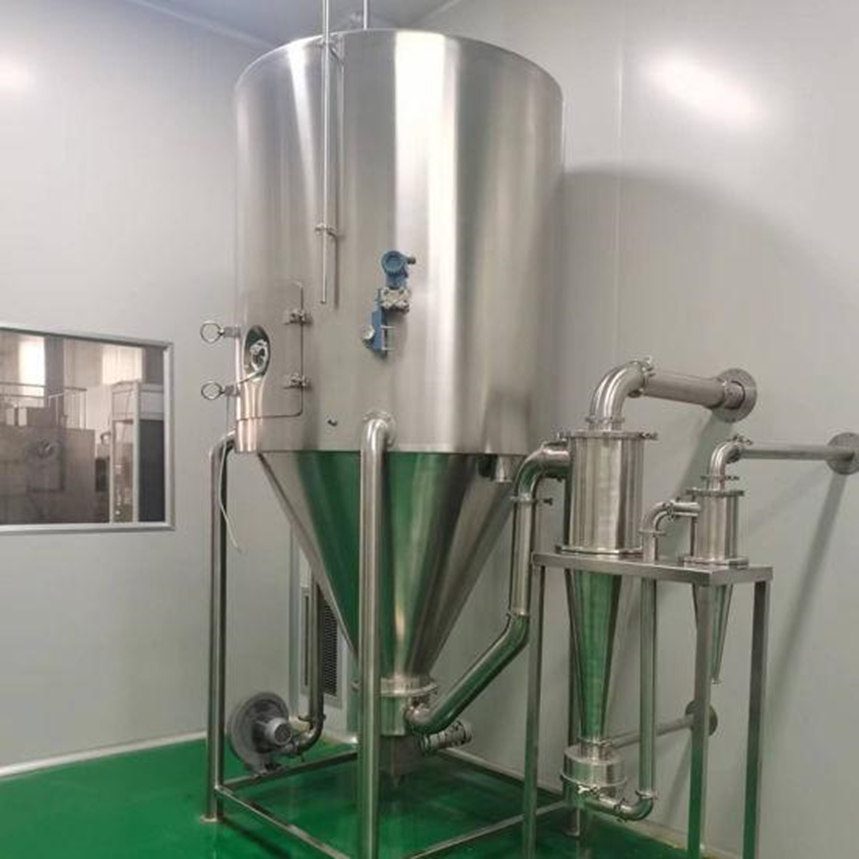
Spray Dryer
Converts liquid tea extract into instant tea or extract powder. Not used for leaf or CTC granule drying.
Heat-Pump / Low-Temperature Options
Evaluated when energy recovery or very gentle drying of specialty leaf is prioritised.
3. Technology Selection Matrix
| Requirement | VFBD / Fluid Bed | Combination / Multi-Stage | Tray / Batch | Spray Dryer |
|---|---|---|---|---|
| High-volume CTC granules | Strong | Possible | Limited | No |
| Orthodox whole/broken leaf | Moderate (risk of breakage) | Strong | Suitable for small scale | No |
| Green tea leaf | Possible with care | Strong | Suitable for small scale | No |
| Instant tea / extract powder | No | No | No | Strong |
| Continuous high throughput | Strong | Strong | Limited | Strong (for liquid) |
| Leaf appearance protection | Moderate | Strong | Strong | N/A |
4. Practical Decision Path
- Identify the tea type and physical form after rolling/oxidation or fixation (granules vs whole/broken leaf vs liquid extract).
- Define target residual moisture (commonly ~2–3 % for made tea; confirm with factory specification).
- Quantify continuous capacity and peak seasonal load.
- For CTC granules → evaluate vibratory fluid-bed (VFBD) systems first.
- For orthodox, green or specialty leaf → evaluate multi-stage / combination systems with controlled temperature profiling.
- For instant tea or extract powder → evaluate spray drying.
- Confirm heat source, dust collection, cooling and factory layout integration.
- Validate moisture uniformity and liquor quality with representative trials where quality is critical.
5. Critical Process Variables in Tea Drying
| Variable | Why it matters | Design implication |
|---|---|---|
| Inlet moisture after fermentation/fixation | Sets evaporation load | Dryer sized on realistic peak moisture, not average |
| Final residual moisture | Shelf life, mould risk, market specification | Must be uniform across the bed or belt |
| Product temperature profile | Aroma, colour and liquor character | Multi-zone control for leaf teas; controlled conditions for CTC |
| Residence time | Completeness of drying without over-drying | Matched to particle size and moisture |
| Cooling after drying | Stops residual drying and protects quality | Often integrated or immediately downstream |
| Fines generation | Affects grade mix and dust load | Gentler handling for orthodox; proper air velocity for CTC |
6. Common Mistakes in Tea Dryer Selection
- Applying a single dryer design to both CTC and orthodox lines without adjusting for particle form.
- Running excessive temperature to compensate for undersized capacity, damaging aroma and colour.
- Neglecting cooling after drying, leading to continued moisture loss or quality change in the bin.
- Ignoring seasonal moisture variation in withered/oxidised leaf.
- Selecting solely on capital cost without evaluating residual-moisture uniformity and liquor quality.
7. Data Required for a Reliable Recommendation
- Tea type (CTC, orthodox, green, specialty, or extract)
- Physical form and approximate particle size
- Inlet moisture range after previous stage
- Target residual moisture
- Required throughput (made-tea basis)
- Heat source available
- Preference for continuous vs batch
- Any specific liquor, colour or aroma requirements
Geographic Note
Tea drying technology is applied across major producing regions including India, Kenya, Sri Lanka, Bangladesh, Rwanda, Malawi, Ethiopia, Zimbabwe, Cameroon and others. CTC remains the dominant volume product in many African and some Asian factories, favouring VFBD systems. Orthodox and green tea expansion drives demand for multi-stage, gentler systems. Instant and extract powders create a separate spray-drying opportunity. Local altitude, humidity, fuel availability and export specifications influence design details, but selection still begins with tea type and particle form.
How GTI Dryers Approaches Tea Drying
GTI Dryers designs vibratory fluid-bed, combination multi-stage, spray and related systems for tea processing. The approach is:
- Distinguish CTC granules from orthodox/green leaf from the outset
- Match VFBD systems to high-volume CTC lines
- Match multi-stage/combination systems to orthodox, green and specialty leaf
- Support spray drying for instant tea and extract powders
- Engineer temperature, airflow, residence time and cooling around the factory’s quality targets
There is no universal best tea dryer. The correct system is the one that reliably delivers the required residual moisture and liquor quality for the specific tea type at the needed capacity.
Frequently Asked Questions
What is the best dryer for CTC tea?
Vibratory fluid-bed dryers (VFBD) are widely used because CTC granules fluidise well and require rapid, uniform continuous drying.
What is preferred for orthodox tea?
Multi-stage or combination systems that provide controlled temperature profiling and gentler handling of whole or twisted leaf.
Can the same dryer handle CTC and orthodox?
Some flexible multi-stage systems can be adjusted, but dedicated or carefully scheduled configurations usually give better quality control.
What residual moisture should made tea reach?
Many factories target approximately 2–3 %. The exact specification must be confirmed with the factory and market requirements.
When is spray drying used in tea?
For liquid tea extracts and instant tea powder production, not for leaf or CTC granule drying.
Next Step
If you are installing or upgrading a tea drying system for CTC, orthodox, green or specialty tea, share the tea type, capacity and residual-moisture targets. GTI can review the data and recommend a suitable dryer configuration for technical discussion.
Request a tea dryer assessment with your process data.
Contact the GTI Technical Team:
Website: gtidryers.com
Email: mktg@gtidryers.com
Phone / WhatsApp: +91 9330077417