
Sticky filter cakes, cohesive pastes and high-moisture slurries are among the most difficult feeds in industrial drying. They do not fluidise, they resist simple conveying, and they often contain enough free or bound water to create severe wall deposits if the wrong technology is applied.
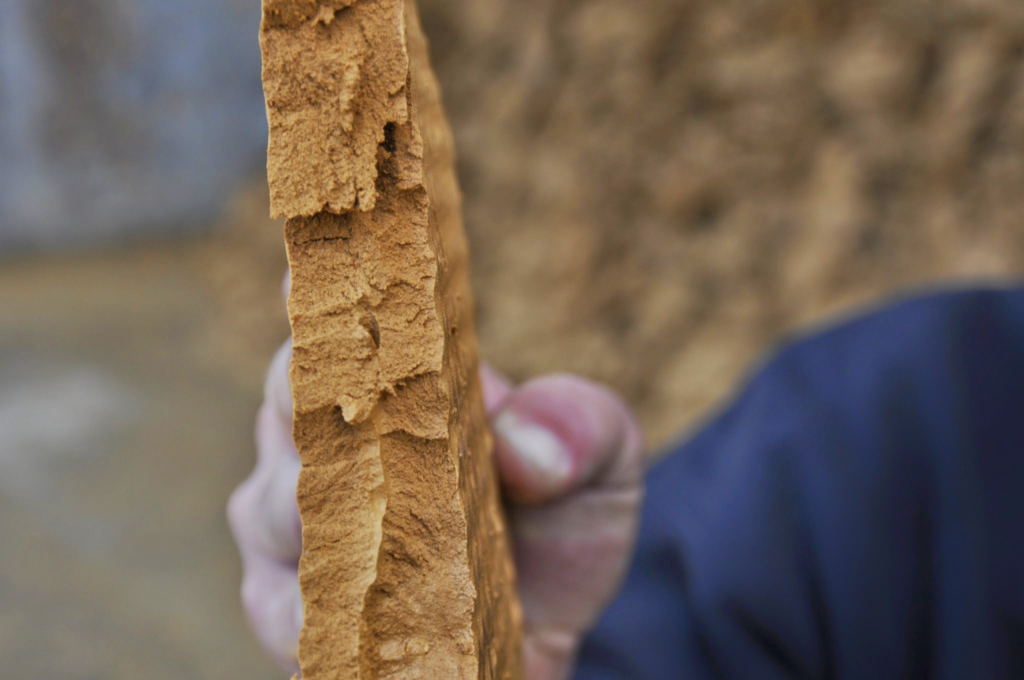
Many plants respond by adding water to turn a cake into a slurry so that a spray dryer can be used. This increases the evaporation load, energy cost and downstream dust handling. A better approach is to match the dryer to the actual rheology of the feed.
This guide provides a practical framework for selecting dryers for sticky, high-moisture solids and slurries.
1. First Classify the Feed Correctly
| Feed description | Typical behaviour | Primary technologies to evaluate |
|---|---|---|
| Sticky / cohesive filter cake or paste (non-pumpable) | Does not flow, bridges, sticks to surfaces | Spin-flash / flash dryer, paddle / indirect contact dryer |
| High-moisture but pumpable slurry or suspension | Can be pumped and atomised | Spray dryer (sometimes with secondary fluid-bed) |
| Concentrated viscous slurry or mother liquor (ZLD / evaporation residue) | Thick, high solids, often scaling | Agitated thin-film dryer (ATFD) or specialised contact systems |
| Free-flowing damp granules or crystals | Can be fluidised | Fluid-bed / vibratory fluid-bed (not the subject of this page) |
The most common and costly error is treating a non-pumpable cake as if it were a slurry.
2. Core Technologies for Sticky and High-Moisture Feeds
Spin-Flash / Flash Dryer
Wet cake is mechanically dispersed by a high-speed rotor into a hot-gas stream. Moisture evaporates rapidly while the particles are classified and discharged as a free-flowing powder.
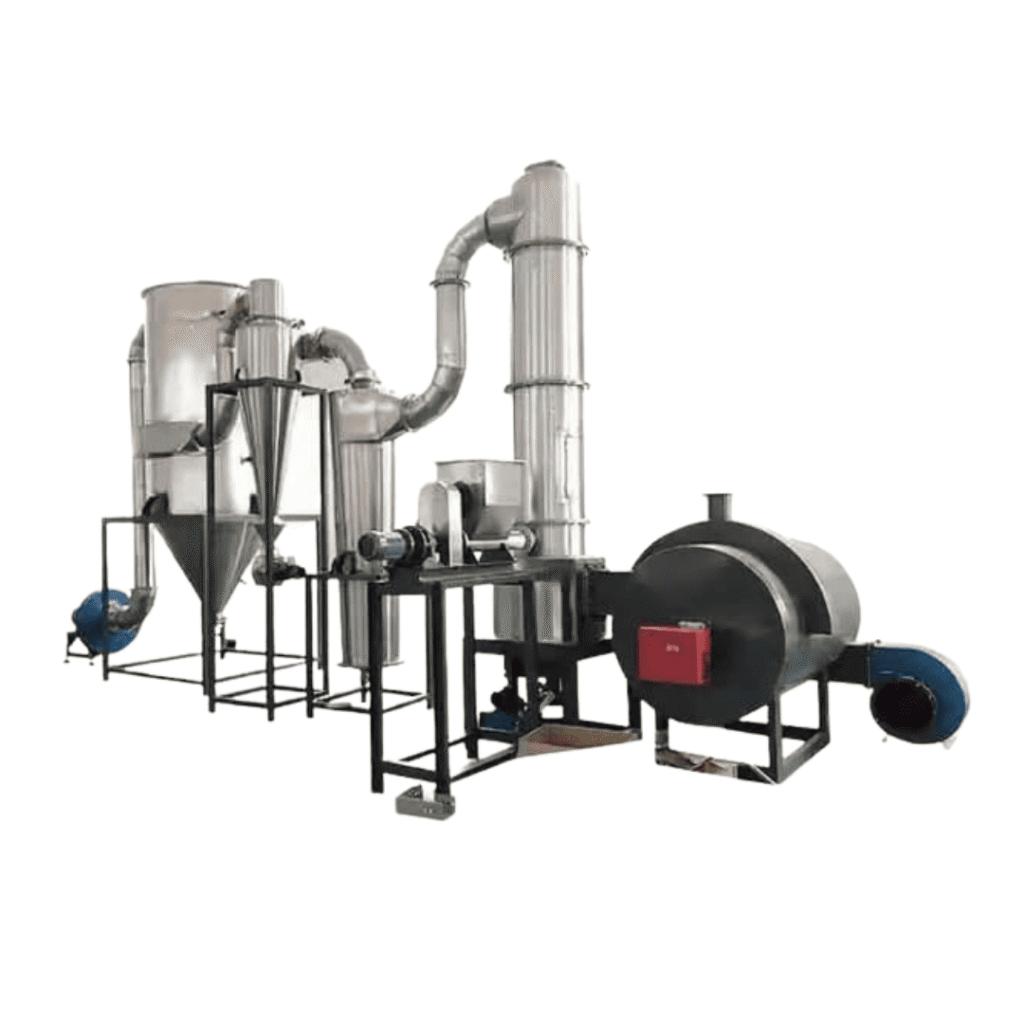
Why it is frequently the first choice for sticky cakes
- Accepts cohesive filter cake without re-slurrying
- Short residence time limits thermal damage
- Continuous operation with relatively compact footprint
- Proven on pigment, dye, TiO₂, silica, calcium carbonate, many chemical intermediates and selected battery-material cakes
Key design points
- Rotor and dispersion zone matched to cake consistency
- Hot-gas temperature and velocity controlled to residual-moisture target
- Robust dust collection and product recovery
Paddle / Indirect Contact Dryer
Heat is transferred through heated shafts, paddles and often a jacketed trough while the material is continuously agitated. Process-gas volume is low.
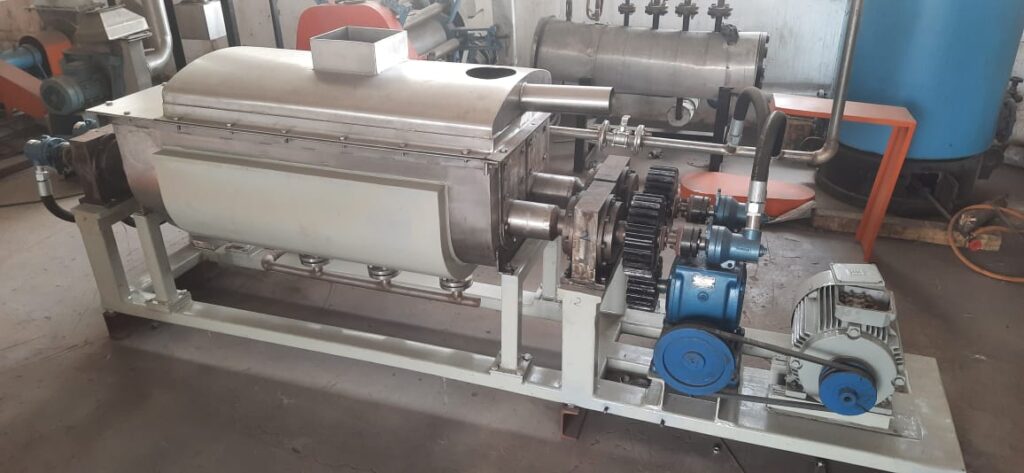
Why it is strong for pastes and sticky cakes
- Handles very sticky or pasty materials that would foul a flash dryer
- Enclosed operation supports vapour, solvent or odour control
- Good temperature control and relatively high thermal efficiency for suitable duties
- Suitable for continuous or semi-continuous operation
Typical uses: Chemical pastes, certain pharmaceutical and specialty cakes, sludge-like materials, and feeds where low gas volume is an advantage.
Spray Dryer (Only for True Pumpable Slurries)
A pumpable liquid or slurry is atomised into hot gas and converted directly into powder.
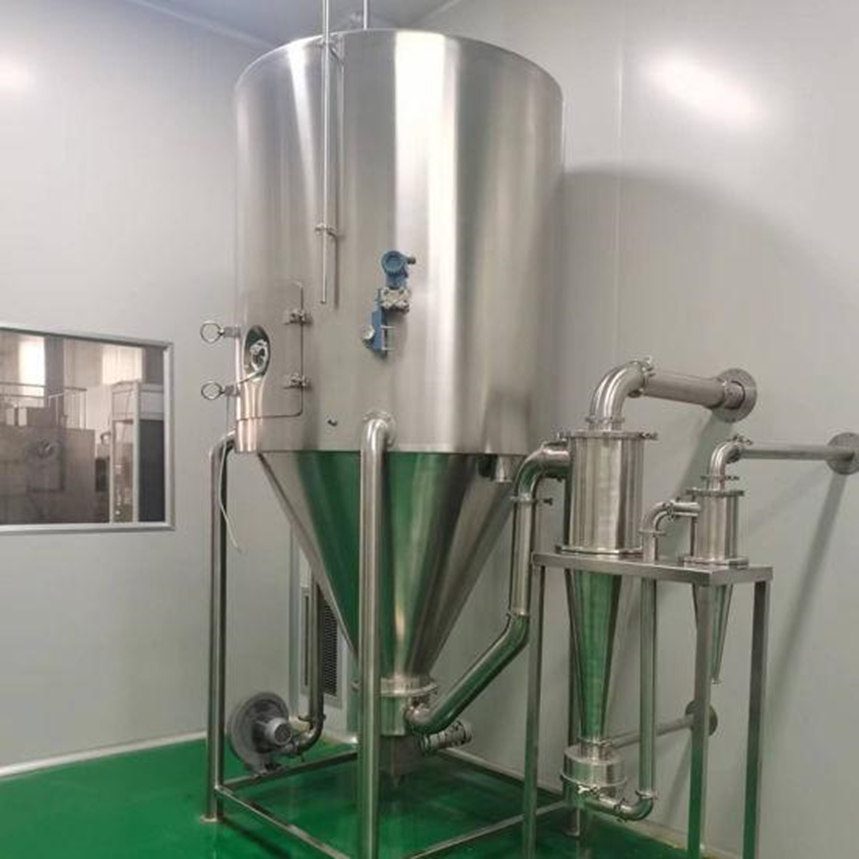
When it is appropriate
- The process is deliberately designed around a stable, pumpable slurry
- Particle morphology from atomisation is required
- Solids content is high enough that the evaporation load is economically acceptable
When it is usually a penalty
- The natural feed is a filter cake that must be diluted with large amounts of water solely to make it sprayable
Agitated Thin-Film Dryer (ATFD)
Creates a thin, turbulent film of concentrated slurry or viscous liquid on a heated surface. Particularly relevant in ZLD and high-TDS concentrate drying.
When it is evaluated
- High-solids concentrates, mother liquors and viscous residues after evaporation
- Need for continuous conversion of liquid/slurry concentrate into dry solids
3. Side-by-Side Comparison for Difficult Wet Feeds
| Decision factor | Spin-Flash / Flash | Paddle / Indirect | Spray Dryer | ATFD |
|---|---|---|---|---|
| Non-pumpable sticky cake | Strong | Strong | Requires dilution | Limited |
| Pumpable high-moisture slurry | Possible after conditioning | Possible | Strong | Strong for concentrates |
| Re-slurrying required | No | No | Often yes if starting from cake | No |
| Process-gas volume | Moderate–high | Low | High | Low |
| Residence time | Very short | Longer, controllable | Short | Short |
| Enclosed / vapour control | Good with proper design | Excellent | Moderate | Excellent |
| Typical footprint | Compact | Compact to moderate | Tall chamber | Compact |
| Best starting point for | Pigment, TiO₂, silica, PCC cakes | Very sticky pastes, solvent-containing cakes | True slurries | ZLD concentrates |
4. Practical Decision Path
- Is the feed a non-pumpable sticky cake or paste?
→ Evaluate spin-flash and paddle systems first. Avoid automatic re-slurrying. - Is the feed already a stable, pumpable slurry with acceptable solids content?
→ Evaluate spray drying (and possible secondary fluid-bed finishing). - Is the feed a high-TDS concentrate or viscous residue from evaporation?
→ Evaluate ATFD or specialised thin-film / contact systems. - Define residual-moisture target, maximum product temperature and any solvent, odour or contamination constraints.
- Confirm materials of construction, dust collection and vapour handling.
- Conduct representative-feed trials when cake rheology or residual-moisture specification is critical.
5. Common and Costly Mistakes
- Adding large volumes of water to a filter cake only to feed a spray dryer, then paying for the extra evaporation for the life of the plant.
- Installing a fluid-bed dryer for a cohesive cake that never fluidises.
- Ignoring vapour and odour load from high-moisture organic or chemical cakes.
- Underspecifying dust collection and product recovery for fine, high-value powders.
- Selecting solely on capital cost without evaluating total energy and maintenance impact of the wrong feed–technology match.
6. Data Required for a Reliable Recommendation
- Exact material and process stage
- Physical description of the feed (cake, paste, slurry) and approximate moisture
- Whether the feed is pumpable without dilution
- Target residual moisture
- Maximum allowable product temperature
- Capacity (dry basis preferred)
- Solvent content, odour or emission constraints
- Available utilities and space
- Downstream process requirements (powder handling, packaging, further reaction)
Geographic Note
Sticky filter cakes and high-moisture slurries appear in chemical, pigment, pharmaceutical, battery-material and wastewater plants worldwide. In India the same engineering logic applies, with additional attention to local utility costs, emission norms and the prevalence of filter-press cakes from chemical and pigment production. Technology selection still begins with the physical behaviour of the feed, not with regional equipment preferences.
How GTI Dryers Approaches Sticky and High-Moisture Feeds
GTI Dryers designs spin-flash/flash, paddle, spray and thin-film systems for difficult wet solids. The engineering approach is:
- Refuse to treat every wet solid as a slurry
- Match non-pumpable cakes to mechanical-dispersion or agitated-contact technologies
- Reserve spray drying for genuinely pumpable feeds or processes designed around atomisation
- Integrate vapour handling, dust collection and product recovery from the outset
- Support process-data review and representative-feed evaluation when rheology or residual moisture is critical
There is no universal “best” dryer for every sticky cake or slurry. The correct system is the one that accepts the actual feed, reaches the required residual moisture, and protects product quality at acceptable operating risk and cost.
Frequently Asked Questions
What is the best dryer for sticky filter cake?
Spin-flash / flash dryers and paddle dryers are the two most frequently evaluated options. The choice depends on cake consistency, temperature limits and the need for enclosed vapour control.
Should I re-slurry my filter cake to use a spray dryer?
Only if particle morphology from atomisation is essential or the process is already designed as a slurry route. In most cases re-slurrying increases energy consumption without improving the product.
Can a fluid-bed dryer handle sticky cake?
Generally no. Cohesive cakes do not fluidise properly and tend to channel or stick.
When is an ATFD the right choice?
For concentrated liquids, high-TDS slurries and viscous residues typical of the final stage of many ZLD systems.
What single piece of information is most important?
Whether the feed is pumpable without dilution, together with its moisture content and residual-moisture target.
Next Step
If your process generates sticky filter cakes, pastes or high-moisture slurries and you need a dryer that can accept the feed without unnecessary dilution or product damage, share the material description, moisture data and capacity. GTI can review the information and recommend a suitable configuration for technical discussion.
Request a sticky-cake / paste / slurry dryer assessment with your process data.
Contact the GTI Technical Team:
Website: gtidryers.com
Email: mktg@gtidryers.com
Phone / WhatsApp: +91 9330077417