
In the chemical industry, drying is rarely a simple moisture-removal step. Pigments, dyes, industrial salts and bulk inorganic chemicals leave upstream processes as filter cakes, crystals, granules or slurries. The dryer must deliver a free-flowing powder with controlled residual moisture while protecting particle size, colour, purity and downstream handling properties.
Selecting the wrong technology creates incomplete dispersion of cakes, agglomeration, colour shift, high residual moisture, excessive fines or dust-collection problems. This guide provides a practical, feed-form-based framework for choosing dryers across the main chemical families.
1. Start with Feed Form, Not Product Name
The most reliable way to shortlist technologies is to classify the material as it enters the dryer:
| Feed form entering the dryer | Primary technologies to evaluate first |
|---|---|
| Sticky filter cake or paste (pigments, TiO₂, silica, PCC, many dye intermediates) | Spin-flash / flash dryer, paddle / indirect dryer |
| Free-flowing crystals or granules (industrial salts, many inorganic salts) | Fluid-bed or vibratory fluid-bed dryer |
| Pumpable slurry or solution | Spray dryer |
| Robust bulk solids or coarse inorganic materials | Rotary dryer |
| Heat- or solvent-sensitive specialty chemicals | Vacuum or specialised contact systems |
Product chemistry matters for temperature limits, corrosion and purity, but feed form determines whether the material can be atomised, fluidised, dispersed or tumbled.
2. Dryer Technologies Commonly Used in the Chemical Industry
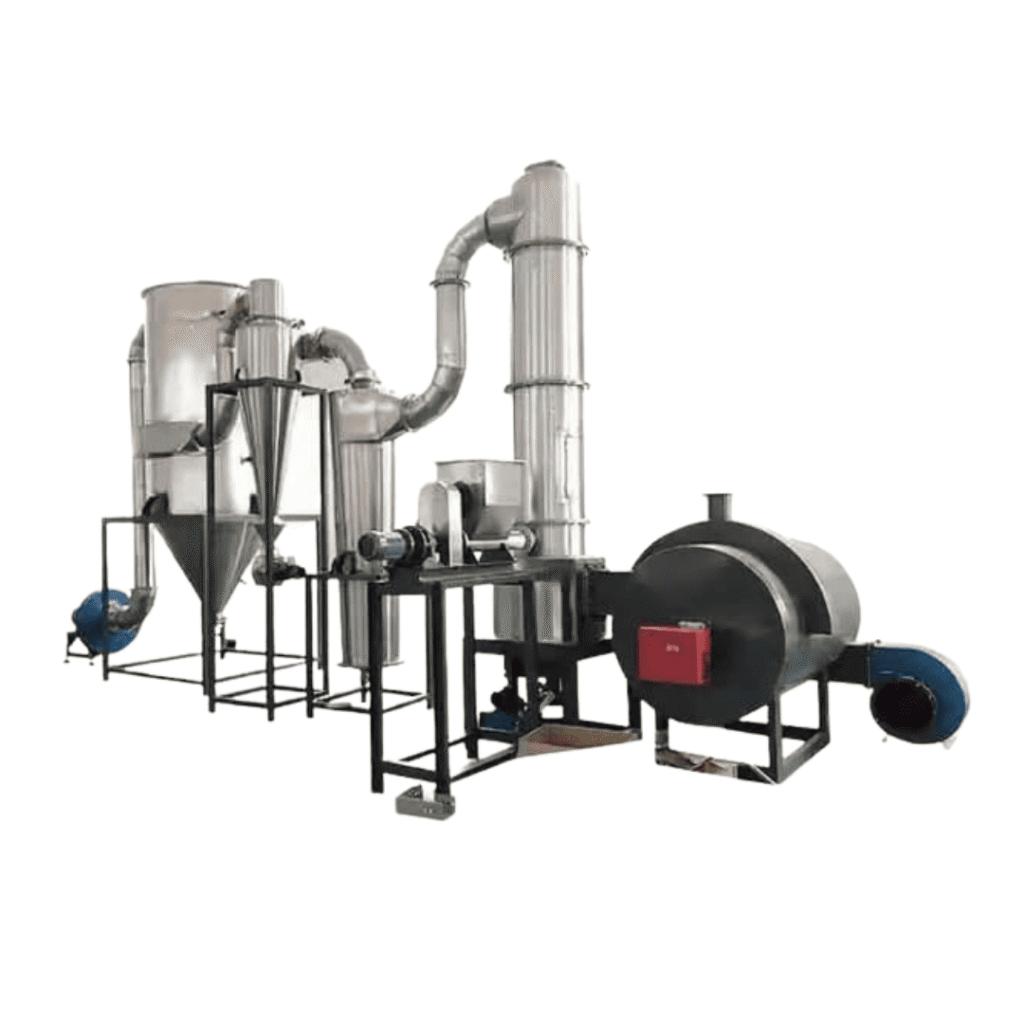
Spin-Flash / Flash Dryer
Mechanical dispersion of wet cake into a high-velocity hot-gas stream with short residence time.
Strong candidates for
- Pigment and dye filter cakes
- Precipitated silica
- Titanium dioxide cakes
- Calcium carbonate (PCC) filter cakes
- Many fine inorganic precipitates
Why it works
- Handles cohesive cakes that will not fluidise
- Rapid drying with continuous classification
- Produces free-flowing powder without the need to re-slurry
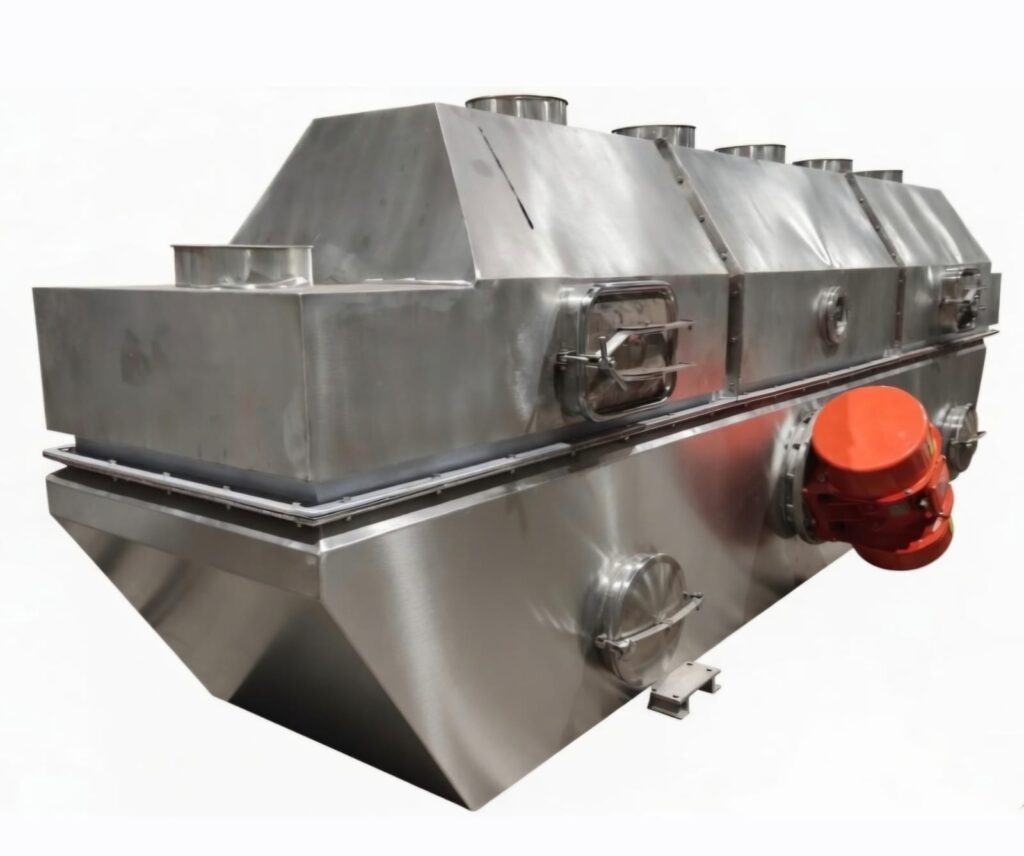
Fluid-Bed / Vibratory Fluid-Bed Dryer
Upward hot air fluidises free-flowing particles; vibration can assist movement of broader size distributions.
Strong candidates for
- Industrial salts (sea salt, vacuum salt, rock salt, iodised salt)
- Sodium carbonate, sodium sulfate, potassium chloride and similar crystals
- Free-flowing inorganic granules and secondary drying of powders
Why it works
- Excellent gas–solid contact and residual-moisture uniformity
- Integrated cooling often possible
- Gentle handling for crystals that must retain integrity
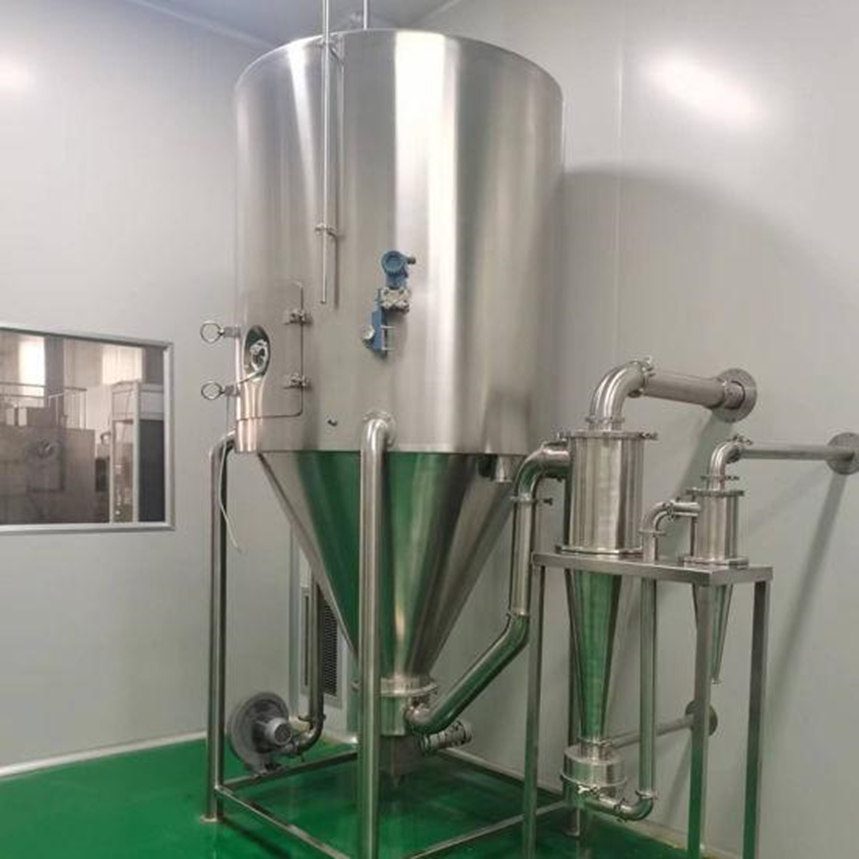
Spray Dryer
Atomisation of a pumpable liquid or slurry into hot gas, converting it directly into powder.
Strong candidates for
- Dye or pigment slurries that are intentionally kept pumpable
- Certain specialty chemical solutions
- Processes where particle morphology from atomisation is required
Limitation
- Not suitable for non-pumpable filter cakes unless the process is redesigned around a slurry feed (usually an energy penalty).
Rotary Dryer
Rotating drum with cascading flights; direct or indirect heating.
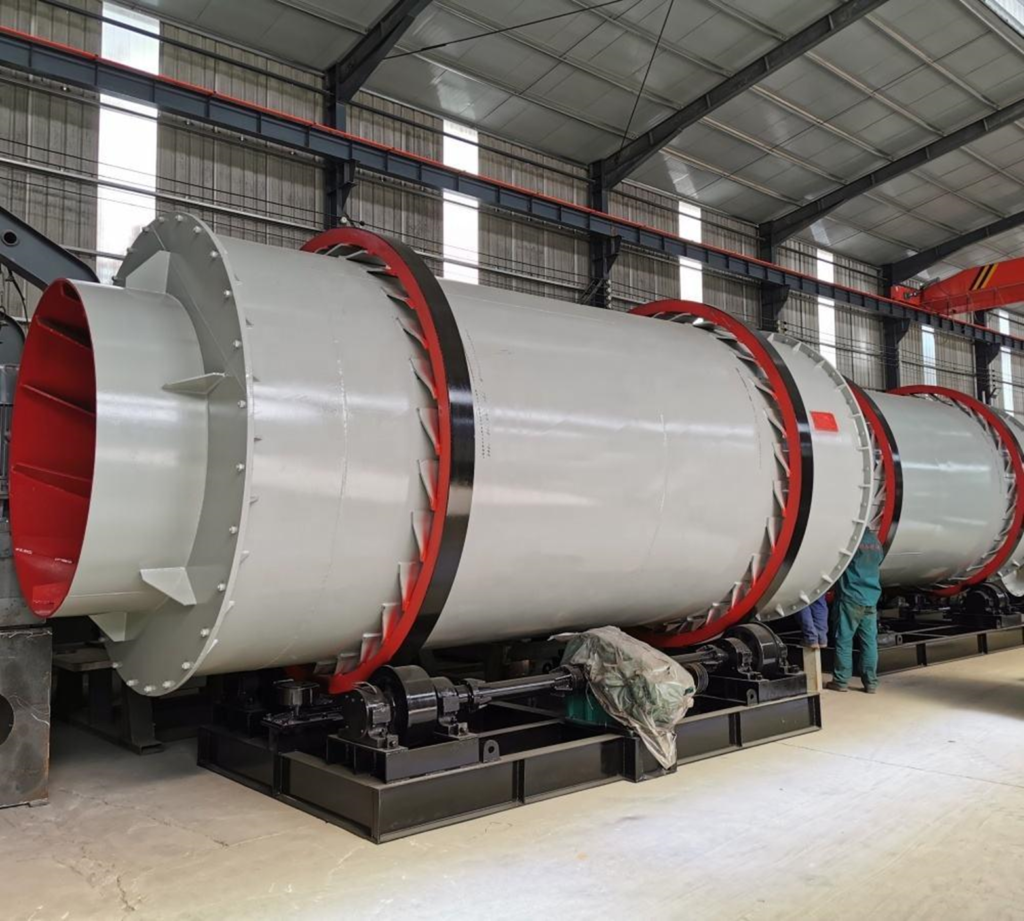
Strong candidates for
- High-volume bulk inorganic solids
- Robust mineral-derived chemicals
- Materials that can tolerate tumbling
Paddle / Indirect Contact Dryer
Conductive heating with mechanical agitation; low process-gas volume.
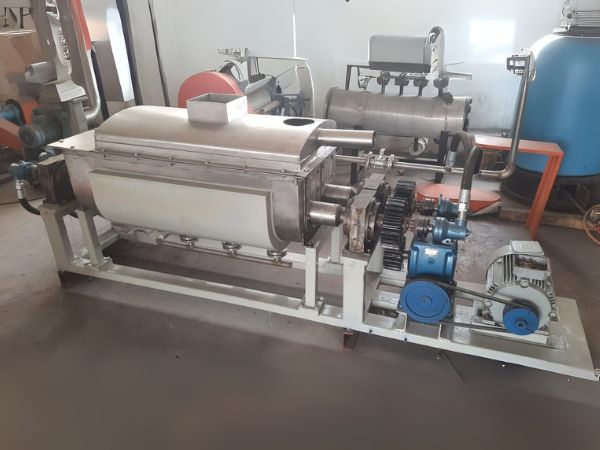
Strong candidates for
- Sticky cakes where enclosed operation and solvent or vapour control are important
- Specialty chemicals requiring tighter atmosphere or temperature control
3. Material-Family Selection Guidance
Pigments and Dyes
Most industrial pigments and many dyes leave filtration as wet, cohesive cakes. Particle size, colour strength and dispersibility are critical.
Primary technologies: Spin-flash / flash systems for filter cakes; spray drying when the process operates with a stable slurry.
Key risks: Incomplete dispersion, agglomeration, colour or tint strength loss, contamination from wear materials.
Industrial Salts
After crystallisation, washing and centrifugation, salt is typically a free-flowing crystalline solid with residual surface moisture.
Primary technology: Fluid-bed drying (often with integrated cooling).
Key requirements: Uniform residual moisture to prevent caking in storage, retention of crystal integrity, and corrosion-resistant construction.
Bulk Inorganic Chemicals (PCC, TiO₂, Silica, etc.)
Precipitated products frequently arrive as filter cakes that resist fluidisation.
Primary technologies: Spin-flash for cohesive cakes; fluid-bed or rotary for free-flowing or bulk forms; spray drying for selected slurry routes.
Key requirements: Particle morphology, residual moisture, and purity appropriate to the end use (paper, plastics, coatings, etc.).
4. Practical Decision Path
- Identify the exact material and its physical form at the dryer inlet (cake, crystal, slurry, bulk solid).
- Define target residual moisture and any particle-size or colour specifications.
- Check maximum product temperature and corrosion or contamination constraints.
- Shortlist technologies that can accept the feed form without forced re-slurrying or severe attrition.
- Evaluate dust collection, materials of construction and energy integration.
- Confirm with representative-feed testing when cake rheology or particle integrity is critical.
5. Common Selection Mistakes
- Installing a fluid-bed dryer for a sticky pigment or TiO₂ cake that never fluidises.
- Re-slurrying a filter cake solely to feed a spray dryer, increasing the evaporation load.
- Treating all “inorganic chemicals” as identical and applying one standard machine.
- Ignoring residual-moisture uniformity for salts, leading to caking in bags or silos.
- Under-specifying dust collection and materials of construction for abrasive or corrosive products.
6. Data Required for a Reliable Recommendation
- Exact chemical and grade
- Physical form (filter cake, crystals, slurry, powder)
- Inlet and target residual moisture
- Particle-size or morphology requirements
- Maximum product temperature
- Capacity (dry basis preferred)
- Corrosion, abrasion and purity constraints
- Available utilities and space
Geographic Note
Pigment, dye, salt and inorganic chemical production is significant in India, China, Europe and other industrial regions. The engineering logic is the same: match dryer technology to feed form and product specification. Local differences appear mainly in scale, energy cost, emission norms and the availability of utilities. Technology selection should still begin with the material’s physical state, not with regional equipment preferences.
How GTI Dryers Approaches Chemical Industry Drying
GTI Dryers designs spray, spin-flash/flash, fluid-bed, rotary and paddle systems for pigments, dyes, salts and bulk inorganic chemicals. The approach is:
- Begin with feed form and product-quality requirements
- Map sticky cakes to dispersion technologies (spin-flash, paddle)
- Map free-flowing crystals and granules to fluid-bed systems
- Map pumpable slurries to spray drying where morphology or process design justifies it
- Support process-data review and representative-feed evaluation when particle integrity or residual moisture is critical
There is no single “best” dryer for the chemical industry. The correct system is the one that reliably converts the given feed into a free-flowing powder meeting the required residual moisture and quality specification at acceptable operating risk and cost.
Frequently Asked Questions
What is the best dryer for pigment filter cake?
Spin-flash / flash dryers are frequently the strongest starting point because they disperse cohesive cakes and produce free-flowing powder without re-slurrying.
What is the preferred dryer for industrial salt?
Fluid-bed dryers are widely used for free-flowing salt crystals because of uniform residual moisture and the possibility of integrated cooling.
Can one dryer handle both pigments and salts?
Only if the feed forms are compatible. A system optimised for sticky cake is rarely optimal for free-flowing crystals, and vice versa.
Is residual moisture the only specification that matters?
No. Particle size, colour, dispersibility, purity and caking behaviour are equally important for many chemical products.
What information does GTI need for an assessment?
Material type, feed form, moisture figures, residual-moisture target, capacity and any particle or purity requirements.
Next Step
If you are drying pigments, dyes, salts or inorganic chemicals and need a system matched to your feed form and product specification, share the material data, moisture targets and capacity. GTI can review the information and recommend a suitable dryer configuration for technical discussion.
Request a chemical industry dryer assessment with your process data.
Contact the GTI Technical Team:
Website: gtidryers.com
Email: mktg@gtidryers.com
Phone / WhatsApp: +91 9330077417