
In oral solid dosage (OSD) manufacturing, wet granulation is only one stage of the process. The wet granules that leave the high-shear granulator or fluid-bed granulator still contain significant moisture and must be dried to a controlled residual-moisture level before milling, blending, lubrication and compression or capsule filling.
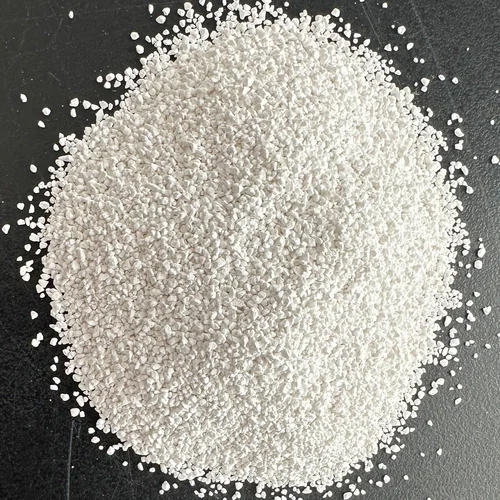
The drying step directly influences granule porosity, residual moisture uniformity, flow properties and, ultimately, tablet hardness, disintegration and content uniformity. Choosing the wrong dryer or operating it outside the validated window creates downstream quality problems that are expensive to correct.
This guide focuses on the practical selection of dryers for pharmaceutical wet granules in OSD manufacturing.
1. Where Drying Sits in the OSD Process
A typical wet-granulation OSD sequence is:
Dry mix → Wet granulation (high-shear or fluid-bed) → Wet granules → Drying → Milling / sizing → Blending → Compression / encapsulation
The dryer receives cohesive, moisture-laden granules and must deliver free-flowing, uniformly dry granules that meet the residual-moisture specification (often in the range of 1–3 % or as defined by the product) without destroying the granule structure created during granulation.
2. Why Fluid-Bed Drying Is the Primary Technology for Wet Granules
Fluid-bed dryers (FBD) pass heated air upward through a bed of granules, suspending the particles so that each granule is surrounded by drying gas. This produces rapid, relatively uniform heat and mass transfer.
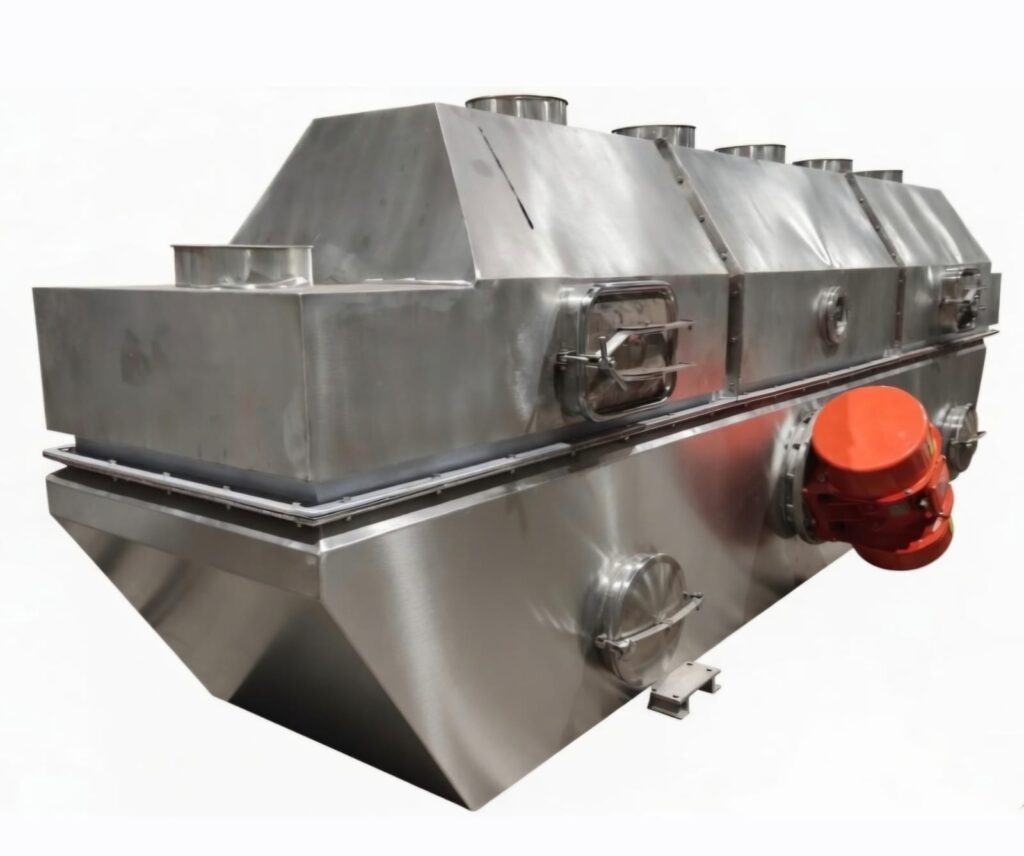
Reasons fluid-bed drying is widely used for pharmaceutical wet granules
- Efficient gas–solid contact and shorter drying cycles compared with static tray drying
- More uniform residual moisture when the bed is properly fluidised
- Ability to transfer wet granules into the dryer and discharge dried product with reduced manual handling
- Compatibility with closed material handling and GMP requirements when correctly designed
- Possibility of integrating drying and cooling in the same unit
FDA guidance has long recognised fluid-bed drying as a standard approach for wet granulation processes and notes that it can provide more uniform granulation than tray drying when properly operated.
3. Alternative and Complementary Technologies
| Technology | Best-suited situation | Key consideration |
|---|---|---|
| Fluid Bed Dryer (batch) | Standard wet pharmaceutical granules after high-shear or fluid-bed granulation | Requires granules that can be fluidised; validated air distribution and filter systems essential |
| Vibratory Fluid Bed Dryer | Free-flowing granules where continuous operation is acceptable | Vibration assists movement and can reduce air velocity |
| Tray / Vacuum Tray Dryer | Heat-sensitive products, small batches, or materials that cannot be fluidised | Longer cycle times; moisture gradients possible if loading is uneven |
| Vacuum Paddle / Conical Dryer | Sticky cakes, pastes or solvent-wet materials (more common for APIs than for standard OSD granules) | Indirect heating and enclosed operation |
| Spray Dryer | Solutions or suspensions that must be converted directly to powder (excipients or specific formulations) | Not the primary route for post-wet-granulation drying |
For conventional post-wet-granulation OSD manufacturing, fluid-bed drying is usually the first technology evaluated. Other systems are considered when the product is heat-sensitive, cannot be fluidised, or belongs to a different process family (API isolation, solvent-wet intermediates, etc.).
4. Critical Process Variables in Pharmaceutical Granule Drying
| Variable | Why it matters | Practical implication |
|---|---|---|
| Inlet air temperature | Drives evaporation rate | Must be high enough for productivity but low enough to protect the formulation |
| Product / exhaust temperature | Indicates actual thermal exposure | Often used as a process endpoint or control parameter |
| Airflow / fluidisation velocity | Determines bed movement and heat transfer | Too low → channelling; too high → attrition and filter loading |
| Residual moisture target | Affects downstream compressibility and stability | Must be measurable and achievable within the validated cycle |
| Filter integrity and cleaning | GMP and cross-contamination control | Critical for multi-product facilities |
| Loading / batch size | Affects fluidisation and drying uniformity | Scale-up requires demonstrated equivalence |
5. Fluid Bed vs Tray Dryer – Practical Comparison for OSD
| Factor | Fluid Bed Dryer | Tray Dryer |
|---|---|---|
| Drying speed | Fast (typically minutes to a few hours) | Slow (often many hours) |
| Moisture uniformity | High when properly fluidised | Moderate; depends on tray loading and air circulation |
| Risk of case-hardening / migration | Lower with good fluidisation | Higher with static beds |
| Manual handling | Can be minimised with closed transfer | Higher with traditional tray loading |
| Footprint for given capacity | Compact | Larger |
| Suitability for heat-sensitive products | Good with controlled temperatures | Strong (especially vacuum tray) |
| Typical OSD role | Primary technology for wet granules | Still used for certain products or small scale |
6. Practical Decision Path for OSD Granule Drying
- Confirm the material is wet granules from a wet-granulation process (not an API wet cake or solution).
- Verify that the granules can be fluidised without excessive attrition.
- Define the residual-moisture specification and any temperature limits of the formulation.
- Evaluate batch fluid-bed drying as the primary option for standard OSD production.
- Consider vacuum tray or other enclosed systems only when fluidisation is unsuitable or thermal sensitivity demands lower temperatures / vacuum.
- Ensure the selected system supports the required GMP features (cleanability, containment, documentation, change-control).
- Validate the drying endpoint (moisture, temperature, time) as part of the overall process validation.
7. Common Mistakes in Pharmaceutical Granule Drying
- Treating tray drying and fluid-bed drying as interchangeable without considering moisture uniformity and cycle time.
- Overlooking the importance of air-distribution plates and filter systems in fluid-bed units.
- Using an endpoint based only on time instead of a measurable residual-moisture or product-temperature criterion.
- Scaling up from laboratory to production without demonstrating equivalent fluidisation and drying behaviour.
- Neglecting cleanability and cross-contamination controls in multi-product OSD facilities.
8. Data Required for a Reliable Recommendation
- Formulation type and wet-granulation method (high-shear, fluid-bed granulation, etc.)
- Typical batch size and granule characteristics (size, density, stickiness)
- Inlet moisture and target residual moisture
- Maximum allowable product temperature
- Required throughput or number of batches per day
- GMP / containment / cleanability requirements
- Preference for batch or continuous operation
- Any solvent content or special atmosphere needs
Geographic Note
Fluid-bed drying of pharmaceutical granules is a global standard in modern OSD plants in India, Europe, North America and other regulated markets. Regulatory expectations (cGMP, data integrity, cleaning validation) are similar in principle; local documentation and inspection practices differ. Technology selection should still begin with the granule behaviour and residual-moisture requirement, not with regional equipment preferences.
How GTI Dryers Approaches Pharmaceutical Granule Drying
GTI Dryers designs fluid-bed and related drying systems for pharmaceutical applications, including wet-granule drying in OSD manufacturing. The engineering approach is:
- Treat post-wet-granulation drying as a critical quality step, not a generic moisture-removal operation
- Position fluid-bed drying as the primary technology for suitable pharmaceutical granules
- Evaluate tray, vacuum or continuous alternatives only when product behaviour or process constraints require them
- Support process-data review and, where appropriate, trial work to confirm fluidisation and residual-moisture performance
There is no single “best” dryer for every pharmaceutical material. For conventional wet granules in OSD manufacturing, a properly designed and validated fluid-bed dryer is usually the most appropriate starting point.
Frequently Asked Questions
What is the most common dryer for pharmaceutical wet granules?
Fluid-bed dryers are widely used because they provide efficient, relatively uniform drying of granules that can be fluidised.
When should a tray dryer still be considered?
For heat-sensitive products that cannot tolerate fluidisation temperatures or air contact, for very small batches, or when the material does not fluidise well.
Can the same fluid-bed unit granulate and dry?
Yes. Fluid-bed processors can combine granulation (with binder spray) and subsequent drying in the same bowl. A pure fluid-bed dryer is used when granulation is performed in a separate high-shear granulator.
What residual moisture should be targeted?
It is product-specific. Many OSD granules are dried to a low single-digit percentage, but the exact specification must come from the formulation and stability data.
What information does GTI need for an assessment?
Granule type and origin, batch size, moisture targets, temperature limits and GMP requirements.
Next Step
If you are selecting or upgrading drying capacity for pharmaceutical wet granules in OSD manufacturing, share the granule characteristics, residual-moisture target and production requirements. GTI can review the data and recommend a suitable dryer configuration for technical discussion.
Request a pharmaceutical granule / OSD dryer assessment with your process data.
Contact the GTI Technical Team:
Website: gtidryers.com
Email: mktg@gtidryers.com
Phone / WhatsApp: +91 9330077417