
Effluent Treatment Plants (ETPs), municipal sewage treatment plants and Zero Liquid Discharge (ZLD) systems all generate wet solids that must be further dried. The objectives are the same in principle — reduce volume, improve handling, lower transport and disposal cost, and meet regulatory or recovery requirements — yet the sludge itself is not the same.
Industrial ETP sludge, municipal/STP sludge and ZLD concentrates differ in composition, stickiness, organic content, salt load and regulatory classification. Selecting a dryer without recognising these differences is one of the most common causes of operational problems.

This guide provides a practical framework for matching dryer technology to sludge type and process goal.
1. Why Thermal Drying Is Needed After Mechanical Dewatering
Mechanical dewatering (filter press, belt press, screw press, centrifuge) removes free water and typically produces a cake still containing 60–85 % moisture (wet basis), depending on the sludge and equipment. Thermal drying is applied when further moisture reduction is required for:
- Lower transport and disposal cost
- Improved storage stability and reduced odour
- Compliance with landfill or co-processing criteria
- Preparation for incineration, co-combustion or resource recovery
- Final solids handling in a ZLD train
Thermal drying is not a substitute for proper upstream dewatering; it is the next controlled step.
2. Three Different Sludge Families
| Sludge type | Typical origin | Key characteristics that affect dryer choice |
|---|---|---|
| Industrial ETP sludge | Chemical, pharma, textile, dye, food, paper, CETP | Variable composition, often sticky/pasty, may contain process chemicals, salts or fibres; regulatory status is site-specific |
| Municipal / STP sludge | Sewage treatment plants | Higher organic content, biological character, pathogen and vector-attraction considerations; regulated as biosolids in many jurisdictions |
| ZLD concentrates / residues | Downstream of MEE/MVR or high-TDS evaporation | High dissolved solids, salts, mother liquors or viscous concentrates; often requires thin-film or specialised contact drying |
Important: Industrial ETP sludge should not automatically be treated as municipal biosolids. Composition, contaminants and intended disposal or recovery route must be established for each project.
3. Dryer Technologies Commonly Evaluated
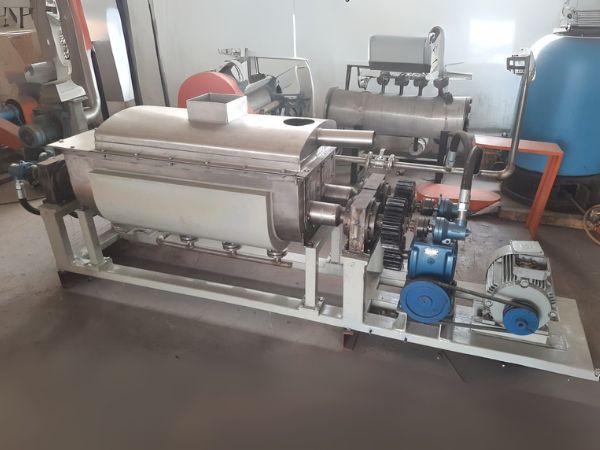
Paddle Dryer (Indirect Contact)
Indirect conductive heating through hollow shafts, paddles and often a jacketed trough. Low process-gas volume, enclosed operation, continuous mixing.
Strong candidates when
- Sludge is sticky, pasty or cohesive cake
- Enclosed vapour handling and odour control are priorities
- Compact footprint is required
- Continuous or semi-continuous operation is preferred
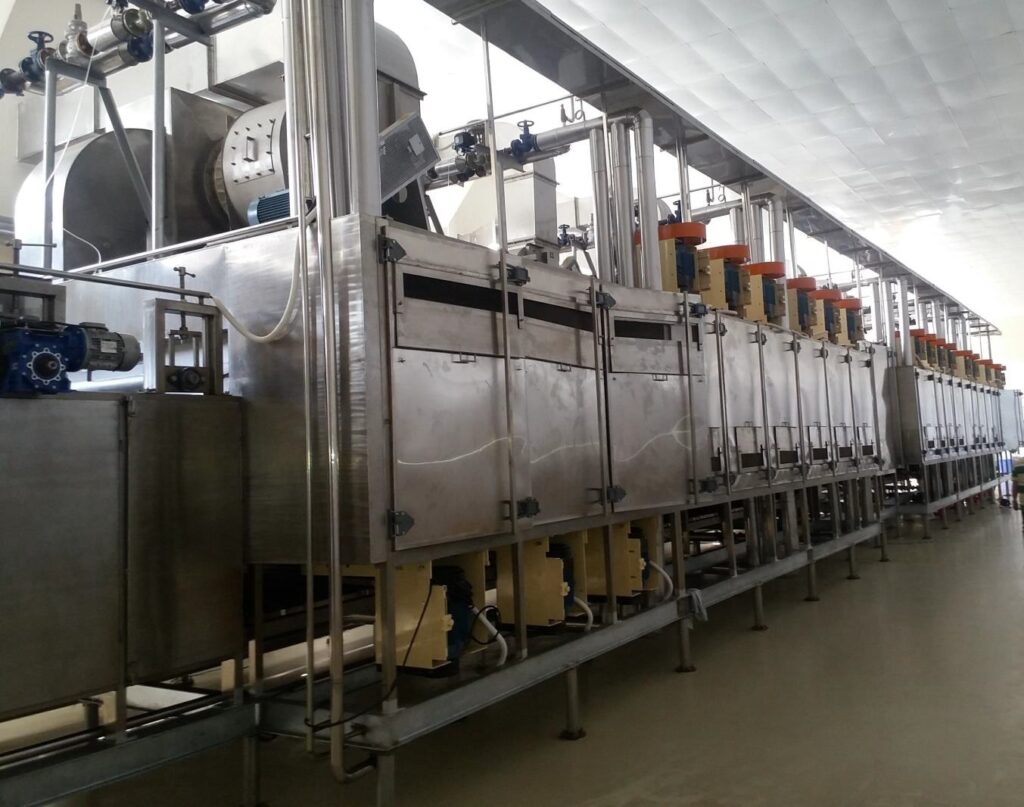
Belt / Band / Mesh-Belt Dryer
Sludge is spread on a moving perforated or mesh belt and dried by controlled hot air in multiple zones.
Strong candidates when
- Larger continuous throughput with relatively stable, spreadable sludge
- Multi-zone temperature control is useful
- Plant has adequate floor space
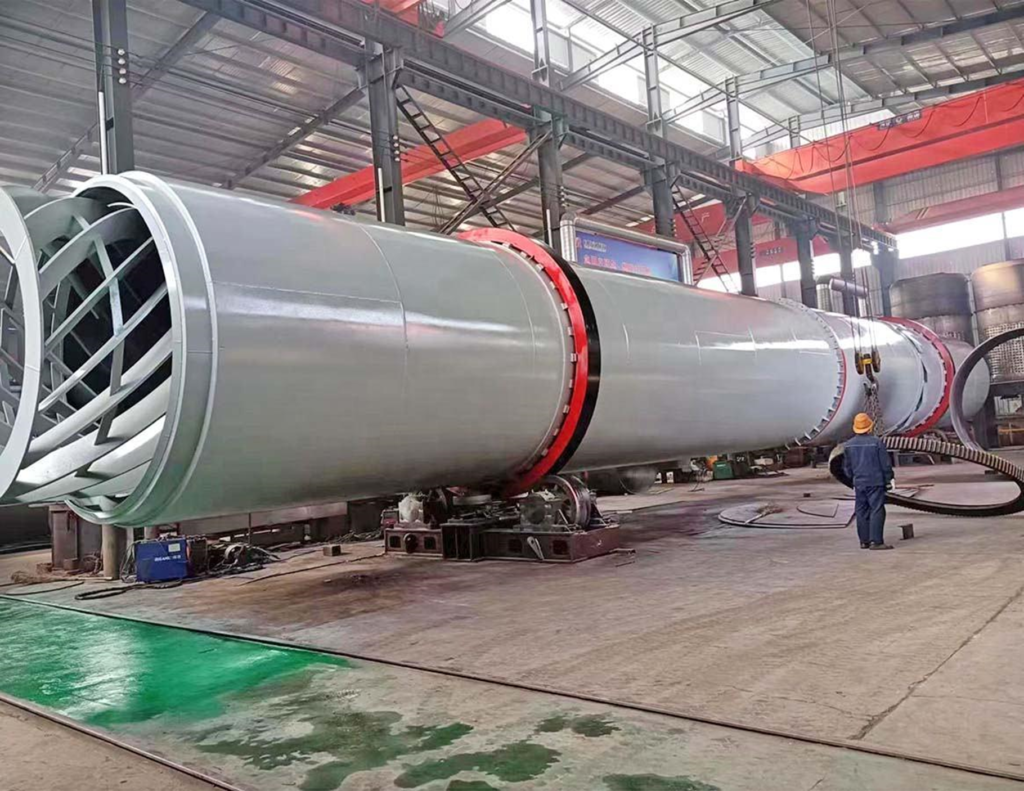
Rotary Dryer
Rotating drum with cascading action; can be direct or indirect.
When considered
- Higher continuous capacities
- Sludge that can be conditioned to a more granular or less sticky form
- Robust bulk handling is acceptable
Thin-Film / Agitated Thin Film Dryer (ATFD)
Especially relevant in ZLD trains for concentrated liquids, brines, mother liquors and high-TDS slurries. Creates a thin turbulent film on a heated surface for rapid evaporation.
Strong candidates when
- Feed is a concentrated liquid or pumpable high-solids slurry from evaporation
- Final conversion of ZLD concentrate to dry residue is required
Other Options
Disc dryers, fluid-bed systems (for suitably conditioned material) and hybrid arrangements appear in specific projects. Selection always starts from sludge rheology and final destination.
4. Technology Selection Starting Matrix
| Requirement | Paddle (Indirect) | Belt / Band | Rotary | ATFD / Thin-Film |
|---|---|---|---|---|
| Sticky / pasty ETP cake | Strong | Possible with feed prep | Possible with design care | Limited (better for concentrates) |
| Municipal sludge (after dewatering) | Strong | Strong | Possible | Less common |
| ZLD concentrate / high-TDS slurry | Possible for some solids | Limited | Limited | Strong |
| Low process-air / enclosed system | Strong | Moderate | Moderate | Strong |
| High continuous throughput | Good | Strong | Strong | Application-dependent |
| Odour & vapour management priority | Strong | Requires robust exhaust treatment | Requires robust exhaust treatment | Strong (low gas volume) |
| Compact footprint | Advantage | Larger | Larger | Compact |
This matrix is a screening tool. Final selection requires sludge analysis and process data.
5. Practical Decision Path
- Identify the sludge family — industrial ETP, municipal/STP, or ZLD concentrate.
- Determine feed form after dewatering — sticky cake, spreadable cake, granular, or concentrated slurry/liquid.
- Define the target residual moisture and the reason (landfill, co-processing, incineration, recovery, storage).
- Assess odour, VOC and emission constraints — these often favour indirect, low-gas-volume systems.
- Check available utilities and space — steam, thermal oil, hot water, waste heat, and plant footprint strongly influence configuration.
- Evaluate total system scope — feeding, vapour condensation/treatment, odour control, cooling, discharge and storage must be engineered together with the dryer.
- Confirm with representative sludge testing when composition or stickiness is variable.
6. Critical Engineering Considerations
| Factor | Why it matters | Design implication |
|---|---|---|
| Inlet moisture after dewatering | Sets the evaporation load | Never size a dryer on “wet sludge” without stating dewatered moisture |
| Stickiness and phase behaviour | Causes wall deposits, bridging and incomplete drying | Prefer systems with mechanical agitation or proven feed conditioning |
| Residual moisture target | Affects disposal cost and regulatory compliance | Must be realistic for the chosen technology and residence time |
| Odour and vapour load | Major community and permitting issue | Enclosed systems + proper condensation/scrubbing often preferred |
| Corrosion and abrasion | Industrial and saline sludge can be aggressive | Materials of construction must match the chemistry |
| Final destination | Landfill, cement kiln, incineration, agricultural use (where permitted) | Determines dryness, particle form and documentation needs |
7. Common Mistakes
- Treating all “sludge” as identical and applying one standard dryer design.
- Undersizing vapour treatment and then fighting odour complaints.
- Ignoring upstream dewatering performance — a poor cake makes every dryer more expensive to operate.
- Focusing only on dryer purchase price instead of total installed cost (feeding, vapour system, odour control, civil works).
- Assuming dried industrial ETP sludge can automatically follow municipal biosolids rules.
8. Data Required for a Reliable Recommendation
- Sludge source (ETP industry type, municipal/STP, ZLD stage)
- Dewatered moisture content and physical consistency
- Target residual moisture and reason for drying
- Daily or hourly quantity (dry basis preferred)
- Available heat source and utilities
- Odour, emission and permitting constraints
- Intended disposal, co-processing or recovery route
- Space and layout limitations
Geographic Note
In India, ETP and CETP sludge drying is driven by disposal cost, landfill restrictions and increasing pressure toward volume reduction and recovery. Municipal plants face similar volume and odour drivers. ZLD projects in chemical, pharmaceutical and textile sectors frequently require a final drying stage (often ATFD or equivalent) after evaporation. The same engineering logic applies in other regions; local regulations determine the exact residual-moisture and quality targets, but technology selection still begins with sludge type and rheology.
How GTI Dryers Approaches Sludge and ZLD Drying
GTI Dryers designs industrial drying systems for ETP sludge, municipal sludge and ZLD-related concentrates. The approach is:
- Distinguish industrial ETP sludge from municipal biosolids and from ZLD concentrates
- Match technology (paddle, belt, rotary, thin-film/ATFD and related systems) to actual sludge behaviour and final destination
- Engineer the complete chain — feeding, drying, vapour/odour treatment and discharge — rather than the dryer in isolation
- Support process-data review based on real dewatered sludge characteristics
There is no universal “best” sludge dryer. The correct system is the one that reliably converts the given sludge into a stable, lower-volume solid that meets the plant’s handling, disposal or recovery requirements at acceptable operating risk and cost.
Frequently Asked Questions
What is the best dryer for sticky ETP sludge cake?
Indirect paddle dryers are frequently the strongest starting point because they combine mechanical agitation, enclosed operation and low process-gas volume. Final selection still depends on the specific sludge and plant constraints.
Can the same dryer be used for municipal and industrial sludge?
Only if the sludge characteristics and regulatory pathways are compatible. Composition, contaminants and permitted end uses often differ, so separate evaluation is recommended.
Where does an ATFD fit in a ZLD plant?
Typically as the final drying stage for concentrated brine, mother liquor or high-TDS slurry after multi-effect or mechanical vapour recompression evaporation.
Is thermal drying always required after dewatering?
No. It is required when further moisture reduction is needed for cost, compliance, handling or recovery reasons. Some plants stop at mechanical dewatering if the cake meets their disposal criteria.
What single piece of information is most important?
The physical state and moisture of the sludge as it will enter the dryer, together with the target residual moisture and the intended final destination of the dried solid.
Next Step
If your plant generates ETP sludge, municipal sludge or ZLD concentrates and you need to reduce volume, improve handling or meet disposal/recovery targets, share the sludge type, dewatered moisture, target dryness and capacity. GTI can review the data and recommend a suitable dryer configuration for technical discussion.
Request an ETP / municipal sludge / ZLD dryer assessment with your process data.
Contact the GTI Technical Team:
Website: gtidryers.com
Email: mktg@gtidryers.com
Phone / WhatsApp: +91 9330077417