
Silica gel, molecular sieves (zeolites) and related desiccant powders are manufactured as high-surface-area, porous materials whose value lies in their ability to adsorb moisture or other molecules. After precipitation, gelation, washing or ion exchange, these materials typically leave the process as wet filter cakes or moist powders that must be dried to a controlled residual moisture before activation, forming, packaging or sale.
Drying is not a simple moisture-removal step. Excessive temperature, prolonged exposure or mechanical stress can collapse pores, reduce specific surface area, create hard agglomerates or leave residual moisture that compromises adsorption performance. This page focuses on the industrial drying of desiccant and hygroscopic powders themselves — silica gel powder, molecular sieve powder and similar materials — and is distinct from solvent-dehydration systems that use molecular sieves as the adsorbent.
Why Drying Desiccant Powders Is Technically Demanding
Key challenges include:
- High residual moisture in filter cakes after washing
- Cohesive or gel-like behaviour of wet silica and some zeolite intermediates
- Need to preserve pore volume, pore-size distribution and surface area
- Risk of hydrothermal damage or sintering if product temperature is too high
- Hygroscopic nature of the dried powder (re-adsorption of ambient moisture)
- Strict residual-moisture targets for downstream activation or packaging
An unsuitable dryer produces material that looks dry but has impaired adsorption capacity or poor handling properties.
Typical Process Position
Precipitation / gelation / synthesis → Washing → Filtration / centrifugation → Wet cake or moist powder → Thermal drying → (Activation / calcination if required) → Forming or packaging
The dryer must accept the wet intermediate and deliver a free-flowing powder at the residual moisture required for the next step, while protecting the porous structure.
Dryer Technologies Suitable for Silica Gel and Molecular Sieve Powders
1. Spin-Flash / Flash Dryer
Rapid dispersion of wet cake into a hot gas stream with short residence time and continuous classification.
Why it is frequently evaluated
- Handles cohesive filter cakes that resist fluidisation
- Short thermal exposure helps limit pore damage
- Produces fine, free-flowing powder
- Continuous operation suited to industrial throughputs
2. Fluid-Bed Dryer
Controlled upward air flow fluidises the particles (or conditioned granules), providing good heat and mass transfer.
Strengths
- Uniform residual moisture
- Suitable once the material can be fluidised
- Possibility of staged temperature profiles
- Good for free-flowing or pre-conditioned powders
3. Rotary Dryer
Rotating drum with internal flights; direct or indirect heating.
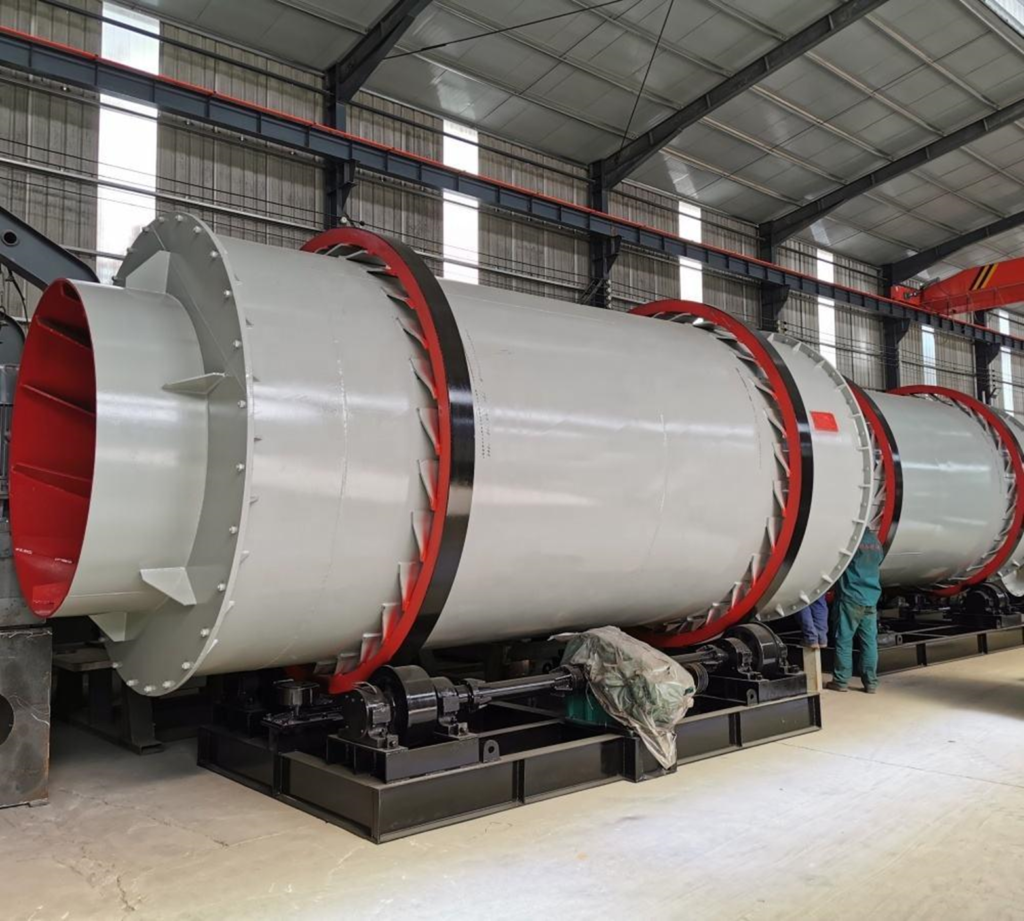
When considered
- Higher continuous capacities
- Less heat-sensitive grades or when robust mechanical handling is preferred
- Care required to avoid excessive attrition or local overheating
4. Other Options
- Paddle or indirect agitated dryers for sticky cakes where mechanical dispersion is needed
- Tray or vacuum systems for smaller batches or highly temperature-sensitive grades
Selection depends on cake rheology, particle-size target, allowable product temperature and residual-moisture specification.
Critical Engineering Considerations
| Factor | Why it matters | Design implication |
|---|---|---|
| Product temperature | High temperature can collapse pores or cause sintering | Controlled temperature profile; distinguish gas vs product temperature |
| Residual moisture | Affects adsorption capacity and downstream processing | Reliable final-moisture control and verification |
| Pore structure protection | Core performance attribute of desiccants | Short residence time or gentle conditions preferred for sensitive grades |
| Feed form | Wet cake vs free-flowing powder changes technology choice | Dispersion capability required for cohesive cakes |
| Re-adsorption after drying | Hygroscopic powders pick up moisture quickly | Closed discharge, dry conveying and packaging |
| Dust control | Fine powders generate significant dust | Robust cyclone + filter systems |
Distinction from Solvent Dehydration Systems
Molecular-sieve dehydration units used to produce anhydrous ethanol or dry solvents employ the finished molecular sieve as the adsorbent. Those systems regenerate the sieve in place by heat or pressure swing.
This page addresses the upstream manufacturing step: drying the silica-gel or molecular-sieve powder itself after synthesis and washing. The equipment, temperature limits and performance criteria are different.
Common Problems and Engineering Responses
| Problem | Typical causes | Practical response |
|---|---|---|
| Reduced adsorption capacity | Pore collapse from excessive temperature or hydrothermal conditions | Lower product temperature; shorten residence time; verify atmosphere |
| Hard agglomerates | Poor dispersion of cohesive cake | Use spin-flash or agitated systems that provide mechanical dispersion |
| Residual moisture above target | Insufficient evaporation duty or short-circuiting | Recalculate water load; improve gas–solid contact |
| Excessive fines | High gas velocity or aggressive mechanical action | Optimise air velocity and classification; review attrition |
| Rapid re-adsorption after drying | Exposure to ambient humidity | Closed system design; dry conveying and immediate packaging |
| Uneven residual moisture | Poor feed distribution or channeling | Improve feeder and bed/air distribution |
Key Data Required for Technical Assessment
- Exact material (silica gel grade, molecular sieve type / pore size, zeolite)
- Feed form and residual moisture after filtration
- Target residual moisture
- Maximum allowable product temperature
- Particle-size or morphology requirements
- Required throughput
- Downstream step (activation, forming, packaging)
- Any atmosphere or contamination constraints
Geographic Considerations & Market Evaluation
- India — Growing specialty inorganic and adsorbent manufacturing; demand for robust continuous systems that protect product performance for domestic and export markets.
- East Asia — Large silica-gel and molecular-sieve production base; high-throughput flash and fluid-bed systems common.
- Europe & North America — Emphasis on consistent adsorption performance, documented process control and low residual moisture for high-specification grades.
GTI evaluates projects from the actual cake properties, pore-structure sensitivity and residual-moisture target rather than applying a single standard dryer.
How GTI Dryers Approaches Desiccant and Hygroscopic Powder Drying
GTI Dryers designs industrial drying systems for bulk inorganic chemicals, silica, zeolites and related specialty powders. For desiccant powders the engineering approach is:
- Treat the material as a performance-critical porous solid, not a generic inorganic cake
- Evaluate spin-flash, fluid-bed and rotary options according to feed rheology and thermal sensitivity
- Control product temperature and residence time to protect pore structure
- Integrate dust collection, dry product handling and packaging interfaces
- Support process-data review based on real filter-cake characteristics
This page is distinct from GTI’s solvent-dehydration content and focuses specifically on manufacturing the desiccant powders themselves.
Frequently Asked Questions
What residual moisture is typically required for silica gel or molecular sieve powder?
It depends on the grade and downstream process, but residual moisture is usually driven to a low level so that the material can be activated or packaged with full adsorption capacity. Exact targets are product-specific.
Can a standard rotary dryer be used?
For some robust grades and higher capacities, yes. For fine, pore-sensitive materials, spin-flash or carefully controlled fluid-bed systems are often preferred to limit thermal and mechanical damage.
How is this different from regenerating molecular sieves in a solvent dryer?
Regeneration heats the finished adsorbent in place to drive off adsorbed water or solvent. Manufacturing drying removes process moisture from the newly synthesised powder while trying to preserve the pore structure that will later provide adsorption capacity.
What information does GTI need for an assessment?
Material type, feed form and moisture, target residual moisture, maximum product temperature, capacity and particle-size requirements.
Contact the GTI Technical Team:
Website: gtidryers.com
Email: mktg@gtidryers.com
Phone / WhatsApp: +91 9330077417