
Recovered carbon black (rCB) produced from end-of-life tyre pyrolysis is typically a fine, low-density powder after milling and refining. In this form it is dusty, difficult to handle, costly to transport and prone to moisture-related problems. Most commercial rCB plants therefore convert the powder into pellets or granules before storage and sale.
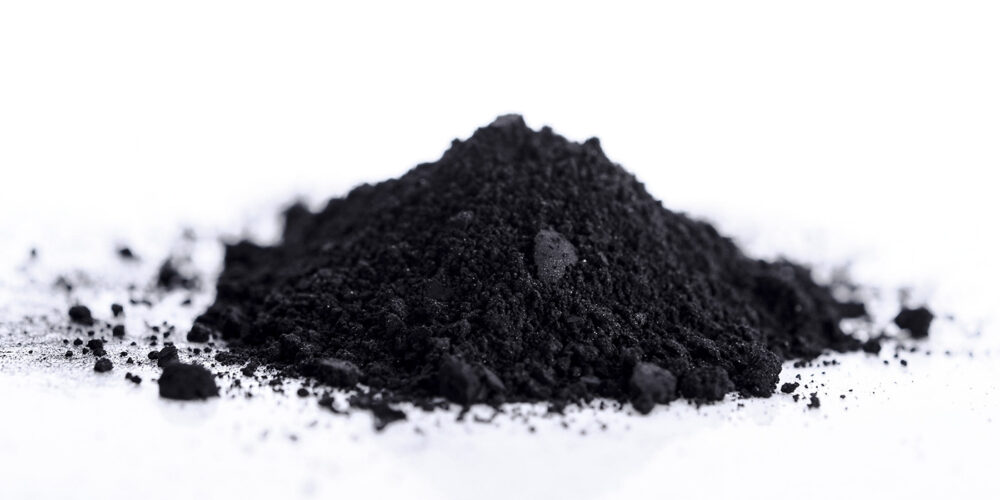
The critical process step is the wet pelletizing → drying → cooling sequence. Moisture is deliberately added during agglomeration to form durable pellets; that moisture must then be removed to a controlled residual level without destroying pellet strength or generating excessive fines. This page focuses on the engineering integration of pelletizing and drying for recovered carbon black.
Why Pelletizing and Drying Must Be Designed Together
Fine rCB powder presents several handling challenges:
- Extremely low bulk density and high dustiness
- Tendency to agglomerate or cake if residual moisture is not controlled
- Combustible-dust hazards that require careful system design
- Variable ash content and particle characteristics depending on the pyrolysis and refining route
Wet pelletizing (usually with a pin mixer or high-shear agglomerator and a controlled amount of water or binder) produces moist, green pellets. These pellets leave the mixer with surface and internal moisture that must be removed before packaging. If the dryer is undersized, poorly matched to the pellet strength, or not integrated with cooling and screening, the result is soft pellets, residual-moisture variation, high recycle rates or excessive dust.
Successful plants therefore treat pelletizing and drying as one continuous process line rather than two independent machines.
Typical Integrated Process Flow
Pyrolysis char → Milling / refining → Fine rCB powder → Wet pelletizing (pin mixer / agglomerator) → Moist pellets → Thermal drying → Cooling → Screening / classification → Recycle of undersize → Storage / packing
Key interfaces that must be engineered:
- Consistent feed rate from the pelletizer to the dryer
- Gentle transfer of soft green pellets
- Controlled drying temperature and residence time
- Immediate cooling to prevent re-agglomeration or moisture pick-up
- Efficient fines recovery and recycle
Dryer Technologies Used After rCB Pelletizing
1. Fluid-Bed Dryer (including Vibratory / Shaking Fluid Bed)
A controlled upward air stream fluidises the pellets while they move through the dryer. Vibration or shaking assists transport and improves uniformity.
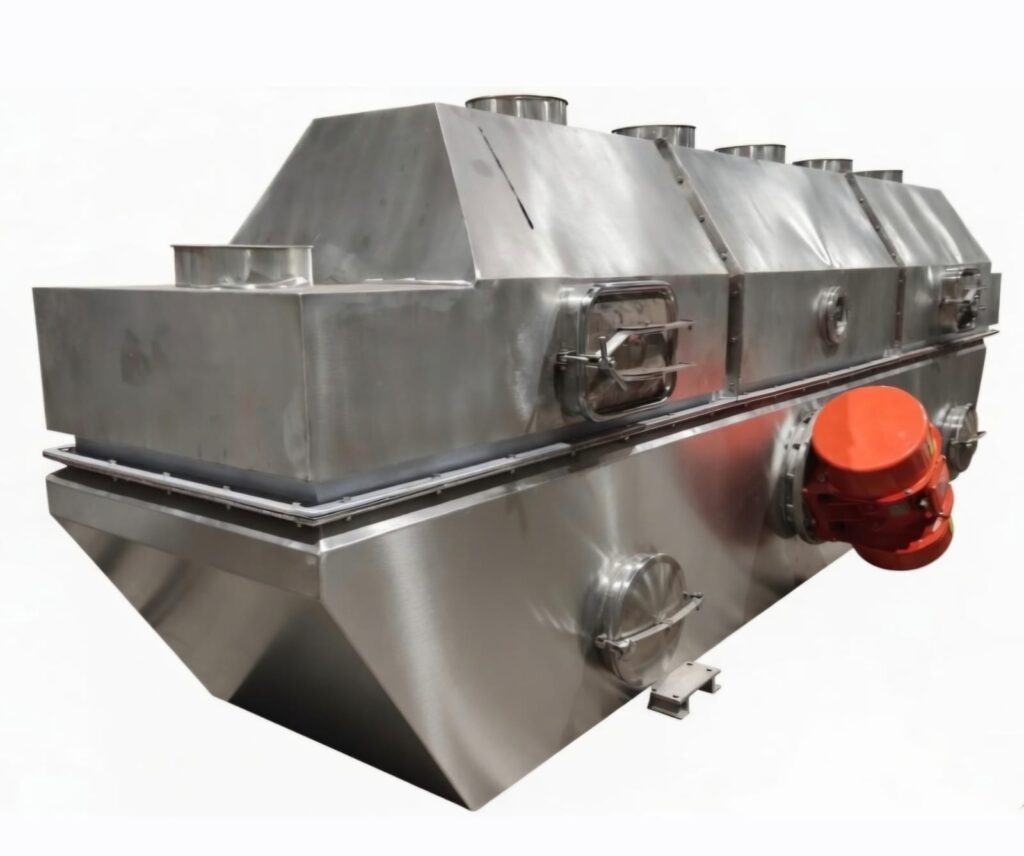
Why it is widely used for rCB pellets
- Gentle handling that helps preserve pellet integrity
- Excellent moisture uniformity
- Easy integration of a cooling zone in the same machine
- Continuous operation well suited to pelletizer output
- Good dust containment when properly designed
2. Rotary Dryer
A rotating drum with internal flights cascades the pellets through hot gas. Rotary dryers have a long history in virgin carbon-black pellet drying and can be evaluated for certain rCB applications.
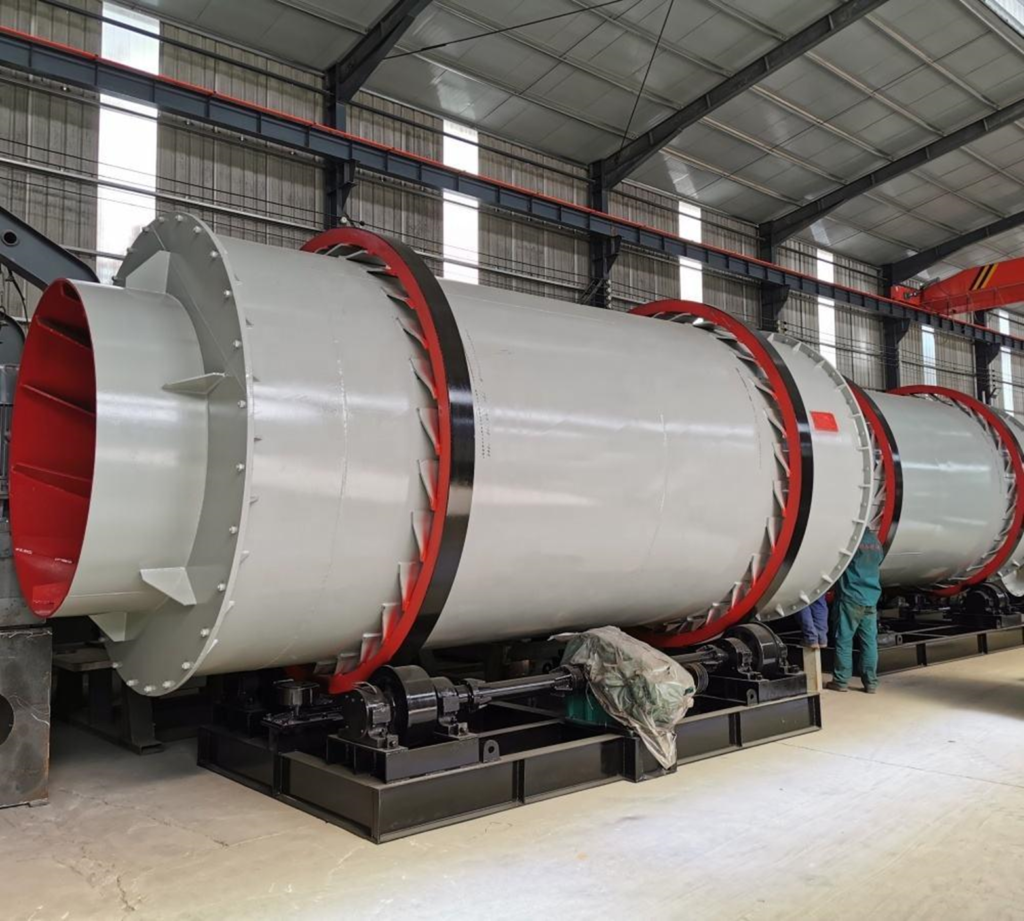
When it may be considered
- Higher continuous capacities
- Robust mechanical preference
- When pellet strength can tolerate cascading action
Design caution: Pellet attrition and fines generation must be carefully managed; flight design and rotational speed are critical.
Technology selection starting point
| Requirement | Fluid-bed / VFBD | Rotary dryer |
|---|---|---|
| Pellet integrity / low fines | Strong | Moderate (depends on design) |
| Integrated drying + cooling | Strong | Usually separate cooler |
| Continuous match to pelletizer | Excellent | Excellent |
| High capacity | Excellent | Excellent |
| Combustible-dust management | Requires careful design | Requires careful design |
Final selection depends on pellet strength, moisture load, capacity and product specification.
Critical Engineering Considerations for the Integrated Line
| Factor | Why it matters | Design implication |
|---|---|---|
| Green-pellet strength | Soft pellets break easily | Gentle transfer and controlled drying conditions |
| Residual moisture target | Affects storage stability and customer acceptance | Reliable final-moisture control and verification |
| Product temperature | Avoid thermal damage or surface changes | Controlled gas temperature profile |
| Dust & explosion protection | Fine carbon black is combustible | Closed systems, inerting options, certified explosion protection where required |
| Fines recycle | Undersize and broken pellets must return to the pelletizer | Efficient screening and recycle loop |
| Atmosphere / purity | Some applications are sensitive to contamination | Appropriate materials of construction and clean design |
Common Problems and Engineering Responses
| Problem | Typical causes | Practical response |
|---|---|---|
| Soft or broken pellets | Excessive mechanical stress or rapid moisture removal | Optimise dryer type and operating severity; improve green-pellet strength |
| Residual moisture above target | Insufficient residence time or heat input | Recalculate evaporation duty; verify air temperature and flow |
| High fines generation | Aggressive cascading or high air velocity | Prefer gentler fluid-bed configuration; adjust rotary parameters |
| Re-agglomeration after drying | Product discharged too hot or residual moisture still high | Add or enlarge cooling zone; confirm final moisture |
| Dust emissions / explosion risk | Inadequate containment or inerting | Closed design, proper dust collection, explosion-protection measures |
| Uneven moisture | Poor feed distribution from pelletizer | Improve interface between pelletizer and dryer |
Representative-feed testing of the actual moist pellets is strongly recommended before final equipment selection.
Key Data Required for Line Assessment
- Form of rCB after milling (particle-size distribution, ash content)
- Pelletizing method and binder/water addition rate
- Moisture content of green pellets leaving the pelletizer
- Target residual moisture of finished pellets
- Required throughput (dry basis)
- Pellet size and strength specification
- Dust-explosion classification and preferred protection philosophy
- Available heat source and utilities
- Downstream packaging or transport requirements
Geographic Considerations & Market Evaluation
Recovered-carbon-black production is expanding globally as tyre-recycling and circular-economy regulations tighten:
- India — Growing tyre-pyrolysis capacity; focus on robust, cost-effective continuous pelletizing–drying lines matched to local utilities and emission norms.
- Europe & North America — Emphasis on product consistency, low residual moisture, explosion protection and documentation for rubber and plastics markets.
- Southeast Asia & other emerging regions — Project-specific evaluation of capacity, energy cost and integration with existing pyrolysis plants.
GTI evaluates every project from the actual moist-pellet characteristics and site constraints rather than applying a single standard design.
How GTI Dryers Approaches rCB Pelletizing & Drying Integration
GTI Dryers designs industrial drying systems for carbon black and recovered carbon black. For rCB the engineering approach is:
- Treat pelletizing and drying as one integrated process line
- Evaluate fluid-bed and rotary options according to pellet strength and capacity
- Integrate feeding, drying, cooling, screening, fines recycle and dust containment
- Address combustible-dust hazards as part of the system design
- Support process-data review and representative-feed evaluation when required
This content strengthens GTI’s existing carbon-black and recovered-carbon-black drying page by focusing specifically on the process-integration step that converts fine powder into saleable pellets.
Frequently Asked Questions
Why is drying necessary after rCB pelletizing?
Wet pelletizing adds moisture to form durable pellets. That moisture must be removed to a controlled residual level so the pellets remain free-flowing, stable in storage and acceptable to end users.
Is a fluid-bed dryer better than a rotary dryer for rCB pellets?
Fluid-bed systems generally offer gentler handling and easier integration of cooling. Rotary dryers remain suitable for certain high-capacity or robust-pellet applications. Selection depends on the actual pellet characteristics.
Can the dryer be integrated directly after the pelletizer?
Yes. Continuous lines are designed so that moist green pellets pass directly into the dryer with minimal intermediate handling.
What residual moisture is typically required?
The exact target depends on the end-use specification, but finished rCB pellets are normally dried to a low residual moisture that prevents caking and meets customer requirements.
Does GTI supply the complete pelletizing–drying line?
GTI focuses on the drying, cooling and related thermal and solids-handling systems and can work with pelletizing equipment suppliers to deliver a coordinated line solution.
Contact the GTI Technical Team:
Website: gtidryers.com
Email: mktg@gtidryers.com
Phone / WhatsApp: +91 9330077417