
Precursor Cathode Active Material (pCAM) — the mixed nickel-cobalt-manganese hydroxide produced by co-precipitation — is a critical intermediate in the manufacture of NMC cathode active material for lithium-ion batteries. After precipitation, ageing, filtration and thorough washing, pCAM typically leaves the solid–liquid separation stage as a wet filter cake that still contains substantial residual moisture.
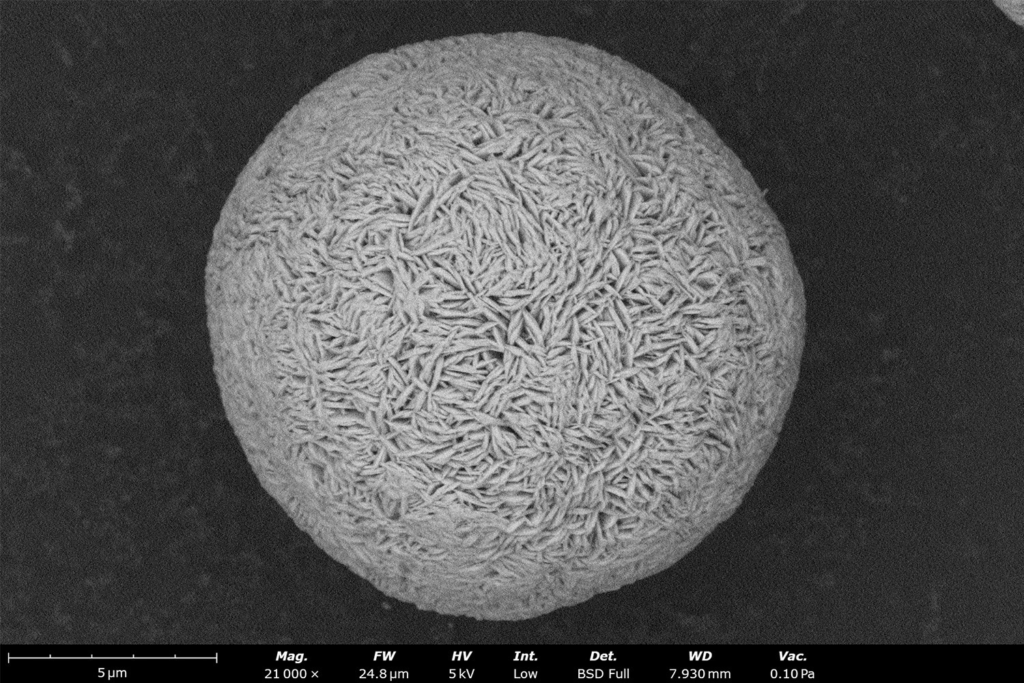
This cake must be dried to a controlled residual moisture before it can be mixed with a lithium source and calcined. The drying step is not ordinary moisture removal. It must preserve the carefully engineered secondary-particle morphology, minimise metal contamination, limit oxidation (especially in nickel-rich grades) and deliver a free-flowing powder suitable for the subsequent high-temperature lithiation step.
This page provides a practical engineering framework for selecting and specifying a dryer for pCAM filter cake.
Why pCAM Filter-Cake Drying Is Technically Demanding
Key process challenges include:
- High residual moisture after filtration/washing (commonly in the range that requires significant evaporation duty)
- Cohesive or pasty behaviour of the wet mixed-hydroxide cake
- Need to protect spherical secondary-particle morphology and primary-particle orientation
- Strict limits on magnetic and metallic impurities
- Sensitivity of nickel-rich compositions to oxidation
- Requirement for consistent low residual moisture before lithiation
- Avoidance of local overheating that could alter surface chemistry
An unsuitable dryer can introduce contamination, destroy morphology, leave residual moisture that affects the subsequent solid-state reaction, or create handling and dust problems.
Typical Process Position of the Dryer
Metal sulphate solution → Co-precipitation (CSTR) → Ageing → Filtration → Washing → pCAM filter cake → Thermal drying → Dry pCAM powder → Mixing with Li source → Calcination → CAM
The dryer sits between the wet purification steps and the high-temperature lithiation step. Its output quality directly influences the performance of the final cathode active material.
Dryer Technologies Suitable for pCAM Filter Cake
Because the feed is typically a wet, cohesive inorganic hydroxide cake, the following technologies are commonly evaluated:
1. Paddle Dryer (Indirect)
Indirect conductive drying with mechanical agitation. Heat is transferred through heated shafts and paddles while the product is continuously mixed and moved.
Why it is frequently considered
- Handles sticky/pasty filter cakes well
- Enclosed operation supports atmosphere control and containment
- Relatively low process-gas volume
- Good temperature control
- Continuous or semi-continuous operation possible
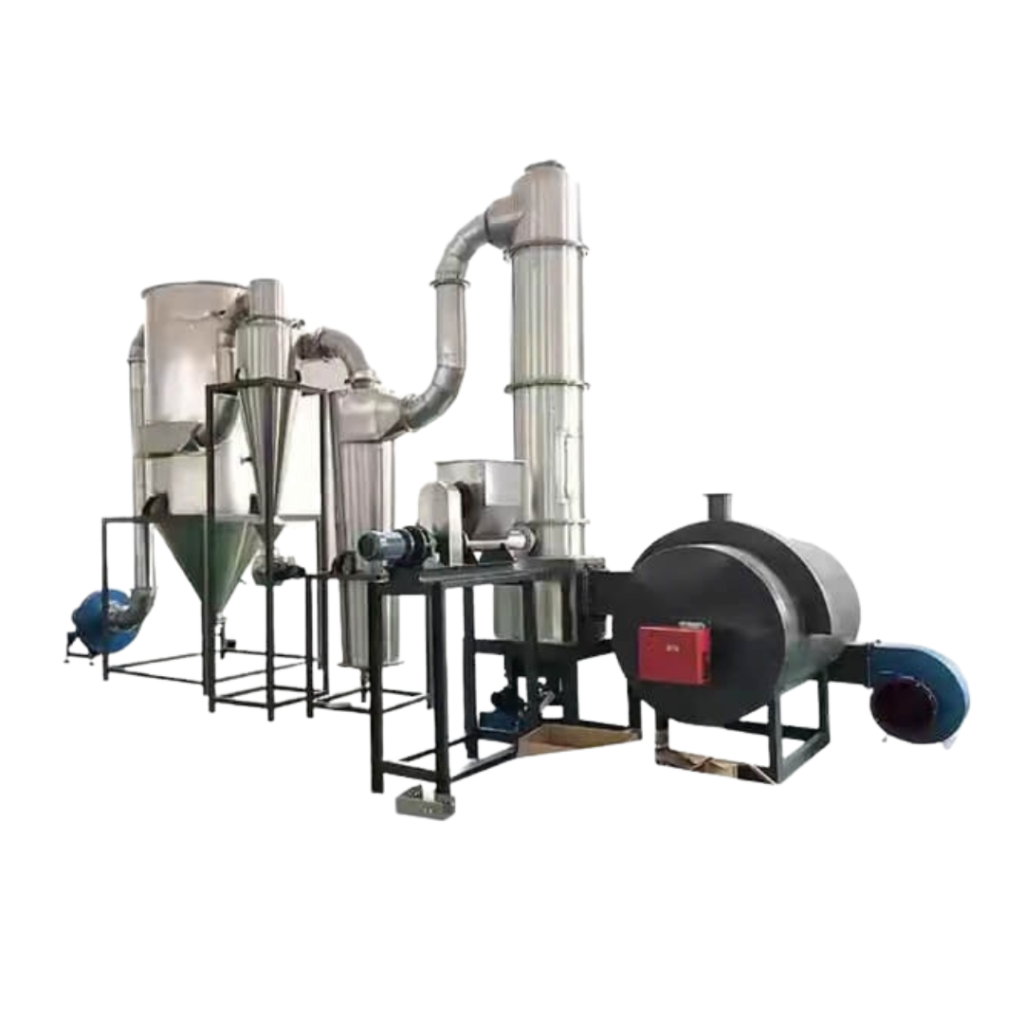
2. Flash / Spin-Flash Dryer
Rapid dispersion of the wet cake into a hot gas stream with short residence time.
Why it may be evaluated
- Effective for high-moisture cakes that can be dispersed
- Short thermal exposure
- Continuous high throughput
- Good for producing free-flowing powder when particle integrity can be maintained
3. Vacuum or Controlled-Atmosphere Systems
Batch or continuous vacuum dryers (paddle, conical, tray or specialised designs) when oxidation control, lower temperature or solvent/vapour management is critical.
4. Rotary Dryer (with design care)
Can be considered for larger continuous duties when the cake can be conditioned and when product temperature and contamination risks are tightly managed. Indirect or specially designed direct systems may be preferred over simple hot-air rotary units.
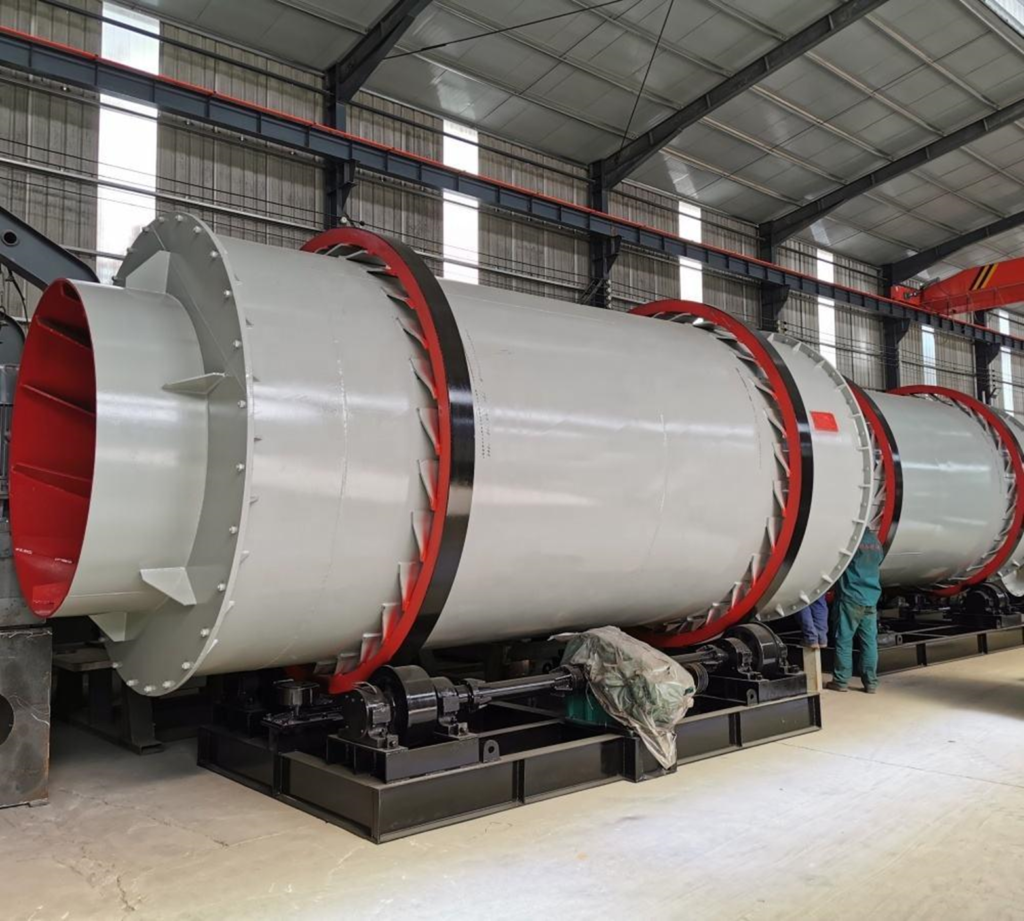
*Here picture just for reference but customizable according to need
5. Disc / Tray / Contact Plate
Suitable for smaller capacities or when very gentle, multi-stage contact drying is required.
Technology selection depends on
- Exact cake moisture and rheology
- Ni/Co/Mn ratio and oxidation sensitivity
- Required residual moisture
- Throughput
- Acceptable particle attrition
- Purity / magnetic-impurity limits
- Preferred atmosphere (air, nitrogen, etc.)
There is no single universal dryer for all pCAM grades. The correct package is determined by testing and process data.
Critical Engineering Considerations
| Factor | Why it matters for pCAM | Design implication |
|---|---|---|
| Product temperature | Avoid surface chemistry change or early decomposition | Controlled heat input; distinguish gas vs product temperature |
| Atmosphere | Ni-rich grades can be oxidation-sensitive | Nitrogen blanketing or low-oxygen systems when required |
| Contamination | Magnetic and metallic impurities affect battery performance | Appropriate materials of construction, clean design, no carbon-steel contact |
| Particle morphology | Secondary-particle sphericity and primary-particle orientation influence CAM performance | Minimise aggressive attrition; evaluate gentle agitation or short residence time |
| Residual moisture | Affects downstream mixing and calcination | Reliable final-moisture control and verification |
| Dust containment | Fine hydroxide powders | Closed systems, efficient recovery, operator protection |
Common Problems and Engineering Responses
| Problem | Typical causes | Practical response |
|---|---|---|
| Residual moisture variation | Uneven feed, short-circuiting, inadequate residence time | Improve feed consistency; verify heat-transfer area and mixing |
| Agglomeration or hard lumps | Sticky intermediate phase | Optimise temperature profile and agitation; consider pre-conditioning |
| Loss of spherical morphology | Excessive mechanical stress or high gas velocity | Select gentler technology or milder operating conditions |
| Oxidation / colour change | High temperature + oxygen exposure (Ni-rich) | Controlled atmosphere; lower peak product temperature |
| Metal contamination | Inappropriate materials of construction or wear | Specify suitable stainless or higher alloys; minimise wear points |
| High energy use | High inlet moisture, poor heat recovery | Maximise upstream dewatering; evaluate heat recovery and system efficiency |
Representative-feed testing is essential before final equipment selection.
Key Data Required for Technical Assessment
- Exact pCAM composition (Ni:Co:Mn ratio or grade)
- Feed form and moisture content after washing/filtration
- Target residual moisture
- Required throughput (dry basis)
- Maximum allowable product temperature
- Atmosphere requirements (air / nitrogen / other)
- Particle-size and morphology specifications
- Magnetic and metallic impurity limits
- Available utilities and preferred heating medium
- Downstream process (lithiation conditions)
Geographic Considerations & Market Evaluation
pCAM production is concentrated in regions with strong battery-materials supply chains:
- East Asia (China, Korea, Japan) — Largest existing capacity; high emphasis on continuous, high-purity systems and tight particle-size control.
- Europe & North America — Growing local precursor capacity driven by battery-gigafactory investments; strong focus on traceability, low contamination and controlled atmosphere.
- India — Emerging battery-materials ecosystem under national manufacturing initiatives; opportunity for robust, cost-effective continuous drying packages matched to local utilities and purity expectations.
GTI evaluates projects according to the specific cake properties, purity requirements and regional regulatory or customer specifications rather than applying a single standard design.
How GTI Dryers Approaches pCAM Filter-Cake Drying
GTI Dryers designs industrial drying systems for battery materials, including cathode precursors. For pCAM filter cake the engineering approach is:
- Treat the material as a high-value, morphology- and purity-critical inorganic hydroxide cake
- Evaluate paddle, flash , vacuum and controlled rotary options according to feed rheology and oxidation sensitivity
- Prioritise contamination control and particle-integrity preservation
- Integrate feeding, atmosphere management, dust recovery and product handling
- Support process data review and, where appropriate, representative-feed evaluation
GTI’s battery-materials drying portfolio already addresses NMC cathode precursors and related wet inorganic intermediates.
Frequently Asked Questions
What is pCAM?
Precursor Cathode Active Material — typically a mixed Ni/Co/Mn hydroxide produced by co-precipitation and used as the intermediate for NMC cathode active material after lithiation and calcination.
Why can’t a standard rotary or tray dryer always be used?
pCAM filter cake is often cohesive, purity-sensitive and morphology-critical. Standard equipment may introduce contamination, destroy particle structure or fail to control oxidation and residual moisture adequately.
Is atmosphere control necessary?
For many nickel-rich grades, yes. Oxygen exposure at elevated temperature can alter surface chemistry. Nitrogen or controlled low-oxygen systems are frequently specified.
What residual moisture is typically required?
The exact target depends on the downstream lithiation process, but the dryer must deliver consistent, low residual moisture suitable for the subsequent high-temperature reaction.
Can GTI evaluate an alternative dryer package for my pCAM cake?
Yes. Share the cake moisture, composition, capacity, purity limits and target residual moisture. GTI can review the data and propose a suitable drying configuration for technical discussion.
Contact the GTI Technical Team:
Website: gtidryers.com
Email: mktg@gtidryers.com
Phone / WhatsApp: +91 9330077417