
Precipitated calcium carbonate (PCC) and ground calcium carbonate (GCC) are high-volume industrial fillers and functional additives used in paper, plastics, paints, coatings, rubber, adhesives, sealants, pharmaceuticals and construction materials. After production, both materials frequently leave the solid–liquid separation stage as a wet filter cake, paste or moist powder that must be dried to a free-flowing, specification-compliant product.
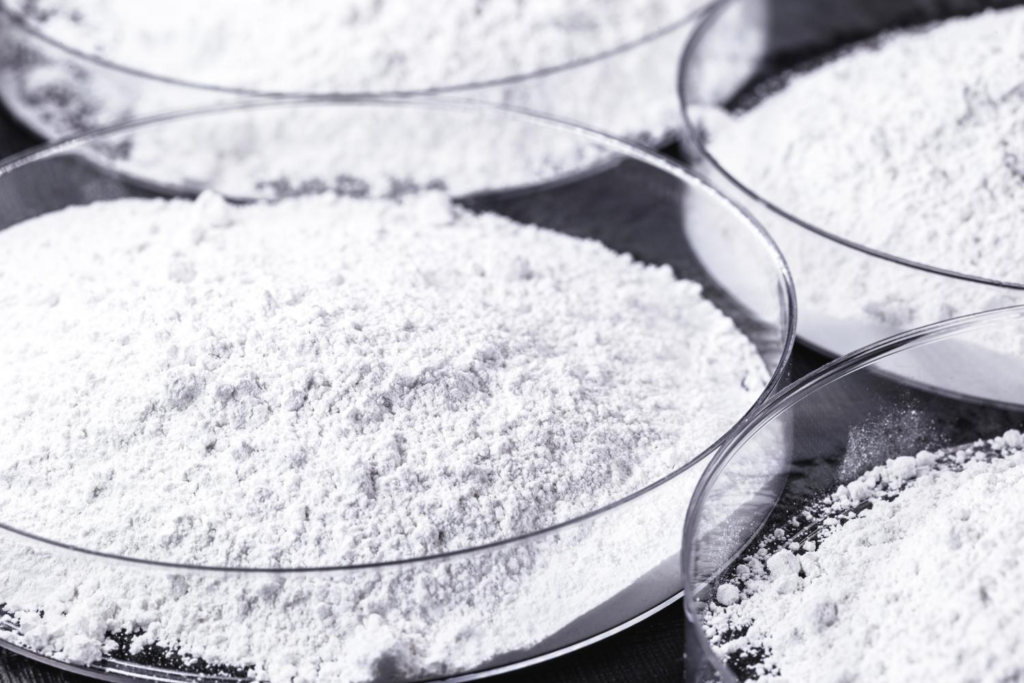
The drying step is not a simple moisture-removal operation. For PCC the process must preserve crystal morphology, brightness, particle-size distribution and purity. For GCC it must deliver consistent residual moisture and handling properties without excessive fines or energy waste. Selecting the wrong dryer technology creates agglomerates, residual moisture variation, wall deposits, dust-control problems or product that fails downstream specifications.
This page is written for process engineers and technical buyers who need a practical decision framework for PCC and calcium carbonate dryers.
Why Drying Is Critical for PCC and GCC
PCC is produced by a controlled chemical route (typically calcination of limestone → slaking → carbonation). The precipitated solids are filtered or centrifuged. Typical filter-cake moisture after dewatering can range from roughly 30 % to more than 45–50 % on a wet basis, depending on particle size, crystal morphology, filtration pressure and washing efficiency. The target residual moisture for many commercial grades is often below 0.5–1 %.
GCC is produced by mechanical grinding of natural limestone, marble or chalk. Wet-process routes or surface moisture still require drying before classification, coating or packaging.
Key product attributes that drying must protect or achieve include:
- Residual moisture consistent with packaging and storage requirements
- Controlled particle-size distribution and avoidance of hard agglomerates
- Brightness and colour stability
- Free-flowing behaviour for conveying, packing and compounding
- Minimal contamination or abrasion of high-purity grades
- Acceptable bulk density and powder recovery
Poor drying directly affects filler performance in paper coating, plastics compounding, paint dispersion and pharmaceutical grades.
Typical Feed Forms and the Real Engineering Problem
| Feed form | Typical origin | Dominant drying challenges |
|---|---|---|
| Wet filter cake / paste | PCC after filtration or centrifugation | Cohesion, stickiness, poor fluidisation, agglomeration, wall deposition |
| High-moisture slurry (thickened) | Some PCC processes | Need for dispersion or pre-concentration before thermal drying |
| Wet ground powder / cake | GCC wet process or surface moisture | Throughput, residual moisture uniformity, fines generation |
| Free-flowing moist crystals / granules | Certain post-processed grades | Standard convective drying with controlled residence time |
The single most important question is not “What is the capacity?” but “What is the physical state of the feed entering the dryer?” A free-flowing crystal and a sticky 40 %+ moisture filter cake require fundamentally different equipment.
Dryer Technologies Worth Evaluating for Calcium Carbonate
No single dryer is universally correct. Selection depends on feed form, particle size, purity requirements, capacity and plant constraints.
Spin-Flash / Spin Flash Dryer (strong candidate for PCC filter cake)
A spin-flash dryer combines mechanical dispersion with high-velocity hot gas. Wet cake is fed into a chamber where a high-speed rotor breaks agglomerates while hot air rapidly evaporates moisture. Short residence time and continuous classification help produce a free-flowing powder.
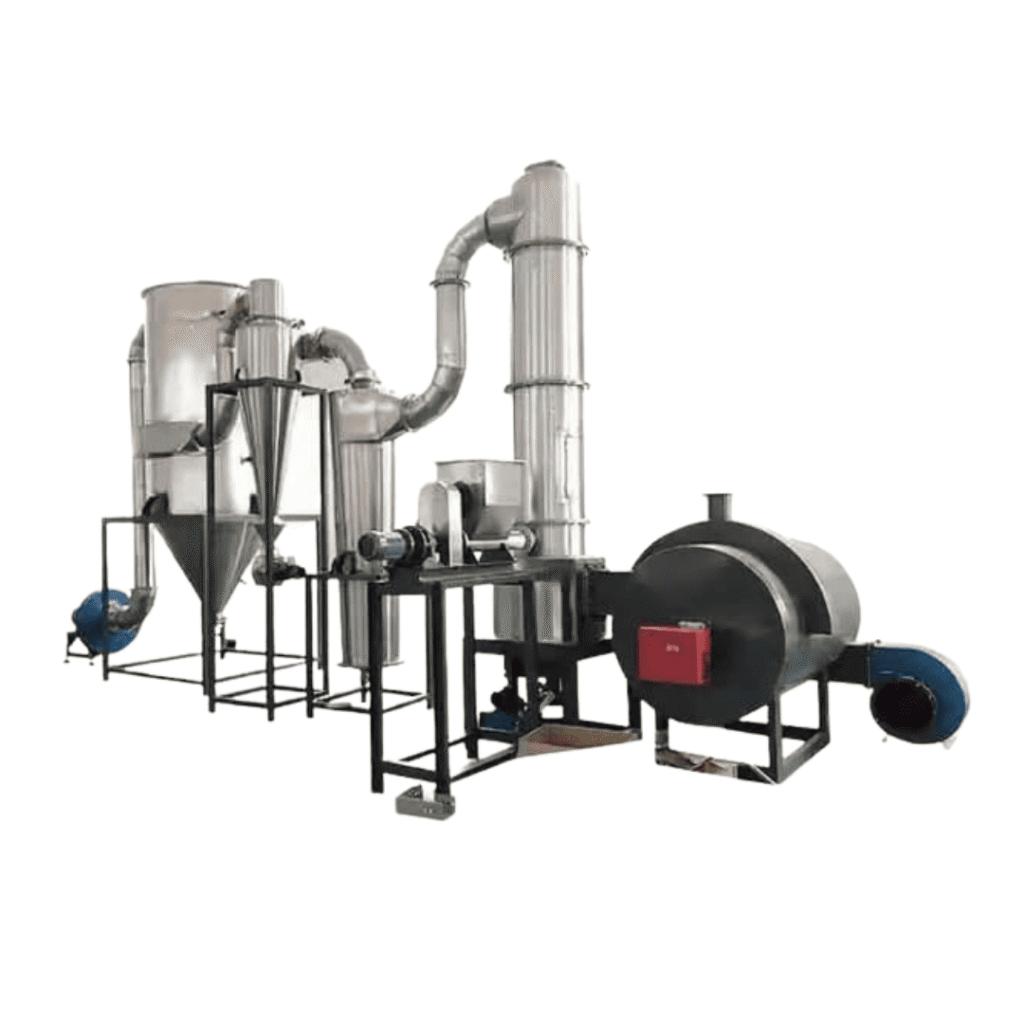
This configuration is frequently evaluated for precipitated products, fine inorganic filter cakes and materials that resist fluidisation (including calcium carbonate, silica and titanium dioxide cakes). It addresses the dispersion problem that conventional fluid beds struggle with when fed cohesive cake.
Key considerations: feed consistency, rotor design, gas temperature profile, product temperature, dust collection and recovery of fine particles.
Rotary Dryer
Rotary dryers suit higher-throughput, more robust bulk solids or mineral-derived calcium carbonate streams. Material tumbles through a rotating drum in contact with hot gas (direct or indirect configurations). They are established for large continuous mineral and bulk-chemical duties.
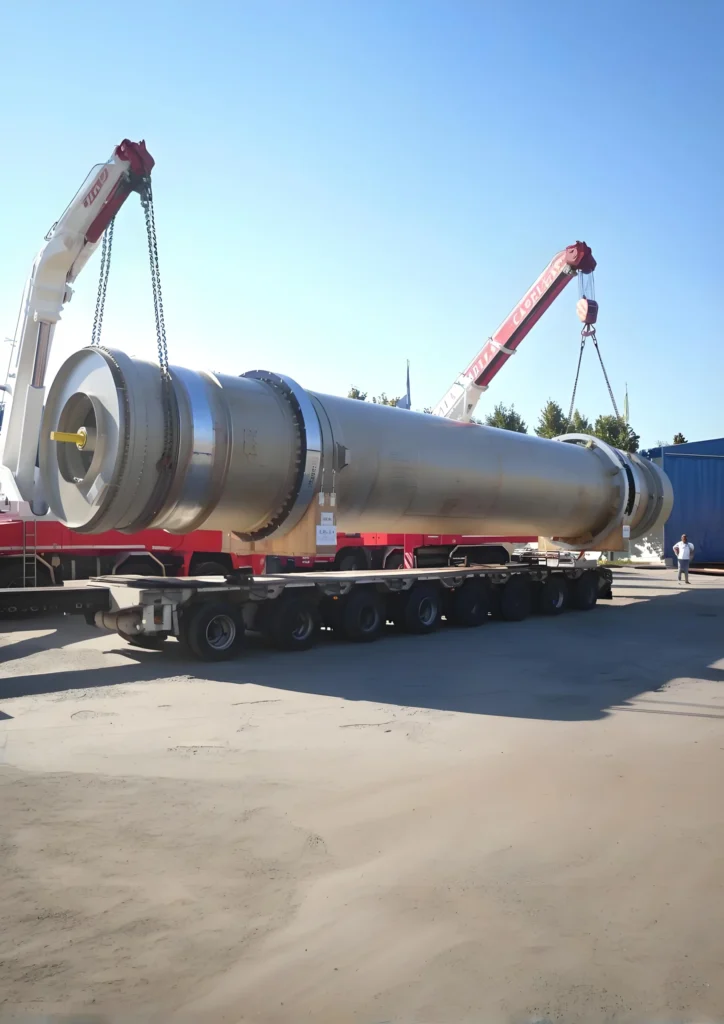
Limitations appear with very fine, sticky or morphology-sensitive PCC cakes: risk of wall buildup, longer residence time and potential for agglomeration or attrition if the feed is not free-flowing.
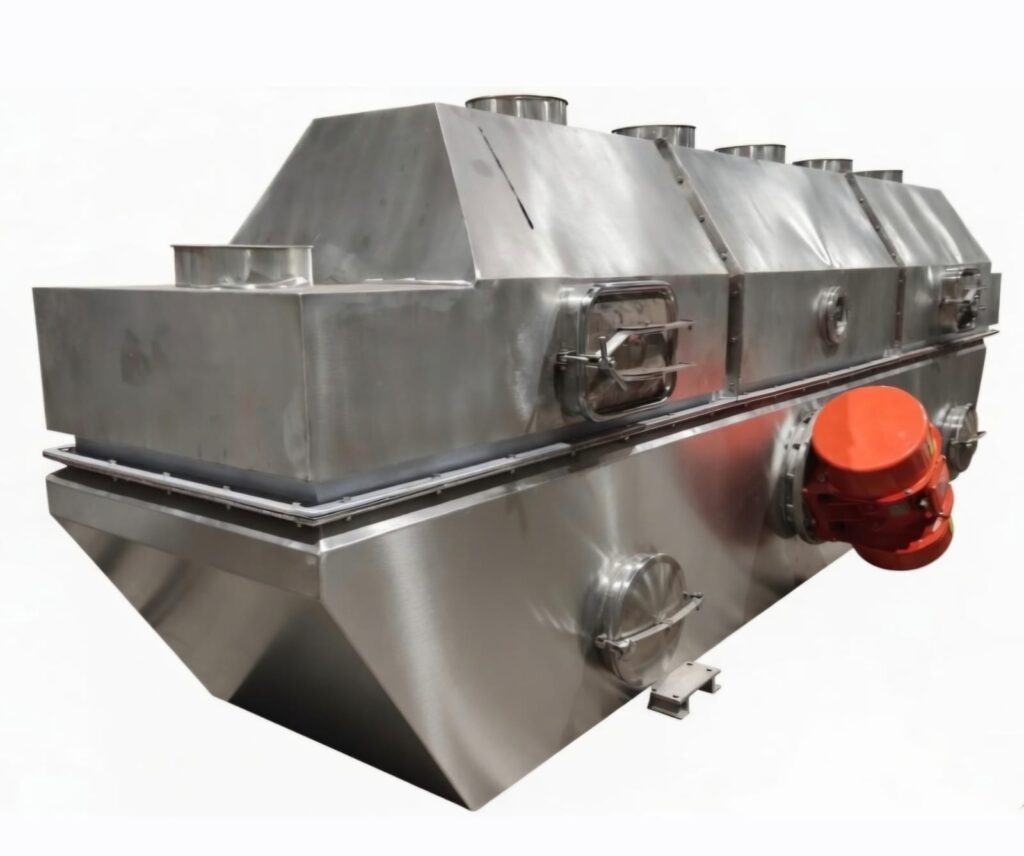
Fluid-Bed Dryer
Fluid-bed systems work well when the feed is already a free-flowing particulate that can be fluidised. They offer good gas–solid contact and the possibility of integrated cooling. They are less suitable as a first-stage dryer for sticky high-moisture PCC filter cake unless the cake is first broken or pre-conditioned.
Disc / Tray / Paddle and Indirect Options
Continuous disc (tray) dryers and paddle dryers appear in some specialty or lower-capacity PCC lines, particularly where conduction heating, lower air volumes or solvent/vapour management is preferred. Indirect systems can reduce product contamination risk for high-purity grades. Residence time and heat-transfer surface must be matched to the moisture load.
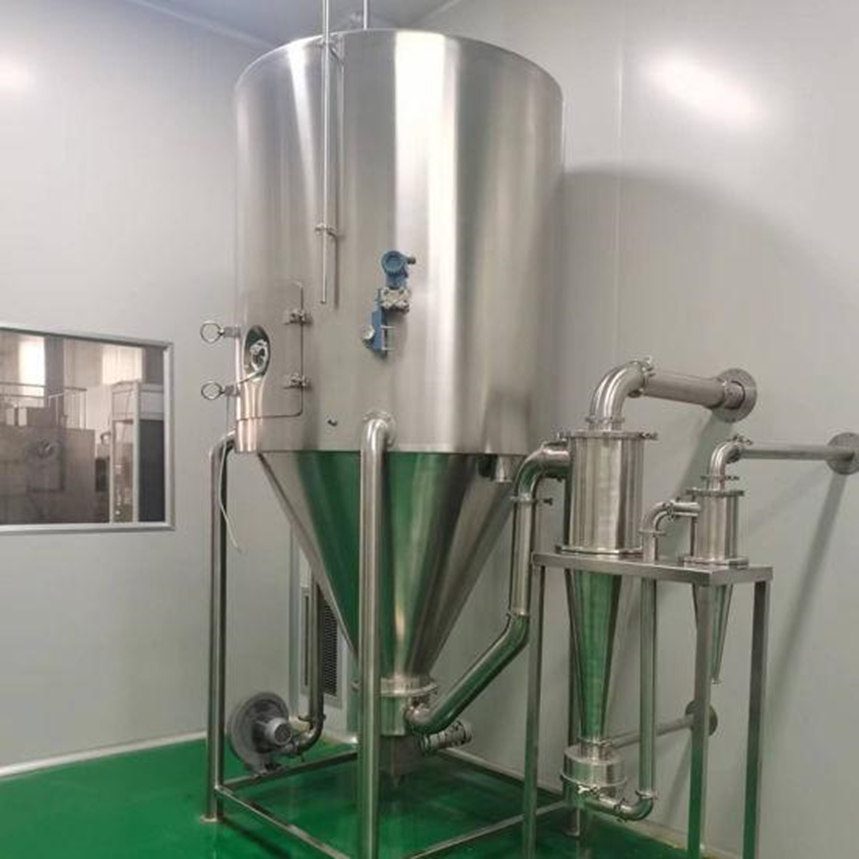
Spray Dryer
Spray drying is considered when the feed is a pumpable slurry or when very fine or nano-scale PCC grades are required. It is not the default choice for dense filter cake without dilution or specialised atomisation.
Technology selection matrix (starting point only)
| Requirement | Spin-flash | Rotary | Fluid bed | Disc / Paddle | Spray |
|---|---|---|---|---|---|
| High-moisture cohesive PCC cake | Strong candidate | Possible with design care | Weak unless pre-dispersed | Possible | Requires slurry |
| High-throughput bulk GCC / mineral | Possible | Strong candidate | Possible | Less common | Less common |
| Tight particle-size / morphology control | Good potential | Moderate | Good if fluidisable | Moderate | Excellent for slurry |
| Short residence time | Yes | Longer | Controllable | Controllable | Very short |
| Compact footprint | Advantage | Larger | Moderate | Compact | Moderate–large |
| Dust & recovery critical | Essential engineering | Essential | Essential | Lower air volume possible | Essential |
Final selection always requires representative feed testing.
Common Process Problems and Engineering Responses
| Problem observed | Likely causes | Practical response |
|---|---|---|
| Hard agglomerates / lumps | Residual moisture during agitation or high local temperature; liquid bridges | Improve upstream dewatering; control product temperature; ensure dispersion before/during drying; evaluate spin-flash or agitated systems with appropriate residence time |
| Residual moisture above specification | Insufficient evaporation duty, short-circuiting, uneven feed | Recalculate mass balance; improve feed distribution; verify gas temperature and flow; check for wall deposits reducing effective volume |
| Excessive fines or particle breakage | Over-attrition in high-velocity zones or long residence time | Adjust rotor/gas velocity; review classification; consider gentler technology if morphology is critical |
| Wall deposits / buildup | Sticky intermediate moisture phase | Surface materials selection, scraping/mechanical design, temperature profile control, feed consistency |
| Brightness or colour shift | Local overheating or contamination | Control product temperature (distinguish inlet gas temperature from product temperature); material of construction; avoid direct flame contact where purity demands it |
| High energy consumption | High inlet moisture, poor heat recovery, excess air | Maximise upstream filtration solids; evaluate heat recovery; optimise air–solids ratio |
| Dust-collection overload | Fine particle generation + high gas volume | Proper cyclone + bag filter design; controlled classification; possible recycle of fines |
Laboratory or pilot trials with the actual filter cake remain the most reliable way to confirm behaviour.
Key Process Data Needed for Dryer Selection and Sizing
Provide the following information when requesting a technical assessment:
- Exact material (PCC grade / crystal morphology or GCC source and fineness)
- Feed form (filter cake, paste, slurry, wet powder) and bulk density
- Incoming moisture (wet basis) and target residual moisture
- Required throughput (dry solids basis)
- Particle-size distribution and any top-size or morphology constraints
- Thermal sensitivity or maximum allowable product temperature
- Purity / brightness / contamination limits
- Available heat source (steam, hot air generator, thermic fluid, etc.)
- Utilities, footprint and environmental constraints (dust emission limits, noise, etc.)
- Downstream process (coating, packing, pneumatic conveying, etc.)
An illustrative mass-balance starting point (example only, not a design guarantee):
If 1 000 kg/h of wet cake at 40 % moisture (wet basis) must be dried to 0.5 % residual moisture, approximately 395 kg/h of water must be evaporated. Actual dryer size, gas flow and energy demand depend on heat-transfer rate, residence time, inlet gas temperature and heat losses — all of which require material-specific data.
How GTI Dryers Approaches PCC and Calcium Carbonate Drying
GTI Dryers designs and manufactures industrial drying systems for bulk inorganic chemicals and mineral-derived materials, including calcium carbonate applications. Technology evaluation follows the feed characteristics rather than a single preferred machine:
- Spin-flash / flash configurations for suitable wet filter cakes and precipitated products
- Rotary dryers for higher-throughput bulk or mineral streams
- Fluid-bed systems where the material is free-flowing
- Other process-specific arrangements (paddle, disc, custom) when justified by purity, temperature or integration requirements
The engineering objective is a reliable continuous line from wet feed through drying, dust recovery, cooling (if required) and product handling that meets the stated moisture, particle-size and quality targets.
Existing related pages on the GTI site cover bulk inorganic chemical dryers (including calcium carbonate notes) and flash/spin-flash systems. This page focuses specifically on the PCC/GCC decision problem.
Contact the GTI Technical Team:
Website: gtidryers.com
Email: mktg@gtidryers.com
Phone / WhatsApp: +91 9330077417