
The performance of a lithium-ion battery depends on more than cell design and chemistry. The powders and intermediates used to manufacture its electrodes must meet demanding requirements for moisture, purity, particle characteristics and process consistency.
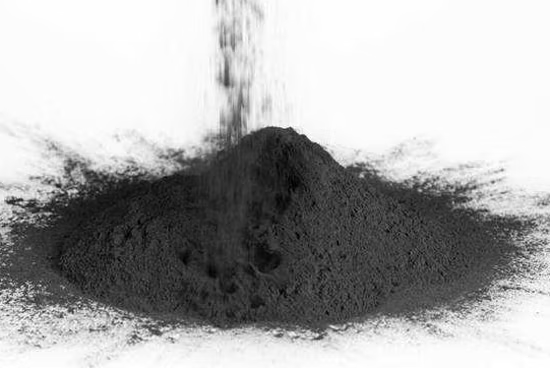
For battery-material manufacturers, drying is a critical process step. Inadequate moisture removal can affect downstream processing and product quality. Excessive thermal exposure, unsuitable particle handling or contamination can create different problems. In high-value materials, even small amounts of lost product or inconsistent batches can have commercial consequences.
These challenges arise across lithium iron phosphate (LFP), nickel manganese cobalt (NMC) cathode materials, cathode precursors, lithium compounds and selected anode materials.
However, there is no single battery material dryer suitable for every material or manufacturing stage. Drying a wet precursor cake is different from spray-drying a cathode slurry, removing residual moisture from a finished powder or drying a coated electrode.
GTI Dryers evaluates industrial drying requirements around the feed material, moisture-removal duty, product specifications and production objectives. This guide helps battery-material manufacturers identify the appropriate drying route, understand common process problems and prepare a technically useful equipment enquiry.
1. First Identify What You Need to Dry
Before choosing a battery material dryer, identify the material’s exact position in the production process. This is the most important step in avoiding an unsuitable equipment specification.
| Material or process stage | Typical feed condition | Main drying objective |
| NMC cathode precursor (pCAM) | Wet precipitate, filter cake or suitable powder | Remove retained moisture while controlling oxidation, purity and particle characteristics |
| LFP-related precursor or intermediate | Slurry, precipitate, filter cake or powder | Achieve the required intermediate moisture and physical properties |
| LFP cathode material | Suitable slurry or particulate feed | Produce powder or granules with specified particle characteristics |
| NMC cathode active material (CAM) | Finished or intermediate powder | Control residual moisture and contamination without compromising product specifications |
| Lithium carbonate or lithium hydroxide | Crystals, granules or wet solids | Meet the specified moisture or hydrate requirement while maintaining product purity |
| Graphite or silicon-carbon anode material | Powder, granules or suitable slurry | Control moisture, particle properties and contamination according to the material specification |
| Electrode coating | Wet slurry coated onto metal foil | Remove the coating solvent or water while preserving coating structure and adhesion |
These are different applications, and not every route requires the same equipment.
For example, spray drying may be appropriate when a suitable liquid feed must be converted into powder or granules. Flash, vacuum, paddle or other dryers may be considered for selected wet cakes and powders. Electrode-coating dryers are designed for a different production duty from bulk powder dryers.
Calcination is another distinct process: it deliberately changes material properties through controlled thermal treatment and must not be treated as a synonym for drying.
2. NMC Dryer Selection: Solving Cathode Precursor and Powder-Drying Problems
NMC refers to nickel manganese cobalt-based cathode materials. Their exact composition varies, including different nickel, manganese and cobalt ratios.
The term also covers more than one manufacturing stage. Cathode precursor material and finished cathode active material have different process histories and may require different drying arrangements.
Drying NMC cathode precursors
NMC precursors are often produced through chemical precipitation and subsequent solid-liquid separation. Depending on the process, the material entering the drying stage may be a wet cake or another intermediate solid.
Common engineering questions include:
- How much liquid remains after filtration?
- Is the cake cohesive, fine or difficult to feed continuously?
- What residual moisture is required?
- What oxidation or contamination controls are necessary?
- Must particle morphology and chemical composition be preserved?
- What is the next process step after drying?
Depending on the feed characteristics, a flash dryer, suitable indirect dryer, vacuum dryer or another system may be evaluated.
The decision should follow the actual material and production process rather than the NMC label alone. Industrial powder-processing suppliers identify flash and vacuum-based systems among the options used for selected cathode precursor drying duties.
Drying finished NMC cathode powder
Finished cathode active materials may have stringent requirements for moisture, chemical purity and handling. High-nickel compositions can be particularly sensitive to moisture exposure, making controlled handling and storage important.
The equipment assessment should consider:
- Initial moisture and the required final specification.
- Powder flow behaviour and particle characteristics.
- Potential contamination from product-contact surfaces.
- Temperature exposure and the material’s stability.
- Conveying, cooling and packaging after drying.
- Humidity control during transfer and storage.
A dryer alone cannot guarantee battery-grade purity. Material-contact design, cleaning procedures, handling systems and analytical quality control are part of the complete process.
When should a manufacturer consider a vacuum or indirect dryer?
Vacuum or indirect drying may be worth evaluating when the feed requires enclosed handling, controlled thermal exposure or a specific moisture-removal profile.
The suitability of these systems depends on the powder or cake characteristics, process pressure, heat-transfer behaviour, discharge requirements and the target specification.
A technical assessment should compare the available options against product quality, throughput, maintenance and operating costs before choosing the final arrangement.
3. LFP Dryer Systems: Spray Drying, Powder Formation and Intermediate Drying
Lithium iron phosphate (LFP) is an important cathode chemistry used in electric vehicles and stationary energy-storage applications.
In LFP manufacturing, it is important to distinguish between producing powder from a slurry, drying a wet intermediate and performing subsequent thermal treatment.
When is an LFP spray dryer appropriate?
Spray drying can be evaluated when a suitable pumpable slurry or suspension needs to be converted into powder. Atomization forms droplets that dry during their interaction with the drying gas, producing particles that are then collected.
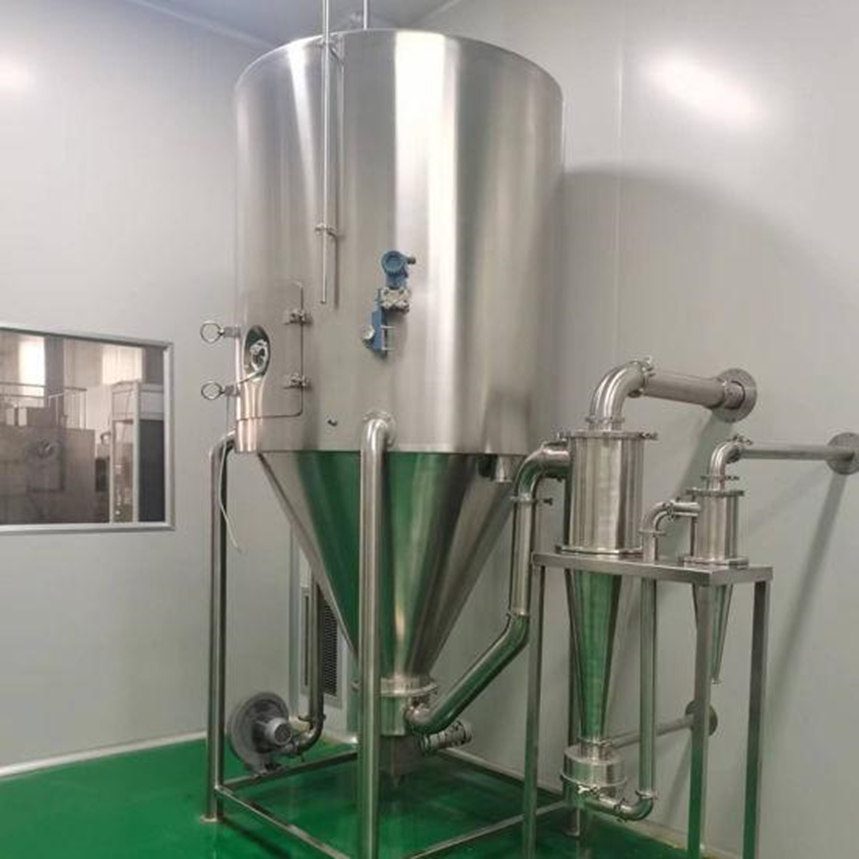
The process can be relevant when particle morphology, powder recovery and feed-to-product consistency matter.
SACMI identifies its spray dryer as a technology for LFP cathode powder processing and notes that atomization, air conditions, slurry-feed ratios and heat-generator settings must be matched to the material.
The engineering review should examine:
- Slurry solids concentration and viscosity.
- Atomizer selection and droplet formation.
- Desired particle size, morphology and bulk density.
- Product collection and fines recovery.
- Moisture requirements before subsequent processing.
- Feed stability and production-rate variability.
Spray drying does not automatically establish the final electrochemical properties of LFP. Those properties depend on the complete material formulation and manufacturing route, including any subsequent thermal processing.
When is a different LFP drying system required?
If the material enters as a wet filter cake or already formed particles, a conventional spray dryer may not be the most suitable option.
Depending on the feed, a flash dryer, vacuum dryer, indirect dryer or fluid-bed system may be assessed. The material must be suitable for the selected feeding, heat-transfer and solids-handling mechanism.
The decision should begin with the actual feed form and the next process step—not with a preference for a particular machine.
4. Cathode Precursor Drying: From Wet Filter Cake to Process-Ready Powder
Cathode precursor production can involve precipitation, aging, filtration, washing and drying. The moisture-removal stage must be compatible with the chemistry and the product specifications required downstream.
A wet cake is not simply a powder containing extra water. It can have a different structure, permeability and feeding behaviour from the final dried material.
Problem: The filter cake is difficult to dry uniformly
Possible contributing factors include variable incoming moisture, fine particles, uneven cake structure and inconsistent feeding.
What to investigate: Characterize the cake, measure feed variability and evaluate whether the material requires mechanical dewatering, conditioning or a different dryer configuration.
Problem: The powder contains excessive lumps
Agglomeration can arise from the feed structure, local moisture, unsuitable dispersion or drying conditions.
What to investigate: Review the cake preparation, feed-distribution system, particle handling and the final powder’s size and flow specifications.
Problem: Product quality varies between batches
Differences in feed composition, moisture, particle characteristics or thermal history can influence the final material.
What to investigate: Define the critical quality attributes, standardize feed characterization and establish a validated drying and handling procedure.
Problem: Contamination is a concern
Battery materials can have strict limits on impurities. Contamination may originate from contact surfaces, wear, upstream equipment, cleaning or cross-contamination between products.
What to investigate: Specify acceptable contact materials, wear controls, cleaning requirements and product-testing procedures before equipment selection.
5. Lithium Compound Drying: Lithium Carbonate and Lithium Hydroxide
Lithium carbonate and lithium hydroxide are important compounds in battery-material supply chains. Their drying requirements depend on the exact product, hydration state, feed condition and required final specification.
Crystals, granules, wet filter cakes and formulated intermediates should not automatically be treated as equivalent feeds.
Lithium carbonate drying
A lithium carbonate drying assessment should establish whether the feed is a wet crystalline product, a cake from a purification process or another intermediate.
Important factors include:
- Initial moisture and residual-moisture requirements.
- Product purity and allowable contamination.
- Particle size, agglomeration and handling.
- Corrosion and product-contact compatibility.
- Cooling, packaging and storage conditions.
Lithium hydroxide drying
Lithium hydroxide may be processed in different chemical and hydration forms. The intended product specification determines the required drying duty.
The process assessment should account for moisture sensitivity, the possibility of unwanted chemical changes, atmospheric exposure, material compatibility and the need to prevent contamination.
Do not specify a temperature or moisture target from the chemical name alone. The appropriate conditions depend on the exact grade, form, process route and validated product specification.
For both compounds, the equipment review should include upstream dewatering, thermal requirements, product recovery and downstream packaging. A dryer should be selected as part of the complete process rather than as a standalone machine.
6. Graphite and Silicon-Carbon Anode Materials
Anode materials introduce additional drying considerations. Graphite, silicon-carbon composites and other anode powders may have specific requirements for moisture, contamination, particle properties and protection from unsuitable process conditions.
Depending on the process, the feed may be a powder, wet cake, granule or slurry.
The drying assessment should consider:
- Residual-moisture requirements.
- Sensitivity to oxidation or atmospheric exposure.
- Particle size and agglomeration.
- Risk of contamination from contact surfaces.
- Dust collection and combustible-dust hazards.
- Cooling, conveying and packaging conditions.
For some materials, a fluid-bed or vacuum-based system may be considered; for other feeds, a different configuration may be more appropriate. The choice depends on the material’s physical form and the required process environment.
Battery-material drying must also be distinguished from drying the wet electrode coating applied to copper or aluminium foil. The latter is a web-handling and coating-process application with its own residence-time, airflow, solvent-management and coating-quality requirements.
7. Electrode-Coating Drying Is Not the Same as Powder Drying
These are distinct equipment categories.
| Requirement | Bulk powder or precursor drying | Electrode-coating drying |
| Feed | Powder, crystals, granules, wet cake or suitable slurry | Wet coating on moving metal foil |
| Main objective | Remove moisture or solvent from the material | Dry the coating while preserving its structure and adhesion |
| Equipment considerations | Solids handling, heat transfer, containment and powder recovery | Web speed, coating thickness, airflow, temperature profile and solvent management |
| Quality concerns | Moisture, purity, particle properties and contamination | Binder distribution, adhesion, cracking and coating uniformity |
| Process integration | Filtration, powder collection, cooling and packaging | Coating line, exhaust treatment, solvent handling and downstream electrode processing |
Research published in 2026 on electrode-drying scale-up emphasizes the importance of matching the underlying drying behaviour between laboratory, pilot and production equipment, rather than simply copying machine set points.
If your requirement is specifically a roll-to-roll electrode-coating dryer, identify that duty clearly when contacting a supplier. Do not assume that a bulk powder dryer can be used for a coated electrode line.
8. Which Battery Material Dryer Should You Choose?
The following table provides an initial screening guide, not a final equipment specification.
| Feed condition | Technology to evaluate | Main decision factor |
| Suitable slurry converted into LFP or other powder | Spray dryer | Atomization, particle morphology and powder recovery |
| Wet cathode precursor filter cake | Flash, vacuum, indirect or other suitable solids dryer | Cake behaviour, moisture load, purity and thermal exposure |
| Suitable free-flowing particulate powder | Fluid-bed or another suitable powder dryer | Particle size, density, fluidization and moisture target |
| Heat-sensitive or enclosed batch duty | Vacuum dryer or suitable indirect system | Product stability, pressure, heat transfer and discharge |
| Wet lithium salt crystals or granules | Suitable crystal or solids dryer | Purity, hydrate form, particle handling and final moisture |
| Graphite or silicon-carbon material | Application-specific vacuum, fluid-bed or other dryer | Moisture, atmosphere, contamination and dust safety |
| Wet electrode coating on foil | Dedicated electrode-coating dryer | Web speed, coating structure, airflow and solvent management |
The correct configuration may include more than one unit operation. For example, mechanical dewatering may precede thermal drying, while powder formation, calcination or cooling may occur in separate downstream stages.
9. Troubleshooting Battery Material Drying Problems
| Production issue | Possible causes | What the plant should check |
| Final moisture is inconsistent | Variable feed moisture, unstable feeding or nonuniform heat transfer | Feed characterization, mass balance and process-control data |
| Excessive fines or particle breakage | Mechanical stress, unsuitable conveying or aggressive handling | Particle strength, equipment contact points and discharge arrangement |
| Agglomeration or poor flowability | Residual moisture, cohesive feed or unsuitable powder formation | Feed properties, drying trajectory and particle-size distribution |
| Product purity does not meet specification | Contact-material wear, contamination or inadequate cleaning | Materials of construction, wear protection and cleaning validation |
| Drying consumes too much energy | High liquid load, unsuitable feed condition or inefficient heat integration | Upstream dewatering, energy balance and heat recovery |
| Thermal changes affect the material | Excessive or unsuitable thermal exposure | Product stability, temperature profile and process residence time |
| Product absorbs moisture after drying | Humid transfer, cooling or storage conditions | Enclosure, packaging and humidity management |
| Scale-up produces different results | Differences in heat and mass transfer, flow distribution or residence time | Pilot data, process modelling and production-scale validation |
No single adjustment solves every battery-material drying problem. The solution should be based on the material’s properties, production data and final quality requirements.
10. Battery-Grade Purity, Atmosphere and Process Safety
Battery-material processing can require strict control over contamination, moisture exposure and the surrounding atmosphere. These requirements depend on the chemistry and the production stage.
Product-contact materials
Contact surfaces, seals, agitators and conveying components should be assessed against the acceptable impurity limits and material compatibility requirements. A general-purpose industrial dryer should not automatically be assumed to meet battery-grade contamination specifications.
Controlled atmosphere
Some feeds may require inert-gas protection or another controlled atmosphere to manage oxidation, moisture exposure or process hazards. Whether this is necessary must be determined from the material’s chemistry and safety data.
Moisture control after drying
The final moisture level at the dryer discharge may not remain unchanged during conveying and storage. Enclosed transfer, suitable cooling, humidity control and packaging can be important parts of the complete process.
Dust and solvent safety
Fine powders may create dust hazards, while solvent-bearing feeds may require appropriate exhaust management, recovery or explosion protection. The system should be engineered around the actual material and applicable safety requirements.
Product validation
The acceptance criteria should be defined before commissioning. Depending on the application, they may include residual moisture, chemical composition, particle size, bulk density, contamination and other material-specific properties.
A dryer cannot guarantee battery performance on its own. Product quality depends on the complete manufacturing process and appropriate analytical testing.
11. How to Reduce Drying Costs Without Sacrificing Product Quality
The best cost-saving opportunity is not always to increase drying temperature or shorten residence time. For sensitive or high-value materials, the process must balance throughput, energy, quality and recovery.
Reduce the liquid load where feasible. Evaluate whether upstream filtration or mechanical dewatering can reduce the amount of water entering the dryer.
Match the technology to the feed. A liquid slurry, filter cake and free-flowing powder have different drying and handling characteristics.
Measure the real evaporation duty. Calculate the moisture or solvent that must be removed, then evaluate the heat and mass balance.
Optimize the complete line. Feed preparation, drying, collection, cooling, conveying and packaging all affect operating performance.
Validate scale-up. Pilot or representative trials can help identify product-quality risks and operating constraints before full production investment.
Measure quality alongside throughput. Faster drying is not an improvement if it creates unacceptable contamination, particle changes or product losses.
12. What Information Should You Send to a Battery Dryer Manufacturer?
A well-prepared enquiry helps determine whether the proposed equipment is appropriate for the application.
<box border radius=”xl” padding={4} gap={3}> <title size=”lg”>Battery material dryer enquiry checklist</title> <text color=”secondary” size=”sm”>Mark the information you already have. You can copy the checklist for your project team.</text> {@body const enquiryItems = [ “Exact material name and chemistry: NMC, LFP, precursor, lithium salt or anode material”, “Process stage: precursor, active material, intermediate powder or electrode coating”, “Feed form: slurry, filter cake, powder, granules or crystals”, “Feed rate and required operating hours”, “Initial moisture or solids concentration”, “Required final moisture and product specification”, “Particle size, morphology, bulk density or flowability targets”, “Thermal sensitivity and atmosphere requirements”, “Acceptable contamination limits and contact-material requirements”, “Available heat source, utilities and installation conditions”, “Dust collection, exhaust treatment and safety requirements”, “Downstream process: calcination, blending, coating, cooling or packaging” ]} {@body const [enquiryChecked, setEnquiryChecked] = DIL.useState([])} <text color=”secondary” size=”sm”>{enquiryChecked.length} of {enquiryItems.length} items prepared</text> {#each enquiryItems as item} <checkbox key={item} checked={enquiryChecked.includes(item)} onChange={(checked) => setEnquiryChecked(old => checked ? […old, item] : old.filter(x => x !== item))} lineThrough={false}>{item}</checkbox> {/each} <button block variant=”outline” onClick={() => GenUI.copy(enquiryItems.map(item => `${enquiryChecked.includes(item) ? “[x]” : “[ ]”} ${item}`).join(“\n”))}>Copy enquiry checklist</button> </box>
If you do not yet know the final moisture target or the best dryer type, provide the available feed data and explain the downstream process. These are part of the technical questions that the initial assessment should resolve.
13. Why Consider GTI Dryers for Battery Material Drying?
GTI Dryers, from Genex Tech Industries LLP, provides industrial drying equipment and application-oriented engineering solutions across process industries.
For battery-material applications, the first step is to establish the exact process duty: whether the requirement involves drying a cathode precursor, converting a suitable slurry into powder, drying lithium compounds or processing another battery-related material.
Depending on the material and process, suitable equipment options may be assessed from GTI’s relevant drying technologies, subject to confirmation of application fit and the required performance.
A technical review should address:
- The material’s physical form and chemical characteristics.
- Initial and required final moisture.
- Product quality and contamination limits.
- Feed rate and production objectives.
- Thermal exposure and atmosphere requirements.
- Product collection, transfer and storage.
- The need for representative material testing or pilot validation.
This approach helps avoid specifying a dryer solely on the basis of the material name or a generic capacity requirement.
GTI Dryers — Engineered Drying Solutions from India for Global Industries.
Planning a battery-material drying project? Visit GTI Dryers to discuss your feed characteristics, required product specifications and production goals.
14. Frequently Asked Questions
Which dryer is suitable for lithium battery materials?
The choice depends on the material and process stage. Spray dryers may be suitable for certain liquid-to-powder processes, while flash, vacuum, indirect or fluid-bed systems may be evaluated for suitable wet cakes, crystals and powders. Electrode-coating drying requires a different equipment approach.
What is the difference between an NMC precursor dryer and an NMC cathode powder dryer?
An NMC precursor dryer processes an intermediate material, which may be a wet precipitate or filter cake. A cathode powder dryer handles a later-stage material with its own moisture, purity and particle requirements. The feed characteristics and target specifications can therefore lead to different equipment choices.
Can an LFP spray dryer produce battery-grade cathode material?
Spray drying can be part of a suitable LFP powder or granulation process. However, final battery-grade performance depends on the complete manufacturing route, including formulation, subsequent processing, contamination control and product testing. A spray dryer alone does not guarantee electrochemical performance.
Why is moisture control important for NMC materials?
Moisture exposure can influence certain cathode materials and downstream manufacturing operations. The required control depends on the specific chemistry, material stage and product specification. Handling and storage conditions after drying also matter.
Can a vacuum dryer be used for lithium compounds?
A vacuum dryer may be evaluated for suitable lithium compounds and feed conditions. The choice depends on the compound’s chemical form, moisture target, thermal behaviour, purity requirements and required throughput.
Is electrode-coating drying the same as battery powder drying?
No. Electrode-coating drying removes solvent or water from a wet coating on moving foil. Powder drying handles solids or suitable liquid feeds in a different process configuration. Their equipment, controls and quality considerations differ.
What causes agglomeration in battery powder drying?
Possible factors include feed properties, residual moisture, particle interactions, unsuitable dispersion or process conditions. The cause must be established through material characterization and operating data.
What information is needed for a battery dryer quotation?
Provide the material name, process stage, feed form, production rate, initial moisture, final moisture requirement, particle specifications, thermal constraints, atmosphere requirements and acceptable contamination limits. If some details are unknown, explain the process and the information available.
Can one dryer process both NMC and LFP?
A shared system may be technically possible for some applications, but compatibility cannot be assumed. The materials may differ in process conditions, contamination controls, cleaning requirements and product specifications. Any shared-use design should be validated for both materials.
Does GTI Dryers guarantee a specific moisture level or battery performance?
Such outcomes must not be assumed from the dryer category alone. A target moisture level or product-quality guarantee requires a defined feed specification, process design and appropriate validation. Battery performance depends on the broader manufacturing process, not drying alone.
Conclusion: Select the Dryer for the Material, Process Stage and Final Specification
Battery-material drying is a specialized engineering task. NMC precursors, LFP slurries, lithium compounds, graphite-based materials and electrode coatings have different feed conditions and process requirements.
The right starting point is to identify the exact material and manufacturing stage, quantify the moisture-removal duty and define the quality attributes that must be preserved. Equipment selection can then be based on the actual process rather than a generic battery dryer specification.
Looking for an industrial battery material dryer? Contact GTI Dryers with your material, feed condition, production rate and required final-product specifications to begin a technical discussion.