
Manufacturers processing rubber latex, polymer emulsions and synthetic resins often face a production challenge that begins before the material reaches the dryer: how can a liquid or semi-liquid polymer feed be converted into a stable, recoverable powder without compromising its essential properties?
Materials such as melamine-formaldehyde resin, urea-formaldehyde resin, phenol-formaldehyde resin, ABS latex, SBR latex, acrylic polymer emulsions and other specialty resin systems may require carefully engineered drying processes when the intended product is a powder or dried particulate.
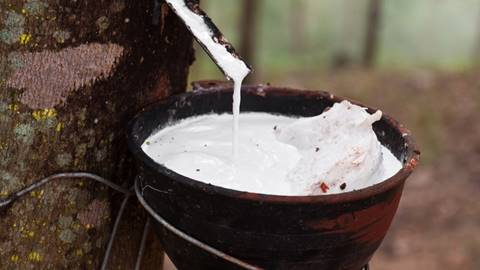
For these applications, selecting an industrial dryer involves more than calculating evaporation capacity. Feed viscosity, solids concentration, polymer chemistry, stickiness, thermal behaviour, residual moisture, particle size, powder recovery and downstream requirements all influence the equipment configuration.
GTI Dryers evaluates industrial drying requirements based on material properties, process objectives and production conditions. Spray drying and other specialized drying technologies can be assessed according to the feed form and the required final product.
1. Start With the Material, Not Just the Dryer
Two polymer emulsions may look similar in a storage tank but behave very differently during atomization and drying. Likewise, two formaldehyde-based resins may have different solids content, viscosity, curing behaviour and thermal sensitivity.
A dryer selected without understanding these differences can create problems such as chamber deposits, inconsistent powder, excessive fines, low product recovery or changes in product performance.
The first step is to establish the actual production requirement.
| Production requirement | What the engineering assessment should examine |
| Convert a liquid resin feed into powder | Atomization, droplet drying and powder recovery |
| Dry a rubber latex or polymer emulsion | Polymer characteristics, solids concentration and thermal behaviour |
| Reduce moisture in wet polymer particles | Particle size, agglomeration and moisture distribution |
| Improve powder handling | Flowability, bulk density, particle morphology and caking |
| Increase production capacity | Evaporation load, feed rate, airflow and collection efficiency |
| Reduce material deposits | Stickiness, wall interaction, atomization and operating conditions |
| Maintain product functionality | Chemistry, thermal exposure and final-product specifications |
Spray drying has been demonstrated for urea-formaldehyde-melamine resin powders used in composite materials, adhesives and coatings. However, the successful processing conditions for one resin formulation cannot automatically be applied to another.
2. Materials That May Require Specialized Polymer and Resin Drying
The following materials form a potential application group for industrial spray drying and related drying systems. The appropriate technology depends on whether the material enters as a liquid, emulsion, suspension, wet crumb or solid.
Melamine-formaldehyde resin
Melamine-formaldehyde resins are used in applications such as surface coatings, laminates, moulding compounds and related industrial products.
When the manufacturing process requires a dry resin powder, spray drying may be evaluated for a suitable pumpable feed. Important considerations include:
- Feed solids concentration and viscosity.
- Resin chemistry and the possibility of continued reaction or curing.
- Powder particle size and flow characteristics.
- Moisture requirements for storage and subsequent processing.
- Control of deposits and product recovery.
The resin’s formulation and intended end use must be established before finalizing the drying system.
Urea-formaldehyde resin
Urea-formaldehyde resins are widely associated with wood adhesives, particleboard, plywood and other composite-material applications.
For processes requiring powdered resin, spray drying can be considered when the feed and resin chemistry are compatible with the process. The engineering assessment should examine the resin’s stability, solids concentration, viscosity, drying behaviour and required redispersibility or downstream performance.
Where the resin must retain specific reactivity or bonding characteristics, the drying process must be assessed against those requirements rather than moisture removal alone.
Phenol-formaldehyde resin
Phenol-formaldehyde resins are used in applications including engineered wood products, moulding materials, friction products and industrial binders.
The suitable drying route depends on the resin type, its feed condition and the desired final form. Some processes may require drying a suitable liquid feed, while others may involve solidification, flaking, granulation or drying of an already formed solid.
Before choosing a spray dryer, the manufacturer should confirm that the feed is suitable for atomization and that drying will not create unacceptable changes in resin properties.
ABS latex and ABS-related polymer feeds
Acrylonitrile butadiene styrene (ABS) is an important engineering thermoplastic. In certain production routes, latex or emulsion intermediates may need to be processed into a recovered solid or powder.
The appropriate drying technology depends on the exact feed stage. A pumpable latex feed intended for conversion into powder is a different duty from wet polymer particles obtained after coagulation, separation or mechanical dewatering.
For a latex-based process, assessment points include:
- Solids concentration and latex stability.
- Viscosity and atomization behaviour.
- Particle formation and powder recovery.
- Residual moisture and downstream processing requirements.
- Dust collection and polymer handling.
Important: Do not select the dryer from the label “ABS” alone. The process stage and physical form of the material are essential to equipment selection.
SBR and other synthetic rubber latexes
Styrene-butadiene rubber (SBR) latex and other synthetic rubber emulsions may be encountered in coatings, adhesives, binders and rubber-related manufacturing processes.
The drying route depends on whether the required output is a powder produced from a liquid feed or dried rubber crumb produced after coagulation and mechanical dewatering.
For a liquid latex feed, spray drying may be evaluated. For wet crumb, mechanical dewatering followed by a suitable thermal dryer may be more appropriate.
These are distinct process duties and should not be treated as interchangeable.
Acrylic polymer emulsions and similar materials
Acrylic and polyacrylate emulsions are used in coatings, adhesives, binders, construction chemicals and other formulated products.
If the target product is a dry powder, the engineering assessment should consider emulsion stability, solids loading, particle stickiness, film formation, thermal sensitivity and the need for additives or carriers.
Other materials that may warrant application-specific evaluation include polyvinyl acetate emulsions, selected water-based polymer dispersions and specialty synthetic latex systems.
Their suitability for drying must be confirmed individually.
3. Which Dryer Should You Choose for Rubber Latex and Resin Processing?
The central question is not simply which dryer removes moisture fastest. It is which drying route can convert the actual feed into the required final product while maintaining acceptable yield, quality and operating stability?
Spray dryer: for suitable liquid-to-powder processes
A spray dryer atomizes a pumpable solution, suspension, emulsion or other suitable liquid feed into droplets. The droplets contact a drying gas, moisture or solvent evaporates, and the resulting particles are collected through an appropriate separation system.
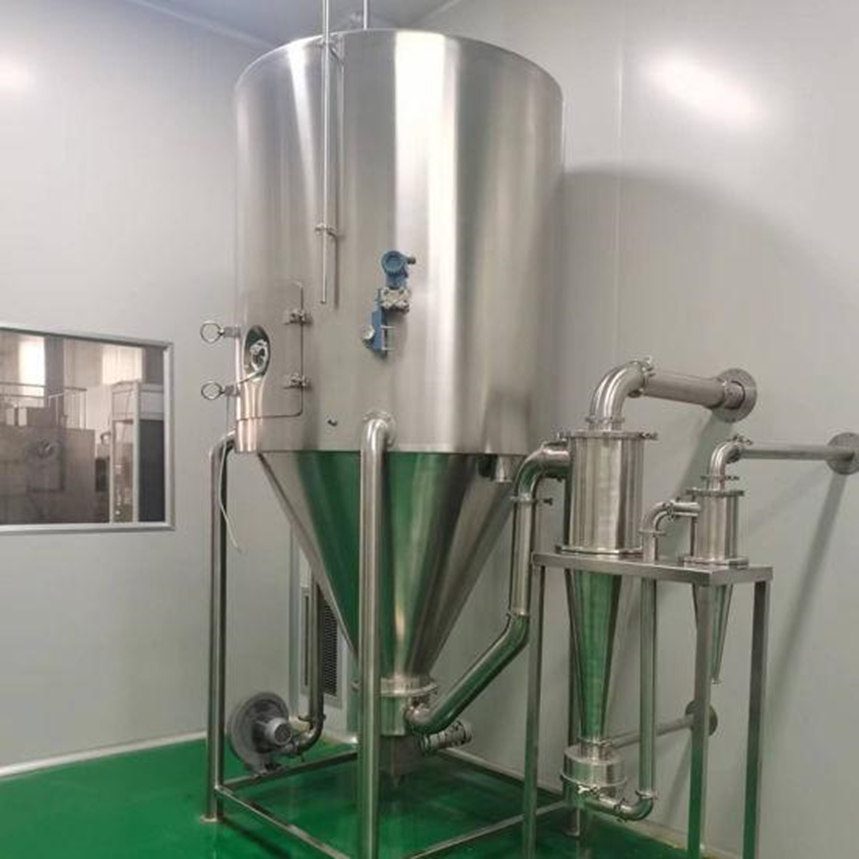
Spray drying is worth evaluating when:
- The feed is suitable for atomization.
- The intended product is a dry powder or particulate.
- Continuous processing is required.
- Particle characteristics and powder recovery matter.
- The resin or polymer can tolerate the selected drying environment.
The system may include feed preparation, a suitable atomizer, drying chamber, cyclone or filter-based collection, exhaust handling and controls.
No single spray dryer configuration suits every polymer. Atomizer selection, airflow pattern, chamber geometry, collection equipment and operating conditions must be evaluated against the actual feed. Research on sticky-material spray drying highlights how these factors interact to influence yield, particle properties and wall deposition.
Fluid bed dryer: for suitable particles and granules
A fluid bed dryer uses a controlled gas stream to suspend and dry suitable particles or granules.
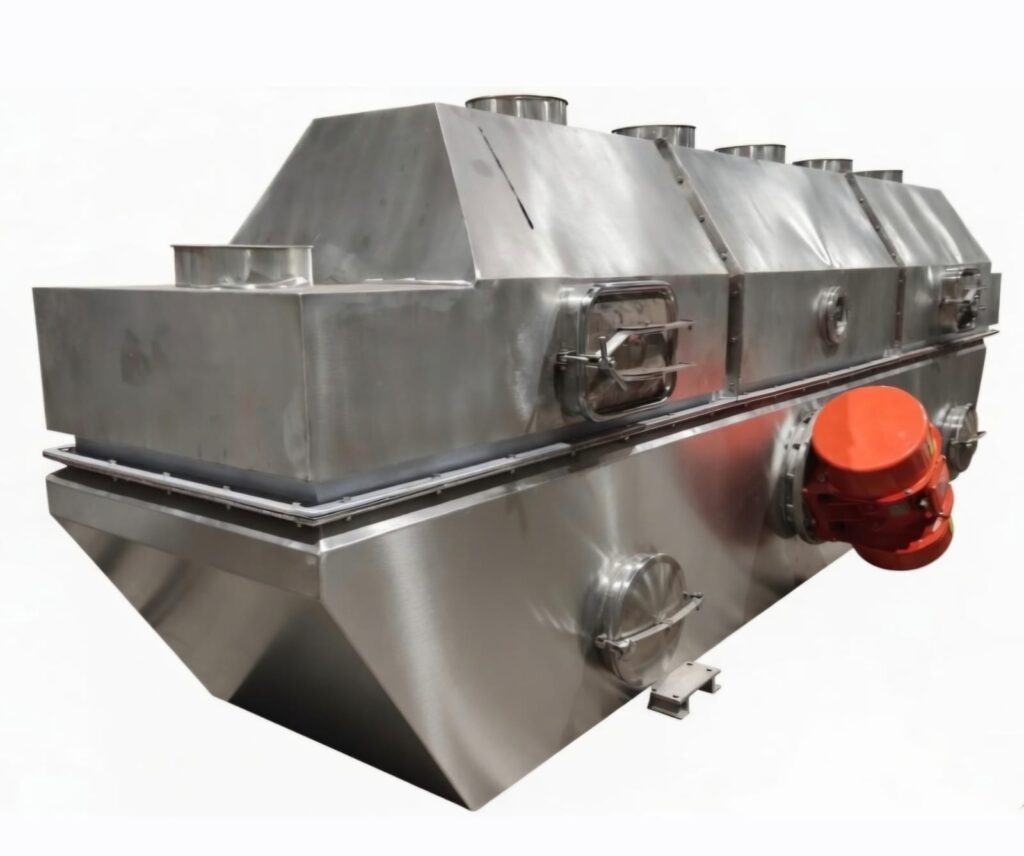
It may be appropriate for polymer particles that have already been formed through another process, provided their size distribution, density, mechanical strength and flow behaviour support fluidization.
Potential duties include:
- Further drying of suitable polymer granules.
- Moisture conditioning of particulate products.
- Cooling after drying, where the system is designed for it.
- Integration with upstream particle formation or downstream packaging.
A fluid bed should not automatically be selected for a sticky, cohesive latex or resin feed. If the feed is a liquid emulsion, a suitable primary conversion process may be required first.
Rotary dryer: for suitable robust solids
Rotary dryers may be considered for appropriate solid polymer or rubber feeds, depending on their mechanical behaviour and thermal requirements.
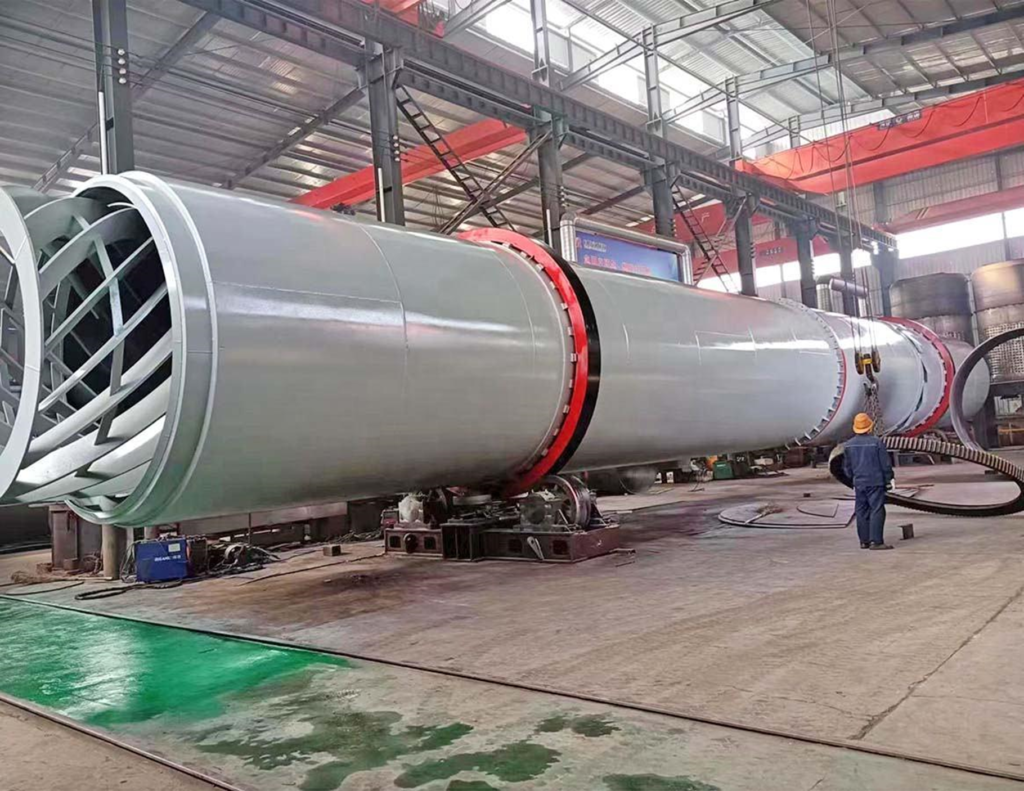
They are not the default choice for converting a liquid latex directly into a fine powder. Their suitability must be assessed against the feed’s physical form, tendency to agglomerate, required product quality and heat-transfer requirements.
Mechanical dewatering followed by thermal drying
For rubber crumb or other wet polymer solids, removing water mechanically before thermal drying can reduce the evaporation load.
Depending on the material, upstream equipment may include a suitable separation, pressing or dewatering stage. A thermal dryer is then selected for the resulting wet solid.
This process route is different from spray drying a liquid emulsion and may be more appropriate for certain rubber-processing operations.
4. The Production Problems That a Properly Selected Dryer Should Address
A commercially useful dryer specification begins with the problem the plant needs to solve.
| Production problem | Possible contributing factors | What to assess |
| Sticky powder deposits on chamber walls | Feed chemistry, particle temperature, residual moisture or unsuitable operating conditions | Stickiness behaviour, atomization, chamber design and process conditions |
| Low powder recovery | Fine particles, wall deposits or ineffective separation | Droplet size distribution, airflow, cyclone and filter performance |
| Uneven final moisture | Variable feed properties, inconsistent atomization or inadequate drying | Feed stability, heat and mass balance, and residence-time distribution |
| Poor powder flowability | Particle morphology, residual moisture or agglomeration | Final moisture, particle characteristics and storage conditions |
| Nozzle blockage or unstable spraying | Excessive viscosity, solids, unsuitable nozzle or feed instability | Pumpability, filtration where appropriate, atomizer selection and feed preparation |
| Product performance changes | Thermal exposure, resin chemistry or unwanted reactions | Product-specific stability and quality tests |
| Excessive energy consumption | High water load, low feed solids or inefficient heat use | Feed concentration, evaporation duty, heat recovery and exhaust conditions |
| Frequent cleaning and downtime | Persistent deposits, difficult product recovery or unsuitable cleaning access | Process behaviour, chamber design, inspection and cleaning requirements |
These are diagnostic possibilities, not guaranteed outcomes. Each problem should be investigated using process data and, where necessary, trials.
5. How to Reduce Stickiness and Wall Deposition in Polymer Spray Drying
Stickiness is one of the most important challenges in drying certain polymeric and resin-based materials. Deposits can reduce product recovery, increase cleaning frequency and destabilize production.
Several interacting factors may contribute:
Feed formulation and concentration: Solids content affects evaporation demand, while higher concentration may also increase viscosity and make atomization more difficult.
Droplet formation: The atomizer influences droplet size and distribution. Droplets that are too large or poorly distributed may not dry as intended.
Particle temperature and moisture: Polymer behaviour can change as the particle dries. Certain materials become soft or adhesive under specific combinations of temperature and residual moisture.
Drying chamber and airflow: Chamber geometry and airflow influence droplet trajectories, drying history and the likelihood of wall contact.
Powder collection: Cyclone and filter performance affect the amount of product recovered and the load on the exhaust system.
These variables must be considered together. Simply increasing the inlet temperature is not a reliable universal solution and can create new quality or fouling problems. Process development research identifies wall interaction, drying conditions and scale-up as important factors when working with sticky substances. Technical reference.
6. How to Evaluate a Dryer Before Investing
Instead of selecting a machine only by nameplate capacity, use a feed-to-product assessment.
Step 1: Define the feed
Identify the exact resin, latex or emulsion, including its composition where shareable, solids concentration, viscosity, pH where relevant, temperature and current physical form.
Step 2: Define the desired product
Specify whether the output must be a fine powder, granules, dried crumb or another form. Include the required final moisture, particle-size range, bulk density, flowability and downstream performance criteria where applicable.
Step 3: Calculate the drying load
Estimate the water or solvent that must be removed from the feed. For a simplified water-based process:
[
\text{Water removed}=\text{Feed mass}-\text{Final product mass}
]
This simplified calculation assumes the nonvolatile solids are retained and that the feed and product masses are known on a consistent basis. Actual mass balances must account for losses, volatile components and process-specific conditions.
Step 4: Assess material behaviour
Evaluate pumpability, atomization, stickiness, thermal stability, tendency to agglomerate and compatibility with equipment materials.
Step 5: Review the complete process
Consider feed preparation, drying, powder collection, exhaust handling, conveying, cooling if needed, storage and packaging. The dryer must work as part of the production line.
Step 6: Validate the process
Where material behaviour is uncertain, laboratory or pilot-scale trials can help evaluate drying feasibility, powder characteristics, recovery and scale-up risks before a production system is finalized.
7. Why a Complete Drying System Matters More Than the Dryer Alone
For rubber latex and resin emulsions, the chamber is only one part of the process.
A suitable industrial system may need to integrate:
- Feed storage, agitation or conditioning where required.
- Feed pumps and an appropriate atomization arrangement.
- A drying chamber designed for the specific application.
- Cyclone, bag filter or another suitable product-recovery arrangement.
- Exhaust-air management and any required treatment.
- Instrumentation and process controls.
- Safe product discharge and downstream conveying.
- Inspection, cleaning and maintenance access.
The final configuration depends on the material, solvent or water system, required product properties and plant operating conditions.
Process safety and emissions
Resin and latex processing can involve chemicals that require specific exposure controls. Formaldehyde-containing systems, solvent-bearing feeds and combustible polymer dusts may present different hazards.
The project assessment should address the actual chemical composition, safety data sheets, ventilation, emissions, dust hazards, electrical classification where applicable, and any required explosion protection or solvent recovery.
Water-based feed does not automatically mean the process is free from chemical vapours or other hazards. Safety provisions must be based on the real feed and process.
8. Why Work With GTI Dryers for a Polymer or Resin Drying Assessment?
GTI Dryers approaches industrial drying as an application-engineering requirement: the equipment must match the material, process conditions and desired product.
For rubber latex, polymer emulsions and selected resin applications, the first step is to establish whether spray drying, fluid-bed drying, rotary drying or a combined process route is technically appropriate.
A useful enquiry should include:
- Material name and application.
- Current feed form: latex, emulsion, solution, suspension, wet crumb or solid.
- Feed rate and operating hours.
- Feed solids concentration and initial moisture, if known.
- Required final moisture and product form.
- Thermal sensitivity or product-quality limitations.
- Available heat source and site utilities.
- Desired production capacity and installation location.
With this information, the engineering team can assess the application and identify the information needed for preliminary equipment selection.
GTI Dryers — Engineered Drying Solutions from India for Global Industries.
If you are evaluating an industrial dryer for melamine-formaldehyde resin, urea-formaldehyde resin, phenol-formaldehyde resin, ABS latex, SBR latex or a similar polymer emulsion, contact GTI Dryers to discuss your feed characteristics and production objectives.
9. Frequently Asked Questions
Which dryer is commonly considered for melamine-formaldehyde and urea-formaldehyde resin powders?
Spray drying may be considered when the resin feed is suitable for atomization and the required output is a powder. Resin chemistry, feed stability, thermal behaviour and target powder properties must be evaluated before equipment selection.
Can ABS latex be converted into powder using a spray dryer?
Spray drying may be suitable for certain ABS latex or related polymer feeds, depending on the formulation and process stage. The feed must be assessed for stability, viscosity, solids concentration, drying behaviour and the required final product.
Is spray drying suitable for phenol-formaldehyde resin?
It can be evaluated for suitable liquid resin feeds where powder production is required. Some phenolic resin processes may instead involve solidification or other processing routes, so the exact feed and product specification determine the appropriate technology.
Can rubber latex be dried directly?
Certain liquid latex feeds may be suitable for spray drying, but suitability depends on the material’s properties and the desired product. Rubber crumb produced through coagulation and dewatering presents a different drying requirement.
How can resin powder sticking inside a spray dryer be reduced?
The investigation should cover feed concentration, viscosity, atomization, particle stickiness, drying conditions, chamber airflow and powder recovery. No single operating adjustment solves every formulation’s sticking problem.
What information is needed to select a polymer or resin dryer?
The most useful starting information includes the material name, feed form, solids concentration, viscosity, feed rate, initial and final moisture, target particle properties, thermal limitations and downstream application.
Does every polymer emulsion require spray drying?
No. Spray drying is relevant when a suitable liquid feed must be converted into a powder or particulate. Other processes may be better for wet crumb, formed granules, bulk solids or materials intended to remain in liquid form.
Can one industrial dryer process all resin types?
Not necessarily. Different resin chemistries and feed properties can require different equipment configurations or process routes. A common platform may be adaptable to some products, but compatibility must be established for each application.
Conclusion: Select the Dryer Around the Required Product
Drying rubber latex, ABS latex, polymer emulsions and formaldehyde-based resins requires a clear understanding of both the feed and the final product. Spray drying may be a strong option for suitable liquid-to-powder processes, while fluid-bed, rotary or combined systems may be appropriate for other feed forms.
The most reliable starting point is to define the production problem, quantify the drying requirement and assess the material’s behaviour before finalizing the equipment.
Planning a resin or polymer drying project? Share your material details, current feed form, required output and production capacity with GTI Dryers for an application-specific discussion.