
Industrial drying solutions for carbon black pellets, recovered carbon black (rCB), rubber-grade materials and specialty carbon powders
Carbon black manufacturers and recovered carbon black producers face a production challenge that goes beyond removing moisture. The drying stage must deliver the required residual moisture while maintaining pellet strength, limiting fines, supporting consistent material handling and meeting the needs of downstream processing.
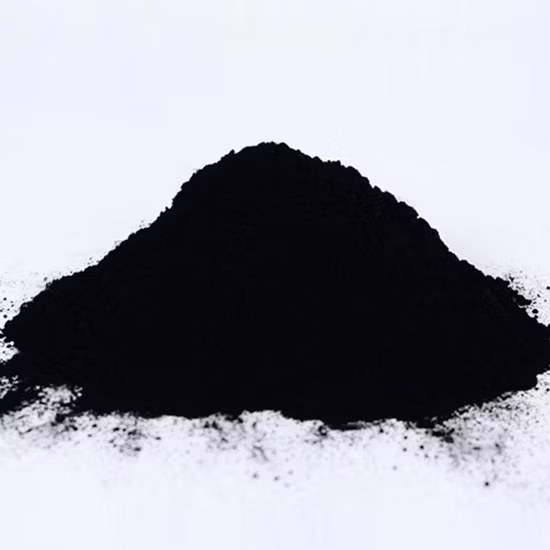
For virgin carbon black, drying is commonly integrated with wet pelletizing. In recovered carbon black production, material from tyre pyrolysis is often processed, refined, pelletized or agglomerated, and dried before storage, transport or reuse. Rotary dryers and specialized fluid-bed systems are among the technologies used for these duties, depending on the feed material and process design.
GTI Dryers evaluates industrial drying requirements based on material properties, feed condition, production capacity, moisture-removal duty, product-quality targets and plant integration needs. For carbon black and rCB projects, the appropriate equipment should be selected only after reviewing the actual process conditions and the required final product.
1. The Real Production Problem: Drying Without Losing Product Quality
A dryer may reduce moisture and still fail to deliver the required production result. If the drying process produces excessive fines, inconsistent pellets or unstable discharge moisture, the plant may face additional handling, reprocessing, packaging or quality-control problems.
The most useful starting point is therefore not simply the dryer capacity. It is the relationship between moisture removal, pellet quality, heat transfer, residence time and downstream product requirements.
| Production challenge | Possible process impact | What the dryer design should evaluate |
| Uneven residual moisture | Variable storage and handling performance | Feed distribution, airflow or heat transfer, residence time and moisture measurement |
| Pellet breakage or excess fines | Dust generation and reduced saleable pellet quality | Drum internals, material movement, temperature profile and mechanical stress |
| Sticky or agglomerated feed | Unstable feeding and inconsistent drying | Feed preparation, pellet properties, bed or drum behaviour and discharge design |
| High energy consumption | Higher operating cost per tonne | Water evaporation load, heat source, exhaust losses and heat recovery |
| Fluctuating production rate | Unstable final moisture and throughput | Feed-rate control, residence-time range and process-control strategy |
| Dust escaping from equipment | Housekeeping, product loss and occupational hazards | Enclosure, extraction, filtration and appropriate dust-hazard protection |
| Overheating or product deterioration | Potential change in material or pellet properties | Product temperature, heat-transfer mode and material-specific operating limits |
These problems should be investigated together. Increasing the heating temperature alone may not solve poor moisture uniformity or weak pellets, and it may create other product-quality problems.
2. Virgin Carbon Black vs. Recovered Carbon Black: Why the Difference Matters
Carbon black is used in rubber products, tyres, plastics, coatings, inks and pigments. Recovered carbon black is produced from end-of-life tyre or other suitable rubber pyrolysis streams and requires processing to achieve the properties needed for its intended application.
Although both materials contain carbon, their drying requirements should not automatically be treated as identical.
Virgin carbon black
In a typical wet-pelletizing route, fine carbon black is mixed with water and, where required, a binder to form pellets. These wet pellets then enter a drying stage before cooling, storage or shipment. The dryer must remove moisture while preserving the desired pellet characteristics.
Key design considerations include:
- Feed rate and incoming pellet moisture.
- Pellet size, density, strength and attrition resistance.
- Required residual moisture and test method.
- Heating arrangement and combustion-gas contact requirements.
- Fines collection, exhaust treatment and product cooling.
Recovered carbon black (rCB)
Recovered carbon black commonly follows a different upstream route involving pyrolysis-derived material, separation or refining, milling and, where required, pelletization or agglomeration. Drying may be integrated after wet granulation or pellet formation.
Recovered material can vary with the feedstock, pyrolysis process, refining method, particle-size distribution and pelletizing recipe. Those differences can affect moisture removal, agglomeration behaviour, product handling and the suitability of a particular dryer.
For rCB projects, the engineering assessment should establish:
- Whether the feed is powder, granules, wet pellets or another intermediate.
- Whether drying takes place before or after pelletization.
- How much mechanical stress the pellets can tolerate.
- Whether drying and cooling should be integrated.
- The required product specification for the intended reuse.
- The combustible-dust and process-gas hazards that must be addressed.
Important: rCB should not be assumed to have the same moisture, pellet strength, thermal behaviour or processing requirements as virgin carbon black. A representative feed sample and process data help determine the correct configuration.
3. Which Dryer Is Suitable for Carbon Black?
There is no single dryer that is automatically best for every carbon black application. Rotary dryers are widely associated with carbon black pellet drying, while fluid-bed systems are also used for suitable pelletized or agglomerated recovered carbon black. The final choice depends on feed condition, capacity, product quality and process integration.
A. Rotary dryer for carbon black pellets
A rotary dryer moves material through a rotating cylindrical drum while heat is supplied directly, indirectly or through a suitable combined arrangement. Internal flights and other design features may be used to support material movement and heat transfer.
For carbon black pellet drying, the design must consider the need to remove moisture without causing unnecessary pellet breakage or fines generation.
Evaluate a rotary dryer when:
- The plant requires continuous drying at industrial throughput.
- The feed is suitable for movement through a rotating drum.
- The required residence time and heat-transfer duty can be achieved.
- The selected configuration can protect the required pellet characteristics.
- Dust collection, exhaust management and cooling can be integrated.
Rotary dryer design is application-specific. Drum dimensions, internal arrangement, heat source, airflow and residence time must be established from the actual process requirements.
B. Indirect rotary dryer
In an indirect rotary dryer, heat is transferred to the product through a heated surface rather than relying entirely on direct contact between the product and combustion gases. This can be relevant when limiting direct exposure to combustion products is important.
The choice between direct, indirect and combined heating should consider heat-transfer requirements, product specifications, exhaust handling, fuel availability and overall plant design.
Indirect heating should not be assumed to be universally superior: the correct choice depends on the required evaporation duty, operating economics and product-quality constraints.
C. Fluid-bed dryer for recovered carbon black
A fluid-bed dryer passes a controlled gas stream through a suitable bed of particles, promoting heat and mass transfer. Specialized systems may also include mechanical assistance to maintain material movement.
Fluid-bed drying can be evaluated for recovered carbon black pellets or agglomerates that are appropriate for the selected bed configuration. The assessment must confirm that the material can be processed without unacceptable entrainment, attrition, agglomeration or other quality issues.
Evaluate a fluid-bed system when:
- The feed has a suitable particle or pellet structure.
- Uniform heat distribution and controlled residence time are important.
- Drying and cooling may be integrated.
- Gas velocity and bed behaviour can be controlled for the actual material.
- Dust containment and combustible-dust protection are incorporated into the design.
A fluid bed is not automatically appropriate for every fine carbon powder, sticky feed or fragile pellet.
D. Multi-stage drying and cooling
Some production lines may benefit from separating the main moisture-removal duty from final drying or cooling. A multi-stage approach can be assessed where the feed has a high moisture load, the pellet quality is sensitive to the drying profile, or a separate cooling step is required.
A multi-stage arrangement should be justified by process data. Additional stages increase equipment and control complexity, so the benefit should be demonstrated against the required throughput, final moisture and product quality.
4. Carbon Black Dryer Selection: A Practical Comparison
| Selection factor | Rotary dryer | Indirect rotary dryer | Fluid-bed dryer |
| Typical configuration | Rotating drum | Rotating drum with indirect heat transfer | Gas passing through a particle bed |
| Feed suitability | Suitable solids and pellets, subject to testing | Suitable solids where indirect heating meets the duty | Suitable particles, granules or pellets that fluidize appropriately |
| Main design focus | Heat transfer, material movement and residence time | Heat transfer through the heated surface | Gas distribution, bed stability and particle movement |
| Pellet quality | Internal design must limit excessive attrition | Mechanical movement and heat profile must be evaluated | Fluidization conditions must avoid unacceptable breakage or entrainment |
| Cooling integration | Possible with a separate or integrated arrangement | Depends on system configuration | May be integrated into suitable designs |
| Key engineering concern | Uniform drying and dust control | Heat-transfer capacity and temperature control | Stable bed behaviour, gas handling and dust safety |
This comparison is a screening guide, not a final equipment specification. The best choice should be based on a review of the feed material, test data, operating conditions and target product properties.
5. How a Carbon Black Drying System Works
A typical wet-pellet drying line may include the following stages. The exact sequence depends on whether the plant processes virgin carbon black or recovered carbon black.
Step 1 — Feed preparation
The incoming material is assessed for moisture, particle size, pellet condition and consistency. For a wet-pelletizing process, this stage may include mixing and pellet formation.
Step 2 — Controlled feeding
A suitable feeding system delivers the material at a stable rate. Feed surges can change residence time and thermal loading, potentially affecting final moisture.
Step 3 — Industrial drying
The selected rotary or specialized dryer supplies the heat and mass-transfer conditions needed to remove water. Operating conditions are chosen to meet moisture and product-quality targets.
Step 4 — Exhaust and dust management
The drying system is connected to suitable exhaust handling and particulate collection. Equipment selection must consider the dust properties, gas composition, operating temperature and applicable safety requirements.
Step 5 — Product cooling, where required
Dried pellets may need cooling before conveying, storage or packaging. Cooling requirements depend on the product specification and the downstream process.
Step 6 — Quality checks and packaging
The product is checked against agreed requirements, which may include moisture, pellet-size distribution, fines, strength, bulk density and other application-specific properties.
A successful installation integrates the dryer with feeding, exhaust, conveying, cooling, instrumentation and packaging rather than treating the drying machine as an isolated unit.
6. Troubleshooting Carbon Black and rCB Drying Problems
Problem: Final moisture varies from batch to batch or across the discharge
Investigate: changes in incoming moisture, unstable feed rate, uneven material distribution, residence-time variation, gas conditions and measurement methods.
Engineering response: assess feed control, temperature or heat-transfer distribution, residence-time behaviour and the suitability of online or laboratory moisture measurement.
Problem: Pellets break down during drying
Investigate: pellet strength before drying, drum internals or bed conditions, material movement, thermal profile and conveying impact.
Engineering response: evaluate the feed pellet characteristics and redesign or adjust the material-handling and drying conditions to reduce unnecessary mechanical stress.
Problem: The dryer produces excessive fines
Investigate: weak pellets, abrasion, impact points, excessive gas velocity or inappropriate internal equipment configuration.
Engineering response: review the full material path, including the dryer, discharge, transfer conveyors and dust collection. Fines may be generated outside the dryer itself.
Problem: Wet material builds up or forms agglomerates
Investigate: incoming moisture, pelletizing consistency, feed distribution, material temperature and the suitability of the dryer for the actual feed.
Engineering response: assess feed preparation and the dryer’s operating window before increasing heat input.
Problem: Energy consumption is too high
Investigate: the actual water evaporation load, exhaust losses, insulation, heat-source efficiency, air leakage, feed moisture variation and operating rate.
Engineering response: evaluate heat recovery, insulation, process control and the overall heat balance. Energy performance should be compared using the same production basis and moisture specifications.
Problem: Dust escapes during operation
Investigate: transfer points, seals, extraction airflow, filters, pressure balance and maintenance condition.
Engineering response: assess enclosure and dust-collection performance as part of the complete system. Fine carbonaceous dust can create serious occupational and fire or explosion hazards under suitable conditions.
7. Moisture Control Is Not the Only Quality Requirement
A carbon black dryer should be designed around the finished product specification, not solely around a target moisture number.
Depending on the application, the quality review may include:
- Residual moisture and the agreed measurement method.
- Pellet strength and attrition resistance.
- Particle or pellet size distribution.
- Fines generation and dust losses.
- Flowability and bulk handling.
- Product temperature at discharge.
- Bulk density and packaging behaviour.
- Relevant performance requirements for rubber, tyre, plastic, pigment or other downstream use.
The relationship between drying and final material performance must be confirmed for the specific grade. A moisture result alone does not establish that a carbon black product meets all customer requirements.
Moisture test methods also matter. Some standard carbon black measurements report heating loss that is primarily moisture but may include other volatile losses. The buyer and supplier should agree on the measurement method before defining acceptance criteria.
8. Heat Source, Exhaust Management and Process Safety
Carbon black drying requires attention to the complete thermal system. The heat source may be selected according to the plant’s available utilities, process-gas characteristics, thermal duty and environmental requirements.
The engineering review should address:
- Heat source: fuel availability, consistency, efficiency and integration with the plant.
- Heat transfer: direct, indirect or combined heating based on product and process requirements.
- Exhaust: moisture-laden gas handling, particulate collection and applicable emission-control requirements.
- Dust safety: carbon black and rCB dust properties, ignition sources, containment, and appropriate fire or explosion prevention and protection.
- Instrumentation: temperature, feed rate, pressure or airflow where relevant, and product-moisture monitoring.
- Maintenance: access to filters, seals, bearings, drive systems and material-contact components.
Combustible-dust protection must be based on a site-specific hazard assessment and applicable regulations and standards. The appropriate measures may include ignition prevention, grounding and bonding, suitable electrical equipment, isolation, venting or suppression, depending on the assessed hazards. No generic dryer configuration should be considered safe for every carbon black or rCB process.
Where pyrolysis-derived gases are used as a heat source, their composition and variability, combustion performance and safety controls require specific engineering review.
9. How to Select a Carbon Black Dryer Manufacturer in India
When evaluating a carbon black dryer manufacturer, look beyond nominal capacity and equipment price. A technically suitable supplier should understand the material, the upstream process, the target product and the complete plant integration requirements.
Use this checklist during vendor evaluation:
- Material experience: Can the supplier evaluate the difference between virgin carbon black, recovered carbon black, wet powder and pelletized feed?
- Feed assessment: Will the supplier review incoming moisture, particle or pellet properties and material variability?
- Technology selection: Can the supplier explain why rotary, indirect rotary, fluid-bed or a different configuration fits the duty?
- Product quality: Are residual moisture, fines and pellet integrity included in the design discussion?
- Heat balance: Is the expected evaporation load assessed against available utilities and operating conditions?
- Safety: Are dust hazards, exhaust handling, ignition risks and applicable standards addressed?
- Plant integration: Does the proposal consider feeding, conveying, cooling, dust collection and packaging?
- Testing and validation: Can representative material testing or a pilot evaluation be considered where uncertainty remains?
- Controls and maintenance: Are instrumentation, operating procedures, inspection access and maintenance requirements clearly defined?
- Performance criteria: Are the acceptance conditions and test methods agreed before finalizing the equipment?
A credible proposal should explain its assumptions, identify missing process information and distinguish estimated performance from validated results.
10. GTI Dryers: Application-Based Industrial Drying Evaluation
GTI Dryers, from Genex Tech Industries, develops industrial drying solutions for process applications where equipment selection depends on the material, production requirements and desired product quality.
For a carbon black or recovered carbon black project, the first step is to establish the feed condition and drying duty. A rotary or specialized dryer configuration should be considered only after the application has been evaluated against the relevant engineering and safety requirements.
GTI can review the process information supplied by the project team to help determine whether the proposed drying duty is suitable for a rotary dryer, a fluid-bed arrangement or another engineered configuration. Final equipment selection and performance commitments must be based on the actual application, available data and any required trials.
What to include in a carbon black dryer enquiry
To help assess your project, provide:
- Material: virgin carbon black or recovered carbon black (rCB).
- Feed form: wet powder, wet pellets, granules or agglomerates.
- Wet feed capacity: kg/h or tonnes/h.
- Incoming moisture: percentage by weight and test method.
- Required final moisture: percentage by weight and test method.
- Pellet or particle properties: size range, density, strength and fines, where available.
- Operating schedule: hours per day and days per year.
- Heat source: available fuel, steam, electricity or process gas, as applicable.
- Downstream process: cooling, milling, conveying, storage or packaging.
- Site information: location, available space and relevant utility or environmental constraints.
- Special requirements: product-quality targets, dust controls, automation and applicable safety standards.
If some data are not available, begin with the information you have. The missing items can be identified during the technical review.
Discuss your carbon black drying requirement with GTI Dryers. Share your material type, wet feed rate, initial moisture and required final moisture to begin an application assessment.
Website: https://gtidryers.com/
11. Frequently Asked Questions
Which dryer is commonly used for carbon black pellets?
Rotary dryers are commonly used for wet carbon black pellets. Depending on the feed condition and process requirements, indirect rotary or other specialized configurations may be considered. The final selection depends on moisture load, pellet quality, throughput and plant integration.
Can a rotary dryer dry recovered carbon black?
A rotary dryer may be suitable for some recovered carbon black applications, but suitability depends on the material form, pellet strength, moisture, thermal conditions and required product quality. Fluid-bed systems are also used for suitable rCB pellets and agglomerates.
What is the difference between a carbon black dryer and an rCB dryer?
The basic purpose is moisture removal, but the upstream process and material characteristics can differ. Recovered carbon black may have different feed variability, particle properties, pelletizing conditions and handling requirements. These differences should inform equipment selection and operating conditions.
What final moisture should a carbon black dryer achieve?
There is no single universal target. The required moisture depends on the grade, product specification, test method, storage and transport needs, and downstream application. Buyers should define the target and measurement method before the dryer is specified.
How can pellet breakage during drying be reduced?
Start by evaluating the strength and moisture of the incoming pellets. Then assess the dryer’s material movement, residence time, thermal profile and the impact of downstream conveying. Reducing temperature alone may not resolve mechanical attrition.
Is a fluid-bed dryer suitable for recovered carbon black?
It can be suitable for feed materials with appropriate particle or pellet properties. Bed stability, gas velocity, entrainment, fines, agglomeration, moisture uniformity and dust hazards must be evaluated for the actual product.
Can carbon black drying use recovered process gas as a heat source?
It may be possible in certain plant configurations, but the gas composition, heating value, variability, combustion system, emissions and safety requirements need a detailed engineering assessment. Suitability should not be assumed without process data.
What information is required to obtain a carbon black dryer quotation?
The most useful starting data are material type, feed form, wet feed capacity, incoming moisture, required final moisture, particle or pellet properties, heat-source availability and operating hours. Downstream handling and site safety requirements are also important.
Does GTI Dryers supply customized carbon black drying systems?
GTI Dryers evaluates industrial drying applications based on process requirements. Carbon black or rCB projects should be reviewed individually to establish technology suitability, scope, performance requirements and any need for representative material testing before a specific configuration is proposed.
Conclusion: Specify the Process Before Specifying the Dryer
Carbon black and recovered carbon black drying systems must do more than remove water. They must meet the required moisture specification while supporting pellet quality, reliable throughput, efficient heat use, safe dust handling and downstream processing.
Rotary dryers, indirect rotary dryers and specialized fluid-bed systems each have potential roles, but no single option is appropriate for every material or production line. The right decision begins with a clear understanding of the feed, moisture-removal duty, product specification and process risks.
For manufacturers planning a new plant, expanding capacity or resolving recurring drying problems, GTI Dryers can review the available process information and help establish the next steps for an application-specific drying evaluation.
Enquire about your carbon black or recovered carbon black drying project with GTI Dryers.