
GTI Dryers designs industrial drying systems for polymers, resins, plastic granules, powders and recycled plastics, with technology selection based on moisture type, material form, thermal sensitivity and downstream processing requirements.
In plastics manufacturing, moisture is not always the same problem.
For materials such as PE, PP and PVC, moisture may primarily exist as surface moisture from storage, washing or handling. For hygroscopic materials such as PET, PA, PC, PBT and certain engineering resins, moisture can be absorbed into the polymer itself and must be removed under controlled drying conditions before extrusion, injection moulding or other thermal processing.
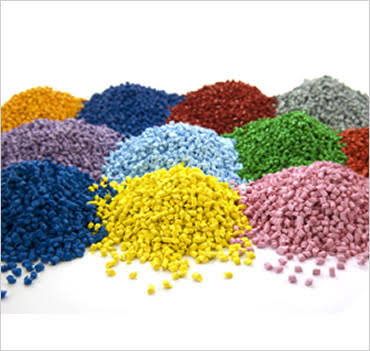
This difference changes the dryer selection completely.
A simple heated-air system may be appropriate for some non-hygroscopic applications, while hygroscopic polymers may require dehumidified/desiccant air, controlled dew point, sufficient residence time and carefully controlled temperature.
GTI Dryers approaches polymer and resin drying as a material-specific process engineering problem rather than a one-machine-fits-all application.
The Real Problem: Your Resin Is Drying — But Is It Dry Enough?
A plastic processor may already have a dryer and still experience:
- Splay or silver streaks
- Bubbles during extrusion
- Voids
- Surface defects
- Brittle products
- Loss of mechanical properties
- Reduced polymer viscosity
- PET intrinsic-viscosity loss
- Pellet sticking or agglomeration
- Uneven moisture
- Over-drying
- Excessive energy consumption
- Long drying cycles
- Inconsistent extrusion
- Dryer hopper bridging
- Production losses after material changes
The mistake is often to ask:
“What temperature should the dryer run at?”
Temperature is only one part of the answer.
For resin drying, heat, dew point, airflow and drying time/residence time work together.
The more useful question is:
“What moisture is present, how is it held in the polymer, and what moisture condition is required before the next processing step?”
Polymer Dryer Selection Starts With One Important Question
Is the Resin Hygroscopic or Non-Hygroscopic?
This is the first screening step.
Non-Hygroscopic / Low-Moisture-Affinity Materials
Common examples include:
- Polyethylene (PE)
- Polypropylene (PP)
- PVC
- Polystyrene and selected other polymers
These materials generally do not absorb atmospheric moisture into the polymer structure in the same way as hygroscopic resins. Moisture may instead remain on the pellet surface due to condensation, storage or handling.
For suitable applications, heated-air drying can remove this surface moisture.
Hygroscopic Materials
Examples include:
- PET
- Nylon / Polyamide (PA)
- Polycarbonate (PC)
- PBT
- ABS
- PMMA/acrylic
- TPU
- Other engineering polymers
These materials can absorb moisture into the pellet.
For such materials, simply blowing warm ambient air through the resin may not provide the required moisture removal. Low-dew-point dehumidified air is commonly used to establish the moisture gradient required for drying.
A Practical Polymer Dryer Decision Map
| Material / Feed | Main Moisture Issue | Technology to Evaluate |
| PE pellets | Surface moisture | Heated-air / suitable hot-air system |
| PP pellets | Surface moisture | Heated-air / suitable hot-air system |
| PVC granules | Surface moisture / process-specific moisture | Heated-air or suitable thermal dryer |
| Plastic regrind | Surface + process moisture | Fluid bed / mechanical + thermal drying |
| Plastic flakes after washing | High surface moisture | Mechanical dewatering + thermal drying |
| PET flakes | Surface + absorbed moisture | Crystallization + desiccant drying where required |
| PET pellets | Hygroscopic moisture | Desiccant/dehumidified drying |
| Nylon | Absorbed moisture | Low-dew-point desiccant drying |
| PC | Absorbed moisture | Controlled dehumidified/desiccant drying |
| PBT | Absorbed moisture | Controlled dehumidified/desiccant drying |
| Mixed engineering resins | Grade-specific | Resin-specific drying evaluation |
This is a technology-screening guide, not a universal processing specification.
1. Desiccant Dryers for Hygroscopic Resins
For hygroscopic polymers, the objective is not simply to heat the pellets.
The drying air must be sufficiently dry to maintain the driving force for moisture migration from inside the pellet toward the surrounding air.
A typical desiccant system works by:
Moist Ambient / Return Air
↓
Desiccant / Molecular-Sieve Dehumidification
↓
Low-Dew-Point Air
↓
Heating
↓
Drying Hopper
↓
Moisture Removal From Resin
↓
Return / Regeneration Loop
Desiccant systems therefore control both temperature and air dryness.
This is particularly relevant to PET, nylon, PC, PBT and other hygroscopic engineering plastics.
The four key drying parameters are:
1. Heat
Raises polymer temperature and assists moisture migration.
2. Dew Point
Determines how dry the surrounding process air is.
3. Time
Provides sufficient residence for moisture to diffuse out of the polymer.
4. Airflow
Transfers heat to the material and carries moisture away.
Changing only one parameter may not solve an under-drying problem.
2. PET Dryer Systems: Why Moisture Control Becomes Critical
PET is one of the most important examples of a hygroscopic polymer.
When PET containing excessive moisture reaches melt-processing conditions, moisture can contribute to hydrolytic degradation of polymer chains, affecting molecular weight/intrinsic viscosity and ultimately product properties.
This is why PET drying often requires much tighter control than PE or PP.
Depending on the application, the process may involve:
PET Flake / Pellet
↓
Mechanical Dewatering Where Applicable
↓
Crystallization Where Required
↓
Controlled Heating
↓
Desiccant / Dehumidified-Air Drying
↓
Low-Moisture PET
↓
Extrusion / Injection / Fibre / Sheet / Bottle Processing
The exact sequence depends on whether the feed is virgin PET, amorphous recycled PET, crystalline PET or another grade.
PET Regrind & Recycled PET Need Special Attention
Recycled PET can behave differently from virgin crystalline PET.
Amorphous PET may soften or become tacky during heating, which can cause:
- Clumping
- Hopper bridging
- Wall sticking
- Poor material flow
- Uneven drying
For suitable recycled-PET processes, crystallization may be incorporated before deep desiccant drying.
This is an important distinction when designing a PET recycling or reprocessing line.
The dryer should therefore be selected around the physical state of the PET, not simply the word “PET.”
3. Fluid Bed Dryers for Plastic Granules, Flakes & Powders
Fluid-bed drying can be considered when the polymer material is available in a suitable particulate form.
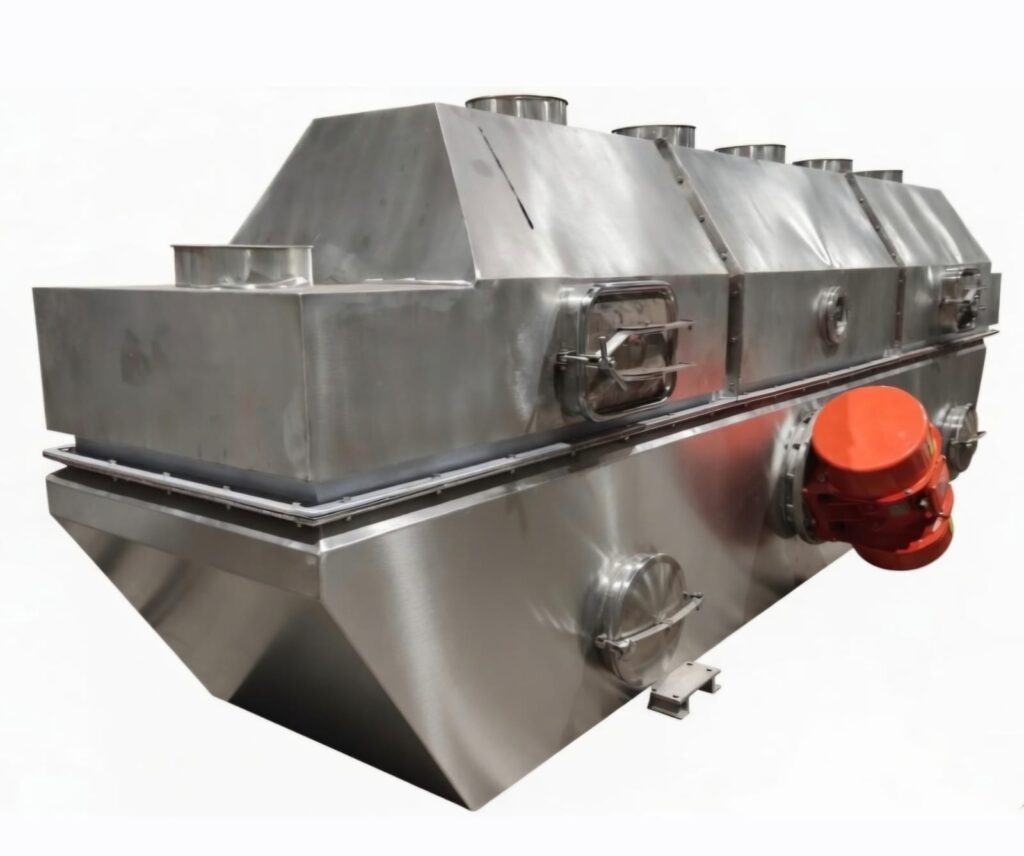
The basic principle is:
Wet Granules / Flakes / Particles
↓
Controlled Air Distribution
↓
Fluidization
↓
Heat & Mass Transfer
↓
Moisture Evaporation
↓
Dry Product
Fluid-bed systems can provide intensive gas-solid contact and are particularly relevant to particulate materials.
They may be considered for:
- Plastic granules
- Polymer particles
- Recycled plastic flakes
- Suitable powders
- Chemical/polymer intermediates
- Post-wash plastic materials
The actual suitability depends on particle size, density, shape, moisture, temperature sensitivity and fluidization behaviour.
4. Rotary Dryers for Polymer & Plastic Materials
Rotary dryers can be considered for suitable robust bulk plastic materials, especially where the material enters as a larger-volume particulate stream and the primary objective is removal of surface or process moisture.
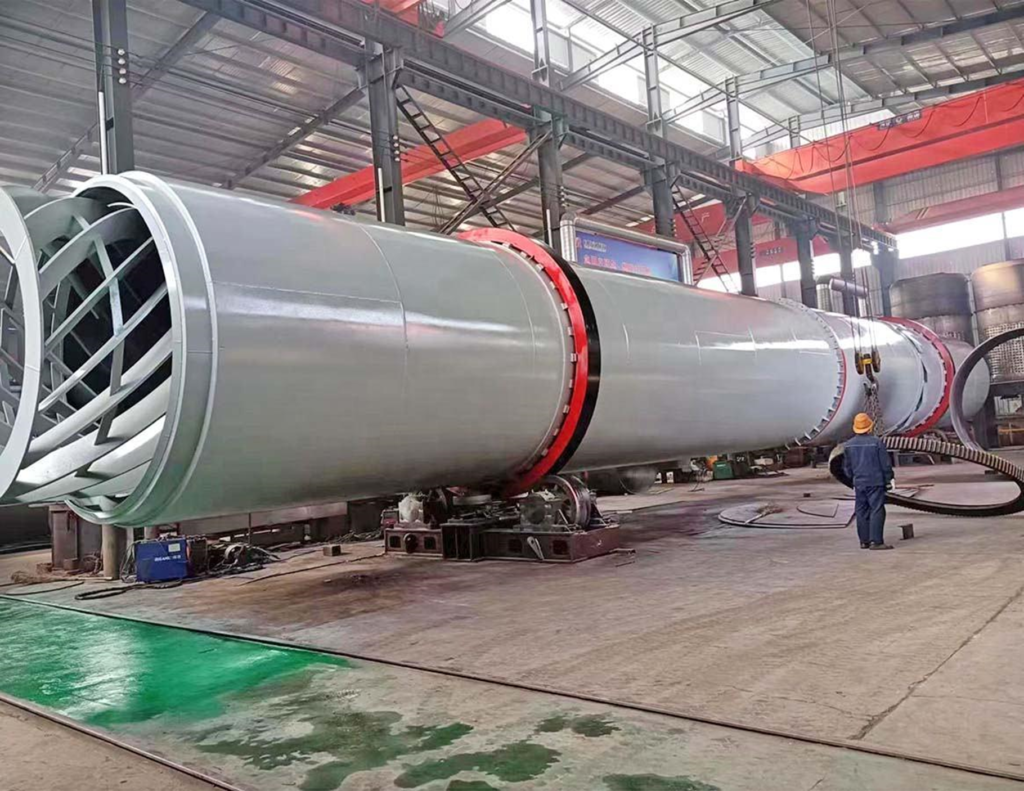
Potential applications include:
- Plastic flakes
- Recycled polymer materials
- Robust granules
- Washed plastic fractions
- Polymer-related bulk solids
However, rotary drying should not automatically replace a dedicated low-dew-point desiccant system for hygroscopic resin that requires deep internal moisture removal.
This distinction is particularly important for PET and engineering polymers.
5. Plastic Flake Drying After Washing
Recycling plants often face a different moisture problem from virgin-resin processors.
A washed plastic stream can contain significant surface water after:
- Washing
- Rinsing
- Friction washing
- Separation
- Wet processing
The efficient route may therefore begin with mechanical water removal before thermal drying.
A practical process can be:
Washed Plastic
↓
Centrifugal / Mechanical Dewatering
↓
Thermal Surface Drying
↓
Further Resin-Specific Drying Where Required
↓
Extrusion / Pelletizing
This is especially important because a thermal dryer should not be expected to evaporate water that could have been removed mechanically at much lower energy cost.
PE & PP Drying: Don’t Over-Engineer the Problem
PE and PP are generally considered non-hygroscopic materials. Surface moisture can still occur because of:
- Washing
- Condensation
- Wet storage
- Environmental exposure
- Recycling operations
For suitable applications, heated-air drying may therefore be sufficient for removing surface moisture.
This creates an important buying principle:
Don’t specify a desiccant dryer simply because it is a more sophisticated machine.
If the actual problem is only surface moisture on PE or PP pellets, a simpler system may provide the required result with lower capital and operating complexity.
PVC Drying: Moisture, Heat & Process Stability
PVC processing has its own process constraints.
Drying requirements depend on the grade, additives, feed form and processing route.
Possible forms include:
- PVC powder
- PVC compound
- PVC granules
- Recycled PVC
- PVC blends
A drying system may need to consider:
- Surface moisture
- Powder/granule flow
- Heat sensitivity
- Residence time
- Airflow
- Dust generation
- Additive stability
- Downstream extrusion requirements
PVC should therefore be evaluated based on the actual compound and processing conditions rather than treated exactly like PE or PP.
The Problem-Solving Section: Why Resin Drying Systems Fail
Problem 1: “The Dryer Temperature Is Correct, But the Resin Is Still Wet.”
Possible causes:
- Insufficient dew-point control
- Inadequate residence time
- Incorrect airflow
- Excessive material throughput
- Poor hopper design
- Moisture entering through conveying/storage
- Incorrect resin classification
For hygroscopic resins, temperature alone does not guarantee drying.
Recommended approach: measure incoming moisture, process-air dew point and actual material residence time.
Problem 2: Splay, Silver Streaks or Bubbles During Processing
Excess moisture can vaporize during melt processing and produce visible defects.
Possible causes include:
- Inadequate drying
- Resin reabsorbing moisture after drying
- Wet conveying lines
- Open storage
- Incorrect dryer settings
- Mixed resin grades
Solution approach:
Check the complete material route:
Storage → Conveying → Drying → Hopper → Machine
The dryer may not be the only source of the problem.
Problem 3: PET Loses Quality During Processing
If PET enters melt processing with excessive moisture, hydrolytic degradation can reduce polymer molecular weight and intrinsic viscosity.
The solution is not simply “increase the temperature.”
Instead, evaluate:
- PET condition
- Initial moisture
- Crystallinity
- Drying-air dew point
- Drying temperature
- Residence time
- Material throughput
- Moisture pickup after drying
PET drying references emphasize the importance of controlled low-dew-point drying for moisture removal.
Problem 4: Pellets Stick Together
This is particularly relevant to certain PET/recycled PET applications.
Possible causes include:
- Amorphous material softening
- Excessive temperature
- Inadequate crystallization
- Poor material movement
- Incorrect residence time
- Excessive fines
Engineering response: evaluate crystallization, temperature profile, agitation/material movement and hopper design.
Problem 5: Resin Is Over-Dried
More drying is not automatically better.
Over-drying can mean:
- Higher energy consumption
- Longer residence time
- Lower productivity
- Unnecessary thermal exposure
- Increased operating cost
The objective should be:
Required moisture → Not “minimum possible moisture.”
The target should come from the resin grade and downstream process specification.
Problem 6: Dryer Capacity Looks Adequate on Paper but Production Is Lower
This can happen when calculations are based only on nominal dryer capacity.
Actual performance may be affected by:
- Initial moisture
- Final moisture
- Bulk density
- Resin type
- Residence time
- Airflow
- Dew point
- Pellet geometry
- Throughput changes
- Ambient conditions
- Material reabsorption
This is why a resin dryer should be evaluated based on actual material and process data, not just tonnes per hour.
Problem 7: Resin Reabsorbs Moisture After Drying
This is often overlooked.
A resin can be adequately dried and then exposed to humid air during:
- Pneumatic conveying
- Open storage
- Hopper transfer
- Long holding periods
- Packaging
- Machine feeding
For hygroscopic polymers, the entire handling system may therefore need moisture-control consideration.
Fluid Bed vs Rotary vs Desiccant: Which One Should You Buy?
| Factor | Fluid Bed | Rotary Dryer | Desiccant Resin Dryer |
| Main use | Particulate materials | Robust bulk solids | Hygroscopic resin |
| Moisture type | Mainly surface/process moisture | Mainly surface/process moisture | Absorbed/internal moisture |
| PE/PP | Possible | Possible | Usually unnecessary for basic surface drying |
| PVC | Application dependent | Application dependent | Grade dependent |
| PET | Surface/preparation stage | Certain applications | Highly relevant for deep drying |
| Nylon | Application dependent | Generally not the primary choice for deep resin drying | Highly relevant |
| PC/PBT | Application dependent | Not generally primary deep-drying solution | Highly relevant |
| Air dew point | Important | Application dependent | Critical |
| Residence time | Process dependent | Process dependent | Resin-specific |
| Crystallization | Possible in suitable systems | Not normally the core function | May be integrated upstream for PET |
| Best selection basis | Particle behaviour | Bulk-solid behaviour | Resin hygroscopicity + processing requirement |
A Better Way to Select a Polymer Dryer
Instead of asking:
“Which dryer is best for plastic?”
Use this five-step decision process.
Step 1 — Identify the polymer
PE?
PP?
PVC?
PET?
PA?
PC?
PBT?
ABS?
Other resin?
Step 2 — Identify the feed form
- Pellet
- Granule
- Powder
- Flake
- Regrind
- Washed material
- Amorphous PET
- Crystalline PET
Step 3 — Identify the moisture
Is it:
Surface moisture?
or
Moisture absorbed inside the polymer?
Step 4 — Define the downstream requirement
- Extrusion
- Injection moulding
- Blow moulding
- Fibre spinning
- Sheet production
- Film production
- Pelletizing
- Compounding
- Recycling
Step 5 — Establish the actual specification
- Initial moisture
- Target moisture
- Throughput
- Residence time
- Temperature limit
- Required dew point
- Energy source
- Material bulk density
- Particle dimensions
- Ambient conditions
Only then should the dryer configuration be finalized.
Drying System for Polymer Compounding & Extrusion
A polymer drying system is rarely an isolated piece of equipment.
It can be integrated into a larger process:
Raw Resin / Recycled Polymer
↓
Storage
↓
Material Conveying
↓
Dewatering if Required
↓
Crystallization if Required
↓
Thermal / Desiccant Drying
↓
Moisture Monitoring
↓
Blending / Compounding
↓
Extrusion
↓
Pelletizing
↓
Packaging
The dryer therefore has a direct relationship with the stability of the complete extrusion process.
Moisture Monitoring Should Be Part of the Process Strategy
For high-value resins, relying only on dryer settings can be risky.
Useful monitoring points may include:
- Incoming material moisture
- Dryer-air dew point
- Drying-air temperature
- Return-air temperature
- Material temperature
- Dryer throughput
- Residence time
- Final resin moisture
- Ambient humidity
For hygroscopic resins, dew point is especially important because the surrounding air must be dry enough to maintain the moisture-removal driving force.
Energy Efficiency in Polymer Drying
Drying can consume significant energy, particularly where heated and dehumidified air must be continuously circulated.
Energy optimization can involve:
- Correct dryer sizing
- Controlled airflow
- Efficient insulation
- Heat recovery
- Optimized residence time
- Efficient desiccant regeneration
- Avoiding unnecessary over-drying
- Correct material throughput
- Automated control
- Moisture-based process monitoring
For PE/PP surface moisture applications, unnecessary deep dehumidification can add complexity without solving a real process problem.
For PET and other hygroscopic materials, however, adequate dehumidification can be essential.
The engineering objective is therefore the required moisture level at the lowest practical total process cost, rather than simply minimizing dryer temperature or airflow.
Desiccant vs Vacuum Drying for Hygroscopic Resins
For some high-value engineering resins, processors may compare desiccant and vacuum drying.
Neither technology is universally better.
Current resin-drying guidance notes that desiccant drying remains a general-purpose approach for many hygroscopic engineering resins, while vacuum drying can be attractive for selected high-temperature resins and shorter-cycle requirements.
The comparison should consider:
- Resin type
- Moisture target
- Throughput
- Batch vs continuous operation
- Cycle time
- Temperature
- Energy consumption
- Material handling
- Capital cost
- Integration with extrusion/moulding
Where GTI Dryers Fits Into Polymer & Resin Processing
GTI Dryers approaches polymer and resin drying from the process requirement backward.
The engineering evaluation can begin with:
Material
What polymer are you processing?
PE / PP / PVC / PET / PA / PC / PBT / ABS / resin blend / recycled polymer
Feed
What form does it enter as?
Pellet / granule / powder / flake / regrind / wet washed plastic
Moisture
Where is the moisture?
Surface / absorbed / process water / residual solvent
Product
What happens after drying?
Extrusion / injection moulding / compounding / fibre / sheet / pelletizing
Performance
What must the dryer achieve?
Moisture target / throughput / temperature control / dew point / residence time / powder or pellet quality
This approach helps determine whether the project should use a fluid-bed, rotary, hot-air, desiccant or another process-specific drying configuration.
What GTI Engineers Need Before Designing Your Resin Dryer
For a serious technical evaluation, provide:
- Polymer/resin name and grade
- Virgin or recycled material
- Pellet, powder, flake or granule size
- Initial moisture
- Required final moisture
- Production capacity
- Bulk density
- Material temperature limit
- Hygroscopic/non-hygroscopic classification
- Extrusion or processing temperature
- Required residence time
- Ambient humidity conditions
- Available heat source
- Available electrical capacity
- Required automation level
- Space available
- Continuous or batch operation
- Solvent content, if applicable
- Upstream washing/dewatering details
- Downstream extrusion/compounding requirements
For recycled plastics, also provide:
- Washing process
- Mechanical dewatering method
- Flake size
- Contamination level
- PET crystallinity where relevant
- Recycled/virgin blend ratio
Why a Customized Polymer Dryer Can Be Better Than a Standard Machine
Two plants can process the same polymer and still require different drying systems.
For example:
PET bottle recycling plant
may require:
Washing → Mechanical Dewatering → Crystallization → Desiccant Drying → Extrusion
while:
PP recycling
may require:
Washing → Mechanical Dewatering → Surface Drying → Extrusion
And:
Virgin PET processing
may require a controlled low-dew-point resin-drying system without the same washing/dewatering stages.
Therefore, a dryer manufacturer’s value is not only in manufacturing the equipment.
It is in correctly connecting the dryer to the material, moisture mechanism and downstream process.
Frequently Asked Questions
Which dryer is used for plastic granules?
The correct dryer depends on the polymer and moisture type. Fluid-bed or heated-air systems may be suitable for certain particulate materials, while hygroscopic resins such as PET may require controlled desiccant/dehumidified drying.
Which dryer is suitable for PET resin?
PET is hygroscopic and generally requires controlled drying with sufficiently dry process air before melt processing. Desiccant/dehumidified-air drying is widely used for PET; the actual temperature, dew point, residence time and final moisture should be established for the specific grade and application.
Does PE require a desiccant dryer?
Usually not simply because it is PE. PE is generally non-hygroscopic, so when the issue is only surface moisture, heated-air drying may be sufficient.
Does PP absorb moisture?
PP is generally considered non-hygroscopic. However, PP pellets or recycled PP can carry surface moisture from washing, condensation or handling, which may require drying before processing.
Why is PET drying so important?
Moisture in PET can contribute to hydrolytic degradation during melt processing, potentially reducing molecular weight/intrinsic viscosity and affecting finished-product properties.
What are the four important parameters in resin drying?
The fundamental parameters are heat, dew point, drying time and airflow.
Can a fluid-bed dryer dry plastic flakes?
Yes, suitable plastic flakes can be processed in fluidized systems when their size, density, shape and moisture characteristics allow effective fluidization. The system must be designed around the actual material.
Can rotary dryers be used for plastic recycling?
Rotary dryers can be evaluated for suitable robust bulk plastic fractions, particularly for surface/process moisture. They are not a universal replacement for deep desiccant drying of hygroscopic resins.
Can GTI Dryers design customized polymer drying systems?
GTI Dryers can evaluate polymer drying applications based on material characteristics, moisture, capacity, thermal requirements, energy source and downstream processing requirements.
Final Buyer Guide: Choose the Dryer Around the Moisture Problem
The most important lesson for polymer and resin drying is simple:
Not every plastic needs the same type of drying.
For PE, PP and suitable PVC applications, the main issue may be surface moisture.
For PET, nylon, PC, PBT and other hygroscopic resins, moisture can penetrate the polymer and requires controlled low-dew-point drying.
For washed recycled plastics, mechanical dewatering should often be considered before thermal drying.
For PET recycling, crystallization and deep drying may need to work together.
For plastic granules, flakes and powders, fluid-bed or rotary technologies may be evaluated according to particle behaviour and moisture requirements.
The right solution is therefore not simply the dryer with the largest capacity.
It is the drying system that delivers the required moisture condition consistently before compounding, extrusion, injection moulding or other thermal processing — without unnecessary energy consumption or material degradation.
Talk to GTI Dryers
Share your polymer type, feed form, initial moisture, target moisture, capacity and downstream process with the GTI engineering team for a dryer-selection evaluation.
GTI Dryers — Engineered Drying Solutions from India for Global Polymer, Resin & Plastics Processing Industries.