
Industrial fertilizer drying solutions for urea, NPK, ammonium sulfate, ammonium nitrate, potash, phosphate fertilizers, micronutrient fertilizers and other granular products
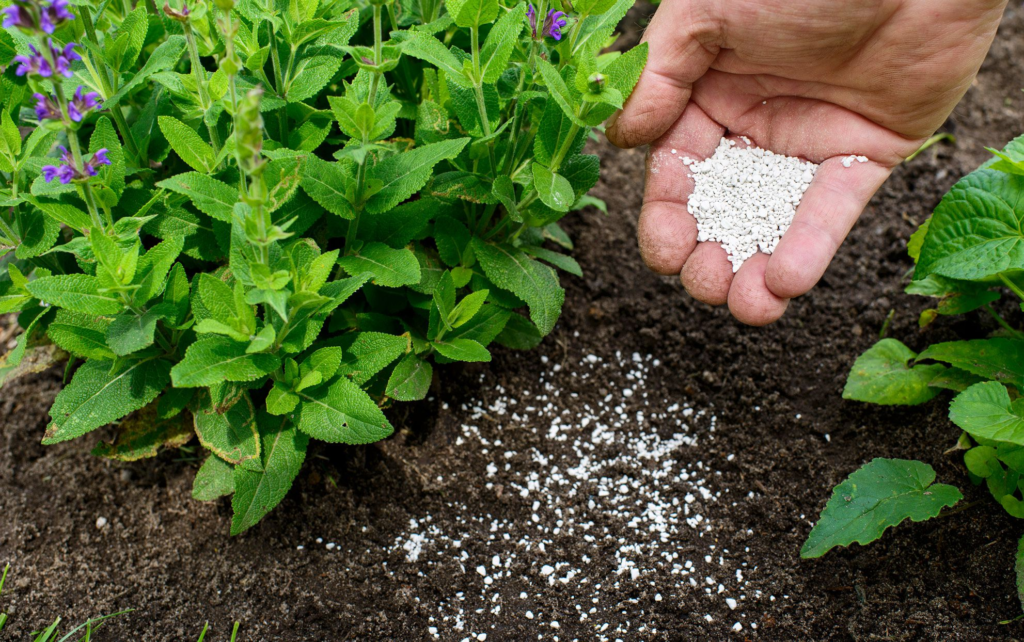
Fertilizer granulation does not end when the granules are formed.
For many fertilizer production routes, the newly formed granules still contain moisture that must be controlled before cooling, screening, coating, storage and packaging.
If the drying stage is poorly designed, manufacturers can face:
- Excessive residual moisture
- Granule caking during storage
- Weak or fragile granules
- Excessive fines
- Uneven moisture distribution
- Product overheating
- Dust generation
- Poor screening efficiency
- Increased recycle load
- Higher energy consumption
- Unstable product quality
This makes fertilizer drying a process-engineering problem, not simply a moisture-removal problem.
GTI Dryers designs industrial drying systems for fertilizer and chemical granules, including rotary dryers, fluid-bed dryers and vibratory fluidised-bed dryers, with the technology selected according to feed characteristics, production capacity, moisture target, granule strength and downstream requirements. GTI’s current VFBD and rotary dryer pages specifically identify fertilizer applications including NPK, urea, ammonium sulfate and potash.
What Is a Fertilizer Dryer?
A fertilizer dryer is an industrial drying system used to remove the required amount of moisture from fertilizer granules or other wet particulate products after a suitable granulation or wet-processing stage.
A simplified process can be:
Raw Materials → Batching → Mixing → Granulation → Drying → Cooling → Screening → Coating → Storage → Packaging
Depending on the fertilizer manufacturing route, the upstream and downstream configuration can differ significantly.
The dryer therefore needs to be designed as part of the complete fertilizer processing line, rather than as an isolated machine.
Why Fertilizer Granule Drying Is So Important
Fertilizer granules need to remain stable during:
- Conveying
- Screening
- Bulk handling
- Bagging
- Transportation
- Warehouse storage
- Field application
Excess moisture can increase the risk of caking or handling problems, while excessive thermal treatment can negatively affect product quality.
The objective is therefore:
Remove the required moisture → protect granule integrity → cool the product appropriately → maintain consistent product quality.
Continuous fluid-bed systems are widely used for granular materials where uniform moisture reduction and controlled residence time are important.
Which Fertilizers Need Industrial Drying?
Fertilizer drying applications can include:
Urea Granules
Urea granules may require controlled drying and cooling depending on the production route and product specification.
Important considerations include:
- Moisture
- Granule temperature
- Particle size
- Mechanical strength
- Caking tendency
- Dust and fines
NPK Fertilizers
NPK is one of the most important applications for industrial fertilizer drying.
Depending on the process, NPK granules can contain different proportions of:
- Nitrogen sources
- Phosphate components
- Potassium sources
- Fillers
- Micronutrients
- Recycled fines
The formulation can significantly influence drying behavior.
Ammonium Sulfate
Ammonium sulfate granules or crystals can require controlled drying after wet processing.
The dryer should consider:
- Crystal/granule size
- Feed moisture
- Product temperature
- Caking
- Corrosion
- Dust
- Required throughput
Ammonium Nitrate
Ammonium nitrate requires particularly careful process and safety engineering.
The drying and cooling system must be designed around the specific product, formulation, operating conditions and applicable safety requirements.
Potash / Potassium Chloride
Potash granules and crystals can be processed through continuous drying systems depending on the upstream process and moisture requirement.
Phosphate Fertilizers
Selected phosphate fertilizer products can also require drying after wet processing or granulation.
Micronutrient Fertilizers
Specialty granular fertilizers may require tighter control of:
- Moisture
- Particle size
- Granule strength
- Temperature
- Segregation
- Dust
Rotary Dryer for Fertilizer Granules
The rotary dryer remains an important industrial technology for large-scale fertilizer processing.
It is particularly useful where the material is:
- Granular
- Robust enough for rotary handling
- Produced at high throughput
- Suitable for continuous hot-air drying
Industrial rotary dryers are used for fertilizer products including NPK, urea granules, ammonium sulfate, potash and other granulated fertilizers.
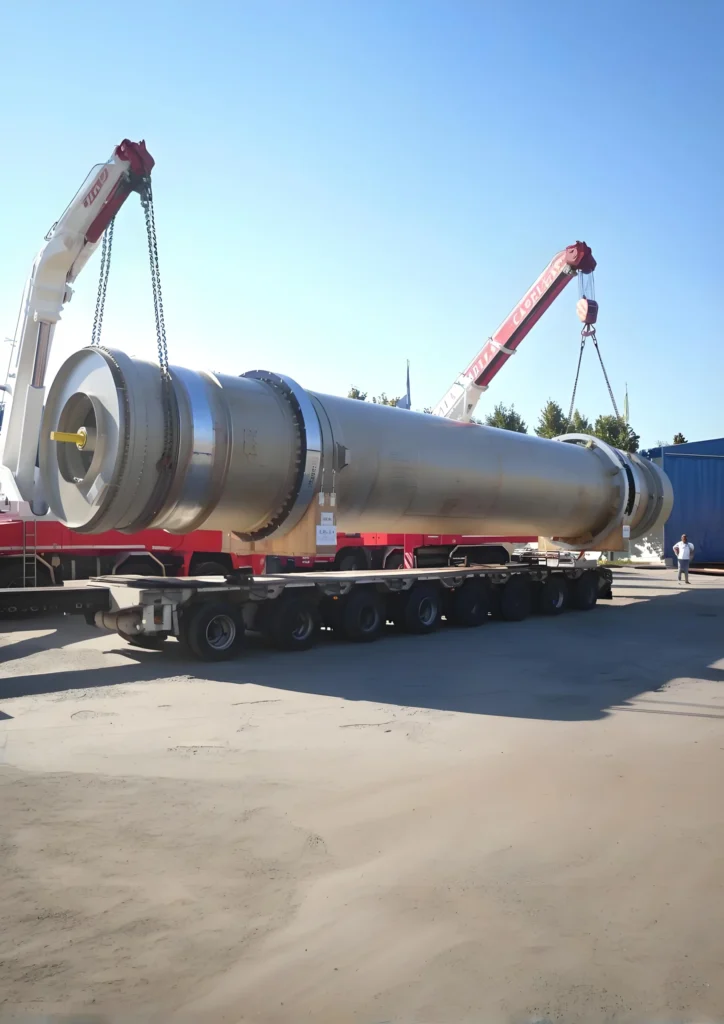
How a Fertilizer Rotary Dryer Works
Wet fertilizer granules enter the rotating drum through a controlled feeding system.
As the drum rotates, internal flights lift and shower the material through the heated gas stream.
This increases contact between:
Hot Gas + Wet Granules
and promotes moisture evaporation.
The dried product exits continuously and can then move to:
Cooling → Screening → Coating → Storage
Key advantages
- High-throughput continuous operation
- Robust construction
- Suitable for many granular materials
- Relatively simple mechanical arrangement
- Can be integrated into complete fertilizer lines
- Suitable for large industrial capacities
Rotary dryer limitations
A rotary dryer should not automatically be selected for every fertilizer.
Potential concerns include:
- Excessive particle attrition
- Fines generation
- Non-uniform residence time
- Product temperature control
- Dust carryover
- Space requirement
The correct internals, airflow direction, residence time and operating conditions depend on the fertilizer formulation.
Fluid Bed Dryer for Fertilizers
A fluid-bed dryer uses controlled upward airflow to suspend and fluidize suitable fertilizer particles.
This creates strong gas-solid contact and can provide efficient heat and mass transfer.
Fluid-bed drying is particularly attractive when manufacturers require:
- Uniform moisture reduction
- Controlled residence time
- Continuous operation
- Drying and cooling in one system
- Reduced variation across the product bed
Continuous fluid-bed systems are commercially used for granular fertilizer materials such as urea and NPK.
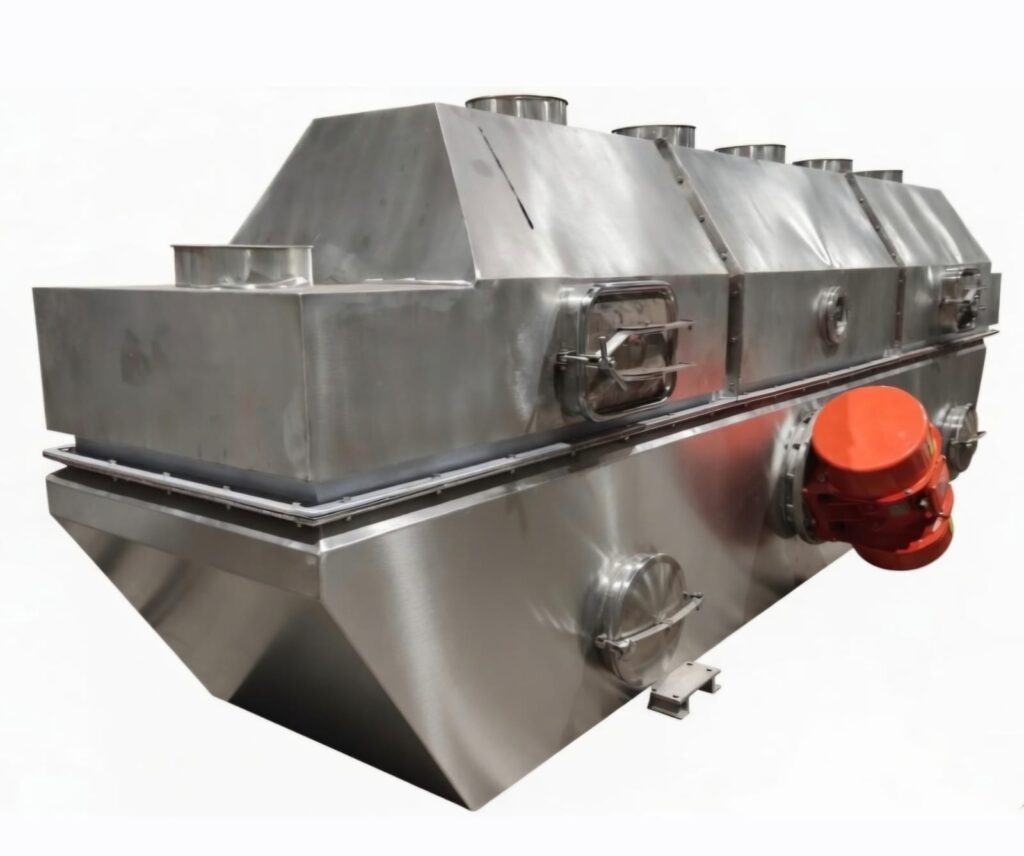
Vibratory Fluidised Bed Dryer for Fertilizer Granules
A VFBD combines controlled fluidization with mechanical vibration.
The vibration helps move the product through the drying zone while maintaining contact with the heated air.
This can be useful for suitable:
- NPK granules
- Urea granules
- Ammonium sulfate
- Potash
- Micronutrient fertilizers
- Other free-flowing granular products
GTI’s VFBD technology is specifically positioned for continuous drying of fertilizer granules and provides control over moisture, residence time and product handling.
Potential advantages of VFBD
- Controlled material movement
- Uniform product exposure
- Continuous operation
- Drying and cooling integration
- Suitable for certain fragile or free-flowing particles
- Controlled residence time
- Reduced dependence on drum rotation
The suitability still depends on particle-size distribution, density, flowability and fluidization characteristics.
Fertilizer Dryer + Cooler: Why Both Matter
One common mistake is to focus only on drying.
After drying, fertilizer granules may still be too hot for immediate:
- Packaging
- Storage
- Coating
- Conveying
- Bulk loading
Therefore, a complete process may require:
Drying → Cooling → Screening → Coating
A fluid-bed dryer-cooler can integrate these functions for suitable products.
For rotary systems, a separate rotary cooler may be integrated downstream.
The Most Common Fertilizer Drying Problems — and How to Solve Them
Problem 1: Fertilizer Granules Are Caking
Caking can be influenced by:
- Residual moisture
- Product temperature
- Humidity
- Granule composition
- Storage conditions
- Surface properties
- Inadequate cooling
- Inappropriate coating
Engineering approach
Do not simply increase dryer temperature.
Instead, evaluate:
Drying + Cooling + Moisture + Coating + Storage Conditions
A dryer may achieve the moisture target but still produce a storage problem if the granules leave the process too hot or are exposed to unsuitable humidity.
Problem 2: Final Moisture Is Not Uniform
Possible causes include:
- Uneven feed distribution
- Variable feed moisture
- Incorrect airflow
- Inadequate residence time
- Poor fluidization
- Overloaded dryer
- Unstable granulation
Potential solutions
Review:
- Feed system
- Air distribution
- Bed depth
- Residence time
- Dryer loading
- Granule-size distribution
- Upstream moisture consistency
A good dryer cannot compensate indefinitely for highly unstable feed conditions.
Problem 3: Too Many Fines Are Generated
Excessive fines can increase:
- Dust
- Product loss
- Screening recycle
- Bag-filter loading
- Environmental-control requirements
Potential causes include:
- Excessive mechanical handling
- Granule weakness
- Excessive impact
- Over-drying
- Incorrect airflow
- Poor granulation upstream
Solution
The dryer should be evaluated together with:
Granulation → Drying → Cooling → Screening → Recycle
rather than optimized independently.
Problem 4: Granules Are Too Hot After Drying
Hot product can create downstream problems even when moisture is correct.
Potential solutions include:
- Integrated cooling zone
- Separate cooler
- Controlled cooling air
- Improved residence-time management
- Heat recovery where feasible
The target should be dry and stable, not simply dry.
Problem 5: Dryer Consumes Too Much Energy
High energy consumption may result from:
- Excessive moisture entering the dryer
- Poor feed distribution
- Excessive exhaust airflow
- Heat losses
- Poor insulation
- Inadequate heat recovery
- Over-drying
- Unoptimized air temperature
- Unstable production rate
A better approach
First calculate the actual evaporation requirement.
Then evaluate:
Mechanical Dewatering → Dryer → Heat Recovery → Cooling → Exhaust Management
Energy optimization should be performed across the complete process.
Problem 6: Dryer Capacity Drops During High-Humidity Conditions
Ambient conditions can influence:
- Drying-air humidity
- Evaporation driving force
- Cooling performance
- Storage behavior
- Product caking
A plant operating successfully in one climate may need different air-handling or cooling considerations in another.
This is especially relevant for fertilizer plants operating in humid coastal and tropical regions.
Problem 7: Granules Break During Drying
Granule breakage can occur because of:
- Mechanical impact
- Weak granulation
- Excessive handling
- High airflow
- Excessive recycle
- Thermal stress
The dryer should therefore be selected according to granule strength, not only capacity.
Fertilizer Dryer Selection: Rotary vs Fluid Bed vs VFBD
| Requirement | Rotary Dryer | Fluid Bed Dryer | VFBD |
| High bulk throughput | Excellent for suitable products | Excellent | Excellent |
| Robust granules | Very suitable | Suitable | Suitable |
| Tight residence-time control | Moderate | High | High |
| Drying + cooling | Separate/integrated options | Strong option | Strong option |
| Free-flowing granules | Suitable | Very suitable | Very suitable |
| Fragile granules | Requires evaluation | Often favorable | Can be favorable |
| Very fine powder | Application-dependent | Application-dependent | Application-dependent |
| Large fertilizer plants | Suitable | Suitable | Suitable |
| Mechanical handling | Rotating drum | Fluidization | Fluidization + vibration |
There is no universal winner.
For a high-capacity NPK plant, rotary drying may be attractive in one process while a continuous fluid-bed or VFBD system may be more appropriate in another.
How to Choose the Right Fertilizer Dryer
Before requesting a quotation, define these parameters.
1. Fertilizer Type
For example:
- Urea
- NPK
- Ammonium sulfate
- Ammonium nitrate
- DAP
- MAP
- Potash
- SSP
- Micronutrient fertilizer
- Specialty fertilizer
2. Feed Condition
Is the feed:
- Wet granules?
- Crystals?
- Agglomerated particles?
- Filter cake?
- Slurry?
- Recycled fines?
3. Capacity
Specify:
kg/h, TPH or tonnes/day
Capacity has a major influence on dryer configuration.
4. Initial Moisture
Give the moisture entering the dryer.
5. Target Moisture
Specify the required moisture at dryer outlet.
Avoid using generic moisture targets because fertilizer specifications vary by formulation and production route.
6. Particle Size
Provide:
- Minimum size
- Maximum size
- Target size
- Size distribution
7. Product Temperature
Define any maximum allowable product temperature.
8. Granule Strength
If breakage and fines are critical, this should be included in the dryer-selection discussion.
9. Heat Source
Possible sources can include:
- Natural gas
- LPG
- Steam
- Thermal oil
- Electricity
- Recovered process heat
- Other plant-specific sources
10. Plant Location
Ambient temperature and humidity can influence air-handling and cooling design.
Fertilizer Drying Is Part of a Larger Process
A commercial fertilizer plant may contain:
Raw Material Storage
↓
Batching & Dosing
↓
Mixing
↓
Granulation
↓
Drying
↓
Cooling
↓
Screening
↓
Oversize Crushing / Recycle
↓
Coating / Conditioning
↓
Final Screening
↓
Packing / Bulk Storage
This means dryer performance can affect the entire plant.
For example:
Poor drying → weak/caking granules → more fines → higher recycle → lower effective capacity
This is why fertilizer drying should be evaluated as a plant-capacity problem, not simply a dryer-capacity problem.
Dust Collection in Fertilizer Drying Plants
Fertilizer dryers can generate dust and fine particles.
A complete system may therefore require:
Dryer → Cyclone / Primary Separator → Bag Filter → Exhaust / Scrubbing System
The exact configuration depends on:
- Fertilizer chemistry
- Particle size
- Airflow
- Dust loading
- Environmental requirements
- Product recovery requirements
Dust collection can also recover valuable fertilizer fines for controlled return to the process where appropriate.
Automation & Process Control
Large fertilizer plants benefit from automated monitoring of parameters such as:
- Feed rate
- Dryer inlet temperature
- Dryer outlet temperature
- Product temperature
- Airflow
- Pressure
- Residence time
- Bed conditions
- Final moisture
- Cooling temperature
- Product discharge rate
PLC/SCADA-based control can help operators maintain repeatable process conditions.
For a fertilizer plant, automation should ideally connect:
Granulation + Drying + Cooling + Screening + Recycle
rather than treating every machine as an independent operation.
Energy Efficiency in Fertilizer Drying
A high-capacity fertilizer dryer should be designed around the actual evaporation load.
Potential approaches include:
Reduce moisture before thermal drying
Where the upstream process permits mechanical removal of water, reducing the dryer load can improve overall energy efficiency.
Avoid over-drying
Drying below the required specification wastes energy and may negatively affect product quality.
Optimize airflow
Excessive airflow can increase exhaust losses and dust loading.
Recover heat
Where process conditions allow, waste heat can potentially be recovered for preheating drying air or other plant duties.
Integrate drying and cooling
A properly designed drying/cooling system can improve overall thermal management.
Safety Considerations for Fertilizer Dryers
Fertilizer drying must be engineered around the specific product.
This is especially important for products containing ammonium nitrate or other materials with significant thermal or decomposition hazards.
The engineering review should consider:
- Product chemistry
- Maximum product temperature
- Heat-source configuration
- Dust characteristics
- Combustion-gas contact
- Pressure protection where required
- Emergency shutdown
- Instrumentation
- Fire and explosion-risk assessment where applicable
- Applicable statutory and process-safety requirements
No generic dryer temperature should be treated as suitable for every fertilizer.
The final process window must be established for the actual product and formulation.
How GTI Dryers Designs Fertilizer Drying Systems
GTI’s approach starts with the fertilizer rather than the machine.
Step 1 — Product Characterization
GTI can evaluate:
- Fertilizer composition
- Particle size
- Bulk density
- Initial moisture
- Target moisture
- Granule strength
- Flowability
- Caking tendency
- Thermal behavior
Step 2 — Process Review
The engineering team considers the upstream and downstream process:
Granulation → Drying → Cooling → Screening → Coating → Packing
Step 3 — Dryer Technology Selection
Depending on the application, technologies can include:
- Rotary Dryer
- Fluid Bed Dryer
- Vibratory Fluidised Bed Dryer
- Dryer-Cooler
- Hybrid drying systems
- Other process-specific configurations
GTI’s published dryer portfolio identifies fertilizer applications for both rotary drying and VFBD systems.
Step 4 — Complete System Engineering
The project can be evaluated around:
- Feeders
- Dryer
- Air-heating system
- Dust collection
- Cooling
- Conveying
- Screening
- Product recycle
- Automation
Step 5 — Process Optimization
The goal is not simply:
“Maximum drying capacity.”
The real objective is:
Required Throughput + Controlled Moisture + Granule Integrity + Stable Product Temperature + Efficient Operation
Why GTI Dryers for Fertilizer Drying?
GTI Dryers designs industrial drying systems for fertilizer and chemical processing applications.
The engineering approach focuses on:
- Process-specific technology selection
- Continuous industrial operation
- Customized dryer configuration
- Moisture-control requirements
- Granule-handling considerations
- Drying and cooling integration
- Dust-management requirements
- Automation options
- Energy-conscious system design
- Integration with upstream and downstream equipment
GTI’s current rotary and VFBD dryer portfolio specifically lists NPK, urea, ammonium sulfate, potash and other fertilizer applications, supporting the use of these technologies as part of the company’s fertilizer-drying offering.
When Should You Choose a Rotary Fertilizer Dryer?
Consider evaluating a rotary dryer when:
- Production volume is high
- Granules are mechanically robust
- Continuous operation is required
- The material tolerates rotary handling
- A heavy-duty industrial configuration is preferred
When Should You Choose a Fluid Bed Fertilizer Dryer?
Consider evaluating a fluid-bed system when:
- Granules are free-flowing
- Uniform drying is important
- Residence-time control is important
- Drying and cooling need to be integrated
- Product handling through fluidization is suitable
When Should You Choose a VFBD?
A vibratory fluidised bed can be considered when:
- Controlled continuous movement is required
- Granules are suitable for fluidization
- Residence-time control is important
- Drying and cooling need to be combined
- Gentle product handling is desirable
What GTI Needs to Size Your Fertilizer Dryer
For a meaningful preliminary assessment, send:
Product:
Urea / NPK / Ammonium Sulfate / Ammonium Nitrate / Potash / Other
Capacity:
_____ kg/h or TPH
Feed moisture:
_____ %
Final moisture:
_____ %
Feed temperature:
_____ °C
Product-temperature limit:
_____ °C
Particle size:
_____ mm
Bulk density:
_____ kg/m³
Operating hours:
_____ h/day
Available heat source:
Gas / Steam / Thermal Oil / Electric / Other
Plant location:
Existing equipment:
Granulator / Dryer / Cooler / Screen / Other
With this information, GTI can assess the appropriate rotary, fluid-bed, VFBD or other process configuration for the application.
Frequently Asked Questions
What type of dryer is used for fertilizer granules?
Rotary dryers, continuous fluid-bed dryers and vibratory fluidised-bed dryers can all be considered depending on fertilizer type, granule properties, capacity and moisture requirements.
Which dryer is best for NPK fertilizer?
There is no universal best dryer. Rotary, fluid-bed and VFBD systems can all be evaluated depending on the NPK formulation, granule strength, moisture load, capacity, drying/cooling requirements and downstream process.
Can a rotary dryer dry urea?
Yes, rotary drying can be considered for suitable urea granules and is used in fertilizer-processing applications. The actual process conditions must be designed around the specific urea product and safety requirements.
Can a fluid-bed dryer dry NPK fertilizer?
Yes. Continuous fluid-bed systems can be suitable for free-flowing NPK granules where controlled fluidization and moisture removal are required.
Why does fertilizer cake after drying?
Caking can be associated with residual moisture, product temperature, humidity, formulation, particle properties, coating and storage conditions. The solution may require optimizing drying and cooling, rather than simply increasing drying temperature.
Why are fertilizer granules breaking inside the dryer?
Possible causes include weak granules, excessive mechanical impact, excessive handling, unsuitable airflow, over-drying or excessive recycle. Dryer selection should therefore consider granule strength and the complete process.
Can drying and cooling be combined?
Yes. Fluid-bed and VFBD systems can be configured for drying and cooling of suitable granular materials, while rotary dryer lines can also incorporate downstream cooling equipment.
Does every fertilizer manufacturing process require a dryer?
No. The requirement depends on the manufacturing route. Some melt or tower-granulation processes rely primarily on cooling and solidification rather than conventional post-granulation drying.
Can GTI supply a complete fertilizer drying system?
GTI can engineer the drying system together with associated feeding, heating, dust collection, cooling, conveying, screening and automation requirements according to the project scope.
Request a Fertilizer Dryer Assessment from GTI
If you are planning a new fertilizer plant, capacity expansion, dryer replacement or process upgrade, the first step is not selecting a machine from a catalogue.
It is understanding the fertilizer.
Send GTI:
Product + Capacity + Initial Moisture + Final Moisture + Particle Size + Product Temperature Limit + Heat Source
and the appropriate drying technology can be evaluated for your process.
GTI Dryers
Industrial Fertilizer Drying Solutions for Urea, NPK, Ammonium, Potash & Specialty Granules
Engineered in India. Designed for the World.