
From Coconut Drying to Complete Processing: Building a Modern Coconut Industry
Coconut is much more than a single agricultural commodity.
From the fresh coconut kernel to coconut milk, virgin coconut oil, desiccated coconut, coconut water, coconut flour, chips, flakes, coir pith and coconut fibre, almost every part of the coconut can be converted into a valuable product.
That makes coconut one of the most versatile raw materials for the global food, beverage, nutraceutical, personal-care, oil, agricultural and industrial sectors.
World Coconut Day is observed annually on September 2 to highlight the economic, social and industrial importance of coconut around the world. In 2026, the theme highlighted by ICAR-CPCRI was “Coconuts in times of uncertainty: Securing food, energy, and livelihoods.”
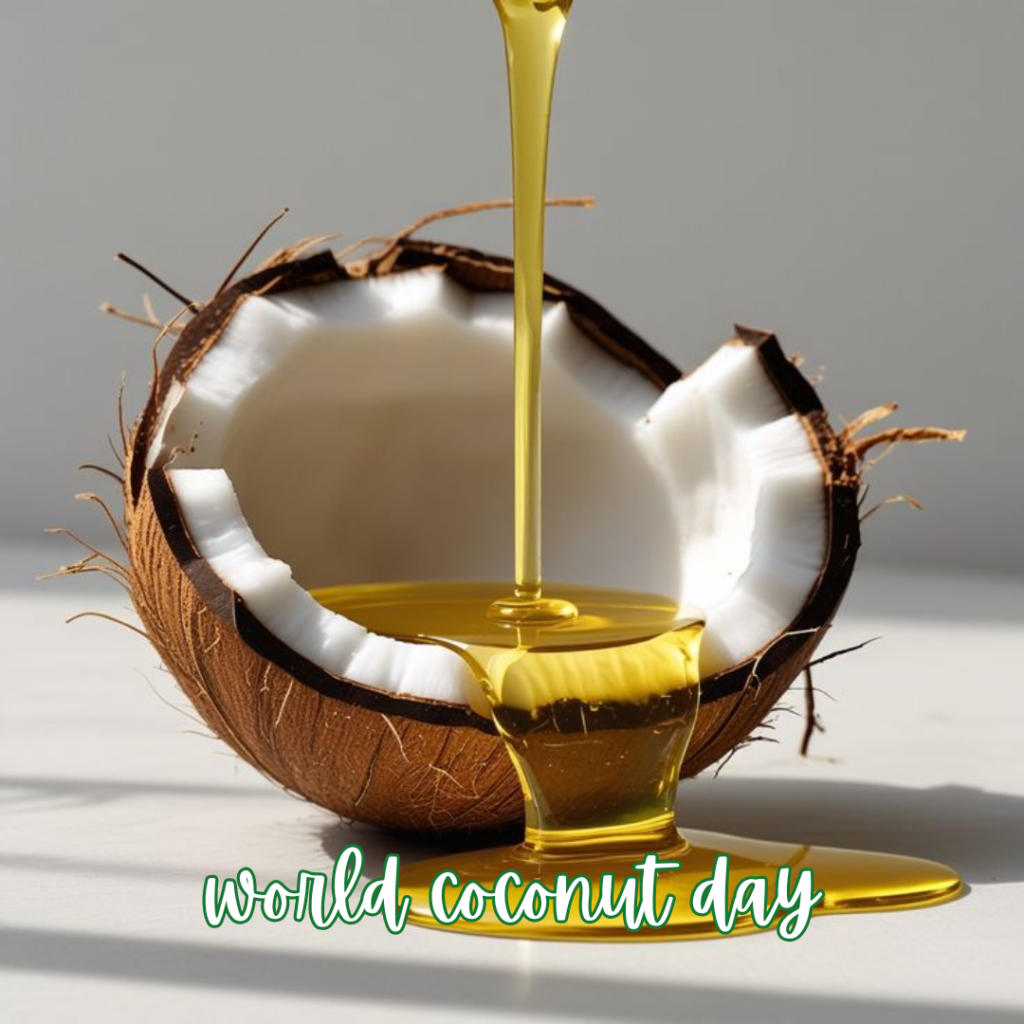
This article is therefore presented as a World Coconut Day 2026 Special and explores the complete coconut-processing value chain:
Raw Coconut → Preparation → Processing → Extraction → Drying → Cooling → Separation → Packaging → Value-Added Coconut Products
For businesses planning to establish or expand a coconut-processing facility, the opportunity is not simply to process coconut.
The opportunity is to build an integrated, efficient and commercially scalable coconut-processing ecosystem.
And this is where GTI Dryers and the wider GTI coconut-processing engineering ecosystem can help.
The Global Coconut Opportunity
Coconut is cultivated across tropical regions and supports millions of farming and processing communities.
The coconut industry is also becoming increasingly diversified.
Instead of selling only raw coconuts or copra, processors can develop higher-value products such as:
- Desiccated coconut
- Coconut milk
- Coconut cream
- Coconut milk powder
- Virgin coconut oil
- Coconut water
- Coconut water powder
- Coconut flour
- Coconut chips
- Coconut flakes
- Coconut threads
- Coconut shell products
- Coconut fibre
- Coir pith
- Coconut-based functional ingredients
The International Coconut Community’s World Coconut Day material highlights the global scale and economic importance of coconut, with cultivation spanning more than 90 countries and coconut products reaching international markets.
This creates an important question for entrepreneurs and established processors:
How can more value be extracted from every coconut?
The answer lies in integrated processing.
Complete Coconut Processing: From Raw Coconut to Finished Products
A modern coconut-processing facility can be designed around several interconnected stages.
A simplified value chain is:
Fresh Coconut
↓
Dehusking
↓
Deshelling
↓
Paring
↓
Washing
↓
Cutting / Grating
↓
Processing / Extraction
↓
Separation / Filtration
↓
Concentration
↓
Drying / Dehydration
↓
Cooling
↓
Grinding / Sieving / Classification
↓
Packaging
↓
Finished Coconut Product
Not every coconut product follows the same route.
For example:
- Desiccated coconut requires drying of grated coconut.
- VCO requires oil extraction and purification.
- Coconut milk requires extraction and separation.
- Coconut milk powder requires additional concentration and drying.
- Coconut water requires filtration, processing and potentially concentration or powder production.
- Fibre and coir follow a completely different non-food route.
Therefore, a modern coconut-processing plant should be designed according to the target product portfolio.
1. Coconut Reception and Raw Material Handling
The first stage is receiving and handling the coconuts.
The plant may require:
- Raw coconut receiving
- Weighing
- Inspection
- Sorting
- Storage
- Conveyor systems
- Feeding systems
Raw-material quality can influence downstream processing.
Important considerations include:
- Coconut maturity
- Kernel condition
- Moisture
- Oil content
- Microbiological quality
- Physical damage
- Storage conditions
For commercial processing, consistent raw-material supply is an important part of plant planning.
2. Dehusking
The outer husk is removed from the coconut.
This produces:
Husk → Shell → Kernel
The husk itself is not necessarily waste.
It can potentially be directed toward:
- Coir fibre
- Coir pith
- Growing media
- Mats
- Ropes
- Industrial fibre products
- Biomass applications
A well-designed coconut-processing facility therefore considers by-product utilization from the beginning.
3. Deshelling
After dehusking, the hard coconut shell is removed.
The shell can become a valuable secondary product.
Potential applications include:
- Activated carbon
- Charcoal
- Fuel
- Shell powder
- Industrial materials
This is one of the fundamental principles of integrated coconut processing:
The objective is not simply to process the kernel. It is to maximize the value recovered from the entire coconut.
4. Paring
The brown testa or outer layer surrounding the white kernel may be removed depending on the product.
Paring can be important for products where a clean white appearance is required.
The removed material can also potentially be processed further for oil recovery or other applications.
5. Washing and Cleaning
After shelling and paring, the kernel may undergo cleaning and washing.
The objective is to prepare the material for subsequent processing while maintaining hygienic conditions.
The processing line may include:
- Washing
- Inspection
- Foreign-material removal
- Water management
- Conveying
For export-oriented food processing, hygienic design becomes particularly important.
6. Cutting, Slicing and Grating
The prepared coconut kernel can be converted into different physical forms depending on the final product.
These may include:
- Grated coconut
- Coconut chips
- Coconut flakes
- Coconut threads
- Coconut pieces
- Fine coconut particles
The physical form directly affects the drying process.
A thin coconut flake does not behave like a thick piece.
A fine grated coconut product does not behave like a liquid coconut milk feed.
This is why product form is one of the most important dryer-selection parameters.
Desiccated coconut is one of the most important value-added coconut products.
The basic route is:
Fresh Coconut
↓
Dehusking
↓
Deshelling
↓
Paring
↓
Washing
↓
Grating
↓
Drying
↓
Cooling
↓
Sieving / Grading
↓
Packaging
The critical stage is drying.
Excess moisture can contribute to:
- Microbial growth
- Spoilage
- Clumping
- Reduced shelf life
- Quality variation
GTI’s desiccated-coconut drying information identifies fluidized-bed and band-dryer technologies as options for industrial desiccated coconut drying, depending on product and production requirements.
High-Fat vs Low-Fat Desiccated Coconut
Desiccated coconut can be produced in different forms, including high-fat and low-fat products.
The difference in fat content can influence:
- Drying behaviour
- Product handling
- Bulk density
- Powder characteristics
- Moisture removal
- Cooling
- Packaging
For low-fat desiccated coconut, GTI has specifically developed VFBD-based drying solutions designed around controlled movement, air-product contact and moisture uniformity.
Therefore, the dryer should be selected according to the actual coconut product specification, rather than simply using a generic coconut dryer.
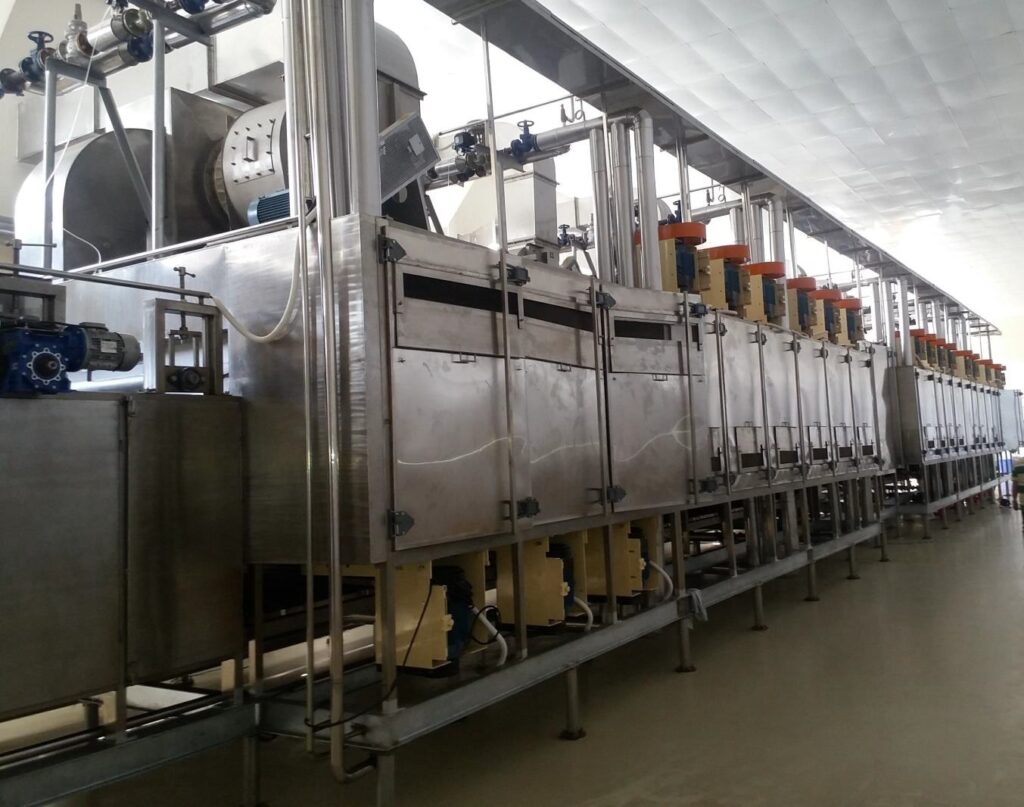
Band Dryer for Desiccated Coconut
A band or apron-type dryer can provide continuous drying of grated coconut.
The product travels through controlled drying zones.
A typical concept is:
Wet Grated Coconut
↓
Feed Distribution
↓
Zone 1
↓
Zone 2
↓
Zone 3
↓
Final Drying
↓
Cooling
↓
Finished Product
Multiple zones can allow the process engineer to control drying conditions progressively.
GTI’s coconut-processing resources identify band dryers as part of its desiccated-coconut processing solutions.
Fluid Bed Drying for Coconut
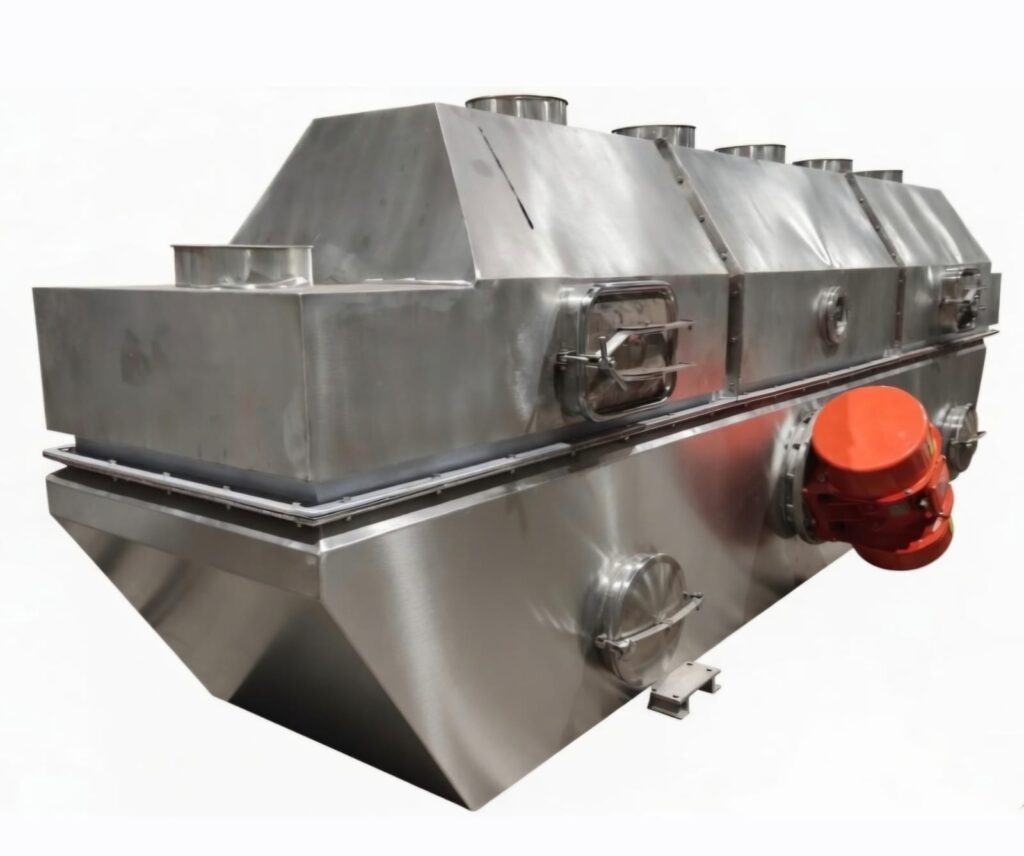
Fluidized-bed drying can be considered for suitable granular or particulate coconut products.
Advantages can include:
- Efficient air-product contact
- Uniform moisture removal
- Good heat transfer
- Controlled residence time
- Continuous operation
For suitable coconut products, a fluidized-bed dryer can form an important part of the drying and conditioning stage.
Combination Drying for Coconut
Some coconut-processing applications benefit from combining drying stages.
A combination system may integrate:
Initial Drying → Fluidized Drying → Final Moisture Adjustment → Cooling
The objective is to match each stage with the changing characteristics of the product.
This can be particularly valuable where:
- Moisture uniformity is critical
- Product temperature needs to be controlled
- High production capacity is required
- Final product consistency is important
Coconut milk is produced by extracting the liquid from coconut kernel.
A simplified process is:
Fresh Coconut
↓
Dehusking / Deshelling
↓
Paring
↓
Grating
↓
Water Addition / Extraction
↓
Pressing
↓
Filtration
↓
Coconut Milk
↓
Pasteurization / Further Processing
↓
Packaging OR Further Concentration/Drying
A complete coconut milk plant can therefore involve considerably more than a dryer.
GTI’s coconut-processing portfolio includes complete coconut milk processing systems and describes turnkey integration from preparation through processing and packaging.
Coconut Cream Processing
Coconut cream is a higher-solids coconut product obtained through controlled extraction and separation.
The process may involve:
Coconut Kernel → Grating → Extraction → Filtration → Separation → Concentration → Coconut Cream
Depending on the final product, coconut cream can be:
- Packaged as a liquid
- Further concentrated
- Converted into powder
- Used as a food ingredient
The appropriate processing route depends on the desired final product.
Coconut Milk Powder Processing
Coconut milk powder creates a higher-value, shelf-stable ingredient.
A simplified route can be:
Fresh Coconut
↓
Kernel Preparation
↓
Grating
↓
Coconut Milk Extraction
↓
Filtration
↓
Concentration
↓
Spray Drying / Appropriate Drying Technology
↓
Powder Collection
↓
Cooling
↓
Sieving
↓
Packaging
GTI’s coconut-processing resources specifically identify a coconut milk powder processing plant as a turnkey application, including process design, plant layout, capacity planning, equipment selection, technical specifications and project execution.
Coconut water is another high-value coconut product.
The basic processing route can include:
Coconut → Opening → Water Collection → Filtration → Processing → Filling / Packaging
For powder or concentrated products, additional stages may include:
Filtration → Concentration → Drying → Powder Handling → Packaging
Potential technologies depend on whether the final product is:
- Ready-to-drink coconut water
- Concentrated coconut water
- Coconut water powder
- Functional ingredient
Converting coconut water into a powder can improve:
- Shelf stability
- Transportation efficiency
- Storage
- Ingredient flexibility
A generalized process may be:
Coconut Water → Filtration → Concentration → Drying → Powder Recovery → Cooling → Packaging
Spray drying or other product-specific technologies may be evaluated according to the formulation and desired powder characteristics.
Virgin Coconut Oil, or VCO, is another major value-added coconut product.
A simplified process can involve:
Fresh Coconut
↓
Dehusking
↓
Deshelling
↓
Paring
↓
Grating
↓
Milk Extraction
↓
Separation
↓
Oil Recovery
↓
Purification / Filtration
↓
Virgin Coconut Oil
↓
Storage
↓
Packaging
The precise extraction technology can vary depending on the intended product specification and production capacity.
GTI’s coconut-processing portfolio includes dedicated VCO processing solutions.
Another opportunity is converting VCO or suitable coconut-oil-based formulations into powder products.
This can create ingredients suitable for:
- Food formulations
- Nutritional products
- Beverage mixes
- Functional foods
- Specialty ingredients
The process requires appropriate formulation and powder-production technology rather than simply drying pure oil.
Coconut Flour
Coconut flour can be produced as a value-added product from suitable coconut solids after processing.
A simplified concept is:
Coconut Kernel / Coconut Residue
↓
Drying
↓
Grinding
↓
Sieving
↓
Coconut Flour
The exact route depends on:
- Fat content
- Moisture
- Fibre content
- Particle size
- Desired nutritional specification
Drying is therefore again a critical process stage.
Coconut Chips, Flakes and Threads
Coconut can also be processed into:
- Coconut chips
- Coconut flakes
- Coconut threads
- Coconut slices
- Snack products
A typical route can include:
Kernel Preparation → Cutting/Slicing → Pre-treatment → Drying → Cooling → Seasoning/Processing → Packaging
The drying technology must be selected according to thickness, shape and target moisture.
Copra Processing
Copra is the dried kernel of coconut.
A basic route is:
Fresh Coconut → Dehusking/Deshelling → Kernel → Drying → Copra
Drying is therefore fundamental to copra production.
Depending on the scale and product specification, drying may involve:
- Controlled hot-air drying
- Tray systems
- Continuous dryers
- Other suitable thermal systems
The target moisture and drying conditions must be established according to the final application.
Coconut Shell Utilization
The coconut shell can be processed into valuable products rather than being discarded.
Potential products include:
- Charcoal
- Activated carbon
- Shell powder
- Fuel
- Industrial materials
This creates another opportunity for integrated coconut-processing facilities.
A complete coconut plant can therefore consider:
Kernel Value + Shell Value + Husk Value
rather than focusing only on one finished product.
Coconut Husk, Fibre and Coir Processing
The coconut husk contains valuable fibre.
Potential products include:
- Coir fibre
- Coir yarn
- Mats
- Ropes
- Brushes
- Geotextiles
- Growing media
The remaining pith can also be processed into products used in horticulture and agriculture.
This creates an important circular-economy opportunity.
Coconut Processing as a Zero-Waste / Low-Waste Opportunity
A state-of-the-art coconut-processing facility should consider the entire coconut.
Kernel
→ Desiccated Coconut
→ Milk
→ Cream
→ VCO
→ Flour
→ Chips
→ Flakes
Water
→ Beverage
→ Concentrate
→ Powder
Shell
→ Charcoal
→ Activated Carbon
→ Fuel
→ Shell Products
Husk
→ Fibre
→ Coir
→ Coir Pith
The goal is:
Maximum value from minimum waste.
This approach can improve resource utilization and create multiple revenue streams from the same agricultural raw material.
Where Drying Fits Into the Coconut Value Chain
Drying appears in several important coconut-processing routes.
| Coconut Product | Drying Requirement | Potential Technology |
| Desiccated Coconut | Critical | Band / Fluid Bed |
| Low-Fat Desiccated Coconut | Critical | VFBD / Fluid Bed |
| High-Fat Desiccated Coconut | Critical | Band / Fluid Bed |
| Copra | Essential | Controlled Drying |
| Coconut Flour | Required | Suitable Hot-Air / Other Dryer |
| Coconut Chips | Required | Band / Belt / Suitable Dryer |
| Coconut Flakes | Required | Band / Belt / Suitable Dryer |
| Coconut Milk Powder | Critical | Spray / Product-Specific Drying |
| Coconut Water Powder | Critical | Spray / Product-Specific Drying |
| Coconut Extracts | Product-specific | RWD / Spray / Vacuum / Other |
| Coconut Residues | Product-specific | Thermal Drying |
The exact technology depends on the product, moisture, capacity and quality requirement.
Advanced Coconut Drying Technologies
Band Dryer
Best considered for continuous drying of suitable grated, sliced, flaked and particulate coconut products.
Key advantages:
- Continuous operation
- Multi-zone drying
- Controlled airflow
- Large-scale processing
- Adjustable residence time
Vibratory Fluid Bed Dryer
Suitable for selected particulate coconut products.
Potential advantages:
- Good air-product contact
- Controlled movement
- Uniform drying
- Continuous operation
- Efficient heat transfer
Combination Fluid Bed Dryer
Useful where multiple drying and conditioning stages are required.
Spray Dryer
Potentially important for converting suitable liquid coconut feeds into powders.
Applications can include:
- Coconut milk powder
- Coconut water powder
- Coconut-based ingredients
Refractance Window Dryer
A potentially valuable technology for selected coconut liquid or semi-liquid products.
GTI’s RWD systems are designed for continuous low-temperature drying of liquid and semi-liquid materials into powders, flakes and sheets.
This creates opportunities for selected coconut applications where gentle drying is important.
Why Coconut Dryer Selection Is Critical
A common mistake is to search for:
“Best coconut dryer.”
There is no single best coconut dryer.
The correct question is:
“Which drying technology is appropriate for my coconut product?”
Consider:
Product Form
Is it:
- Grated?
- Sliced?
- Flaked?
- Granular?
- Liquid?
- Cream?
- Slurry?
- Powder?
Moisture
- Initial moisture
- Final moisture
- Evaporation requirement
Fat Content
High-fat and low-fat coconut products can behave differently.
Capacity
- kg/hour
- tonnes/day
- Continuous or batch
Quality
- Colour
- Aroma
- Taste
- Moisture
- Particle size
- Nutritional characteristics
Energy
- Steam
- Gas
- Electricity
- Biomass
- Thermal oil
- Waste heat
These parameters determine the appropriate dryer.
State-of-the-Art Coconut Processing Facility: What Does It Include?
A modern coconut-processing facility can be designed as a complete integrated plant.
Raw Material Section
- Receiving
- Storage
- Conveying
- Sorting
Coconut Preparation
- Dehusking
- Deshelling
- Paring
- Washing
- Cutting
- Grating
Food Processing
- Extraction
- Pressing
- Filtration
- Separation
- Concentration
Drying
- Band Dryer
- Fluid Bed Dryer
- VFBD
- Combination Dryer
- Spray Dryer
- RWD
- Other product-specific systems
Post-Drying
- Cooling
- Milling
- Sieving
- Classification
- Blending
Packaging
- Powder packing
- Liquid filling
- Oil filling
- Bulk packing
By-Product Processing
- Husk
- Fibre
- Coir pith
- Shell
- Charcoal
- Other recoverable streams
How GTI Fits Into the Coconut Industry
This is where GTI’s role becomes broader than supplying an individual dryer.
GTI can help companies evaluate and develop complete coconut-processing facilities, from raw-coconut preparation to finished products.
The coconut-processing platform describes integrated solutions for:
- Desiccated coconut
- Virgin coconut oil
- Coconut water
- Coconut milk
- Coconut milk powder
- Copra
- Coconut chips and flakes
- Coconut fibre
- Coir pith
- Coconut-based value-added products
It also describes turnkey project support including process design, plant layout, machinery manufacturing, installation, commissioning, automation and after-sales support.
This means a customer does not necessarily need to approach the coconut project as a collection of unrelated machines.
The facility can instead be engineered as one integrated process.
GTI’s Role in Coconut Drying
Within the complete coconut-processing ecosystem, drying is one of GTI’s key areas.
GTI’s drying portfolio includes technologies such as:
- Band Dryer
- Fluid Bed Dryer
- Vibratory Fluid Bed Dryer
- Combination Fluid Bed Dryer
- Spray Dryer
- Refractance Window Dryer
- Other customized industrial drying systems
The dryer can be selected according to the product.
For example:
Grated Coconut → Band / Fluid Bed
Low-Fat Desiccated Coconut → VFBD
Coconut Milk → Spray / Appropriate Liquid-Food Dryer
Coconut Water → Spray / Appropriate Powder-Drying Route
Selected Coconut Cream / Liquid Products → RWD or Other Suitable Technology
This product-specific approach is essential because different coconut feeds behave differently during drying.
GTI’s Coconut Processing Approach
A state-of-the-art coconut-processing project should begin with:
Product Selection
↓
Market Requirement
↓
Raw Material Assessment
↓
Process Design
↓
Mass Balance
↓
Capacity Planning
↓
Dryer Selection
↓
Plant Layout
↓
Equipment Engineering
↓
Manufacturing
↓
Installation
↓
Commissioning
↓
Automation
↓
Production Optimization
This is the approach required when developing a commercial processing plant rather than simply purchasing a machine.
From Feasibility Study to Complete Coconut Plant
For entrepreneurs and established manufacturers, GTI can help evaluate a coconut-processing project around several questions.
What product do you want to manufacture?
- Desiccated coconut?
- VCO?
- Coconut milk?
- Coconut milk powder?
- Coconut water?
- Coconut water powder?
- Coconut flour?
- Coconut chips?
- Coconut fibre?
What production capacity do you need?
- Small
- Medium
- Large
- Export-scale
What raw material is available?
- Fresh mature coconut
- Semi-processed coconut
- Copra
- Coconut kernel
- Coconut milk
What market are you targeting?
- Domestic
- Export
- Food ingredients
- Retail
- Bakery
- Beverage
- Nutraceutical
- Industrial
These answers influence the entire plant design.
Coconut Processing for Export Markets
Export-oriented coconut plants may need to consider:
- Hygienic design
- Consistent moisture
- Product traceability
- Food-grade materials
- Process automation
- Packaging
- Quality control
- Microbiological control
- Product specifications
- Destination-market requirements
GTI’s coconut-processing resources describe CE-marked machinery, food-processing engineering and export-oriented project solutions.
The exact certification and compliance requirements should always be established according to the destination country and product.
Automation in Modern Coconut Processing
Automation can connect different stages of the plant.
Depending on the project, this can include:
- PLC control
- HMI
- SCADA
- Temperature monitoring
- Moisture control
- Dryer-speed control
- Feed-rate control
- Pump control
- Conveyor automation
- Alarm systems
- Data logging
The objective is to make the complete plant more consistent and easier to operate.
Energy Efficiency in Coconut Processing
Drying can be one of the major thermal-energy consumers in a coconut-processing facility.
Energy efficiency can be improved through:
- Proper dryer selection
- Multi-zone drying
- Heat recovery
- Airflow optimization
- Insulation
- Efficient heating systems
- Controlled residence time
- Feed pre-treatment
- Process integration
- Appropriate automation
GTI’s industrial drying engineering information emphasizes balancing heat transfer, mass transfer, airflow, residence time and energy consumption when selecting a drying system.
Coconut Processing and Circular Economy
A modern coconut factory can be designed around the idea of full coconut utilization.
Instead of:
Coconut → One Product → Waste
the objective becomes:
Coconut → Multiple Products + Multiple Revenue Streams + Reduced Waste
For example:
Kernel → Food Products
Milk → Beverages / Powder
Oil → VCO / Value-Added Products
Water → Beverage / Powder
Shell → Charcoal / Activated Carbon
Husk → Fibre / Coir
Pith → Horticultural Products
This creates a more integrated business model.
Common Coconut Processing Challenges
Uneven Desiccated Coconut Moisture
Potential causes include:
- Uneven feeding
- Poor airflow
- Variable particle size
- Incorrect residence time
- Inadequate drying-zone control
A properly engineered band or fluid-bed system can address these factors.
High Energy Consumption
Possible areas for investigation:
- Dryer airflow
- Heat recovery
- Insulation
- Moisture load
- Heating source
- Residence time
- Dryer configuration
Product Discolouration
Potential causes include excessive thermal exposure, unsuitable residence time or inappropriate drying conditions.
Process conditions should therefore be optimized according to the product.
Powder Caking
Possible contributing factors include:
- Moisture
- Product temperature
- Particle characteristics
- Storage humidity
- Packaging conditions
Drying and cooling should be considered together.
Low Production Capacity
Capacity limitations can originate from:
- Dryer sizing
- Feed preparation
- Heat-transfer capacity
- Airflow
- Product distribution
- Upstream bottlenecks
Increasing dryer temperature alone is not necessarily the correct solution.
A Complete Coconut Processing Project With One Engineering Partner
For an entrepreneur planning a new coconut factory, managing dozens of separate equipment suppliers can create:
- Integration problems
- Responsibility gaps
- Layout conflicts
- Commissioning delays
- Utility mismatches
- Process coordination issues
A turnkey approach can instead bring together:
Process Engineering
Plant Layout
Machinery
Drying
Automation
Installation
Commissioning
Training
After-Sales Support
GTI’s coconut-project platform specifically describes this single-point turnkey approach for coconut-processing plants.
Who Can Benefit From a State-of-the-Art Coconut Processing Plant?
Potential customers include:
- Coconut farmers’ cooperatives
- Coconut exporters
- Food manufacturers
- Ingredient manufacturers
- Coconut-oil producers
- Desiccated coconut manufacturers
- Beverage companies
- Nutraceutical companies
- Food entrepreneurs
- Agro-processing companies
- Investors establishing new processing facilities
- Existing processors expanding capacity
Coconut Products and Their Processing Routes
| Product | Main Processing Route | Drying Requirement |
| Desiccated Coconut | Grating → Drying → Cooling | High |
| Low-Fat Desiccated Coconut | Processing → Drying → Cooling | High |
| High-Fat Desiccated Coconut | Grating → Drying → Cooling | High |
| Coconut Milk | Grating → Extraction → Filtration | Product-dependent |
| Coconut Milk Powder | Extraction → Concentration → Drying | Critical |
| Coconut Cream | Extraction → Separation → Concentration | Product-dependent |
| Coconut Water | Extraction → Filtration → Processing | Product-dependent |
| Coconut Water Powder | Filtration → Concentration → Drying | Critical |
| VCO | Milk Extraction → Separation → Oil Recovery | Usually not primary drying |
| Coconut Flour | Processing → Drying → Milling | Critical |
| Coconut Chips | Cutting → Drying → Cooling | Critical |
| Coconut Flakes | Cutting → Drying → Cooling | Critical |
| Copra | Kernel → Drying | Essential |
| Coconut Fibre | Husk → Fibre Extraction | Product-dependent |
| Coir Pith | Husk Processing → Separation | Product-dependent |
Why Choose GTI for Coconut Processing?
A coconut-processing project requires more than equipment manufacturing.
It requires an understanding of:
- Coconut characteristics
- Product requirements
- Drying behaviour
- Extraction
- Moisture control
- Process integration
- Plant layout
- Utilities
- Automation
- Hygiene
- Product recovery
- Packaging
- By-product utilization
GTI’s coconut-processing platform states that its engineering ecosystem has experience with complete coconut processing plants and international installations, including solutions for desiccated coconut, VCO, coconut water, coconut milk, copra, fibre and related products.
For a new facility, the key advantage is the ability to evaluate the complete processing chain, rather than treating the dryer as an isolated piece of equipment.
Build a State-of-the-Art Coconut Processing Facility With GTI
If you are planning to establish a coconut-processing plant, GTI can help evaluate the project from the initial concept through process engineering and plant implementation.
A typical project journey can be:
1. Product Selection
Determine which coconut products will be manufactured.
2. Market & Capacity Planning
Define:
- Target market
- Production capacity
- Operating hours
- Product specifications
3. Process Engineering
Develop the appropriate processing route.
4. Dryer Selection
Evaluate:
- Band Dryer
- Fluid Bed Dryer
- VFBD
- Combination Dryer
- Spray Dryer
- RWD
- Other suitable technologies
5. Plant Layout
Integrate:
- Raw material handling
- Processing
- Drying
- Cooling
- Packaging
- Utilities
6. Equipment Manufacturing
Manufacture the required equipment according to project specifications.
7. Installation & Commissioning
Integrate and commission the plant.
8. Automation
Implement suitable control and monitoring systems.
9. Production Optimization
Fine-tune the process according to actual product behaviour.
Start Your Coconut Processing Project
Planning to establish a:
- Desiccated Coconut Plant?
- Coconut Milk Processing Plant?
- Coconut Milk Powder Plant?
- VCO Plant?
- Coconut Water Processing Plant?
- Coconut Flour Plant?
- Coconut Chips & Flakes Plant?
- Coconut Fibre / Coir Plant?
- Integrated Coconut Processing Facility?
The first step is to define the product, capacity and raw material.
GTI can then help evaluate:
Process → Equipment → Dryer → Plant Layout → Utilities → Automation → Turnkey Execution
The objective is to create a coconut-processing facility designed around your actual production requirements.
Frequently Asked Questions About Coconut Processing
What is the complete coconut processing process?
A complete coconut-processing chain can include receiving, dehusking, deshelling, paring, washing, cutting or grating, extraction, filtration, concentration, drying, cooling, grinding, sieving and packaging. The exact route depends on the final product.
Which coconut products require industrial drying?
Desiccated coconut, copra, coconut flour, chips, flakes and many coconut powders require drying. Coconut milk and coconut cream may also require drying when converted into powdered products.
Which dryer is used for desiccated coconut?
Band dryers, fluidized-bed dryers and combination drying systems can be considered depending on capacity, product form, moisture and quality requirements. GTI specifically offers band and fluidized-bed drying solutions for desiccated coconut.
Which dryer is used for coconut milk powder?
Spray drying can be considered for suitable concentrated coconut-milk feeds. The final system depends on feed solids, formulation, required powder characteristics and production capacity.
What is a coconut milk powder plant?
It is an integrated processing facility that converts coconut into milk and subsequently converts the suitable concentrated liquid feed into coconut milk powder through an appropriate drying and powder-handling process.
Can coconut water be converted into powder?
Yes, suitable coconut-water streams can be processed into powder through concentration and an appropriate drying technology, subject to the product formulation and quality requirements.
Can GTI provide a complete coconut processing plant?
GTI’s coconut-processing platform describes turnkey solutions covering process design, plant layout, machinery, installation, commissioning, automation and support for multiple coconut products.
How do I choose the right coconut dryer?
The selection should consider product form, initial moisture, final moisture, fat content, production capacity, heat sensitivity, desired quality, energy source and required residence time.
Can one coconut-processing plant produce multiple products?
Yes, a properly engineered facility can potentially incorporate multiple processing routes. The actual configuration depends on the raw material, product portfolio, capacity and economics.
Conclusion: From One Coconut to a Complete Processing Ecosystem
The future of the coconut industry is not simply about producing more coconuts.
It is about extracting greater value from every coconut.
A modern coconut-processing facility can transform:
Kernel → Desiccated Coconut, Milk, Cream, VCO, Flour, Chips & Flakes
Water → Beverages & Powder
Shell → Charcoal, Activated Carbon & Industrial Products
Husk → Fibre & Coir
Pith → Horticultural Products
And throughout several of these processing routes, drying becomes a critical technology for achieving the required moisture, stability, shelf life and product quality.
This is where industrial drying and complete process engineering come together.
GTI can help businesses move from an initial coconut-processing idea to a state-of-the-art integrated coconut processing facility, including process engineering, coconut-processing machinery, industrial drying systems, plant integration, automation and turnkey project execution.
Don’t just process coconut. Build a complete coconut value chain.
GTI — Engineering State-of-the-Art Coconut Processing & Drying Solutions for Global Markets.