
SIAL Paris 2026 and the Growing Importance of Industrial Drying
SIAL Paris 2026 brings together the global food industry, including food manufacturers, ingredient producers, technology companies, buyers, distributors and processing specialists.
The 2026 edition is scheduled for 17–21 October 2026 at Paris Nord Villepinte, France. SIAL describes the event as a global platform connecting food-industry professionals, technology providers and companies looking for solutions to improve production and develop new products.

For food manufacturers, however, the discussion does not stop with the finished food product.
Behind many food products is a complex processing chain involving:
Raw Material → Preparation → Extraction/Processing → Concentration → Drying → Cooling → Powder or Product Handling → Packaging
Among these stages, industrial drying can determine product stability, moisture level, shelf life, quality, energy consumption and production capacity.
A fruit processor may need continuous dehydration.
A dairy manufacturer may need spray drying followed by fluid-bed drying and cooling.
A spice processor may require controlled low-temperature dehydration.
A coconut processor may need a combination of extraction, concentration and drying.
A food-ingredient manufacturer may require a complete powder-processing system.
Therefore, selecting an industrial dryer is not simply an equipment-buying decision.
It is a process-engineering decision.
During SIAL Paris 2026, representatives from GTI Dryers’ regional network are expected to visit the exhibition as industry visitors to follow developments in food processing, drying technologies and related processing equipment.
GTI Dryers is not an exhibitor at SIAL Paris 2026 and is not hosting a booth or stand at the event. The representatives’ visit is intended to support market awareness, technology observation and professional engagement with the wider food-processing ecosystem.
Why Industrial Drying Matters at SIAL Paris 2026
Modern food manufacturing is facing several simultaneous challenges:
- Increasing production capacity
- Consistent product quality
- Longer shelf life
- Energy efficiency
- Reduced processing losses
- Hygienic manufacturing
- Automation
- Heat-sensitive ingredients
- Powder flowability
- Moisture uniformity
- Sustainable processing
- Export-quality production
- Lower operating costs
Industrial drying can directly influence many of these requirements.
But removing moisture is only one part of the objective.
A properly engineered drying system must control the drying process without unnecessarily compromising:
- Colour
- Flavour
- Aroma
- Nutritional characteristics
- Texture
- Solubility
- Particle structure
- Flowability
- Bulk density
- Rehydration behaviour
This is why modern industrial dryers are designed around the product rather than around a generic machine specification.
GTI Dryers describes its food drying systems around controlled moisture removal, hygienic processing, temperature and airflow control, product quality and customized engineering.
What Is an Industrial Dryer?
An industrial dryer is a process system designed to remove water, moisture or other volatile components from a material under controlled conditions.
Depending on the technology, drying can involve:
- Convective heat transfer
- Conductive heat transfer
- Fluidization
- Pneumatic conveying
- Vacuum drying
- Radiant heating
- Thin-film drying
- Indirect drying
- Combination drying
- Multi-stage drying
The appropriate technology depends on the material.
A powder behaves differently from a wet cake.
A liquid behaves differently from a sliced vegetable.
A sticky paste behaves differently from a free-flowing granule.
Therefore:
There is no universal industrial dryer suitable for every product.
The correct selection begins with understanding the material and the required final product.
SIAL Paris 2026: From Food Products to Processing Technology
SIAL Paris is designed around the broader food ecosystem, and its 2026 visitor information emphasizes the importance of identifying technological and industrial solutions that can improve food production.
For industrial dryer manufacturers and food processors, this creates an important connection:
Food Innovation → Processing Innovation → Drying Innovation
A new food product may require:
- A new dehydration process
- Better moisture control
- A different powder structure
- Lower-temperature drying
- Higher production capacity
- Continuous operation
- Improved energy recovery
- Multi-stage drying
- Automated process control
This is where an industrial drying technology partner becomes important.
The Complete Industrial Food Drying Process
Industrial drying rarely operates as an isolated machine.
A typical processing route may look like:
Stage 1 — Raw Material Reception
Raw materials are received, inspected and stored.
Stage 2 — Preparation
Depending on the product:
- Washing
- Cleaning
- Sorting
- Peeling
- Cutting
- Slicing
- Grinding
- Blanching
- Cooking
may be required.
Stage 3 — Extraction or Processing
Some products require:
- Extraction
- Filtration
- Separation
- Concentration
- Homogenization
before entering the dryer.
Stage 4 — Drying
The appropriate industrial drying system is selected according to product characteristics.
Stage 5 — Cooling
Many products require controlled cooling after drying.
Stage 6 — Size Reduction or Classification
Depending on the product:
- Milling
- Grinding
- Sieving
- Classification
may follow.
Stage 7 — Packaging
The final product is transferred into suitable packaging under controlled conditions.
This complete process perspective is important because changing one stage can affect the performance of the dryer.
Industrial Dryer Technologies Relevant to Food Processing
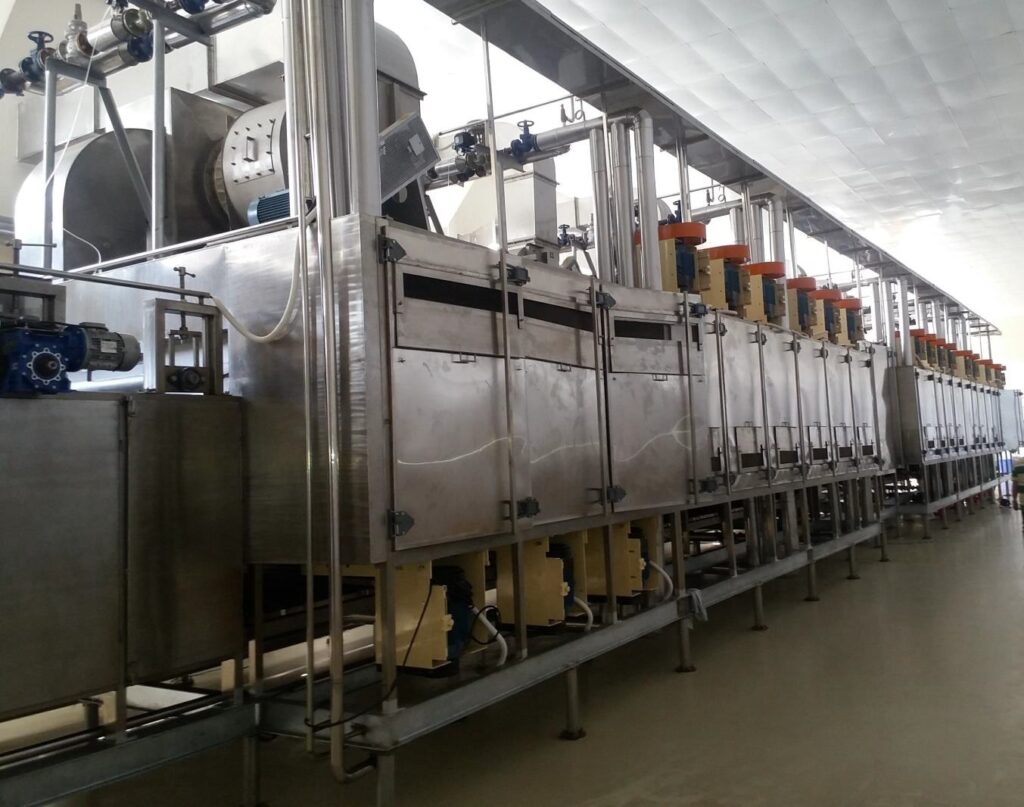
1. Band Dryer / Belt Dryer
A band or belt dryer is a continuous drying system in which the product travels through controlled drying zones.
It can be considered for products such as:
- Fruits
- Vegetables
- Spices
- Herbs
- Coconut
- Agricultural products
- Food ingredients
- Slices
- Flakes
- Granular materials
The system can be designed with multiple zones to provide controlled drying conditions through the process.
Typical Process
Wet Product → Feed Distribution → Drying Zones → Moisture Reduction → Final Drying → Cooling → Product Collection
Important engineering parameters include:
- Product layer depth
- Air temperature
- Air velocity
- Residence time
- Feed rate
- Initial moisture
- Final moisture
- Product size
2. Mesh Belt Dryer
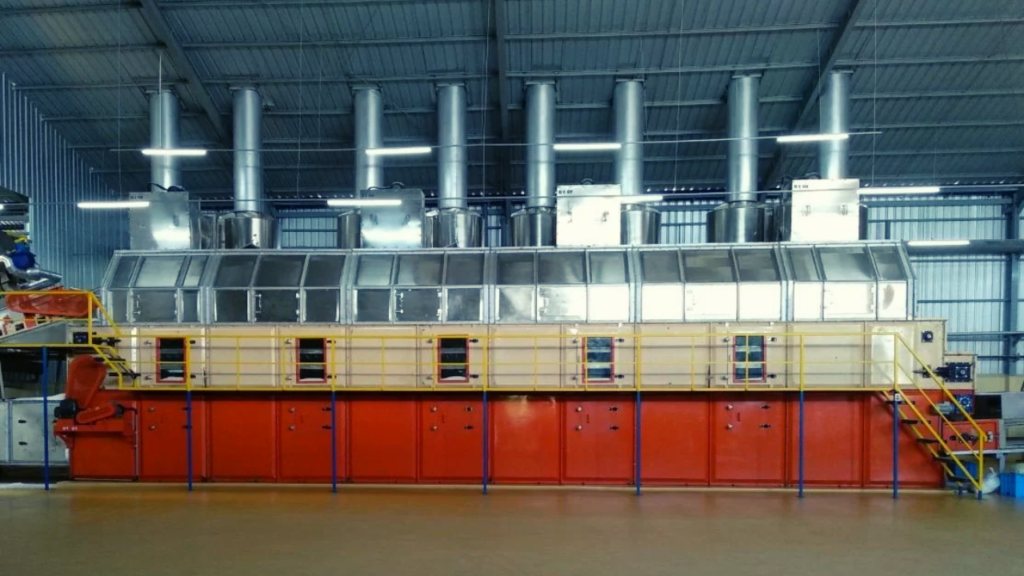
Mesh belt dryers provide controlled hot-air circulation through a moving product bed.
They can be evaluated for:
- Vegetables
- Fruits
- Herbs
- Spices
- Coconut
- Agricultural materials
- Food ingredients
The choice between a solid belt, perforated belt or mesh configuration depends on the product and airflow requirement.
3. Fluid Bed Dryer
Fluidized-bed drying uses controlled air velocity to suspend or fluidize suitable particles.
This technology can be particularly useful for:
- Granules
- Free-flowing powders
- Food ingredients
- Starch
- Dairy ingredients
- Nutritional products
- Food particles
The key requirement is that the product must have suitable fluidization characteristics.
Fluid-bed drying can also provide opportunities for:
- Final drying
- Cooling
- Conditioning
- Moisture equalization
4. Vibratory Fluidized Bed Dryer
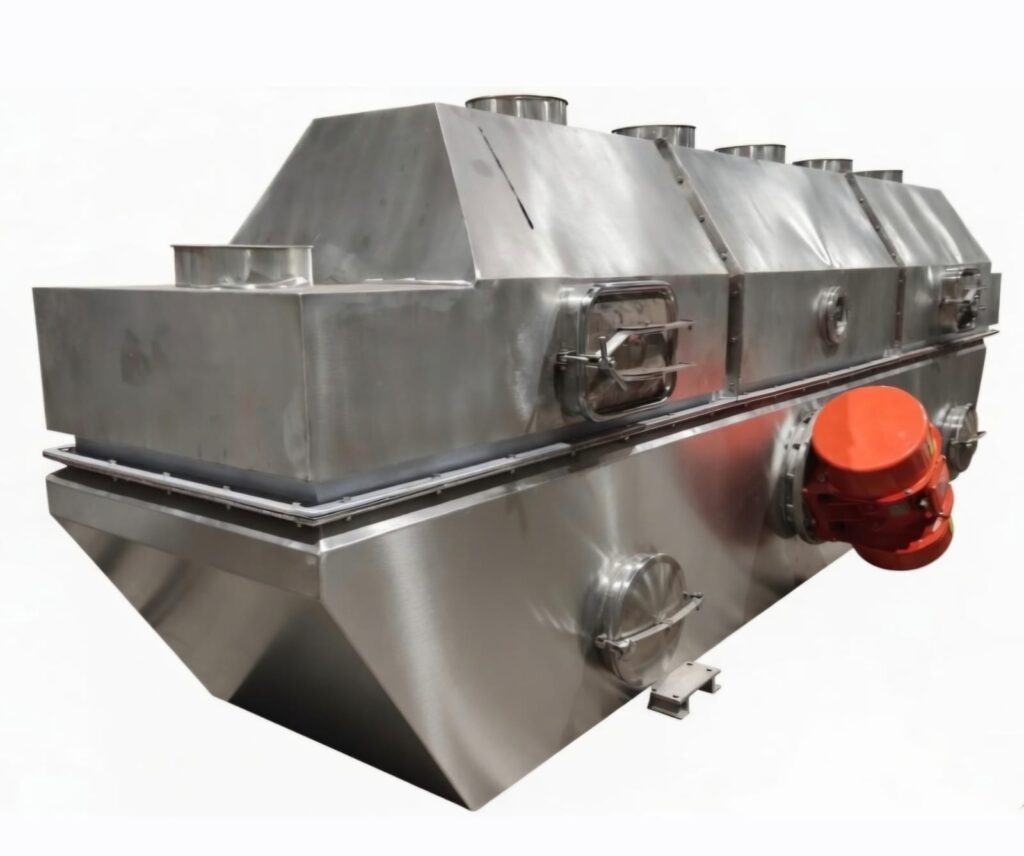
Vibratory fluidized-bed systems combine fluidizing airflow with controlled mechanical movement.
Potential applications include suitable:
- Granules
- Food ingredients
- Agricultural products
- Powdered products
- Particulate materials
The vibration can assist product movement and distribution through the drying chamber.
5. Spray Dryer
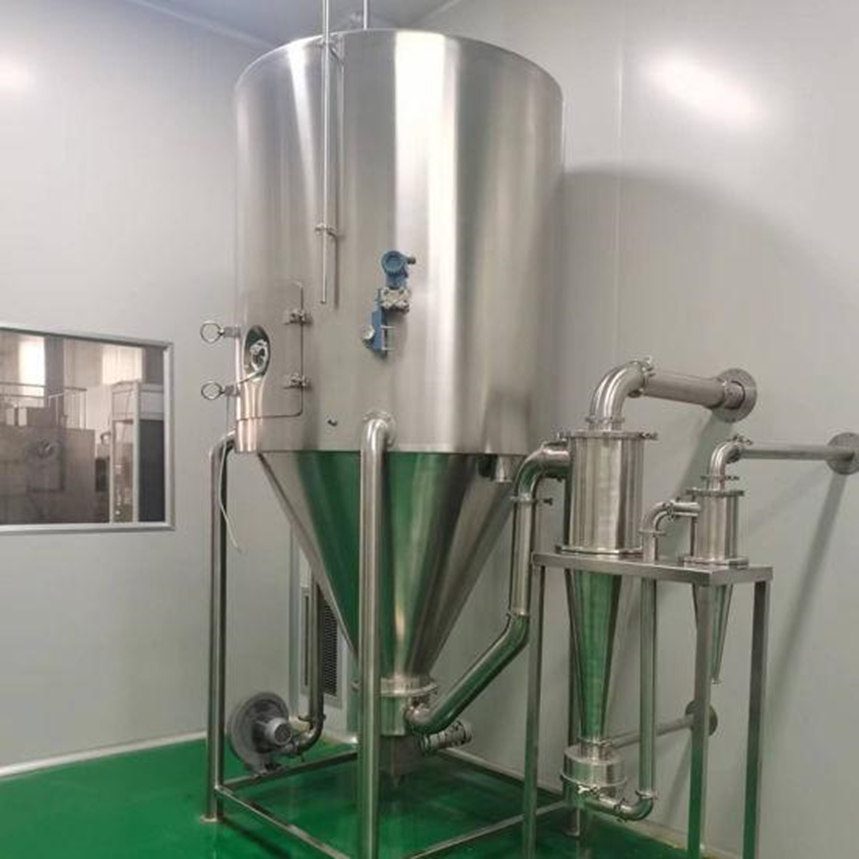
Spray drying is one of the most important technologies for converting suitable liquid feeds into powders.
Typical applications include:
- Milk powder
- Whey
- Dairy ingredients
- Plant proteins
- Food ingredients
- Nutritional products
- Flavour ingredients
- Fruit products
- Coconut-based liquid feeds
- Food extracts
Basic Spray-Drying Route
Liquid Feed → Atomization → Hot-Air Contact → Moisture Evaporation → Powder Separation → Powder Collection
The final powder characteristics depend on many factors, including:
- Feed solids
- Viscosity
- Atomization
- Drying conditions
- Particle formation
- Powder collection
- Secondary drying
Spray drying therefore needs to be engineered around the product rather than treated as a standard machine.
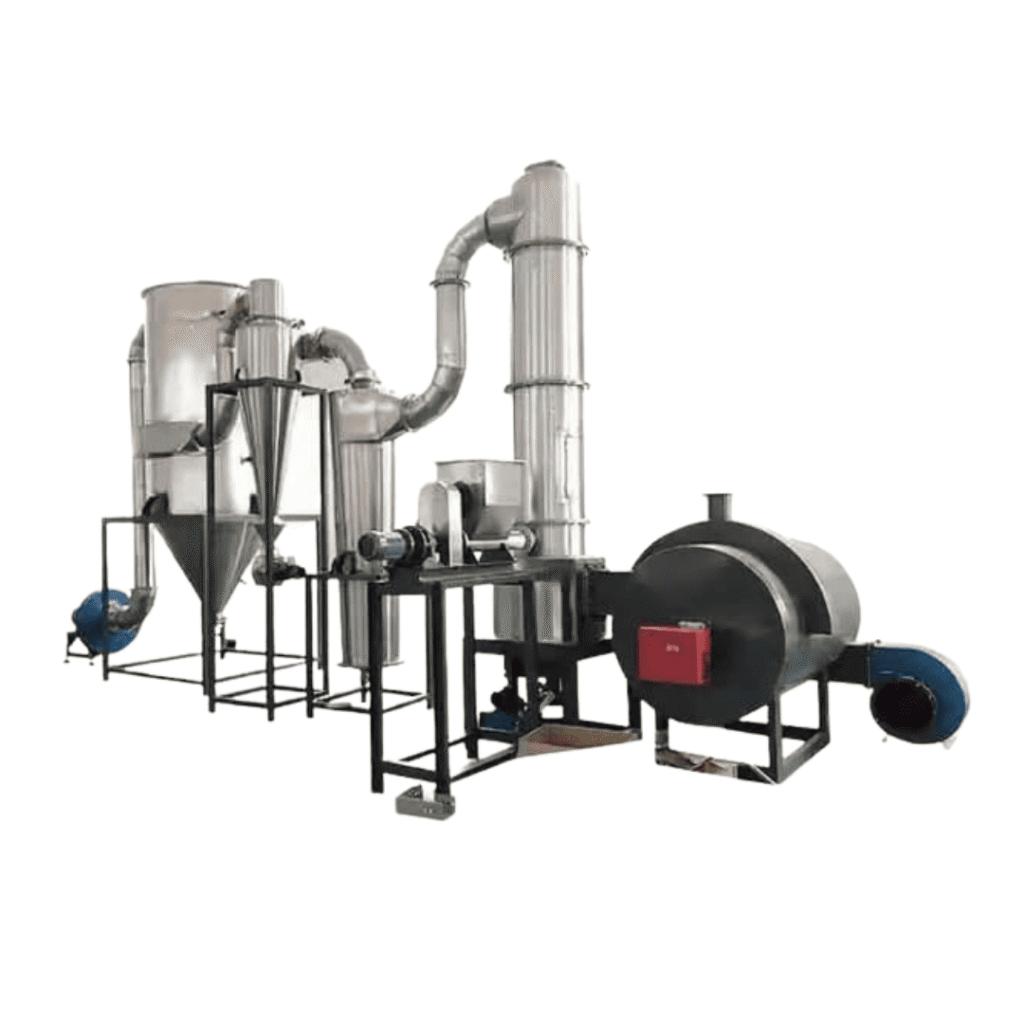
6. Flash Dryer
Flash drying is designed for very rapid moisture removal from suitably prepared wet materials.
GTI describes its flash dryer as a pneumatic drying system for applications involving powders, slurries, filter cakes, pastes and fibrous materials, with short residence times and rapid heat and mass transfer.
Potential food-related applications can include:
- Starch
- Food powders
- Fine food ingredients
- Protein materials
- Wet particulate feeds
Basic Process
Wet Feed → Dispersion → High-Velocity Hot Air → Rapid Moisture Evaporation → Cyclone/Separator → Dry Product
The technology can be attractive where rapid drying and compact equipment are important.
7. Ring Dryer
A ring dryer can be considered for selected powder and particulate materials where recirculation and classification are beneficial.
The basic concept involves:
Feed → Pneumatic Drying → Classification → Recirculation of Underdried Particles → Final Product Separation
This can provide additional control for products where particle size and moisture are closely related.
Potential applications can include:
- Starch
- Modified starch
- Fine food powders
- Food ingredients
- Selected particulate products
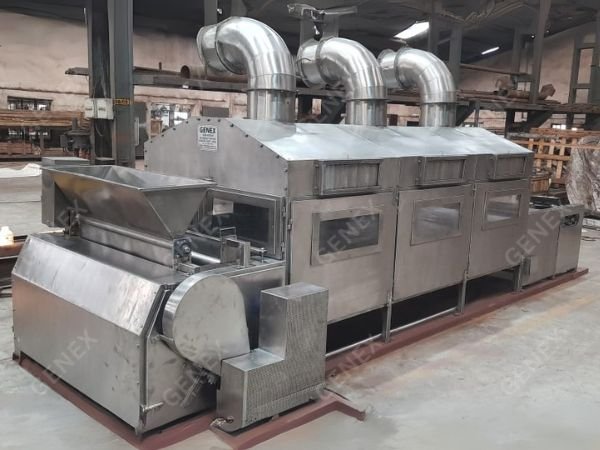
8. Refractance Window Dryer
Refractance Window Drying is particularly relevant to selected liquid and semi-liquid food products.
Potential applications include:
- Fruit puree
- Vegetable puree
- Coconut products
- Food extracts
- Nutritional ingredients
- Botanical materials
The product is spread as a thin layer over a heated surface and dried under controlled conditions.
This technology can be considered when the manufacturer wants to produce dried flakes, sheets, powders or other forms from suitable liquid/semi-liquid feeds.
9. Rotary Drum Dryer
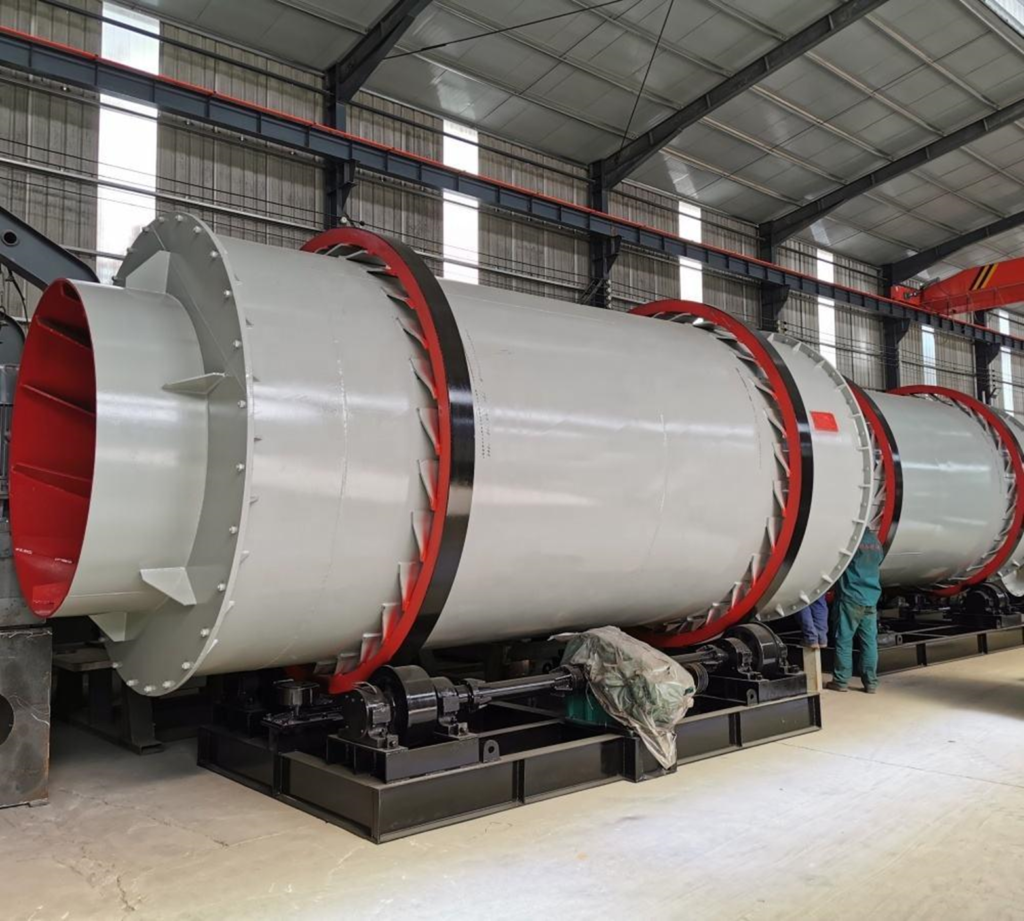
Rotary drum dryers can be considered for robust particulate materials and large-scale continuous processing.
Depending on the product, applications may include:
- Agricultural materials
- Food ingredients
- Granular products
- Certain starch or food-related materials
The suitability of rotary drying depends strongly on:
- Particle characteristics
- Heat sensitivity
- Required residence time
- Moisture removal
- Product handling
10. Paddle Dryer
Paddle dryers use indirect heat transfer through heated surfaces and mixing elements.
They can be considered for difficult materials including selected:
- Wet solids
- Pastes
- Sludges
- Sticky materials
- Industrial ingredients

For food applications, hygienic design and appropriate product-contact materials become critical.
11. Heat Pump Dryer
Heat pump drying can be evaluated for products requiring controlled lower-temperature drying and efficient heat utilization.
Potential applications include:
- Fruits
- Vegetables
- Herbs
- Spices
- Heat-sensitive food materials
The final configuration depends on the product moisture load, drying temperature and desired humidity conditions.
12. Vacuum Drying Systems
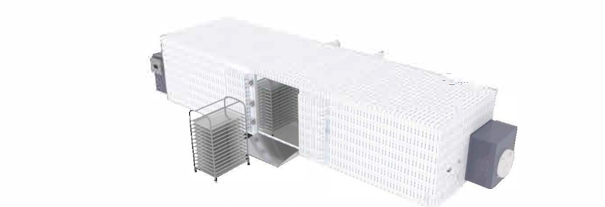
Vacuum drying reduces the boiling point of water and can therefore be evaluated for selected heat-sensitive products.
Potential applications may include:
- Herbal ingredients
- Specialty food materials
- Extracts
- Nutritional products
- Heat-sensitive formulations
Vacuum systems can become particularly useful when thermal exposure must be carefully controlled.
Hybrid and Multi-Stage Industrial Drying
One of the most important developments in modern industrial processing is the use of more than one drying technology in a single process route.
Instead of asking:
“Which dryer can do everything?”
the better question can be:
“Which technology should perform each stage of moisture removal?”
Examples include:
Spray Dryer + Fluid Bed
Liquid Concentrate → Spray Dryer → Fluid Bed Drying → Cooling
Potential applications:
- Dairy
- Whey
- Plant protein
- Food ingredients
- Nutritional powders
Band Dryer + Fluid Bed
Prepared Food Product → Band Dryer → Fluid Bed Conditioning → Cooling
Potential applications:
- Coconut
- Vegetables
- Food ingredients
- Selected agricultural products
Flash Dryer + Fluid Bed
Wet Particulate Feed → Flash Dryer → Fluid Bed → Cooling
Potential applications:
- Starch
- Food powders
- Fine ingredients
Vacuum Drying + Secondary Drying
Potential for selected heat-sensitive products where different moisture-removal stages require different drying conditions.
Concentration + Spray Dryer
Liquid Food → Concentration → Spray Dryer → Powder
This can reduce the amount of water that must be evaporated inside the spray dryer.
Why Multi-Stage Drying Can Improve Process Control
During drying, the product does not behave identically throughout the process.
At high moisture:
- Evaporation can be rapid.
- The product may tolerate different conditions.
At lower moisture:
- Product temperature can increase.
- Stickiness may become important.
- Heat sensitivity may increase.
- Powder properties can change.
A multi-stage approach allows the process engineer to adapt the drying environment as the product changes.
This can help address:
- Final moisture control
- Product temperature
- Powder structure
- Energy use
- Cooling
- Residence time
The exact benefit must be established through product and process evaluation.
Industrial Drying for Dairy & Protein Products
Dairy and protein powders are among the most technically demanding food-drying applications.
Potential products include:
- Milk powder
- Whey
- Lactose
- Casein
- Plant protein
- Pea protein
- Soy protein
- Nutritional powders
A typical route can be:
Liquid Feed → Filtration → Concentration → Spray Drying → Fluid Bed Drying → Cooling → Sieving → Packaging
The final system may need to control:
- Moisture
- Particle size
- Bulk density
- Solubility
- Flowability
- Product temperature
GTI’s food-drying portfolio specifically identifies dairy powder, whey, lactose, plant proteins and nutritional powders among its food-drying applications.
Industrial Drying for Fruits
Industrial fruit drying can convert seasonal raw materials into stable products.
Potential products include:
- Dried fruit slices
- Fruit flakes
- Fruit powders
- Fruit granules
- Fruit ingredients
- Puree-based dried products
GTI’s fruit-drying systems cover applications including mango, banana, apple, pineapple, papaya, berries, citrus, guava and jackfruit.
The process may involve:
Sorting → Washing → Peeling → Cutting → Pre-treatment → Drying → Cooling → Grading → Packaging
The selected dryer depends on whether the feed is:
- Whole
- Sliced
- Diced
- Puree
- Concentrate
- Powder
Industrial Drying for Vegetables
Vegetable dehydration is widely used to produce stable ingredients.
Potential products include:
- Onion flakes
- Onion powder
- Garlic flakes
- Garlic powder
- Carrot
- Potato
- Peas
- Tomato
- Leafy vegetables
The process can include:
Washing → Cutting → Blanching/Pre-treatment → Drying → Cooling → Milling/Grading → Packaging
Continuous belt or mesh-belt systems can be considered for suitable sliced and particulate products.
Industrial Drying for Spices and Herbs
Spices require special attention because aroma, colour and volatile components can be commercially important.
Potential products include:
- Turmeric
- Ginger
- Chilli
- Coriander
- Cumin
- Garlic
- Onion
- Herbs
- Botanical ingredients
GTI’s food-drying portfolio specifically includes turmeric, ginger, chilli, coriander and cumin drying applications.
The drying system should be designed to minimize unnecessary thermal exposure while achieving the required moisture.
Industrial Drying for Coconut
Coconut is a particularly interesting area because the processing chain can involve several different physical forms.
Grated Coconut
Grating → Drying → Cooling → Grading → Packaging
A continuous belt or combination drying system may be evaluated.
Coconut Milk
Grating → Extraction → Filtration → Concentration → Drying
Spray drying or other suitable technologies can be evaluated according to the final product.
Coconut Cream
A concentrated liquid/semi-liquid product may require a different drying strategy from grated coconut.
Coconut Powder
Powder characteristics, moisture, bulk density and solubility become important.
This demonstrates why a single “coconut dryer” specification is insufficient.
The actual feed and final product must be understood first.
Industrial Drying for Starch and Food Ingredients
Starch processing can involve:
- Wet extraction
- Separation
- Dewatering
- Drying
- Milling
- Classification
- Packaging
Suitable pneumatic, flash, ring or fluidized systems can be evaluated depending on the feed condition and desired product.
Potential products include:
- Corn starch
- Potato starch
- Cassava starch
- Modified starch
- Food-grade starch ingredients
Industrial Drying for Nutraceutical & Functional Food Ingredients
Nutritional and functional food products can be sensitive to heat and moisture.
Potential products include:
- Plant extracts
- Fruit extracts
- Herbal ingredients
- Protein concentrates
- Nutritional powders
- Functional ingredients
Possible technologies include:
- Spray Dryer
- Vacuum Dryer
- Refractance Window Dryer
- Fluid Bed Dryer
- Hybrid Drying Systems
The correct selection depends on the active ingredients, feed characteristics and required product properties.
Industrial Dryer Selection: The Engineering Questions
Before selecting a dryer, a food manufacturer should establish:
Product
- What is the product?
- Is it liquid, slurry, paste, powder, granule, slice or flake?
- Is it sticky?
- Is it heat-sensitive?
Moisture
- Initial moisture?
- Final moisture?
- Required evaporation?
- Moisture basis?
Capacity
- kg/hour?
- tonnes/day?
- Batch or continuous?
- Operating hours?
Quality
- Colour?
- Aroma?
- Nutritional value?
- Particle size?
- Bulk density?
- Flowability?
- Solubility?
Utilities
- Steam?
- Gas?
- Electricity?
- Thermal oil?
- Biomass?
- Hot water?
Plant
- Available area?
- Existing equipment?
- Exhaust arrangement?
- Dust collection?
- Future expansion?
These parameters allow the drying system to be engineered around the actual process.
Common Industrial Dryer Problems and Possible Solutions
Problem 1: Uneven Moisture
Possible causes:
- Uneven feeding
- Poor airflow distribution
- Variable feed moisture
- Incorrect residence time
- Product bed-depth variation
Potential solutions:
- Improved feed distribution
- Airflow balancing
- Multiple drying zones
- Process automation
- Better moisture monitoring
Problem 2: Product Overheating
Possible causes:
- Excessive thermal load
- Incorrect airflow
- Excessive residence time
- Poor process control
Potential solutions:
- Lower drying intensity
- Better temperature profiling
- Controlled residence time
- Multi-stage drying
- Alternative drying technology
Problem 3: High Energy Consumption
Potential areas for investigation:
- Heat recovery
- Air recirculation
- Insulation
- Feed pre-concentration
- Airflow optimization
- Multi-stage drying
- Heat-pump integration
- Improved burner control
Energy consumption should be calculated from the actual evaporation requirement rather than assumed from equipment type.
Problem 4: Sticky Powder
Potential causes may include:
- Product composition
- High sugar content
- Feed solids
- Particle temperature
- Humidity
- Glass-transition behaviour
Possible solutions can involve:
- Feed conditioning
- Process-temperature optimization
- Secondary fluid-bed drying
- Cooling
- Modified powder-collection conditions
Problem 5: Low Production Capacity
Possible causes:
- Dryer undersizing
- Excessive moisture load
- Poor feed preparation
- Insufficient heat-transfer area
- Incorrect residence time
A capacity increase may require more than simply increasing dryer temperature.
The complete process should be evaluated.
Energy Efficiency in Industrial Drying
Drying is often an energy-intensive operation because a significant amount of energy can be required to evaporate water.
Energy-efficiency strategies may include:
- Heat recovery
- Optimized airflow
- Insulation
- Air recirculation
- Efficient burners
- Variable-frequency drives
- Feed pre-concentration
- Multi-stage drying
- Waste-heat utilization
- Heat-pump systems
- Process automation
GTI’s current industrial-dryer platform highlights heat recovery, reduced fuel consumption, airflow optimization, automation and sustainable plant design as areas of its engineering approach.
Automation and Smart Industrial Drying
Modern drying systems can incorporate automation to improve consistency.
Depending on the project, control systems may include:
- PLC
- HMI
- SCADA
- Temperature sensors
- Pressure sensors
- Airflow control
- VFD
- Moisture monitoring
- Alarm systems
- Data logging
- Remote monitoring
GTI states that its industrial dryers can be integrated with PLC/SCADA automation, real-time monitoring and data-driven process optimization.
The objective is not automation for its own sake.
The objective is:
Repeatable Process → Consistent Product → Better Production Control
Hygienic Design for Industrial Food Dryers
Food-processing dryers require careful attention to hygiene.
Important design considerations may include:
- Appropriate stainless-steel construction
- Product-contact material selection
- Smooth internal surfaces
- Cleaning access
- Controlled air handling
- Product accumulation prevention
- Dust management
- Suitable seals
- Hygienic equipment layout
The exact hygienic requirements depend on:
- Product
- Regulatory requirements
- Cleaning method
- Production environment
- End market
GTI’s food-drying systems are described as incorporating hygienic construction and controlled processing for food applications.
Dust Collection and Powder Handling
Dry powder processing creates another engineering requirement:
Where does the powder go after drying?
A complete system may require:
- Cyclones
- Bag filters
- Scrubbers
- Product separators
- Conveyors
- Cooling systems
- Sieving
- Storage
- Pneumatic conveying
The drying system and powder-recovery system therefore need to be considered together.
This is particularly important for:
- Fine powders
- Starch
- Dairy powders
- Protein powders
- Spice powders
- Food ingredients
Drying System Safety
Industrial drying systems may involve:
- High temperatures
- Combustion systems
- Fine powders
- Dust
- Pressure
- Moving equipment
- Solvent or volatile vapours in some processes
Safety engineering therefore needs to consider the specific material and process.
Depending on the application, the system may require appropriate:
- Temperature protection
- Pressure protection
- Dust management
- Fire protection
- Explosion-risk assessment
- Interlocks
- Emergency shutdown
- Exhaust management
Safety requirements must be established from the actual product and operating conditions.
From Individual Dryer to Complete Drying Plant
A food manufacturer may initially search for:
“industrial food dryer”
But the actual requirement may be much larger.
A complete project could include:
Raw Material Handling
↓
Cleaning & Preparation
↓
Processing / Extraction
↓
Concentration
↓
Industrial Dryer
↓
Cooling
↓
Milling / Sieving
↓
Powder Handling
↓
Packaging
↓
Utilities & Automation
↓
Complete Plant
This is where process engineering becomes more important than simply selecting a machine.
What Makes a Drying Solution Problem-Solving?
A problem-solving approach starts with the manufacturer’s challenge.
For example:
“My product is not drying uniformly.”
The solution may involve airflow and feed-distribution engineering.
“My powder is becoming sticky.”
The solution may involve feed concentration, temperature, particle formation or secondary drying.
“My energy cost is too high.”
The solution may involve heat recovery, pre-concentration or multi-stage drying.
“My existing dryer cannot handle higher production.”
The solution may involve process redesign rather than simply increasing temperature.
“My product is heat-sensitive.”
The solution may involve vacuum, RWD, heat-pump, multi-stage or other controlled drying technologies.
“I need a complete factory.”
The requirement may become a turnkey food-processing project.
This is the engineering perspective GTI Dryers brings to industrial drying.
GTI Dryers and the SIAL Paris 2026 Opportunity
GTI Dryers‘ participation in the wider international food-processing conversation around SIAL Paris 2026 represents an opportunity to connect with manufacturers looking for practical drying solutions.
Rather than focusing only on equipment promotion, the objective is to understand:
- New food products
- New ingredient requirements
- Production challenges
- Dehydration requirements
- Energy concerns
- Powder-processing requirements
- Capacity expansion
- Process modernization
- Turnkey plant requirements
GTI’s current portfolio includes:
- Band / Belt Dryer
- Mesh Belt Dryer
- Combination Fluid Bed Dryer
- Flash Dryer
- Heat Pump Dryer
- Paddle Dryer
- Refractance Window Dryer
- Rotary Drum Dryer
- Spray Dryer
- Vibratory Fluidized Bed Dryer
along with customized drying systems.
This broad technology portfolio allows the engineering discussion to begin with the product and process, rather than forcing every customer into the same dryer.
From SIAL Paris 2026 Meeting to Industrial Drying Project
A successful exhibition conversation can develop into a structured engineering project.
Step 1 — Understand the Product
What is being dried?
Step 2 — Understand the Moisture
What is the initial and final moisture?
Step 3 — Understand the Production
What capacity is required?
Step 4 — Understand Product Sensitivity
Can the product tolerate high temperature?
Step 5 — Evaluate Technologies
Should the process use:
- Belt drying?
- Fluid-bed drying?
- Spray drying?
- Flash drying?
- RWD?
- Vacuum?
- Heat pump?
- Hybrid drying?
Step 6 — Process Engineering
Develop:
- Mass balance
- Heat balance
- Process flow
- Equipment sizing
- Utility requirements
Step 7 — Equipment Engineering
Design the appropriate drying system.
Step 8 — Plant Integration
Integrate:
- Feed system
- Dryer
- Dust collection
- Cooling
- Product handling
- Automation
Step 9 — Commissioning & Optimization
The final objective is consistent industrial production.
Why International Food Manufacturers Need a Dryer Manufacturer With Process Expertise
A dryer manufacturer should understand more than:
temperature + fan + heating system.
Modern industrial drying requires understanding:
- Heat transfer
- Mass transfer
- Moisture migration
- Product behaviour
- Airflow
- Residence time
- Particle characteristics
- Energy balance
- Product quality
- Automation
- Hygiene
- Plant integration
This becomes particularly important when the customer is developing a new product or completely new processing line.
GTI Dryers positions its engineering approach around product characteristics, moisture, capacity, heat sensitivity, residence time, energy source and product-quality requirements before selecting the appropriate dryer.
Global Applications for Industrial Drying
Industrial drying solutions can support food-processing projects across:
Europe
- Dairy
- Food ingredients
- Plant proteins
- Spices
- Nutritional products
- Fruit ingredients
Asia
- Coconut
- Spices
- Fruits
- Vegetables
- Starch
- Dairy
- Food powders
Middle East
- Dates
- Dairy
- Food ingredients
- Powdered products
- Spices
Africa
- Fruits
- Vegetables
- Cereals
- Cassava
- Agricultural products
Latin America
- Fruits
- Coconut
- Cassava
- Agricultural ingredients
- Food powders
North America
- Nutritional ingredients
- Plant proteins
- Dairy ingredients
- Specialty food products
The geographical market may change, but the engineering principle remains the same:
Product → Process → Drying Requirement → Technology → Complete Solution
Industrial Dryer Buyer Checklist for SIAL Paris 2026
If you are a food manufacturer, engineer, procurement manager or project developer looking for an industrial dryer at or around SIAL Paris 2026, prepare the following information:
Product
- Product name
- Physical form
- Particle size
- Density
- Stickiness
- Heat sensitivity
Moisture
- Initial moisture
- Final moisture
- Evaporation requirement
Production
- Feed capacity
- Output capacity
- Operating hours
- Batch/continuous
Quality
- Colour
- Aroma
- Nutritional requirements
- Particle size
- Flowability
- Solubility
- Bulk density
Utilities
- Steam
- Gas
- Electricity
- Thermal oil
- Biomass
- Hot water
Plant
- Available space
- Existing equipment
- Dust collection
- Exhaust system
- Future expansion
The more complete the process information, the more meaningful the technology discussion can become.
Frequently Asked Questions
What is SIAL Paris 2026?
SIAL Paris 2026 is an international food-industry trade event scheduled for October 17–21, 2026 at Paris Nord Villepinte, France.
Why is industrial drying important in food processing?
Drying can reduce moisture, improve storage stability and enable production of dehydrated foods, powders, flakes, granules and other value-added ingredients.
Which industrial dryer is best for food processing?
There is no universal best dryer. Selection depends on product form, moisture, capacity, heat sensitivity, final product requirements and available utilities.
Which dryer is suitable for fruits and vegetables?
Band, belt, mesh-belt, heat-pump and other technologies can be evaluated depending on whether the product is sliced, diced, particulate, puree or another form.
Which dryer is used for milk powder?
Spray drying is commonly considered for suitable concentrated liquid dairy feeds, often with downstream fluid-bed drying and cooling.
Which dryer is suitable for spices?
Band, belt and other controlled dehydration technologies can be considered depending on the spice, particle size, moisture and quality requirements.
Can one dryer handle the entire food-processing process?
Not always. Many industrial processes benefit from multiple technologies, such as spray drying followed by fluid-bed drying and cooling.
What information is required to select an industrial dryer?
The most important information includes product type, feed form, initial moisture, final moisture, production capacity, heat sensitivity, desired product quality and available utilities.
Can GTI Dryers provide customized industrial drying systems?
Yes. GTI’s current portfolio describes customized industrial drying solutions across food, dairy, protein, starch, coconut and other process industries.
Can GTI Dryers support complete food-processing projects?
The broader Genex engineering ecosystem can support drying and processing requirements depending on the project scope. The final equipment and turnkey scope should be established from the customer’s process requirements.
Discuss Your Industrial Drying Requirement
Whether the requirement is a food dryer, industrial dehydrator, powder drying system, spray dryer, fluid-bed dryer, belt dryer, flash dryer, RWD system or complete multi-stage drying plant, the right starting point is the product and process.
GTI Dryers can evaluate requirements based on:
Product → Moisture → Capacity → Quality → Heat Sensitivity → Energy → Drying Technology → Complete Process
For manufacturers visiting SIAL Paris 2026, planning a new food-processing facility, expanding an existing plant or looking to replace an inefficient drying system, this engineering approach can help turn a processing challenge into a practical industrial solution.
GTI Dryers — Engineered Drying Solutions from India for Global Industries.
contacts:+91 93300 77417
SIAL Paris 2026 + Industrial Dryers: The Bigger Opportunity
SIAL Paris 2026 is more than a meeting point for food products.
It is an opportunity to understand where food manufacturing is heading — and where processing technology needs to evolve.
From fruit dehydration and vegetable drying to dairy powders, plant proteins, spices, coconut, starch, nutritional ingredients and specialty food products, industrial drying sits at the intersection of product quality, production efficiency and process engineering.
The opportunity for food manufacturers is therefore not simply to find a dryer.
It is to find the right drying technology for the right process.
And that is where an engineering-led industrial dryer manufacturer can add value:
Understand the Problem → Select the Technology → Engineer the System → Integrate the Process → Optimize Production.
As the global food industry comes together in Paris, industrial drying remains an essential part of turning perishable raw materials and liquid or wet feeds into stable, transportable and commercially valuable food products.
For companies searching for industrial dryers at SIAL Paris 2026, food processing drying systems, industrial food dehydration, powder drying, spray drying, fluid-bed drying, belt drying, flash drying or customized drying solutions, GTI Dryers can be positioned as an engineering partner focused on solving the actual process requirement.