
SIAL Paris 2026 and the Future of Global Food Processing
SIAL Paris 2026 brings together a wide spectrum of the global food industry — from food manufacturers and ingredient producers to technology providers, processing companies, buyers and project developers.
For food manufacturers, however, producing a successful finished product is not only about the raw material or formulation. Behind every stable food ingredient, dehydrated vegetable, spice powder, dairy powder, fruit product, coconut product or nutritional ingredient is a carefully engineered processing chain.

And within many of these processing chains, drying and dehydration are among the most critical stages.
Drying affects:
- Final moisture
- Shelf life
- Product stability
- Colour
- Aroma
- Nutritional quality
- Flowability
- Bulk density
- Particle size
- Solubility
- Rehydration behaviour
- Production capacity
- Energy consumption
- Storage and transportation requirements
This is where industrial drying technology becomes a process-engineering decision rather than simply a machine purchase.
During SIAL Paris 2026, representatives from GTI Dryers’ regional network are expected to visit the exhibition as industry visitors to follow developments in food processing, drying technologies and related processing equipment.
GTI Dryers is not an exhibitor at SIAL Paris 2026 and is not hosting a booth or stand at the event. The representatives’ visit is intended to support market awareness, technology observation and professional engagement with the wider food-processing ecosystem.
The exhibition is scheduled for 17–21 October 2026 at Paris Nord Villepinte, France.
The objective is simple:
Understand the product → understand the process → identify the drying challenge → engineer the appropriate solution.
Why SIAL Paris 2026 Matters to Food Processing
Modern food manufacturing is moving beyond conventional processing.
Food companies are increasingly looking for:
- Higher production capacity
- Better product consistency
- Longer shelf life
- Lower moisture variation
- Better energy efficiency
- Hygienic processing
- Automated production
- Improved powder characteristics
- Better handling of heat-sensitive products
- Reduced product losses
- Scalable production systems
- Complete turnkey processing plants
This creates a growing requirement for specialized thermal processing technologies.
A fruit processor may need a continuous dehydration system.
A dairy manufacturer may require spray drying followed by fluid-bed drying and cooling.
A spice processor may need controlled low-temperature dehydration.
A coconut processor may require extraction, concentration, drying, cooling and powder handling.
A food ingredient manufacturer may need a combination of drying technologies rather than one standalone machine.
Therefore, the important question is not simply:
“Which dryer should I buy?”
The better question is:
“Which drying and processing technology is appropriate for my product, moisture load, capacity, quality target and complete production process?”
That is the engineering approach GTI Dryers brings to food processing.
Food Processing at SIAL Paris 2026: Where Industrial Drying Fits
Food processing covers an enormous range of products.
Industrial drying can become important at different stages depending on the product.
A simplified processing chain can be:
Raw Material → Cleaning → Sorting → Preparation → Cutting/Grinding → Extraction or Cooking → Concentration → Drying → Cooling → Sieving → Powder/Granule Handling → Packaging
Not every product follows this exact route.
Some require blanching.
Some require concentration before drying.
Some require fermentation.
Some require extraction.
Some require granulation.
Some require multiple drying stages.
This is why dryer selection must begin with the complete process, not the equipment name.
1. Fruits & Vegetables Processing
Fruits and vegetables represent one of the most important areas for industrial dehydration.
Products may include:
- Mango
- Banana
- Apple
- Pineapple
- Papaya
- Tomato
- Onion
- Garlic
- Carrot
- Peas
- Potato
- Leafy vegetables
- Tropical fruits
- Vegetable powders
- Fruit powders
- Fruit flakes
The challenge is not simply removing water.
Excessive thermal exposure can influence:
- Colour
- Aroma
- Texture
- Nutritional characteristics
- Volatile compounds
- Rehydration behaviour
Depending on the product and final form, possible technologies include:
Band / Belt Dryer
Suitable for continuous dehydration of sliced, diced, shredded or particulate food products.
Typical applications include:
- Fruits
- Vegetables
- Herbs
- Spices
- Coconut
- Agricultural products
Multi-zone airflow and temperature control can be used when the drying profile requires different conditions through the process.
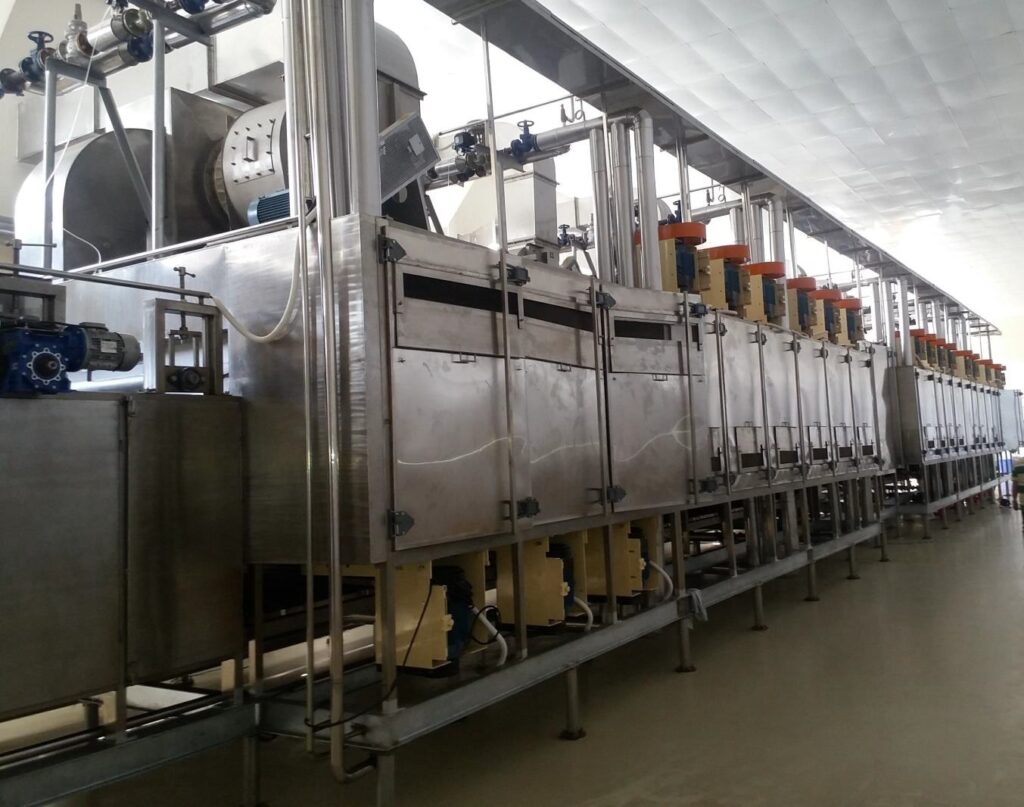
Mesh Belt Dryer
Useful where controlled continuous airflow through a product bed is required.
Refractance Window Dryer
Particularly interesting for liquid or semi-liquid food materials where gentle continuous drying is required.
Potential applications include:
- Fruit purees
- Vegetable purees
- Coconut products
- Nutritional formulations
- Food extracts
- Liquid food ingredients
Heat Pump Dryer
Can be considered for applications where lower-temperature controlled drying and heat recovery are important.
The correct technology depends on the product form, moisture content, desired final product and production capacity.
2. Spice & Herb Processing
Spices and herbs create a very different drying challenge.
Products may include:
- Turmeric
- Ginger
- Chilli
- Garlic
- Onion
- Coriander
- Cumin
- Mint
- Basil
- Curry leaves
- Botanical materials
- Herbal ingredients
The drying system must consider the preservation of:
- Colour
- Aroma
- Volatile components
- Active compounds
- Final moisture
- Microbiological stability
A common industrial route may include:
Cleaning → Washing → Cutting/Slicing → Pre-treatment → Drying → Cooling → Grinding → Sieving → Packaging
Depending on the product, GTI can evaluate technologies such as:
- Band Dryer
- Mesh Belt Dryer
- Fluid Bed Dryer
- Heat Pump Dryer
- Refractance Window Dryer
- Flash Dryer
- Combination Drying Systems
The important point is that there is no single universal spice dryer.
A sliced turmeric product, a fresh herb, a spice powder and a liquid botanical extract can require completely different drying technologies.
3. Dairy & Milk Powder Processing
Dairy is one of the most important industrial powder-processing applications.
Products can include:
- Milk powder
- Whey powder
- Lactose
- Dairy ingredients
- Protein concentrates
- Nutritional powders
- Specialty dairy formulations
For suitable liquid feeds, spray drying can be used to convert concentrated liquid into powder.
A typical process route can be:
Milk / Liquid Feed → Filtration → Standardization → Concentration → Atomization → Spray Drying → Powder Separation → Fluid Bed Drying → Cooling → Sieving → Packaging
This illustrates an important principle:
One dryer does not always complete the entire drying process.
Spray drying may perform the primary moisture removal and powder formation.
Fluid-bed drying can then support final moisture adjustment and cooling.
This type of multi-stage drying architecture can provide greater process control than forcing the entire moisture-removal duty into a single drying stage.
4. Food Powder Processing
Modern food manufacturers produce powders from many different raw materials.
Examples include:
- Milk
- Whey
- Plant proteins
- Fruit
- Vegetable extracts
- Starch
- Flavours
- Nutritional ingredients
- Functional food ingredients
- Egg products
- Coconut products
- Botanical extracts
Powder processing can involve:
Concentration → Spray Drying → Fluid Bed Drying → Cooling → Milling/Sieving → Packaging
Depending on the product, other technologies such as flash drying, vacuum drying or refractance window drying may be evaluated.
Important powder characteristics include:
- Moisture
- Particle size
- Bulk density
- Flowability
- Solubility
- Stickiness
- Caking tendency
- Thermal sensitivity
A dryer therefore needs to be selected according to the desired powder characteristics, not simply evaporation capacity.
5. Plant Protein & Nutritional Ingredients
The growth of plant-based foods and nutritional products is creating new opportunities for industrial drying.
Potential products include:
- Pea protein
- Soy protein
- Plant protein concentrates
- Nutritional powders
- Functional ingredients
- Food supplements
- Protein-rich formulations
Here the drying process can influence:
- Protein functionality
- Solubility
- Moisture
- Bulk density
- Flowability
- Particle structure
Spray drying, fluid-bed drying and multi-stage drying systems can be evaluated depending on the feed and final product requirements.
6. Coconut Processing & Coconut Products
Coconut is another important food-processing value chain where drying plays a major role.
A modern coconut-processing plant can include:
Coconut → Dehusking → Deshelling → Paring → Washing → Grating → Extraction → Filtration → Concentration → Drying → Cooling → Powder Handling → Packaging
Depending on the finished product, different technologies may be required.
Applications can include:
- Desiccated coconut
- Coconut milk powder
- Coconut cream powder
- Coconut-based ingredients
- Coconut water products
- Coconut extracts
- Value-added coconut ingredients
Possible drying technologies include:
- Band Dryer
- Combination Fluid Bed Dryer
- Spray Dryer
- Refractance Window Dryer
- Fluid Bed Dryer
- Other customized drying configurations
The important engineering consideration is matching the dryer to the physical form of the coconut feed.
Liquid coconut milk is not processed in the same way as grated coconut.
Coconut cream is not the same feed as desiccated coconut.
Therefore, the drying technology must be designed around the actual feed characteristics.
7. Onion & Garlic Dehydration
Onion and garlic processing requires careful control of thermal exposure because flavour and volatile components are commercially important.
A typical dehydration line may include:
Receiving → Sorting → Washing → Peeling → Cutting → Drying → Cooling → Milling → Sieving → Packaging
Products can include:
- Onion flakes
- Onion granules
- Onion powder
- Garlic flakes
- Garlic granules
- Garlic powder
Continuous band or belt drying can be evaluated for sliced products, while other technologies may be considered for powder or concentrated feeds.
A complete plant should also consider:
- Feed distribution
- Air filtration
- Dust control
- Odour management
- Cooling
- Milling
- Sieving
- Product recovery
- Packaging
8. Starch & Food Ingredient Processing
Starch and modified-starch manufacturing can require rapid moisture removal from wet materials.
Possible applications include:
- Native starch
- Modified starch
- Food starch
- Industrial starch ingredients
- Starch derivatives
Pneumatic flash drying and ring drying technologies can be considered where rapid drying of suitably prepared particulate or powder feeds is required.
Fluid-bed systems can also be used for suitable free-flowing products.
The final selection depends on:
- Feed moisture
- Particle size
- Feed condition
- Required final moisture
- Product temperature
- Throughput
- Residence time
- Dust characteristics
9. Ready-to-Eat & Convenience Food
The ready-to-eat and convenience-food sector creates several dehydration requirements.
Products may include:
- Dehydrated vegetables
- Soup ingredients
- Instant food components
- Dehydrated sauces
- Seasoning systems
- Prepared meal ingredients
- Dried garnishes
- Instant mixes
Drying can help reduce moisture and improve storage stability, but the technology must be selected according to the product’s structure and rehydration requirements.
For example, a vegetable piece may require a completely different system from a liquid sauce or food powder.
10. Beverage, Juice & Liquid Food Processing
Liquid food products often require concentration before drying.
A simplified process may be:
Raw Material → Extraction → Filtration → Concentration → Drying → Powder Collection
Spray dryers are widely considered for converting suitable liquid feeds into powders.
Refractance Window Dryers may also be evaluated for selected liquid and semi-liquid food products where gentle continuous drying is desirable.
The engineering challenge is to balance:
- Feed solids
- Viscosity
- Atomization or spreading
- Heat sensitivity
- Evaporation rate
- Final powder characteristics
- Energy consumption
11. Egg & Protein-Based Food Ingredients
Egg products and protein ingredients can require carefully controlled drying.
Possible products include:
- Egg powder
- Protein powders
- Nutritional ingredients
- Functional food ingredients
Spray drying, fluid-bed systems or other specialized configurations may be evaluated depending on the product form and process route.
Hygienic design, cleaning requirements, temperature control and product recovery become particularly important.
12. Seafood, Meat & Animal-Based Ingredients
Food-processing operations involving seafood and animal-derived ingredients may also require drying or thermal stabilization.
Potential applications include:
- Fish ingredients
- Seafood powders
- Protein-rich materials
- Animal feed ingredients
- Functional protein products
The appropriate technology depends heavily on the raw material, fat content, particle structure, odour characteristics and final product.
For these applications, the dryer should be considered together with:
- Odour control
- Vapour handling
- Dust collection
- Hygiene
- Product recovery
- Cooling
- Storage
Industrial Dryer Technologies for Food Processing
There is no universal industrial food dryer.
Different technologies solve different problems.
Band / Belt Dryer
A continuous dryer in which product travels through controlled drying zones.
Potential applications:
- Fruits
- Vegetables
- Spices
- Coconut
- Herbs
- Agricultural products
- Food ingredients
The system can be configured with different airflow and temperature conditions across multiple zones.
Mesh Belt Dryer
Suitable for continuous processing of particulate, sliced or granular food products where controlled air circulation through the product bed is required.
Fluid Bed Dryer
Fluidized-bed technology is particularly useful for suitable free-flowing particles, granules and powders.
Potential applications include:
- Food powders
- Granules
- Starch
- Dairy ingredients
- Nutritional products
- Food ingredients
Air velocity, particle characteristics and fluidization behaviour are critical to successful operation.
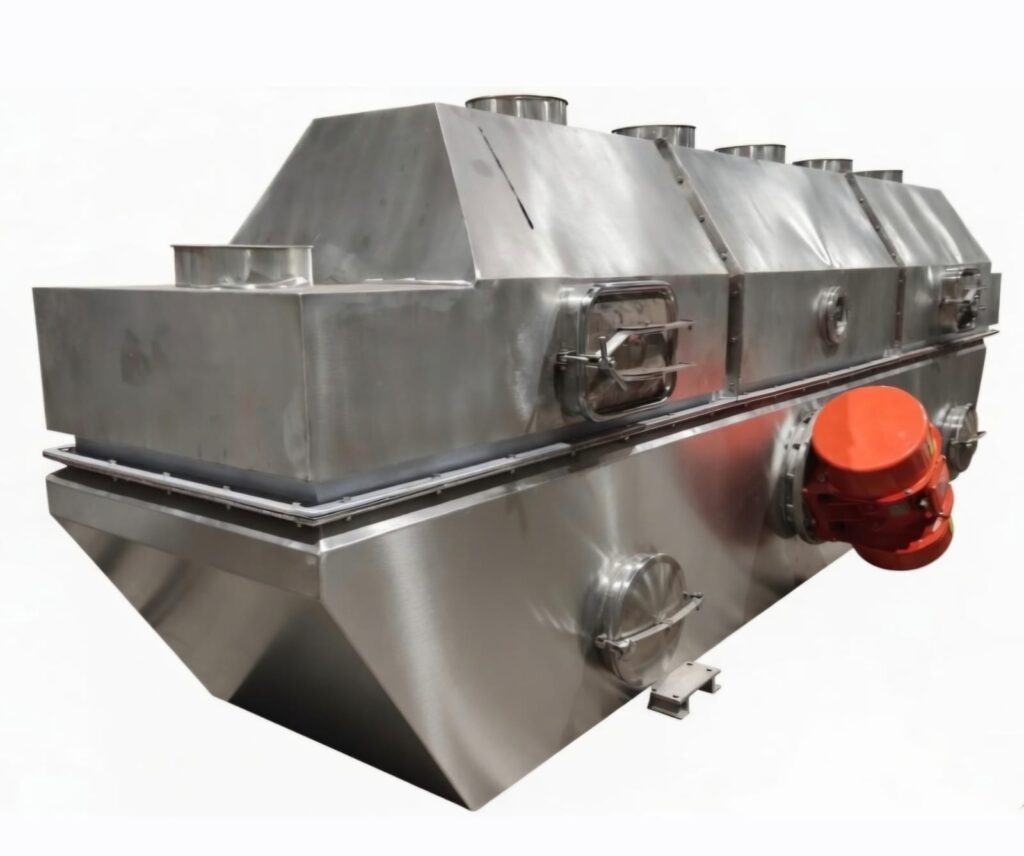
Combination Fluid Bed Dryer
A combination system can integrate different drying stages or tray/continuous fluidization arrangements.
This can be useful when the product requires:
- Initial drying
- Final moisture adjustment
- Cooling
- Controlled residence time
Combination systems can be particularly relevant in food ingredient and coconut-processing applications.
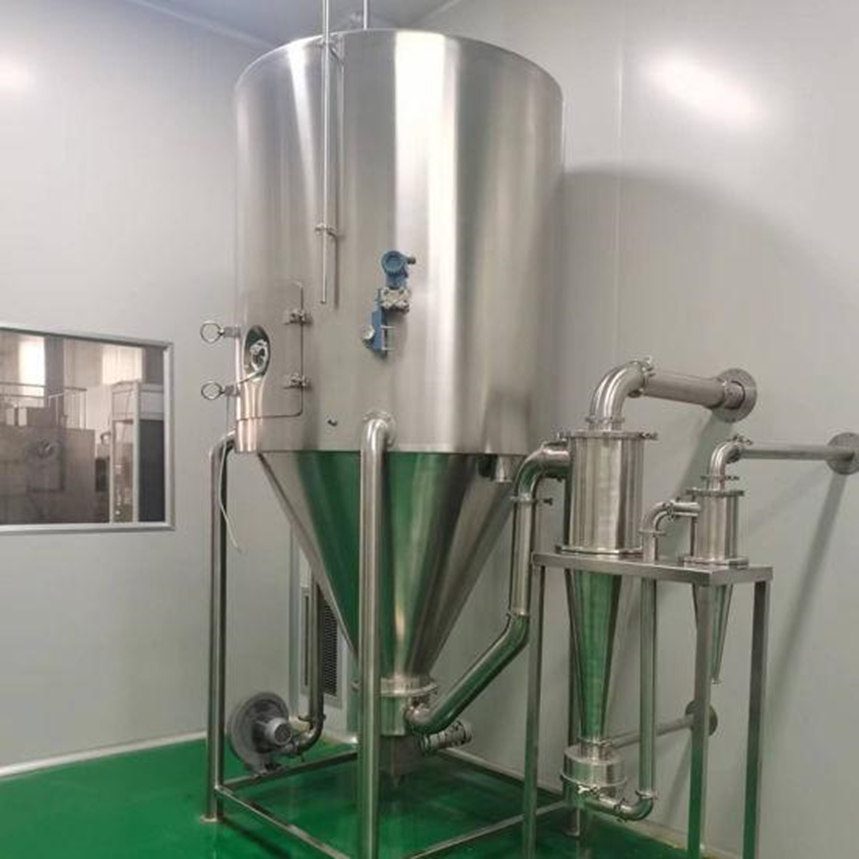
Spray Dryer
Spray drying is primarily suited to converting suitable liquid or slurry feeds into powders.
Typical applications include:
- Milk powder
- Whey
- Food ingredients
- Flavours
- Nutritional powders
- Plant proteins
- Coconut milk powder
- Liquid food extracts
The basic route is:
Liquid Feed → Atomization → Hot Air Contact → Moisture Evaporation → Powder Separation
Particle size and morphology can be influenced through atomization and process conditions.
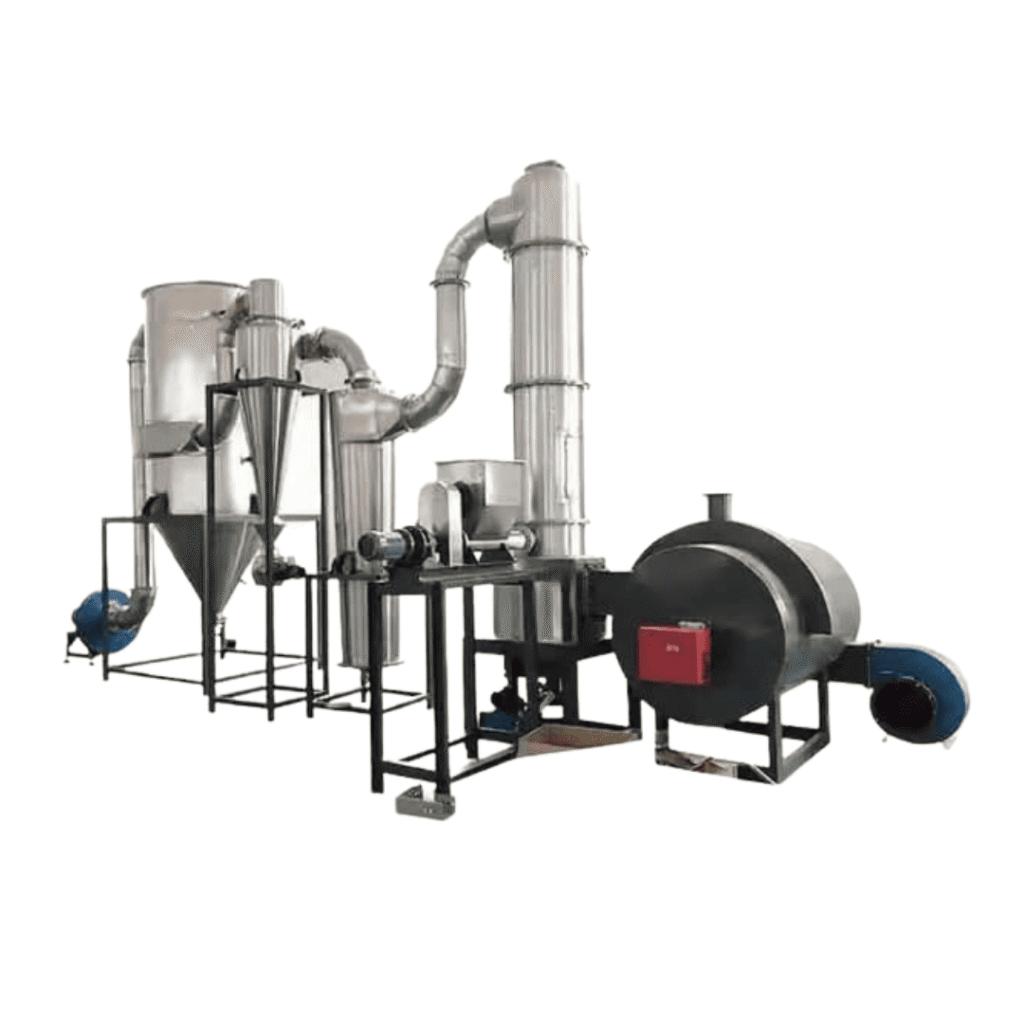
Flash Dryer
Flash drying provides rapid moisture removal from suitably prepared wet particulate materials.
Potential food applications include:
- Starch
- Food powders
- Wet cakes
- Fine food ingredients
- Agricultural materials
Its short residence time can be valuable where rapid drying is needed.
Ring Dryer
Ring drying can be considered where a recirculating pneumatic drying/classification arrangement is appropriate.
The system can allow particles requiring additional drying to remain in circulation while adequately dried material is separated.
This makes ring-type systems interesting for selected:
- Starch applications
- Fine powders
- Food ingredients
- Chemical-food intermediates
- Particulate materials
Refractance Window Dryer
Refractance Window Drying is designed for selected liquid and semi-liquid products.
The product is distributed as a thin layer over a food-grade film heated from below.
Potential applications include:
- Fruit purees
- Vegetable purees
- Coconut products
- Botanical extracts
- Nutritional ingredients
- Food concentrates
Its value lies in controlled thin-film drying and the possibility of processing products under relatively gentle conditions.
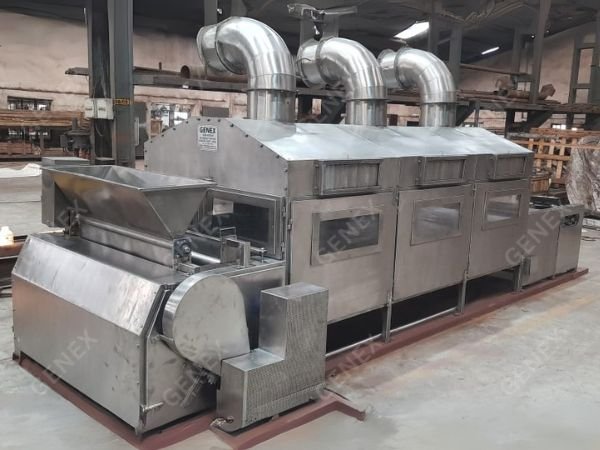
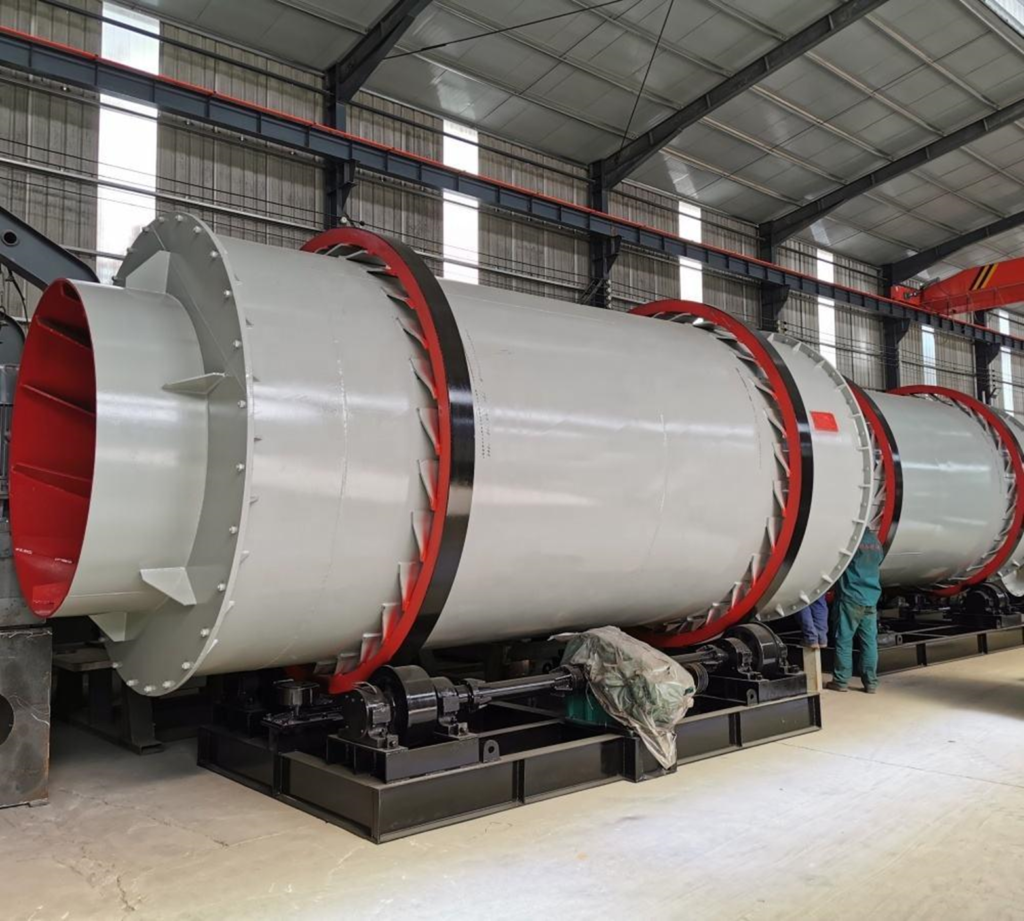
Rotary Drum Dryer
Rotary drying can be evaluated for robust, free-flowing or particulate materials where large-scale continuous processing is required.
It may be considered for selected:
- Food ingredients
- Agricultural materials
- Biomass-derived food/feed materials
- Granular products
Feed characteristics and required product quality determine whether rotary drying is appropriate.
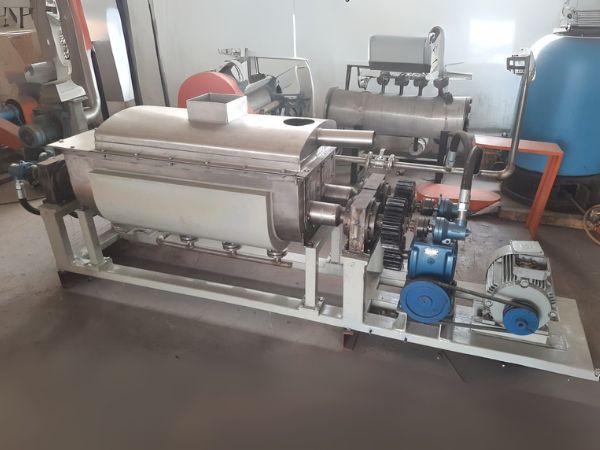
Paddle Dryer
Paddle dryers use indirect heat transfer and controlled mixing.
They can be considered for selected wet, pasty or difficult-to-handle materials.
For food applications, hygienic construction and product-specific design are essential.
Heat Pump Dryer
Heat pump drying can be considered where lower-temperature operation, controlled humidity and heat recovery are important.
Potential applications include:
- Fruits
- Vegetables
- Herbs
- Spices
- Heat-sensitive food materials
When One Dryer Is Not Enough
One of the most important lessons in industrial food processing is that a complete production line may require multiple drying technologies.
For example:
Milk Powder
Concentration → Spray Dryer → Fluid Bed Dryer → Cooling → Sieving → Packaging
Coconut
Extraction → Filtration → Concentration → Spray/RWD or Other Suitable Drying → Cooling → Powder Handling
Vegetables
Pre-treatment → Cutting → Band Dryer → Cooling → Grading → Packaging
Spices
Cleaning → Cutting → Controlled Dehydration → Cooling → Grinding → Sieving → Packaging
Food Ingredients
Extraction → Concentration → Spray Drying → Fluid Bed Conditioning → Cooling → Packaging
Starch
Extraction → Dewatering → Flash/Ring Drying → Separation → Cooling → Packaging
These are examples of process routes for engineering evaluation; the final configuration must be established from actual product and process data.
Drying Is Only One Part of the Food Processing System
A food-processing project should not be designed around the dryer alone.
A complete plant may require:
Raw Material Handling
- Conveyors
- Hoppers
- Feeders
- Storage systems
- Sorting
Preparation
- Washing
- Peeling
- Cutting
- Slicing
- Grinding
- Blanching
- Cooking
Extraction & Concentration
- Extractors
- Filters
- Separators
- Concentrators
- Homogenizers
Drying
- Band dryers
- Fluid bed dryers
- Spray dryers
- Flash dryers
- RWD systems
- Rotary dryers
- Vacuum dryers
- Combination systems
Post-Drying
- Cooling
- Sieving
- Milling
- Classification
- Blending
- Conveying
Final Product Handling
- Powder transfer
- Storage
- Metal detection
- Packaging
- Palletizing
A successful project therefore requires coordination between the different process stages.
How GTI Dryers Approaches a Food Processing Problem
GTI Dryers approaches industrial drying from the perspective of process engineering rather than simply equipment selection.
The starting point is the material.
The engineering team needs to understand:
- What is the product?
- What is the feed form?
- What is the initial moisture?
- What is the required final moisture?
- What is the production capacity?
- Is the feed liquid, slurry, paste, powder, granule, slice or flake?
- How heat-sensitive is the product?
- What product quality must be preserved?
- What is the desired particle size?
- Is cooling required?
- Is dust collection required?
- What utilities are available?
- What is the preferred heat source?
- What are the hygiene requirements?
- What are the available plant dimensions?
Only after understanding these factors should dryer technology be shortlisted.
From Dryer Selection to Complete Turnkey Food Processing
For larger projects, the requirement may go beyond supplying one machine.
GTI’s food-processing engineering approach can extend toward:
Process Study → Technology Selection → Process Design → Equipment Engineering → Manufacturing → Plant Integration → Installation → Commissioning → Process Optimization
This approach is particularly valuable for companies developing:
- New food factories
- Food dehydration plants
- Ingredient manufacturing plants
- Powder-processing plants
- Coconut-processing plants
- Spice-processing plants
- Fruit and vegetable dehydration plants
- Dairy-processing plants
- Nutritional ingredient plants
- Export-oriented food-processing facilities
Food Tech Projects, within the wider Genex ecosystem, also presents turnkey food-processing capabilities and project experience covering areas such as desiccated coconut, coconut processing, juice processing and dairy projects.
Solving Common Food-Processing Problems
Problem: Product Is Overheated
Possible considerations:
- Reduce thermal intensity
- Adjust airflow
- Modify residence time
- Use multiple drying zones
- Consider lower-temperature technology
- Evaluate hybrid drying
Problem: Moisture Is Not Uniform
Possible causes:
- Uneven feed distribution
- Poor airflow
- Incorrect residence time
- Variable feed moisture
- Inadequate mixing
Potential solutions can include:
- Improved product distribution
- Multi-zone airflow
- Controlled feed rate
- Process automation
- Improved residence-time control
Problem: Powder Is Sticky
Potential considerations include:
- Product glass-transition behaviour
- Feed solids
- Inlet/outlet conditions
- Particle size
- Air humidity
- Powder handling temperature
A process engineer may evaluate spray-drying conditions, fluid-bed conditioning or multi-stage drying rather than simply increasing temperature.
Problem: High Energy Consumption
Possible areas for investigation include:
- Heat recovery
- Exhaust-air management
- Insulation
- Air recirculation
- Moisture load
- Feed pre-concentration
- Multi-stage drying
- Heat-pump integration
- Process optimization
Energy performance should always be calculated against the actual evaporation duty and operating conditions rather than assumed from the dryer name.
Problem: Product Quality Is Falling
The solution may involve changing:
- Temperature profile
- Airflow
- Residence time
- Product layer depth
- Feed rate
- Drying technology
- Cooling conditions
The correct solution is process-specific.
Why Multi-Stage Drying Can Be Important
A modern food factory should not automatically try to remove all moisture in one stage.
Different drying technologies can perform different duties.
For example:
Primary Drying → Secondary Drying → Cooling
This allows the process to be designed around the changing properties of the product as moisture decreases.
The first stage may handle high evaporation.
The second may provide controlled final moisture adjustment.
The final stage may stabilize the product temperature.
This can provide better control of product quality and energy use than treating the entire drying curve as one uniform operation.
Hygiene and Food-Grade Engineering
Food-processing equipment must be designed around hygienic operation.
Important considerations include:
- Food-grade materials
- Stainless-steel construction where appropriate
- Cleanable surfaces
- Reduced product accumulation
- Appropriate seals
- Controlled air handling
- Dust management
- Product-contact design
- Cleaning access
- Automation and monitoring
The exact material grade and hygienic design should be selected according to the food product, regulatory requirements and cleaning process.
GTI’s food-drying portfolio highlights hygienic construction, controlled drying temperatures, automation and customized food dehydration systems.
Automation and Process Control
Modern industrial food dryers can incorporate automated monitoring and control of critical parameters.
Depending on the project, this can include:
- Temperature
- Airflow
- Product feed rate
- Residence time
- Dryer speed
- Moisture
- Pressure
- Humidity
- Exhaust conditions
- Heating system
- Cooling system
PLC/SCADA-based automation can help operators maintain repeatable process conditions.
GTI’s industrial dryer portfolio includes automated PLC/SCADA control and customized drying systems across food and other process industries.
How to Select the Right Food Dryer
Before contacting a dryer manufacturer, food processors should prepare the following information:
Product Information
- Product name
- Physical form
- Particle size
- Density
- Stickiness
- Heat sensitivity
Moisture Information
- Initial moisture
- Final moisture
- Moisture basis
- Evaporation requirement
Production Information
- Feed capacity
- Required output
- Operating hours
- Batch or continuous operation
Quality Requirements
- Colour
- Aroma
- Nutrient retention
- Powder flowability
- Bulk density
- Particle size
- Rehydration
Utility Information
- Steam
- Gas
- Electricity
- Hot water
- Thermal oil
- Biomass
- Available cooling
Plant Information
- Available space
- Existing equipment
- Elevation restrictions
- Exhaust requirements
- Dust collection
- Future expansion
With these parameters, the dryer manufacturer can evaluate the appropriate technology rather than recommending a generic machine.
GTI Dryers at SIAL Paris 2026: Connecting Food Problems With Engineering Solutions
The value of an international food exhibition is not limited to displaying machines.
It creates an opportunity to understand what food manufacturers are actually trying to solve.
During GTI Dryers’ engagement around SIAL Paris 2026, conversations with food-industry professionals can be approached from questions such as:
What are you drying?
What is your current moisture problem?
Are you losing product quality during drying?
Is your existing dryer consuming too much energy?
Do you need higher production capacity?
Are you planning a new dehydration plant?
Do you need a powder-processing system?
Do you need a complete turnkey food-processing line?
Can multiple drying technologies improve your process?
This changes the conversation from:
“We manufacture dryers.”
to:
“Tell us what you need to manufacture, and we can evaluate the appropriate processing and drying route.”
That is the difference between selling a machine and solving a process problem.
Global Food Processing Applications
The same engineering approach can be applied across international food markets.
Potential applications include:
Europe
- Dairy ingredients
- Functional foods
- Plant proteins
- Spices
- Fruit ingredients
- Nutraceutical food ingredients
Asia
- Coconut
- Spices
- Rice
- Pulses
- Fruits
- Vegetables
- Dairy
- Food powders
Africa
- Cassava
- Fruits
- Vegetables
- Cereals
- Spices
- Agricultural products
Middle East
- Dairy
- Dates
- Food ingredients
- Fruit products
- Powdered foods
- Spices
Latin America
- Coconut
- Cassava
- Fruits
- Coffee-related ingredients
- Agricultural products
- Food powders
North America
- Nutritional ingredients
- Plant proteins
- Dairy ingredients
- Functional foods
- Specialty food powders
The technology remains product-specific even when the geographical market changes.
From SIAL Paris to the Next Food Processing Project
An exhibition meeting can become the starting point for a complete engineering project.
A practical workflow is:
Exhibition Discussion
↓
Product & Process Data Collection
↓
Laboratory / Pilot Evaluation Where Required
↓
Dryer Technology Selection
↓
Evaporation & Energy Calculation
↓
Process Flow Development
↓
Equipment Design
↓
Manufacturing
↓
Installation
↓
Commissioning
↓
Process Optimization
This is particularly important for large food-processing projects where a dryer is only one part of the production line.
Why GTI Dryers Can Be a Technology Partner for Food Processors
GTI Dryers provides a broad industrial drying portfolio covering technologies such as:
- Band / Belt Dryer
- Mesh Belt Dryer
- Combination Fluid Bed Dryer
- Vibratory Fluidized Bed Dryer
- Spray Dryer
- Flash Dryer
- Ring Dryer
- Refractance Window Dryer
- Rotary Drum Dryer
- Paddle Dryer
- Heat Pump Dryer
- Customized multi-stage drying systems
This range allows the engineering approach to begin with the product and process requirement, rather than forcing every application into one dryer type.
GTI also works across food-related areas including:
- Fruits and vegetables
- Spices and herbs
- Dairy
- Food ingredients
- Plant proteins
- Coconut
- Starch
- Nutritional products
- Agricultural products
- Food powders
The company’s food-drying portfolio includes customized continuous food dehydration systems, food powder drying and turnkey food-drying plant support.
Frequently Asked Questions About Food Processing & Industrial Dryers
Which industrial dryer is best for food processing?
There is no single best industrial dryer for every food product. Band, fluid bed, spray, flash, RWD, rotary, heat-pump and hybrid systems each address different feed and product conditions.
Which dryer is suitable for fruits and vegetables?
Band, mesh belt, heat-pump and other continuous dehydration systems can be evaluated depending on whether the product is sliced, diced, particulate, puree or another form.
Which dryer is used for milk powder?
Spray drying is commonly evaluated for converting suitable concentrated liquid dairy feeds into powder, often with downstream fluid-bed drying and cooling.
Which dryer is suitable for spices?
Band, mesh belt and other controlled dehydration technologies can be considered depending on the spice, particle size, moisture and quality requirements.
Can coconut milk be converted into powder?
Yes, suitable coconut milk feeds can be processed through industrial powder-making routes such as spray drying or other product-specific technologies, depending on solids, formulation and desired powder properties.
Is one dryer enough for a food-processing plant?
Not necessarily. Multi-stage systems can combine spray, fluid bed, belt, flash, vacuum or other technologies to perform different process duties.
How do I select an industrial food dryer?
Start with product form, initial and final moisture, capacity, heat sensitivity, desired product characteristics, utilities and process route. These parameters should be evaluated before selecting the dryer.
Can GTI provide a complete food-processing solution?
GTI’s broader engineering ecosystem includes industrial dryers, food-processing machinery and turnkey project capabilities. The final scope depends on the project and process requirements.
Discuss Your Food Processing & Drying Requirement
Planning to meet suppliers, develop a new food factory, expand production or upgrade an existing dehydration line?
The most useful starting point is not the name of the dryer.
Start with the product.
Share:
- Product name
- Feed form
- Initial moisture
- Required final moisture
- Capacity
- Operating hours
- Heat sensitivity
- Desired final product
- Available utilities
- Existing process equipment
- Plant location
GTI Dryers can then evaluate the appropriate drying technology and, where required, the broader processing route.
From food dehydration and powder production to complete processing lines, the objective is to develop a solution around the actual manufacturing requirement.
GTI Dryers — Engineered Drying Solutions from India for Global Food Industries.
SIAL Paris 2026 + Food Processing: The Technology Opportunity
SIAL Paris is not only a place to discover food products.
It is also a place to understand where the food-processing industry is moving.
As manufacturers seek better shelf life, controlled moisture, improved product quality, efficient production and higher-value food ingredients, industrial drying becomes increasingly important.
For GTI Dryers, the opportunity is to connect these food-industry requirements with practical engineering:
Food Product → Process Challenge → Technology Selection → Drying System → Integrated Processing → Complete Solution
That is the approach that can turn an exhibition conversation into a long-term food-processing project.
If your company is looking for an industrial food dryer, dehydration system, powder-processing system, multi-stage dryer or complete food-processing solution, GTI Dryers can evaluate the requirement based on your actual product and process conditions.