
GTI Dryers has successfully developed and demonstrated an advanced dehydration solution for coconut cream using Refractance Window Dryer technology.
This development represents an important capability for the growing coconut-processing industry, where manufacturers are increasingly looking for ways to convert coconut-based materials into stable, value-added ingredients while maintaining the desired functional and quality characteristics of the product.
For GTI Dryers, this application is more than another drying project. It demonstrates our ability to engineer drying solutions for challenging, high-value food materials and to adapt advanced dehydration technology to specific industrial product requirements.
The proprietary processing methodology, operating parameters and process sequence used for this application are not disclosed in this article. They form part of GTI Dryers’ confidential engineering and process-development expertise.
Instead, this case study explains the technology capability, application potential and commercial significance of using Refractance Window Drying for coconut-based products.
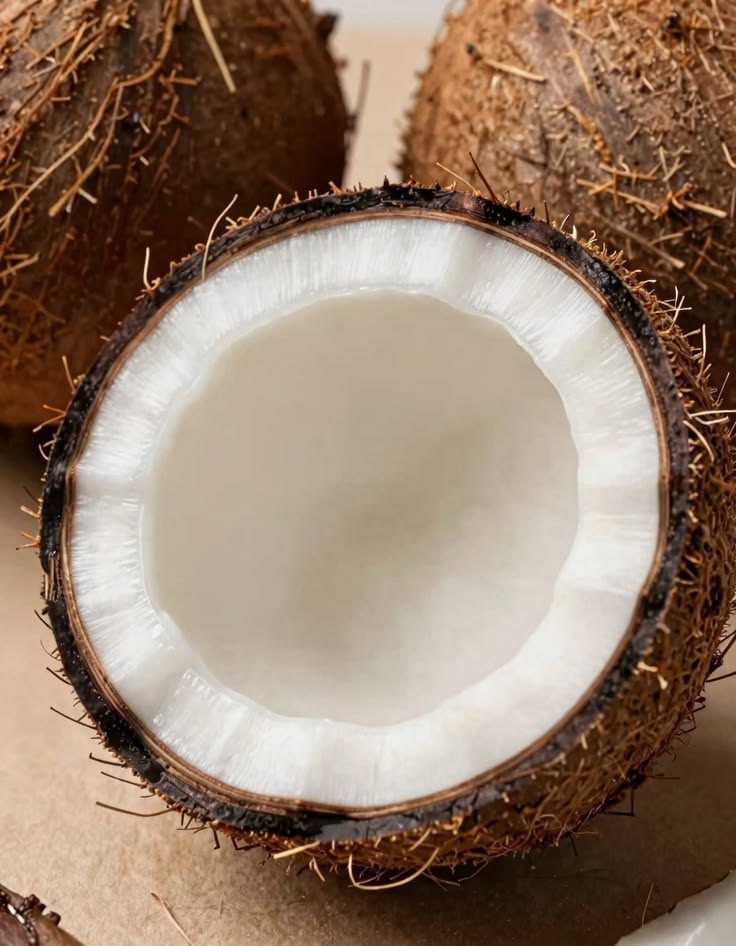
GTI Dryers Successfully Develops Coconut Cream Dehydration Application
Coconut is one of the most versatile tropical food commodities, with applications extending from coconut milk and coconut cream to coconut oil, desiccated coconut, coconut flour, coconut water, coconut-based beverages, bakery ingredients, confectionery products and functional food formulations.
However, converting coconut-based liquid or semi-liquid products into stable dehydrated ingredients can be technically challenging.
Coconut cream contains valuable food components and has product characteristics that require careful consideration during thermal processing. Conventional drying technologies may not always provide the desired combination of drying performance, product quality and process control.
GTI Dryers has successfully addressed this application by developing a Refractance Window Dryer-based dehydration solution for coconut cream.
This achievement demonstrates GTI’s capability to work beyond standard dryer applications and develop application-specific industrial drying solutions for coconut and other high-value food products.
For coconut processors, ingredient manufacturers and food-processing companies, this creates an opportunity to explore new product formats and higher-value applications from coconut-derived materials.
Why This Development Matters to the Coconut Industry
The coconut industry is moving beyond traditional commodity products.
Manufacturers are increasingly developing:
- Coconut cream ingredients
- Coconut milk powders
- Coconut-based beverage ingredients
- Coconut-derived food powders
- Coconut concentrates
- Coconut-based bakery ingredients
- Coconut ingredients for confectionery
- Coconut-based nutritional formulations
- Instant food ingredients
- Functional coconut ingredients
- Export-oriented shelf-stable coconut products
This shift creates demand for advanced dehydration technologies capable of handling liquid and semi-liquid food products.
GTI’s successful coconut cream application demonstrates that Refractance Window Dryer technology can be considered for innovative coconut-processing applications where conventional drying approaches may not provide the required product characteristics.
The objective is not simply to remove moisture.
The objective is to develop a controlled industrial dehydration solution around the product, its characteristics and the customer’s commercial requirements.
What Is a Refractance Window Dryer?
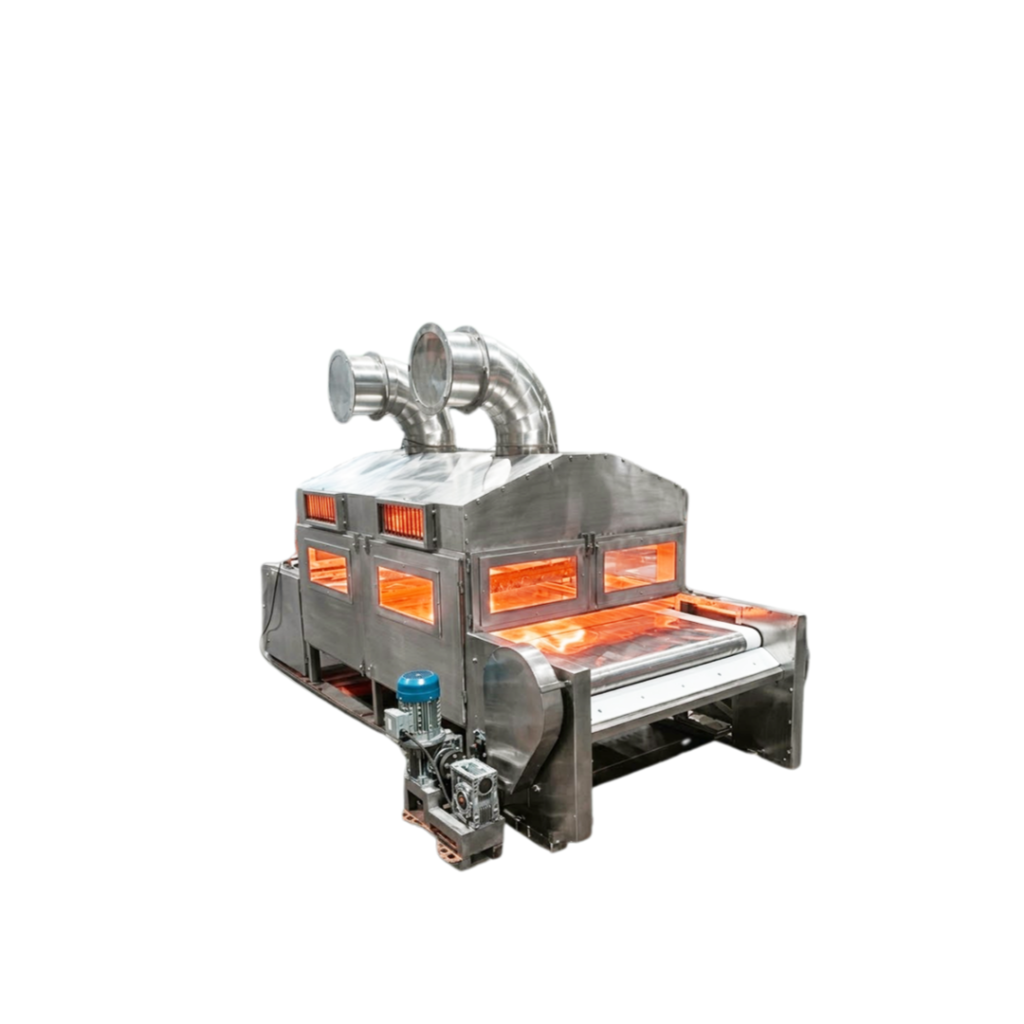
A Refractance Window Dryer (RWD) is an advanced thin-film drying technology used for liquid, semi-liquid and puree-type food materials.
It is particularly associated with the dehydration of heat-sensitive food products where product quality, colour, flavour, nutritional characteristics and functional properties are important.
Published research describes Refractance Window Drying as a technology involving efficient heat transfer through an infrared-transparent film, with heat and mass transfer occurring rapidly while maintaining relatively moderate product temperatures.
Recent research continues to identify RWD as a promising technology for high-value food and biological materials, while also highlighting the importance of scale-up, product-layer control and application-specific process design.
Important: GTI Does Not Treat RWD as a One-Size-Fits-All Dryer
Every food material behaves differently during dehydration.
Factors such as:
- Feed composition
- Solids concentration
- Viscosity
- Product thickness
- Moisture characteristics
- Desired final moisture
- Required product form
- Heat sensitivity
- Flow behaviour
- Rehydration requirements
- Final application
can influence the suitability and configuration of a drying system.
Therefore, GTI approaches Refractance Window Dryer projects as application-engineering projects rather than simply supplying a standard machine.
Why Refractance Window Drying Is Interesting for Coconut-Based Products
Coconut processors often need to balance several requirements simultaneously.
The drying system may need to provide:
Moisture reduction + product quality + controlled thermal exposure + consistent output + industrial scalability
This is where RWD becomes an interesting technology option.
Research on Refractance Window Drying has reported its potential for food materials requiring better retention of quality characteristics compared with some conventional drying approaches. Studies have investigated applications involving fruit and vegetable purees, powders, dairy-based formulations and other heat-sensitive materials.
For coconut-based applications, the technology can therefore be evaluated where manufacturers are looking for a controlled dehydration platform for liquid or semi-liquid coconut products.
GTI’s successful coconut cream development takes this technology from theoretical suitability toward an actual industrial application demonstrated by GTI.
GTI Dryers’ Coconut Cream Application: What We Have Achieved
GTI Dryers has successfully developed a dehydration application for coconut cream using Refractance Window Dryer technology.
The significance of this development lies in three areas.
1. Application Engineering
GTI has demonstrated the ability to work with a challenging coconut-based food material and develop a suitable drying solution around the product.
2. Advanced Drying Technology
The application demonstrates GTI’s capability in Refractance Window Drying, an advanced technology particularly relevant to heat-sensitive and high-value food materials.
3. Coconut Industry Expertise
The development strengthens GTI’s position in the wider coconut-processing equipment segment, creating opportunities to work with manufacturers developing coconut cream, coconut milk, coconut-based ingredients and other value-added coconut products.
The proprietary process details are intentionally not disclosed.
This article therefore focuses on the technology capability and application outcome rather than revealing the confidential processing methodology.
From Coconut Cream to New Value-Added Coconut Products
One of the biggest opportunities for coconut processors is moving from raw-material processing toward higher-value ingredients and finished food products.
Drying technology can play an important role in this transition.
Depending on the customer’s product concept, downstream application and product requirements, dehydrated coconut-based ingredients may have potential applications in areas such as:
Food & Beverage
Coconut-derived ingredients can be evaluated for use in:
- Beverage formulations
- Smoothies
- Instant drink mixes
- Bakery products
- Desserts
- Confectionery
- Sauces
- Ready-to-use food formulations
Dairy Alternatives & Plant-Based Foods
Coconut-based ingredients are widely relevant to the expanding plant-based food sector.
Potential applications include:
- Plant-based formulations
- Dairy-alternative products
- Creamer-type ingredients
- Coconut-based beverage formulations
- Plant-based desserts
Ingredient Manufacturing
Dehydrated coconut ingredients can also become intermediate materials for food manufacturers who require:
- Controlled moisture
- Easier handling
- Powder or dry ingredient formats
- Longer storage potential
- Ingredient standardization
- Convenient transportation
The exact suitability depends on the final formulation and product specifications.
Why Coconut Processors Should Look Beyond Conventional Drying
A dryer should not be selected simply because it can remove moisture.
For coconut-based products, processors may need to consider:
- Product quality
- Thermal sensitivity
- Aroma and flavour
- Colour
- Nutritional characteristics
- Final moisture
- Powder or sheet characteristics
- Rehydration behaviour
- Storage requirements
- Production capacity
- Energy consumption
- Cleaning requirements
- Food hygiene
- Scale-up feasibility
This is why application-specific dryer selection is important.
GTI Dryers works with customers to understand the material and the desired final product before recommending a suitable drying technology or system configuration.
Refractance Window Dryer vs Conventional Drying Technologies
Different dryers solve different processing problems.
| Drying Technology | Typical Strength | Potential Coconut Application |
| Refractance Window Dryer | Thin-film drying of liquid/semi-liquid heat-sensitive materials | Coconut cream and selected coconut-based products |
| Spray Dryer | Continuous conversion of suitable liquid feeds into powders | Coconut milk and liquid food ingredients |
| Freeze Dryer | Very high-quality dehydration of sensitive materials | Premium/high-value products |
| Drum Dryer | Continuous contact drying of suitable liquid/paste feeds | Food pastes, slurries and selected coconut products |
| Vacuum Dryer | Reduced-pressure drying for heat-sensitive materials | Specialized food and ingredient applications |
| Belt/Band Dryer | Continuous drying of solids, slices and formed materials | Coconut flakes and other solid coconut products |
The best technology depends on the feed material, required final product, production capacity, thermal sensitivity and commercial objectives.
GTI’s engineering approach is therefore based on matching the technology to the application rather than promoting one dryer for every coconut product.
A Technology Platform for the Coconut Processing Industry
The coconut industry contains many different products, and each may require a different processing route.
GTI Dryers can engage with manufacturers working with:
Coconut Cream → Coconut Milk → Coconut Water → Coconut Flakes → Coconut Powder → Coconut Flour → Coconut-Based Ingredients → Value-Added Coconut Products
The appropriate drying technology can differ significantly between these materials.
This creates an opportunity for coconut processors to discuss their product with GTI’s engineering team and determine whether Refractance Window Drying, spray drying, belt drying, fluid-bed drying, vacuum drying or another technology is more appropriate.
What Makes GTI’s Coconut Cream Development Different?
Many dryer manufacturers focus primarily on equipment specifications.
GTI’s approach is different.
We focus on the relationship between the product and the drying technology.
The successful coconut cream application demonstrates GTI’s ability to:
- Work with specialized food materials
- Evaluate advanced dehydration technologies
- Develop application-specific drying solutions
- Engineer around product characteristics
- Support new product development
- Address industrial-scale drying requirements
- Work with food-processing companies on customized applications
This capability is particularly valuable for companies developing new coconut products rather than simply drying an existing commodity.
More Than a Dryer: Process Development for Food Manufacturers
For a food manufacturer, the important question is not:
“Which dryer should we buy?”
The more important question is:
“Which drying technology can help us convert our product into the quality and commercial format we need?”
This difference is important.
A dryer can be mechanically capable of removing moisture while still being unsuitable for a particular food product.
GTI therefore encourages customers to discuss:
- What is the product?
- What is the current form?
- What is the target final form?
- What final moisture is required?
- What production capacity is expected?
- What product quality attributes are critical?
- Is the product heat-sensitive?
- What is the intended market?
- Is the product for direct consumption or further processing?
These answers help determine the appropriate engineering direction.
Refractance Window Dryer for Global Food Processing Applications
The potential of Refractance Window Drying extends beyond coconut.
The technology has been researched and applied across various food and biological materials, including fruit and vegetable products, purees, powders and other heat-sensitive materials.
This makes the technology relevant to food-processing companies across:
- India
- Southeast Asia
- Indonesia
- Philippines
- Vietnam
- Sri Lanka
- Thailand
- Malaysia
- Brazil
- Mexico
- Africa
- Middle East
- Europe
- North America
- Latin America
For GTI Dryers, the coconut cream development is therefore not only an individual application.
It is an example of how advanced drying engineering can support the global value-added food-processing industry.
Talk to GTI Before Selecting Your Dryer
If your company is processing coconut products and is considering dehydration, GTI Dryers can help evaluate the application.
You may be developing:
Coconut cream powder | Coconut milk powder | Coconut-based ingredients | Coconut beverages | Coconut food ingredients | Coconut concentrates | New coconut products
You do not necessarily need to know which dryer you need before contacting us.
Share your product and application requirements, and GTI can evaluate the appropriate drying technology.
Useful information for an initial discussion
- Product name
- Feed form
- Approximate moisture content
- Solids content
- Desired final moisture
- Required production capacity
- Desired final product form
- Heat sensitivity
- Current processing method
- Intended application
- Production location
- Preferred energy/heat source
- Food-safety or hygienic requirements
Where appropriate, product trials or application-development work can be considered before final industrial system engineering.
Why GTI Dryers for Advanced Coconut Drying Applications?
GTI Dryers, a division of Genex Tech Industries, develops industrial drying solutions for food, agriculture, chemicals, pharmaceuticals, nutraceuticals and other processing industries.
Our technology portfolio includes multiple drying platforms, allowing the engineering team to evaluate different solutions rather than forcing every application into one dryer category.
For coconut and food applications, the technology selection may include:
- Refractance Window Dryer
- Band/Belt Dryer
- Spray Dryer
- Fluid Bed Dryer
- Vacuum Dryer
- Drum Dryer
- Hybrid and multi-stage drying systems
- Customized drying solutions
The successful development of coconut cream dehydration using Refractance Window Dryer technology demonstrates GTI’s commitment to application-focused engineering.
The machine is only one part of the solution. Understanding the product is equally important.
Frequently Asked Questions
Can Refractance Window Dryer be used for coconut cream?
Yes. GTI Dryers has successfully developed and demonstrated a coconut cream dehydration application using Refractance Window Dryer technology. The exact processing methodology and operating parameters are proprietary and are not disclosed publicly.
What type of products can Refractance Window Dryer handle?
RWD is generally associated with liquid, semi-liquid, puree and other heat-sensitive food materials. Its suitability depends on the specific product characteristics and desired final product.
Is Refractance Window Dryer suitable for coconut products?
It can be a technology option for selected coconut-based products, particularly where controlled dehydration of liquid or semi-liquid material is required. Final suitability should be established from the actual product and application requirements.
Does GTI disclose the coconut cream drying process?
No. GTI does not disclose proprietary processing parameters, process sequences or confidential engineering details associated with customer or internal development projects.
Can GTI develop customized coconut drying systems?
Yes. GTI can evaluate different drying technologies based on the customer’s product, production capacity, final product requirements and process objectives.
Is RWD better than spray drying or freeze drying?
Not universally. Each technology has different strengths. RWD may be attractive for certain heat-sensitive liquid or semi-liquid products, while spray drying and freeze drying may be more appropriate for other applications. Technology selection should be product-specific.
Can coconut processors contact GTI for a new product development project?
Yes. Coconut processors, food ingredient manufacturers and companies developing new coconut-based products can contact GTI to discuss their product and drying requirements.
Conclusion: A New Possibility for Value-Added Coconut Processing
The successful development of coconut cream dehydration using Refractance Window Dryer technology represents an important application achievement for GTI Dryers.
It demonstrates that industrial drying is not always about choosing an off-the-shelf machine.
Sometimes, it is about understanding a product, identifying the right technology and developing an engineering solution around the customer’s objective.
For the coconut industry, this opens the door to further discussions around value-added coconut ingredients, dehydrated coconut products and advanced food-processing applications.
GTI’s coconut cream development is one example of this approach.
Developing a Coconut-Based Product?
If you are a coconut processor, coconut product manufacturer, food ingredient company, beverage manufacturer or food-processing business looking for an industrial dehydration solution, talk to GTI Dryers.
Share your coconut product and production requirements with our engineering team.GTI Dryers — Engineered Drying Solutions from India for Global Industries.