
When Does Microwave Drying Make Engineering Sense?
Microwave drying is emerging as an important technology for industries looking for faster moisture removal, volumetric heating and better control of drying for selected products.
Unlike conventional hot-air drying, where heat is transferred from the outside surface toward the material, microwave energy can generate heat within the material itself. This can create a different heat and moisture-transfer mechanism and, for suitable products, accelerate the drying process.
But faster does not automatically mean better.
The performance of an industrial microwave dryer depends on the product’s dielectric properties, moisture distribution, geometry, thickness, operating conditions and dryer design. Uniform microwave heating can also be challenging, particularly when scaling a process from laboratory or pilot equipment to industrial production.
That is why GTI Dryers approaches microwave drying as an application-specific technology, with the objective of determining where microwave energy can provide a practical advantage and where conventional or hybrid drying may be more appropriate.
What Is an Industrial Microwave Dryer?
An industrial microwave dryer uses electromagnetic energy to heat suitable materials volumetrically and assist moisture evaporation.
Microwave energy interacts with polar molecules and ions within the material. Because moisture is often an important absorber of microwave energy, heating can occur within the product rather than relying entirely on heat transfer from the surface.
This can create a temperature and moisture gradient that supports movement of moisture from the interior toward the surface.
In a conventional hot-air dryer:
Hot Air → Product Surface → Internal Heat Transfer → Moisture Migration → Evaporation
In microwave-assisted drying:
Microwave Energy → Volumetric Heating → Internal Moisture Movement → Surface Evaporation
The actual mechanism varies with the material, moisture content, microwave frequency, power density, product geometry and drying configuration.
For industrial applications, microwave systems are often considered together with another drying method rather than automatically used as a standalone technology.
Why Consider Microwave Drying?
The main reason industries investigate microwave drying is the potential to address limitations associated with conventional drying.
Faster Internal Heating
Microwave energy can interact with the interior of suitable wet materials, potentially accelerating heating and moisture movement.
Volumetric Heating
Instead of depending entirely on surface-to-core heat transfer, microwave energy can generate heat within the material.
Potentially Shorter Drying Cycles
For appropriate products and process conditions, microwave-assisted drying can reduce drying time compared with conventional hot-air drying.
Better Processing of Selected Heat-Sensitive Materials
Microwave drying does not automatically mean low-temperature drying, but shorter residence times and controlled hybrid operation may help when preserving certain product characteristics is important.
Hybrid Process Possibilities
Microwave energy can be combined with hot air, vacuum, infrared or other drying technologies to address different stages of moisture removal.
Research on microwave-convective drying shows particular interest in combining microwave volumetric heating with conventional convective drying to improve drying kinetics.
The Most Important Question: Is Microwave Drying Right for Your Product?
This is where industrial dryer selection becomes an engineering problem rather than a simple equipment purchase.
Microwave drying may be worth evaluating when the product has characteristics that allow effective microwave absorption and when faster internal heating could improve the overall drying process.
However, it may not be the best choice when:
- Microwave absorption is insufficient
- Heating becomes highly non-uniform
- The product develops hot spots
- Product geometry causes uneven energy distribution
- The material changes significantly during drying
- Conventional drying already meets the required production target economically
- Scale-up cannot provide adequate field distribution
- Product quality is negatively affected by excessive microwave intensity
Therefore, microwave drying should be selected based on process evidence rather than simply because it is a newer technology.
Microwave + Hot-Air Drying: A Practical Hybrid Approach
One of the most promising configurations is microwave-assisted hot-air drying.
In this arrangement, hot air provides controlled convective heat transfer and carries evaporated moisture away, while microwave energy supplies volumetric heating inside the product.
The two technologies can therefore complement each other.
Microwave
Provides volumetric energy input and supports internal heating.
Hot Air
Provides surface drying, moisture removal and controlled air movement.
Combined System
Can potentially improve drying kinetics while allowing greater control over temperature, airflow and moisture removal.
Hybrid drying is particularly interesting when conventional hot-air drying becomes slow during the later stages of moisture removal or when internal moisture movement limits overall drying performance.
Current research also identifies hybrid microwave approaches as an important direction for scaling microwave drying toward practical industrial applications.
Microwave Dryer Applications
Microwave drying is not limited to one industry. Its suitability depends on material properties and process requirements.
1. Food & Food Ingredients
Potential applications include selected:
- Fruits
- Vegetables
- Herbs
- Spices
- Food ingredients
- Plant-based materials
- Nutritional products
- Specialty food products
Microwave-assisted drying has been investigated extensively for food materials, particularly where drying time and quality retention are important considerations.
However, product-specific trials are important because food composition, shape and moisture distribution strongly affect microwave absorption.
2. Herbs & Botanical Materials
Herbs can be particularly sensitive to prolonged thermal exposure because colour, aroma, volatile compounds and functional components may be affected during drying.
Microwave-assisted and other physical-field drying technologies are being investigated for medicinal and aromatic herbs as alternatives or complements to conventional hot-air drying.
However, recent research also points out that industrial scale-up and uniform heating remain important challenges.
For herbs, GTI can evaluate whether microwave, microwave-hot air or another controlled drying technology is more appropriate for the specific product.
3. Biomass
Microwave-assisted drying can also be investigated for selected biomass materials where moisture reduction is required before further processing.
Potential applications may include:
- Biomass feedstocks
- Agricultural residues
- Plant-derived materials
- Organic materials
- Selected bio-based products
The suitability depends strongly on moisture content, particle size, dielectric behaviour, throughput and downstream processing requirements.
4. Pharmaceutical & Nutraceutical Materials
Drying of pharmaceutical and nutraceutical materials requires careful control because active ingredients and critical quality attributes can be sensitive to processing conditions.
Microwave drying can be investigated for selected products where rapid internal heating provides a process advantage.
However, pharmaceutical applications require appropriate consideration of:
- Product sensitivity
- Uniformity
- Containment
- Cleaning
- Validation
- Process control
- Material compatibility
- GMP requirements
Microwave drying is therefore a technology to be evaluated against alternatives such as vacuum drying, freeze drying, fluidised bed drying or other suitable processes rather than assumed to be superior. Research on advanced drying of biopharmaceuticals and functional foods similarly emphasizes matching the drying technology to the specific material and quality requirements.
5. Specialty Chemicals
Microwave energy can be considered for selected chemical materials where dielectric properties and process requirements make volumetric heating technically feasible.
Potential areas may include selected:
- Specialty chemicals
- Chemical intermediates
- Functional materials
- Organic materials
- Fine chemical products
For chemical applications, additional factors such as solvent presence, flammability, pressure, containment and electromagnetic compatibility must be evaluated before selecting the system.
Microwave Drying vs Conventional Hot-Air Drying
| Parameter | Microwave Drying | Conventional Hot-Air Drying |
|---|---|---|
| Heating mechanism | Volumetric electromagnetic heating | Mainly convective surface heating |
| Internal heating | Possible | Relatively slower |
| Drying rate | Can be high for suitable products | Depends strongly on airflow and temperature |
| Heating uniformity | Requires careful system design | Generally easier to control |
| Product dependence | High | High |
| Scale-up | Requires electromagnetic design | Generally more established |
| Hybrid operation | Highly suitable | Common |
| Energy efficiency | Application-dependent | Application-dependent |
| Hot-spot risk | Important consideration | Generally lower |
| Best approach | Product-specific evaluation | Product-specific evaluation |
The important conclusion is that microwave and hot-air drying should not be treated as competing technologies in every application.
In many cases, the engineering opportunity lies in combining them.
Microwave Drying vs Other Advanced Drying Technologies
Microwave Dryer vs Freeze Dryer
Freeze drying can provide excellent quality retention for selected high-value products but generally involves freezing and vacuum sublimation.
Microwave drying may offer a substantially different process route where rapid volumetric heating is appropriate.
The right choice depends on product quality requirements, moisture target, structure, economics and production scale.
Microwave Dryer vs Spray Dryer
Spray drying is primarily suited to suitable liquids, emulsions and slurries that can be atomized into a drying chamber.
Microwave drying is generally considered for different feed forms and applications.
They should not be treated as interchangeable technologies.
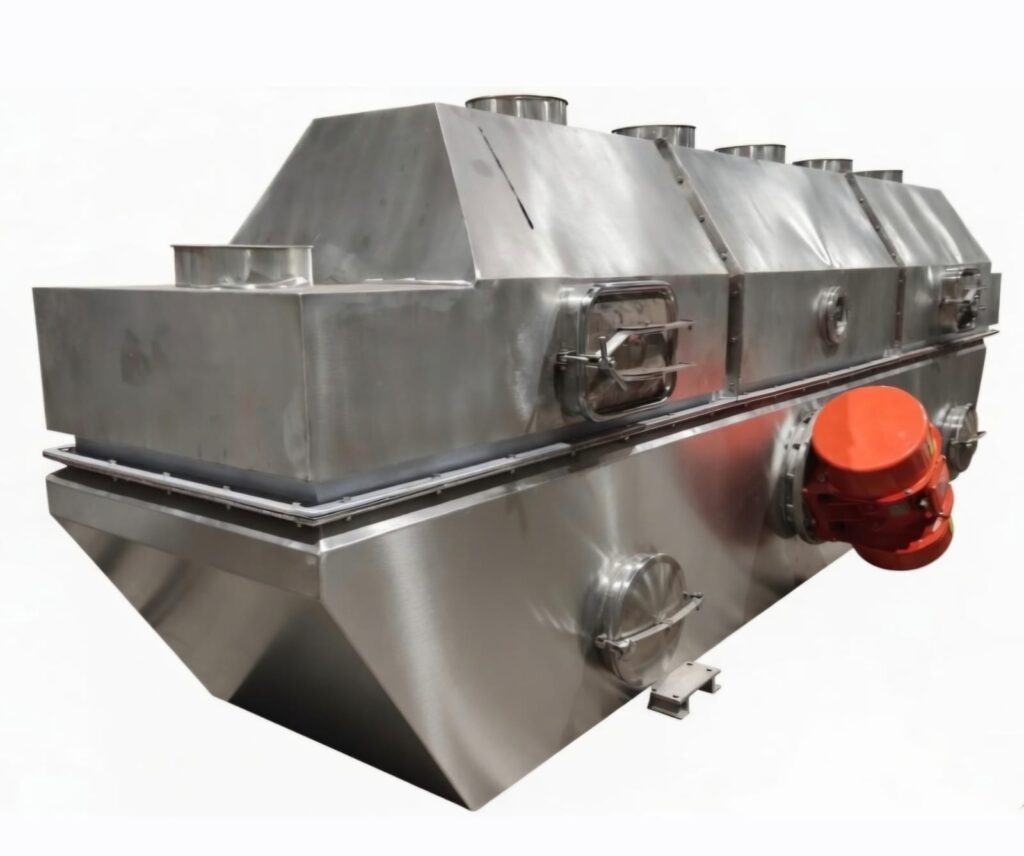
Microwave Dryer vs Fluidised Bed Dryer
Fluidised bed drying is particularly relevant for suitable particles, granules and particulate materials.
Microwave-assisted fluidised bed configurations can also be considered where combining volumetric heating with fluidization provides a process advantage.
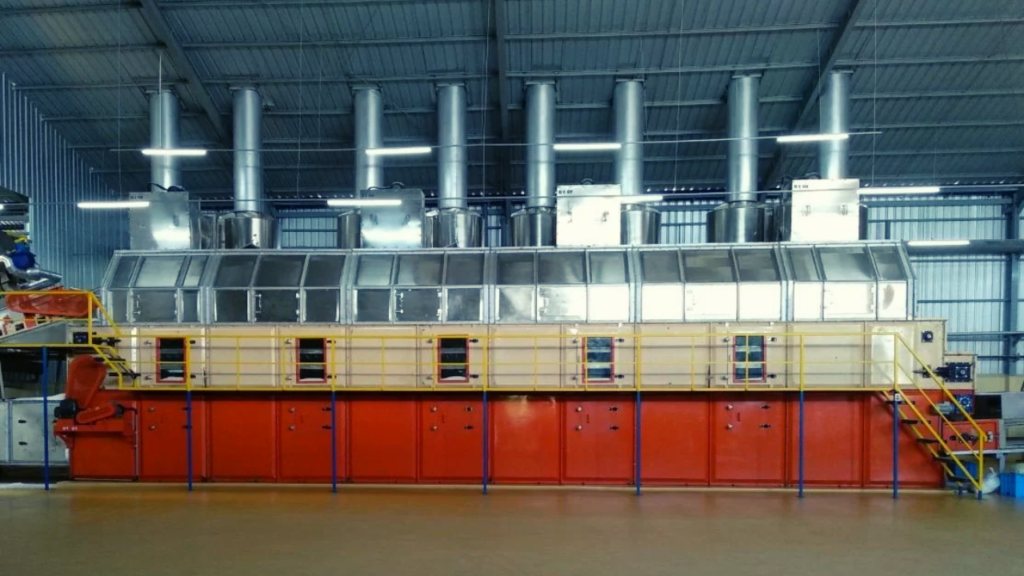
Microwave Dryer vs Belt Dryer
Belt drying provides continuous drying of suitable products through controlled hot-air zones.
Microwave-assisted belt systems can potentially combine continuous material handling with volumetric microwave heating.
Microwave Dryer vs Infrared Dryer
Infrared primarily delivers radiative surface heating, while microwave energy can penetrate suitable materials and generate volumetric heating.
A hybrid microwave-infrared system may be considered for specialized applications.
Understanding Microwave Frequency and Penetration
Microwave drying is not simply about installing a microwave generator around a product.
The electromagnetic interaction depends on the material’s dielectric properties and the operating frequency.
Industrial systems may use different microwave frequencies depending on regulatory requirements, penetration considerations, equipment design and application.
A key engineering parameter is penetration depth.
If microwave energy does not interact effectively with the required depth of material, volumetric heating may not provide the expected benefit.
As moisture content changes during drying, the dielectric behaviour of the product can also change.
Therefore:
Microwave Power + Frequency + Product Properties + Moisture Content + Geometry = Drying Behaviour
This is one reason pilot testing and process characterization are valuable before designing a large industrial system.
The Challenge of Uniform Microwave Heating
One of the biggest engineering challenges in microwave drying is uniform heating.
Uneven electromagnetic fields can create:
- Hot spots
- Cold zones
- Uneven moisture
- Product quality variation
- Local overheating
- Inconsistent final moisture
Research published in Food Engineering Reviews identifies dielectric properties, food composition, geometry and dryer design as important factors affecting microwave heating uniformity. It also discusses field-distribution strategies, hybrid systems and advanced monitoring as areas of development.
This is why a good microwave dryer design requires more than simply specifying microwave power.
The system must consider:
- Microwave field distribution
- Product loading
- Conveyor configuration
- Product thickness
- Residence time
- Airflow
- Temperature monitoring
- Moisture removal
- Microwave shielding
- Process control
How an Industrial Microwave Dryer Can Be Designed
A typical system may include:
Product Feeding
↓
Controlled Material Distribution
↓
Microwave Heating Zone
↓
Hot-Air / Drying-Air Zone
↓
Moisture Exhaust
↓
Temperature & Process Monitoring
↓
Final Moisture Control
↓
Product Discharge
The actual configuration depends on the product and production requirement.
For continuous applications, a conveyor or belt arrangement can be integrated with microwave chambers and controlled airflow.
For batch applications, a chamber-based configuration may be more suitable.
For advanced applications, microwave heating can also be combined with vacuum or other drying technologies.
Microwave Dryer Design Parameters
Before designing or selecting an industrial microwave drying system, GTI recommends evaluating:
Product Information
- Product name
- Physical form
- Bulk density
- Particle size
- Product thickness
- Dielectric characteristics where available
Moisture Information
- Initial moisture
- Target final moisture
- Moisture distribution
- Free and bound moisture considerations
Production Information
- Feed rate
- Required output
- Operating hours
- Batch or continuous operation
Thermal Information
- Maximum product temperature
- Heat sensitivity
- Required drying profile
Process Information
- Residence time
- Airflow requirement
- Exhaust moisture load
- Heating source
- Downstream process
Quality Information
- Colour
- Aroma
- Texture
- Nutrient retention
- Rehydration
- Active ingredient stability
These parameters help determine whether microwave, hybrid microwave-hot air or another drying technology is technically and economically suitable.
Can Microwave Drying Reduce Energy Consumption?
Potentially—but this should never be presented as a universal guarantee.
Microwave heating can directly deposit energy within suitable materials, potentially reducing heating losses associated with some conventional configurations.
However, total plant energy consumption depends on:
- Microwave generator efficiency
- Product moisture load
- Drying time
- Airflow
- Exhaust losses
- Insulation
- Heating system
- Product loading
- Microwave power
- Process control
- Heat recovery
- Final moisture requirement
Therefore, energy performance should be evaluated at the complete-system level, not simply by comparing microwave power with heater power.
Microwave Drying for Heat-Sensitive Products
Heat sensitivity is one of the most interesting reasons to investigate microwave-assisted drying.
But there is an important distinction:
Microwave drying is not automatically a low-temperature process.
Microwave energy can create rapid heating, and excessive power or poor field distribution can cause local overheating.
For heat-sensitive materials, the engineering objective should therefore be:
Rapid Moisture Removal + Controlled Product Temperature + Uniform Heating
rather than simply “maximum microwave power.”
This makes process control and pilot testing especially important.
Why Pilot Testing Matters
Microwave drying is highly product-dependent.
Two products with similar moisture content may behave very differently under microwave energy because their composition, geometry and dielectric properties differ.
A pilot study can help determine:
- Microwave absorption behaviour
- Suitable power density
- Drying rate
- Temperature profile
- Residence time
- Moisture uniformity
- Product quality
- Energy consumption
- Hybrid drying requirements
For this reason, GTI Dryers recommends evaluating the actual product before finalizing an industrial microwave drying system.
When Should You Consider a Microwave Dryer?
A microwave drying system may be worth evaluating when:
✓ Drying time is a major process limitation
✓ Internal moisture movement is limiting conventional drying
✓ The product interacts effectively with microwave energy
✓ Product quality may benefit from shorter thermal exposure
✓ A hybrid microwave + hot-air process is technically suitable
✓ Continuous or controlled processing is required
But conventional or alternative drying may remain preferable when:
✗ Microwave absorption is poor
✗ Uniformity cannot be achieved economically
✗ Conventional drying already meets the required target
✗ Product quality is negatively affected
✗ Scale-up presents unacceptable technical or economic challenges
This balanced decision-making approach helps prevent unnecessary investment in technology that does not provide a meaningful process advantage.
GTI Dryers: Application-Focused Industrial Drying Solutions
Genex Tech Industries / GTI Dryers provides industrial drying and dehydration solutions for food, pharmaceutical, chemical and process industries.
The company’s broader drying portfolio includes:
- Band / Belt Dryer
- Mesh Belt Dryer
- Flash Dryer
- Spray Dryer
- Vibratory Fluidised Bed Dryer
- Rotary Drum Dryer
- Paddle Dryer
- Refractance Window Dryer
- Heat Pump Dryer
- Customized Drying Systems
Microwave drying can be evaluated alongside these technologies when the product and process make it technically appropriate.
The objective is not to promote one drying technology for every application.
The objective is to identify the most suitable drying approach for the product, capacity, moisture requirement, quality target and operating conditions.
Why Choose GTI for a Customized Drying Evaluation?
A drying system should be considered as part of the complete process rather than as an isolated machine.
GTI’s application approach considers:
Material → Moisture → Capacity → Heat Sensitivity → Drying Method → Energy Source → Product Quality → Process Integration
This can help manufacturers compare microwave drying with conventional and hybrid alternatives before making a capital investment.
For specialized microwave applications, laboratory or pilot-scale testing can also help establish whether the technology provides sufficient technical and commercial benefit.
Microwave Industrial Dryer Manufacturer in India for Global Applications
As food, pharmaceutical, chemical, biomass and specialty-material industries search for faster and more controlled processing technologies, microwave-assisted drying offers an interesting area for industrial development.
However, its greatest value is not that it is simply “faster.”
Its value lies in where volumetric heating can solve a specific drying problem that conventional technology cannot address as efficiently or consistently.
That is the engineering question GTI Dryers aims to answer.
Looking for an Industrial Microwave Dryer?
If you are evaluating a microwave industrial dryer, microwave food dryer, microwave-assisted hot-air dryer, biomass dryer, pharmaceutical drying system or customized hybrid drying solution, GTI Dryers can assess your application.
Share:
Product + Initial Moisture + Final Moisture + Capacity + Product Form + Heat Sensitivity + Heating Requirements
with the GTI engineering team to determine whether microwave, hybrid microwave-hot air or another drying technology is appropriate.
GTI Dryers — Engineered Drying Solutions from India for Global Industries.
Frequently Asked Questions
What is an industrial microwave dryer?
An industrial microwave dryer uses electromagnetic energy to generate volumetric heating within suitable materials and assist moisture removal.
How does microwave drying differ from hot-air drying?
Hot-air drying primarily transfers heat from the surrounding air toward the product surface and then inward. Microwave heating can generate heat volumetrically within suitable materials, potentially accelerating internal heating and moisture movement.
Is microwave drying better than conventional drying?
Not universally. Microwave drying can provide advantages for selected materials and process conditions, but heating uniformity, scale-up, energy economics, product properties and equipment design must be evaluated.
What products can be dried using microwave technology?
Potential applications include selected foods, herbs, botanical materials, biomass, pharmaceutical or nutraceutical materials and specialty chemicals. Suitability depends on the material’s dielectric properties and process requirements.
What is microwave-assisted hot-air drying?
It is a hybrid drying method that combines microwave volumetric heating with convective hot-air drying. The microwave component can support internal heating while hot air removes moisture from the product and surrounding drying zone.
Can microwave drying be used for herbs?
It can be investigated for suitable herbs and botanical materials. Because herbs can contain sensitive volatile and functional compounds, product-specific testing and controlled processing are important.
Can microwave dryers be used for biomass?
Selected biomass materials can be evaluated for microwave-assisted drying. Moisture content, particle size, composition, dielectric behaviour, throughput and downstream requirements need to be considered.
Can microwave drying be used in pharmaceutical applications?
Potentially, for selected pharmaceutical, nutraceutical and related materials. Pharmaceutical applications require appropriate consideration of product stability, uniformity, containment, cleaning, validation and applicable GMP requirements.
Does microwave drying always reduce energy consumption?
No. Energy performance is application- and system-dependent. Generator efficiency, moisture load, airflow, exhaust losses, insulation, operating conditions and process integration all influence total energy consumption.
Why is pilot testing important for microwave drying?
Microwave absorption and heating behaviour vary significantly between materials. Pilot testing can help establish suitable power, residence time, temperature profile, moisture uniformity, product quality and energy requirements before industrial-scale implementation.
Can GTI Dryers provide customized microwave drying solutions?
GTI Dryers can evaluate microwave-assisted and hybrid drying concepts according to the application. The final technology and configuration should be established from product testing and process requirements.
Looking for an Industrial Microwave Dryer?
If you are evaluating a microwave industrial dryer, microwave food dryer, microwave-assisted hot-air dryer, biomass dryer, pharmaceutical drying system or customized hybrid drying solution, GTI Dryers can assess your application.
Share:
Product + Initial Moisture + Final Moisture + Capacity + Product Form + Heat Sensitivity + Heating Requirements
with the GTI engineering team to determine whether microwave, hybrid microwave-hot air or another drying technology is appropriate.
GTI Dryers — Engineered Drying Solutions from India for Global Industries.