
What Is a Vacuum Belt Dryer?
A Vacuum Belt Dryer (VBD) is a continuous drying system designed to remove moisture or volatile components from liquid, concentrated, paste-like or suitable particulate materials under controlled vacuum conditions.
The product is introduced into an enclosed vacuum chamber and distributed over moving belts or conveyor surfaces. Heated zones provide controlled indirect heat while the reduced pressure facilitates evaporation at conditions that can be gentler than conventional atmospheric hot-air drying.
The dried material is then cooled and discharged continuously or through an automated collection arrangement, depending on the system design.
This makes vacuum belt drying particularly relevant to products where manufacturers need to balance:
- Low-temperature processing
- Product quality
- Moisture reduction
- Aroma retention
- Active-ingredient protection
- Continuous production
- Controlled residence time
- Reduced oxidation
- Automated feeding and discharge
- Hygienic processing
Vacuum belt dryers are commercially used for products such as herbal extracts, fruit and vegetable concentrates, pharmaceutical concentrates, proteins, malt extracts and other heat-sensitive materials.
Why Are Manufacturers Choosing Vacuum Belt Drying?
Many conventional dryers create a difficult trade-off.
A manufacturer may need to remove a large quantity of water but cannot expose the product to excessive thermal stress.
This is particularly important for:
- Herbal extracts
- Botanical concentrates
- Nutraceutical ingredients
- Pharmaceutical formulations
- Natural colors
- Flavour compounds
- Fruit concentrates
- Vegetable concentrates
- Specialty food ingredients
- Heat-sensitive chemical products
For these materials, the drying process must consider more than evaporation capacity.
The real question is:
How can the required moisture be removed while maintaining the product characteristics required by the customer or downstream process?
Vacuum belt drying addresses this challenge through a combination of:
Vacuum + controlled heating + thin product layers + continuous movement + staged drying + controlled residence time
The exact operating conditions must be established from the actual product and process data.
How Does a Vacuum Belt Dryer Work?
A typical vacuum belt drying process follows:
Concentrated Feed → Feeding System → Uniform Spreading → Vacuum Drying Zones → Intermediate Moisture Removal → Final Drying → Cooling → Scraping / Discharge → Powder Collection
1. Feed Preparation
The feed may be:
- Liquid concentrate
- Thick concentrate
- Paste
- Slurry
- Herbal extract
- Fruit extract
- Pharmaceutical concentrate
- Suitable powder or granule
Feed concentration is important.
In many applications, concentrating the product before the vacuum belt dryer can reduce the evaporation load and improve overall process economics.
2. Controlled Feeding
The material must be distributed consistently over the drying surface.
An unsuitable feeding system can create:
- Uneven layer thickness
- Wet zones
- Over-drying
- Variable residence time
- Product buildup
Therefore, the feeding arrangement should be selected according to feed viscosity, solids content, stickiness and rheology.
3. Vacuum Environment
The drying chamber operates under controlled vacuum.
Reducing the pressure lowers the boiling point of water and can facilitate evaporation at lower product temperatures than would generally be required at atmospheric pressure.
This is particularly useful for temperature-sensitive products.
Vacuum also reduces the presence of oxygen in the drying environment, which can be beneficial for oxidation-sensitive materials when the complete system is appropriately designed.
4. Multi-Zone Heating
A vacuum belt dryer may contain several heating zones.
Each zone can be configured around the changing condition of the product during drying.
A typical process may progress through:
Initial Evaporation → Intermediate Drying → Final Drying → Cooling
The actual number of zones, temperature profile, belt speed and drying time depend on the product.
5. Continuous Product Movement
The product travels through the vacuum chamber on moving belts.
This allows the drying process to be continuous rather than relying on tray loading and unloading.
Belt speed can influence:
- Residence time
- Final moisture
- Product thickness
- Drying rate
- Production capacity
6. Final Drying and Cooling
Near the end of the dryer, the product reaches the required moisture level.
A cooling stage can then reduce product temperature before discharge.
Cooling can be important when the final powder needs to be:
- Packed
- Milled
- Blended
- Granulated
- Stored
- Transported
Major Advantages of Vacuum Belt Dryers
1. Controlled Low-Temperature Drying
Vacuum operation can allow moisture removal at lower pressure and potentially lower product temperatures than atmospheric drying.
This is valuable for temperature-sensitive products.
2. Continuous Operation
Unlike conventional vacuum tray drying, vacuum belt systems can be engineered for continuous feeding and discharge.
This can support:
- Larger production volumes
- Reduced manual handling
- Consistent residence time
- Automated process control
- Better integration with upstream and downstream equipment
3. Reduced Oxygen Exposure
The enclosed vacuum environment can reduce exposure to atmospheric oxygen.
This can be beneficial for selected products susceptible to oxidation.
However, the actual oxygen level depends on vacuum performance, leakage, inert-gas arrangements and overall system design.
4. Suitable for Sticky Products
Some concentrated extracts become sticky or highly viscous during drying.
Vacuum belt systems can be designed with appropriate feeding, spreading and product-discharge mechanisms to handle such materials.
This is particularly relevant to botanical and food extracts.
5. Better Control of Product Residence Time
The combination of belt speed, layer thickness, heating zones and vacuum conditions allows the drying cycle to be engineered around the product.
6. Automated Processing
A modern system can integrate:
- PLC control
- Temperature monitoring
- Vacuum monitoring
- Belt-speed control
- Feed-rate control
- Automatic discharge
- CIP systems
- Alarm management
- Data logging
This can reduce manual intervention and improve process repeatability.
Vacuum Belt Dryer Applications
Herbal extracts are one of the strongest application areas for vacuum belt drying.
Examples include:
- Botanical extracts
- Ayurvedic extracts
- Plant concentrates
- Herbal formulations
- Medicinal plant extracts
- Functional botanical ingredients
Many herbal products contain heat-sensitive compounds, volatile components, pigments or active ingredients whose quality can be affected by aggressive drying.
A vacuum belt system can therefore be evaluated where gentle continuous drying is required.
GTI already provides industrial herbal-extract drying systems for herbal, nutraceutical, pharmaceutical and food applications.
2. Nutraceutical Drying
Nutraceutical manufacturers may need to process:
- Botanical concentrates
- Plant-based ingredients
- Functional food ingredients
- Protein concentrates
- Natural extracts
- Nutritional formulations
The drying objective is often not simply “make it dry.”
The manufacturer may also need to maintain:
- Active ingredients
- Color
- Aroma
- Solubility
- Functional properties
- Final moisture
- Reconstitution behaviour
The dryer should therefore be selected according to the complete product specification.
Potential pharmaceutical applications include:
- Pharmaceutical concentrates
- Herbal pharmaceutical products
- Selected APIs/intermediates
- Fermentation-derived materials
- Heat-sensitive formulations
- Pharmaceutical ingredients
Pharmaceutical processing may additionally require:
- Hygienic design
- Product-contact material selection
- Controlled cleaning
- Containment
- Validation documentation
- Batch traceability
- Controlled moisture
- Solvent management
GTI’s pharmaceutical drying portfolio already covers API, herbal extract, powder and granule drying, alongside vacuum, belt, fluid-bed and spray technologies.
Vacuum belt drying can be evaluated for:
- Fruit concentrates
- Vegetable concentrates
- Fruit extracts
- Vegetable extracts
- Natural ingredients
- Plant-based concentrates
This can be particularly relevant when the manufacturer wants to convert a concentrated liquid into a stable dried ingredient while controlling thermal exposure.
5. Food Ingredients
Potential applications include:
- Malt extracts
- Protein ingredients
- Food concentrates
- Instant beverage ingredients
- Flavor ingredients
- Natural food extracts
- Specialty food ingredients
The suitability depends on feed viscosity, solids content, stickiness, desired powder properties and downstream requirements.
6. Fine & Specialty Chemicals
Selected chemical applications can also be evaluated when vacuum and controlled thermal processing are important.
Possible materials include:
- Specialty chemical concentrates
- Fine chemical products
- Heat-sensitive intermediates
- Selected polymers
- Chemical formulations
- Solvent-containing materials
For chemical applications, the system must consider chemical compatibility, solvent properties, hazardous-area requirements and vapour handling.
Vacuum Belt Dryer vs Freeze Dryer
This is one of the most important questions for a buyer.
Both technologies can be considered for heat-sensitive products, but their operating principles are different.
| Parameter | Vacuum Belt Dryer | Freeze Dryer |
| Main principle | Vacuum + controlled heated belt drying | Freezing + sublimation |
| Product state | Concentrate/paste/liquid or suitable feed | Frozen product |
| Continuous operation | Possible | Generally more batch-oriented, although continuous systems exist |
| Drying approach | Evaporative | Sublimation |
| Process complexity | High but generally simpler than freeze drying | High |
| Typical use | Extracts, concentrates, food ingredients, pharma/nutraceutical products | Highly sensitive biological/pharmaceutical products |
| Product structure | Depends strongly on feed and process | Often highly porous |
| Capital intensity | Application-dependent | Often high |
| Best selection basis | Product and process requirements | Product stability and lyophilization requirements |
The important point is that vacuum belt drying should not be marketed as universally replacing freeze drying.
Freeze drying may be required where preservation of a specific product structure or biological stability demands lyophilization.
Vacuum belt drying becomes attractive where continuous low-temperature evaporative drying can meet the product specification.
Vacuum Belt Dryer vs Spray Dryer
Spray drying is particularly effective when the feed is a pumpable liquid, solution, emulsion or suitable slurry and the desired result is direct powder formation.
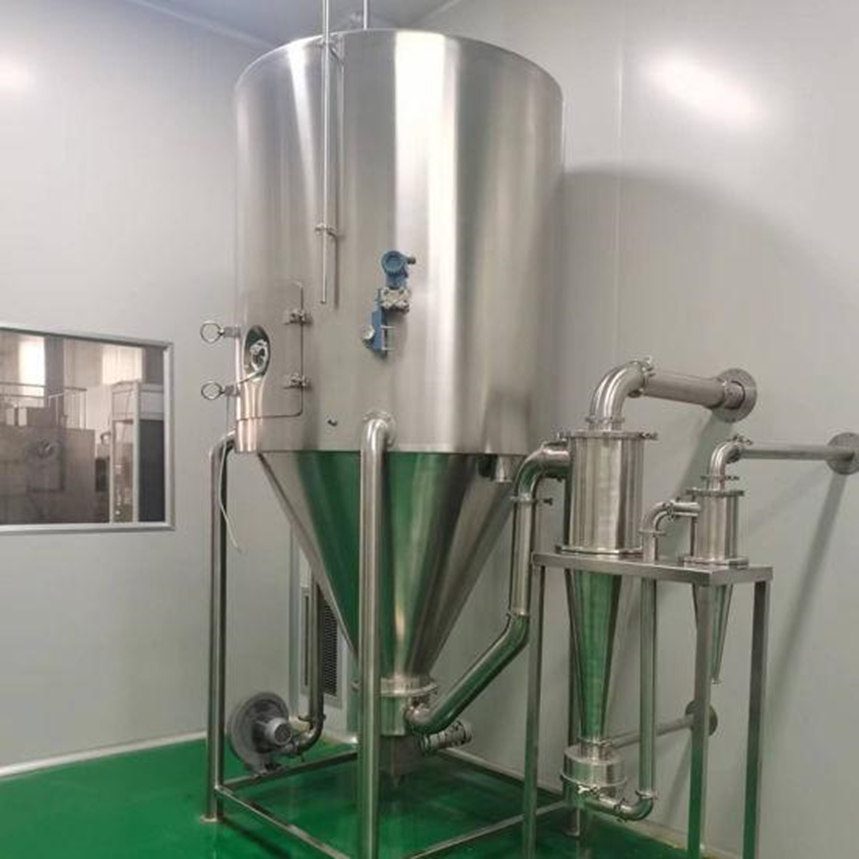
Vacuum belt drying may be considered when:
- Feed is highly viscous
- Feed becomes sticky during drying
- Heat sensitivity is significant
- Low oxygen exposure is desirable
- Continuous vacuum drying is required
- Conventional spray drying creates product-quality challenges
Spray drying can offer rapid liquid-to-powder conversion and strong particle-engineering capabilities.
Vacuum belt drying offers a fundamentally different drying environment.
The choice should therefore be based on:
Feed properties + thermal sensitivity + desired particle properties + final moisture + throughput + energy + product quality
Vacuum Belt Dryer vs Refractance Window Dryer
Refractance Window Drying (RWD) is a thin-film drying technology particularly associated with heat-sensitive food and biological materials.
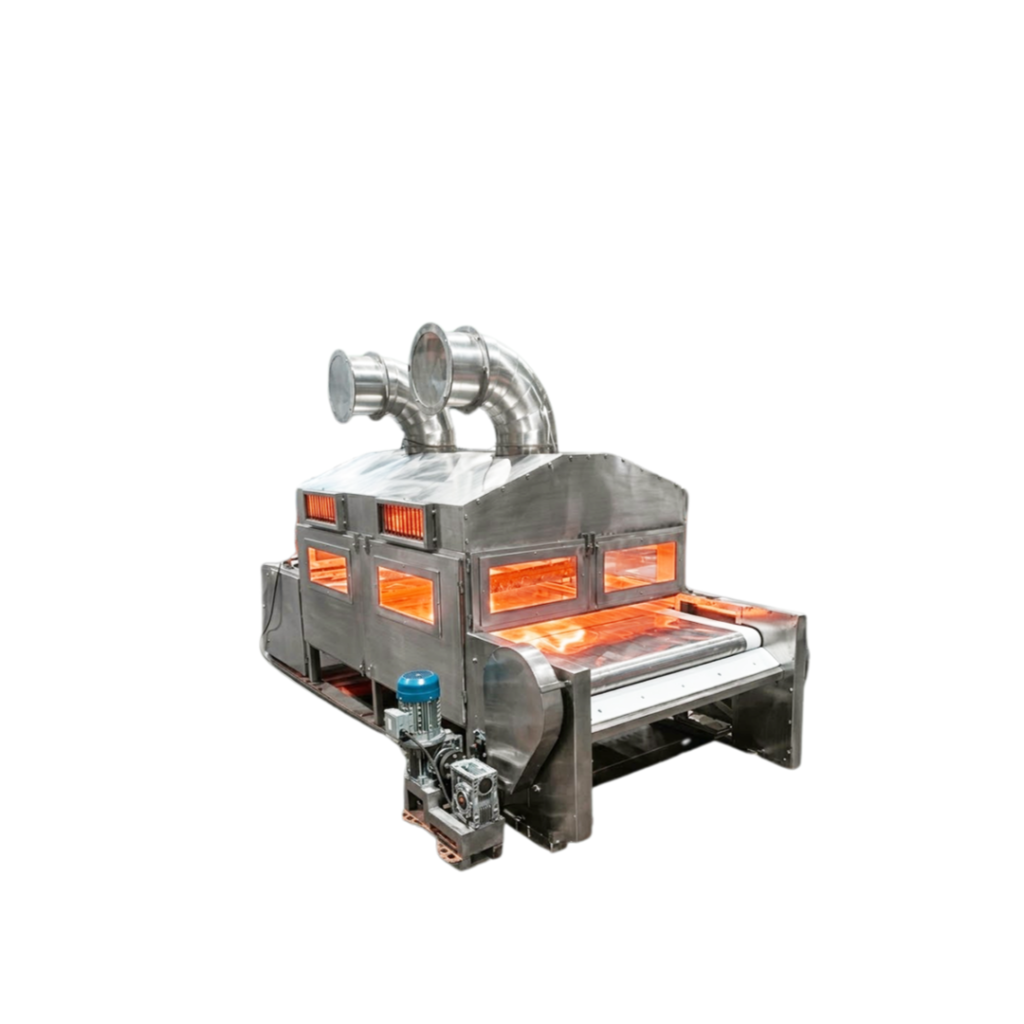
RWD transfers heat through a transparent polymer film from circulating hot water, with heat transfer involving conduction, radiation and convection. Recent reviews continue to identify RWD as a promising low-temperature technology for food products and heat-sensitive materials.
A simplified comparison:
| Parameter | Vacuum Belt Dryer | Refractance Window Dryer |
| Operating environment | Vacuum | Usually atmospheric |
| Product feed | Liquid, paste, concentrate, selected particulate feeds | Primarily liquid/semi-liquid thin layers |
| Heating | Controlled heated zones | Hot-water-supported film drying |
| Oxygen exposure | Low under vacuum | More dependent on surrounding atmosphere |
| Continuous operation | Yes | Yes |
| Strong application area | Extracts, pharmaceutical/food concentrates | Heat-sensitive foods, juices, purees, extracts |
| Main selection factor | Vacuum + controlled evaporation | Thin-film low-temperature drying |
RWD has demonstrated strong potential for quality retention in heat-sensitive foods, but the appropriate technology depends on the feed and production requirement.
Which Dryer Is Right for Your Product?
A useful decision framework is:
If your feed is a liquid or slurry and you want direct powder production:
Consider Spray Dryer
If your product is a concentrated liquid/paste and heat sensitivity is important:
Evaluate Vacuum Belt Dryer
If your product requires sublimation and very high preservation of specific product characteristics:
Evaluate Freeze Dryer
If your product is a heat-sensitive puree or thin liquid film and food quality is the main concern:
Evaluate Refractance Window Dryer
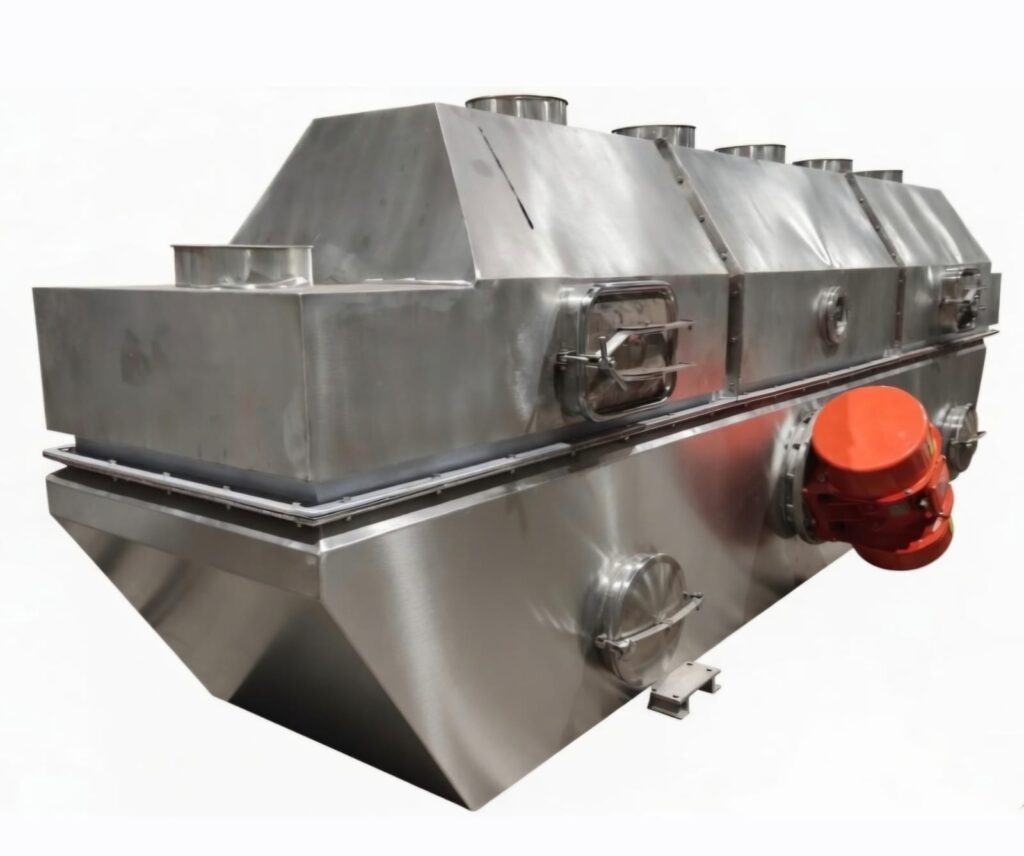
If your material is already a free-flowing powder or granule:
Evaluate Fluid Bed / Vibratory Fluid Bed Dryer
If your material is a wet cake, paste or difficult-to-handle solid:
Evaluate Vacuum Paddle / Other Contact Drying Technologies
The correct answer should come from the material and process data—not from the dryer name alone.
Vacuum Belt Dryer Design Parameters
Before specifying a vacuum belt dryer, the manufacturer should collect detailed process information.
Feed Characteristics
- Product name
- Feed form
- Solids concentration
- Initial moisture
- Feed temperature
- Viscosity
- Density
- Stickiness
- Particle characteristics
- pH
- Thermal sensitivity
Final Product
- Target moisture
- Water activity
- Residual solvent
- Particle size
- Bulk density
- Solubility
- Rehydration requirement
- Color specification
- Aroma/flavour requirement
Production Requirements
- Feed rate
- Water evaporation load
- Operating hours
- Required throughput
- Batch/continuous requirement
- Production days per year
Thermal Requirements
- Maximum product temperature
- Heating medium
- Available steam pressure
- Hot-water availability
- Thermal-oil availability
- Cooling requirement
Vacuum Requirements
- Required operating pressure
- Condenser requirement
- Vapour load
- Vacuum pump selection
- Inert-gas requirement
Why Feed Concentration Matters
A common mistake is to specify the vacuum belt dryer based only on the final production capacity.
The amount of water entering the dryer is equally important.
For example:
Wet Feed → Concentration → Vacuum Belt Drying → Final Powder
If upstream concentration increases the solids content, the evaporation duty of the dryer may decrease.
Therefore, a proper engineering calculation should consider:
Feed rate + Initial solids + Final solids + Evaporation load + Drying time
This is much more useful than selecting equipment based only on “tons per day.”
Energy Efficiency of Vacuum Belt Drying
Drying is an energy-intensive operation, so energy should be evaluated at the system level.
Important factors include:
- Initial moisture
- Final moisture
- Feed solids
- Product temperature
- Vacuum level
- Heating-medium temperature
- Heat-transfer area
- Insulation
- Condenser performance
- Vapour load
- Belt loading
- Residence time
- Heat recovery
- Feed pre-concentration
A vacuum dryer is not automatically energy-efficient simply because it operates under vacuum.
The complete thermal and vapour-handling system determines actual energy performance.
GTI’s industrial drying approach similarly emphasizes product characteristics, moisture, capacity, energy source and process requirements when selecting drying systems.
Product Quality Problems and How to Troubleshoot Them
Problem: Product is too dark
Possible causes:
- Excessive product temperature
- Excessive residence time
- Localized overheating
- Incorrect zone profile
Potential solutions:
- Review temperature profile
- Reduce thermal exposure
- Adjust belt speed
- Improve product distribution
- Evaluate feed concentration
Problem: Product remains sticky
Possible causes:
- Product passes through a sticky phase
- Feed layer is too thick
- Drying rate is insufficient
- Product formulation has low glass-transition behaviour
Potential solutions:
- Review spreading thickness
- Adjust heating zones
- Modify belt speed
- Evaluate feed concentration
- Review final drying/cooling conditions
Problem: Final moisture varies
Possible causes:
- Uneven feed distribution
- Variable feed solids
- Inconsistent belt loading
- Vacuum instability
- Incorrect residence time
Potential solutions:
- Improve feed control
- Stabilize vacuum
- Monitor feed solids
- Optimize belt speed
- Introduce zone-based control
Problem: Powder sticks to the belt
Possible causes:
- Incorrect product temperature
- Product entering a sticky phase
- Poor release conditions
- Excessive layer thickness
Potential solutions:
- Evaluate belt material
- Modify heating profile
- Optimize feed layer
- Review discharge system
Vacuum Belt Dryer for Pharmaceutical & GMP Applications
Pharmaceutical applications require a different level of engineering than ordinary industrial drying.
The project may need:
- SS316/316L product-contact construction
- Hygienic design
- Controlled access
- CIP
- Cleanable product-contact surfaces
- Containment
- Automated process control
- Temperature monitoring
- Vacuum monitoring
- Documentation
- Validation support
The final requirements depend on the product, facility and applicable regulatory framework.
A dryer should therefore be specified as part of the complete pharmaceutical process, not as an isolated machine.
Vacuum Belt Dryer for Herbal Extracts
Herbal-extract drying deserves its own engineering approach.
The feed may contain:
- Water
- Plant solids
- Sugars
- Proteins
- Polyphenols
- Volatile compounds
- Natural pigments
- Thermolabile components
During drying, manufacturers may be concerned about:
- Color loss
- Aroma loss
- Active-compound degradation
- Stickiness
- Hygroscopicity
- Poor flowability
- Powder recovery
A vacuum belt dryer can be evaluated where controlled low-temperature continuous drying is required.
The exact drying profile should be established through product testing because different botanical extracts can behave very differently.
Vacuum Belt Dryer for Nutraceuticals
For nutraceutical manufacturers, the final product may need to satisfy both drying and formulation requirements.
Important quality parameters can include:
- Moisture
- Water activity
- Solubility
- Flowability
- Bulk density
- Active-ingredient retention
- Color
- Aroma
- Particle size
The dryer therefore needs to be designed around the finished-product specification, not just the evaporation capacity.
Vacuum Belt Dryer for Food Extracts
Food-extract manufacturers may be looking for:
- Good flavour retention
- Color preservation
- Low thermal exposure
- Continuous processing
- Easy cleaning
- Consistent powder quality
- Reduced oxidation
- Controlled moisture
Vacuum belt drying can be evaluated for suitable food concentrates and extracts.
Commercial vacuum belt systems are already used for products such as herbal extracts, fruit and vegetable concentrates, malt extracts, proteins and pharmaceutical concentrates.
Safety Considerations
Vacuum belt drying can involve water vapour, organic solvents, combustible powders or oxygen-sensitive materials.
Depending on the application, the system may require:
- Appropriate pressure/vacuum protection
- Solvent-compatible construction
- Condensation
- Vapour recovery
- Inert-gas purging
- Explosion protection
- Hazardous-area compliant components
- Dust-control systems
- Proper grounding
- Safety interlocks
For solvent-containing pharmaceutical or chemical products, the safety design must be developed from the actual solvent and plant classification.
Pilot Testing: Why It Matters
A laboratory or pilot trial can significantly reduce the risk of selecting the wrong dryer configuration.
Testing can establish:
- Drying rate
- Product temperature
- Required vacuum
- Feed layer thickness
- Belt speed
- Drying time
- Final moisture
- Powder characteristics
- Stickiness
- Product recovery
- Energy requirement
This is particularly important for:
New products + high-value extracts + pharmaceutical materials + nutraceutical formulations + difficult-to-dry concentrates
The goal is not simply to prove that the material can be dried.
The goal is to establish how it should be dried at production scale.
How GTI Dryers Approaches Vacuum Belt Dryer Projects
GTI Dryers develops application-specific industrial drying solutions across food, pharmaceutical, nutraceutical, chemical and process industries.
Its existing pharmaceutical and herbal drying portfolio includes vacuum, belt, fluid-bed, spray and other technologies, allowing the drying method to be evaluated according to the material rather than forcing every application into one dryer type.
For a vacuum belt drying project, the engineering evaluation should cover:
Feed → Concentration → Moisture Load → Product Temperature → Vacuum → Heating → Residence Time → Vapour Removal → Cooling → Discharge → Final Product
This approach helps determine whether vacuum belt drying is actually appropriate or whether another GTI drying technology would provide a better process fit.
Engineered in India. Designed for Global Industrial Applications.
GTI can target application-specific drying projects across:
- India
- Middle East
- Southeast Asia
- Africa
- Europe
- North America
- Latin America
International projects may require adaptation for local utilities, electrical standards, safety requirements, documentation and installation conditions.
What Should You Send to a Vacuum Belt Dryer Manufacturer?
A quotation request should contain more than:
“Please send price for 500 kg/hr vacuum belt dryer.”
Instead, provide:
Product
- Product name
- Product type
- Industry
- Feed form
Feed
- Feed rate
- Initial moisture
- Initial solids
- Feed temperature
- Viscosity
- Density
Final Product
- Final moisture
- Required powder form
- Particle size
- Bulk density
- Solubility
- Water activity
Thermal
- Maximum allowable product temperature
- Heating medium
- Available steam/hot water/thermal oil
Vacuum
- Required operating pressure if known
- Solvent present
- Vapour load
- Condenser requirement
Production
- Hours/day
- Days/year
- Required evaporation capacity
- Automation requirement
Installation
- Country
- Plant location
- Available space
- Utility availability
- Hazardous-area requirements
This information allows the manufacturer to perform a meaningful process evaluation.
Vacuum Belt Dryer RFQ Template
Product:
Industry:
Feed Type: Liquid / Concentrate / Paste / Powder
Feed Rate:
Initial Moisture:
Initial Solids:
Final Moisture:
Product Temperature Limit:
Feed Temperature:
Viscosity:
Density:
Solvent Present: Yes / No
Solvent Type:
Required Vacuum:
Heating Medium:
Available Utility:
Required Evaporation:
Operating Hours:
Required Automation:
CIP Required: Yes / No
Installation Country:
Installation Location:
Frequently Asked Questions
What is a vacuum belt dryer?
A vacuum belt dryer is a continuous drying system that removes moisture or volatile components from suitable liquids, pastes, concentrates or particulate materials under controlled vacuum conditions.
What products are suitable for vacuum belt drying?
Potential applications include herbal extracts, nutraceutical concentrates, fruit and vegetable concentrates, pharmaceutical concentrates, proteins, malt extracts and selected heat-sensitive food or chemical products.
Is vacuum belt drying suitable for herbal extracts?
Yes, it can be evaluated for herbal extracts, particularly when continuous low-temperature drying and controlled oxygen exposure are important.
Is a vacuum belt dryer better than a spray dryer?
Neither is universally better. Spray drying is highly effective for suitable liquid feeds and direct powder production, while vacuum belt drying can be attractive for viscous, sticky or heat-sensitive concentrates where controlled vacuum drying is required.
Is a vacuum belt dryer the same as a vacuum band dryer?
The terms are often used interchangeably in industrial drying markets. The actual equipment configuration should be checked from the manufacturer’s design and process specification.
Can vacuum belt dryers operate continuously?
Yes. Continuous feeding and discharge are key characteristics of industrial vacuum belt drying systems.
Can vacuum belt dryers be used for pharmaceutical products?
They can be evaluated for suitable pharmaceutical products. Pharmaceutical projects may require hygienic construction, containment, cleaning, automation, documentation and validation-related requirements.
Can a vacuum belt dryer dry fruit extracts?
Yes, suitable fruit concentrates and extracts can be considered. Feed viscosity, solids concentration, thermal sensitivity and desired final powder characteristics need to be evaluated.
Can vacuum belt drying replace freeze drying?
Not universally. Freeze drying and vacuum belt drying use different mechanisms and can produce different product structures. The choice should be based on product stability, quality requirements, throughput, process economics and final-product specifications.
How do I select a vacuum belt dryer?
Start with the product and process data: feed rate, solids, moisture, temperature limit, viscosity, final moisture, evaporation load, vacuum requirement, heating source and production target.
Request a Vacuum Belt Dryer Technical Evaluation from GTI Dryers
If you are searching for a Vacuum Belt Dryer Manufacturer in India for pharmaceuticals, nutraceuticals, herbal extracts, fruit concentrates or heat-sensitive food ingredients, the correct first step is a process evaluation.
Send GTI:
Product + Feed Rate + Initial Solids/Moisture + Final Moisture + Temperature Limit + Viscosity + Required Evaporation + Heating Medium + Vacuum Requirement
GTI can then evaluate the appropriate drying technology, process configuration and equipment requirements.
GTI Dryers — Engineered Drying Solutions from India for Global Industries.
Discuss your Vacuum Belt Dryer requirement with the GTI engineering team.
“GTI evaluates the product, drying duty, thermal sensitivity, vacuum requirement and final product specification to develop an application-specific drying solution.”
That makes the page more credible to engineers and procurement teams while still targeting the high-intent keyword “Vacuum Belt Dryer Manufacturer India.”