
Infrared Industrial Drying: When Direct Radiant Heating Makes Sense
Drying does not always require large quantities of hot air.
For some products, especially thin layers, slices, flakes, surface-wet materials and selected particulate products, infrared (IR) radiation can transfer thermal energy directly to the product surface.
This creates another option for industrial drying:
Product → Infrared Energy → Moisture Heating & Evaporation → Moisture Removal
Infrared can also be combined with conventional hot-air drying.
The resulting system may be:
IR + Hot Air
rather than IR being used as the only source of drying energy.
This distinction is important because the best industrial solution is often not a question of choosing “IR versus hot air.”
It may be a question of:
How much IR should be used, where should it be used, and should it be combined with another drying method?
What Is an Infrared Industrial Dryer?
An Infrared Industrial Dryer uses infrared radiation to transfer heat to the product.
Unlike conventional convective dryers, where heated air transfers much of the thermal energy to the material, IR systems use electromagnetic radiation emitted by IR sources.
The product absorbs part of that radiation according to its optical and thermal properties.
The absorbed energy increases the product temperature and promotes moisture evaporation.
This makes IR particularly interesting for:
- Thin food products
- Sliced fruits and vegetables
- Herbs
- Spices
- Agricultural products
- Surface-wet materials
- Thin layers
- Selected specialty materials
IR can also be integrated with hot-air circulation to improve moisture removal after the surface is heated.
The Important Question: Is IR Suitable for Your Product?
This is where industrial buyers often need better guidance.
Infrared is not automatically the best dryer for every product.
Its performance depends on factors such as:
- Product thickness
- Surface area
- Moisture content
- Moisture distribution
- Surface characteristics
- IR wavelength
- Radiation intensity
- Emitter-to-product distance
- Product temperature
- Belt speed
- Air velocity
- Layer thickness
- Required final moisture
Research reviews identify wavelength, radiation intensity, distance and temperature as important variables in IR drying. Excessive intensity or product temperature can cause overheating and quality deterioration.
Therefore, a professional IR dryer project should start with product characterization and drying trials, not simply with a requested machine capacity.
How Does an Infrared Dryer Work?
A typical industrial IR drying line can be represented as:
Feed Preparation → Product Distribution → IR Heating → Moisture Evaporation → Moisture Removal → Optional Hot-Air Drying → Cooling → Discharge
Step 1: Product Feeding
The product is introduced onto a suitable conveyor, belt, tray or drying surface.
Depending on the application, the feed may be:
- Sliced vegetables
- Fruit pieces
- Herbs
- Spices
- Grains
- Flakes
- Granules
- Thin food layers
- Biomass particles
- Specialty materials
Uniform feeding is important because product thickness directly affects the distance that moisture must travel before leaving the material.
Step 2: IR Radiation
IR emitters direct radiation toward the product.
The product absorbs a portion of this energy.
Unlike conventional heating, which depends primarily on heating the surrounding air first, IR can deliver energy directly to the exposed product surface.
This can provide a rapid thermal response.
Step 3: Surface Moisture Removal
The initial drying stage can be strongly influenced by surface moisture.
When the surface receives radiant energy, water near the surface can evaporate.
The generated vapour then needs to be removed from the drying chamber.
This is why IR heating and vapour removal must be designed together.
Increasing IR power without providing appropriate moisture removal can create a poor drying environment.
Why Combine Infrared with Hot Air?
One of the most commercially useful configurations is IR-assisted hot-air drying.
Instead of replacing the conventional dryer completely:
IR + Hot Air
can be used to combine rapid radiant heating with convective moisture removal.
A hybrid system may provide:
- Faster initial heating
- Better control of surface drying
- Improved moisture removal
- Greater process flexibility
- Reduced dependence on one heating mechanism
- Better control over final moisture
Research on IR-assisted food drying has reported improvements in drying rate and processing time compared with conventional drying in specific products and experimental conditions. However, the actual improvement varies substantially with product and operating conditions.
Therefore, GTI should evaluate the product rather than promise a fixed percentage reduction in energy or drying time.
Infrared Wavelengths: Why They Matter
Infrared is not one single type of radiation.
Industrial systems may use different IR wavelength regions, commonly described as:
- Near infrared (NIR)
- Mid infrared (MIR)
- Far infrared (FIR)
The interaction between radiation and the product depends on the wavelength and the optical properties of the material.
Different products absorb radiation differently.
Therefore, emitter selection should be based on the product and drying objective, rather than simply choosing an IR heater based on nominal power.
For food drying, recent research continues to investigate wavelength selection and combinations of IR with other drying technologies.
Infrared Dryer Applications
1. Herb Drying
Herbs can be difficult to dry because excessive thermal exposure can affect:
- Color
- Aroma
- Volatile compounds
- Texture
- Active components
IR drying can be evaluated for suitable herbs where controlled radiant heating and rapid drying are desirable.
Potential products include:
- Mint
- Coriander leaves
- Curry leaves
- Basil
- Parsley
- Medicinal herbs
- Botanical leaves
However, fresh herbs can be particularly sensitive, so IR intensity and product temperature must be carefully controlled.
2. Fruit Drying
Potential applications include:
- Apple
- Banana
- Mango
- Pineapple
- Papaya
- Jackfruit
- Strawberry
- Citrus products
- Fruit slices
- Fruit leather
The drying objective may include:
- Moisture reduction
- Color retention
- Texture control
- Reduced drying time
- Improved shelf stability
Product thickness is especially important because thicker pieces can develop different temperature and moisture profiles than thin slices.
3. Vegetable Drying
IR drying can be considered for:
- Carrot
- Potato
- Onion
- Garlic
- Tomato
- Pumpkin
- Mushroom
- Green vegetables
- Vegetable slices
IR and IR-assisted hot-air systems have been investigated extensively for fruits and vegetables.
However, drying conditions should be developed around the desired final product characteristics rather than simply maximizing drying rate.
4. Spice Drying
Spices are particularly interesting because drying can influence aroma and flavour.
Potential products include:
- Turmeric
- Ginger
- Garlic
- Chili
- Coriander
- Cumin
- Onion
- Black pepper
- Spice blends
- Sliced spices
Drying technology can influence volatile compounds and sensory characteristics.
For example, recent research reviewing garlic, ginger and scallion drying notes that thermal drying methods can alter volatile compounds and flavour profiles. It also reports that IR can provide different quality outcomes from conventional hot-air drying under appropriate conditions.
Therefore:
Fastest drying ≠ automatically best spice drying.
The correct target is the combination of:
Drying rate + final moisture + colour + aroma + active compounds + product stability
5. Onion & Garlic
Onion and garlic are high-value opportunities for industrial drying systems.
Typical applications include:
- Onion flakes
- Onion slices
- Onion powder
- Garlic flakes
- Garlic slices
- Garlic powder
For these products, buyers may care about:
- Colour
- Aroma
- Sulphur compounds
- Moisture
- Rehydration
- Bulk density
- Final particle characteristics
IR can be considered as a standalone or hybrid drying technology depending on the product form.
For larger industrial capacities, GTI can evaluate whether IR, hot air, belt, fluid-bed or another drying technology is the better fit.
6. Biomass & Agricultural Materials
IR can also be investigated for selected biomass and agricultural materials.
Potential materials include:
- Agricultural residues
- Thin biomass particles
- Plant materials
- Seed products
- Selected fibre materials
- Biomass-derived specialty products
However, bulk biomass is not automatically an ideal IR application.
For thick beds and high-throughput bulk materials, technologies such as:
- Rotary dryers
- Belt dryers
- Flash dryers
- Fluidized-bed dryers
may provide a more appropriate process configuration.
This is why technology selection should consider material geometry and drying mechanism, not just moisture content.
7. Specialty Materials
IR can also be considered for selected specialty materials where rapid surface heating provides a process advantage.
Examples may include:
- Thin films
- Coated materials
- Agricultural products
- Specialty food ingredients
- Selected chemical products
- Surface-moist solids
The suitability should be confirmed through testing.
Infrared Dryer vs Conventional Hot-Air Dryer
| Parameter | Infrared Dryer | Conventional Hot-Air Dryer |
| Primary heat-transfer mode | Radiation | Convection |
| Heating response | Rapid | Generally slower |
| Drying medium | Radiation, with optional air | Heated air |
| Surface heating | Strong | Indirect through air |
| Hybrid operation | Possible | Standard |
| Best suited to | Thin layers, slices, selected products | Broad range of solids |
| Product thickness sensitivity | High | Moderate to high |
| Moisture removal | Requires vapour removal | Air carries moisture away |
| Process flexibility | High when combined with air | Established and versatile |
The important takeaway:
IR is not necessarily a replacement for hot air.
In many industrial applications, the strongest configuration can be a combination of both.
Infrared Dryer vs Fluid Bed Dryer
Fluid-bed drying works by suspending suitable particles in moving air.
It is particularly useful for:
- Powders
- Granules
- Crystals
- Particles with suitable fluidization characteristics
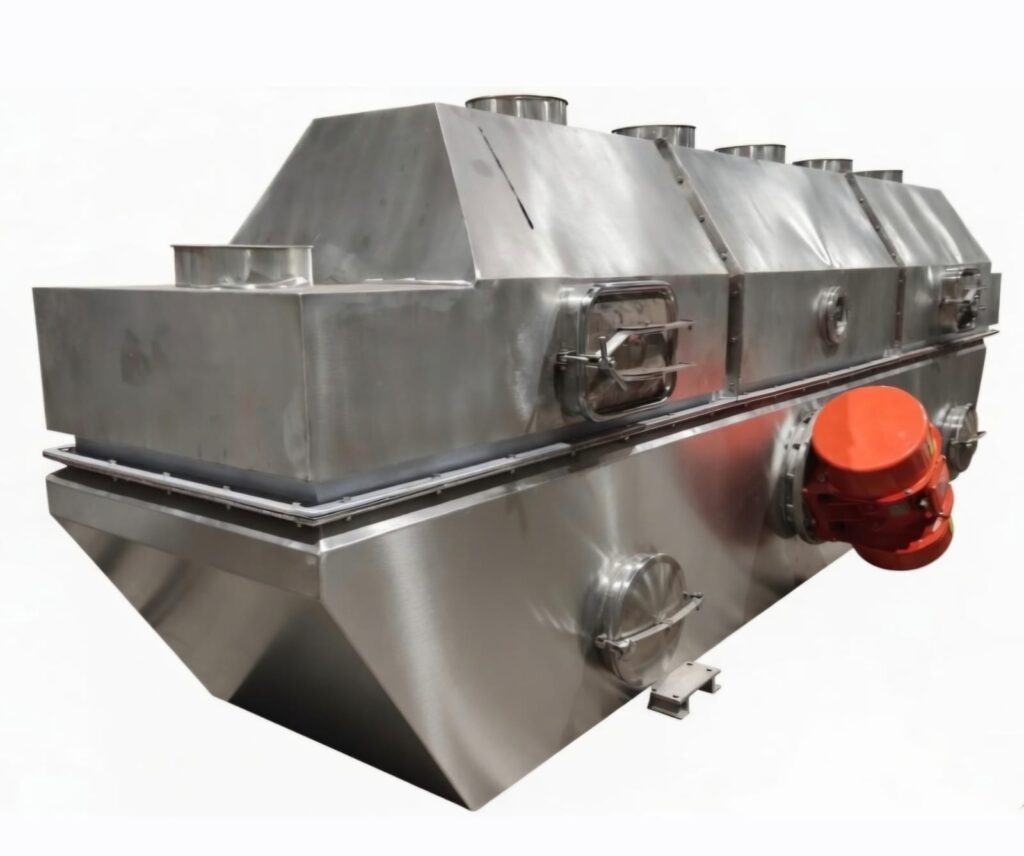
IR drying is more directly influenced by exposed surface area and radiation absorption.
Therefore:
Consider IR when:
- Product has substantial exposed surface
- Thin-layer drying is possible
- Rapid surface heating is desirable
- A hybrid system is useful
Consider fluid bed when:
- Product is free-flowing
- Particles can fluidize effectively
- Strong convective heat and mass transfer is required
Infrared Dryer vs Freeze Dryer
These technologies solve very different problems.
Freeze drying removes ice through sublimation after freezing.
Infrared drying removes moisture through thermal evaporation.
Freeze drying is generally selected when preservation of highly sensitive products and porous structure is particularly important.
IR is more attractive when:
- Continuous operation is desired
- Product can tolerate controlled thermal exposure
- Rapid drying is required
- The feed can be processed as a thin layer
IR should therefore not be marketed as a universal replacement for freeze drying.
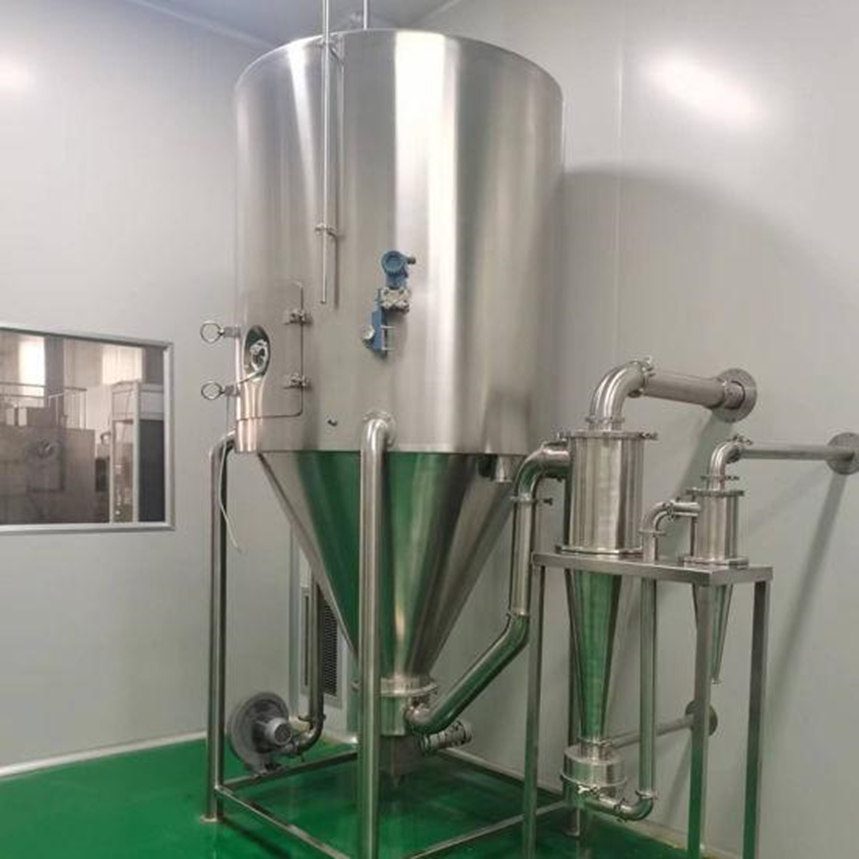
Infrared Dryer vs Spray Dryer
Spray drying converts a suitable liquid feed into powder through atomization and hot drying gas.
IR drying typically works with an exposed product surface or thin product layer.
Best evaluated for:
- Solutions
- Emulsions
- Pumpable slurries
- Direct powder production
- Particle engineering
Infrared Dryer
Best evaluated for:
- Slices
- Thin layers
- Surface-wet solids
- Selected agricultural products
- Selected specialty materials
For concentrated liquids that need powder production, spray drying may be the more natural technology.
For slices, flakes or thin layers, IR may be more relevant.
The Hybrid Dryer Approach
One of the strongest engineering opportunities is to combine technologies.
Possible configurations include:
IR + Hot Air
For rapid heating and continuous moisture removal.
IR + Vacuum
For applications requiring reduced pressure and controlled thermal conditions.
IR + Fluid Bed
For selected particulate materials where radiation can supplement convective drying.
IR + Microwave
For specialized applications requiring volumetric and surface heating.
IR + Existing Belt Dryer
IR modules can potentially be incorporated into selected conveyor/belt drying arrangements.
The correct hybrid arrangement depends on the product.
What Problems Can an Infrared Dryer Solve?
Problem: Drying time is too long
Possible cause: Conventional heat transfer is limiting the drying rate.
Potential approach: Evaluate IR-assisted heating to increase the rate of energy transfer.
Problem: Product surface dries slowly
Possible cause: Insufficient surface heat transfer.
Potential approach: Evaluate direct IR heating and optimize emitter configuration.
Problem: Product quality changes during prolonged drying
Possible cause: Long exposure to thermal conditions.
Potential approach: Investigate faster drying with controlled IR intensity and product temperature.
Problem: Conventional hot-air system uses excessive process air
Potential approach: Evaluate whether IR can provide part of the required heat duty and reduce dependence on convective heating.
Problem: Product temperature becomes too high
This is an important warning.
Increasing IR power does not automatically improve the process.
Excessive:
- Radiation intensity
- Product temperature
- Exposure time
- Emitter proximity
can cause overheating and quality deterioration.
The solution may be:
- Lower IR intensity
- Increase belt speed
- Increase emitter distance
- Add cooling
- Introduce controlled air
- Divide the process into zones
- Use intermittent IR
Infrared Dryer Design Parameters
A proper industrial design should consider at least:
Product
- Product name
- Moisture content
- Product temperature limit
- Optical properties
- Colour
- Surface characteristics
- Thickness
- Particle size
- Bulk density
Process
- Feed rate
- Initial moisture
- Final moisture
- Required residence time
- Drying temperature
- Belt speed
- Layer thickness
IR System
- IR wavelength
- Emitter type
- Radiation intensity
- Emitter-to-product distance
- Number of zones
- Zone control
- Heating capacity
Air System
- Air temperature
- Air velocity
- Relative humidity
- Airflow direction
- Exhaust capacity
Product Quality
- Colour
- Aroma
- Texture
- Rehydration
- Nutrient retention
- Active-compound retention
- Final moisture
- Water activity
Why Product Thickness Matters
This is one of the most overlooked aspects of IR drying.
A thin slice and a thick block of the same material will not behave identically.
For a thin product:
IR → Surface → Moisture removal
can occur relatively rapidly.
For a thicker product:
IR → Surface heating → Internal moisture movement → Surface evaporation
becomes increasingly important.
Therefore, IR system design must consider:
Thickness + moisture diffusion + radiation absorption + surface temperature + drying time
This is one reason pilot testing is valuable before industrial-scale equipment selection.
Energy Efficiency: What Should Buyers Actually Ask?
Instead of asking:
“Is an infrared dryer energy efficient?”
ask:
“How much energy is required to evaporate one kilogram of water from my actual product under the proposed operating conditions?”
Useful performance indicators include:
- Specific energy consumption
- Water evaporation rate
- Thermal efficiency
- Product throughput
- Drying time
- Heat recovery
- Exhaust losses
- IR utilization
- Product quality
IR can reduce drying time and energy consumption in some applications, but published results vary with product, IR intensity, operating temperature and configuration.
Therefore, GTI should establish performance from the actual product rather than promise a universal energy-saving percentage.
Pilot Testing: The Most Important Step Before Buying
Infrared drying is highly product-dependent.
A pilot trial can establish:
- Suitable wavelength
- IR intensity
- Emitter distance
- Product temperature
- Drying rate
- Belt speed
- Layer thickness
- Final moisture
- Colour change
- Aroma retention
- Energy consumption
The objective is to identify the process window in which the product reaches its specification without overheating.
This is especially important for:
- Herbs
- Spices
- Fruits
- Vegetables
- Nutraceutical ingredients
- Natural products
- Specialty materials
How GTI Dryers Can Evaluate an Infrared Dryer Project
GTI Dryers can evaluate the application from the product backward.
Instead of starting with:
“Which IR machine do you want?”
the engineering approach should start with:
What are you drying?
Then:
How wet is it?
How thin can it be spread?
What temperature can it tolerate?
What final moisture is required?
What production rate is required?
Does the product need hot-air assistance?
Does the process need vacuum?
What product-quality parameters must be retained?
From these answers, GTI can evaluate whether:
- Standalone IR drying
- IR + hot air
- Belt drying
- Fluid-bed drying
- Rotary drying
- Flash drying
- Vacuum drying
- Another process configuration
is appropriate.
This application-first approach is especially important because GTI’s broader industrial drying portfolio includes multiple drying technologies for food, agricultural, chemical and process applications.
Engineered in India. Designed for Global Industrial Applications.
GTI can support application-specific drying projects for customers in India and international markets, with final equipment configuration based on product characteristics, process requirements, utilities, safety requirements and applicable standards.
Infrared Dryer Selection Checklist
Before requesting a quotation, prepare:
Product:
Industry:
Feed Form:
Initial Moisture:
Final Moisture:
Product Thickness:
Feed Rate:
Required Throughput:
Maximum Product Temperature:
Target Drying Time:
Desired Final Product:
Colour Requirement:
Aroma Requirement:
Heating Utility:
Available Electrical Power:
Hot-Air Requirement:
Installation Location:
Operating Hours:
For herbs, spices and food products, also provide:
- Variety
- Slice size
- Pretreatment
- Blanching
- Initial colour
- Target colour
- Aroma/volatile retention requirement
- Water activity
Infrared Dryer RFQ Example
Instead of sending only:
“Need infrared dryer for 500 kg/hr.”
send:
Product: Garlic slices
Feed rate: 500 kg/hr
Initial moisture: XX%
Final moisture: XX%
Slice thickness: XX mm
Maximum product temperature: XX°C
Operating hours: XX h/day
Required final product: Flakes/powder
Colour requirement: Natural colour retention
Aroma requirement: High
Installation: India / Export
Preferred system: IR or IR + hot air
This gives the manufacturer enough information to begin a meaningful technical discussion.
Infrared Dryer for Global Food & Agricultural Processing
Infrared drying is relevant to a wide range of food and agricultural processing markets.
Potential international applications include:
India
- Spices
- Herbs
- Onion
- Garlic
- Fruits
- Vegetables
- Agricultural products
Southeast Asia
- Tropical fruits
- Herbs
- Coconut-related products
- Spices
- Agricultural ingredients
Middle East
- Herbs
- Spices
- Fruits
- Vegetable ingredients
Africa
- Agricultural products
- Fruits
- Vegetables
- Herbs
- Spices
Europe & North America
- Specialty food ingredients
- Botanical ingredients
- Nutraceutical materials
- Specialty agricultural products
For international projects, the final design should also account for local electrical requirements, safety standards, installation conditions and applicable food-processing regulations.
Frequently Asked Questions
What is an infrared industrial dryer?
An infrared industrial dryer uses infrared radiation to transfer thermal energy to the product and promote moisture evaporation. It can operate independently or be combined with hot-air drying.
What products can be dried using infrared?
Potential applications include herbs, fruits, vegetables, spices, agricultural products, thin food products and selected specialty materials.
Is infrared drying suitable for spices?
It can be evaluated for suitable spices, including products such as ginger, garlic, onion, turmeric and other spice materials. Product temperature and IR intensity need to be controlled because drying conditions can affect aroma and flavour.
Is infrared better than hot-air drying?
Not universally. IR can provide rapid radiant heating, while hot air provides both heating and moisture removal. In some applications, combining IR with hot air may provide a useful process configuration.
Can infrared drying be continuous?
Yes. IR emitters can be integrated into continuous belt or conveyor-based drying systems.
Can infrared be combined with hot air?
Yes. IR-assisted hot-air drying is one of the important hybrid configurations for industrial food drying.
Does infrared drying save energy?
It can reduce drying time and energy consumption in some applications, but performance varies with product properties and operating conditions. Energy consumption should be established through process calculations or trials rather than assumed.
Is infrared suitable for heat-sensitive products?
It can be suitable for selected heat-sensitive products when radiation intensity and product temperature are properly controlled. “Heat-sensitive” does not mean that any IR intensity is safe; excessive surface heating can damage the product.
What is the difference between infrared and far-infrared drying?
Far-infrared is a portion of the infrared spectrum. The appropriate wavelength depends on the product’s absorption characteristics and the desired process conditions.
Can infrared dry biomass?
It can be considered for selected biomass and agricultural materials, particularly where the material can be presented as a suitable thin layer. For high-volume bulk biomass, other dryer technologies may be more appropriate.
How do I select an infrared dryer?
Start with product thickness, moisture, feed rate, maximum allowable temperature, desired final moisture, product quality requirements and whether hot-air assistance is needed. Pilot testing is recommended for unfamiliar products.
Request an Infrared Industrial Dryer Evaluation
If you are looking for an Infrared Industrial Dryer Manufacturer in India for herbs, spices, fruits, vegetables, agricultural products or specialty materials, do not select the equipment only from the required production capacity.
Start with the product.
Provide GTI with:
Product + Feed Rate + Moisture + Thickness + Temperature Limit + Final Moisture + Product Quality Requirement + Required Throughput
GTI can then evaluate whether the appropriate solution is:
IR → IR + Hot Air → Belt Dryer → Fluid Bed → Rotary → Flash → Vacuum → or another application-specific drying technology.
GTI Dryers — Engineered Drying Solutions from India for Global Industries.
Discuss your product and drying requirement with the GTI engineering team.