
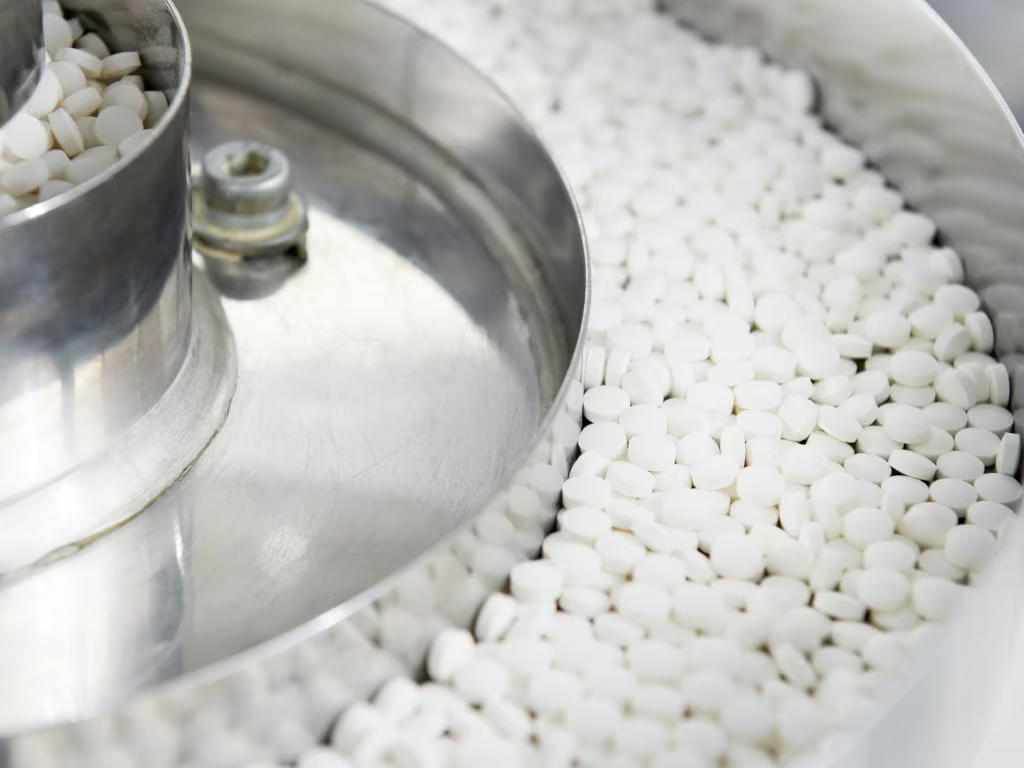
What Is a Helix Dryer?
A Helix Dryer, also called a Helical Dryer, is a specialized indirect-contact drying system that uses a helical mixer or agitator to mix the product while heat is transferred through heated surfaces.
Unlike conventional hot-air dryers, the product does not necessarily need to be suspended in a large volume of drying air. The helix mixer continuously exposes the material to heated surfaces, promotes mixing and helps maintain relatively uniform drying conditions.
Modern helix dryers are commonly designed for vacuum contact drying, particularly where manufacturers need controlled product temperature, enclosed processing, solvent removal, gentle handling or high product containment. Established industrial designs are used for applications including APIs, antibiotics, amino acids, pharmaceutical intermediates, fine chemicals, food products and sticky or free-flowing materials.
For chemical and pharmaceutical manufacturers, the value of a helix dryer is therefore not simply moisture removal.
The objective is to achieve the required drying endpoint while controlling:
- Product temperature
- Moisture or residual solvent
- Drying time
- Product degradation
- Mixing uniformity
- Product losses
- Containment
- Cleaning requirements
- Energy consumption
How Does a Helix / Helical Dryer Work?
A typical helix drying process can be summarized as:
Wet Product → Charging → Mixing → Indirect Heating → Vacuum / Controlled Atmosphere → Moisture or Solvent Evaporation → Vapour Condensation / Recovery → Final Drying → Discharge
The main process steps are:
1. Product Charging
The wet material is introduced into the drying vessel.
Depending on the application, the feed may be:
- Centrifuge-wet solids
- Filter cake
- Free-flowing powder
- Pasty material
- Sticky solids
- High-viscosity material
- Crystalline product
- Pharmaceutical intermediate
The feed characteristics are important because the mixer design and operating conditions must accommodate the actual product behaviour.
2. Mixing by the Helical Agitator
A central helical mixer moves and mixes the material inside the vessel.
Mixing helps expose different portions of the product to the heated surfaces and reduces the possibility of localized wet or overheated zones.
The helical mixing mechanism can also help process products that change consistency during drying.
3. Indirect Contact Heating
Heat is transferred through heated surfaces rather than relying entirely on direct contact between the product and hot drying gas.
The vessel and, depending on the design, the mixer can be heated using media such as:
- Steam
- Hot water
- Thermal oil
The appropriate heating medium depends on the required product temperature and process duty.
4. Vacuum Drying
Many helix dryers operate under vacuum.
Reducing the operating pressure can facilitate evaporation at lower product temperatures, which can be valuable for temperature-sensitive products or for removing solvents under controlled conditions.
The exact vacuum level must be established from the product, solvent, boiling characteristics, required endpoint and process design.
5. Vapour Removal and Condensation
During drying, evaporated water or solvent leaves the product.
The system can incorporate appropriate vapour handling equipment such as:
- Condenser
- Vacuum system
- Solvent recovery system
- Filters
- Vapour separation equipment
- Exhaust treatment
For solvent-containing materials, the complete system must be designed around solvent properties, flammability, compatibility, containment and applicable plant safety requirements.
Why Choose a Helix Dryer for Industrial Drying?
A helix dryer becomes particularly interesting when conventional convective drying creates problems involving temperature exposure, containment, dust generation, solvent handling or product consistency.
Key advantages can include:
- Indirect heat transfer
- Vacuum operation
- Controlled product temperature
- Effective product mixing
- Enclosed processing
- Low-temperature drying capability
- Suitable for solvent-containing materials
- Reduced product loss
- Controlled residence/drying time
- Flexible handling of different product consistencies
- Potential for solvent recovery
- Compact process arrangement
- Suitable for high-value products
The exact benefits depend on product properties and the final equipment configuration.
Helix Dryer Applications
Helix dryers are particularly relevant to industries where product value is high and drying conditions need to be controlled carefully.
1. Pharmaceutical & API Drying
Pharmaceutical products can be sensitive to heat, moisture, oxygen, contamination and mechanical stress.
Potential applications include:
- APIs
- Antibiotics
- Amino acids
- Pharmaceutical intermediates
- Fine pharmaceutical chemicals
- Crystalline pharmaceutical products
- Wet filter cakes
- Solvent-containing pharmaceutical materials
Helix drying can be evaluated when controlled vacuum contact drying and enclosed processing are required.
Pharmaceutical drying equipment may also need to consider:
- Hygienic design
- Cleanability
- CIP requirements
- Containment
- Material of construction
- Validation requirements
- Residual-solvent limits
- Cross-contamination control
Established pharmaceutical drying references identify helix dryers for APIs, antibiotics, amino acids and pharmaceutical intermediates.
2. Fine & Specialty Chemicals
Fine chemicals frequently require tighter control than conventional bulk drying applications.
Possible materials include:
- Fine chemicals
- Specialty chemicals
- Chemical intermediates
- Agrochemical intermediates
- Pigments
- Dyes
- Catalytic materials
- High-value chemical solids
The dryer may need to remove water, mother liquor or organic solvents without adversely affecting the chemical product.
For these applications, the engineering study should consider:
Feed condition → Solvent/moisture → Thermal sensitivity → Vacuum requirement → Heating medium → Vapour handling → Final moisture/solvent specification
3. Sticky & Difficult-to-Handle Products
Some materials become sticky during the early or intermediate stages of drying.
This can create problems in conventional systems, including:
- Wall deposition
- Agglomeration
- Uneven drying
- Material buildup
- Poor discharge
- Cleaning difficulties
Helix dryers use mechanical mixing to maintain product movement inside the vessel.
Special mixer designs can be considered when sticky products need to be processed. Established helix-dryer designs specifically describe configurations for sticky products and pasty or filter-wet materials.
However, not every sticky material is automatically suitable for a helix dryer. Product rheology and actual drying behaviour should be established through testing.
4. Food & Specialty Food Ingredients
Helix dryers can also be evaluated for selected food and specialty food applications where controlled contact drying, mixing and low-temperature operation are required.
Potential applications may include:
- Specialty food ingredients
- Food powders
- High-value food products
- Sticky food materials
- Intermediate food products
For food applications, hygienic construction, cleanability, product-contact materials and contamination control become important design considerations.
5. Plastics & Polymer Processing
Certain polymer and plastic-related materials may require controlled thermal processing and moisture or solvent removal.
Helix drying technology can be evaluated for selected:
- Polymer intermediates
- Plastic materials
- Specialty polymer products
- Recycled polymer streams
The correct technology depends heavily on particle size, viscosity, thermal behaviour, residual liquid and required final specification.
6. Battery Recycling & Advanced Materials
A newer application area for helix drying is battery recycling.
In 2026, ANDRITZ announced a helix dryer specifically developed for lithium-ion battery recycling. The system uses indirect vacuum drying and controlled mixing to remove low- and high-boiling solvents from heterogeneous shredded battery materials.
This demonstrates an important principle for advanced-material applications:
The dryer should be designed around the actual material and downstream process—not simply selected from a generic dryer catalogue.
For battery-related applications, factors can include:
- Solvent type
- Electrolyte composition
- Product temperature
- Vacuum level
- Inert atmosphere
- Material containment
- Dust/particle control
- Solvent recovery
- Downstream black-mass quality
Helix Dryer vs Other Industrial Dryers
Choosing the dryer only by the word “industrial dryer” can lead to an unsuitable process design.
Different technologies solve different drying problems.
| Dryer Technology | Typical Feed | Main Drying Principle | When to Evaluate |
|---|---|---|---|
| Helix Dryer | Wet solids, powders, pastes, filter cakes | Indirect contact + mechanical mixing | Controlled vacuum drying, sensitive/high-value products |
| Paddle Dryer | Sludge, wet cakes, pastes, solids | Indirect contact | Continuous drying and difficult wet materials |
| Plate Dryer | Free-flowing bulk solids | Indirect contact | Continuous drying of suitable bulk solids |
| Drum Dryer | Liquids, slurries, pastes | Contact drying | Products that form a film on a heated drum |
| Fluid Bed Dryer | Powders, granules, crystals | Convective fluidization | Free-flowing particulate materials |
| Flash Dryer | Dispersed wet solids | Rapid convective drying | Fast drying of suitable fine/wet materials |
| Spray Dryer | Pumpable liquids/slurries | Atomization + hot gas | Liquid-to-powder conversion |
| Vacuum Tray Dryer | Batch solids, powders, wet cakes | Vacuum + indirect heating | Batch processing and heat-sensitive materials |
Helix Dryer vs Paddle Dryer
This is one of the most important comparisons for a buyer.
Helix Dryer
Typically evaluated when:
- Batch processing is required
- Vacuum drying is important
- Product value is high
- Controlled temperature is required
- Product may be sticky or pasty
- Product containment is important
- Pharmaceutical or fine-chemical processing is involved
Paddle Dryer
Typically evaluated when:
- Continuous operation is preferred
- Large quantities of wet solids need drying
- Sludge or filter cake is involved
- Indirect heating is required
- Low exhaust gas volume is desirable

GTI’s existing drying portfolio includes paddle drying for wet cakes, slurries, pastes, chemicals, pharmaceuticals, minerals and industrial sludge.
Therefore, a customer should not automatically choose a helix dryer simply because the product is heat-sensitive.
Batch size, feed consistency, throughput, moisture load, solvent characteristics and process requirements should determine the technology.
Helix Dryer vs Fluid Bed Dryer
A fluid bed dryer relies primarily on contact between the product and a moving drying gas.
It can be highly effective for:
- Free-flowing powders
- Granules
- Crystals
- Pellets
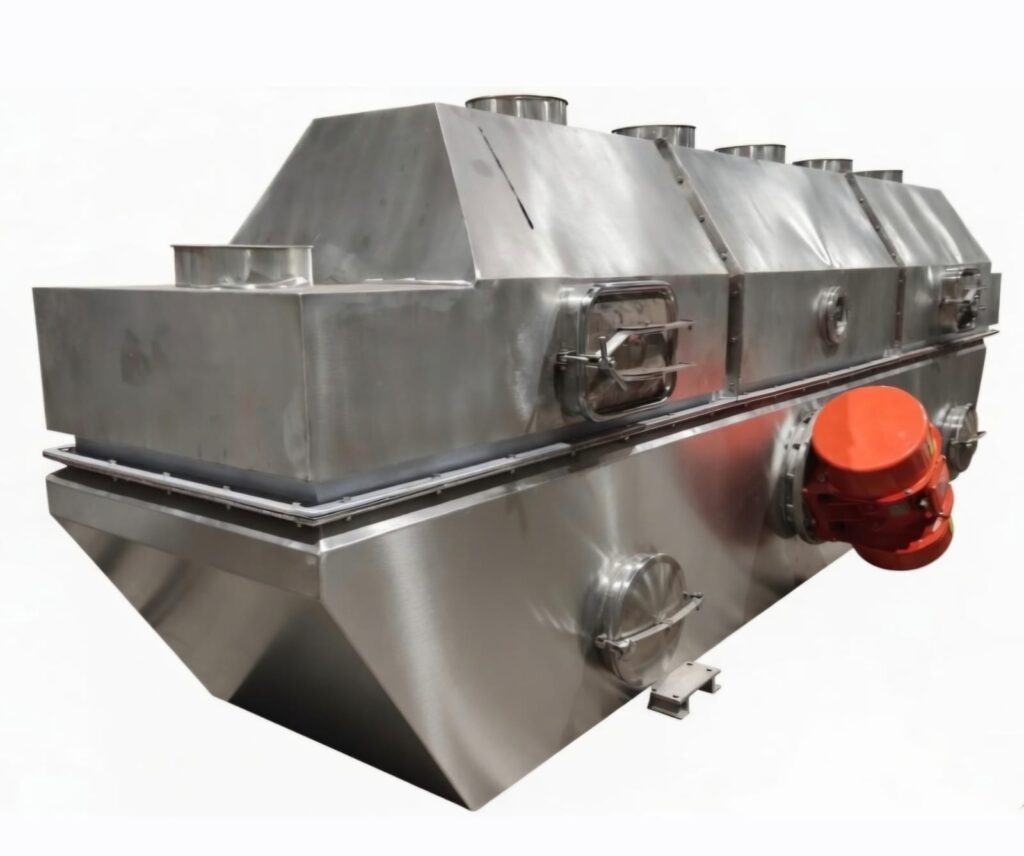
A helix dryer becomes more interesting where the process requires:
- Indirect heating
- Vacuum operation
- Enclosed contact drying
- Mechanical mixing
- Processing of wet cakes or pasty materials
- Reduced dependence on large volumes of drying gas
This does not mean one technology is universally better.
The material’s physical behaviour should determine the selection.
Helix Dryer vs Vacuum Tray Dryer
Both can be considered for batch vacuum drying.
A tray dryer generally spreads the material over trays, while a helix dryer uses mechanical mixing within the vessel.
A helix system can therefore offer advantages where:
- Mixing during drying is required
- Uniform heat exposure is important
- Product consistency changes during drying
- Automated product movement is desirable
- Reduced manual handling is required
The final choice depends on product characteristics, batch size, cleaning requirements, drying cycle and plant layout.
Helix Dryer Design Parameters
A professional helix dryer project should begin with process data rather than machine dimensions.
Important inputs include:
Product Information
- Product name
- Chemical composition
- Particle size
- Bulk density
- Specific heat
- Thermal sensitivity
- Stickiness
- Rheology
- Corrosiveness
- Abrasiveness
Feed Information
- Feed rate
- Initial moisture
- Initial solvent content
- Feed temperature
- Feed consistency
- Filter-cake or centrifuge-cake characteristics
Final Product Requirement
- Final moisture
- Residual solvent
- Product temperature
- Particle characteristics
- Required discharge condition
- Product quality specification
Process Information
- Batch size
- Drying time
- Operating pressure
- Heating medium
- Available utilities
- Vacuum requirement
- Condensation requirement
- Solvent recovery requirement
Plant Information
- Available space
- Electrical supply
- Heating utility
- Cooling water
- Automation level
- Hazardous-area classification
- Cleaning requirements
- Material of construction
Energy Efficiency of a Helix Dryer
Energy performance should be evaluated at the complete-system level.
Important factors include:
- Initial and final moisture
- Solvent load
- Evaporation duty
- Heating-medium temperature
- Vacuum level
- Heat-transfer area
- Insulation
- Condenser performance
- Heat recovery
- Drying cycle
- Product temperature
- Vacuum-system efficiency
Indirect drying can reduce the requirement for large quantities of process air, depending on the configuration.
However, no responsible manufacturer should promise a fixed energy consumption without process data and testing.
GTI’s broader industrial drying engineering approach considers material characteristics, moisture, capacity, residence time, energy source and product quality when selecting drying technology.
Vacuum Drying and Solvent Recovery
For chemical and pharmaceutical applications, water may not be the only material being removed.
The wet feed may contain:
- Ethanol
- Methanol
- Acetone
- Isopropanol
- Other organic solvents
- Solvent-water mixtures
The dryer system therefore becomes part of a larger process.
A typical arrangement may be:
Wet Cake → Helix Dryer → Vapour Line → Condenser → Solvent Collection → Vacuum System
Depending on the solvent and plant requirements, the system may require:
- Condenser
- Receiver
- Vacuum pump
- Inert gas system
- Vapour filtration
- Explosion protection
- Pressure/vacuum protection
- Appropriate seals
- Solvent-compatible materials
Flammable-solvent applications must be engineered according to the applicable process-safety and hazardous-area requirements.
Product Containment & Pharmaceutical Processing
For high-value pharmaceutical and chemical materials, preventing product loss can be as important as drying capacity.
A properly engineered system may incorporate:
- Closed processing
- Sealed charging
- Product filters
- Controlled discharge
- Vacuum operation
- Inert gas purging
- CIP provisions
- Containment interfaces
Established pharmaceutical helix-dryer designs include containment-oriented configurations and auxiliary equipment such as filters, isolation valves, CIP systems and purge-gas systems.
The exact containment and hygienic requirements should be specified according to the customer’s product, facility classification and applicable regulations.
Common Problems in Industrial Drying—and How Helix Technology Can Help
Problem 1: Product degradation
Possible cause: Excessive product temperature or prolonged thermal exposure.
Potential approach: Evaluate vacuum contact drying and optimize product temperature and drying time.
Problem 2: Uneven drying
Possible cause: Poor mixing or insufficient heat transfer.
Potential approach: Optimize mixer configuration, fill level, heat-transfer area and operating cycle.
Problem 3: Sticky material buildup
Possible cause: Product passes through a sticky phase during drying.
Potential approach: Evaluate mixer geometry, operating conditions and vessel configuration using actual product behaviour.
Problem 4: Residual solvent remains high
Possible cause: Inadequate vapour removal, unsuitable pressure or insufficient drying duty.
Potential approach: Review vacuum level, condenser performance, heat-transfer duty and drying endpoint.
Problem 5: Product loss during discharge
Possible cause: Product retention inside the vessel or poor discharge geometry.
Potential approach: Consider vessel geometry, mixer design and discharge configuration.
Some established helix dryer designs specifically emphasize central discharge and minimized product retention.
Is a Helix Dryer Suitable for Your Product?
A helix dryer should be considered when several of the following conditions apply:
✓ Batch processing is acceptable
✓ Product requires controlled drying
✓ Vacuum operation is desirable
✓ Product is heat-sensitive
✓ Product contains water or solvents
✓ Material may be sticky or pasty
✓ Product value is high
✓ Enclosed processing is important
✓ Product containment is required
✓ Mechanical mixing is beneficial
✓ Low product loss is important
However, if your material requires high-throughput continuous drying, a paddle, plate, fluid-bed, belt, rotary or other technology may be more appropriate.
This is why GTI recommends evaluating the complete process before finalizing the dryer.
How GTI Dryers Approaches Helix Dryer Projects
GTI Dryers develops application-specific industrial drying solutions for chemical, pharmaceutical, food, mineral and other process industries.
Its broader drying engineering portfolio includes technologies for powders, granules, slurries, wet cakes, chemicals, pharmaceutical materials, food products and industrial residues.
For a Helix / Helical Dryer project, GTI can evaluate the application based on:
Material → Feed Condition → Moisture/Solvent → Capacity → Temperature Limit → Drying Endpoint → Vacuum Requirement → Heating Source → Vapour Handling → Material of Construction → Automation
The final equipment configuration should then be developed from process calculations, product testing and project requirements.
Engineered in India. Designed for Global Industrial Applications.
GTI’s engineering approach is intended for customers in India as well as international markets requiring application-specific industrial drying systems.
Potential project regions include:
- India
- Southeast Asia
- Middle East
- Africa
- Europe
- North America
- Latin America
For international projects, equipment design should account for the customer’s local electrical, safety, pressure, material, documentation and installation requirements.
Helix Dryer Manufacturer in India: What Buyers Should Ask Before Purchasing
Before requesting a quotation, prepare the following information.
Product
- Product name
- Chemical composition
- Particle size
- Bulk density
- Thermal sensitivity
- Sticky/pasty behaviour
Feed
- Feed quantity per batch
- Initial moisture
- Solvent content
- Feed temperature
- Filter-press or centrifuge condition
Final Requirement
- Final moisture
- Residual solvent specification
- Final product temperature
- Product quality requirements
Process
- Required batch time
- Available heating medium
- Vacuum requirement
- Condenser requirement
- Solvent recovery requirement
Plant
- Installation location
- Available space
- Hazardous-area classification
- Automation requirement
- Cleaning/CIP requirement
- Material of construction
Providing these details allows the manufacturer to evaluate the process rather than simply quote a machine based on a nominal capacity.
Helix Dryer RFQ Checklist
For a faster technical evaluation, send:
Material:
Batch Size:
Initial Moisture:
Final Moisture:
Solvent Present: Yes / No
Solvent Type:
Feed Condition: Powder / Wet Cake / Paste / Slurry
Required Drying Time:
Product Temperature Limit:
Heating Medium Available:
Vacuum Required: Yes / No
Final Product Specification:
Operating Hours:
Industry:
Plant Location:
GTI can then evaluate the evaporation load, thermal requirement, equipment configuration and appropriate drying technology.
Frequently Asked Questions
What is a Helix Dryer?
A helix dryer is a specialized mechanical mixing and contact-drying system using a helical agitator to mix the product while heat is transferred through heated surfaces. Many industrial designs operate as batch vacuum contact dryers.
Is a Helix Dryer continuous or batch?
A helix dryer is generally associated with batch vacuum contact drying, unlike continuous paddle, plate or belt dryers. The exact operating configuration depends on the equipment design and application.
What products can be dried in a Helix Dryer?
Potential applications include APIs, pharmaceutical intermediates, fine chemicals, amino acids, antibiotics, food products, powders, wet cakes, pastes and selected solvent-containing materials.
Can a Helix Dryer remove solvents?
Yes, helix vacuum contact dryers can be engineered for solvent removal. However, solvent type, boiling point, flammability, vacuum conditions, condensation, containment and plant safety requirements must be considered.
Is a Helix Dryer suitable for APIs?
It can be evaluated for APIs and pharmaceutical intermediates where controlled, enclosed and vacuum contact drying is required. The final design must account for the API’s thermal, chemical, containment, cleaning and quality requirements.
What is the difference between a Helix Dryer and Paddle Dryer?
A helix dryer is generally a batch vacuum contact dryer using a central helical mixer, while paddle dryers are commonly used as continuous indirect dryers for wet solids, sludge, filter cakes and pasty materials. The correct choice depends on feed characteristics and process requirements.
What heating media can be used?
Depending on the design, heating may use steam, hot water or thermal oil. The choice depends on the required drying temperature and process duty.
How do I select the right Helix Dryer capacity?
Capacity should not be selected from feed rate alone. Batch size, initial moisture, final moisture, solvent content, drying time, product density, thermal characteristics and heating duty should all be considered.
Can GTI Dryers manufacture a Helix Dryer for my application?
GTI Dryers can evaluate application-specific industrial drying requirements and determine the appropriate technology and configuration. For a helix-specific project, final equipment selection should be based on process data, engineering calculations and, where necessary, product testing.
Helix Dryer Manufacturer India — Request a Technical Evaluation
If your company is looking for a Helix Dryer Manufacturer in India for chemicals, APIs, pharmaceutical intermediates, fine chemicals, food products, wet cakes or solvent-containing materials, the first step should be a process evaluation—not simply a machine-price comparison.
Send GTI Dryers:
Product + Batch Size + Initial Moisture/Solvent + Final Moisture/Solvent + Temperature Limit + Required Drying Time + Heating Medium + Vacuum Requirement
The GTI engineering team can then evaluate:
Feed Characteristics → Drying Duty → Heat Requirement → Vacuum Requirement → Vapour Handling → Dryer Configuration → Automation → Project Requirements
GTI Dryers — Engineered Drying Solutions from India for Global Industries.
Contact GTI Dryers for a technical discussion about your Helix / Helical Dryer requirement and application-specific industrial drying project.