
Contact Plate Dryer Manufacturer in India for Chemicals, Minerals, Salts & Fine Products
A Contact Plate Dryer is an indirect drying system designed to remove moisture or volatile components from suitable bulk solids through contact with heated surfaces rather than relying primarily on direct hot air.
Plate dryers are particularly relevant to industrial applications involving:
- Chemical solids
- Fine chemicals
- Salts
- Pigments
- Minerals
- Pharmaceutical products
- Sensitive powders
- Solvent-containing products
- Selected industrial residues
A modern plate dryer can be configured for atmospheric, gas-tight or vacuum operation depending on the process. Current industrial plate-dryer references describe continuous contact drying of free-flowing bulk materials, including applications involving sensitive, toxic and solvent-containing products.
For industrial buyers, however, selecting a plate dryer is not simply a question of choosing a machine for a particular material.
The correct design depends on:
Feed condition → Moisture → Particle properties → Heat sensitivity → Required final moisture → Residence time → Heating medium → Vapour handling → Product discharge
This makes process engineering particularly important when designing plate dryers for chemical, mineral, pharmaceutical and environmental applications.
What Is a Contact Plate Dryer?
A Contact Plate Dryer is an indirect dryer in which the product comes into contact with heated plates or heat-transfer surfaces.
Heat passes from the heating medium through the plate surface into the product.
Moisture or other volatile components then evaporate from the material.
Unlike direct hot-air drying, the process does not require large volumes of hot drying gas to transfer heat directly to the product.
This can provide potential advantages such as:
- Lower carrier-gas requirements
- Reduced dust generation
- Controlled product temperature
- Efficient heat transfer
- Possibility of vacuum operation
- Enclosed processing
- Easier handling of selected solvent-containing products
Industrial plate dryers are available in atmospheric, gas-tight and vacuum configurations.
How Does a Contact Plate Dryer Work?
The basic operating principle can be understood in several stages.
1. Feed Introduction
The wet or partially wet bulk material enters the dryer through a controlled feeding arrangement.
Depending on the material, the feed may be:
- Powder
- Crystals
- Granules
- Fine solids
- Filter cake after conditioning
- Other free-flowing or suitably prepared bulk materials
Feed characteristics determine the appropriate feeding and product-distribution arrangement.
2. Product Distribution
The material is distributed across the heated plate surfaces.
Uniform product distribution is important because uneven loading can result in:
- Uneven drying
- Localized overheating
- Wet pockets
- Reduced heat-transfer efficiency
- Variable final moisture
3. Indirect Heat Transfer
The plates are heated by a suitable heating medium.
Depending on the process, this may include:
- Steam
- Thermal fluid
- Hot water
- Other suitable heating media
The heat travels through the plate surface into the product.
4. Moisture Evaporation
As heat enters the material, moisture evaporates.
The process progressively changes the material from:
Wet Solid → Partially Dried Solid → Dried Product
The actual drying curve depends on the material and process conditions.
5. Product Movement and Residence Time
Internal mechanical arrangements control how the product moves through the dryer.
Residence time is affected by factors such as:
- Product loading
- Internal configuration
- Product flow behaviour
- Dryer geometry
- Operating conditions
Industrial plate-dryer systems can provide control over product layer depth and residence time.
6. Vapour Removal
The evaporated moisture exits the drying chamber.
Depending on the application, the system may incorporate:
- Vapour outlet
- Condenser
- Vacuum system
- Gas-tight vapour handling
- Solvent recovery
- Dust/entrainment separation
For solvent-containing or sensitive materials, enclosed vapour handling can be particularly important.
7. Dry Product Discharge
After reaching the required moisture level, the dried material is continuously discharged for:
- Cooling
- Milling
- Screening
- Packaging
- Further processing
- Storage
Contact Plate Dryer Process Flow
Wet / Moist Bulk Solid
↓
Controlled Feeding
↓
Product Distribution
↓
Heated Plate Contact
↓
Moisture Evaporation
↓
Controlled Product Movement
↓
Drying / Moisture Equalization
↓
Dry Product Discharge
Meanwhile:
Evaporated Vapour
↓
Vapour Handling
↓
Condenser / Vacuum System
↓
Condensate or Solvent Recovery
The exact process arrangement depends on the material and whether the dryer operates under atmospheric, gas-tight or vacuum conditions.
Why Use a Contact Plate Dryer?
The major reason to consider contact drying is that heat is supplied through a heated surface rather than primarily through a large volume of hot gas.
This can be valuable for applications where:
Low Dust Is Important
Because the process does not rely on large quantities of high-velocity drying air, dust loading can potentially be reduced.
Product Containment Is Important
A closed contact dryer can help contain powders and selected process vapours.
Solvent Recovery Is Required
Gas-tight or vacuum configurations can be integrated with appropriate condensation and recovery systems.
Heat Exposure Must Be Controlled
Indirect heat transfer can provide controlled heating conditions.
Energy Efficiency Matters
Efficient contact heat transfer can reduce the need for large quantities of carrier gas. Current plate-dryer references identify efficient contact drying and low carrier-gas flow among the technology’s potential benefits.
Contact Plate Dryer Applications
1. Chemical Solids
Plate dryers can be considered for selected chemical solids where controlled indirect drying is required.
Applications may include:
- Fine chemicals
- Specialty chemicals
- Chemical intermediates
- Chemical crystals
- Inorganic compounds
- Organic solids
- Process chemicals
The actual design depends on chemical compatibility, thermal behaviour, particle properties and required final moisture.
2. Salts
Industrial salts can present challenging drying conditions because crystallization behaviour and scaling can vary considerably.
Potential applications include:
- Sodium salts
- Potassium salts
- Ammonium salts
- Sulphates
- Chlorides
- Carbonates
- Other technical salts
Plate drying can be evaluated when controlled indirect heating is required.
For salt-processing plants, technology selection should also consider whether the process requires:
Drying → Cooling → Crystallization → Classification → Packaging
or a different sequence.
Specialist industrial drying portfolios include plate dryers among technologies used for technical salts and chemical solids.
3. Pigments
Pigments and fine powders may require careful control of:
- Moisture
- Temperature
- Agglomeration
- Colour
- Particle properties
- Contamination
A contact dryer can be considered where indirect heating and enclosed powder handling are beneficial.
For high-value pigments, product contamination and material-of-construction selection are particularly important.
4. Minerals
Selected mineral materials can be processed using contact drying when their physical properties are compatible with the technology.
Potential applications include:
- Mineral powders
- Mineral concentrates
- Metal powders
- Fine inorganic materials
- Specialty mineral products
For abrasive materials, wear protection and material selection need to be considered during equipment design.
Industrial plate-dryer applications include mineral-processing environments where controlled contact drying is required.
5. Pharmaceutical Products
Pharmaceutical and fine-chemical products may require:
- Controlled temperature
- Containment
- Low dust
- Solvent recovery
- Hygienic construction
- Batch traceability
- Cleaning capability
Plate drying can be considered for selected pharmaceutical and fine-chemical solids, although the final equipment configuration must be matched to the product and regulatory requirements.
Pharmaceutical drying systems generally require specific attention to contamination control, cleanability and process validation.
6. Fine Chemicals
Fine chemicals often have high product value and strict quality requirements.
Potential requirements include:
- Low product loss
- Controlled temperature
- Solvent recovery
- Containment
- Corrosion resistance
- Minimal contamination
- Consistent final moisture
A plate dryer can be evaluated where these characteristics align with indirect contact drying.
7. Solvent-Containing Products
Some chemical and pharmaceutical products retain organic solvents after filtration or crystallization.
In such cases, an appropriately designed gas-tight or vacuum contact dryer can be evaluated.
The complete system may include:
Dryer → Vapour Separation → Condenser → Solvent Recovery
The actual configuration depends on solvent properties, flammability, boiling point, toxicity and applicable process-safety requirements.
Industrial plate dryers are available in gas-tight and vacuum configurations for products containing solvents.
8. Industrial Sludge and Residues
Sludge is an important industrial drying category, but this is where technology selection needs particular care.
A plate dryer should not automatically be selected for every sludge.
The technology is more relevant where the material can be appropriately distributed and moved across the heated surfaces.
For sticky, highly pasty or difficult sludge, technologies such as:
- Paddle Dryer
- Belt Dryer
- Rotary Dryer
- Other indirect dryers
may be more appropriate depending on feed characteristics.
GTI’s current environmental drying portfolio includes belt, rotary, fluidized-bed, paddle and flash technologies for different waste and sludge applications.
Contact Plate Dryer vs Paddle Dryer
Both are indirect contact dryers, but their mechanical configurations differ.
| Parameter | Contact Plate Dryer | Paddle Dryer |
|---|---|---|
| Heat transfer | Heated plates | Heated trough/shafts/paddles |
| Typical feed | Free-flowing bulk solids | Slurries, pastes, sludge, wet cakes, solids |
| Carrier gas | Low requirement possible | Low requirement |
| Vacuum option | Available in suitable designs | Available in suitable designs |
| Product movement | Internal plow/product movement arrangement | Rotating hollow shafts/paddles |
| Solvent handling | Possible in gas-tight/vacuum configurations | Possible in suitable closed designs |
| Sticky sludge | Application dependent | Often more suitable |
| Free-flowing solids | Strong application area | Also possible |
| ZLD/chemical solids | Application dependent | Strong application range |
ANDRITZ categorizes plate and paddle machines within its contact-dryer portfolio, while describing its paddle dryer as a continuous indirect dryer for environmental, chemical and food applications.
Contact Plate Dryer vs Drum Dryer
Both use indirect heat transfer, but the geometry and product-contact mechanism are different.
Plate Dryer
Uses heated plate surfaces and internal product movement.
Drum Dryer
Uses a rotating heated drum surface, typically forming a film on the drum.
Drum dryers are particularly relevant to liquids, slurries, pastes and viscous materials, whereas plate dryers are generally positioned for suitable free-flowing bulk solids.
Contact Plate Dryer vs Fluid Bed Dryer
These technologies use fundamentally different heat-transfer mechanisms.
Plate Dryer
Indirect contact heating
Heat passes through heated surfaces into the product.
Fluid Bed Dryer
Convective heating
Hot gas passes through and fluidizes the particles.
Fluid-bed drying can provide very strong gas-solid heat and mass transfer for suitable free-flowing particles, while contact plate drying can reduce carrier-gas requirements.
GTI already offers fluidised-bed technology for powders, granules, crystals and particulate materials, making this an important technology comparison within the site’s internal linking structure.
Contact Plate Dryer vs Rotary Dryer
A rotary dryer is generally considered for bulk solids where direct or indirect rotating-cylinder drying is appropriate.
A plate dryer is more focused on controlled contact drying of suitable bulk solids.
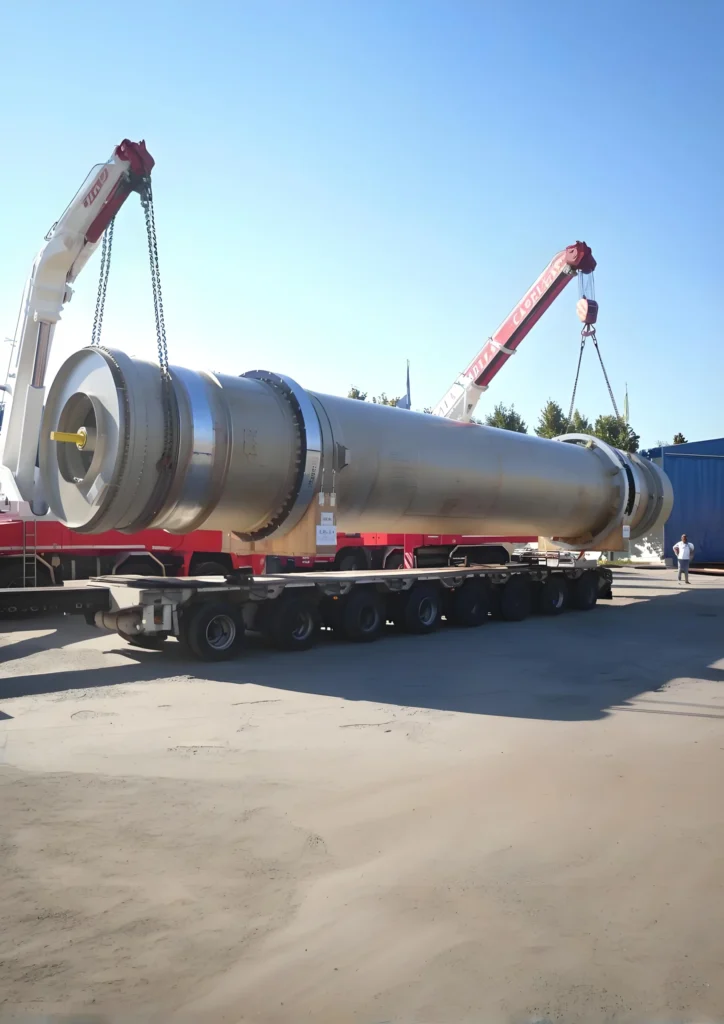
Rotary Dryer
Often evaluated for:
- Minerals
- Biomass
- Granules
- Agricultural materials
- Bulk solids
Plate Dryer
Often evaluated for:
- Fine chemicals
- Salts
- Pigments
- Sensitive powders
- Solvent-containing products
- Selected mineral materials
The actual choice should be based on feed characteristics and process requirements.
Contact Plate Dryer vs Spray Dryer
A spray dryer is normally used to convert a liquid or slurry into powder through atomization.
A plate dryer generally processes a solid or suitably prepared bulk feed.
Therefore:
Liquid/slurry → Spray Dryer may be considered
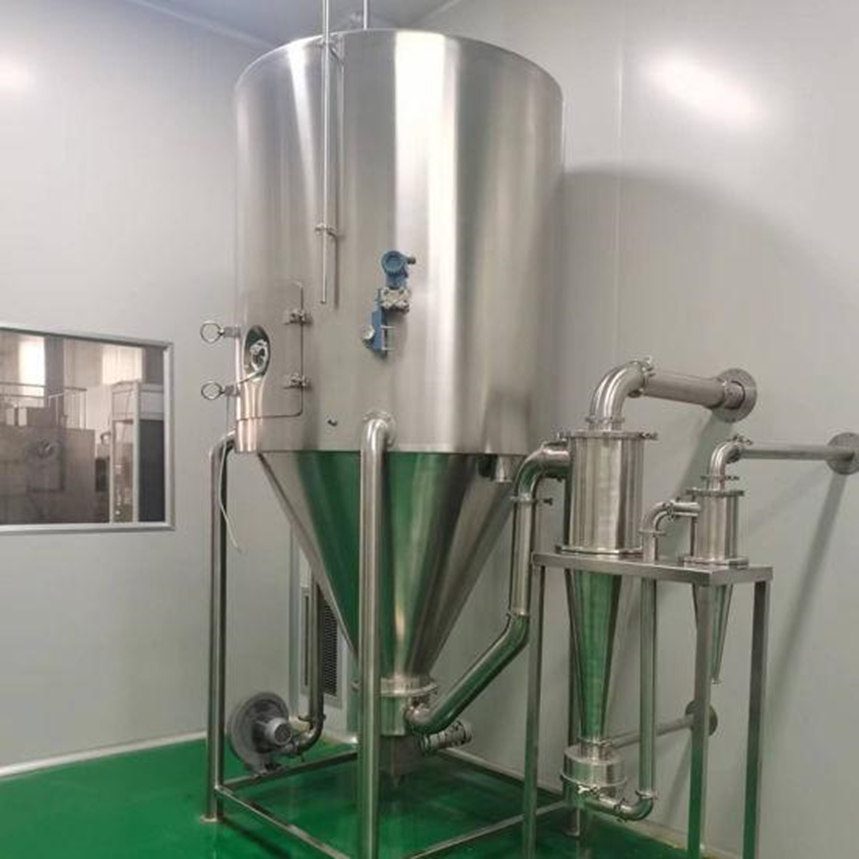
Wet/free-flowing solid → Plate Dryer may be considered
This distinction is important when selecting equipment during the early project stage.
Atmospheric, Gas-Tight and Vacuum Plate Dryers
One of the important advantages of plate-dryer technology is configuration flexibility.
Atmospheric Plate Dryer
Suitable where atmospheric drying conditions meet the product requirements.
Gas-Tight Plate Dryer
Useful where containment of process vapours or controlled atmosphere is required.
Potential applications include:
- Solvent-containing products
- Toxic materials
- Sensitive chemical products
Vacuum Plate Dryer
Vacuum can lower the boiling temperature of volatile components.
This may be useful for:
- Heat-sensitive materials
- Pharmaceutical products
- Solvent removal
- Specialty chemicals
- Products requiring low-temperature drying
Current industrial plate-dryer references identify atmospheric, gas-tight and vacuum configurations.
Key Contact Plate Dryer Design Parameters
A proper plate dryer cannot be sized only from production capacity.
Important parameters include:
Feed Capacity
- kg/h
- tonnes/day
- Operating hours
Initial Moisture
Specify:
- Wet-basis moisture
- Dry-basis moisture, if available
- Free vs bound moisture
Final Moisture
Define the actual product specification.
For example:
Initial moisture: 30%
Target moisture: 2%
This provides a very different drying duty from:
Initial moisture: 10%
Target moisture: 5%
Particle Size and Bulk Density
Provide:
- Particle-size distribution
- Bulk density
- Particle shape
- Flowability
- Cohesiveness
- Friability
These parameters influence product movement and heat transfer.
Thermal Sensitivity
For heat-sensitive products, define:
- Maximum product temperature
- Maximum wall temperature
- Acceptable residence time
- Colour limits
- Degradation limits
- Product-quality specifications
The objective is not simply to maximize drying temperature.
It is to achieve the required moisture removal without compromising product quality.
Chemical Properties
For chemical applications, provide:
- Chemical composition
- pH
- Corrosiveness
- Chloride content
- Solvent content
- Boiling point
- Thermal stability
- Toxicity
- Dust characteristics
This information is important for selecting:
- Material of construction
- Seals
- Heating system
- Vapour system
- Safety arrangement
Material of Construction
The correct material depends on the product chemistry.
Potential materials may include:
- Carbon steel
- SS304/304L
- SS316/316L
- Duplex stainless steel
- Higher-alloy materials
- Special corrosion-resistant materials
For aggressive chemicals or chloride-rich materials, the MOC should be selected using the actual chemical and operating conditions.
Never select the MOC only from the product name.
Heating Media
Depending on the process, plate dryers may use:
- Steam
- Thermal oil
- Hot water
- Other suitable heat-transfer media
The selection depends on:
- Required heat duty
- Product temperature
- Available utilities
- Operating pressure
- Energy economics
- Heat-transfer requirements
Energy Efficiency of Contact Plate Dryers
One of the major reasons to consider contact drying is the possibility of reducing the amount of carrier gas required.
Potential energy-saving measures include:
Efficient Heat Transfer
Maximize useful heat transfer through the plate surfaces.
Proper Product Layer Control
The product layer should be appropriate for the material and drying duty.
Insulation
Insulate heated surfaces and connected equipment.
Heat Recovery
Recover useful heat from vapour or other process streams where practical.
Vacuum Operation
For suitable applications, vacuum drying can reduce the boiling temperature and support lower-temperature operation.
Process Automation
Monitor temperature, pressure, residence time and feed conditions to maintain stable operation.
Industrial plate-dryer references identify efficient contact drying and minimum energy requirement among the technology’s benefits.
Dust Control
Reduced carrier-gas flow can be advantageous in applications where dust generation is a concern.
However, dust is not automatically eliminated.
Fine powders can still generate dust during:
- Feeding
- Product movement
- Discharge
- Conveying
- Milling
- Packaging
Therefore, the complete plant should consider:
- Enclosures
- Local extraction
- Filters
- Product collection
- Transfer-point design
Solvent Recovery
For solvent-containing chemical or pharmaceutical materials, solvent recovery may be an important part of the drying system.
A potential arrangement is:
Wet Product
↓
Gas-Tight Plate Dryer
↓
Solvent Vapour
↓
Condenser
↓
Recovered Solvent
This can potentially reduce solvent emissions and recover valuable process material.
However, the actual system must be engineered around:
- Solvent type
- Boiling point
- Flammability
- Vapour concentration
- Condenser temperature
- Vacuum conditions
- Inerting requirements
Contact Plate Dryer for Pharmaceutical Products
Pharmaceutical applications require more than drying performance.
Important considerations may include:
- Product purity
- Containment
- Cleanability
- Material compatibility
- Cross-contamination control
- Validation
- GMP requirements
- Solvent recovery
- Temperature control
Where the product is highly valuable or heat-sensitive, pilot testing can help establish the required drying conditions.
Current pharmaceutical drying portfolios place strong emphasis on hygienic design, cleanability, traceability and controlled drying for pharmaceutical products.
Contact Plate Dryer for Chemical Manufacturing
Chemical drying projects may involve:
- Crystals
- Fine powders
- Filter cakes
- Pigments
- Salts
- Intermediates
- Polymers
- Specialty chemicals
The dryer should be selected after evaluating:
Chemistry + Moisture + Particle Behaviour + Temperature + Solvent + Capacity
rather than simply selecting a dryer from an application list.
Specialty chemical processing frequently requires different drying approaches depending on the raw material and product characteristics.
Common Contact Plate Dryer Problems
Problem 1: Uneven Final Moisture
Possible causes:
- Uneven feed distribution
- Incorrect product layer
- Variable feed moisture
- Inadequate residence time
- Uneven heat transfer
Corrective approach
Check feed distribution, product loading, heating conditions and residence-time behaviour.
Problem 2: Product Overheating
Possible causes:
- Excessive heating-medium temperature
- Long residence time
- Low feed rate
- Excessive wall temperature
Corrective approach
Review product temperature rather than controlling only the heating-medium temperature.
Problem 3: Product Sticking
Possible causes:
- Product becomes sticky during drying
- Incorrect temperature profile
- Excessive layer thickness
- Poor product movement
Corrective approach
Evaluate the material’s drying curve and sticky-phase behaviour.
Problem 4: High Energy Consumption
Possible causes:
- Excessive moisture load
- Poor upstream dewatering
- Heat losses
- Incorrect operating conditions
- Inefficient heating arrangement
Corrective approach
Review the complete mass and heat balance.
Problem 5: Poor Product Discharge
Possible causes:
- Cohesive material
- Incorrect internal configuration
- Excessive moisture
- Product agglomeration
Corrective approach
Evaluate product flowability and internal product-movement requirements.
How to Improve Plate Dryer Performance
A high-performing dryer depends on the complete process.
1. Stabilize the Feed
Consistent feed moisture and flow improve drying stability.
2. Optimize Product Loading
Avoid excessive or insufficient layer depth.
3. Control Heating Conditions
Maintain the appropriate heating-medium and product temperatures.
4. Control Residence Time
The material should remain in the dryer long enough to meet the moisture specification without unnecessary thermal exposure.
5. Control Vapour Removal
Efficient vapour removal supports evaporation.
6. Maintain Heat-Transfer Surfaces
Fouling or deposits can reduce heat-transfer efficiency.
7. Automate Critical Parameters
PLC/SCADA systems can monitor and control key process conditions.
GTI’s current industrial drying platform supports automated process control and custom dryer engineering based on material and process requirements.
Plate Dryer Capacity: What Buyers Need to Know
A buyer should not specify a plate dryer only by saying:
“We need a 2-ton-per-hour dryer.”
The important question is:
2 tonnes/hour of what material, at what moisture, and to what final moisture?
For example:
Wet feed = 2,000 kg/h
Initial moisture = 20%
Approximately:
Water = 400 kg/h
Dry solids = 1,600 kg/h
If the final product must contain 2% moisture, the required evaporation duty is substantially different from a product leaving at 10% moisture.
Therefore, proper sizing requires a mass balance and heat balance.
Pilot Testing for Contact Plate Drying
Pilot testing can be valuable when:
- The product is new
- The feed behaviour is uncertain
- The material is heat-sensitive
- Solvent recovery is required
- Scaling/fouling is possible
- Product quality is critical
Testing can establish:
- Drying rate
- Product temperature
- Required residence time
- Heat-transfer behaviour
- Product movement
- Final moisture
- Solvent removal
- Fouling tendency
- Product quality
A representative feed sample is much more useful than relying only on the material name.
How to Select the Right Contact Dryer
Before selecting a plate dryer, compare the material with alternative contact technologies.
| Feed / Requirement | Technology to Evaluate |
|---|---|
| Free-flowing bulk solids | Plate Dryer |
| Fine chemical solids | Plate / Vacuum Contact Dryer |
| Solvent-containing powder | Gas-tight/Vacuum Contact Dryer |
| Sticky sludge | Paddle Dryer |
| Liquid/slurry | Drum / Spray Dryer |
| Wet filter cake | Paddle / Plate / Vacuum Dryer depending on behaviour |
| Free-flowing granular material | Plate / Fluid Bed Dryer |
| Large bulk mineral solids | Rotary / Fluid Bed / Contact Dryer depending on process |
| Heat-sensitive fine chemical | Vacuum Contact Dryer |
This is a technology-screening guide, not a substitute for process testing and engineering.
What Information Should You Send GTI for a Plate Dryer Quotation?
This section is particularly important for converting organic traffic into qualified enquiries.
Product
- Product name
- Chemical composition
- Feed form
- Particle size
- Bulk density
- Flowability
- Stickiness
Moisture
- Initial moisture
- Final moisture
- Moisture basis
- Free/bound moisture
Production
- Feed capacity kg/h
- Operating hours/day
- Batch or continuous requirement
- Annual production
Thermal
- Feed temperature
- Maximum product temperature
- Heat source
- Steam pressure, if applicable
- Thermal-fluid temperature, if applicable
Chemical
- pH
- Corrosive components
- Chloride
- Solvent content
- Boiling point
- Thermal sensitivity
Product Quality
- Final moisture
- Particle-size requirement
- Colour
- Bulk density
- Flowability
- Purity requirement
Plant
- Country
- Plant location
- Available space
- Existing equipment
- Utilities
- Automation requirement
Safety
- Solvent information
- Dust hazard
- Flammability
- Toxicity
- Inerting requirements
- Required containment
Why Choose GTI Dryers for Contact Drying Projects?
GTI Dryers’ current industrial platform covers customized drying systems for food, pharmaceutical, chemical, mineral and process industries, with dryer selection based on material characteristics, moisture, heat sensitivity, capacity, residence time, energy source and product requirements.
For a contact plate-drying project, the engineering evaluation should consider the complete system rather than only the dryer chamber:
- Feed preparation
- Dryer sizing
- Heat-transfer design
- Product movement
- Heating system
- Vapour handling
- Condensation
- Vacuum, where required
- Dust control
- Product discharge
- Automation
- Integration with upstream/downstream equipment
GTI’s wider drying portfolio includes paddle, flash, rotary, belt/band, spray and fluidised-bed technologies, allowing the process to be evaluated against alternative drying approaches when appropriate.
Engineered in India. Designed for Global Chemical, Mineral, Pharmaceutical & Process Industries.
Contact Plate Dryer Manufacturer India for Global Projects
For international buyers, selecting a dryer manufacturer involves more than equipment fabrication.
Evaluate:
- Process engineering
- Thermal calculations
- Material selection
- Equipment design
- Manufacturing capability
- Automation
- Documentation
- Installation support
- Commissioning
- Spare parts
- Technical service
- Export packaging
- Project coordination
For a global project, the supplier should be able to understand both the process requirement and the site requirement.
Frequently Asked Questions
What is a Contact Plate Dryer?
A contact plate dryer is an indirect drying system that transfers heat through heated plates or contact surfaces to remove moisture or volatile components from suitable bulk solids.
What is a plate dryer used for?
Applications can include selected chemicals, fine chemicals, salts, pigments, minerals, pharmaceutical products and other free-flowing bulk materials.
Is a plate dryer an indirect dryer?
Yes. Heat is transferred indirectly from heated surfaces to the product.
Can a plate dryer operate under vacuum?
Yes. Plate dryers can be configured for vacuum operation for appropriate products and processes.
Can a plate dryer handle solvent-containing products?
Gas-tight or vacuum configurations can be evaluated for solvent-containing products, with appropriate vapour handling and process-safety engineering.
Is a plate dryer suitable for chemicals?
Yes, selected chemical and specialty-chemical solids are applications for which plate drying can be evaluated.
Can a plate dryer dry minerals?
Selected mineral materials can be processed using plate-drying technology, depending on particle characteristics, moisture and thermal requirements.
Can a plate dryer dry sludge?
It can be considered for suitable sludge or residue characteristics, but highly sticky or pasty sludge may require another technology such as a paddle dryer. GTI evaluates sludge drying according to the feed characteristics and process requirement.
What is the difference between a plate dryer and paddle dryer?
Both are indirect contact dryers, but a plate dryer uses heated plate surfaces while a paddle dryer uses heated shafts and paddles. Paddle dryers are particularly suited to many slurries, wet cakes and sludge applications.
What is the difference between a plate dryer and rotary dryer?
A plate dryer uses stationary heated contact surfaces with controlled product movement, while a rotary dryer uses a rotating drum and can operate through different direct or indirect drying arrangements.
What determines plate dryer capacity?
Capacity depends on feed rate, initial moisture, target final moisture, solids, product properties, heat-transfer conditions and required residence time.
How do I select a plate dryer?
Start with the actual feed data: capacity, moisture, particle size, bulk density, thermal sensitivity, chemistry, required final moisture, heating medium and product quality requirements. Pilot testing may be appropriate for difficult products.
Request a Contact Plate Dryer Solution from GTI
If you are evaluating a Contact Plate Dryer Manufacturer in India for:
Chemicals • Minerals • Salts • Pigments • Fine Chemicals • Pharmaceuticals • Solvent-Containing Products • Selected Industrial Residues
send GTI Dryers:
Product + Feed Capacity + Initial Moisture + Target Moisture + Particle Size + Bulk Density + Temperature Limit + Chemical Composition + Heat Source + Plant Location
GTI can evaluate the appropriate plate-dryer configuration, heating system, product movement, vapour handling, vacuum/gas-tight requirements, material of construction, automation and complete process integration.
GTI Dryers — Engineered Drying Solutions from India for Global Industries.