
Agitated Thin Film Dryer (ATFD) Manufacturer in India for ZLD, Chemicals & High-TDS Concentrates
An Agitated Thin Film Dryer (ATFD) is a continuous indirect drying system designed for concentrated liquids, slurries, mother liquors, brines and other difficult-to-dry process streams.
ATFD technology is particularly important in Zero Liquid Discharge (ZLD) systems, where concentrated liquid remaining after evaporation must be converted into a dry solid or manageable residue.
The technology uses a heated cylindrical surface and a rotating rotor fitted with specially designed blades or wipers. The feed is distributed over the heated inner wall and continuously renewed as a thin film. Heat transfers through the wall while water or other volatile components evaporate, progressively concentrating the material until the remaining solids are discharged.
In many ZLD configurations, ATFD is positioned downstream of concentration equipment such as a Multi-Effect Evaporator (MEE) or other evaporation/concentration stage.
For industrial buyers, however, an ATFD should not be selected simply because a process contains wastewater. Feed concentration, viscosity, TDS, scaling tendency, chemistry, heat sensitivity, solids behaviour and required final product condition all influence the design.
What Is an ATFD?
ATFD stands for Agitated Thin Film Dryer.
It is a mechanically agitated thin-film drying system used to process concentrated liquids, slurries, pastes and high-solids streams.
A typical ATFD consists of:
- Vertical cylindrical drying body
- Heating jacket
- Rotor/shaft
- Scraper or wiper blades
- Feed distributor
- Drive and gearbox
- Vapour outlet
- Product discharge
- Vapour separator, where required
- Condenser system
- Vacuum/blower system, where applicable
- Instrumentation and controls
The rotor continuously spreads and renews the material against the heated surface. This helps maintain heat transfer while reducing the formation of a stagnant layer on the heating wall.
Why Is ATFD Important in ZLD Plants?
A typical industrial wastewater treatment and ZLD process can involve several stages:
Industrial Wastewater
↓
ETP / Pretreatment
↓
Membrane Treatment, Where Applicable
↓
Evaporation / MEE / MVR
↓
Concentrated Brine / Mother Liquor / High-TDS Slurry
↓
ATFD
↓
Dry Salt / Solid Residue
The exact configuration depends on wastewater chemistry, recovery targets, regulations, utilities and the selected ZLD process.
The important point is that MEE and ATFD perform different duties.
An evaporator is primarily used to remove water and concentrate the feed.
As concentration increases, the stream can become more viscous, more saline and more difficult to circulate or evaporate. The ATFD can then be used to take the concentrated stream toward a dry-solid endpoint.
This is why ATFD is frequently associated with the final drying stage of ZLD systems.
How Does an Agitated Thin Film Dryer Work?
The ATFD working principle can be divided into several stages.
1. Concentrated Feed Enters the Dryer
The concentrated liquid or slurry enters through the feed system, commonly at the upper section of a vertical ATFD.
The feed may originate from:
- MEE
- MVR
- Evaporator concentrate
- Brine concentration
- Chemical process
- Pharmaceutical process
- ETP/ZLD system
2. Feed Distribution
A distributor spreads the incoming feed across the internal heated surface.
Uniform distribution is important because poor distribution can result in:
- Uneven drying
- Localized fouling
- Scaling
- Reduced heat transfer
- Wet product
3. Thin-Film Formation
The rotating rotor and blades continuously spread the material into a thin moving layer.
The thin-film principle increases the effective heat-transfer surface and continuously renews the material at the wall.
4. Indirect Heating
The cylindrical shell is heated externally using an appropriate heating medium.
Depending on the design, heating may use:
- Steam
- Thermic fluid
- Other suitable heating media
The heat passes through the shell wall into the thin product film.
5. Evaporation
As the feed receives heat, water or other volatile components evaporate.
The material progressively changes from:
Liquid → Concentrate → Slurry → Paste → Wet Solid → Dry Solid
The exact transition depends on the feed composition and drying behaviour.
6. Continuous Agitation
The rotor keeps moving and renewing the material.
This is particularly important for concentrated feeds that can become:
- Sticky
- Viscous
- Crystalline
- Scaling
- Fouling
- Difficult to pump
7. Vapour Removal
The generated vapour leaves through the vapour outlet.
Depending on the process, vapour handling may include:
- Vapour separator
- Cyclone/entrainment separator
- Condenser
- Vacuum system
- Non-condensable removal
8. Solid Discharge
As moisture continues to evaporate, the material becomes increasingly solid and is discharged from the lower section.
A typical process description uses a bottom discharge for the dried material while vapour moves counter-currently toward the vapour-handling system.
ATFD Process Flow
Concentrated Feed
→ Feed Pump
→ Feed Distributor
→ Thin Film Formation
→ Indirect Heating
→ Continuous Agitation
→ Water / Volatile Evaporation
→ Concentration & Solid Formation
→ Dry Solid Discharge
Meanwhile:
Generated Vapour
→ Vapour Separation
→ Condenser
→ Condensate Collection
→ Non-Condensable Handling
This arrangement can be integrated into a wider ZLD or chemical-process plant.
Why Use a Thin Film?
Thin-film drying is particularly useful when dealing with concentrated and difficult materials.
If a highly viscous product forms a thick stagnant layer against a heated wall, heat transfer can decrease and fouling can increase.
In an ATFD, mechanical agitation continuously renews the film.
This can provide:
- Better surface renewal
- Improved heat transfer
- Reduced stagnant material
- Controlled residence time
- Continuous processing
- Better handling of viscous concentrates
The actual performance depends heavily on rotor design, film behaviour, feed properties, heating conditions and operating parameters.
ATFD Applications
ATFD systems are used across several process industries.
1. Zero Liquid Discharge (ZLD)
One of the most important ATFD applications is ZLD.
Potential applications include:
- Industrial wastewater
- ETP concentrates
- High-TDS wastewater
- MEE concentrates
- Brine
- Salt-containing process streams
- Concentrated effluent
The objective is to convert the final concentrated liquid/slurry into a dry solid or residue while recovering the evaporated water through the associated vapour-condensation system.
2. Chemical Industry
Chemical processes can generate concentrated streams that become increasingly difficult to handle as water is removed.
Potential applications include:
- Chemical concentrates
- Mother liquors
- Inorganic salts
- Chloride streams
- Sulphate streams
- Bromide streams
- Chemical intermediates
- Dye intermediates
- Pigment-related streams
- Specialty chemicals
- Agrochemical process streams
The correct ATFD configuration depends on chemistry, corrosion behaviour, viscosity, solids loading and fouling characteristics.
3. Pharmaceutical Wastewater
Pharmaceutical manufacturing can generate concentrated process streams and wastewater containing dissolved solids, salts, organic material or process-specific components.
ATFD systems can be evaluated for:
- Pharmaceutical wastewater
- Concentrated mother liquor
- API process streams
- High-TDS pharmaceutical effluent
- Solvent-related process streams, subject to appropriate design
- Pharmaceutical intermediate waste streams
Pharmaceutical applications require particular attention to containment, materials of construction, cleaning and process-safety requirements.
4. ETP Concentrates
ETP treatment can generate concentrated streams that require further volume reduction.
An ATFD may be integrated downstream of concentration equipment to process:
- ETP concentrate
- High-TDS concentrate
- Chemical wastewater concentrate
- Industrial brine
- Process wastewater residue
The suitability depends on the actual chemistry and solids characteristics.
5. Brine Drying
Brines may contain high concentrations of:
- Sodium salts
- Chlorides
- Sulphates
- Other dissolved inorganic compounds
An ATFD can be used as part of a brine-to-solid process where the process objective requires further evaporation and solids separation.
However, salt crystallization behaviour must be evaluated carefully because scaling and deposition characteristics can vary significantly between brines.
6. Mother Liquor Drying
Mother liquor from crystallization or chemical production can contain:
- Dissolved salts
- Organic compounds
- Chemical intermediates
- Residual product
- Solvents or water
ATFD technology can be considered where the mother liquor must be further concentrated or dried.
The process should be evaluated for volatility, crystallization, fouling, thermal sensitivity and required recovery.
7. Salt Recovery
ATFD systems can support processes where concentrated salt-containing streams must be converted into a dry solid.
Potential objectives include:
- Salt recovery
- Waste volume reduction
- Easier transportation
- Solid residue generation
- Further salt processing
The recovered material should not automatically be described as a reusable commercial salt. Its composition and quality must be established through process analysis.
8. Distillery and Process Concentrates
Selected high-solids process streams and concentrated residues can be evaluated for ATFD processing.
The exact dryer configuration depends on:
- Organic content
- Solids
- Stickiness
- Foaming
- Odour
- Thermal sensitivity
- Final product requirements
ATFD for High-TDS Wastewater
High-TDS streams are among the most challenging feeds in wastewater processing.
As water is removed:
TDS concentration increases → viscosity may increase → crystallization may begin → scaling/fouling risk may increase
Therefore, an ATFD for high-TDS wastewater needs to be engineered around the actual concentrate rather than simply specifying a dryer by wastewater flow rate.
Important parameters include:
- TDS
- Total solids
- Chloride
- Sulphate
- COD
- Organic content
- pH
- Density
- Viscosity
- Crystallization tendency
- Scaling tendency
- Feed temperature
- Final solids requirement
ATFD vs MEE
These technologies are complementary rather than direct substitutes.
| Parameter | MEE | ATFD |
|---|---|---|
| Main function | Evaporation/concentration | Final drying/concentration |
| Feed | Usually liquid/concentrated liquid | Concentrated slurry/liquid |
| Solids level | Lower to moderate depending on stage | Often higher |
| Viscosity | Increasing viscosity can limit operation | Designed for difficult concentrated feeds |
| Product | Concentrate | Dry solid/residue |
| Heat transfer | Evaporator surfaces | Thin film on heated wall |
| Agitation | Depends on evaporator design | Central to ATFD operation |
| ZLD role | Concentrates wastewater | Can provide final drying stage |
A common ZLD arrangement is therefore:
ETP → Pretreatment → Membrane/RO where applicable → MEE/MVR → ATFD
The exact process configuration depends on the wastewater and selected ZLD design.
ATFD vs Spray Dryer
These technologies are designed for different feed conditions.
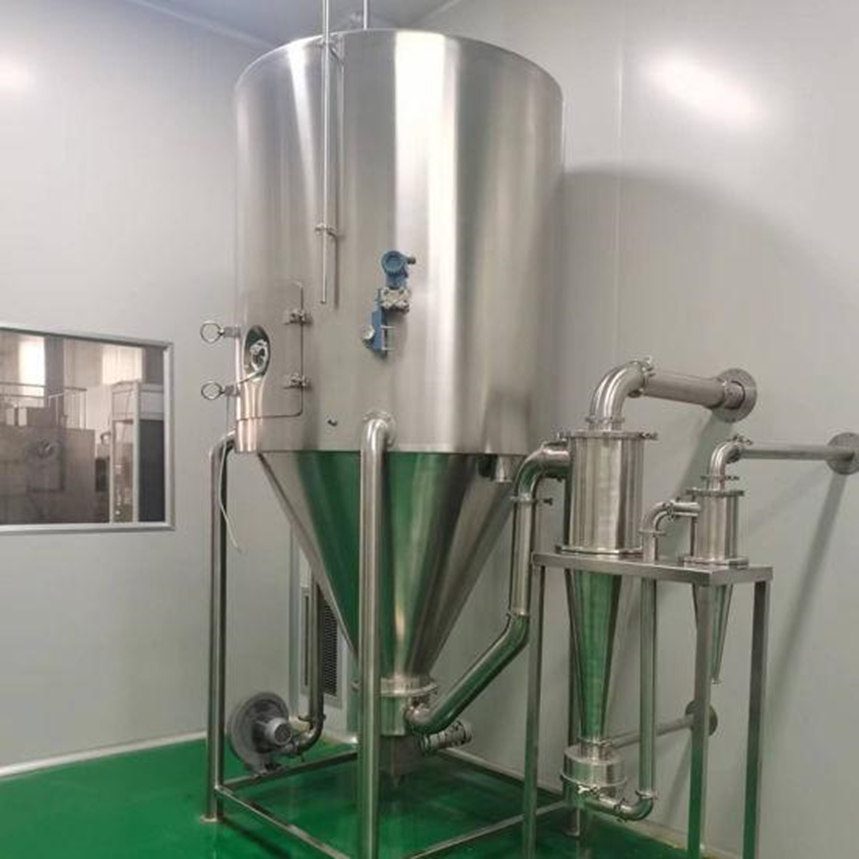
Spray Dryer
Typically atomizes a pumpable liquid or slurry into a hot gas stream to produce powder.
ATFD
Uses mechanical agitation to spread a concentrated feed into a thin film on a heated wall.
An ATFD can therefore be particularly useful when the material becomes:
- Highly concentrated
- Viscous
- Sticky
- Fouling-prone
- Difficult to atomize
A spray dryer may be more appropriate when controlled atomization and powder morphology are the primary requirements.
Technology selection should be based on feed rheology, solids, thermal behaviour and desired product form.
ATFD vs Paddle Dryer
Both can handle difficult industrial materials, but the process mechanisms differ.
| Parameter | ATFD | Paddle Dryer |
|---|---|---|
| Main mechanism | Thin-film indirect drying | Indirect conductive/contact drying |
| Configuration | Usually vertical cylindrical | Usually horizontal |
| Agitation | Rotor/wiper system | Hollow shafts/paddles |
| Feed | Concentrated liquid/slurry | Slurry, paste, wet cake, sludge |
| Typical role | ZLD final drying/concentrate | Sludge, chemicals, wet cakes and process solids |
| Thin film | Yes | No |
| ZLD application | Strong fit | Can be used for selected ZLD solids/sludges |
The two technologies can therefore occupy different positions within the same industrial drying portfolio.
ATFD vs Rotary Dryer
A conventional rotary dryer generally uses a rotating cylindrical shell with hot gas flowing through or around the material.
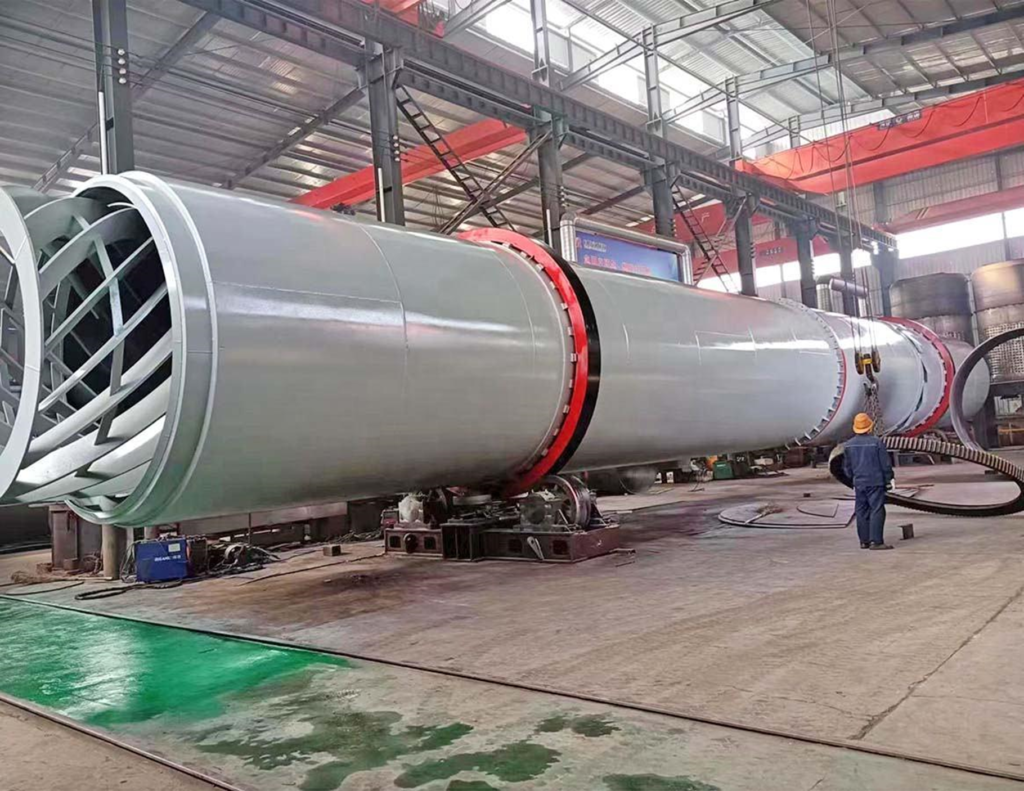
An ATFD is a mechanically agitated thin-film contact dryer.
They should not be treated as interchangeable technologies.
ATFD is generally evaluated for:
- Concentrated liquids
- High-viscosity feeds
- Mother liquors
- Brines
- High-TDS concentrates
- Difficult slurries
Rotary dryers are generally evaluated for:
- Granular solids
- Bulk solids
- Minerals
- Biomass
- Agricultural materials
- Other free-flowing or conditioned solids
The feed state should therefore determine the technology selection.
Critical ATFD Design Parameters
A reliable ATFD proposal requires more than feed flow.
1. Feed Flow Rate
Specify:
- kg/h
- tonnes/day
- Continuous operating hours
2. Feed Solids
Provide:
- Total solids %
- Dissolved solids %
- Suspended solids %
- TDS
3. Feed Chemistry
Provide:
- pH
- Chloride
- Sulphate
- COD
- Organic content
- Salts
- Corrosive components
4. Viscosity
Viscosity can change substantially as evaporation progresses.
Therefore, where available, viscosity data at different solids concentrations are valuable for ATFD design.
5. Scaling and Fouling
Provide information about:
- Crystallization
- Scaling
- Deposition
- Sticky solids
- Fouling behaviour
6. Final Product
Define whether the target is:
- Dry powder
- Dry salt
- Flakes
- Granular solid
- Cake/residue
- Reduced-moisture solid
Materials of Construction for ATFD
Material selection must be based on the actual process chemistry.
Potential construction materials may include:
- Carbon steel
- SS304/304L
- SS316/316L
- Duplex stainless steel
- Super duplex
- Other corrosion-resistant alloys
For aggressive chemical streams, the correct material should be established from:
- Chloride concentration
- pH
- Temperature
- Chemical composition
- Corrosion data
- Operating conditions
Do not select MOC only because the application is called “wastewater.”
A chemical wastewater stream and a food-processing wastewater stream can have completely different corrosion requirements.
Heating Media for ATFD
Depending on process requirements, an ATFD may use:
Steam
Suitable where reliable plant steam is available.
Thermic Fluid
Can be considered where the process requires a different heating-temperature range or where thermic-fluid infrastructure is available.
Other Heating Arrangements
Special process requirements may require alternative heating configurations.
The selected heating system should consider:
- Required evaporation duty
- Product temperature
- Available utilities
- Heat-transfer requirements
- Operating cost
- Safety
- Plant infrastructure
Vacuum Operation in ATFD
Vacuum operation can reduce the boiling temperature of the process stream.
This may be useful for:
- Heat-sensitive products
- Temperature-sensitive chemicals
- Certain pharmaceutical streams
- Solvent-containing feeds
- Processes requiring controlled evaporation temperature
However, vacuum is not automatically required for every ATFD.
The decision depends on:
- Feed boiling behaviour
- Heat sensitivity
- Vapour pressure
- Heating-medium temperature
- Condenser conditions
- Non-condensable load
- Process economics
Vapour Handling in an ATFD System
The dryer itself is only one part of the process.
A complete ATFD installation may require:
ATFD → Vapour Separator → Condenser → Condensate Receiver → Vacuum/Blower System
Vapour entrainment control is important because droplets or fine solids can otherwise enter the downstream vapour system.
The system may therefore incorporate suitable:
- Vapour separators
- Demisters
- Cyclones
- Condensers
- Vacuum equipment
- Condensate collection
The exact configuration depends on the feed and vapour characteristics.
ATFD Rotor and Scraper Design
The rotor is one of the most important components of an ATFD.
The rotor determines how effectively the feed is:
- Distributed
- Agitated
- Renewed
- Transported
- Scraped
- Dried
Blade geometry and clearance influence:
- Film thickness
- Heat transfer
- Product residence time
- Fouling
- Product discharge
- Mechanical load
Therefore, the rotor should be selected according to the actual material behaviour.
A blade configuration suitable for an inorganic salt may not be appropriate for a sticky pharmaceutical concentrate.
Common ATFD Problems and Solutions
Problem 1: Excessive Scaling
Possible causes:
- Feed concentration too high
- Poor film renewal
- Incompatible operating conditions
- Crystallization occurring on the wall
- Incorrect rotor/blade configuration
Approach:
Review feed chemistry, concentration profile, wall temperature, rotor speed, film behaviour and cleaning requirements.
Problem 2: Wet Solid at Discharge
Possible causes:
- Excessive feed rate
- Insufficient heat duty
- High feed moisture
- Incorrect film distribution
- Insufficient residence time
Approach:
Recalculate evaporation duty and review feed distribution, heating conditions and rotor operation.
Problem 3: Product Sticks to the Wall
Possible causes:
- Product enters a sticky phase during drying
- Poor film renewal
- Incorrect wall temperature
- Inadequate blade clearance
Approach:
Evaluate the complete drying curve and product behaviour rather than simply increasing temperature.
Problem 4: Vapour Carryover
Possible causes:
- Excessive entrainment
- High vapour velocity
- Poor separation
- Incorrect feed distribution
Approach:
Review vapour velocity and separator/demister design.
Problem 5: High Energy Consumption
Possible causes:
- Excessive evaporation load
- High feed moisture
- Poor upstream concentration
- Heat loss
- Inefficient vapour/condensate management
- Incorrect operating conditions
Approach:
Look at the complete ZLD heat balance rather than optimizing the ATFD in isolation.
How to Reduce ATFD Energy Consumption
Energy optimization should begin upstream of the dryer.
Mechanical Dewatering
Remove as much water mechanically as practical before thermal processing where the process permits.
Efficient Evaporation
A properly designed MEE/MVR system can reduce the amount of water that the final ATFD must evaporate.
Heat Recovery
Where technically and economically suitable, recover usable heat from process streams.
Insulation
Proper insulation minimizes heat loss.
Vapour Management
Efficient condensation and vapour handling can improve the overall thermal system.
Feed Optimization
Stable feed concentration and flow help avoid unnecessary thermal load.
Process Automation
Monitoring feed, pressure, temperature and evaporation conditions can help maintain stable operation.
ATFD in a Complete ZLD System
For industrial wastewater projects, the buyer should evaluate the complete system rather than purchasing an ATFD independently.
A broader process may include:
- ETP
- Clarification/pretreatment
- RO or membrane system, where applicable
- MEE/MVR
- Concentrate tank
- ATFD
- Vapour condenser
- Condensate collection
- Dry-solid collection
- Further salt handling/disposal/recovery
The final configuration depends on the wastewater characteristics and required recovery/discharge objectives.
What Industries Use ATFD Systems?
Potential industries include:
Chemical Industry
Chemical concentrates, salts, intermediates and mother liquors.
Pharmaceutical Industry
Concentrated process streams and selected wastewater/mother-liquor applications.
Textile Industry
Dyeing and finishing process effluents with high dissolved-solids loads.
Agrochemical Industry
Concentrated process streams and wastewater.
Food & Beverage Industry
Selected high-solids process streams and wastewater concentrates.
Sugar Industry
Selected process concentrates and wastewater streams.
Distilleries
Concentrated process streams subject to process chemistry and solids characteristics.
Specialty Chemical Manufacturing
High-solids and difficult-to-handle concentrates.
ETP/ZLD Plants
High-TDS wastewater and final concentrated streams.
How to Select an ATFD Manufacturer in India
A buyer should evaluate more than equipment price.
Important questions include:
Does the manufacturer understand your feed?
Ask whether the supplier requires detailed feed characterization.
Can the supplier evaluate ZLD integration?
The ATFD should be considered alongside:
- MEE/MVR
- Condensers
- Feed tanks
- Pumps
- Vapour systems
- Solid handling
Can the manufacturer customize MOC?
Chemical composition can make material selection critical.
Is pilot testing available?
Testing can reduce uncertainty for difficult or new feeds.
Can the supplier provide complete engineering?
Look for capability covering:
- Process design
- Mechanical design
- Thermal calculations
- Instrumentation
- Automation
- Fabrication
- Installation
- Commissioning
What happens after commissioning?
Ask about:
- Spare parts
- Service
- Maintenance
- Operator support
- Troubleshooting
- Performance assistance
What Data Should You Send for an ATFD Quotation?
This is one of the most important sections for generating qualified GTI enquiries.
Before requesting a quotation, prepare:
Feed Details
- Feed name
- Feed source
- Feed flow rate
- Feed temperature
- Physical state
Moisture/Solids
- Total solids %
- TDS %
- Suspended solids %
- Initial moisture
- Target final moisture
Chemical Analysis
- pH
- Chloride
- Sulphate
- COD
- Major salts
- Organic content
- Corrosive components
Rheology
- Viscosity
- Density
- Stickiness
- Foaming tendency
- Scaling tendency
- Crystallization behaviour
Product Requirements
- Dryness requirement
- Powder/salt/flakes/residue
- Particle-size requirement
- Recovery requirement
- Disposal route
Utility Details
- Steam availability
- Steam pressure
- Thermic-fluid availability
- Cooling water
- Electrical power
- Vacuum requirements
Plant Details
- Country
- Location
- Operating hours
- Available floor space
- Existing MEE/MVR
- Existing ETP
- Existing ZLD system
The more complete this information is, the more meaningful the technical proposal can be.
Why Pilot Testing Can Be Valuable
ATFD performance can be strongly affected by the physical and chemical behaviour of the feed as it dries.
Pilot testing can help evaluate:
- Drying behaviour
- Film formation
- Fouling
- Scaling
- Heat-transfer behaviour
- Final moisture
- Product discharge
- Vapour generation
- Residence time
- Material of construction requirements
This can be particularly useful for:
- New chemical streams
- Pharmaceutical concentrates
- High-TDS wastewater
- Unknown mother liquor
- Difficult brines
- Novel ZLD applications
A pilot test should be designed around representative feed rather than a generic water sample.
ATFD Capacity Calculation: Why Feed Flow Alone Is Not Enough
Suppose an industrial plant has:
Feed flow = 1,000 kg/h
But the feed contains:
20% solids
Then the feed contains approximately:
200 kg/h solids + 800 kg/h water
If the target final product contains 5% residual moisture, the final product mass and required evaporation duty will be different from simply saying:
“The plant needs a 1,000 kg/h ATFD.”
This is why an ATFD should be sized using a mass balance and heat balance.
The design must account for:
- Feed flow
- Initial solids
- Final solids
- Evaporation rate
- Heating medium
- Heat losses
- Vapour conditions
- Product temperature
- Process pressure
ATFD Automation and Control
A modern industrial ATFD can incorporate PLC-based process control.
Typical monitored parameters may include:
- Feed flow
- Feed pressure
- Feed temperature
- Heating-medium pressure
- Heating-medium temperature
- Rotor speed
- Dryer pressure
- Vacuum
- Vapour temperature
- Condenser conditions
- Product discharge
- Motor load
- High-temperature alarms
- High-pressure alarms
Automation helps operators maintain stable operating conditions and provides interlocks for critical process conditions.
ATFD Safety and Environmental Considerations
ATFD projects involving industrial wastewater and chemicals require process-specific safety evaluation.
Depending on the feed, the engineering review may include:
- Corrosion
- High-temperature surfaces
- Pressure/vacuum conditions
- Chemical exposure
- Vapour toxicity
- Solvent vapours
- Dust
- Combustibility
- Explosion risk
- Pressure relief
- Condensate handling
- Waste-solid handling
For solvent-containing or hazardous streams, appropriate containment, vapour treatment and safety systems must be engineered specifically for the process.
ATFD and Zero Liquid Discharge: The Complete Buyer Perspective
A ZLD project should not be evaluated only on whether the ATFD produces dry solids.
The complete system should answer:
Where does the wastewater originate?
↓
What pretreatment is required?
↓
How much water can be recovered?
↓
What concentration reaches the evaporator?
↓
What concentrate reaches the ATFD?
↓
What dry solid is produced?
↓
Can the solid be recovered, reused or disposed of?
↓
How is the condensate handled?
This approach allows the ATFD to be integrated into a complete wastewater-management strategy rather than treated as an isolated machine.
Why GTI Dryers for ATFD & Industrial Drying Projects?
GTI Dryers develops engineered industrial drying solutions around the characteristics of the feed, required moisture reduction, production capacity, heat source and downstream process.
For an ATFD project, the engineering evaluation can include:
- Feed characterization
- Thermal-duty calculation
- Dryer sizing
- Heating-system selection
- Rotor/blade configuration
- Material-of-construction selection
- Vapour handling
- Condensation
- Product discharge
- Automation
- Integration with upstream and downstream equipment
GTI’s broader industrial-drying portfolio also includes technologies such as paddle, flash, fluidised-bed, rotary and belt/band drying systems. This allows a process to be evaluated against alternative drying technologies where appropriate rather than forcing every difficult stream into one dryer type.
Engineered in India. Designed for Global Chemical, ZLD, Wastewater & Process Industries.
ATFD Manufacturer India for Global Industrial Applications
When selecting an Indian ATFD manufacturer for an international project, buyers should evaluate:
- Process engineering
- Fabrication capability
- Material selection
- Documentation
- Automation
- Quality control
- Installation support
- Commissioning
- Spare parts
- Technical service
- Export packaging
- International project coordination
GTI can position its ATFD offering around custom process engineering rather than a one-size-fits-all machine.
For global buyers, useful search terms include:
- ATFD Manufacturer India
- Agitated Thin Film Dryer Manufacturer India
- ZLD Dryer Manufacturer India
- ATFD Supplier India
- ATFD Exporter India
- ATFD for Chemical Industry
- ATFD for Wastewater Treatment
- ATFD for High TDS Effluent
- ATFD for MEE Concentrate
- Brine Dryer Manufacturer India
- Mother Liquor Dryer Manufacturer India
Frequently Asked Questions About ATFD
What does ATFD stand for?
ATFD stands for Agitated Thin Film Dryer.
What is an Agitated Thin Film Dryer used for?
ATFDs are used for drying concentrated liquids, slurries, brines, mother liquors and high-solids streams. They are particularly associated with final drying/concentration duties in ZLD systems.
Is ATFD used in ZLD?
Yes. ATFD is commonly used as a final drying stage for concentrated streams in ZLD configurations.
What is the difference between MEE and ATFD?
MEE primarily concentrates a liquid by evaporation, while ATFD is used to take suitable concentrated material further toward a dry solid or residue.
Can ATFD handle high-TDS wastewater?
ATFD can be evaluated for high-TDS concentrates, but the actual salt chemistry, viscosity, scaling tendency and final solids behaviour must be assessed.
Can ATFD handle brine?
Yes, selected brine streams can be processed using ATFD technology. The design must account for crystallization and scaling behaviour.
Can ATFD be used for pharmaceutical wastewater?
It can be considered for selected pharmaceutical wastewater and concentrated process streams, subject to chemistry, thermal sensitivity, containment and safety requirements.
What heating media can be used in ATFD?
Steam and thermic fluid are common heating options. The appropriate heating medium depends on the process duty and available utilities.
Can ATFD operate under vacuum?
Yes. Vacuum operation can be incorporated where lower boiling temperatures or controlled evaporation conditions are required.
What is the role of the rotor in an ATFD?
The rotor continuously distributes, agitates and renews the material film against the heated wall. Its design strongly affects heat transfer, fouling, residence time and product discharge.
What information is needed to size an ATFD?
At minimum, provide feed flow, solids/TDS, moisture, temperature, viscosity, chemical composition, target final solids/moisture, heat source and required operating hours. Additional data on scaling and crystallization can be important.
Is ATFD suitable for every wastewater stream?
No. ATFD selection depends on the concentrate characteristics. Dilute wastewater normally requires upstream treatment/concentration before an ATFD becomes appropriate.
How do I select an ATFD manufacturer?
Evaluate the supplier’s process-engineering capability, feed-testing approach, MOC selection, thermal calculations, rotor design, automation, ZLD integration, commissioning support and after-sales service—not only equipment price.
Get an ATFD Solution Designed for Your Process
If you are looking for an Agitated Thin Film Dryer Manufacturer in India for:
- ZLD
- ETP concentrates
- High-TDS wastewater
- Brine
- Salt recovery
- Chemical concentrates
- Mother liquor
- Pharmaceutical wastewater
- Chemical wastewater
- Industrial process concentrates
share your process data with GTI Dryers.
Send these details:
Feed Flow + TDS/Solids + Chemical Analysis + Viscosity + Initial Moisture + Target Final Moisture/Solids + Feed Temperature + Heat Source + Existing MEE/MVR + Plant Location
GTI can then evaluate the appropriate ATFD configuration, heating system, rotor/blade arrangement, vapour handling, condenser, product discharge, automation and integration requirements.
GTI Dryers — Engineered Drying Solutions from India for Global Industries.