
Sri Lanka’s Spice Industry Is Moving from Raw Produce to Value-Added Processing
Sri Lanka is internationally associated with spices, but the opportunity for industrial drying is broader than simply drying traditional export spices.
The country has an established agricultural and food-processing ecosystem involving ginger, turmeric, chilli, onion, garlic and other condiments and agricultural products.
The Department of Agriculture specifically lists big onion, chilli and red onion among Sri Lanka’s condiment crops, while government programmes also cover ginger and turmeric as export agricultural crops.
At the same time, Sri Lanka is actively pursuing post-harvest technology, productivity improvement, organic production, certification and export-crop development.
In 2025, the Sri Lankan Cabinet approved programmes covering 14 export agricultural crops, including turmeric and ginger, with measures including productivity improvement, export-crop expansion and a post-harvest technology programme. The programme covers around 82,000 hectares and approximately one million stakeholders involved in cultivation and related industries.
This creates an important industrial opportunity:
The next stage of Sri Lankan spice processing is not only growing more crops—it is increasing the amount of value obtained from each kilogram of harvested raw material.
Industrial dehydration can play a major role in that transition.
Why Industrial Spice Drying Matters in Sri Lanka
Fresh ginger, turmeric, onion, garlic and chilli contain significant moisture.
Without appropriate drying and storage, processors can face:
- Shorter shelf life
- Quality deterioration
- Seasonal supply fluctuations
- Post-harvest losses
- Variable moisture
- Difficult storage
- Inconsistent raw material availability
- Limited ability to manufacture powders and flakes
Drying changes the commercial possibilities of the raw material.
Instead of selling only fresh produce, a processor can potentially produce:
Fresh Ginger
→ Dried Ginger
→ Ginger Flakes
→ Ginger Powder
Fresh Turmeric
→ Dried Turmeric
→ Turmeric Slices
→ Turmeric Powder
Fresh Onion
→ Dried Onion
→ Onion Flakes
→ Onion Powder
Fresh Garlic
→ Dried Garlic
→ Garlic Flakes
→ Garlic Powder
Fresh Chilli
→ Dried Chilli
→ Chilli Flakes
→ Chilli Powder
This creates multiple value-added product pathways from the same agricultural supply chain.
Sri Lankan government documentation also records value-added products such as dehydrated ginger and ginger powder and turmeric powder and paste, demonstrating that dehydration and downstream processing are already part of the country’s value-addition ecosystem.
The Sri Lanka Spice Dryer Opportunity: Five Products, One Processing Strategy
Instead of installing completely separate drying concepts for every crop, a food-processing company can evaluate whether a suitably configured industrial dehydration system can process multiple products.
The five major applications are:
Ginger Dryer
For sliced, chopped or prepared ginger.
Turmeric Dryer
For turmeric slices or other prepared forms before grinding.
Onion Dryer
For sliced onion and value-added onion products.
Garlic Dryer
For sliced or prepared garlic.
Chilli Dryer
For whole, cut or prepared chilli depending on the desired finished product.
The final machine configuration should not be assumed to be identical for all five products.
Each product has different:
- Moisture content
- Slice thickness
- Bulk density
- Heat sensitivity
- Drying time
- Aroma characteristics
- Colour requirements
- Final moisture specification
Therefore, the right commercial message is:
One industrial drying platform, engineered around multiple product-specific drying profiles.
1. Ginger Dryer Machine Manufacturer in Sri Lanka
Ginger is one of the most relevant products for Sri Lanka’s export-agriculture and value-addition strategy.
The government specifically includes ginger among the export agricultural crops targeted for productivity, expansion, organic certification and post-harvest technology programmes.
Sri Lanka exported approximately 58,080 kg of ginger worth US$544,470 in 2024, with Switzerland, Ghana and Germany among the reported destinations.
This shows that ginger is not simply a domestic agricultural product; it also participates in international trade.
Industrial Ginger Drying
A commercial ginger drying line can be designed around:
Washing
↓
Peeling
↓
Slicing
↓
Controlled Drying
↓
Cooling
↓
Grinding / Flaking
↓
Packaging
Depending on the final product, the dryer may process ginger as:
- Slices
- Chips
- Small pieces
- Granules
- Prepared material
Benefits of Controlled Ginger Drying
An industrial dryer can help provide:
- Consistent moisture reduction
- Controlled drying time
- Better batch consistency
- Improved production capacity
- Reduced dependence on weather
- Better hygiene control
- Improved suitability for powder production
- Controlled thermal exposure
The actual drying profile should be developed from the raw material and final-product specification.
Ginger Dryer – Sinhala Terminology
Useful Sinhala terminology includes:
ඉඟුරු — Ginger
ඉඟුරු වියළීම — Ginger drying
ඉඟුරු වියළන යන්ත්රය — Ginger drying machine
ඉඟුරු විජලනය — Ginger dehydration
ඉඟුරු කුඩු — Ginger powder
Government documentation itself uses ඉඟුරු විජලිත for dehydrated ginger and ඉඟුරු පවුඩර් for ginger powder.
Potential Sinhala search phrases:
ඉඟුරු වියළන යන්ත්රය ශ්රී ලංකාව
ඉඟුරු විජලන යන්ත්රය
ඉඟුරු වියළන යන්ත්ර
2. Turmeric Dryer Machine Manufacturer in Sri Lanka
Turmeric is another important product for Sri Lanka’s agricultural value-addition strategy.
The Sri Lankan government specifically includes turmeric in its export agricultural crop development programmes.
In 2024, Sri Lanka exported approximately 50,967 kg of turmeric worth US$568,200, with the United States, United Kingdom, Canada, Australia and Bangladesh among the reported destinations.
Turmeric therefore provides an opportunity to connect:
Agriculture → Dehydration → Powder Processing → Food Ingredients → Export
Industrial Turmeric Drying Process
A typical value-added route may include:
Fresh Turmeric
↓
Cleaning
↓
Boiling / Pre-treatment where required
↓
Slicing
↓
Industrial Drying
↓
Cooling
↓
Grinding
↓
Sieving
↓
Turmeric Powder
The precise process depends on the desired product and processing standard.
Why Industrial Turmeric Drying?
Controlled drying can help processors achieve:
- More consistent moisture
- Improved storage stability
- Controlled drying conditions
- Better production planning
- Reduced weather dependency
- Improved suitability for grinding
- More predictable downstream processing
Sri Lankan government records specifically identify turmeric powder and turmeric paste among value-added products.
Turmeric Dryer – Sinhala Terminology
කහ — Turmeric
කහ වියළීම — Turmeric drying
කහ වියළන යන්ත්රය — Turmeric drying machine
කහ කුඩු — Turmeric powder
කහ පේස්ට් — Turmeric paste
These terms can be incorporated into dedicated Sinhala content and image alt text.
Potential search terms:
කහ වියළන යන්ත්රය ශ්රී ලංකාව
කහ විජලන යන්ත්රය
කහ කුඩු නිෂ්පාදන යන්ත්ර
3. Onion Dryer Machine Manufacturer in Sri Lanka
Onion represents a particularly interesting drying opportunity because Sri Lanka has both domestic production and substantial import requirements.
The Department of Agriculture lists big onion and red onion among the country’s condiment crops.
But international trade data shows a substantial dependence on imported onions.
In 2024, Sri Lanka imported approximately 231.56 million kg of fresh onions and shallots, worth more than US$133 million, from Pakistan, India, China and other suppliers.
That scale of raw-material movement demonstrates the size of the onion supply chain.
For food manufacturers, dehydration can create another opportunity:
Fresh Onion → Dried Onion → Onion Flakes → Onion Powder → Seasoning Ingredient
Industrial Onion Drying
An onion drying system can be designed around:
- Sliced onion
- Diced onion
- Onion flakes
- Onion pieces
The process normally involves:
Sorting
↓
Peeling
↓
Washing
↓
Slicing
↓
Drying
↓
Cooling
↓
Flaking / Grinding
↓
Packaging
Why Dry Onion?
Dried onion can provide:
- Longer storage potential
- Easier transportation
- Reduced bulk compared with fresh product
- Convenient use in food manufacturing
- Raw material for seasoning blends
- Ingredient for soups, sauces and prepared foods
The dryer should be engineered to control product temperature, airflow, residence time and moisture reduction.
Onion Dryer – Sinhala Terminology
ලූනු — Onion
ලොකු ලූනු — Big onion
රතු ලූනු — Red onion
ලූනු වියළන යන්ත්රය — Onion drying machine
ලූනු වියළීම — Onion drying
ලූනු කුඩු — Onion powder
The Department of Agriculture’s Sinhala crop portal uses ලොකු ලූනු and රතු ලූනු for big onion and red onion.
4. Garlic Dryer Machine Manufacturer in Sri Lanka
Garlic is another product where the trade data reveals a significant processing opportunity.
Sri Lanka’s 2024 fresh/chilled garlic imports reached approximately 36.95 million kg, worth US$49.86 million, with China accounting for almost all of the reported import value.
By comparison, Sri Lanka exported only approximately 5,454 kg of fresh/chilled garlic in 2024.
This creates a very different commercial story from ginger and turmeric.
For garlic, the opportunity is less about current export volume and more about:
domestic supply + food processing + dehydration + import substitution + value addition.
Industrial Garlic Drying
A garlic processing line can include:
Garlic Bulbs
↓
Cleaning
↓
Peeling
↓
Slicing
↓
Controlled Drying
↓
Cooling
↓
Flakes / Granules
↓
Garlic Powder
A properly designed dryer can help food processors reduce moisture consistently while maintaining the required product characteristics.
Garlic Dryer – Sinhala Terminology
සුදුළූණු — Garlic
සුදුළූණු වියළීම — Garlic drying
සුදුළූණු වියළන යන්ත්රය — Garlic drying machine
සුදුළූණු කුඩු — Garlic powder
Government and Sri Lankan food-related publications use සුදුළූණු for garlic.
Potential search phrases:
සුදුළූණු වියළන යන්ත්රය
සුදුළූණු විජලන යන්ත්රය
සුදුළූණු කුඩු නිෂ්පාදන යන්ත්ර
5. Chilli Dryer Machine Manufacturer in Sri Lanka
Chilli has a particularly strong domestic-consumption angle in Sri Lanka.
The Department of Agriculture reports annual per-capita consumption of approximately 2.10–2.31 kg of dried chilli, with fresh chilli also contributing substantially to consumption. It also states that chilli can be cultivated from sea level to approximately 1,600 metres.
This makes chilli an important candidate for industrial dehydration.
The drying opportunity extends beyond whole dried chilli.
Processors can produce:
- Whole dried chilli
- Chilli pieces
- Chilli flakes
- Chilli powder
- Seasoning ingredients
- Spice blends
Industrial Chilli Drying
A typical process may be:
Fresh Chilli
↓
Sorting
↓
Cleaning
↓
Preparation
↓
Industrial Drying
↓
Cooling
↓
Grinding / Flaking
↓
Packaging
For chilli, the drying system must be designed carefully around:
- Colour
- Product temperature
- Moisture
- Aroma
- Drying time
- Particle size
- Final application
Chilli Dryer – Sinhala Terminology
මිරිස් — Chilli
අමුමිරිස් — Fresh/green chilli
වියළි මිරිස් — Dried chilli
මිරිස් වියළන යන්ත්රය — Chilli drying machine
මිරිස් කුඩු — Chilli powder
Sri Lanka’s Department of Agriculture uses මිරිස් for chilli and describes both dried-chilli and fresh-chilli consumption.
Potential searches:
මිරිස් වියළන යන්ත්රය ශ්රී ලංකාව
වියළි මිරිස් නිෂ්පාදන යන්ත්රය
මිරිස් විජලන යන්ත්රය
One Industrial Dryer for Multiple Sri Lankan Agricultural Products
One of the strongest commercial opportunities for a Sri Lankan food-processing company is a multi-product dehydration plant.
Instead of investing in a completely different drying concept for every agricultural product, manufacturers can evaluate a flexible industrial dryer that can be configured for different products and operating conditions.
Potential Product Portfolio
| Product | Possible Finished Forms |
| Ginger | Slices, flakes, powder |
| Turmeric | Slices, dried pieces, powder |
| Onion | Flakes, pieces, powder |
| Garlic | Flakes, granules, powder |
| Chilli | Whole, pieces, flakes, powder |
The important point is that one machine should not necessarily run all products under identical conditions.
Product-specific recipes may be required.
How a Multi-Product Spice Dryer Works
A typical industrial dehydration line can be organized as:
Raw Material Receiving
↓
Sorting & Cleaning
↓
Peeling / Preparation
↓
Slicing / Cutting
↓
Controlled Feeding
↓
Industrial Dryer
↓
Moisture Reduction
↓
Cooling
↓
Inspection
↓
Flaking / Grinding
↓
Sieving
↓
Packaging
This configuration can allow a processor to move from selling agricultural commodities toward producing higher-value ingredients.
Which Dryer Technology Is Suitable for Ginger, Turmeric, Onion, Garlic and Chilli?
There is no single universally correct dryer for all five products.
The technology should be selected based on:
- Product form
- Feed moisture
- Final moisture
- Throughput
- Slice thickness
- Bulk density
- Heat sensitivity
- Desired colour
- Aroma retention
- Residence time
- Available heating source
- Plant layout
For many sliced agricultural and spice products, industrial tray, cabinet, conveyor/belt or multi-stage continuous drying systems may be evaluated.
For free-flowing particulate materials, fluidized-bed technologies may be appropriate where product characteristics permit.
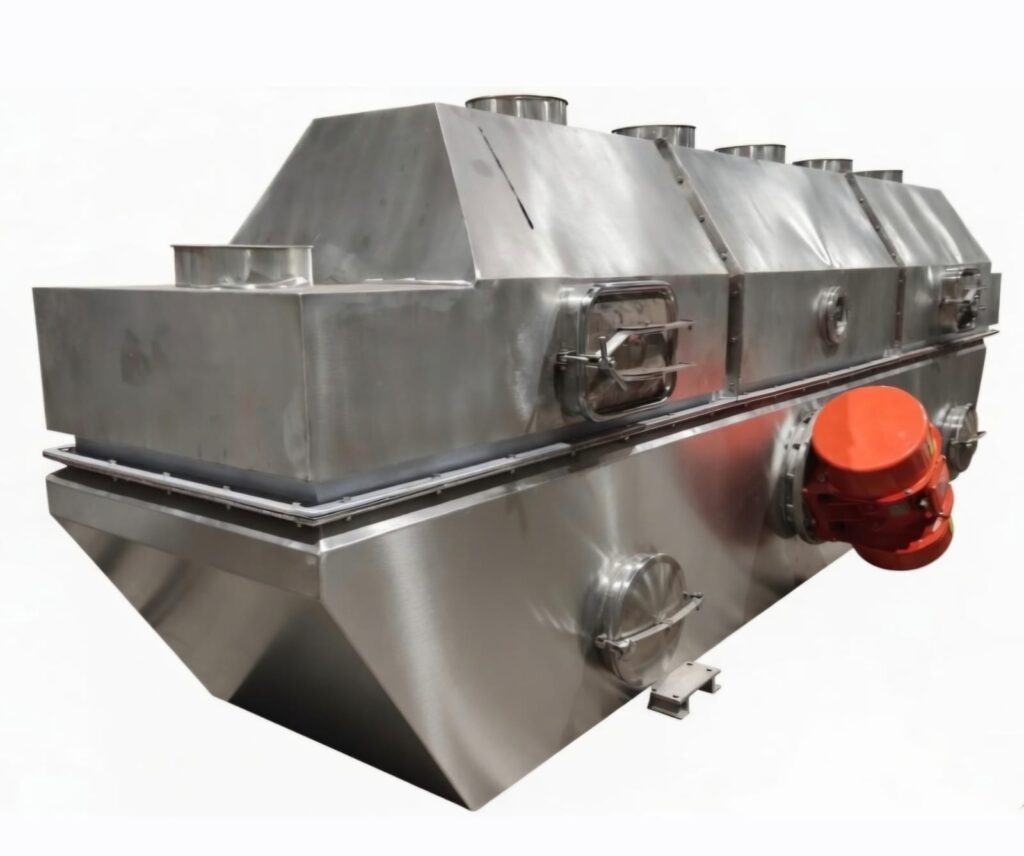
GTI’s spice-drying approach similarly recommends selecting the drying configuration according to:
Product → Feed Form → Initial Moisture → Required Final Moisture → Throughput → Heat Sensitivity → Residence Time → Energy Source.
This engineering-first approach is important because ginger, turmeric, onion, garlic and chilli should not be treated as identical materials.
Why Sri Lankan Food Processors Are Looking at Dehydration
Sri Lanka’s export sector is already moving toward value-added agricultural products.
The country’s Export Development Board reported US$461.85 million in spice and concentrate export earnings in 2024, up 16.11% year over year. The government has also been promoting the expansion and productivity of export agricultural crops and post-harvest technology.
For equipment manufacturers, this creates several potential customer groups.
Spice Exporters
Companies processing spices for international markets.
Food Ingredient Manufacturers
Businesses producing powders, flakes and dried ingredients.
Seasoning Manufacturers
Companies using dried onion, garlic, chilli, ginger and turmeric.
Agricultural Cooperatives
Groups seeking to reduce post-harvest losses and increase farmer value.
Food Processing Plants
Manufacturers producing sauces, instant foods, snacks and ready-to-use ingredients.
Businesses processing ginger, turmeric and other plant-based ingredients.
Import Dependence Creates Another Drying Opportunity
The Sri Lankan market should not be viewed only through exports.
Import data can reveal another form of industrial opportunity.
For example, in 2024:
- Sri Lanka imported about 36.95 million kg of fresh garlic, worth US$49.86 million.
- Sri Lanka imported more than 231 million kg of onions and shallots, worth over US$133 million.
- Sri Lanka exported only about 5.45 tonnes of fresh garlic that year.
This does not mean a dryer will automatically replace imports.
Instead, it highlights a broader opportunity:
Processors can evaluate whether locally sourced or imported raw materials can be converted into stable, higher-value dried ingredients for Sri Lanka’s food-manufacturing sector.
That is a more defensible commercial argument than claiming that dehydration alone will eliminate imports.
Sri Lanka Strategy for Spice Dryer
The national keyword should be supported by agricultural and food-processing locations.
Potential targets include:
Central Province
- Kandy
- Matale
- Nuwara Eliya
Potential keywords:
Spice Dryer Kandy
Ginger Dryer Kandy
Turmeric Dryer Matale
Spice Processing Equipment Central Province
Uva Province
- Badulla
- Monaragala
Potential keywords:
Ginger Dryer Badulla
Turmeric Dryer Monaragala
Spice Drying Machine Uva
North Central Province
- Anuradhapura
- Polonnaruwa
Potential keywords:
Chilli Dryer Anuradhapura
Onion Dryer Anuradhapura
Spice Processing Equipment Polonnaruwa
North Western Province
- Kurunegala
- Puttalam
Potential keywords:
Garlic Dryer Kurunegala
Chilli Dryer Kurunegala
Industrial Food Dryer North Western Province
Western Province
- Colombo
- Gampaha
These locations can be targeted more toward:
Food Processing Equipment Colombo
Industrial Dehydration Machine Sri Lanka
Spice Processing Machinery Colombo
rather than raw-material production alone.
Sri Lanka’s Three-Language
A major advantage for this country pillar page is that Sri Lanka has a multilingual search environment.
The primary commercial page can remain in English while supporting pages target:
English
Ginger Dryer Machine Sri Lanka
Turmeric Dryer Manufacturer Sri Lanka
Industrial Spice Dryer Sri Lanka
Sinhala
ඉඟුරු වියළන යන්ත්රය
කහ වියළන යන්ත්රය
ලූනු වියළන යන්ත්රය
සුදුළූණු වියළන යන්ත්රය
මිරිස් වියළන යන්ත්රය
කුළුබඩු වියළන යන්ත්රය
Tamil
இஞ்சி உலர்த்தும் இயந்திரம்
மஞ்சள் உலர்த்தும் இயந்திரம்
வெங்காயம் உலர்த்தும் இயந்திரம்
பூண்டு உலர்த்தும் இயந்திரம்
மிளகாய் உலர்த்தும் இயந்திரம்
மசாலா உலர்த்தும் இயந்திரம்
This multilingual architecture can capture search intent that an English-only website may miss.
Recommended Sri Lanka Cluster
This pillar page should become the main authority page:
/spice-dryer-machine-manufacturer-sri-lanka/
Then build supporting commercial pages.
Product Cluster
Ginger
/ginger-dryer-machine-sri-lanka/
Turmeric
/turmeric-dryer-machine-sri-lanka/
Onion
/onion-dryer-machine-sri-lanka/
Garlic
/garlic-dryer-machine-sri-lanka/
Chilli
/chilli-dryer-machine-sri-lanka/
Processing Technology Cluster
/industrial-spice-dryer-sri-lanka/
/spice-dehydration-equipment-sri-lanka/
/industrial-food-dehydrator-sri-lanka/
/vegetable-dryer-machine-sri-lanka/
/multi-product-spice-dryer-sri-lanka/
These pages can target broader industrial search intent.
Sinhala
Create genuinely localized pages rather than placing Sinhala keywords randomly into English content.
Potential pages:
/kulu-badu-wiyalana-yanthraya-sri-lanka/
කුළුබඩු වියළන යන්ත්රය
ඉඟුරු වියළන යන්ත්රය
කහ වියළන යන්ත්රය
මිරිස් වියළන යන්ත්රය
ලූනු වියළන යන්ත්රය
සුදුළූණු වියළන යන්ත්රය
Tamil
Potential pages:
மசாலா உலர்த்தும் இயந்திரம் இலங்கை
இஞ்சி உலர்த்தும் இயந்திரம் இலங்கை
மஞ்சள் உலர்த்தும் இயந்திரம் இலங்கை
மிளகாய் உலர்த்தும் இயந்திரம் இலங்கை
This creates a multilingual country cluster rather than relying only on English search traffic.
What Information Does GTI Need to Design a Spice Dryer?
A serious industrial enquiry should provide technical information before equipment sizing.
Product
Select:
- Ginger
- Turmeric
- Onion
- Garlic
- Chilli
- Multiple products
Feed Form
For example:
- Whole
- Sliced
- Chopped
- Diced
- Flakes
- Granules
Initial Moisture
Provide the approximate moisture entering the dryer.
Final Moisture
Provide the desired moisture after drying.
Capacity
Specify:
kg/hour or tonnes/day
Product Dimensions
For sliced products, provide:
- Slice thickness
- Width
- Length
- Particle size
Heating Source
Possible options include:
- Steam
- Thermal oil
- Gas
- LPG
- Biomass
- Electric heating
- Waste heat
Operating Schedule
Provide:
- Hours/day
- Days/week
- Seasonal or year-round production
Final Product
Tell the manufacturer whether the dried material will be used for:
- Direct consumption
- Flakes
- Powder
- Seasoning
- Food ingredients
- Export
- Further processing
These parameters allow the drying system to be designed around the actual process.
Why Choose GTI Dryers for Spice Dehydration?
GTI Dryers approaches spice drying as a process-engineering project, rather than simply supplying a standard dehydrator.
The equipment can be evaluated according to:
Product → Moisture → Capacity → Feed Form → Drying Profile → Heat Source → Residence Time → Plant Layout
This allows the system to be customized for the application.
Potential project scope can include:
- Process evaluation
- Dryer selection
- Thermal calculations
- Capacity assessment
- Equipment design
- Manufacturing
- Automation
- Installation
- Commissioning
- Operator training
- After-sales support
For multi-product projects, the engineering team can also evaluate different drying recipes for ginger, turmeric, onion, garlic and chilli.
Frequently Asked Questions
What is the best dryer for ginger in Sri Lanka?
The appropriate dryer depends on the ginger form, moisture, capacity, slice thickness and final product. Industrial tray, belt/conveyor and other continuous drying technologies can be evaluated according to the process requirement.
Can one dryer dry ginger, turmeric, onion, garlic and chilli?
A suitably engineered multi-product drying system can potentially handle multiple products, but each product may require a different drying profile. Product testing and process data should be used to determine the appropriate configuration.
What is the Sinhala term for spice dryer?
A useful Sinhala term is කුළුබඩු වියළන යන්ත්රය.
What is the Sinhala term for ginger dryer?
ඉඟුරු වියළන යන්ත්රය.
What is the Sinhala term for turmeric dryer?
කහ වියළන යන්ත්රය.
What is the Sinhala term for chilli dryer?
මිරිස් වියළන යන්ත්රය. The Department of Agriculture uses මිරිස් for chilli.
Does Sri Lanka have demand for industrial garlic drying?
The country has a substantial garlic supply chain. In 2024, Sri Lanka imported approximately 36.95 million kg of fresh garlic, worth US$49.86 million. This indicates a significant domestic garlic market, although it does not by itself establish demand for a specific dryer technology.
Does Sri Lanka produce turmeric and ginger?
Yes. Both are recognized within Sri Lanka’s export agricultural crop development programmes, and government initiatives specifically include productivity improvement and post-harvest technology.
Can the dryer produce material for powder production?
Yes. Drying can be integrated into a processing line followed by grinding, sieving and packaging. The required final moisture and particle characteristics should be specified during equipment design.
Can the dryer process chilli without damaging colour?
The drying profile should be designed around the particular chilli variety, moisture content, product form and colour requirements. Temperature, airflow and residence time need to be controlled accordingly.
What capacity dryer is suitable for a Sri Lankan spice factory?
Capacity cannot be selected from product name alone. It should be calculated from throughput, initial moisture, final moisture, operating hours and the required evaporation load.
Build a Multi-Product Spice Drying Plant in Sri Lanka
Sri Lanka’s opportunity in spice dehydration is not limited to one crop.
The country has a broader agricultural and food-processing ecosystem involving:
Ginger + Turmeric + Onion + Garlic + Chilli
Each product creates a different value-added pathway.
Ginger → Dried Ginger → Ginger Powder
Turmeric → Dried Turmeric → Turmeric Powder
Onion → Dried Onion → Onion Flakes/Powder
Garlic → Dried Garlic → Garlic Flakes/Powder
Chilli → Dried Chilli → Chilli Flakes/Powder
With appropriate process engineering, an industrial dehydration plant can become the link between fresh agricultural production and shelf-stable, higher-value food ingredients.
Sri Lanka’s government is already emphasizing export-crop productivity, value addition and post-harvest technology, while trade data demonstrates significant domestic and international movement of these products.
Planning a Spice Dryer Project in Sri Lanka?
Send GTI Dryers:
Product + feed form + capacity + initial moisture + required final moisture + slice thickness + heating source + operating hours + plant location
The engineering team can then evaluate the appropriate industrial dehydration technology for your application.
Sinhala Enquiry CTA
ශ්රී ලංකාවේ ඉඟුරු, කහ, ලූනු, සුදුළූණු හෝ මිරිස් වියළීමේ කර්මාන්ත ව්යාපෘතියක් සැලසුම් කරනවාද?
ඔබගේ:
නිෂ්පාදනය + ධාරිතාව + ආරම්භක තෙතමනය + අවසාන තෙතමනය + නිෂ්පාදන ආකාරය + බලශක්ති මූලාශ්රය + කර්මාන්තශාලා ස්ථානය
අප වෙත ලබා දෙන්න.
GTI Dryers ඔබගේ නිෂ්පාදන ක්රියාවලියට ගැලපෙන කාර්මික වියළීමේ විසඳුමක් සඳහා තාක්ෂණික ඇගයීමක් සිදු කළ හැක.
GTI Dryers — Sri Lanka’s Spice & Food Processing Industry සඳහා ඉංජිනේරුමය කාර්මික වියළීමේ විසඳුම්.