
Bangladesh Tea Dryer Machine Manufacturer for Modern Tea Processing
Bangladesh’s tea industry presents a different equipment opportunity from many of the world’s major tea-producing countries.
The country has an established tea-growing and processing industry, a large domestic consumer market and a growing interest in value-added tea products and export-oriented quality improvement.
According to Bangladesh Tea Board data, the country produced approximately 94.93 million kg of tea in 2025, following 93.04 million kg in 2024 and a record 102.918 million kg in 2023. Tea exports were approximately 1.64 million kg in 2025.
This creates an interesting industrial picture:
Large domestic consumption + established tea factories + expanding production geography + relatively small export volume + value-added opportunity.
For tea manufacturers, the drying stage is therefore important not only for production efficiency but also for consistent quality, moisture control, product diversification and export readiness.
GTI Dryers designs industrial drying systems for different tea-processing applications, including:
CTC Tea → Vibratory Fluid Bed Dryer (VFBD)
Orthodox Tea → Combination Fluid Bed Dryer
Green Tea → Combination Fluid Bed Dryer
The appropriate system should be selected according to tea type, production capacity, moisture load, product characteristics, heating source and factory layout.
Bangladesh Tea Industry: A Large Domestic Market with Processing Potential
Tea is deeply integrated into Bangladesh’s everyday consumption culture.
A 2025 peer-reviewed field study estimated annual domestic tea consumption at approximately 92.15 million kg, equivalent to around 142.8 million cups per day based on its survey methodology. The study also found that domestic consumption accounted for more than 95% of production in 2021 and 2022.
More recent industry reporting indicates that domestic demand is around 85–90 million kg annually, while tea imports fell to only about 50,000 kg in 2025 as domestic production increasingly met local requirements.
This means Bangladesh’s tea-processing industry cannot be evaluated purely through export figures.
The domestic market itself represents a substantial processing base.
At the same time, Bangladesh Bank research reports that value-added tea exports have grown and that in FY2025 Bangladesh exported approximately:
- 0.89 million kg of loose tea
- 1.04 million kg of value-added tea
The same research identifies packet tea demand in markets including Pakistan, the USA, Kuwait, Saudi Arabia and China.
This creates two complementary equipment opportunities:
Domestic Market
High-volume, consistent and cost-conscious tea processing.
Export & Value Addition
Higher emphasis on product consistency, moisture control, differentiated tea products and packaging quality.
Where Is Bangladesh’s Tea Industry Located?
The tea industry is concentrated in particular geographic clusters.
Bangladesh Bank’s 2026 research based on Bangladesh Tea Board data reports that approximately 72% of annual tea production came from greater Sylhet in 2024. It identifies Moulvibazar as the largest producing district, followed by Habiganj, while Panchagarh and Chattogram are also important production areas.
The 2024 production distribution reported in that research was approximately:
| Region / District | Share of 2024 Production |
| Moulvibazar | 50% |
| Habiganj | 18% |
| Panchagarh | 15% |
| Chattogram | 12% |
| Sylhet | 5% |
The Bangladesh Tea Board’s registered estates are distributed across tea-growing valleys including:
- Balisera
- Luskerpore
- Juri
- Longla
- North Sylhet
- Monu-Doloi
- Chattogram
- Korotoya
- Bandarban
Bangladesh Tea Dryer Map
Instead of targeting only:
“Tea Dryer Bangladesh”
a manufacturer can build content around actual tea-processing locations.
Moulvibazar & Sreemangal
Potential searches:
- Tea Dryer Moulvibazar
- Tea Processing Equipment Moulvibazar
- Tea Dryer Sreemangal
- Tea Factory Equipment Sreemangal
- Industrial Tea Dryer Sylhet
- Tea Processing Machinery Sylhet
Habiganj
Potential searches:
- Tea Dryer Habiganj
- Tea Processing Equipment Habiganj
- Industrial Tea Drying Machine Habiganj
- Tea Factory Machinery Bangladesh
Sylhet
Potential searches:
- Tea Dryer Sylhet
- Tea Processing Equipment Sylhet
- Tea Drying System Sylhet
- CTC Tea Dryer Sylhet
Panchagarh
Panchagarh has become increasingly important as a northern tea-growing region.
Potential searches:
- Tea Dryer Panchagarh
- Tea Processing Equipment Panchagarh
- Industrial Tea Dryer Northern Bangladesh
- Tea Factory Equipment Panchagarh
Chattogram
Potential searches:
- Tea Dryer Chattogram
- Tea Processing Equipment Chattogram
- Industrial Tea Dryer Chittagong
- Tea Factory Machinery Chattogram
Bandarban & Hill Tracts
Potential searches:
- Tea Processing Equipment Bandarban
- Tea Dryer Bandarban
- Tea Processing Machinery Chattogram Hill Tracts
This country → region → technology → application architecture can help capture more commercially relevant searches than one broad national keyword.
Bangladesh Tea Drying: The Three-Technology Approach
A modern tea factory may require different drying technologies depending on its product.
For GTI’s Bangladesh-focused strategy:
| Tea Type | GTI Technology | Main Application |
| CTC Tea | VFBD | Continuous granular tea drying |
| Orthodox Tea | Combination Fluid Bed Dryer | Controlled multi-stage drying |
| Green Tea | Combination Fluid Bed Dryer | Controlled drying after enzyme deactivation |
This approach is especially useful for Bangladesh because the country has both a large mainstream tea market and opportunities for differentiated/value-added products.
CTC Tea Dryer Machine Manufacturer in Bangladesh – VFBD
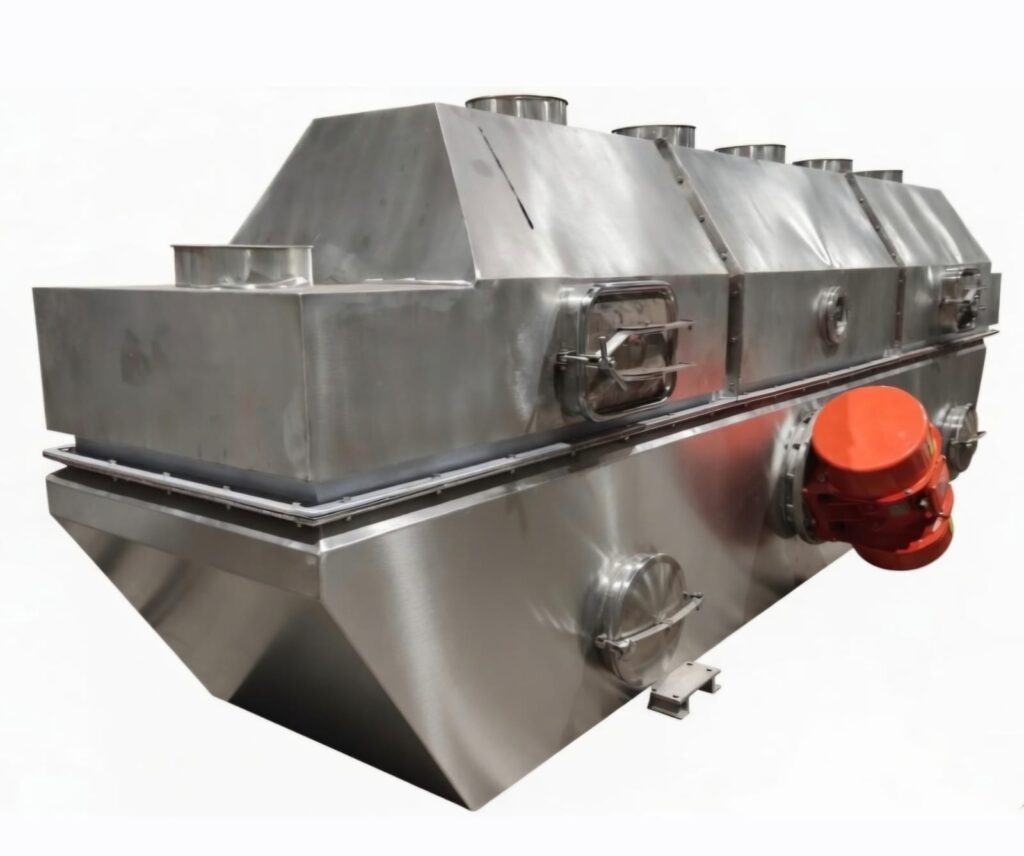
Vibratory Fluid Bed Dryer for CTC Tea
CTC stands for:
Crush – Tear – Curl
CTC processing produces granular tea particles that require controlled drying following oxidation.
For continuous industrial processing, a Vibratory Fluid Bed Dryer (VFBD) can provide a combination of:
fluidized hot air + controlled vibration + continuous product movement.
GTI’s VFBD systems are designed to provide uniform drying, controlled final moisture, continuous operation and controlled residence time. GTI specifically lists tea among its food-processing applications for VFBD systems.
How the CTC Tea VFBD Works
A simplified process is:
Processed CTC Tea
↓
Controlled Feeding
↓
Vibrating Fluid Bed
↓
Heated Air Contact
↓
Moisture Evaporation
↓
Exhaust Air Removal
↓
Dried CTC Tea
↓
Cooling / Grading
The wet tea is evenly distributed over a perforated vibrating bed.
Heated air passes upward through the bed and fluidizes the tea particles.
At the same time, controlled vibration transports the product through the dryer.
The combination improves air-particle contact and supports controlled residence time.
GTI’s VFBD design incorporates variables such as:
- airflow
- inlet air temperature
- bed depth
- vibration intensity
- residence time
- feed moisture
Why VFBD Can Be Useful for Bangladesh’s CTC Tea Processing
A CTC tea factory may require:
- continuous operation
- uniform moisture removal
- stable product movement
- high throughput
- controlled residence time
- consistent final moisture
- automation
A VFBD can be engineered around these requirements.
Potential Benefits
Uniform Drying
Fluidized hot air provides effective air-product contact.
Continuous Processing
The product can move continuously through the dryer.
Controlled Residence Time
Vibration and airflow can be adjusted according to the application.
Moisture Control
Drying conditions can be designed around the required final moisture.
Gentle Product Movement
Controlled vibration helps transport the material without relying solely on mechanical conveying.
Automation
Temperature, airflow and vibration can be integrated into automated controls.
Orthodox Tea Dryer Machine Manufacturer in Bangladesh – Combination Fluid Bed Dryer
Controlled Drying for Orthodox Tea
Orthodox tea represents an important opportunity for product differentiation in Bangladesh.
Current industry reporting notes that premium varieties such as Orthodox and Green Tea continue to find export markets, even though common tea faces stronger cost competition.
This makes controlled Orthodox tea processing relevant for manufacturers looking beyond conventional high-volume tea.
A Combination Fluid Bed Dryer can be engineered for multi-stage drying and controlled moisture removal.
Instead of treating drying as one uniform operation, different zones can be designed around the changing moisture condition of the product.
Orthodox Tea Drying Process
A typical industrial process can be represented as:
Fresh Tea Leaf
↓
Withering
↓
Rolling / Leaf Processing
↓
Oxidation
↓
Controlled Feeding
↓
Initial Drying
↓
Intermediate Drying
↓
Final Moisture Control
↓
Cooling
↓
Grading
↓
Blending / Packaging
The exact process conditions should be established according to the tea characteristics and desired product specification.
Why Bangladesh Tea Processors May Consider Orthodox Tea
Bangladesh’s mainstream tea market is large and strongly domestic-market oriented.
However, export-oriented and premium tea categories provide another route for manufacturers.
Bangladesh Bank’s research notes that value-added tea offers higher prices and export potential, while recent industry reporting specifically identifies Orthodox and Green Tea as premium categories that continue to find export markets.
For a factory, Orthodox tea can therefore be considered as part of a broader strategy involving:
- product differentiation
- premium tea
- specialty tea
- export-oriented products
- value-added processing
- branded tea
A Combination Fluid Bed Dryer can support the controlled drying stage of such a production line.
Green Tea Dryer in Bangladesh – Combination Fluid Bed Dryer
Controlled Green Tea Drying for Product Diversification
Green Tea represents a smaller segment of Bangladesh’s tea industry compared with conventional black tea.
However, it has commercial relevance because Bangladesh already has domestic and export-oriented Green Tea products.
Recent industry reporting identifies Green Tea among Bangladesh’s premium tea categories with export demand.
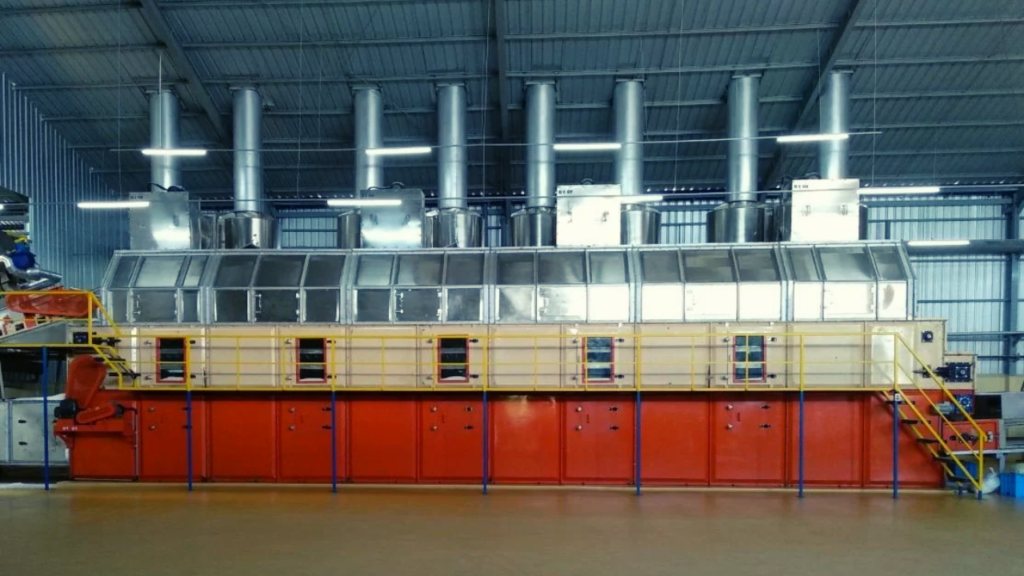
GTI’s Green Tea drying technology describes Combination Dryers as hybrid systems capable of multi-stage drying, moisture control and energy optimization for premium and large-scale green tea production.
Green Tea Processing and Drying
A simplified production route is:
Fresh Tea Leaves
↓
Enzyme Deactivation
↓
Rolling / Shaping
↓
Controlled Drying
↓
Cooling
↓
Sorting
↓
Grading
↓
Packaging
Green Tea differs from conventional black tea because the process aims to limit oxidation.
Therefore, the drying stage must be engineered around:
- leaf condition
- feed moisture
- product temperature
- drying time
- airflow
- final moisture
- desired colour
- product form
GTI describes Green Tea drying as a critical stage following enzyme deactivation, with controlled drying used to reduce moisture while maintaining product characteristics.
Why Green Tea Creates a Bangladesh Value-Addition Opportunity
Bangladesh’s tea market is heavily domestic, but export-oriented value addition is developing.
Bangladesh Bank reports that value-added tea exports have increased substantially over time and that packet tea has demand in several international markets.
For manufacturers, Green Tea can therefore be considered alongside:
- premium tea
- specialty tea
- organic tea
- branded packet tea
- tea bags
- differentiated export products
The opportunity is not necessarily to convert a conventional tea factory entirely to Green Tea.
Instead, manufacturers can evaluate whether a dedicated or flexible Green Tea processing line makes commercial sense.
Bangladesh Tea Dryer Selection: Which Technology Fits Which Product?
The technology should follow the product.
CTC Tea
Technology: VFBD
Best suited for:
- granular tea
- continuous drying
- high-throughput production
- controlled moisture
- automated operation
Orthodox Tea
Technology: Combination Fluid Bed Dryer
Best suited for:
- controlled multi-stage drying
- premium/differentiated tea
- product-quality management
- flexible processing
Green Tea
Technology: Combination Fluid Bed Dryer
Best suited for:
- controlled drying after enzyme deactivation
- staged moisture removal
- product-quality preservation
- premium and value-added production
Bangladesh’s Tea Industry Is Moving Beyond a Single Product Strategy
One of the strongest reasons to consider flexible drying technology is the changing structure of the tea market.
Bangladesh’s tea production reached more than 102 million kg in 2023, fell to 93.04 million kg in 2024, and recovered to approximately 94.93 million kg in 2025.
At the same time, export volumes have remained relatively small compared with total production.
In 2025:
Production: ~94.93 million kg
Exports: ~1.64 million kg
This means most tea remains connected to the domestic market.
However, the relatively small export share also creates a potential value-addition and export-development conversation.
The Bangladesh Bank study reports that value-added tea exports reached approximately 1.04 million kg in FY2025, exceeding loose-tea exports of 0.89 million kg.
For equipment suppliers, this means the lead-generation message should not simply be:
“Buy a tea dryer.”
It should be:
“Improve drying consistency, modernize your processing line and prepare your tea factory for higher-value products and export markets.”
Tea Factory Modernization Opportunities in Bangladesh
The Bangladesh market offers several types of potential dryer projects.
1. New Tea Processing Plants
For new factories, the drying system can be designed as part of the complete processing line.
2. Dryer Replacement
Older drying systems can be evaluated for replacement or modernization.
3. Capacity Expansion
As green-leaf intake increases, drying capacity may become a production bottleneck.
4. Energy Optimization
Improved airflow, insulation and heat management can be evaluated.
5. Automation
PLC/HMI systems can provide better control of:
- temperature
- airflow
- residence time
- vibration
- alarms
- operating data
6. Product Diversification
Factories can evaluate CTC, Orthodox and Green Tea as separate product pathways.
7. Export-Oriented Processing
Improved process consistency can support manufacturers targeting international buyers.
Tea Processing Equipment Demand in Moulvibazar and Sreemangal
Bangladesh Bank’s analysis of Tea Board data identifies Moulvibazar as the country’s largest tea-producing district, contributing approximately 50% of national tea production in 2024.
This creates high-value local search opportunities such as:
- Tea Dryer Machine Manufacturer Moulvibazar
- Tea Processing Equipment Moulvibazar
- Industrial Tea Dryer Sreemangal
- Tea Factory Equipment Sreemangal
- CTC Tea Dryer Moulvibazar
- VFBD Tea Dryer Sylhet
- Orthodox Tea Dryer Bangladesh
The page should also naturally use Sreemangal rather than relying exclusively on the generic “Sylhet tea” keyword because Sreemangal is strongly associated with Bangladesh’s tea-growing and tourism identity.
Panchagarh: A Northern Tea-Processing SEO Opportunity
Panchagarh is particularly interesting because Bangladesh’s tea production geography has expanded beyond the traditional eastern tea belt.
Bangladesh Bank’s 2026 research reports Panchagarh at approximately 15% of national tea production in 2024, making it the second-largest district in the cited distribution.
Tea Dryer Machine Manufacturer in Panchagarh
Tea Processing Equipment Panchagarh
Industrial Tea Dryer Northern Bangladesh
Tea Factory Machinery Panchagarh
Bangla SEO Terminology for Tea Dryer Searches
Bangla is the state language of Bangladesh under Article 3 of the Constitution.
FAQs
- image alt text
- supporting pages
- internal links
- captions
- selected headings
- local-language landing pages
English → Bangla
| English | Bangla |
| Tea | চা |
| Tea Dryer | চা শুকানোর মেশিন / চা শুকানোর যন্ত্র |
| Tea Drying | চা শুকানো |
| Tea Processing | চা প্রক্রিয়াকরণ |
| Tea Processing Machine | চা প্রক্রিয়াকরণ মেশিন |
| Tea Processing Equipment | চা প্রক্রিয়াকরণ যন্ত্রপাতি |
| Tea Factory | চা কারখানা |
| Industrial Tea Dryer | শিল্প চা শুকানোর মেশিন |
| Tea Drying Machine | চা শুকানোর মেশিন |
| CTC Tea | CTC চা |
| CTC Tea Dryer | CTC চা শুকানোর মেশিন |
| Green Tea | গ্রিন টি / সবুজ চা |
| Green Tea Dryer | গ্রিন টি শুকানোর মেশিন |
| Orthodox Tea | Orthodox চা |
| Tea Production | চা উৎপাদন |
| Tea Processing Plant | চা প্রক্রিয়াকরণ কারখানা |
High-Intent Bangla Search Phrases
বাংলাদেশে চা শুকানোর মেশিন
চা প্রক্রিয়াকরণ মেশিন বাংলাদেশ
শিল্প চা শুকানোর মেশিন
চা শুকানোর যন্ত্রপাতি
CTC চা শুকানোর মেশিন
গ্রিন টি শুকানোর মেশিন
চা কারখানার যন্ত্রপাতি
These should be used selectively. Repeating them excessively would create keyword stuffing rather than useful localization.
A Bangladesh Tea Dryer
A strong commercial content structure could look like:
National Search
Tea Dryer Machine Manufacturer Bangladesh
↓
Technology Search
VFBD Tea Dryer Bangladesh
↓
Product Search
CTC Tea Dryer Bangladesh
↓
Application Search
Tea Processing Equipment Bangladesh
↓
Regional Search
Tea Dryer Moulvibazar
↓
Local Search
চা শুকানোর মেশিন বাংলাদেশ
↓
Commercial Enquiry
Request Technical Proposal
This is much stronger for lead generation than trying to rank one article for every variation of “tea dryer.”
What Should a Bangladesh Tea Factory Consider Before Buying a Dryer?
The machine should be selected from process data rather than a generic capacity label.
Important information includes:
Tea Type
- CTC
- Orthodox
- Green Tea
- Specialty Tea
Feed Rate
Specify kg/hour or tonnes/hour.
Initial Moisture
The starting moisture percentage determines the drying load.
Final Moisture
The target moisture specification determines the required drying performance.
Product Characteristics
Provide:
- particle size
- leaf size
- bulk density
- flowability
- product sensitivity
Heating Source
Possible options include:
- steam
- thermic fluid
- gas
- biomass
- electric
- hybrid systems
Factory Location
For example:
- Moulvibazar
- Sreemangal
- Habiganj
- Sylhet
- Panchagarh
- Chattogram
- Bandarban
Project Type
- New plant
- Expansion
- Replacement
- Modernization
Automation
- Manual
- Semi-automatic
- PLC/HMI
- SCADA
Technical Parameters for Tea Dryer Design
There is no universal Bangladesh tea dryer temperature, capacity or residence time.
These parameters depend on the actual product.
Important design variables include:
Feed Moisture
Higher moisture generally increases the drying load.
Final Moisture
The required finished moisture determines the target drying performance.
Airflow
Air velocity and distribution must be matched to the product.
Residence Time
The tea needs sufficient controlled time inside the drying system.
Heating Load
Thermal requirements depend on moisture removal, product flow and operating conditions.
Bed Depth
Particularly important for fluidized systems.
Product Temperature
Must be controlled according to tea type and product-quality objectives.
Exhaust Air
Moisture-laden air must be removed effectively.
GTI’s VFBD technology identifies airflow, inlet air temperature, bed depth, vibration intensity, residence time and feed moisture as important operating/design parameters.
Energy Efficiency in Bangladesh Tea Drying
Energy cost is an important consideration when operating an industrial dryer.
A factory should evaluate:
- thermal efficiency
- airflow management
- insulation
- heating-system efficiency
- exhaust management
- heat recovery potential
- product residence time
- dryer loading
- maintenance requirements
GTI’s industrial tea drying systems are designed around controlled temperature, airflow, moisture content and residence time, with system configurations customized to production requirements.
Actual energy consumption should be calculated from the specific product, moisture load, heating source, ambient conditions and capacity rather than using a generic energy figure.
Export and Value-Added Tea: Where Drying Becomes Commercially Important
Bangladesh’s relatively small export volume compared with production highlights an important opportunity.
The Bangladesh Tea Board records:
2023 production: 102.918 million kg
2024 production: 93.04 million kg
2025 production: 94.93 million kg
2025 exports: 1.64 million kg
At the same time, Bangladesh Bank’s research indicates increasing importance of value-added tea exports.
Therefore, tea-processing companies looking to expand internationally may focus on:
- consistent drying
- quality control
- moisture management
- packet tea
- tea bags
- premium tea
- Green Tea
- Orthodox tea
- branded products
The drying system becomes one part of the overall quality-control chain.
From Tea Leaf to Market-Ready Product
A modern tea-processing line may be represented as:
Tea Cultivation
↓
Green Leaf Collection
↓
Withering
↓
CTC / Orthodox Processing
↓
Oxidation for Black Tea
↓
Drying
↓
Cooling
↓
Grading
↓
Blending
↓
Packaging
↓
Domestic / Export Market
For Green Tea, the process changes:
Fresh Leaf
↓
Enzyme Deactivation
↓
Rolling / Shaping
↓
Controlled Drying
↓
Cooling
↓
Grading
↓
Packaging
The dryer therefore needs to be selected as part of the complete process rather than as an isolated machine.
GTI Tea Drying Solutions for Bangladesh
GTI Dryers designs and manufactures industrial drying systems for different tea-processing applications.
CTC Tea
Vibratory Fluid Bed Dryer
Designed for controlled continuous drying of granular tea.
Orthodox Tea
Combination Fluid Bed Dryer
Designed for controlled multi-stage drying.
Green Tea
Combination Fluid Bed Dryer
Designed for controlled drying after enzyme deactivation.
GTI’s published tea drying systems cover Black Tea including CTC and Orthodox applications, Green Tea and other tea varieties, with control of temperature, airflow, moisture content and residence time.
What Can Be Included in a Bangladesh Tea Drying Project?
Depending on project requirements, the scope can include:
Process Engineering
Evaluation of tea characteristics and moisture-removal requirements.
Dryer Design
Application-specific sizing and configuration.
Feeding System
Controlled feeding and product distribution.
Hot Air System
Heating system designed around the available energy source.
Air Handling
Blowers, ducts and airflow distribution.
Exhaust System
Moisture-laden air and dust management.
Cooling
Cooling arrangement where required.
Automation
PLC/HMI or other process-control systems.
Installation & Commissioning
Support depending on the agreed project scope.
GTI states that its tea drying system scope can include process design and engineering, manufacturing, installation and commissioning, automation integration, operator training and after-sales support.
Why an Application-Specific Tea Dryer Matters
A tea dryer should not be selected simply because it is advertised as:
“1000 kg/hour”
or
“High-capacity tea dryer.”
Two products with the same feed rate can require significantly different drying configurations.
The correct engineering sequence is:
Product
↓
Moisture
↓
Capacity
↓
Drying Load
↓
Airflow
↓
Residence Time
↓
Heating System
↓
Dryer Configuration
↓
Automation
This approach helps reduce the risk of selecting equipment that is either under-designed or unnecessarily oversized.
Bangladesh Tea Dryer Buyer Checklist
Before requesting a quotation, prepare:
Tea Type: CTC / Orthodox / Green Tea
Wet Feed Capacity: ___ kg/hr
Initial Moisture: ___ %
Final Moisture: ___ %
Product Form: Leaf / Granule / Other
Heating Source: ___
Factory Location: ___
Existing Dryer: Yes / No
Project Type: New Plant / Expansion / Replacement
Automation: Manual / PLC / SCADA
Available Installation Area: ___
Future Production Capacity: ___
This information allows the engineering team to prepare a more relevant technical proposal.
Frequently Asked Questions – Tea Dryer Machine in Bangladesh
Which dryer is suitable for CTC tea in Bangladesh?
A Vibratory Fluid Bed Dryer (VFBD) can be engineered for continuous drying of granular CTC tea, providing controlled airflow, vibration, residence time and moisture removal.
Which dryer is suitable for Orthodox tea?
A Combination Fluid Bed Dryer can be designed for controlled multi-stage drying of Orthodox tea according to the required capacity and product specifications.
Can GTI supply a Green Tea Dryer to Bangladesh?
Yes. GTI designs Green Tea Drying Systems, including Combination Dryer configurations, for controlled moisture reduction after enzyme deactivation.
What is “tea dryer” in Bangla?
Common Bangla terminology includes চা শুকানোর মেশিন and চা শুকানোর যন্ত্র, meaning tea-drying machine/equipment.
What is “tea processing” in Bangla?
চা প্রক্রিয়াকরণ means tea processing.
What is “tea processing equipment” in Bangla?
চা প্রক্রিয়াকরণ যন্ত্রপাতি means tea-processing equipment.
Which areas of Bangladesh are important for tea production?
Major production areas include Moulvibazar, Habiganj, Panchagarh, Chattogram and Sylhet, with greater Sylhet accounting for around 72% of 2024 production in the Bangladesh Bank analysis.
Is Bangladesh mainly an export tea market?
No single characterization is sufficient. Bangladesh has a very large domestic market, and most production is consumed domestically. At the same time, value-added tea exports and premium categories create additional export opportunities.
Can one dryer process CTC, Orthodox and Green Tea?
A single standard configuration should not automatically be assumed to be optimal for all three. Each tea type has different processing requirements, so the equipment should be evaluated against the specific product and process.
Can GTI customize a tea dryer for an existing Bangladesh tea factory?
Yes. The system can be evaluated around the factory’s product, capacity, moisture requirements, heating source, layout and automation requirements.
Request a Customized Tea Dryer Proposal for Bangladesh
Planning a new tea-processing plant, factory expansion, dryer replacement, automation upgrade or value-added tea production line in Bangladesh?
GTI Dryers can evaluate your application according to your actual production and drying requirements.
Share Your Project Details
Tea Type: CTC / Orthodox / Green Tea
Capacity: ___ kg/hr or TPH
Feed Moisture: ___ %
Final Moisture: ___ %
Factory Location: Moulvibazar / Sreemangal / Habiganj / Sylhet / Panchagarh / Chattogram / Bandarban / Other
Heating Source: ___
Project Type: New Plant / Expansion / Replacement / Modernization
Automation: Manual / PLC / SCADA
GTI Tea Drying Technology
CTC Tea → Vibratory Fluid Bed Dryer (VFBD)
Orthodox Tea → Combination Fluid Bed Dryer
Green Tea → Combination Fluid Bed Dryer
আপনার চা প্রক্রিয়াকরণ প্রকল্পের জন্য শিল্প চা শুকানোর সমাধান
Engineered in India. Designed for Bangladesh.
Request a Tea Dryer Quotation for Bangladesh
Get Technical Consultation | Discuss Your Tea Factory | Request a Customized Dryer Proposal