
Industrial Tea Drying Solutions for Tanzania’s Growing Tea-Processing Sector
Tanzania has an established commercial tea industry spread across six major tea-growing regions: Mbeya, Njombe, Iringa, Tanga, Kagera and Mara. The Southern Highlands—particularly Njombe, Iringa and Mbeya—form an important production zone, while Tanga represents a long-established northeastern tea region.
The country’s tea industry combines large estates, smallholder farmers and industrial processing factories, creating demand for drying systems that can operate consistently across different production scales.
For tea manufacturers, however, the question is no longer simply:
“How do we dry tea?”
The more important questions are:
- How can the factory achieve consistent final moisture?
- How can drying capacity keep pace with green-leaf supply?
- How can energy consumption be controlled?
- How can product quality be maintained from batch to batch?
- Can the same plant support different tea products?
- How can processing equipment support export-oriented production?
- What drying technology is appropriate for CTC, Orthodox or Green Tea?
This is where modern industrial drying technology becomes important.
GTI Dryers designs and manufactures customized tea drying systems for industrial applications, including:
CTC Tea → Vibratory Fluid Bed Dryer (VFBD)
Orthodox Tea → Combination Fluid Bed Dryer
Green Tea → Combination Fluid Bed Dryer
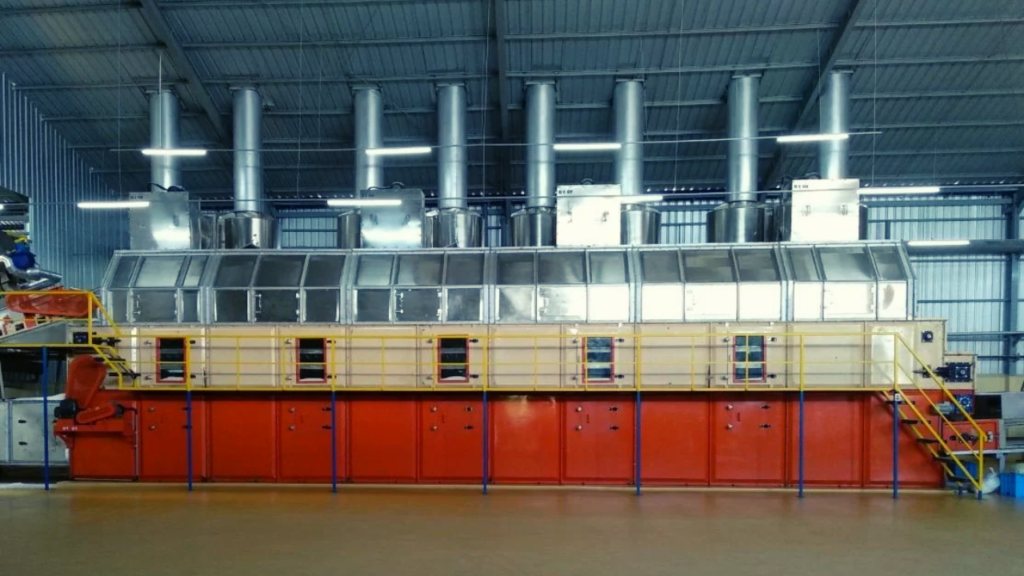
The correct system is selected according to the product, production capacity, feed moisture, final moisture requirement, thermal sensitivity, particle characteristics and factory layout.
Tanzania Tea Industry: An Established Processing Market
Tea is a significant agricultural crop in Tanzania and is grown across multiple regions.
The Tanzania National Sample Census of Agriculture reported 18,661 households involved in tea cultivation in the 2019/20 agricultural year. The census recorded approximately 15,119 hectares planted with tea and 66,540 tonnes of tea production, including both smallholder and large-scale production.
The production geography is particularly relevant for industrial equipment suppliers.
The same census recorded the largest harvested tea areas in:
- Tanga
- Mbeya
- Iringa
while smallholder production was particularly significant in Mbeya and Tanga.
More recent industry reporting also identifies Rungwe, Mufindi and Tanga among the country’s important tea-processing areas and highlights efforts to strengthen production and revive processing capacity.
This creates a different equipment opportunity from a country where tea production is only emerging.
Tanzania already has an industrial tea ecosystem.
The opportunity for equipment manufacturers is therefore strongly connected with:
capacity improvement + factory modernization + drying consistency + energy efficiency + product diversification.
Tanzania’s Tea-Processing Geography Creates Localized Equipment Demand
Tanzania’s tea industry is geographically distributed, so industrial equipment content should also target individual production clusters.
Southern Highlands
The Southern Highlands include:
- Njombe
- Iringa
- Mbeya
This region is particularly important for tea production.
A Tanzania-focused tea dryer manufacturer can therefore target searches such as:
- Tea dryer manufacturer Njombe
- Tea processing equipment Njombe
- Tea dryer Mufindi
- Tea processing machinery Iringa
- Industrial tea dryer Mbeya
- Rungwe tea processing equipment
- VFBD tea dryer Southern Tanzania
Tanga Tea Region
Tanga is another established tea-producing area.
The tea-producing districts include:
- Muheza
- Lushoto
- Korogwe
These locations create additional GEO opportunities:
- Tea dryer Tanga Tanzania
- Tea processing equipment Tanga
- Industrial tea dryer Muheza
- Tea factory equipment Lushoto
- Tea drying machine Korogwe
Kagera and Mara
Tanzania’s northern tea-producing areas also include Kagera and Mara.
Potential localized search terms include:
- Tea dryer Kagera
- Tea processing equipment Kagera
- Tea dryer Mara Tanzania
- Tea factory machinery northern Tanzania
- Industrial tea drying system Tanzania
This geographic strategy helps GTI target actual tea-producing areas rather than relying entirely on a country-level keyword.
What Is Driving the Need for Modern Tea Dryers in Tanzania?
The requirement for industrial drying technology is connected to several stages of tea-industry development.
1. Existing Factory Infrastructure Needs Modernization
Recent reporting from Tanzania’s tea sector has highlighted efforts to revive processing capacity and strengthen factories.
For existing factories, this can create opportunities for:
- dryer replacement
- capacity expansion
- automation upgrades
- energy-efficiency improvements
- improved moisture control
- integration with existing processing lines
2. Smallholder Production Requires Reliable Processing Capacity
Tanzania’s tea industry includes a significant smallholder component. The 2019/20 agricultural census recorded 25,295 tonnes from smallholder farmers compared with 41,245 tonnes from large-scale farms.
Fresh tea leaf needs timely processing.
Therefore, the efficiency and availability of factory infrastructure directly affect the broader tea value chain.
3. Export Markets Require Consistency
Tanzania exports processed tea to international markets.
World Bank WITS data shows that in 2024 Tanzania exported approximately 14.03 million kg of black and partly fermented tea, worth about US$16.84 million. Major destinations recorded included Kenya, the United Kingdom, Pakistan, South Africa and Russia.
This means industrial drying consistency matters not only for domestic processing but also for export-oriented production.
The Three Drying Technologies for Tanzania’s Tea Industry
Different tea products require different drying strategies.
Instead of promoting one universal machine, a tea factory should select the drying technology according to the product.
| Tea Type | GTI Drying Technology | Primary Objective |
| CTC Tea | Vibratory Fluid Bed Dryer | Continuous, uniform drying |
| Orthodox Tea | Combination Fluid Bed Dryer | Controlled multi-stage drying |
| Green Tea | Combination Fluid Bed Dryer | Controlled drying and moisture management |
This product-specific approach allows Tanzanian tea processors to evaluate both their current requirements and potential future diversification.
CTC Tea Dryer Machine Manufacturer in Tanzania – VFBD
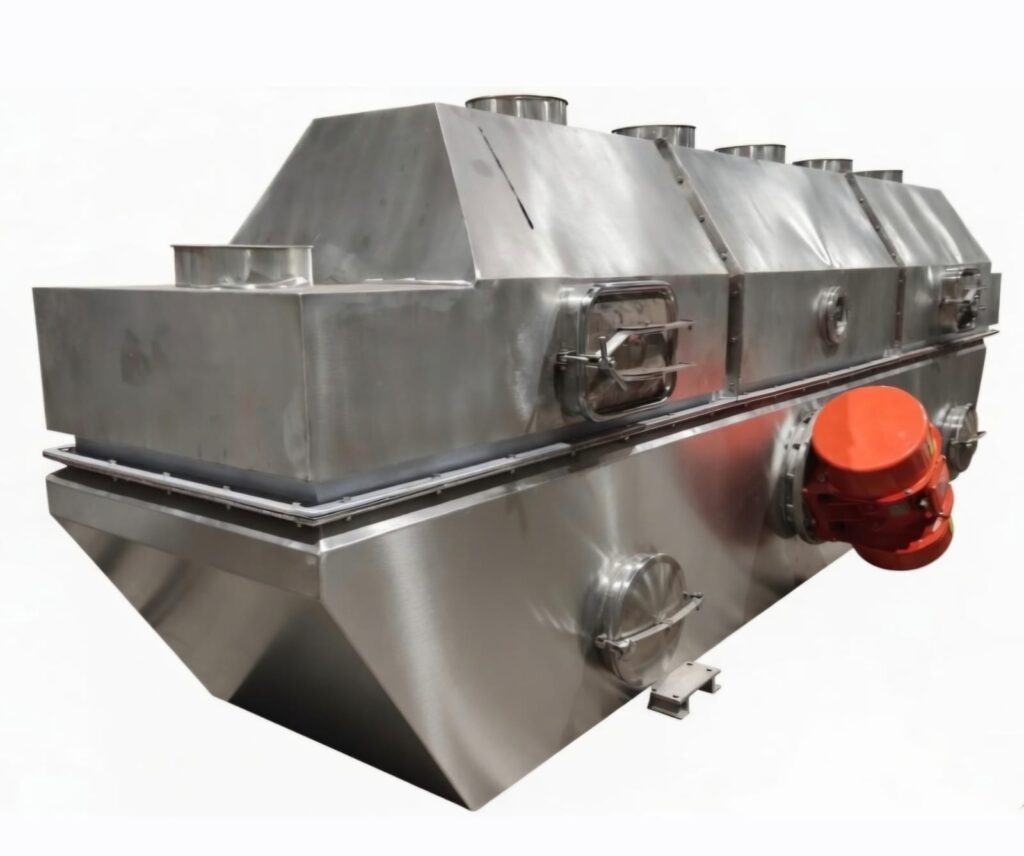
Vibratory Fluid Bed Dryer for CTC Tea Processing
CTC tea processing produces relatively small, granular tea particles that require controlled and uniform drying after oxidation.
A Vibratory Fluid Bed Dryer (VFBD) combines:
controlled vibration + fluidized hot air + continuous product movement.
This makes VFBD technology particularly relevant for industrial applications where consistent moisture removal and continuous throughput are required.
GTI’s VFBD systems are designed around controlled airflow, vibration, product movement and residence time to provide uniform drying and controlled final moisture. Tea is among the food products listed for VFBD application.
CTC Tea Drying Process
A simplified process is:
CTC Green Leaf Processing
↓
Withering / Processing
↓
CTC Crushing, Tearing & Curling
↓
Oxidation
↓
Controlled Feeding
↓
VFBD Drying
↓
Cooling
↓
Grading
↓
Blending / Packaging
The dryer must remove sufficient moisture to stabilize the tea while avoiding unnecessary thermal exposure.
Why VFBD for CTC Tea?
A properly engineered VFBD can provide:
- continuous operation
- uniform product movement
- efficient heat transfer
- controlled moisture reduction
- adjustable residence time
- controlled airflow
- reduced manual handling
- automation integration
For a high-throughput CTC tea factory, these characteristics can help create a more consistent drying stage.
How a VFBD Tea Dryer Works
The wet tea enters the dryer through a controlled feeding system.
Inside the drying chamber:
- Tea is distributed across the vibrating bed.
- Heated air passes upward through the perforated surface.
- Airflow fluidizes the tea particles.
- Mechanical vibration moves the product through the drying chamber.
- Moisture transfers from the tea into the heated air.
- Moisture-laden air exits through the exhaust system.
- Dried tea is discharged for cooling or further processing.
The combination of fluidization and vibration helps provide uniform contact between the product and drying air.
Orthodox Tea Dryer Machine Manufacturer in Tanzania – Combination Fluid Bed Dryer
Controlled Drying for Orthodox Tea Production
Orthodox tea processing differs from CTC processing because the leaf structure and processing approach are different.
For manufacturers developing or expanding Orthodox tea production, the drying system must therefore be selected around the characteristics of the processed leaf.
A Combination Fluid Bed Dryer can provide multi-stage drying conditions and controlled moisture removal.
Instead of treating the entire drying stage as one identical zone, the system can be engineered with different drying conditions across stages.
Orthodox Tea Drying Concept
Withered Leaf
↓
Rolling / Processing
↓
Oxidation
↓
Controlled Feeding
↓
Initial Drying
↓
Intermediate Drying
↓
Final Moisture Control
↓
Cooling
↓
Grading & Packaging
The actual drying temperature profile and residence time should be determined from product trials and process data.
Why Tanzanian Tea Processors May Consider Orthodox Tea Diversification
Tanzania’s tea sector has historically had a strong black-tea orientation, while industry discussions increasingly include diversification and value addition.
For a processor, Orthodox production can create a different product proposition from conventional CTC production.
Potential objectives include:
- differentiated tea products
- premium product development
- specialty tea processing
- greater product flexibility
- access to different buyer segments
- higher-value product exploration
This does not mean that every Tanzanian factory should convert from CTC to Orthodox production.
Rather, the drying system should be evaluated as part of a broader product-development strategy.
Green Tea Dryer in Tanzania – Combination Fluid Bed Dryer
Industrial Green Tea Drying System
Green tea requires a different processing philosophy from black tea because the process aims to limit enzymatic oxidation and preserve the desired characteristics of the leaf.
GTI’s green tea drying systems describe controlled drying after enzyme deactivation and identify Combination Dryers as a multi-stage option for moisture control and large-scale production.
A Combination Fluid Bed Dryer can be engineered for:
- controlled drying
- uniform moisture reduction
- staged heat transfer
- airflow control
- continuous production
- energy optimization
- automation
Green Tea Processing Route
Fresh Tea Leaves
↓
Enzyme Deactivation
↓
Rolling / Shaping
↓
Controlled Drying
↓
Cooling
↓
Sorting / Grading
↓
Packaging
The exact process parameters depend on the tea cultivar, leaf condition, feed moisture, production capacity and desired finished product.
Why Green Tea Could Be a Future Product Opportunity
The available Tanzanian industry data establishes a significant black-tea processing base. Therefore, Green Tea should be positioned as a diversification and value-added opportunity, rather than claiming that Tanzania already has a dominant industrial green-tea market.
For manufacturers considering product diversification, green tea processing can potentially support:
- specialty tea development
- premium product lines
- domestic consumer products
- export-oriented products
- value-added tea processing
This creates a potential future requirement for controlled drying technology.
CTC vs Orthodox vs Green Tea: Selecting the Right Dryer
A Tanzania tea factory should not select a dryer only by machine capacity.
The product itself is the starting point.
CTC Tea
Recommended technology: VFBD
Best suited to requirements involving:
- continuous production
- granular tea
- controlled moisture
- high throughput
- uniform drying
Orthodox Tea
Recommended technology: Combination Fluid Bed Dryer
Relevant where the producer requires:
- controlled drying
- multi-stage moisture removal
- product-quality management
- flexible processing
- differentiated tea production
Green Tea
Recommended technology: Combination Fluid Bed Dryer
Relevant where the producer requires:
- controlled drying conditions
- staged moisture reduction
- careful thermal management
- uniform final moisture
- green-tea product development
Tanzania Tea Dryer Buying Guide: What Should a Factory Tell the Manufacturer?
Before requesting a quotation, tea processors in Tanzania should provide actual production information.
Product Information
- CTC
- Orthodox
- Green Tea
- Specialty Tea
Capacity
For example:
- kg/hour
- tonnes/day
- tonnes/hour
Moisture
- Initial moisture %
- Desired final moisture %
Product Characteristics
- Leaf size
- Particle size
- Bulk density
- Flowability
- Product temperature sensitivity
Heating System
- Steam
- Thermic fluid
- Gas
- Biomass
- Electric
- Hybrid
Factory Details
- Njombe
- Mufindi
- Iringa
- Mbeya
- Rungwe
- Tanga
- Kagera
- Mara
- Other
Automation
- Manual
- Semi-automatic
- PLC
- PLC + HMI
- SCADA integration
These details allow a manufacturer to develop an application-specific drying system instead of recommending a generic machine.
Kiswahili: Tanzania Tea Dryer Terminology
Kiswahili is Tanzania’s national language. Tanzania’s official country information identifies Swahili as the national language and Swahili and English as official languages.
However, these terms should be used naturally rather than repeated as keyword stuffing.
Important Kiswahili Terms
| English | Kiswahili |
| Tea | Chai |
| Green Tea | Chai ya kijani |
| Black Tea | Chai nyeusi |
| Tea Dryer | Kikaushio cha chai |
| Tea Drying | Ukaushaji wa chai |
| Tea Processing | Uchakataji wa chai |
| Tea Processing Machine | Mashine ya kuchakata chai |
| Tea Processing Equipment | Vifaa vya kuchakata chai |
| Industrial Tea Dryer | Kikaushio cha chai cha viwandani |
| CTC Tea | Chai ya CTC |
| CTC Tea Dryer | Kikaushio cha chai ya CTC |
| Fluid Bed Dryer | Kikaushio cha kitanda chenye hewa |
| Vibratory Fluid Bed Dryer | Kikaushio cha kitanda chenye hewa na mtetemo |
| Orthodox Tea | Chai ya Orthodox |
| Tea Factory | Kiwanda cha chai |
| Tea Production | Uzalishaji wa chai |
| Tea Processing Plant | Kiwanda cha kuchakata chai |
Kikaushio cha chai Tanzania
Mashine ya kuchakata chai Tanzania
Vifaa vya kuchakata chai Tanzania
Kikaushio cha chai cha viwandani Tanzania
Kikaushio cha chai ya CTC Tanzania
Ukaushaji wa chai Tanzania
Kikaushio cha chai cha kitanda chenye hewa na mtetemo
These terms can be incorporated into:
- image alt text
- FAQs
- supporting articles
- image captions
- selected subheadings
- metadata where appropriate
- internal-link anchor text
Tanzania Tea Dryer
Country-Level Page
Tea Dryer Machine Manufacturer in Tanzania
↓
Technology Pages
CTC Tea Dryer – VFBD Tanzania
Orthodox Tea Dryer – Combination Fluid Bed Dryer Tanzania
Green Tea Dryer – Combination Fluid Bed Dryer Tanzania
↓
Regional Pages
Tea Processing Equipment Njombe
Tea Dryer Mufindi
Tea Processing Equipment Iringa
Tea Dryer Rungwe
Tea Processing Equipment Mbeya
Tea Dryer Tanga
Tea Processing Equipment Kagera
Tea Dryer Mara
↓
Local-Language Content
Kikaushio cha chai Tanzania
Mashine ya kuchakata chai
Ukaushaji wa chai
Tanzania Tea Dryer Market: Buyer Intent Matters
Not every person searching for “tea dryer Tanzania” is a machine buyer.
Search intent can be divided into several groups.
Research Intent
“How does a tea dryer work?”
Technology Intent
“VFBD tea dryer”
Commercial Intent
“Tea dryer machine manufacturer Tanzania”
Project Intent
“Tea processing plant equipment Tanzania”
Replacement Intent
“Industrial tea dryer replacement”
Expansion Intent
“Tea factory drying capacity expansion Tanzania”
Product Diversification Intent
“Green tea processing equipment Tanzania”
A well-developed pillar page should address all these stages while keeping the primary commercial intent visible.
What Can GTI Dryers Supply for a Tanzania Tea Project?
GTI Dryers can engineer tea drying systems around the specific application.
The potential scope can include:
Process Design
Evaluation of product and moisture-removal requirements.
Dryer Manufacturing
Customized industrial dryer construction according to project requirements.
Hot Air System
Heating and air-handling arrangement selected around the available energy source.
Feeding System
Controlled product feeding for uniform dryer loading.
Air Distribution
Engineered airflow distribution across the drying section.
Exhaust & Dust Collection
Moisture-laden air handling and dust-management arrangements.
Automation
Temperature, airflow and process control through PLC/HMI or other automation configurations.
Installation & Commissioning
Equipment integration and commissioning support can be included depending on project scope.
GTI’s published tea-drying system scope includes process design and engineering, manufacturing, installation and commissioning, automation integration, operator training and after-sales support.
Designing the Dryer Around Tanzanian Tea Processing Conditions
A machine should not be selected only because it has a particular capacity rating.
Dryer design depends on the actual material and process.
Important engineering parameters include:
Feed Rate
How much wet tea enters the dryer per hour.
Initial Moisture
The moisture content entering the dryer.
Final Moisture
The target moisture required after drying.
Moisture Removal Rate
The amount of water that must be removed per hour.
Residence Time
How long the product remains inside the drying system.
Airflow
The quantity and velocity of heated air required for the material.
Heating Source
The available energy source and its operating cost.
Product Characteristics
Particle size, density, leaf structure and flowability.
Factory Layout
Available installation area and connection points.
GTI’s VFBD technology specifically considers parameters including airflow, air velocity, bed depth, residence time, vibration and feed moisture when engineering the drying system.
Energy Efficiency in Tanzanian Tea Drying
Energy is an important operating factor in any continuous drying process.
An industrial tea dryer should therefore be evaluated not simply on purchase price but also on:
- thermal efficiency
- airflow optimization
- insulation
- heat recovery possibilities
- burner efficiency
- residence time
- exhaust management
- product throughput
- maintenance requirements
GTI’s tea and green-tea drying systems describe energy-efficiency features including optimized airflow, insulated drying chambers and heat-recovery approaches depending on the system configuration.
Actual energy performance, however, depends on the product, moisture load, heating source, ambient conditions and plant configuration.
Export-Oriented Tea Drying from Tanzania
Tanzania already participates in international tea trade.
In 2024, recorded Tanzanian exports of black and partly fermented tea reached approximately 14.03 million kg, with a reported value of US$16.84 million. Kenya, the United Kingdom, Pakistan, South Africa and Russia were among the destinations recorded in the WITS data.
For export-oriented factories, drying consistency becomes particularly important because the finished tea may need to remain stable through:
Processing → Grading → Packaging → Storage → Transport → Export → Distribution
A controlled drying system helps manufacturers establish repeatable process conditions and moisture specifications.
From Green Leaf to Export-Ready Tea: Where the Dryer Fits
The drying system is one component within a much larger tea-processing chain.
A typical industrial process can be represented as:
Tea Cultivation
↓
Green Leaf Harvesting
↓
Leaf Collection & Transport
↓
Withering / Preparation
↓
CTC or Orthodox Processing
↓
Oxidation for Black Tea
↓
Drying
↓
Cooling
↓
Grading
↓
Blending
↓
Packaging
↓
Storage
↓
Domestic / Export Market
For Green Tea, the process changes because enzyme deactivation is performed instead of conventional black-tea oxidation.
This is why dryer selection should always be integrated with the overall tea-processing design.
Why Work With an Indian Tea Dryer Manufacturer for Tanzania?
For a Tanzanian tea factory, the supplier relationship can extend beyond the equipment itself.
A project may require:
- process engineering
- equipment selection
- capacity calculation
- thermal calculations
- airflow design
- fabrication
- automation
- installation support
- commissioning
- operator training
- after-sales assistance
GTI Dryers positions its tea systems around customized industrial drying rather than a one-size-fits-all machine. Its published tea systems cover black, CTC, green and specialty tea applications and identify customization according to capacity and processing requirements.
For an international Tanzania project, the technical discussion should therefore begin with product and process data.
Tanzania Tea Dryer Project Checklist
Before contacting a manufacturer, prepare:
Tea Type: CTC / Orthodox / Green
Wet Feed Capacity: ___ kg/hr
Initial Moisture: ___ %
Final Moisture: ___ %
Operating Hours: ___ hours/day
Heating Source: ___
Factory Location: ___
Existing Dryer: Yes / No
Replacement or New Plant: ___
Required Automation: ___
Available Installation Space: ___
Future Capacity: ___
This information can significantly improve the accuracy of the initial technical proposal.
Frequently Asked Questions About Tea Dryers in Tanzania
Which dryer is suitable for CTC tea in Tanzania?
A Vibratory Fluid Bed Dryer (VFBD) can be engineered for continuous drying of CTC tea, providing controlled airflow, vibration, product movement and moisture removal.
Which dryer is suitable for Orthodox tea?
A Combination Fluid Bed Dryer can be configured for controlled multi-stage drying of Orthodox tea. The final design depends on product and process requirements.
Can GTI supply a Green Tea Dryer to Tanzania?
Yes. GTI designs Green Tea Drying Systems, including Combination Dryer configurations, for controlled moisture reduction and industrial green-tea processing.
What is “kikaushio cha chai” in English?
Kikaushio cha chai means tea dryer in Kiswahili.
What is “uchakataji wa chai”?
Uchakataji wa chai means tea processing.
What is “ukaushaji wa chai”?
Ukaushaji wa chai means tea drying.
What regions of Tanzania are important for tea processing?
Important tea-growing regions include Njombe, Iringa, Mbeya, Tanga, Kagera and Mara. The Southern Highlands—particularly Njombe, Iringa and Mbeya—are an important production zone.
Can one dryer process CTC, Orthodox and Green Tea?
A single dryer should not automatically be assumed suitable for all three products. Different tea types have different processing requirements. A system should be selected or engineered according to the actual product, moisture load, capacity and quality objectives.
Can the tea dryer be customized for an existing Tanzanian factory?
Yes. A project can be evaluated around the existing factory layout, production capacity, heating system, moisture requirement, automation level and integration requirements.
Does GTI manufacture tea dryers in India for export to Tanzania?
GTI designs and manufactures industrial drying systems in India and can develop systems for international tea-processing projects.
Request a Tea Dryer Proposal for Tanzania
Planning a new tea factory, processing-line expansion, dryer replacement, capacity upgrade or product-diversification project in Tanzania?
GTI Dryers can evaluate the drying requirement based on your actual tea-processing data.
Tell us:
Tea Type: CTC / Orthodox / Green Tea
Capacity: ___ kg/hr or TPH
Feed Moisture: ___ %
Required Final Moisture: ___ %
Factory Location: Njombe / Mufindi / Iringa / Mbeya / Rungwe / Tanga / Kagera / Mara / Other
Heating Source: ___
Project Type: New Plant / Expansion / Dryer Replacement
Automation: Manual / PLC / SCADA
GTI Tea Drying Technology
CTC Tea → Vibratory Fluid Bed Dryer
Orthodox Tea → Combination Fluid Bed Dryer
Green Tea → Combination Fluid Bed Dryer
Engineered in India. Designed for Tanzania.
Request a Customized Tea Dryer Proposal for Tanzania
Get Technical Consultation | Request a Quotation | Discuss Your Tea Processing Project