
Malawi Tea Drying Industry: From Export-Scale CTC to Value-Added Tea
Malawi has one of Africa’s long-established commercial tea industries.
The country’s tea industry dates back to the late 19th century, and tea remains an important export commodity. Malawi’s trade authorities identify tea among the country’s major agricultural exports, while the Tea Association of Malawi represents tea producers and promotes the sector domestically and internationally.
The scale of the export business remains significant.
In 2024, Malawi exported approximately 28.25 million kg of tea worth US$69.37 million. The United Kingdom accounted for about 11.29 million kg, South Africa 6.40 million kg and the United States 2.63 million kg. Other destinations included Kenya, the Netherlands, Japan, Saudi Arabia, Germany, Botswana, Switzerland, Egypt, China, India and the UAE.
But there is another important characteristic of Malawi’s tea trade:
black/partly fermented tea dominates the export stream.
In 2024, Malawi exported approximately 28.11 million kg of black or partly fermented tea worth US$69.21 million.
This makes high-capacity, consistent black-tea drying an important industrial requirement.
At the same time, Malawi’s Ministry of Trade and Industry has called on the tea sector to increase value addition so that Malawian tea can become more competitive and achieve higher value in international markets.
That creates a broader opportunity:
CTC Tea → high-volume industrial drying
Orthodox Tea → specialty/value-added drying
Green Tea → product diversification
For these applications, the appropriate drying technology can differ.
Malawi’s Tea Industry: Why Dryer Technology Is Becoming More Important
The Malawi tea industry is concentrated around established commercial tea estates and processing factories.
The country’s principal tea-growing areas include Thyolo and Mulanje, with tea also grown in the northern region, including Nkhata Bay. Malawi’s trade-sector information identifies approximately 19,000 hectares of tea plantations and 21 tea factories, while current industry sources continue to identify Thyolo and Mulanje as major tea-processing regions.
Many of these estates operate their own processing factories and also receive green leaf from smallholder growers.
For example, tea estates in Thyolo and Mulanje have dedicated processing facilities and work with smallholder suppliers.
This creates several equipment requirements:
- Replacement of older dryers
- Production-capacity expansion
- Energy-efficient drying
- Improved moisture control
- Automation upgrades
- CTC processing
- Specialty tea production
- Green tea diversification
- Value-added tea processing
A modern industrial dryer therefore needs to be evaluated as part of the complete tea-processing line, not as an isolated machine.
Malawi Tea Export Market: Where Is the Demand Coming From?
Malawi’s tea industry is strongly export-oriented.
According to 2024 WITS/UN Comtrade data, Malawi exported tea to more than 20 international markets.
Major 2024 export destinations
| Destination | Export Volume | Export Value |
| United Kingdom | 11.29 million kg | US$32.74 million |
| South Africa | 6.40 million kg | US$13.66 million |
| United States | 2.63 million kg | US$9.05 million |
| Kenya | 1.56 million kg | US$2.16 million |
| Netherlands | 1.02 million kg | US$1.84 million |
| Japan | 742,848 kg | US$1.47 million |
| Saudi Arabia | 740,220 kg | US$1.28 million |
| Germany | 822,420 kg | US$1.22 million |
These figures are based on Malawi’s 2024 exports under HS 0902.
The export geography shows why drying consistency matters.
Malawi tea is entering markets across:
Europe + Southern Africa + North America + Asia + Middle East.
For an industrial tea factory, consistent final moisture, controlled drying conditions and repeatable production can therefore be important parts of maintaining product specifications for international buyers.
Malawi Tea and Local Language: What Is Tea Called?
The Government of Malawi identifies English as the official language and Chichewa as a common language.
In Chichewa, tea is “tiyi.”
For industrial SEO, however, terms such as CTC Tea, Orthodox Tea, Green Tea, VFBD and Combination Fluid Bed Dryer should remain in English because they are technical B2B terms.
Useful Malawi-localized terminology
| English | Chichewa / Local Term | Recommended SEO Usage |
| Tea | Tiyi | Tea / Tiyi |
| Tea Factory | Fakitale ya tiyi | Tea Factory Malawi |
| Tea Processing | Kukonza tiyi | Tea Processing / Kukonza Tiyi |
| Tea Drying | Kuyanika tiyi | Tea Drying / Kuyanika Tiyi |
| Tea Dryer | Makina owumitsira tiyi | Tea Dryer / Industrial Tea Dryer |
| Green Tea | Tiyi wobiriwira | Green Tea / Tiyi Wobiriwira |
| Black Tea | Tiyi wakuda | Black Tea / Tiyi Wakuda |
| CTC Tea | CTC Tea / Tiyi wa CTC | CTC Tea Malawi |
| Orthodox Tea | Orthodox Tea | Orthodox Tea Malawi |
SEO recommendation: use the local terms in selected headings, FAQs, image alt text and supporting paragraphs, while keeping the English technical keywords as the primary search terms.
Three Tea Categories. Three Drying Requirements.
Malawi’s established tea industry is primarily associated with black tea production, while value-addition initiatives create scope for differentiated tea products.
This means a tea-processing company may have three distinct equipment requirements:
CTC Tea
VFBD / Vibratory Fluidised Bed Dryer
For continuous, high-throughput drying of processed CTC tea.
Orthodox Tea
Combination Fluid Bed Dryer
For controlled multi-stage drying of leaf-style specialty tea.
Green Tea
Combination Fluid Bed Dryer
For controlled drying of green tea where process conditions must be matched to the product.
GTI’s tea-drying portfolio includes Fluid Bed, Vibro Fluid Bed, Conveyor/Band, Tray and Rotary systems, with technology selected according to tea type and process requirements.
CTC Tea Dryer Machine in Malawi – VFBD for Industrial Tea Processing
The Core Drying Opportunity for Malawi’s Established Tea Industry
The strongest equipment opportunity in Malawi is the conventional black-tea segment.
The country’s 2024 export data shows that almost the entire reported tea export volume consisted of black or partly fermented tea.
For high-volume CTC tea processing, the dryer needs to provide stable and repeatable operation.
A Vibratory Fluidised Bed Dryer (VFBD) combines controlled vibration with upward hot-air flow.
The processed tea is fed onto a perforated vibrating bed. Heated air passes through the bed, creating fluidization, while vibration transports the tea progressively through the drying chamber.
This combination improves air-product contact and provides controlled product movement.
GTI’s VFBD systems are designed for uniform drying, controlled final moisture, continuous operation and adjustable residence time.
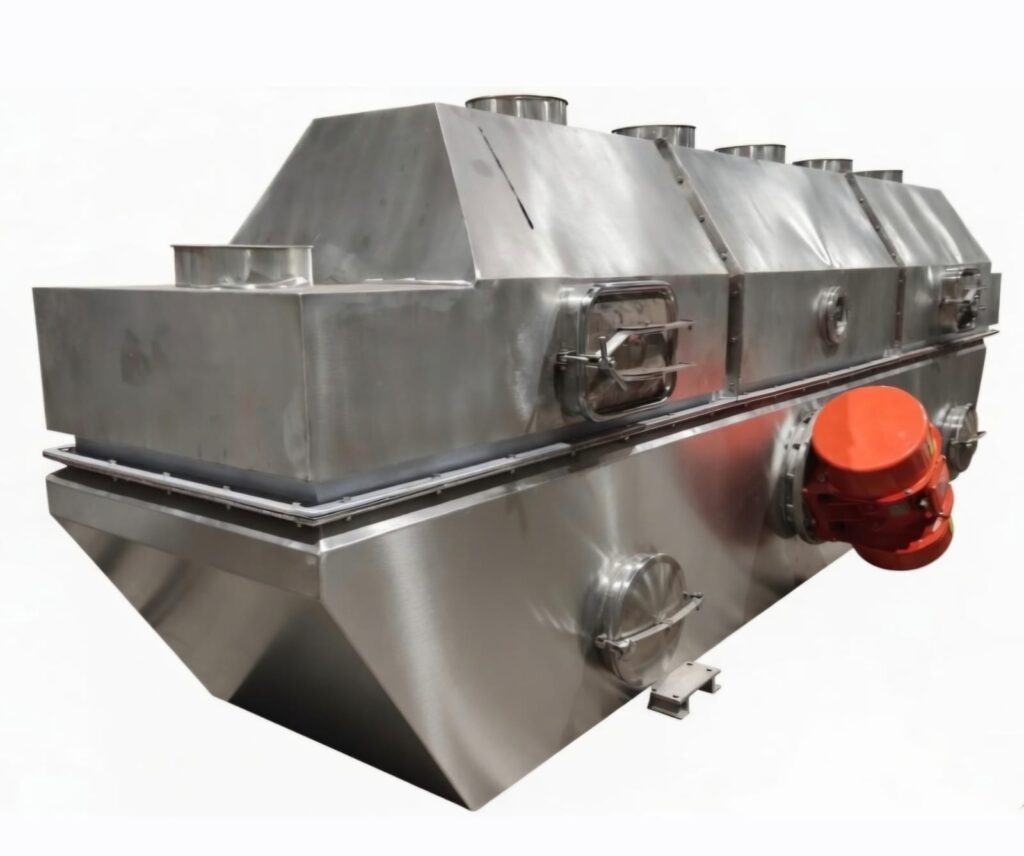
Why VFBD can be suitable for Malawi CTC tea
A customized system can provide:
- Continuous drying
- Uniform airflow distribution
- Controlled temperature
- Controlled residence time
- Consistent moisture reduction
- Adjustable vibration
- Multi-zone drying
- Reduced risk of product accumulation
- Automated operation
- PLC control
- SCADA integration where required
The final system should be designed according to:
green-leaf/process characteristics → feed moisture → production capacity → tea particle characteristics → final moisture → heating system.
A standard machine specification should not be assumed to suit every Malawian tea factory.
Malawi CTC Tea Keywords
CTC Tea Dryer Malawi
CTC Tea Dryer Machine Manufacturer Malawi
VFBD Tea Dryer Malawi
Vibratory Fluid Bed Dryer Malawi
Black Tea Dryer Malawi
CTC Tea Processing Equipment Malawi
Tiyi Wakuda Malawi
Tiyi wa CTC
Orthodox Tea Dryer Machine in Malawi – Combination Fluid Bed Dryer
Supporting Malawi’s Value-Addition Strategy
Orthodox tea is processed differently from CTC tea.
CTC processing produces smaller tea particles through cutting, tearing and curling, while Orthodox production generally aims to retain more of the leaf’s recognizable form.
For Malawi, Orthodox tea is particularly relevant when considering specialty products and value addition.
This fits the direction of the country’s tea-sector policy conversation.
In May 2024, Malawi’s Ministry of Trade and Industry called on tea-industry stakeholders to increase value addition so that Malawian tea could become more competitive and achieve higher value in international markets.
A factory that wants to diversify from conventional bulk black tea may therefore consider additional processing capability for specialty products.
Combination Fluid Bed Dryer for Orthodox Tea
A customized Combination Fluid Bed Dryer can be designed as a multi-stage drying system.
Depending on the process, the system may provide:
- Multiple drying stages
- Controlled temperature zones
- Controlled airflow
- Adjustable residence time
- Uniform moisture reduction
- Gentle product handling
- Automated control
- Energy-management options
- Integration with existing tea-processing equipment
For Orthodox tea, the drying process should be developed around the characteristics of the processed leaf rather than simply selecting a machine based on nominal capacity.
What Should Be Evaluated?
Before designing an Orthodox tea dryer, the engineering team should evaluate:
leaf size + feed moisture + product temperature sensitivity + throughput + target final moisture + heating source + plant layout.
Malawi Orthodox Tea Keywords
Orthodox Tea Dryer Malawi
Orthodox Tea Dryer Machine Manufacturer Malawi
Orthodox Tea Processing Equipment Malawi
Combination Fluid Bed Dryer Malawi
Specialty Tea Dryer Malawi
Orthodox Tea Machine Malawi
Green Tea Dryer in Malawi – Combination Fluid Bed Dryer
A Product-Diversification Opportunity
Green tea is not the dominant export category in Malawi’s current tea trade.
The country’s 2024 export data is overwhelmingly classified as black or partly fermented tea.
However, this does not eliminate the potential for green tea processing.
As Malawi’s tea industry looks at value addition and improved international competitiveness, specialty tea can become an additional processing pathway.
A green-tea production line requires controlled drying because the drying process influences moisture, colour, texture and other finished-product characteristics.
GTI’s green tea drying systems include Combination Dryer concepts designed for multi-stage drying, moisture control and energy efficiency.
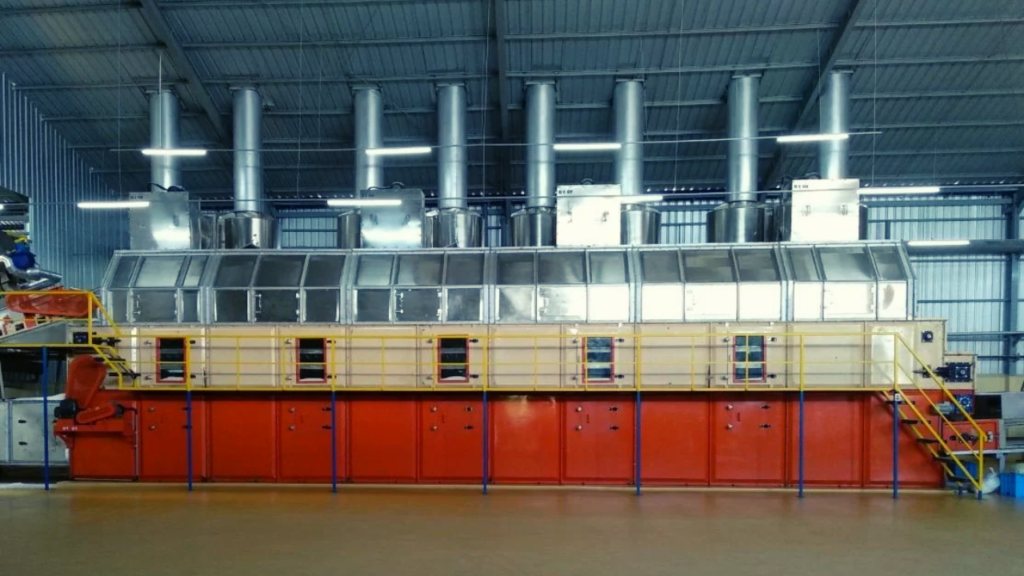
Combination Fluid Bed Dryer for Malawi Green Tea
A customized system may incorporate:
- Multi-stage drying
- Controlled hot-air temperature
- Airflow management
- Moisture monitoring
- Controlled residence time
- Product movement
- Energy-efficient operation
- Automation
- Integration with upstream processing
The actual drying profile should always be determined through product trials and process data.
Potential Malawi applications
Green tea drying equipment can be relevant to:
- Specialty tea producers
- Organic tea processors
- Tea estates diversifying product lines
- Export-oriented tea factories
- Premium tea manufacturers
- Tea-blending companies
- Value-added tea processors
Malawi Green Tea Keywords
Green Tea Dryer Malawi
Green Tea Dryer Machine Manufacturer Malawi
Green Tea Processing Equipment Malawi
Combination Fluid Bed Dryer for Green Tea Malawi
Tiyi Wobiriwira Malawi
Green Tea Processing Machine Malawi
Malawi’s Tea Industry: From Bulk Exports to Value Addition
This is where the three technologies come together.
Malawi already has the production infrastructure, tea estates, factories and international export relationships.
The next equipment opportunity is not necessarily just more drying capacity.
It can also be:
better drying + product diversification + value addition + processing efficiency.
The Ministry of Trade and Industry has specifically encouraged greater tea value addition to improve competitiveness and international market value.
This creates several project possibilities.
Existing CTC Factory
Requirement: Upgrade or replace an existing dryer.
Technology: VFBD
High-Capacity CTC Factory
Requirement: Continuous drying and controlled moisture.
Technology: VFBD
Specialty Tea Project
Requirement: Controlled leaf drying.
Technology: Combination Fluid Bed Dryer
Green Tea Project
Requirement: Controlled multi-stage drying.
Technology: Combination Fluid Bed Dryer
Value-Added Tea Project
Requirement: Product-specific drying and downstream processing.
Technology: Selected according to product characteristics.
Where Is Malawi’s Tea Industry Concentrated?
Thyolo
Thyolo is one of Malawi’s principal tea-growing areas.
Tea estates in the district include Makwasa, Mianga, Kasembereka and Gotha, with processing factories associated with the estates.
Mulanje
Mulanje is another major tea-processing region, located around Mount Mulanje.
Tea estates include Esperanza, Lauderdale, Mini Mini, Ruo, Glenorchy, Likanga, Eldorado, Thornwood, Phwazi, Chisambo and Limbuli.
Nkhata Bay
Tea production has also expanded into northern Malawi, with Kawalazi identified as part of the country’s tea-development activity. Malawi’s Ministry of Trade and Industry has discussed expanding out-grower schemes in Nkhata Bay.
Local Search Opportunities
This creates natural location-specific search terms such as:
- Tea Dryer Manufacturer Malawi
- Tea Dryer Manufacturer Thyolo
- CTC Tea Dryer Thyolo
- VFBD Tea Dryer Mulanje
- Tea Processing Equipment Mulanje
- Orthodox Tea Dryer Malawi
- Green Tea Dryer Malawi
- Tea Factory Machinery Nkhata Bay
- Industrial Tea Dryer Blantyre
- Tea Processing Machinery Lilongwe
- Tea Dryer Supplier Southern Malawi
Why the UK and South Africa Matter to Malawi Tea Processing
The export data also gives this page a useful buyer-market dimension.
In 2024, the United Kingdom accounted for approximately US$32.74 million of Malawi’s tea exports, while South Africa accounted for approximately US$13.66 million. The United States was the third-largest destination at approximately US$9.05 million.
These markets represent very different commercial destinations.
United Kingdom
The UK is an established destination for Malawian tea.
This makes consistent industrial production, moisture control and blending-grade tea quality important considerations for factories supplying international tea businesses.
South Africa
South Africa is both a major regional market and a significant destination for Malawian tea.
Its proximity also makes Southern African regional trade relevant when considering production and logistics.
United States
The United States represented approximately US$9 million of Malawi’s 2024 tea exports.
This further demonstrates the international nature of Malawi’s tea-processing industry.
Tea Dryer Selection for Malawi: What Should a Factory Evaluate?
Selecting the right dryer requires more than knowing whether the factory produces CTC, Orthodox or Green Tea.
1. Product type
CTC, Orthodox, Green, Organic or specialty tea.
2. Production capacity
Required throughput in kg/hour or tonnes/day.
3. Feed moisture
The initial moisture level determines the drying duty.
4. Target final moisture
The required final moisture should be established for the specific product and market specification.
5. Particle or leaf characteristics
CTC particles and whole-leaf Orthodox tea behave differently during drying.
6. Heating source
Potential options may include:
- Steam
- Thermic fluid
- Hot-air generator
- Electric heating
- Biomass-based hot-air generation
The appropriate system depends on the site’s utilities and economics.
7. Residence time
The drying time must be sufficient to achieve the required moisture without unnecessarily exposing the product to heat.
8. Airflow
Air velocity and distribution must be engineered around the product.
9. Automation
The factory may require:
- Manual control
- Semi-automatic control
- PLC control
- SCADA integration
10. Future expansion
A factory should consider whether it may later add:
- Orthodox tea
- Green tea
- Specialty tea
- Blending
- Value-added products
A well-planned dryer installation can therefore be designed with future process integration in mind.
Why a Customized Tea Dryer Is Important for Malawi
No two tea factories necessarily have the same operating conditions.
A dryer designed for one factory may not be suitable for another because of differences in:
- Tea cultivar
- Feed moisture
- Production capacity
- Particle size
- Leaf structure
- Desired final moisture
- Heating medium
- Factory layout
- Automation
- Product specifications
GTI Dryers approaches tea drying as an engineering application.
Its tea-drying scope includes:
Process Design → Technology Selection → Engineering → Manufacturing → Installation → Commissioning → Automation → Training → After-Sales Support
GTI identifies temperature, airflow, moisture content, drying time and residence time as key process parameters for tea drying systems.
GTI Dryers for Malawi Tea Processing Projects
GTI Dryers designs industrial drying systems for different tea-processing applications.
For the Malawi market, the three primary technology pathways are:
CTC Tea — VFBD
A Vibratory Fluidised Bed Dryer can be engineered for continuous CTC tea drying with controlled airflow, vibration, residence time and final moisture.
Orthodox Tea — Combination Fluid Bed Dryer
A Combination Fluid Bed Dryer can be configured for multi-stage drying of Orthodox and specialty tea products.
Green Tea — Combination Fluid Bed Dryer
A Combination Fluid Bed Dryer can be developed for controlled green-tea drying according to product-specific requirements.
GTI also manufactures other industrial tea-drying technologies including fluid bed, band/conveyor, tray and rotary dryers, allowing technology selection to be matched to the actual product and process.
From Thyolo and Mulanje to Global Tea Markets
For a Malawi tea factory, the commercial journey can be represented as:
Tea Estate → Green Leaf → Tea Processing → Drying → Sorting → Grading → Packing → Export
The drying stage sits at the centre of this process.
A controlled drying system can help establish repeatable operating conditions before the tea moves into subsequent processing, grading, packaging or export.
This is particularly relevant for Malawi because the country’s tea industry is highly export-oriented and serves buyers across Europe, Southern Africa, North America, Asia and the Middle East.
Who Should Contact a Tea Dryer Manufacturer in Malawi?
A Malawi-focused tea drying solution can be relevant to:
- Tea estates
- Tea factories
- Tea-processing companies
- Tea exporters
- CTC tea manufacturers
- Orthodox tea processors
- Green tea producers
- Specialty tea manufacturers
- Organic tea processors
- Tea cooperatives
- Smallholder-linked processing projects
- Tea-blending companies
- Value-added tea manufacturers
- EPC companies
- Process engineering companies
- Investors establishing new tea-processing plants
- Existing factories replacing older dryers
Potential project locations include:
Thyolo + Mulanje + Nkhata Bay + Blantyre + other tea-processing regions of Malawi.
Frequently Asked Questions – Tea Dryer Machine Malawi
Which dryer is suitable for CTC tea in Malawi?
A Vibratory Fluidised Bed Dryer (VFBD) can be considered for continuous CTC tea drying where controlled airflow, vibration and residence time are required. Final design depends on the actual product and process conditions.
Is CTC tea important in Malawi?
Yes. Malawi’s 2024 tea exports were overwhelmingly classified as black or partly fermented tea, with approximately 28.11 million kg exported under HS 090240.
Which dryer is suitable for Orthodox tea in Malawi?
A customized Combination Fluid Bed Dryer can be considered for Orthodox tea where controlled multi-stage drying is required.
Does Malawi produce green tea?
Malawi’s export trade is strongly dominated by black tea, so green tea is a smaller segment. For a factory considering diversification, a customized green-tea drying system can be evaluated according to the specific product and process.
What is tea called in Chichewa?
Tea is Tiyi in Chichewa.
What is green tea called in Chichewa?
For localized SEO, Tiyi Wobiriwira can be used as the descriptive Chichewa expression for green tea.
What is black tea called in Chichewa?
Tiyi Wakuda can be used as the localized descriptive expression for black tea, while Black Tea / CTC Tea should remain alongside it for industrial SEO.
Where is tea mainly grown in Malawi?
Major tea-growing areas include Thyolo and Mulanje, while tea production has also expanded into northern areas such as Nkhata Bay.
What are Malawi’s major tea export markets?
In 2024, major destinations included the United Kingdom, South Africa, United States, Kenya, Netherlands, Japan, Saudi Arabia and Germany.
Why is value addition important for Malawi tea?
Malawi’s Ministry of Trade and Industry has specifically called for greater tea value addition to improve competitiveness and achieve higher international-market value.
Can GTI supply a complete tea drying system for Malawi?
GTI’s tea-drying scope includes process design and engineering, equipment manufacturing, installation and commissioning, automation integration, operator training and after-sales support.
Request a Customized Tea Dryer for Malawi
Malawi already has the foundations of a significant tea-processing industry:
Established tea estates + processing factories + export markets + experienced tea producers.
The next opportunity is improving how efficiently and consistently tea can be processed and dried while creating room for higher-value products.
For conventional CTC production:
VFBD — Vibratory Fluidised Bed Dryer
For Orthodox and specialty tea:
Combination Fluid Bed Dryer
For green-tea diversification:
Combination Fluid Bed Dryer
The correct system should be engineered from:
Tea Type + Feed Moisture + Production Capacity + Leaf/Particle Characteristics + Final Moisture + Heating Source + Residence Time + Automation + Factory Layout
Talk to GTI Dryers About Your Malawi Tea Project
Whether you are planning:
- A new CTC tea factory
- CTC drye