
Tea Dryer Machine Manufacturer in Kenya – CTC, Orthodox & Green Tea Drying Technology
Kenya’s tea industry is entering an important phase of transformation.
For decades, black CTC tea has been the backbone of Kenyan tea production and exports. But the industry is increasingly looking toward orthodox tea, specialty tea, green tea, value addition and direct-market products to diversify revenue and reduce dependence on traditional bulk-tea channels.
This creates a new requirement for tea-processing technology.
A modern Kenyan tea factory may no longer need just one type of dryer.
Depending on the product, it may require:
CTC Tea Dryer → VFBD
Orthodox Tea Dryer → Combination Fluid Bed Dryer
Green Tea Dryer → Combination Fluid Bed Dryer
This is where GTI Dryers can position itself as an industrial tea-drying technology partner for Kenya, rather than simply a machine supplier.
GTI designs and manufactures industrial tea-drying systems using technologies including Fluid Bed Dryers, Vibro Fluid Bed Dryers and Combination Drying Systems, with the equipment configuration selected according to tea variety, moisture requirements, capacity and processing conditions.
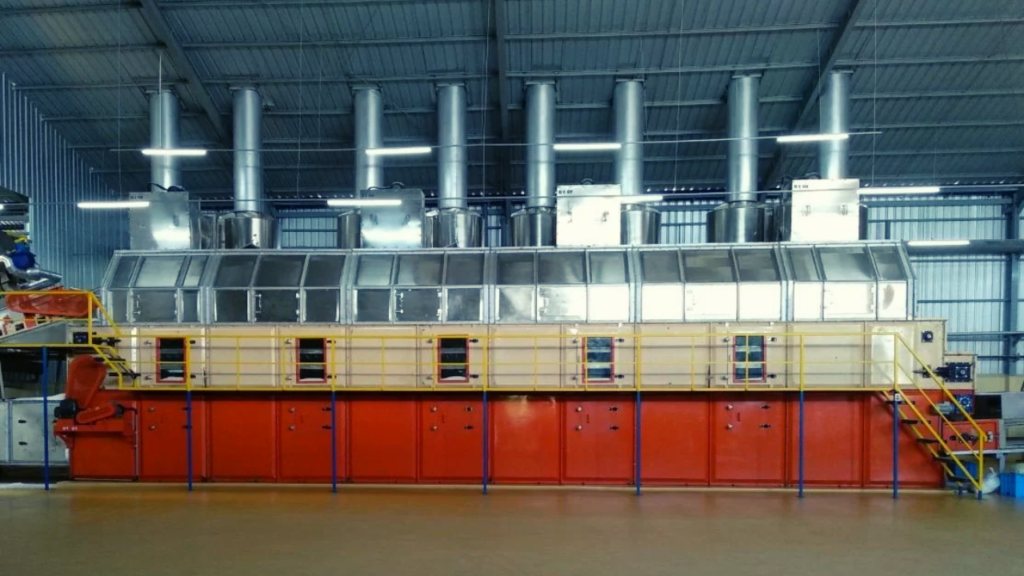
Why Kenya Is a Strategic Market for Tea Drying Equipment
Kenya is one of the world’s major tea-producing and exporting countries.
Kenya’s government reports that tea production reached approximately 600 million kg in 2024, with export earnings of around KSh 211 billion. The government has also identified market expansion and value addition as important opportunities for the sector.
The country’s tea industry is geographically distributed across numerous tea-growing counties, with major production concentrated in areas such as:
- Kericho
- Bomet
- Nandi
- Kisii
- Nyamira
- Kiambu
- Murang’a
- Nakuru
- Trans Nzoia
- Kakamega
The Kenyan government has also been pursuing modernization and value-addition initiatives, including the establishment of orthodox tea lines and value-addition common-user facilities.
That creates an important equipment opportunity:
Kenya does not only need capacity for producing more tea; it needs technology for producing a wider range of tea products.
Tea Types in Kenya: Local Swahili Terminology
For Kenya-focused tea processing and drying content, using both English industry terminology and common Swahili terms can improve local relevance and GEO targeting:
- Green Tea – Chai ya Kijani: Green tea is commonly referred to as Chai ya Kijani in Swahili. Kenya produces green tea as part of its specialty-tea segment, although production remains much smaller than black tea.
- CTC Tea – Chai Nyeusi ya CTC: CTC stands for Cut, Tear and Curl and is the dominant processing method for Kenyan black tea. For a technical audience, the term CTC Tea should be retained alongside the Swahili expression Chai Nyeusi ya CTC.
- Orthodox Tea – Chai ya Orthodox / Chai ya Majani: Orthodox tea is also described as leaf tea because it preserves a more recognizable leaf form compared with CTC processing. Kenya’s specialty-tea sector includes Black Orthodox and other specialty teas.
Kenya’s Tea Industry: Why One Dryer Technology Is Not Enough
The drying requirement changes significantly depending on the type of tea being manufactured.
CTC Tea
CTC tea is the dominant form of Kenyan tea.
Kenya’s tea policy document reports that approximately 98% of Kenyan tea production was CTC, with the remaining share consisting of specialty teas including orthodox, green, white and oolong teas.
CTC tea is granular and relatively free-flowing.
Recommended GTI Technology:
Vibratory Fluid Bed Dryer (VFBD)
The combination of fluidized hot air and controlled vibration provides continuous product movement and effective heat and mass transfer.
Orthodox Tea
Orthodox tea uses a different processing approach and can have larger, more delicate leaf structures.
Kenya is actively encouraging the development of orthodox and specialty tea as part of its value-addition strategy. The Kenyan government has specifically discussed establishing orthodox tea lines and expanding value-added tea processing.
Recommended GTI Technology:
Combination Fluid Bed Dryer
A multi-stage or hybrid drying configuration can be engineered to provide controlled moisture reduction while addressing the handling requirements of more delicate tea products.
Green Tea
Green tea is processed differently from black tea because the objective is to minimize enzymatic oxidation and preserve the desired green characteristics.
GTI’s green-tea drying information identifies Combination Dryers and Vibro Fluid Bed Dryers among industrial technologies that can be selected depending on the production requirement.
Recommended GTI Technology:
Combination Fluid Bed Dryer
The multi-stage approach can provide greater control over drying conditions and moisture removal.
Kenya Tea Drying Technology at a Glance
| Tea Type | Processing Requirement | GTI Dryer Technology |
| CTC Tea | Rapid, uniform moisture reduction after oxidation | VFBD |
| Orthodox Tea | Controlled and gentle drying | Combination Fluid Bed Dryer |
| Green Tea | Controlled drying after enzyme deactivation | Combination Fluid Bed Dryer |
| Specialty Tea | Product-specific low-stress drying | Combination / Fluid Bed / other suitable technology |
The final dryer selection should be based on the actual tea, particle/leaf characteristics, moisture reduction, capacity and product-quality requirements rather than tea category alone.
CTC Tea Dryer Machine Manufacturer in Kenya – VFBD Technology
CTC tea represents the largest immediate equipment opportunity in Kenya because of the country’s strong CTC production base.
The drying process occurs after CTC processing and oxidation.
A simplified process is:
Fresh Tea Leaves
↓
Withering
↓
CTC Crushing, Tearing & Curling
↓
Oxidation
↓
CTC Tea Dryer – VFBD
↓
Cooling
↓
Sorting & Grading
↓
Blending
↓
Packaging / Export
The dryer has one critical responsibility:
Bring the oxidized tea to the required final moisture condition consistently without unnecessarily damaging product quality.
How Does a VFBD CTC Tea Dryer Work?
A Vibratory Fluid Bed Dryer combines:
Controlled vibration + fluidized hot air + continuous conveying
Freshly processed CTC tea is fed onto the perforated drying bed.
Heated air is introduced from underneath.
The air partially suspends the tea particles, creating a fluidized condition.
At the same time, vibration moves the tea continuously through the drying chamber.
The combined effect provides:
- Good air-to-product contact
- Efficient heat transfer
- Continuous product movement
- Controlled residence time
- Uniform moisture reduction
GTI’s VFBD technology is designed around controlled airflow, vibration, residence time and heat/mass transfer for continuous drying applications.
Why VFBD Is Suitable for Kenyan CTC Tea Factories
Uniform Moisture Control
CTC particles need consistent exposure to drying air.
VFBD technology allows the product bed to be continuously mixed and exposed to heated air.
Continuous Operation
Large tea factories can integrate continuous drying into their production lines.
Controlled Residence Time
The product movement can be engineered around the required drying duty.
Efficient Heat Transfer
Fluidization creates substantial contact between hot air and tea particles.
Gentle Conveying
Vibration transports the tea without relying solely on aggressive mechanical conveying.
Automation
The dryer can incorporate control of:
- Temperature
- Airflow
- Vibration
- Feed rate
- Residence time
GTI’s published VFBD systems support automation ranging from manual controls to PLC and SCADA integration.
Orthodox Tea Dryer Machine Manufacturer in Kenya
Kenya’s movement toward orthodox and specialty tea creates a different equipment opportunity.
The government has identified orthodox tea production and value addition as areas for development.
This is commercially important because orthodox and specialty tea can be positioned differently from commodity CTC tea.
The processing objective may focus more strongly on:
- Leaf appearance
- Aroma
- Colour
- Controlled moisture
- Leaf integrity
- Product differentiation
- Specialty-grade consistency
Therefore, simply applying the same drying approach used for CTC tea may not be appropriate.
Combination Fluid Bed Dryer for Orthodox Tea
A Combination Fluid Bed Dryer can integrate different drying stages or drying mechanisms to provide more flexibility than a single-stage system.
Depending on the tea and process requirement, the system can be configured around:
Pre-Drying
Initial moisture reduction under controlled conditions.
Main Drying
Controlled thermal drying to achieve the required moisture reduction.
Final Drying
Fine moisture adjustment.
Cooling
Product cooling before downstream handling and packaging.
This staged approach can help manufacturers control the drying profile more precisely.
GTI’s tea-drying portfolio includes Fluid Bed, Conveyor, Vibro Fluid Bed and other drying technologies, allowing the technology to be matched to the particular tea application.
Why Kenya Is Investing in Orthodox and Specialty Tea
Kenya’s traditional tea business has been heavily concentrated around bulk black CTC tea.
The Kenyan Tea Industry Policy notes that global demand for black tea has been changing and identifies diversification into orthodox and specialty teas as an opportunity. It also notes substantially higher historical average prices for orthodox and specialty teas compared with conventional black tea, although actual prices vary by grade, market and quality.
This creates a potential equipment chain:
Orthodox Tea Line
→
Controlled Drying
→
Specialty Tea Processing
→
Packaging
→
Direct Export
→
Higher-Value Market
For GTI, this means the Kenyan market is not only about replacing existing dryers.
It also includes new tea-processing lines.
Green Tea Dryer Machine Manufacturer in Kenya
Green tea requires a fundamentally different processing philosophy from black tea.
The objective is to prevent or minimize oxidation after the leaves have undergone enzyme deactivation.
The drying process must therefore be carefully controlled.
GTI’s green tea drying information describes drying as a critical stage after steaming or pan-firing and identifies controlled moisture reduction as essential for maintaining desired colour, texture and shelf stability.
Combination Fluid Bed Dryer for Green Tea
A combination dryer can be designed to provide staged drying.
A conceptual process could be:
Fresh Green Tea
↓
Enzyme Deactivation
↓
Initial Moisture Reduction
↓
Combination Fluid Bed Drying
↓
Final Moisture Adjustment
↓
Cooling
↓
Sorting
↓
Packaging
The exact process depends on the tea variety and manufacturing method.
For green tea, the dryer should be engineered around the required thermal exposure rather than simply maximizing drying speed.
Why Combination Drying Can Benefit Kenyan Green Tea Producers
A multi-stage system can provide greater flexibility in controlling:
- Drying temperature
- Airflow
- Residence time
- Moisture reduction
- Product movement
- Cooling
This can be particularly useful for specialty and premium green tea products where the processing target is not simply maximum throughput.
GTI identifies combination drying as a suitable approach for premium and large-scale green tea production where multi-stage moisture control is required.
Kenya’s Tea Export Market Creates the Bigger Opportunity
A tea dryer market should not be evaluated only by domestic tea consumption.
Kenya is fundamentally an export-oriented tea industry.
WITS/UN Comtrade data shows that Kenya exported approximately:
625.56 million kg of tea
worth approximately:
US$1.409 billion
in 2024.
Black/fermented tea accounted for approximately:
606.33 million kg
worth approximately:
US$1.355 billion.
This makes Kenya an unusually relevant market for industrial tea-processing equipment.
Where Does Kenyan Tea Go?
Kenya’s 2024 tea export data identifies several major destination markets.
Pakistan
221.46 million kg
US$554.19 million
Pakistan was by far Kenya’s largest tea destination in the cited 2024 data.
Egypt
90.90 million kg
US$191.57 million
Egypt is another major market for Kenyan tea.
United Kingdom
64.66 million kg
US$138.50 million.
UAE
33.50 million kg
US$70.15 million.
Saudi Arabia
16.04 million kg
US$45.85 million.
Other important markets included:
Russia | Iran | Yemen | India | Kazakhstan | Poland | China | Jordan | Ireland | Sudan | Oman
Target Kenyan tea factories first, then target the countries that buy Kenyan tea.
Kenya Tea Dryer Market: Country-Wise Business Opportunity
| Country | Why It Matters to Kenyan Tea | GTI Opportunity |
| Kenya | Major tea producer/exporter | CTC, orthodox & green tea factories |
| Pakistan | Kenya’s largest tea export market | Tea processing, blending & reprocessing |
| Egypt | Major Kenyan tea destination | Tea processing & packaging |
| UK | Major destination + value-added tea market | Specialty & value-added tea |
| UAE | Major destination and regional trade hub | GCC tea processing projects |
| Saudi Arabia | Significant Kenyan tea destination | Tea blending & processing |
| Russia | Major Kenyan tea market | Tea processing/blending |
| Iran | Important Kenyan tea destination | Tea-processing equipment |
| Yemen | Established Kenyan tea market | Tea processing |
| China | Growing opportunity for Kenyan value-added tea | Orthodox/specialty tea |
| India | Major tea producer and Kenyan tea buyer | Specialized processing projects |
| Poland | European destination | Value-added tea |
| Oman | GCC tea market | Tea blending/processing |
CTC Tea Dryer Manufacturer Pakistan
Tea Dryer Manufacturer Egypt
Tea Processing Equipment UAE
Orthodox Tea Dryer Manufacturer UK
Tea Dryer Manufacturer Saudi Arabia
Kenya’s Shift Toward Value Addition
Kenya’s tea sector is increasingly focused on value addition rather than relying exclusively on bulk exports.
The Kenyan government has introduced measures supporting value addition, including initiatives around packaging and market development. In May 2025, the Ministry of Agriculture highlighted efforts to reduce packaging costs and improve the competitiveness of value-added tea.
There is also direct evidence of Kenya developing international partnerships around orthodox and specialty tea.
In 2024, the government highlighted the launch of a China-Kenya Tea Trade Center and a partnership involving Kenyan orthodox and specialty tea manufacturers.
This creates a strong commercial narrative for equipment manufacturers:
Kenyan Tea → Value Addition → Specialty Products → Better Packaging → New Export Markets
And drying is an essential stage within that chain.
GTI’s Three-Technology Approach for Kenya
Rather than positioning GTI around one generic tea dryer, the company can offer three technology routes.
Solution 1 – CTC Tea VFBD
Best suited for:
- CTC tea
- Granular tea
- High-capacity factories
- Continuous production
- Uniform moisture control
Technology:
Vibratory Fluid Bed Dryer
Solution 2 – Orthodox Tea Combination Dryer
Best suited for:
- Orthodox tea
- Specialty tea
- Premium tea products
- Value-added processing
- Controlled drying profiles
Technology:
Combination Fluid Bed Dryer
Solution 3 – Green Tea Combination Dryer
Best suited for:
- Green tea
- Premium green tea
- Controlled drying applications
- Large-scale processing
- Multi-stage moisture reduction
Technology:
Combination Fluid Bed Dryer
Why GTI Dryers for Kenyan Tea Factories?
GTI’s approach is based on application-specific dryer engineering.
The objective is not:
“Which standard dryer can we sell?”
The question is:
“Which drying configuration fits this Kenyan tea factory’s product, capacity and quality requirement?”
GTI’s tea-drying portfolio includes Fluid Bed, Vibro Fluid Bed and other industrial drying technologies, while its published tea scope includes process design, equipment manufacturing, installation, commissioning, automation integration, operator training and after-sales support.
For a Kenyan tea project, GTI can evaluate:
Tea Type
CTC / Orthodox / Green / Specialty
Production Capacity
kg/hr or tonnes/day
Moisture
Initial and target final moisture
Product Characteristics
Particle size, leaf size, density and flow behaviour
Thermal Requirement
Product-specific temperature profile
Utilities
Steam / LPG / Natural Gas / Thermal Oil / Electricity / Biomass / Waste Heat
Automation
PLC / HMI / SCADA requirements
Factory Layout
Available installation space and integration requirements
GTI Tea Dryer Engineering for Kenya’s Climate
Kenyan tea factories operate under different environmental conditions depending on elevation, region and season.
Therefore, dryer design should consider:
- Ambient temperature
- Relative humidity
- Seasonal conditions
- Available heating source
- Exhaust conditions
- Air-handling requirements
- Factory altitude where relevant
This matters because the drying capacity of hot air is influenced by its moisture content and temperature.
A dryer designed for one environmental condition should not automatically be assumed to deliver identical performance under another.
GTI’s engineering approach therefore considers process conditions and plant utilities before finalizing the dryer configuration.
Energy Efficiency for Kenyan Tea Processing
Energy is a major operating consideration in industrial tea drying.
A modern tea dryer should be designed around:
Efficient airflow
Heat recovery where feasible
Controlled exhaust
Proper insulation
Optimized residence time
Appropriate heating source
Automation
GTI’s industrial VFBD technology emphasizes optimized airflow distribution, heat transfer and energy-conscious design.
For Kenyan factories, the heating system can be evaluated according to local fuel availability and operating economics.
Potential heating options include:
- Steam
- LPG
- Natural gas
- Thermal oil
- Electric heating
- Biomass
- Waste heat
The appropriate choice depends on the factory’s existing utilities and economics.
What Should a Kenyan Tea Factory Send to GTI?
To prepare a technical proposal, GTI should receive:
Product Information
- CTC / Orthodox / Green Tea
- Initial moisture
- Final moisture
- Particle or leaf size
- Bulk density
- Product temperature limitations
Production Information
- kg/hr
- tonnes/day
- Operating hours
- Peak production
- Seasonal production
Existing Plant Information
- Current dryer type
- Existing capacity
- Current energy source
- Current moisture variation
- Available installation area
New Project Information
- New factory or expansion
- Target production capacity
- Heating source
- Automation requirements
- Future expansion plans
This information allows GTI to evaluate whether VFBD, Combination Fluid Bed, Band Dryer or another drying technology is most appropriate.
GTI’s Kenya Tea Dryer Project Workflow
A typical project can follow:
1. Product & Process Discussion
↓
2. Tea Sample / Product Data Evaluation
↓
3. Drying-Duty Calculation
↓
4. Dryer Technology Selection
↓
5. Capacity & Thermal Design
↓
6. Equipment Engineering
↓
7. Manufacturing
↓
8. Factory Testing
↓
9. Installation & Commissioning
↓
10. Performance Optimization
↓
11. After-Sales Support
GTI’s published tea-drying scope includes process engineering, manufacturing, installation and commissioning, automation integration and after-sales support.
Who Should Contact GTI in Kenya?
This page is designed to generate enquiries from:
Tea Factory Owners
Looking to modernize existing drying equipment.
KTDA-Associated Tea Factories
Seeking capacity expansion or process modernization.
Independent Tea Factories
Developing CTC, orthodox or specialty production.
Tea Exporters
Moving from bulk tea toward value-added products.
Specialty Tea Producers
Developing orthodox and green tea lines.
New Tea Processing Projects
Planning a new factory in Kenya.
EPC / Engineering Companies
Looking for an industrial tea-drying technology partner.
Tea Equipment Integrators
Requiring specialized drying equipment.
Frequently Asked Questions
What is the best dryer for CTC tea in Kenya?
For suitable free-flowing CTC tea particles, a Vibratory Fluid Bed Dryer (VFBD) can provide continuous movement, fluidized air contact and controlled moisture removal. Final selection should be based on actual tea characteristics and production requirements. GTI specifically lists CTC tea among applications for its industrial tea drying systems.
Which dryer is suitable for orthodox tea?
A Combination Fluid Bed Dryer can be considered where a controlled, multi-stage drying profile is required. The final configuration should be determined from the orthodox tea’s leaf characteristics, moisture reduction and quality requirements.
Can GTI manufacture a green tea dryer for Kenya?
Yes. GTI’s tea-drying portfolio includes green tea applications and identifies Combination Drying and Vibro Fluid Bed technologies for green tea processing.
Why is Kenya an important market for tea-drying equipment?
Kenya is a major tea-producing and export-oriented country. It produced approximately 600 million kg of tea in 2024 and exported approximately 625.6 million kg of tea worth US$1.41 billion in 2024 according to the cited sources.
Which countries should GTI target after Kenya?
Kenya’s major tea export destinations include Pakistan, Egypt, UK, UAE and Saudi Arabia, followed by markets such as Russia, Iran, Yemen, India, Poland and China. These provide logical opportunities for additional country-specific tea-equipment pages.
Is Kenya producing only CTC tea?
No. CTC dominates Kenya’s tea production, but Kenya also produces orthodox, green, white, oolong and other specialty teas. The Kenyan Tea Industry Policy cited approximately 98% CTC and 2% specialty tea categories for 2022.
Can GTI supply a complete tea drying plant?
GTI’s published tea-drying scope includes process engineering, manufacturing, installation and commissioning, automation integration, operator training and after-sales support.
Get a Tea Dryer Machine for Your Kenya Tea Factory
Kenya’s tea industry is moving beyond a simple question of how much tea can be produced.
The next question is:
How much value can be created from every kilogram of Kenyan tea?
CTC tea requires efficient continuous drying.
Orthodox tea requires controlled and product-sensitive drying.
Green tea requires carefully managed drying to support its processing objectives.
GTI Dryers brings these requirements together through application-specific industrial drying technology.
GTI Tea Drying Solutions for Kenya
CTC Tea → VFBD
Orthodox Tea → Combination Fluid Bed Dryer
Green Tea → Combination Fluid Bed Dryer
Whether you are upgrading an existing Kenyan tea factory, establishing an orthodox tea line, developing green tea production or planning a new value-added tea-processing facility, GTI can evaluate the appropriate drying technology around your actual process requirements.
Looking for a Tea Dryer Machine Manufacturer in Kenya?
Send us:
Tea Type | Production Capacity | Initial Moisture | Target Moisture | Heating Source | Existing/New Plant
and discuss your project with GTI’s tea-drying engineering team.
GTI Dryers — Engineered Industrial Drying Solutions from India for Kenya and Global Tea Processing Industries.