
Inhalation Powder Manufacturing Is More Than Moisture Removal
Inhalation powders are designed to reach a specific delivery location in the respiratory tract. Their performance depends on much more than simply achieving a low moisture content.
Particle size, aerodynamic behaviour, density, morphology, surface properties, dispersibility, dose uniformity and compatibility with the inhaler device can all influence the final product.
This is why inhalation powder production is better understood as particle engineering through controlled drying.
For many inhalation and specialty pharmaceutical formulations, spray drying provides a practical route for converting a liquid feed into engineered powder particles. The liquid may contain an API, polymer, carrier, stabilizer, excipient or encapsulating material. Through atomization and rapid solvent evaporation, the process can create particles with carefully controlled physical characteristics.
GTI Dryers designs and manufactures customized spray drying systems for pharmaceutical and specialty powder applications, including suitable inhalation-related formulations, microencapsulated products and advanced powder systems.
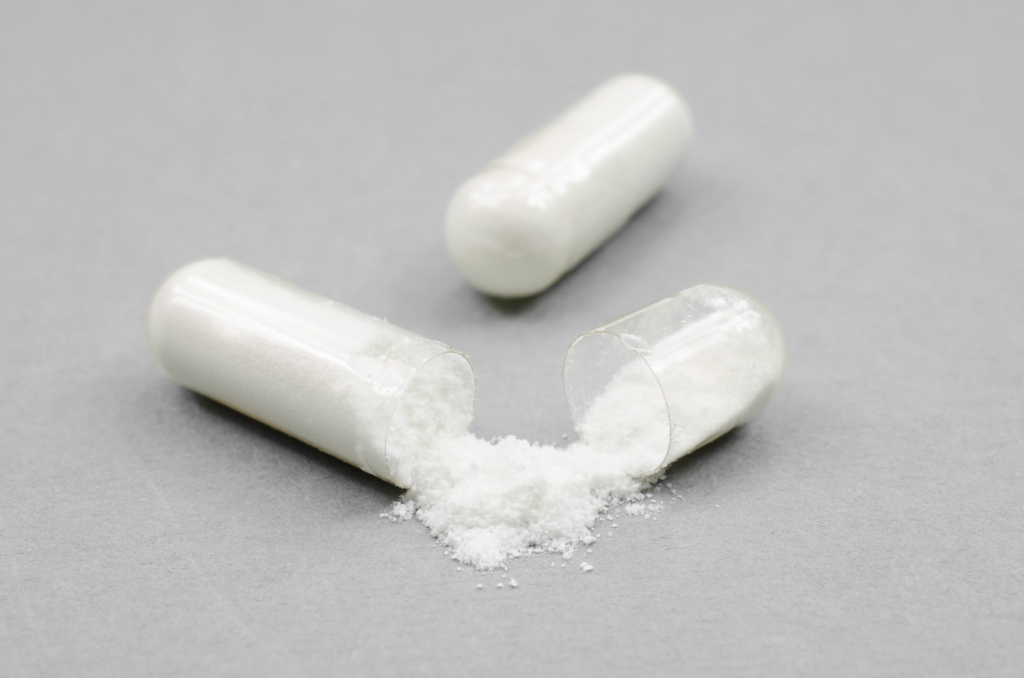
From Liquid Formulation to Inhalable Powder
A typical spray-drying process for an inhalation or specialty powder may follow this sequence:
API or active ingredient → polymer/excipient solution or suspension → feed preparation → atomization → rapid drying → powder separation → final powder conditioning → filling or formulation
The process can be adapted according to the formulation and the intended application.
1. Feed Preparation
The feed may contain:
- Active pharmaceutical ingredient
- Polymer or carrier
- Stabilizer
- Surfactant
- Encapsulating material
- Buffer or functional excipient
- Water or organic solvent
- Suspension or emulsion components
Feed concentration, viscosity, solids content, solvent system and stability can strongly influence the resulting powder.
2. Atomization
The liquid feed is converted into fine droplets using a suitable atomization system.
The selected atomizer affects:
- Droplet size
- Particle size
- Powder morphology
- Production rate
- Wall deposition
- Powder recovery
- Bulk density
3. Rapid Drying
The droplets contact the drying gas inside the chamber. Moisture or solvent evaporates rapidly, leaving solid particles.
The objective is not simply to expose the product to high heat. The process must be designed around the product’s thermal sensitivity, solvent characteristics and desired particle properties.
4. Powder Recovery
The dried particles are separated from the drying gas using suitable collection equipment such as:
- Cyclone separator
- Bag filter
- Cartridge filter
- Secondary powder collector
- Closed powder discharge system
The powder recovery system must be selected according to particle size, density, electrostatic behaviour, containment requirements and product value.
What Are Inhalation Powders?
Inhalation powders are finely engineered pharmaceutical powders intended to be delivered through the respiratory tract.
They may be used for:
- Local pulmonary treatment
- Systemic drug delivery
- Nasal delivery
- Respiratory disease management
- Research and development formulations
- Advanced drug-delivery platforms
Dry powder inhalers, commonly known as DPIs, generally contain a powder formulation that is dispersed and inhaled through a device. The formulation may be supplied in capsules, blisters, reservoirs or other dose-containing systems.
Regulatory guidance for DPI products focuses on product quality and performance, including manufacturing controls, delivered dose, particle-size distribution, formulation properties and device-related performance.
Common Inhalation Powder Applications
Inhalation powders may be developed for:
- Asthma medicines
- Chronic obstructive pulmonary disease therapies
- Anti-inflammatory respiratory drugs
- Bronchodilator formulations
- Anti-infective pulmonary delivery
- Pulmonary antibiotics
- Systemic delivery through the lungs
- Nasal drug-delivery products
- Biopharmaceutical and specialty formulations
Not every inhalation powder is manufactured by spray drying. Other routes may include jet milling, blending with carriers, freeze drying, spray-freeze drying or other particle-engineering technologies. However, spray drying is an important manufacturing route because it can produce particles directly from a liquid formulation and allows control over particle characteristics.
Why Spray Drying Is Used for DPI and Specialty Powders
Spray drying is attractive for inhalation and specialty pharmaceutical products because it can combine drying and particle formation in one continuous process.
Main advantages include:
- Direct conversion of liquid feed into powder
- Controlled particle-size distribution
- Flexible particle morphology
- Ability to process solutions, suspensions and emulsions
- Potential for higher drug loading than some carrier-based approaches
- Suitable processing of selected heat-sensitive formulations
- Possibility of microencapsulation
- Scalable production from development to commercial manufacturing
- Continuous and automated operation
- Controlled residual moisture
- Improved powder handling and downstream processing
Research on inhalable dry powders identifies spray drying as an important particle-engineering method for producing powders with selected aerodynamic and physical properties. It can also accommodate formulations that may not be suitable for conventional carrier-based DPI production.
Spray Drying for Dry Powder Inhalers
A DPI formulation must disperse effectively when the patient inhales through the device. The powder therefore needs to be designed for the intended delivery system.
Important characteristics may include:
- Aerodynamic particle-size distribution
- Fine particle fraction
- Delivered dose uniformity
- Moisture content
- Powder flowability
- Dispersibility
- Bulk and tapped density
- Surface morphology
- Cohesive and adhesive behaviour
- Chemical and physical stability
- Compatibility with the inhaler device
The aerodynamic size of a particle is not always identical to its geometric size. Density and shape can influence how a particle behaves during inhalation.
For this reason, the spray dryer should be designed around the required powder properties rather than selected only by evaporation capacity.
Carrier-Based DPI Formulations
Some DPI formulations use a carrier, commonly a pharmaceutical excipient such as lactose, to support powder handling and dose delivery.
In such systems, the API and carrier properties can affect:
- Powder blending
- Drug distribution
- De-agglomeration
- Dose uniformity
- Device performance
- Lung deposition
FDA material on DPI quality considerations notes that particle size, moisture, polymorphic form, flowability and formulation properties may influence product performance and dose consistency.
Carrier-Free Inhalation Powders
Spray drying can also be used to produce carrier-free or carrier-reduced particles.
These formulations may be designed with:
- Engineered density
- Corrugated or hollow morphology
- Improved dispersibility
- Controlled surface properties
- Enhanced fine-particle performance
- Higher active loading
The suitability of a carrier-free formulation depends on the API, dose, device, formulation composition and required performance testing.
Microencapsulated Pharmaceutical Powders
Microencapsulation involves surrounding or embedding an active ingredient within a protective matrix or coating material.
Spray drying can be used to produce microencapsulated powders from suitable solutions, emulsions or suspensions.
Potential purposes of microencapsulation include:
- Protecting sensitive ingredients
- Controlling release
- Masking taste or odour
- Improving powder stability
- Separating incompatible ingredients
- Protecting active compounds from moisture or oxygen
- Modifying dissolution behaviour
- Improving handling and downstream processing
For inhalation-related applications, the encapsulating material must be selected carefully. The final particles must meet the intended delivery, safety and performance requirements.
Microencapsulation may be relevant to:
- Pulmonary drug delivery
- Nasal powders
- Biopharmaceutical formulations
- Enzyme and protein powders
- Specialty pharmaceutical ingredients
- Controlled-release drug systems
- Functional medical powders
Controlled-Release Powders
Controlled-release powders are designed to release an active ingredient over a selected period or under specific conditions.
Spray drying may be used to create particles containing:
- API and polymer matrices
- Coated active ingredients
- Multi-component release systems
- Encapsulated drug particles
- Functional excipient systems
- Porous or dense engineered particles
The release profile depends on formulation chemistry, polymer selection, particle structure, surface area, porosity, moisture and downstream processing.
Spray drying does not automatically create a controlled-release product. The release behaviour must be demonstrated through formulation development and appropriate testing.
Specialty Powders Produced by Spray Drying
Inhalation powders are one part of a wider specialty powder market.
GTI spray drying systems may be considered for suitable:
Pharmaceutical Applications
- Inhalable APIs
- Respiratory formulations
- Nasal powders
- Pharmaceutical intermediates
- Excipients
- Microencapsulated ingredients
- Controlled-release formulations
- Biopharmaceutical ingredients
- Enzyme powders
- Specialty drug-delivery systems
Nutraceutical and Functional Applications
- Encapsulated nutraceuticals
- Herbal extracts
- Functional ingredients
- Protein powders
- Sensitive botanical compounds
- Controlled-release nutritional ingredients
Chemical and Advanced Material Applications
- Specialty chemicals
- Encapsulated catalysts
- Functional polymers
- Ceramic powders
- Advanced material precursors
- Battery-related materials
- Fine chemical formulations
The final dryer configuration depends on whether the feed is water-based, solvent-based, heat-sensitive, hazardous, sterile or highly valuable.
Product Temperature Is More Important Than Heater Temperature
A common misunderstanding in pharmaceutical spray drying is that a high inlet temperature automatically means the product is exposed to the same temperature.
During spray drying, evaporative cooling can keep the wet droplets and particles at a lower temperature than the incoming drying gas. However, the actual product temperature depends on:
- Feed composition
- Solvent system
- Feed rate
- Inlet temperature
- Outlet temperature
- Droplet size
- Solids concentration
- Drying-gas flow
- Residence time
- Particle moisture
- Chamber design
For sensitive inhalation formulations, the process must be established through product-specific development work. There is no universal inlet temperature, outlet temperature or residence time suitable for every API.
Important Process Parameters for Inhalation Powder Spray Drying
A pharmaceutical spray dryer for inhalation powders may require control of the following parameters:
Feed Parameters
- API concentration
- Polymer concentration
- Solvent composition
- Feed viscosity
- Surface tension
- Solids content
- Suspension stability
- Feed temperature
- Pumpability
Atomization Parameters
- Nozzle type
- Atomization pressure
- Rotary atomizer speed
- Droplet-size distribution
- Feed rate
- Atomizer position
Drying Parameters
- Inlet temperature
- Outlet temperature
- Drying-gas flow
- Residence time
- Chamber pressure
- Humidity
- Oxygen level where applicable
Powder Parameters
- Particle-size distribution
- Aerodynamic size
- Morphology
- Bulk density
- Residual moisture
- Residual solvent
- Flowability
- Dispersibility
- Fine particle fraction
- Chemical and physical stability
The appropriate control strategy should be developed from product and process understanding. For DPI products, formulation, manufacturing process and device performance must be considered together rather than independently.
Open-Cycle and Closed-Cycle Spray Drying
Open-Cycle Spray Drying
Open-cycle systems commonly use air as the drying medium.
They may be suitable for selected water-based formulations and products where the process does not require solvent recovery or inert operation.
Closed-Cycle Spray Drying
Closed-cycle spray drying may be considered for:
- Organic solvent-based feeds
- Flammable solvents
- Oxygen-sensitive products
- Hazardous pharmaceutical compounds
- Solvent recovery requirements
- Containment-focused production
- Reduced environmental emissions
A closed-cycle system may include:
- Inert drying gas circulation
- Solvent condensation
- Gas recirculation
- Oxygen monitoring
- Explosion protection
- Solvent collection
- Pressure control
- Sealed powder discharge
The actual safety design must be based on the solvent, concentration, operating conditions, hazardous-area classification and applicable project standards.
Pharmaceutical Design Considerations for Inhalation Powder Systems
An inhalation powder spray dryer may require a higher level of process control and documentation than a conventional industrial powder dryer.
Depending on the application, the system may be engineered with:
- Stainless-steel product-contact surfaces
- Suitable material of construction
- Controlled product-contact geometry
- Cleanable chamber design
- Containment provisions
- Sealed powder discharge
- Automated temperature and pressure control
- Recipe-based operation
- Data logging
- Differential-pressure monitoring
- Filter monitoring
- CIP-compatible features where applicable
- Solvent recovery
- Inert-gas operation
- Explosion protection
- Appropriate utility and instrumentation documentation
GTI Dryers can develop the equipment configuration around the customer’s formulation, process route, containment requirements and production scale.
The system should not be described as universally “GMP-certified” unless the specific equipment and project have been formally certified. A more accurate approach is to state that the system can be engineered according to applicable pharmaceutical manufacturing and project requirements.
Where Are Inhalation Powders Mostly Used?
Inhalation powders are primarily associated with pharmaceutical and advanced drug-delivery manufacturing.
They are used in:
- Dry powder inhaler production
- Pulmonary drug-delivery research
- Respiratory medicine development
- Nasal powder development
- Pharmaceutical formulation laboratories
- Contract development and manufacturing organisations
- Specialty API manufacturing
- Biopharmaceutical research
- Controlled-release formulation development
- Advanced drug-delivery technology centres
Main Global Markets
The strongest commercial opportunities are generally connected with regions that have established pharmaceutical manufacturing, inhalation-device development, advanced formulation research and contract manufacturing capabilities.
Important markets include:
- India
- United States
- Germany
- Switzerland
- United Kingdom
- Belgium
- Ireland
- France
- Italy
- Japan
- South Korea
- China
- Singapore
- Australia
These markets should be approached through application-specific messaging such as:
- Inhalation Powder Spray Dryer Manufacturer
- DPI Spray Drying System
- Pharmaceutical Spray Dryer for Respiratory Formulations
- Microencapsulation Spray Dryer
- Controlled-Release Powder Manufacturing Equipment
- Inhalable API Spray Dryer
Inhalation Powder and Specialty Pharmaceutical Manufacturing
India is an important pharmaceutical manufacturing and formulation market, with established API, generic-drug, specialty-pharma and contract-manufacturing capabilities.
For inhalation powder and specialty powder equipment, relevant Indian pharmaceutical regions include:
Hyderabad and Telangana
Hyderabad and surrounding Telangana clusters are associated with API manufacturing, pharmaceutical formulation, research, biotechnology and contract development activities.
Potential applications include:
- Inhalable API development
- Pharmaceutical spray drying
- Specialty formulations
- Respiratory drug delivery
- Microencapsulated pharmaceutical powders
- Advanced drug-delivery research
Gujarat
Gujarat is a major pharmaceutical and chemical manufacturing region. Areas such as Ahmedabad, Vadodara, Ankleshwar, Vapi and other industrial clusters may create demand for:
- API spray dryers
- Specialty pharmaceutical powders
- Solvent-based drying systems
- Microencapsulation systems
- Pharmaceutical intermediates
- Controlled-release ingredients
Maharashtra
Maharashtra has a large pharmaceutical manufacturing base across Mumbai, Pune, Aurangabad, Nashik, Tarapur and other industrial areas.
Potential applications include:
- DPI formulation development
- Inhalation API processing
- Pharmaceutical spray dryers
- Specialty powder production
- Contract manufacturing
- Advanced drug-delivery research
Himachal Pradesh
Baddi and surrounding areas are important pharmaceutical manufacturing locations in northern India.
Potential equipment requirements may include:
- Pharmaceutical spray dryers
- Excipients drying systems
- Specialty powder systems
- Formulation-related drying equipment
- Controlled and contained powder handling
Karnataka
Bengaluru and Mysuru are relevant to pharmaceutical research, biotechnology, formulation development and specialty manufacturing.
Potential applications include:
- Inhalation formulation research
- Biopharmaceutical powders
- Enzyme and protein powders
- Microencapsulation
- Advanced particle engineering
Tamil Nadu
Chennai and other pharmaceutical and chemical manufacturing locations in Tamil Nadu may require:
- Pharmaceutical spray drying systems
- Specialty chemical powder dryers
- Inhalation formulation equipment
- Encapsulation systems
- Research and pilot-scale spray dryers
A Government of India survey of pharmaceutical clusters identifies major manufacturing activity across states including Maharashtra, Gujarat, Andhra Pradesh, Himachal Pradesh, Rajasthan, Telangana, Karnataka and Tamil Nadu.
Global Applications by Region
United States
The United States has a strong market for inhalation medicines, pharmaceutical development, generic DPI products, specialty formulations and contract manufacturing.
Relevant search terms include:
- Inhalation Powder Spray Dryer USA
- DPI Spray Dryer Manufacturer
- Pharmaceutical Spray Dryer for Inhalable APIs
- Microencapsulation Spray Dryer USA
FDA guidance for MDI and DPI products addresses quality and performance considerations for inhalation products intended for local or systemic effects.
Germany and Europe
Germany, Switzerland, the United Kingdom, Belgium and Ireland have established pharmaceutical, biotechnology and advanced formulation industries.
Potential applications include:
- Inhalation formulation development
- Specialty pharmaceutical powders
- Spray-dried APIs
- Microencapsulation
- Controlled-release powders
- Biopharmaceutical particle engineering
The European Medicines Agency’s inhalation and nasal-product guideline covers pharmaceutical quality considerations for inhalation and nasal medicinal products, with the revised guideline becoming legally effective in 2026.
Japan and South Korea
These markets are relevant to:
- High-value pharmaceutical formulations
- Respiratory drug delivery
- Specialty APIs
- Advanced powder engineering
- Biopharmaceutical products
- Research and development spray drying
China and Singapore
China and Singapore have growing pharmaceutical, biotechnology, specialty chemical and contract manufacturing sectors.
Potential applications include:
- Pharmaceutical spray drying
- Inhalable formulations
- Microencapsulation
- Specialty powder manufacturing
- API and intermediate drying
- Research-scale particle engineering
Why Inhalation Powder Projects Require Customized Spray Dryers
A standard spray dryer may produce powder, but it may not produce the exact powder required for an inhalation application.
A customized system may be needed because:
- The API may be highly potent
- The feed may contain organic solvent
- The product may be moisture-sensitive
- The formulation may require low residual solvent
- The particle-size distribution may be tightly controlled
- The powder may be cohesive or electrostatic
- The product may require containment
- The formulation may require a specific morphology
- The product may need special powder recovery
- The process may be at laboratory, pilot or commercial scale
The equipment should therefore be selected after understanding:
- Target dose
- Feed composition
- API loading
- Solvent system
- Production capacity
- Required particle size
- Desired morphology
- Residual moisture limit
- Residual solvent limit
- Powder recovery target
- Containment requirement
- Cleaning strategy
- Regulatory expectations
- Downstream filling and formulation process
GTI Dryers’ Approach to Inhalation and Specialty Powders
GTI Dryers approaches inhalation powder projects as a combination of drying, formulation support and particle engineering.
The objective is to help customers convert a suitable liquid feed into a powder with controlled and repeatable characteristics.
GTI can support the engineering of:
- Laboratory and pilot spray drying systems
- Industrial pharmaceutical spray dryers
- Specialty powder spray dryers
- API solution spray dryers
- Microencapsulation spray dryers
- Controlled-release powder systems
- Closed-cycle solvent spray dryers
- Inert-gas spray drying systems
- Powder recovery systems
- Automated drying systems
- Customized pharmaceutical drying equipment
Depending on the project, the system may include:
- Feed preparation and holding
- Metering pump
- Atomization system
- Drying chamber
- Air or inert-gas heating
- Cyclone or filter collection
- Powder discharge
- Solvent condensation
- Gas recirculation
- Instrumentation and controls
- Safety and containment provisions
GTI’s spray drying systems are designed for solutions, suspensions, emulsions and other pumpable feeds used in pharmaceutical, chemical, food, nutraceutical and specialty powder applications.
Why Choose GTI Dryers for Specialty Pharmaceutical Powder Projects?
Process-Oriented Engineering
The dryer is designed around the material and final powder requirements rather than only the nominal evaporation capacity.
Customized Configuration
The system can be developed according to feed characteristics, product sensitivity, production scale and downstream requirements.
Pharmaceutical Application Experience
GTI’s pharmaceutical drying portfolio includes spray, fluid bed, vacuum, tray and other drying technologies for APIs, intermediates, excipients, formulations and specialty powders.
Flexible Technology Selection
Spray drying may be appropriate for liquid feeds, while vacuum, fluid bed or other systems may be more suitable for different product forms.
Solvent and Containment Considerations
For suitable solvent-based or sensitive products, the system can be developed with closed-cycle operation, condensation, inerting and other project-specific safety features.
Scale-Up Focus
The design should consider the relationship between laboratory development, pilot trials and commercial production.
Export-Oriented Manufacturing
GTI Dryers supplies engineered drying solutions from India for customers requiring customized equipment for domestic and international projects.
Information Required for a Spray Dryer Quotation
To recommend a suitable inhalation powder or specialty powder spray drying system, customers should provide:
- Product or formulation name
- Feed composition
- API and polymer concentration
- Water or solvent system
- Feed flow rate
- Initial solids content
- Desired final moisture
- Residual solvent requirement
- Target particle-size range
- Desired particle morphology
- Bulk density requirement
- Production capacity
- Product thermal sensitivity
- Powder recovery expectation
- Containment requirement
- Cleaning and material-of-construction requirements
- Available utilities
- Laboratory or pilot trial data, if available
- Downstream filling or blending process
- Applicable regulatory and documentation requirements
These details help determine whether an open-cycle, closed-cycle, laboratory, pilot or commercial spray drying system is appropriate.
Frequently Asked Questions
What is an inhalation powder spray dryer?
An inhalation powder spray dryer is a specialized spray drying system used to convert a suitable pharmaceutical liquid feed into engineered powder particles for inhalation or specialty drug-delivery applications.
Are all DPI powders produced by spray drying?
No. DPI powders may also be produced using jet milling, carrier blending, freeze drying, spray-freeze drying and other technologies. Spray drying is selected when its particle-engineering and liquid-to-powder capabilities match the formulation requirements.
Can spray drying be used for microencapsulation?
Yes. Spray drying can produce microencapsulated particles from suitable solutions, emulsions or suspensions containing an active ingredient and an encapsulating material.
Can spray drying produce controlled-release powders?
Spray drying may be used to produce polymer-based, coated or matrix-type particles designed for controlled release. However, the release profile must be developed and verified through formulation testing.
Is a high inlet temperature dangerous for inhalation powders?
Not necessarily. Product temperature may remain lower than inlet-gas temperature because of evaporative cooling. However, the actual process must be developed around the formulation’s thermal stability and product-quality requirements.
Can GTI Dryers manufacture solvent-based spray dryers?
Yes. For suitable solvent-based feeds, GTI can engineer closed-cycle spray drying systems with features such as inert-gas circulation, solvent condensation, recovery and project-specific safety provisions.
Can GTI supply pilot-scale spray dryers?
GTI can develop spray drying systems for laboratory, pilot and commercial applications, depending on the required feed, capacity and process objectives.
Does GTI manufacture only inhalation powder dryers?
No. GTI manufactures customized drying systems for pharmaceutical, chemical, food, nutraceutical, mineral and specialty powder applications. The appropriate technology depends on the product and process.
Final Perspective: Engineer the Powder, Not Just the Dryer
Inhalation powders and specialty pharmaceutical powders are high-value applications where powder properties can directly influence product performance.
A successful system must consider:
- Formulation chemistry
- Particle engineering
- Aerodynamic behaviour
- Moisture and solvent control
- Powder recovery
- Containment
- Device compatibility
- Scale-up
- Regulatory documentation
- Long-term process repeatability
For this reason, the right spray dryer is not simply the machine with the highest evaporation capacity. It is the system engineered around the required powder characteristics and the complete manufacturing process.
GTI Dryers — Engineered in India. Designed for the World.
If you are developing inhalation powders, DPI formulations, microencapsulated products or controlled-release specialty powders, share your feed details and target powder specifications with GTI Dryers for a customized spray drying solution.
Request a Customized Inhalation Powder Spray Dryer Proposal from GTI Dryers.