
From Natural Mineral to Cement & Construction Material: Why Gypsum Drying Matters
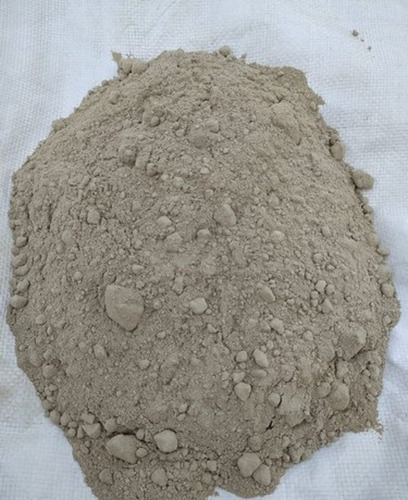
Gypsum is one of those industrial minerals that connects mining, cement manufacturing, construction materials and building-product production.
It is used in cement as a set-regulating material and is also processed into products such as plaster and wallboard. Gypsum is additionally used in agriculture and several industrial applications. USGS describes gypsum as one of the world’s widely used minerals, with major applications including wallboard, cement and agricultural uses.
But before gypsum reaches these applications, it may require moisture reduction after mining, washing, beneficiation, chemical processing or filtration.
Wet gypsum can create challenges in:
- Material handling
- Grinding
- Conveying
- Storage
- Feeding
- Product consistency
- Downstream processing
This makes industrial drying an important process step for many gypsum-processing plants.
GTI Dryers designs and manufactures customized gypsum drying systems for natural gypsum, synthetic/FGD gypsum, gypsum powder, granules and filter-cake materials, with the drying system selected around moisture, capacity, particle size, product temperature and downstream application.
The Commercial Question Is Not “Can Gypsum Be Dried?”
The more important question is:
What does the gypsum need to become after drying?
That answer determines the drying strategy.
A gypsum producer supplying a cement plant may have a different requirement from:
- A gypsum wallboard manufacturer
- A plaster producer
- A gypsum powder processor
- A fertilizer/agricultural supplier
- A gypsum recycling plant
- A cement grinding unit
Therefore, GTI approaches gypsum drying as a process-engineering application, not as a one-size-fits-all dryer purchase.
Where Gypsum Drying Fits in the Production Chain
A simplified industrial process can look like:
Gypsum Mine / Industrial Source
↓
Crushing / Washing / Separation
↓
Dewatering
↓
GYPSUM DRYING
↓
Grinding / Classification / Calcination / Storage
↓
Cement / Plaster / Wallboard / Industrial Product
The exact sequence changes according to the gypsum source and final product.
This distinction is important because drying and calcination are not the same operation.
Drying primarily removes free moisture.
Calcination intentionally removes part of the chemically bound water from gypsum to produce forms such as hemihydrate.
USGS describes calcined gypsum as gypsum heated to partially dehydrate it, producing a hemihydrate base used for plaster and wallboard products.
1. Natural Gypsum Drying
Natural gypsum is mined and processed into material suitable for different industrial applications.
Depending on the deposit and processing route, mined gypsum may undergo:
Mining → Crushing → Screening → Washing/Beneficiation → Dewatering → Drying → Grinding / Further Processing
GTI’s gypsum drying systems can be designed for different natural gypsum feed forms, including:
- Crushed gypsum
- Granular gypsum
- Gypsum powder
- Wet gypsum
- Gypsum filter cake
GTI’s existing gypsum-drying application information indicates that moisture can vary significantly depending on source and processing method, and identifies rotary dryers as a common solution for large-scale gypsum drying.
2. Synthetic / FGD Gypsum Drying
Synthetic gypsum is produced through industrial processes.
One important source is flue-gas desulfurization (FGD).
USGS identifies synthetic gypsum as an important substitute for mined gypsum, particularly in wallboard manufacturing, cement production and agricultural applications.
FGD gypsum can contain substantial moisture after separation and filtration.
The process can therefore include:
FGD Process → Gypsum Slurry → Filtration → Gypsum Filter Cake → Drying → Processing / Product
Why Filter-Cake Drying Matters
A filter cake can be:
- Moist
- Cohesive
- Difficult to convey
- Variable in moisture
- Difficult to feed consistently
The dryer therefore needs to accommodate the actual physical behaviour of the material.
3. Gypsum Filter Cake Dryer
This is a particularly important commercial application for industrial drying.
A typical process could be:
Wet Gypsum Filter Cake
→ Feeding
→ Drying
→ Moisture-Controlled Gypsum
→ Grinding / Storage / Further Processing
GTI can evaluate the appropriate drying configuration based on:
- Filter-cake moisture
- Feed rate
- Particle size
- Cake consistency
- Required final moisture
- Heat source
- Product temperature
- Downstream process
For sticky or cake-like feeds, the feeding and material-distribution system can be just as important as the dryer itself.
4. Gypsum Drying for Cement Manufacturing
This is one of the most important commercial applications.
Cement is manufactured by grinding clinker with controlled additions of materials. USGS notes that Portland, blended and masonry cement are made by grinding clinker and mixing it with a small amount of gypsum, along with increasingly used supplementary cementitious materials.
Gypsum is used as a set regulator in cement production.
Therefore, a cement plant may require gypsum to meet controlled conditions before:
- Grinding
- Feeding
- Blending
- Storage
- Cement production
Typical Cement-Plant Flow
Gypsum Supply
↓
Crushing
↓
Drying
↓
Grinding / Storage
↓
Clinker + Gypsum + Other Materials
↓
Cement Grinding
↓
Finished Cement
This makes gypsum drying particularly relevant to integrated cement plants and cement grinding units.
Why Moisture Control Matters in Cement Plants
Excessive moisture can affect:
- Grinding efficiency
- Mill operation
- Material flow
- Feeding
- Storage
- Product consistency
- Thermal balance
The exact moisture target should be established from the cement plant’s grinding process and raw-material conditions.
GTI therefore recommends designing the dryer around the actual moisture entering the plant and the required condition at the mill or storage stage, rather than applying a generic final-moisture number.
5. Gypsum for Plaster Manufacturing
Gypsum is widely used to produce plaster and related construction products.
When gypsum is intentionally calcined, part of its chemically combined water is removed to produce a form suitable for plaster applications.
A typical processing route may include:
Raw Gypsum → Crushing → Drying → Grinding → Calcination → Plaster Product
Here, drying and calcination need to be carefully distinguished and controlled.
A drying system can prepare the feed material for downstream processing, while the calcination system performs the controlled dehydration required for the final product.
6. Gypsum Wallboard / Drywall Manufacturing
Wallboard is one of the largest gypsum applications.
USGS reports that U.S. gypsum consumption is heavily associated with wallboard, cement and plaster products. In 2025, U.S. wallboard production capacity was approximately 34 billion square feet per year, with estimated sales of 26 billion square feet.
Gypsum used for wallboard may be sourced from:
- Natural gypsum
- Synthetic gypsum
- Recycled gypsum
The drying requirement depends on the process stage and whether the gypsum is being prepared for calcination, formulation or another downstream operation.
Commercial Opportunity
This creates a strong market for:
Gypsum Dryer + Calcination + Wallboard Manufacturing
where drying is one part of a larger gypsum-processing system.
7. Recycled Gypsum Drying
Gypsum recycling is another developing industrial application.
USGS reports that gypsum scrap from wallboard manufacturing is recycled, with recycled gypsum being used primarily for agricultural purposes and as feedstock for new wallboard; other potential applications include cement production and water treatment.
Depending on the source, recycled gypsum may require:
- Size reduction
- Separation
- Contaminant removal
- Drying
- Grinding
- Classification
This creates opportunities for specialized drying systems where moisture control is required before downstream reuse.
Choosing the Right Gypsum Dryer
There is no universal “best gypsum dryer.”
The correct system depends on:
Feed Form
Is the gypsum:
- Powder?
- Granule?
- Crushed rock?
- Wet filter cake?
- Recycled material?
Moisture
What is the initial moisture?
What is the required final moisture?
Capacity
Is the plant processing:
- kg/hr?
- TPH?
- Several hundred TPD?
- Thousands of TPD?
Product Temperature
How much thermal exposure can the material tolerate before the next process?
Downstream Process
Does the dried gypsum go to:
- Cement grinding?
- Calcination?
- Wallboard?
- Plaster?
- Storage?
- Packaging?
These parameters determine the most suitable dryer arrangement.
Rotary Gypsum Dryer – The High-Capacity Solution
For many bulk gypsum applications, a rotary dryer is a practical industrial option.
GTI’s gypsum-drying application identifies rotary dryers as widely used for large-scale gypsum drying because they can handle continuous processing of bulk gypsum, powder and granulated material.
Advantages Can Include
- Continuous operation
- High throughput
- Robust construction
- Suitable for mineral materials
- Controlled residence time
- Integration with dust collection
- Adaptability to different heat sources
- Integration with existing material-handling systems
Direct vs Indirect Gypsum Drying
Depending on the application, both direct and indirect heating approaches can be considered.
Direct Drying
Hot drying gas comes into direct contact with the gypsum.
Potential advantages include:
- High evaporation capacity
- Simple process arrangement
- Suitable for many bulk mineral applications
- High-throughput operation
Indirect Drying
Heat is transferred through a heated surface rather than direct contact between combustion gases and the product.
This may be considered when the process requires:
- Controlled atmosphere
- Reduced direct gas-product contact
- Specific product purity considerations
- Specialized thermal control
The correct arrangement should be selected based on the gypsum specification and downstream process.
The Hidden Engineering Challenge: Gypsum Is Not Just “A Mineral”
A gypsum dryer must account for the fact that the material can undergo changes with excessive heat.
This is particularly important when the material is intended for cement, plaster or wallboard applications.
The drying system therefore needs to distinguish between:
Free Moisture Removal
and
Intentional Chemical Dehydration / Calcination
The process objective determines the operating conditions.
GTI can therefore design around the required:
Moisture Removal + Product Temperature + Residence Time + Heat Transfer + Downstream Requirement
rather than simply maximizing drying temperature.
GTI Gypsum Dryer Process Architecture
A commercial gypsum drying line can be configured around:
Wet Gypsum
→ Feed Hopper
→ Controlled Feeder
→ Rotary / Specialized Dryer
→ Cyclone / Dust Collection
→ Bag Filter
→ Dry Gypsum
→ Cooling / Conveying
→ Grinding / Storage / Calcination
The exact arrangement depends on:
- Plant capacity
- Feed characteristics
- Dust loading
- Product specification
- Emission requirements
- Available utilities
Energy Efficiency: Where the Real Savings Can Come From
Gypsum is often processed in large volumes.
Consequently, thermal efficiency can have a major influence on operating cost.
GTI can evaluate:
- Hot-air temperature
- Airflow
- Residence time
- Drum configuration
- Burner efficiency
- Exhaust temperature
- Heat recovery opportunities
- Insulation
- Dust collection pressure drop
For large cement and gypsum plants, specific energy consumption per tonne of water evaporated is a more meaningful engineering consideration than simply comparing burner capacity.
Where Is Gypsum Used & Produced Most?
For this pillar page,should work in two directions:
A. Gypsum-Producing Regions
Where mines and gypsum-processing plants are concentrated.
B. Gypsum-Consuming Industrial Clusters
Where cement, wallboard, plaster and construction-product manufacturing creates dryer demand.
This is much stronger commercially than simply targeting “gypsum dryer worldwide.”
India – A High-Potential Gypsum Dryer Market
India is an important market for GTI because gypsum demand connects directly with the country’s:
- Cement industry
- Construction sector
- Plaster products
- Building materials
- Gypsum processing
- Mineral industries
USGS estimated India’s gypsum mine production at 4.3 million tonnes in 2025.
Indian mineral reporting also identifies gypsum occurrences across multiple districts, including important areas in Rajasthan and Gujarat.
Rajasthan – India’s Most Important Gypsum GEO Cluster
Rajasthan should be one of the highest-priority locations for GTI’s gypsum SEO strategy.
The state has extensive gypsum resources and production activity.
Potential keywords:
Gypsum Dryer Rajasthan
Gypsum Dryer Manufacturer Rajasthan
Rotary Gypsum Dryer Rajasthan
Gypsum Processing Plant Rajasthan
Gypsum Powder Dryer Rajasthan
Cement Gypsum Dryer Rajasthan
For a commercial page, target the combination:
Gypsum + Dryer + Cement + Rajasthan
rather than only “gypsum dryer.”
Gujarat – Gypsum + Cement + Industrial Minerals
Indian Minerals Yearbook reporting identifies gypsum occurrences in Gujarat districts including:
- Bhavnagar
- Jamnagar
- Junagadh
- Kachchh
- Surendranagar
The same state has substantial cement and industrial-mineral activity.
Gypsum Dryer Gujarat
Gypsum Drying System Gujarat
Cement Gypsum Dryer Gujarat
Gypsum Processing Dryer Kutch
Industrial Gypsum Dryer Gujarat
Tamil Nadu – Cement & Building-Product Demand
Tamil Nadu is another valuable target because of its large cement and construction-material ecosystem.
Potential searches:
Gypsum Dryer Tamil Nadu
Cement Gypsum Dryer Tamil Nadu
Gypsum Drying System Chennai
Industrial Gypsum Dryer Tamil Nadu
The strongest commercial intent comes from linking gypsum processing to cement and construction rather than treating gypsum as a standalone mineral.
Andhra Pradesh & Telangana
These markets can be targeted around:
- Cement plants
- Construction materials
- Gypsum products
- Mineral processing
- Building products
Potential keywords:
Gypsum Dryer Andhra Pradesh
Gypsum Dryer Telangana
Cement Gypsum Dryer Hyderabad
Gypsum Processing Dryer Andhra Pradesh
United States – One of the Strongest Gypsum Markets
The U.S. is an especially valuable market because gypsum demand is strongly connected with wallboard, plaster and cement.
USGS estimated 44 million tonnes of apparent U.S. gypsum consumption in 2025, with the majority going to agriculture, cement production and wallboard/plaster manufacturing.
Leading crude-gypsum-producing states in 2025 were estimated to include:
- Iowa
- Kansas
- Michigan
- Nevada
- Oklahoma
- Texas
Gypsum Dryer USA
Rotary Gypsum Dryer USA
Gypsum Dryer Texas
Gypsum Dryer Oklahoma
Gypsum Dryer Kansas
Wallboard Gypsum Dryer USA
Cement Gypsum Dryer USA
China – Major Global Gypsum & Building-Products Market
China is a major gypsum producer and has a large cement and construction-material manufacturing ecosystem.
USGS estimated China’s 2025 gypsum mine production at approximately 12 million tonnes.
Gypsum Dryer China
Rotary Gypsum Dryer China
Gypsum Powder Dryer China
Cement Gypsum Dryer China
Wallboard Gypsum Dryer China
For China-focused content, the strongest commercial positioning should emphasize high-capacity continuous drying, energy efficiency and process integration.
Iran – Major Gypsum-Producing Market
Iran is a particularly important gypsum market.
USGS identifies Iran as the second-ranked producer of mined gypsum in 2024, with approximately 10% of estimated world production. It also identifies Semnan as the leading gypsum-producing province, with significant activity in Bushehr, Hormozgan and Tehran.
This creates strong location-specific opportunities:
Gypsum Dryer Iran
Gypsum Dryer Semnan
Gypsum Processing Dryer Iran
Rotary Gypsum Dryer Iran
Gypsum Powder Dryer Semnan
Iran also exported gypsum to markets including the UAE, India and Kuwait in 2024, illustrating the regional trade connection.
Oman – High-Value Middle East Market
USGS estimated Oman’s gypsum mine production at 14 million tonnes in 2025, placing it among the world’s major gypsum-producing countries.
This makes Oman a particularly valuable target for GTI.
Keywords
Gypsum Dryer Oman
Gypsum Processing Plant Oman
Rotary Gypsum Dryer Oman
Gypsum Powder Dryer Oman
Cement Gypsum Dryer Oman
For Oman, GTI should position around export-oriented gypsum processing, high-capacity drying and cement/building-material applications.
Saudi Arabia & UAE – Gypsum + Construction
The Middle East is an important market because gypsum demand is closely connected to:
- Cement
- Construction
- Plaster
- Drywall
- Building materials
- Industrial mineral processing
USGS estimated 2025 gypsum production at approximately 3.8 million tonnes for Saudi Arabia.
Potential commercial keywords include:
Gypsum Dryer Saudi Arabia
Gypsum Dryer UAE
Rotary Gypsum Dryer Saudi Arabia
Gypsum Processing Dryer UAE
Wallboard Gypsum Dryer Middle East
Thailand – Southeast Asian Gypsum Market
USGS estimated Thailand’s gypsum mine production at approximately 8.7 million tonnes in 2025, making it one of the significant global producers.
Potential terms:
Gypsum Dryer Thailand
Rotary Gypsum Dryer Thailand
Gypsum Processing Plant Thailand
Cement Gypsum Dryer Thailand
This market can also be connected with broader Southeast Asian cement and construction-product demand.
Spain & Türkiye – European / Mediterranean Gypsum Markets
Spain was estimated by USGS to be the world’s fifth-ranked gypsum producer in 2024, accounting for approximately 7% of global production.
Türkiye was estimated to be the world’s sixth-ranked gypsum producer in 2024, accounting for approximately 6.2% of global production.
These markets create potential for:
- Gypsum dryers
- Gypsum processing plants
- Wallboard feed preparation
- Cement gypsum drying
- Export-oriented gypsum processing
Keywords
Gypsum Dryer Spain
Gypsum Dryer Türkiye
Rotary Gypsum Dryer Turkey
Gypsum Processing Dryer Spain
Gypsum Dryer Selection Matrix
| Application | Feed Form | Dryer Consideration | Main Objective |
| Cement gypsum | Crushed/granular | Rotary / specialized | Moisture control |
| Natural gypsum | Crushed mineral | Rotary | Bulk drying |
| FGD gypsum | Filter cake | Customized rotary/specialized | Filter-cake moisture removal |
| Gypsum powder | Fine powder | Rotary / specialized | Controlled drying |
| Gypsum granules | Granular | Rotary | Continuous drying |
| Wallboard feed | Powder/process material | Drying + downstream calcination | Controlled feed preparation |
| Plaster feed | Powder | Drying + calcination integration | Process consistency |
| Recycled gypsum | Variable | Specialized system | Moisture + material handling |
Why GTI Dryers for Gypsum Processing?
GTI’s approach is based on the final application, not simply the name of the material.
Application-Based Engineering
A cement plant and a wallboard plant may use gypsum differently. The dryer should reflect that difference.
Customized Capacity
Dryer sizing is based on actual feed rate and evaporation duty.
Controlled Moisture Reduction
The target is determined by the downstream process.
Energy-Conscious Design
Airflow, heat source, residence time and exhaust conditions can be evaluated for efficient operation.
Product Protection
Drying conditions can be designed to avoid unnecessary overheating where preservation of gypsum properties is important.
Dust Management
Cyclones, bag filters and exhaust systems can be incorporated where required.
Heavy-Duty Mineral Processing
Equipment can be designed for continuous industrial operation.
Complete Plant Integration
GTI can evaluate the dryer alongside:
Feeding + Drying + Dust Collection + Conveying + Storage + Grinding / Calcination
What Information Does GTI Need to Quote a Gypsum Dryer?
For a project-specific technical and commercial proposal, provide:
Material
- Natural gypsum / FGD gypsum / synthetic gypsum
- Filter cake / powder / granules / crushed material
- Chemical composition, if available
Moisture
- Initial moisture %
- Required final moisture %
- Moisture basis
Capacity
- kg/hr or TPH
- Operating hours/day
- Continuous or batch operation
Particle Characteristics
- Particle size
- Bulk density
- Feed consistency
Thermal Conditions
- Feed temperature
- Required outlet temperature
- Available heat source
- Fuel type
- Waste-heat availability
Plant Details
- Installation location
- Available space
- Electrical supply
- Dust/emission requirements
- Existing conveyor/mill/calciner
- Desired level of automation
Downstream Application
Most importantly, tell GTI what happens after drying:
Cement? Plaster? Wallboard? Grinding? Storage? Agriculture?
This can significantly influence the dryer design.
From Gypsum Mine to Cement Plant: A Complete Drying Solution
The strongest gypsum projects are not necessarily those that simply need a “gypsum dryer.”
They are projects where moisture control directly affects the value of the final product.
For example:
Cement Plant
Gypsum → Drying → Grinding → Cement
Wallboard Plant
Gypsum → Drying → Grinding → Calcination → Board Manufacturing
Synthetic Gypsum
FGD → Filtration → Filter Cake → Drying → Processing
Gypsum Processing Plant
Mine → Crushing → Washing → Dewatering → Drying → Grinding → Product
GTI Dryers can engineer the drying stage around the complete process requirement.
Gypsum Dryer FAQs
What is a gypsum dryer?
A gypsum dryer is an industrial drying system used to remove free moisture from natural gypsum, synthetic gypsum, FGD gypsum, gypsum powder, granules or filter cake before downstream processing.
What type of dryer is used for gypsum?
Rotary dryers are commonly used for large-scale gypsum drying. Depending on feed form and process requirements, specialized drying systems can also be considered.
Can GTI Dryers manufacture a rotary gypsum dryer?
Yes. GTI Dryers designs customized rotary and specialized gypsum drying systems according to capacity, moisture, particle size, heat source and downstream application.
Can gypsum be dried before cement grinding?
Yes. Where the incoming gypsum moisture requires reduction, a drying stage can be incorporated before grinding or feeding into the cement process.
What is FGD gypsum?
FGD gypsum is synthetic gypsum generated through flue-gas desulfurization processes. Synthetic gypsum is used in applications including wallboard, cement and agriculture.
Is gypsum drying the same as gypsum calcination?
No. Drying primarily removes free moisture, while calcination intentionally partially dehydrates gypsum to produce a different chemical form used in plaster and wallboard production.
Can GTI dry gypsum filter cake?
Yes. Filter-cake drying can be evaluated based on cake moisture, consistency, capacity, particle characteristics and required final moisture.
Where is gypsum mostly used?
Major applications include wallboard and plaster, cement production and agriculture. USGS identifies construction-related applications, especially wallboard and cement, as major gypsum markets.
Which countries are major gypsum producers?
The 2025 USGS estimates identify major production from countries including the United States, China, Iran, Oman, Spain, Türkiye, Thailand, India, Japan and Saudi Arabia, among others.
Get a Gypsum Dryer Designed for Your Process
Whether your requirement is for cement-grade gypsum, natural gypsum, synthetic/FGD gypsum, gypsum filter cake, gypsum powder or wallboard feed, the dryer should be selected according to the actual process.
GTI Dryers can evaluate:
Feed Moisture → Capacity → Particle Size → Heat Source → Final Moisture → Product Temperature → Downstream Process
The result is a drying system designed not simply to remove water, but to prepare gypsum for its next industrial application.
Planning a Gypsum Drying Project?
Send GTI Dryers your material and process details for a customized technical evaluation and commercial proposal.
GTI Dryers
Engineered in India. Designed for the World.
Talk to GTI Dryers for Your Industrial Gypsum Drying System.