
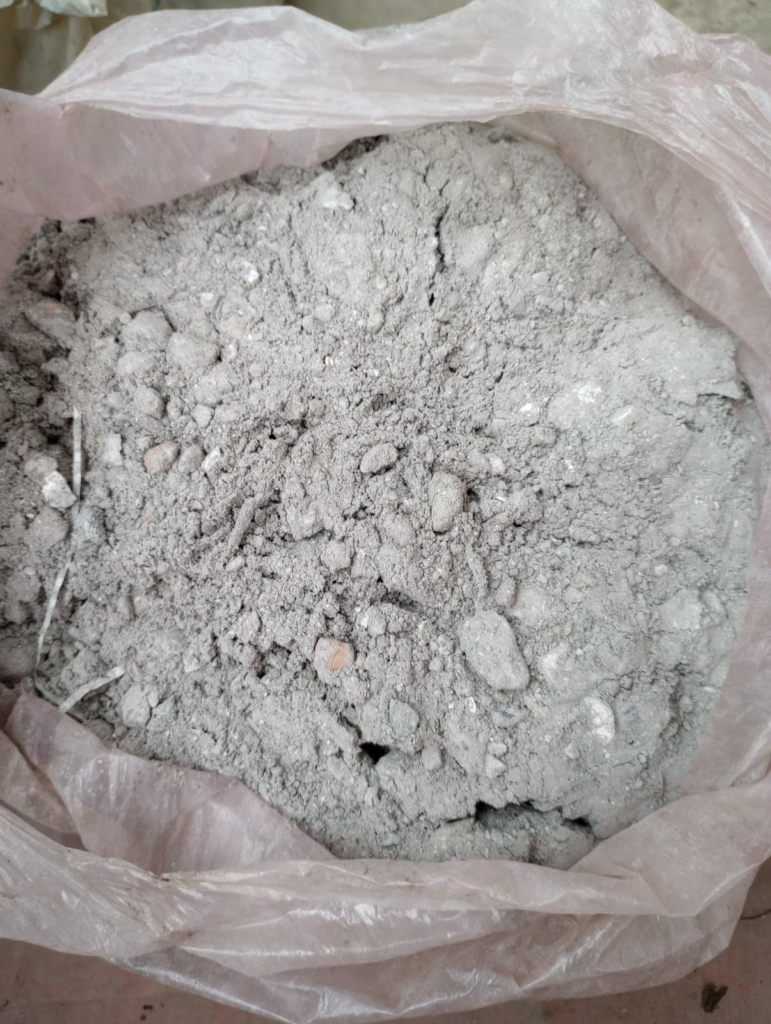
1. Coal Dryer Systems for Cement, Mining & Industrial Fuel
Coal remains one of the major bulk fuels used in heavy industries, while coal is also processed through mining, washing, screening and beneficiation operations.
India alone produced approximately 1,047.5 million tonnes of coal in FY2024–25, according to the Ministry of Coal. Coal India accounted for about 781.1 Mt, while Singareni Collieries produced about 69.0 Mt.
This scale makes moisture management a significant engineering consideration for suitable coal-processing applications.
Why Dry Coal?
Depending on the coal type and process, moisture reduction can help with:
- More consistent fuel feeding
- Improved handling
- Reduced water load during combustion
- Improved pulverization in suitable applications
- Better storage and conveying characteristics
- Improved thermal efficiency
- More predictable fuel quality
The exact final moisture target should always be determined from the coal characteristics and the requirements of the receiving process.
2. Coal Slime & Fine Coal Drying
Coal slime, coal fines and filter-cake-like materials can create a different drying challenge from conventional lump coal.
Fine particles generally provide greater surface area for evaporation but may also create:
- Dust-generation issues
- Stickiness at higher moisture levels
- Material agglomeration
- Difficult feeding
- Carryover into exhaust systems
- Higher dust-collection requirements
For these applications, dryer selection should consider:
Particle size + moisture + stickiness + feed consistency + drying temperature + dust control + final moisture
Depending on the material, technologies such as rotary, flash, belt or specialized indirect/low-temperature drying systems may be evaluated.
3. Lignite Drying: A Special Low-Temperature Opportunity
Lignite generally requires greater attention to moisture because of its comparatively high inherent water content and lower heating value relative to higher-rank coals.
India has a substantial lignite resource base. Government data lists approximately 47.37 billion tonnes of geological lignite resources, with Tamil Nadu accounting for the largest share, followed by Rajasthan and Gujarat.
Major Indian lignite regions include:
- Neyveli, Tamil Nadu
- Rajasthan
- Gujarat
For lignite applications, the dryer may need to balance:
- Moisture reduction
- Product temperature
- Combustion safety
- Dust control
- Oxygen management
- Residence time
- Fuel efficiency
Why consider lower-temperature drying?
A conventional high-temperature approach is not automatically appropriate for every coal or lignite application.
For moisture-sensitive or combustion-sensitive materials, controlled low-temperature drying can be considered where process conditions demand greater thermal control.
GTI can evaluate the appropriate configuration based on feed characteristics, required evaporation load, heat source and downstream fuel system.
4. Coal Drying for Cement Plants
Cement plants are one of the important application areas for industrial coal and fuel drying.
The objective is not simply to obtain “dry coal.”
The real objective is to deliver fuel with characteristics suitable for:
Feeding → Grinding → Pulverization → Combustion → Kiln/Calciner Operation
Moisture can influence fuel preparation, grinding performance, conveying and combustion.
A properly engineered drying system can therefore be integrated with the wider fuel-preparation system rather than treated as a standalone machine.
Potential benefits include:
- More consistent fuel preparation
- Reduced moisture entering the combustion process
- Better handling
- Improved fuel-feed consistency
- Better thermal utilization
- Potential reduction in downstream operational problems
Final process targets depend on the coal, fuel system and cement-plant configuration.
5. Aggregates & Crushed Stone Drying
Aggregates are a different category from fine mineral powders.
Materials such as:
- Crushed stone
- Gravel
- Manufactured sand
- Dolomite
- Coarse mineral aggregates
- Screened construction materials
may require drying before specific manufacturing or construction applications.
Where are dried aggregates used?
Asphalt Plants
Moisture in aggregate can increase the thermal load required to heat the material and evaporate water before asphalt mixing.
Concrete & Building Materials
Controlled moisture can be important where aggregates are proportioned and mixed according to a defined formulation.
Road Construction
Aggregate drying may be required in asphalt and other controlled construction-material processes.
Mineral Processing
Some crushed minerals require drying before:
- Screening
- Grinding
- Classification
- Blending
- Storage
- Further processing
6. Dolomite Dryer Systems
Dolomite is widely used in:
- Steelmaking
- Refractory production
- Cement
- Construction materials
- Glass
- Mineral processing
- Agricultural applications
Drying requirements vary substantially depending on whether the material is supplied as:
- Lump dolomite
- Crushed dolomite
- Dolomite chips
- Dolomite powder
- Processed mineral feed
For coarse or high-throughput applications, rotary drying systems are often evaluated because of their ability to continuously process bulk solids.
For fine powders, alternative technologies may be considered depending on particle size and moisture.
7. Fly Ash Dryer for Cement & Construction Applications
Fly ash is an important industrial by-product generated from coal combustion.
Its moisture content and physical condition can influence:
- Conveying
- Storage
- Blending
- Cement production
- Construction-material processing
- Material utilization
In India, fly ash is increasingly viewed not only as a waste stream but also as a resource. NITI Aayog notes that fly ash is used in cement production, including as a raw-material component and in Portland Pozzolana Cement, while utilization remains constrained in some areas by geographical and process factors.
Why dry fly ash?
A suitable drying system can help:
- Reduce moisture
- Improve flowability
- Improve conveying
- Prepare material for blending
- Support cement and construction applications
- Improve storage and handling
GTI’s mineral drying portfolio specifically includes fly ash, dolomite powder and other mineral powders among potential drying applications.
8. Phosphate Rock Drying
Phosphate rock is a major raw material for the fertilizer industry.
The drying stage can occur within mineral beneficiation or fertilizer-processing routes, depending on the plant configuration.
Moisture control can be important before:
- Grinding
- Beneficiation
- Acidulation
- Fertilizer production
- Storage
- Transportation
India also has domestic phosphate-rock resources, although its broader fertilizer raw-material supply chain includes imported mineral resources.
This creates opportunities for phosphate drying systems at beneficiation, fertilizer and mineral-processing facilities.
GTI’s mineral thermal-processing portfolio includes phosphate among potential mineral applications.
9. Potash Drying
Potash is primarily associated with fertilizer manufacturing.
Drying may be required for suitable:
- Potash minerals
- Potash concentrates
- Granulated products
- Fertilizer intermediates
The required technology depends strongly on whether the feed is:
- Fine powder
- Granular material
- Crystalline product
- Wet concentrate
- Slurry-derived material
For free-flowing particulate materials, fluid bed or rotary systems may be evaluated, depending on throughput and thermal characteristics.
10. Fluorite / Fluorspar Drying
Fluorite, commonly processed as fluorspar, is an important industrial mineral used in applications including:
- Fluorochemical production
- Metallurgy
- Aluminum-related processes
- Specialty chemical manufacturing
Wet mineral concentrate may require moisture reduction before further processing, storage or transportation.
Because fluorite concentrate can vary in particle size and mineral composition, the drying system should be designed from actual process data rather than selected solely from the material name.
11. Barite Dryer Systems
Barite is a particularly interesting GEO market for industrial drying.
According to the USGS, India was the world’s first-ranked producer of barite in 2024, excluding the United States, with an estimated 33% share of world production. India was also estimated to be the world’s first-ranked producer of talc, at 21%.
Barite is widely associated with drilling-fluid applications, but processed barite also serves other industrial markets.
Potential drying requirements include:
- Beneficiated barite
- Wet mineral concentrates
- Barite filter cake
- Fine mineral products
- Powder preparation
GTI can evaluate rotary, flash or other drying configurations depending on particle size, moisture, throughput and required product characteristics.
12. Talc Drying
Talc is used across several industries, including:
- Plastics
- Ceramics
- Paints and coatings
- Paper
- Cosmetics
- Industrial fillers
India is a significant global talc producer, according to USGS estimates.
Fine talc powders require careful consideration of:
- Dust control
- Particle size
- Product temperature
- Air velocity
- Residence time
- Powder recovery
For fine materials, flash drying or other high-rate drying technologies may be considered, while coarser feeds may be evaluated for rotary or fluidized drying depending on their characteristics.
One Dryer Does Not Fit Every Mineral
A major mistake in industrial dryer selection is choosing equipment only from the material name.
For example:
Coal ≠ coal slime ≠ lignite
and
barite ≠ talc ≠ phosphate rock ≠ dolomite
Even within the same mineral, the drying behavior can change with:
- Particle size
- Initial moisture
- Surface moisture
- Bound moisture
- Bulk density
- Feed temperature
- Stickiness
- Abrasiveness
- Thermal sensitivity
- Required final moisture
- Throughput
That is why GTI approaches mineral drying as a process-engineering problem rather than a standard-machine sale.
Which Dryer Technology Should You Consider?
GTI’s industrial dryer portfolio includes rotary, flash, belt, paddle, fluidized and other drying technologies.
| Material / Application | Dryer Technologies to Evaluate | Main Consideration |
| Coal | Rotary / specialized low-temperature systems | Moisture, combustion safety, throughput |
| Coal slime | Rotary / Flash / Belt / specialized systems | Fine particles, dust, stickiness |
| Lignite | Rotary / controlled low-temperature systems | High moisture, thermal control |
| Crushed stone | Rotary | High throughput, coarse particles |
| Aggregates | Rotary | Continuous bulk drying |
| Dolomite | Rotary / Flash | Particle size and throughput |
| Fly ash | Rotary / Flash / Fluid Bed | Fine powder, dust control |
| Phosphate rock | Rotary / Fluid Bed / Flash | Mineral properties and downstream process |
| Potash | Rotary / Fluid Bed | Granule/crystal characteristics |
| Fluorite | Rotary / Flash / Fluid Bed | Concentrate characteristics |
| Barite | Rotary / Flash / Fluid Bed | Powder/concentrate properties |
| Talc | Flash / Fluid Bed / specialized systems | Fine powder and dust control |
This is a preliminary technology-selection guide, not a guarantee of suitability. Final dryer selection should be based on material testing, moisture balance, thermal calculations and process requirements.
The GTI Approach: Design the Dryer Around Your Plant
GTI Dryers does not treat industrial drying as a simple “machine size” calculation.
The engineering process starts with the material and the production requirement.
Step 1 — Understand the Material
GTI evaluates:
- Material type
- Particle size
- Bulk density
- Moisture characteristics
- Flowability
- Stickiness
- Abrasiveness
- Thermal sensitivity
Step 2 — Establish the Moisture Balance
Important inputs include:
Wet feed → Water evaporation → Dry product
The evaporation load is then connected with:
- Heat requirement
- Airflow
- Residence time
- Dryer dimensions
- Fuel/energy requirement
Step 3 — Select the Drying Technology
Depending on the application, GTI can evaluate:
- Rotary Drum Dryer
- Flash Dryer
- Fluidized Bed Dryer
- Belt / Band Dryer
- Paddle Dryer
- Specialized indirect systems
Step 4 — Engineer Dust & Exhaust Handling
Bulk mineral and coal drying can generate dust.
The system may therefore incorporate appropriate:
- Cyclones
- Bag filters
- Scrubbers
- Exhaust systems
- Fans
- Ducting
- Material recovery systems
The final configuration depends on the material and applicable plant/environmental requirements.
Why Rotary Dryers Remain Important for Bulk Minerals
For high-throughput bulk materials, rotary dryers remain a major technology option because they can continuously handle large quantities of solids.
GTI’s rotary dryer systems are designed for applications including:
- Coal
- Aggregates
- Minerals
- Sand
- Dolomite
- Fly ash
- Fertilizers
- Biomass
- Industrial materials
GTI’s published rotary dryer information also describes direct and indirect configurations and emphasizes application-specific parameters such as drum speed, airflow, drying temperature, residence time and exhaust conditions.
For abrasive mineral applications, equipment construction and wear protection become particularly important.
Where Are These Drying Systems Mostly Used?
This is one of the strongest commercial opportunities for a mineral-dryer manufacturer because demand follows mining belts, cement plants, thermal power generation, fertilizer manufacturing, quarrying and construction-material production.
India — One of the Most Important Target Markets
India is especially attractive because several of these materials occur together across large industrial regions.
Coal & Lignite
Major coal-producing regions include:
- Jharkhand
- Odisha
- Chhattisgarh
- West Bengal
- Madhya Pradesh
- Telangana
- Maharashtra
Major lignite resources are concentrated particularly in:
- Tamil Nadu
- Rajasthan
- Gujarat
Government data identifies Tamil Nadu as having the largest share of India’s lignite resources, followed by Rajasthan and Gujarat.
Cement & Mineral Processing
Important industrial zones include:
- Rajasthan
- Gujarat
- Madhya Pradesh
- Chhattisgarh
- Andhra Pradesh
- Telangana
- Maharashtra
- Karnataka
- Tamil Nadu
These regions combine cement manufacturing, limestone/mineral processing, infrastructure development and heavy industry.
Barite & Talc
India is particularly significant for these two minerals.
USGS estimates India produced approximately 33% of global barite and 21% of global talc in 2024, excluding the United States for the barite comparison.
This makes India a high-value for searches such as:
- Barite Dryer Manufacturer India
- Barite Drying System
- Talc Dryer Manufacturer India
- Industrial Mineral Dryer India
- Rotary Mineral Dryer India
- Mining Dryer Manufacturer India
United States
The United States represents a major market for:
- Coal
- Aggregates
- Construction materials
- Industrial minerals
- Fly ash and other mineral/industrial by-products
- Fertilizer minerals
USGS’s Mineral Commodity Summaries provides production, trade, consumption and supply information across more than 90 mineral commodities, making it an important reference for identifying commodity-specific industrial markets.
High-value combinations include:
Industrial Mineral Dryer USA + Rotary Aggregate Dryer + Coal Dryer for Cement + Fly Ash Dryer + Mineral Processing Dryer
China
China is a major global market for:
- Coal
- Cement
- Aggregates
- Fertilizers
- Industrial minerals
- Mineral processing
The scale of heavy industry and mineral-processing infrastructure creates potential demand for high-capacity continuous drying systems.
searches can include:
- Coal Dryer Manufacturer China
- Industrial Mineral Dryer China
- Rotary Mineral Dryer China
- Aggregate Dryer China
- Fly Ash Dryer China
Australia
Australia is one of the world’s major mining economies.
Drying opportunities can occur around:
- Coal
- Mineral concentrates
- Industrial minerals
- Fertilizer minerals
- Mining residues
- Bulk export materials
The strongest commercial opportunity is generally not the generic keyword “dryer,” but combinations such as:
Mining Dryer + Coal Dryer + Mineral Concentrate Dryer + Rotary Dryer + Australian Mining
South Africa
South Africa is a particularly relevant market for mining-focused drying systems.
Potential applications include:
- Coal
- Manganese
- Chrome
- Iron ore
- Industrial minerals
- Aggregates
- Mineral concentrates
GTI’s South Africa-focused rotary dryer content similarly identifies mining, coal, silica sand, limestone, dolomite and other minerals as potential rotary-dryer applications.
Middle East & North Africa
Potential markets include:
- Saudi Arabia
- UAE
- Oman
- Egypt
- Morocco
- Jordan
Relevant sectors include:
- Cement
- Aggregates
- Phosphate
- Fertilizers
- Minerals
- Construction materials
For these markets, drying systems can be positioned around cement, fertilizer and mineral-processing projects rather than only around generic industrial-dryer searches.
Latin America
Important target markets include:
- Brazil
- Chile
- Peru
- Mexico
- Argentina
Potential applications include:
- Mining
- Mineral concentrates
- Cement
- Aggregates
- Fertilizer minerals
- Industrial minerals
For export marketing, GTI can target searches combining country + material + dryer + process.
For example:
Copper Concentrate Dryer Chile
Mineral Dryer Brazil
Rotary Coal Dryer Mexico
Industrial Mineral Dryer Peru
High-Intent Keyword Opportunities
Instead of repeatedly targeting only:
Industrial Dryer Manufacturer
GTI should build location + material + application combinations.
India
- Coal Dryer Manufacturer India
- Coal Slime Dryer India
- Lignite Dryer Manufacturer India
- Rotary Coal Dryer India
- Fly Ash Dryer Manufacturer India
- Aggregate Dryer India
- Dolomite Dryer India
- Barite Dryer Manufacturer India
- Talc Dryer India
- Mineral Dryer Manufacturer India
Global
- Coal Dryer Manufacturer
- Industrial Coal Drying System
- Rotary Coal Dryer
- Low Temperature Coal Dryer
- Lignite Drying System
- Fly Ash Dryer Manufacturer
- Industrial Mineral Dryer
- Rotary Mineral Dryer
- Aggregate Dryer Manufacturer
- Mining Dryer Manufacturer
- Phosphate Rock Dryer
- Potash Dryer
- Barite Dryer
- Talc Dryer
Application-based
- Coal Dryer for Cement Plant
- Coal Drying System for Mining
- Fly Ash Dryer for Cement
- Aggregate Dryer for Asphalt Plant
- Mineral Dryer for Beneficiation Plant
- Barite Dryer for Mineral Processing
- Phosphate Dryer for Fertilizer Plant
These long-tail combinations are generally more commercially meaningful because they connect material + process + location/industry.
What Makes a Good Industrial Mineral Dryer Project?
Before requesting a quotation, prepare the following information:
Material
- Material name
- Chemical composition
- Particle size
- Bulk density
- Abrasiveness
- Stickiness
Moisture
- Feed moisture %
- Required final moisture %
- Moisture type, if known
- Feed temperature
- Product temperature requirement
Production
- Wet feed rate
- Dry product rate
- Operating hours/day
- Operating days/year
Process
- Upstream equipment
- Downstream equipment
- Required residence time
- Available heat source
- Available utilities
Environmental
- Dust characteristics
- Exhaust temperature
- Required emission-control system
- Site/location conditions
Commercial
- New plant or retrofit
- Installation location
- Preferred fuel
- Automation requirements
- Delivery timeline
The more complete the project data, the more accurately GTI can develop the dryer configuration and process proposal.
Why Choose GTI Dryers for Coal & Mineral Drying?
GTI Dryers combines industrial dryer manufacturing with application-focused process engineering.
The company provides customized systems rather than relying solely on standard dryer dimensions.
GTI advantages include:
Application-Specific Engineering
Dryer configuration is developed around the material and process.
High-Capacity Continuous Drying
Suitable technologies can be engineered for large-volume industrial applications.
Energy-Focused Design
Airflow, heat utilization and operating parameters are considered during system development.
Heavy-Duty Construction
Suitable construction and wear considerations can be incorporated for abrasive mineral applications.
Dust Management
Cyclones, filters and exhaust systems can be integrated according to project requirements.
Automation & Control
Industrial dryers can be integrated with PLC/SCADA-based control and monitoring systems.
Turnkey Project Support
GTI’s mineral and industrial drying offering includes process design, manufacturing, plant-layout support, installation/commissioning assistance, automation and technical support.
From Coal to Critical Mineral Processing: One Drying Partner
The future of industrial drying is not limited to traditional cement and coal applications.
Mining and mineral-processing industries are increasingly looking at:
- Better energy utilization
- Resource recovery
- Industrial by-product utilization
- Mineral beneficiation
- Critical-mineral processing
- Waste-to-resource applications
- Lower transportation costs
- Process automation
India has already begun examining recovery of critical minerals from sources including overburden, tailings, fly ash and red mud, demonstrating the increasing importance of secondary mineral resources.
This creates an expanding opportunity for specialized drying and thermal-processing technologies.
GTI’s mineral thermal-processing portfolio covers applications extending beyond simple moisture removal, including drying, calcination, reduction, oxidation, roasting, dehydroxylation and other controlled thermal processes.
Frequently Asked Questions
What type of dryer is commonly used for coal?
Rotary dryers are commonly evaluated for large-scale coal and bulk-solid applications, while specialized low-temperature or indirect configurations may be considered where tighter thermal control is required.
Can GTI Dryers dry coal slime?
Yes. Coal slime and fine coal can be evaluated for rotary, flash, belt or specialized drying systems depending on moisture, particle size, stickiness, throughput and dust-control requirements.
Can lignite be dried at lower temperatures?
Potentially, yes. Lignite applications can require controlled drying conditions. The appropriate temperature profile depends on the material and downstream combustion/process requirements.
Which dryer is suitable for fly ash?
Rotary, flash and fluidized drying systems may be evaluated depending on particle size, moisture, capacity and product requirements.
Can GTI dry aggregates?
Yes. Rotary dryers can be evaluated for suitable crushed stone, aggregates, dolomite, sand and other coarse bulk materials.
Does GTI manufacture barite dryers?
GTI can engineer mineral drying systems for barite and other industrial minerals based on the actual feed characteristics and production requirements.
Can the same dryer be used for coal and mineral powders?
Not necessarily. Even when the equipment category is similar, the internal design, airflow, heat-transfer arrangement, dust handling, residence time and operating conditions can differ significantly.
What information is needed for a dryer quotation?
At minimum, GTI should receive the material name, feed capacity, initial moisture, target final moisture, particle size, bulk density, available heat source and operating conditions.
Talk to GTI About Your Drying Requirement
Whether the requirement is coal drying for a cement plant, lignite drying for fuel preparation, coal slime drying, aggregate drying, fly ash drying, barite drying, talc drying or phosphate/mineral drying, the correct system begins with the process—not with a standard machine size.
GTI Dryers provides customized industrial drying solutions engineered around:
Material → Moisture → Capacity → Heat Source → Dryer Technology → Dust Control → Automation → Downstream Process
If you are planning a new mineral-processing line, upgrading an existing dryer or looking for an alternative industrial dryer supplier, GTI can evaluate the application and recommend a suitable process configuration.
Send GTI these 7 details to start your project evaluation:
1. Material name
2. Wet feed capacity (TPH)
3. Initial moisture (%)
4. Required final moisture (%)
5. Particle size
6. Available heat/energy source
7. Plant location
GTI Dryers — Engineered Drying Solutions from India for Global Industries.