Industrial Dryers for South America & Central America
South America and Central America are major global centers for agro-processing, mining, minerals, food production, chemicals, pharmaceuticals, coffee, cocoa, algae and specialty botanical products.
From large-scale mining operations in Chile, Peru, Brazil and Argentina to coffee and cocoa processing in Colombia and Central America, manufacturers across the region require reliable industrial drying technologies to transform raw materials into stable, higher-value products.
Industrial drying plays an important role in:
- Moisture reduction
- Product stabilization
- Shelf-life improvement
- Powder production
- Mineral processing
- Biomass processing
- Food dehydration
- Chemical processing
- Botanical extraction
- Pharmaceutical manufacturing
The processing environment across the region can vary considerably—from humid tropical agricultural zones to high-altitude Andean mining regions. As a result, industrial dryers need to be selected and engineered according to the product, climate, production capacity, energy source and required final moisture.
GTI Dryers provides industrial drying technologies designed for diverse processing applications, including rotary dryers, spray dryers, flash dryers, band dryers, mesh belt dryers, Refractance Window Dryers, fluid bed dryers and customized drying systems.
Why Industrial Drying Is Important for Latin American Industries
Moisture control is a critical step in many industrial processes.
A raw material may have high moisture after harvesting, washing, extraction, filtration or processing. Without controlled drying, manufacturers can face:
- Inconsistent product quality
- Higher transportation costs
- Reduced storage stability
- Mold or microbial growth
- Product degradation
- Processing bottlenecks
- Increased energy consumption
- Difficulty meeting export specifications
A properly engineered industrial drying system can provide controlled:
Feed Rate → Temperature → Airflow → Residence Time → Moisture Removal → Final Moisture
The objective is not simply to remove moisture as quickly as possible. The objective is to achieve the required moisture level while maintaining product quality and optimizing energy consumption.
Industrial Dryer Manufacturer for South America & Central America
Industrial manufacturers in Latin America have different requirements depending on their raw materials and production environment.
A mining operation in Peru may require a completely different dryer from a coffee processor in Colombia or a botanical-extract manufacturer in Central America.
GTI Dryers focuses on application-specific industrial drying solutions for:
- Food processing
- Agro-processing
- Mining and minerals
- Chemicals
- Pharmaceuticals
- Algae and marine biomass
- Coffee and cocoa
- Botanicals
- Biomass
- Agricultural products
The dryer configuration can be evaluated according to:
- Product characteristics
- Initial moisture
- Target final moisture
- Production capacity
- Particle size
- Bulk density
- Heat sensitivity
- Flowability
- Required residence time
- Available heating source
- Plant layout
South and Central America represent a multilingual industrial market.
For manufacturers and engineering companies searching for drying equipment, search terminology can differ significantly between English, Spanish and Portuguese.
Spanish Industrial Dryer
Important Spanish-language search terms include:
- Secador industrial América Latina
- Secadores industriales en México
- Secador industrial Colombia
- Secador industrial Argentina
- Secador industrial Chile
- Secador industrial Perú
- Secador rotativo
- Secador por aspersión
- Secador flash
- Secador de banda
- Secador de lecho fluidizado
- Secador industrial para alimentos
Portuguese Industrial Dryer
Brazil represents one of the largest industrial and agricultural markets in South America.
Important Portuguese search terms include:
- Secador industrial Brasil
- Secador industrial para alimentos
- Equipamento de secagem industrial
- Secador rotativo industrial
- Secador por spray
- Secador de esteira
- Equipamentos industriais para secagem
These terms are particularly relevant to industrial buyers and engineering companies in regions such as São Paulo, Minas Gerais and Paraná.
Major Industrial Markets Across South & Central America
Brazil
Major applications include:
- Coffee
- Sugar
- Soy-based products
- Food processing
- Chemicals
- Minerals
- Biomass
- Agricultural residues
Key industrial region:
São Paulo – Minas Gerais – Paraná
Argentina
Potential applications include:
- Lithium processing
- Agricultural products
- Food ingredients
- Chemicals
- Minerals
- Biomass
Chile
Important applications include:
- Copper
- Lithium
- Minerals
- Food processing
- Agricultural products
- Specialty chemicals
Peru
Potential industrial dryer applications include:
- Mining
- Mineral concentrates
- Coffee
- Agricultural products
- Food ingredients
- Chemicals
Colombia
Important processing sectors include:
- Coffee
- Cocoa
- Fruits
- Herbs
- Botanicals
- Food ingredients
- Chemicals
Mexico
Potential applications include:
- Food processing
- Chemicals
- Pharmaceuticals
- Mining
- Coffee
- Agricultural products
- Industrial manufacturing
Central America
Markets such as Costa Rica, Guatemala, Panama, Honduras and other Central American countries have opportunities across:
- Coffee
- Cocoa
- Tropical fruits
- Botanicals
- Algae
- Food ingredients
- Agricultural processing
High-Demand Processing Sectors & Specialized Products
South and Central America have a unique combination of agricultural resources, mineral wealth and biodiversity.
This creates demand for specialized industrial drying systems.
1. Algae & Marine Biomass Dryers
The region’s developing blue bio-economy is creating new opportunities for algae and marine biomass processing.
Products such as:
- Spirulina
- Chlorella
- Microalgae
- Seaweed
- Marine biomass
can require carefully controlled drying conditions.
For heat-sensitive algae and botanical materials, aggressive drying temperatures may negatively affect product characteristics.
Depending on the material and process, manufacturers can evaluate:
Band Dryers
Suitable for continuous drying of particulate or bulk materials with controlled temperature and airflow.
Refractance Window Dryers
A gentler drying technology that can be considered for certain heat-sensitive liquid or semi-liquid food and botanical products.
Vacuum Dryers
Can be considered when reduced-pressure drying is required for sensitive products.
The correct technology depends on the material form, moisture content, final product specification and thermal sensitivity.
2. Guayusa, Croton Lechleri & Specialty Botanical Dryers
Latin America is home to a wide range of valuable botanical resources.
Among them are:
- Guayusa
- Croton lechleri
- Specialty teas
- Herbal leaves
- Botanical extracts
- Amazonian plant products
These materials can have high-value phytochemical, aromatic and functional properties.
For these applications, the drying process needs to balance moisture removal with temperature control and product quality preservation.
Potential technologies include:
- Band Dryers
- Mesh Belt Dryers
- Heat Pump Dryers
- Vacuum Dryers
- Refractance Window Dryers
Guayusa Drying
Guayusa leaves can require controlled drying to achieve the desired moisture level before further processing, grinding, packaging or extraction.
A continuous band or mesh belt dryer can be evaluated depending on:
- Leaf size
- Initial moisture
- Final moisture
- Required capacity
- Temperature sensitivity
Croton Lechleri Processing
Croton lechleri, commonly associated with dragon’s blood resin, is a specialty botanical material.
For extracted or liquid botanical products, technologies such as spray drying, vacuum drying or Refractance Window Drying may be considered depending on the feed form and desired final product.
The actual dryer should be selected through product-specific process evaluation rather than assuming one dryer is suitable for every Croton lechleri product.
3. Coffee, Cocoa & Tropical Agro-Processing
South and Central America are globally important coffee and cocoa producing regions.
Drying is an essential part of maintaining consistent moisture and storage stability in agricultural commodities.
Industrial drying systems can be evaluated for:
Coffee
- Green coffee processing
- Coffee by-products
- Coffee extracts
- Coffee ingredients
Cocoa
- Cocoa-related products
- Cocoa processing residues
- Cocoa ingredients
Tropical Agricultural Products
- Fruits
- Vegetables
- Herbs
- Spices
- Agricultural residues
Depending on the product, manufacturers may consider:
Band Dryers → Rotary Dryers → Spray Dryers → Fluid Bed Dryers
4. Mining, Minerals & Lithium Processing
South America has significant mineral resources, including copper, lithium, iron ore and other mineral concentrates.
Countries such as:
- Chile
- Argentina
- Peru
- Brazil
have major mineral-processing activities.
Mining and mineral applications often require robust equipment capable of continuous operation under demanding conditions.
Rotary Dryers for Minerals
Rotary Drum Dryers are widely considered for bulk mineral drying because of their:
- Robust construction
- High throughput capability
- Continuous operation
- Flexible heating options
- Suitability for bulk solids
Potential applications include:
- Mineral concentrates
- Silica sand
- Iron-bearing materials
- Mineral residues
- Industrial sands
- Filter cakes
For abrasive materials, dryer design should consider:
- Material abrasiveness
- Particle size
- Bulk density
- Moisture content
- Wear protection
- Residence time
5. Chemicals, Fertilizers & Sugar Processing
The chemical, fertilizer and sugar industries require highly controlled drying technologies.
Potential applications include:
- Chemical crystals
- Fertilizer products
- Sugar
- Chemical granules
- Industrial salts
- Chemical intermediates
Fluid Bed Dryers
Fluid bed drying is particularly useful for many free-flowing granular products.
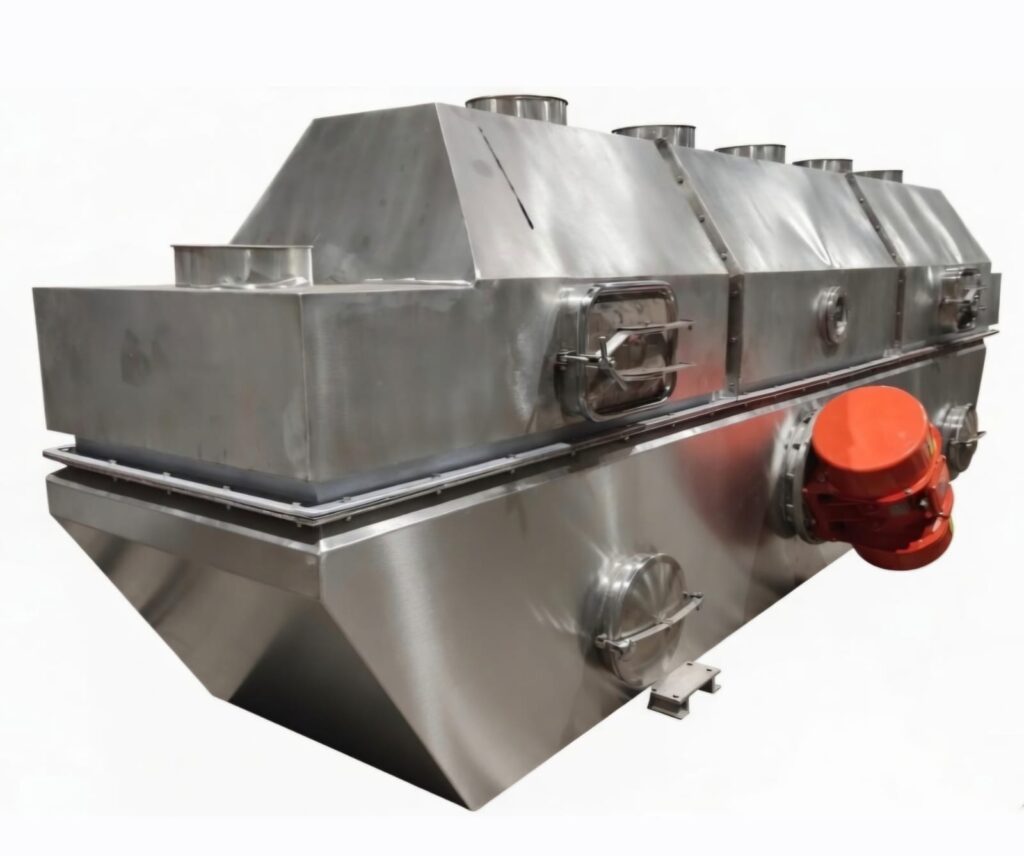
Vibratory Fluid Bed Dryers
Vibratory fluid bed systems combine vibration with controlled airflow to improve product movement and drying uniformity.
Flash Dryers
Flash dryers can be considered for fine wet materials requiring rapid moisture removal.
Most In-Demand Industrial Dryer Technologies for Latin America
Different industrial materials require different drying technologies.
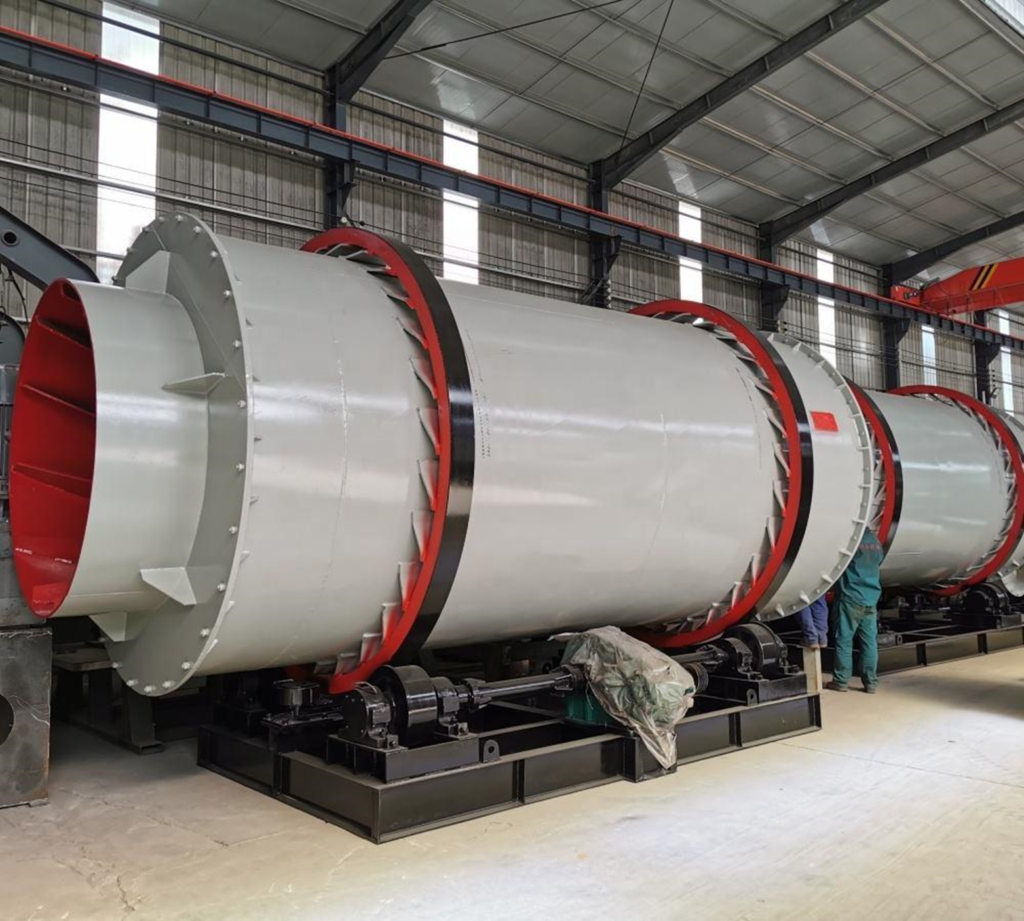
1. Rotary Dryers – Secador Rotativo
Rotary dryers are heavy-duty continuous dryers for bulk materials.
Applications
- Mining
- Minerals
- Sand
- Fertilizers
- Biomass
- Agricultural residues
- Bulk industrial solids
Key Advantages
- High throughput
- Robust construction
- Continuous operation
- Flexible heat sources
- Suitable for demanding environments
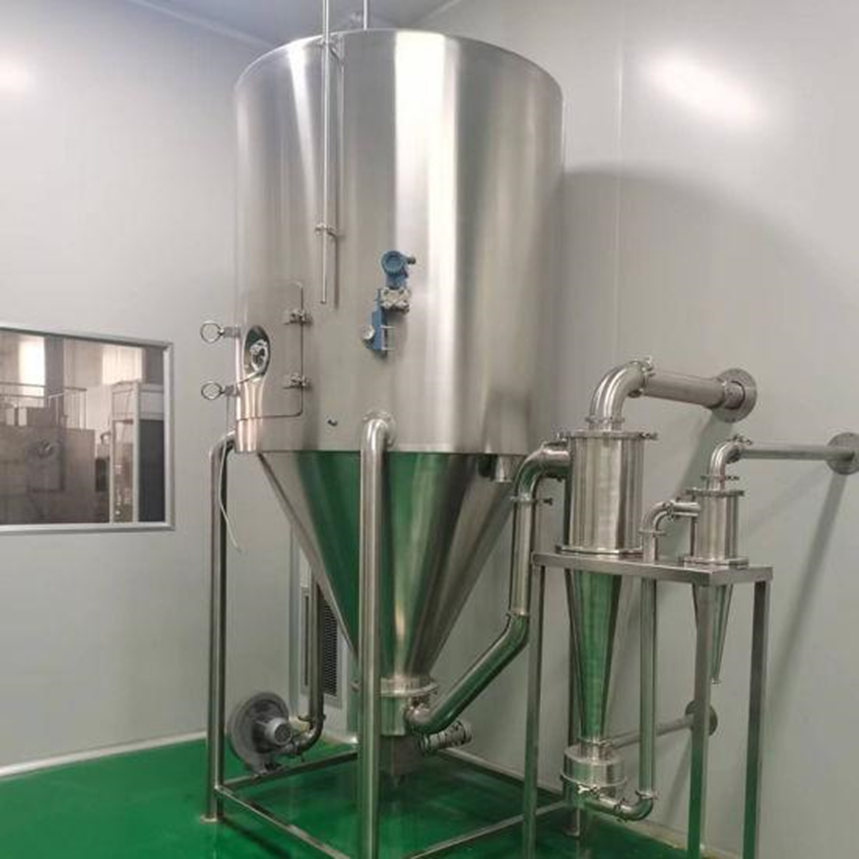
2. Spray Dryers – Secador por Aspersión
Spray dryers transform liquid feeds into powders.
Applications
- Coffee extracts
- Dairy products
- Fruit purees
- Food ingredients
- Chemical slurries
- Botanical extracts
Advantages
- Liquid-to-powder conversion
- Continuous operation
- Controlled powder formation
- Rapid moisture removal
- High production capacity
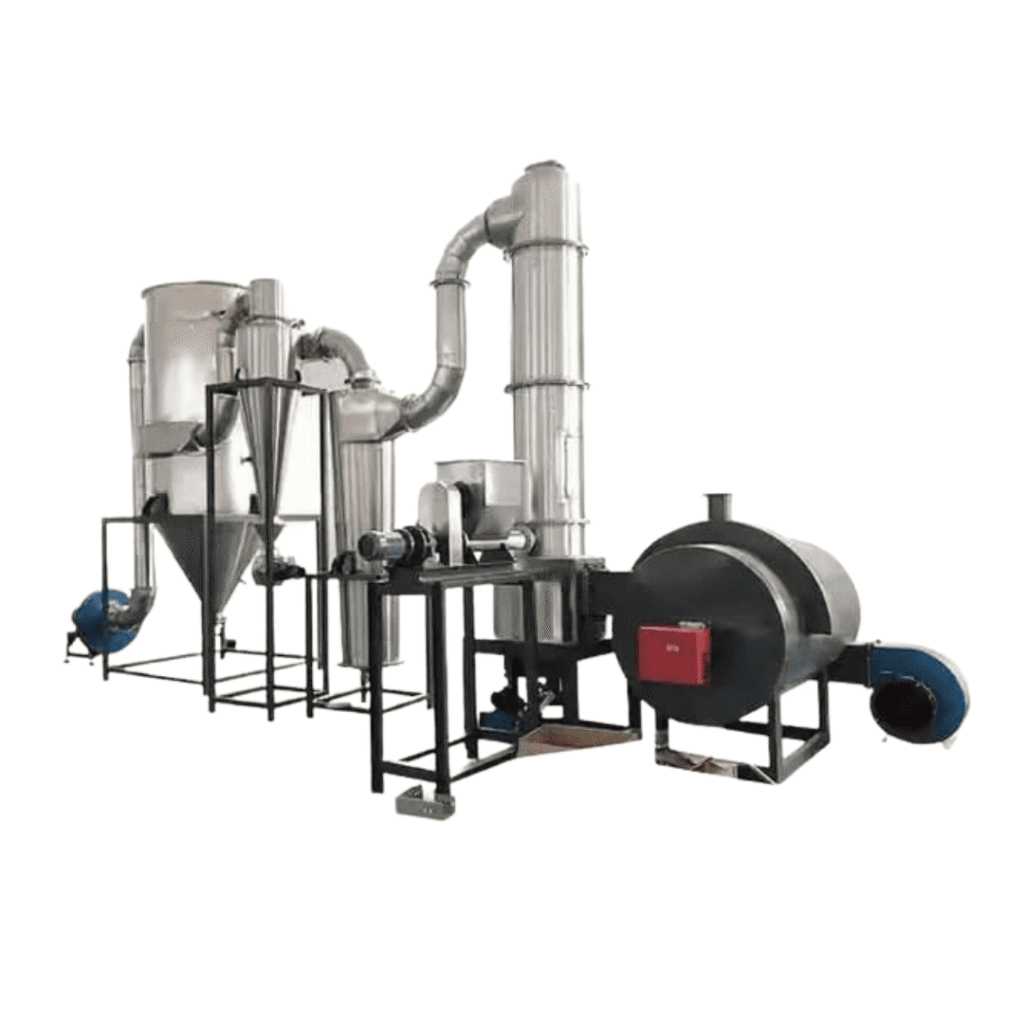
3. Flash Dryers – Secador Flash
Flash dryers are designed for rapid drying of fine wet materials.
Applications
- Starches
- Cassava products
- Wet filter cakes
- Chemical products
- Fine powders
- Pasty materials
Benefits
- Rapid moisture evaporation
- Compact design
- Continuous operation
- High heat and mass transfer
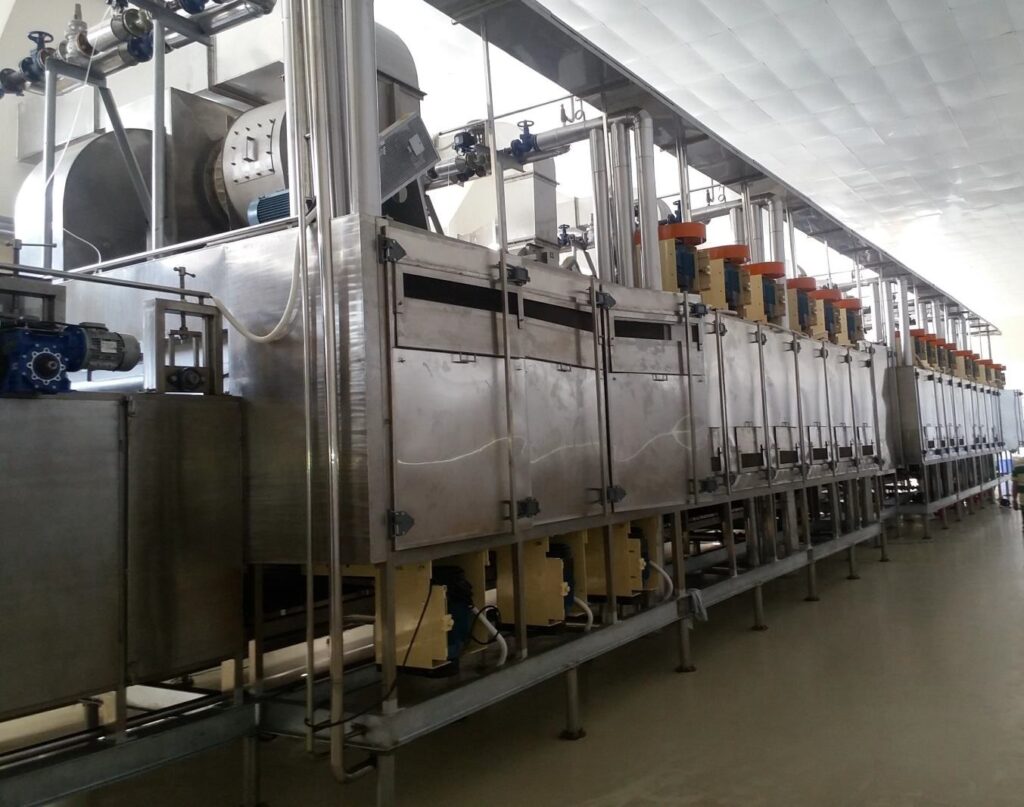
4. Band, Mesh Belt & Conveyor Dryers – Secador de Banda
Band dryers provide continuous drying using a moving belt.
They can be configured with multiple drying zones to control:
- Temperature
- Airflow
- Residence time
- Product loading
Applications
- Coffee-related products
- Cocoa
- Herbs
- Guayusa
- Fruits
- Vegetables
- Organic materials
- Food ingredients
Band dryers are especially useful where gentle handling and controlled continuous drying are required.
A Refractance Window Dryer (RWD) is a specialized drying technology designed for certain liquid, puree, slurry and semi-liquid materials.
It can be particularly interesting for heat-sensitive food products, botanical materials and fruit-based products.
Potential applications include:
- Fruit purees
- Vegetable purees
- Botanical extracts
- Algae
- Functional food ingredients
- Plant-based concentrates
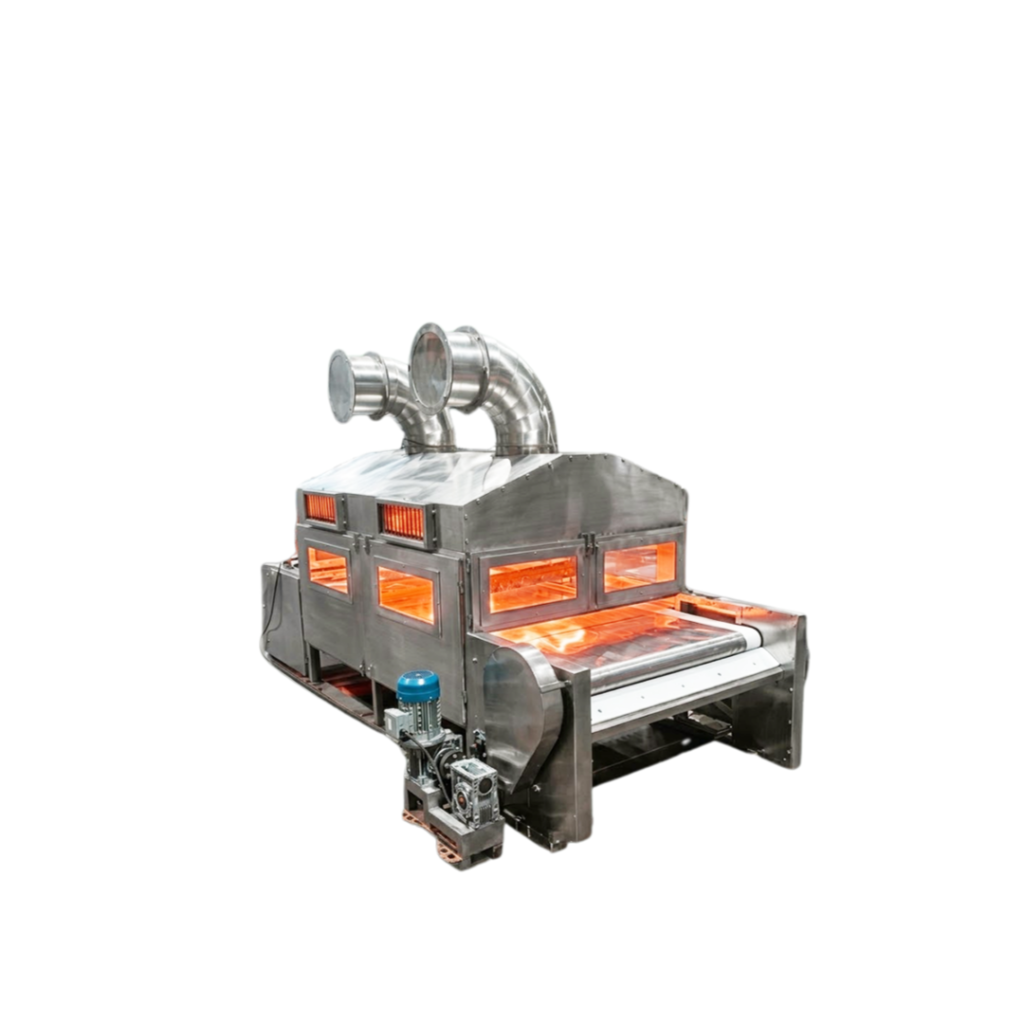
One advantage of the technology is its ability to provide relatively rapid drying with controlled product temperatures, depending on the process configuration.
For high-value heat-sensitive materials, RWD can be evaluated as an alternative to conventional hot-air drying or, in some applications, as an alternative to more energy-intensive drying approaches.
6. Fluid Bed & Vibratory Fluid Bed Dryers
Fluidized bed technology is suitable for many free-flowing granular materials.
Applications
- Sugar
- Fertilizers
- Chemical granules
- Food ingredients
- Agricultural products
- Pharmaceutical granules
Key Advantages
- Efficient heat transfer
- Uniform drying
- Controlled residence time
- Continuous operation
- Suitable for granular products
Industrial Dryer Selection Guide for Latin America
| Product / Application | Dryer Technology to Consider |
| Coffee products | Band / Rotary / Spray Dryer |
| Cocoa products | Band / Rotary Dryer |
| Guayusa leaves | Band / Mesh Belt Dryer |
| Algae | Band / RWD / Vacuum Dryer |
| Fruit puree | Spray / RWD Dryer |
| Botanical extracts | Spray / Vacuum / RWD |
| Croton lechleri extracts | Spray / Vacuum / RWD |
| Lithium-related materials | Rotary Dryer |
| Mineral concentrates | Rotary Dryer |
| Silica sand | Rotary Dryer |
| Fertilizer granules | Fluid Bed / Rotary Dryer |
| Chemical crystals | Fluid Bed / Vibratory Fluid Bed Dryer |
| Cassava starch | Flash Dryer |
| Agricultural residues | Rotary / Band Dryer |
| Heat-sensitive products | RWD / Heat Pump / Vacuum Dryer |
Important: Final dryer selection should always be based on actual feed characteristics, laboratory or pilot testing and process calculations.
How to Choose the Right Industrial Dryer in South America
Before purchasing an industrial dryer, project engineers should evaluate several factors.
Product Characteristics
- Liquid
- Slurry
- Wet cake
- Powder
- Granule
- Leaf
- Fruit
- Bulk solid
Moisture
- Initial moisture
- Final moisture
- Bound moisture
- Free moisture
Capacity
Specify:
- kg/hour
- tons/hour
- tons/day
Thermal Sensitivity
Determine the maximum acceptable product temperature.
Energy Source
Potential heating sources include:
- Natural gas
- LPG
- Steam
- Thermal oil
- Hot water
- Electricity
- Biomass
- Waste heat
Final Product Requirements
Consider:
- Moisture
- Color
- Texture
- Particle size
- Bulk density
- Powder flowability
- Aroma
- Active compounds
Energy-Efficient Industrial Drying for Latin American Plants
Energy consumption is an important consideration when evaluating industrial drying equipment.
A well-designed drying system can incorporate:
- Heat recovery
- Insulated chambers
- Efficient air circulation
- Variable-speed drives
- Optimized airflow
- Multi-zone temperature control
- Heat pump technology
- Waste-heat utilization
However, actual energy savings should be calculated from the specific feedstock, evaporation load, ambient conditions, heating source and operating schedule.
Rather than making generic claims about percentage savings, GTI can evaluate the project based on actual process data.
Pilot Testing Before Buying an Industrial Dryer
Industrial dryer selection should not be based only on brochures or theoretical calculations.
For difficult or high-value materials, pilot testing can provide valuable process information.
A pilot drying trial can help evaluate:
- Drying time
- Final moisture
- Product quality
- Product temperature
- Energy requirement
- Throughput
- Drying behavior
- Material handling
This is particularly important for:
- Algae
- Guayusa
- Botanical extracts
- Croton lechleri products
- Coffee products
- Fruit purees
- Specialty food ingredients
Why Pilot Testing Matters
Pilot testing helps reduce uncertainty before a major capital investment.
It can provide real process data that can be used to support equipment sizing and project evaluation.
Industrial Drying Calculations & ROI Evaluation
Before investing in a dryer, manufacturers should understand the project’s expected economics.
A basic drying evaluation should consider:
Evaporation Load + Energy Consumption + Production Capacity + Operating Hours + Energy Cost + Product Value
The engineering evaluation can include:
- Feed moisture
- Final moisture
- Water evaporation rate
- Dryer capacity
- Heating requirement
- Fuel consumption
- Electricity consumption
- Operating hours
- Production output
These parameters can then be used to estimate:
- Operating cost
- Cost per kg of water removed
- Cost per ton of dried product
- Potential energy savings
- Estimated payback period
Important
Actual ROI and payback cannot responsibly be guaranteed without project-specific data.
For an accurate calculation, provide:
Product + Feed Rate + Initial Moisture + Final Moisture + Operating Hours + Energy Source + Local Energy Cost
Why Choose GTI Dryers for South & Central American Projects?
Application-Specific Engineering
Dryer selection is based on the material and process requirements rather than simply offering a standard machine.
Multiple Drying Technologies
GTI’s portfolio allows manufacturers to evaluate different technologies, including:
- Rotary Dryers
- Spray Dryers
- Flash Dryers
- Band Dryers
- Mesh Belt Dryers
- Refractance Window Dryers
- Fluid Bed Dryers
- Vibratory Fluid Bed Dryers
- Paddle Dryers
- Vacuum Dryers
Food & Industrial Applications
Solutions can be evaluated for:
- Food
- Coffee
- Cocoa
- Coconut
- Algae
- Botanicals
- Chemicals
- Pharmaceuticals
- Minerals
- Biomass
Global Project Support
For international projects, engineering and logistics planning can include:
- Dryer selection
- Process calculations
- Equipment design
- Manufacturing
- Export packaging
- International shipping
- Installation support
- Commissioning assistance
Projects may require logistics through major regional ports such as Santos, Valparaíso, Callao, Buenos Aires, Cartagena and Veracruz, depending on the customer’s location and final shipping arrangement.
Industrial Dryer Markets We Serve Across Latin America
South America
Brazil
- São Paulo
- Minas Gerais
- Paraná
Argentina
- Buenos Aires
- Lithium-producing regions
- Agricultural processing areas
Chile
- Santiago
- Mining regions
- Mineral-processing facilities
Peru
- Lima
- Mining regions
- Agricultural processing centers
Colombia
- Bogotá
- Coffee-producing regions
- Food-processing hubs
Central America
Mexico
- Mexico City
- Food-processing regions
- Industrial manufacturing hubs
Costa Rica
- San José
- Food and agricultural processing
Guatemala
- Coffee and agricultural processing
Panama
- Logistics and industrial processing
This location-based approach helps capture searches such as:
“industrial dryer manufacturer Brazil”
“rotary dryer for mining Peru”
“spray dryer food processing Colombia”
“band dryer for coffee Brazil”
“industrial dryer supplier Chile”
“food dehydration equipment Mexico”
Frequently Asked Questions About Industrial Dryers in South America & Central America
Which industrial dryer is best for mining in South America?
For many bulk mineral applications, a rotary dryer can be considered because of its continuous operation and robust handling capabilities. Final selection depends on the mineral, moisture content, throughput and drying conditions.
Which dryer is suitable for coffee processing?
Depending on the product stage, coffee-related applications can consider band dryers, rotary dryers or spray dryers. Whole or particulate products and liquid coffee extracts require different technologies.
Which dryer is suitable for guayusa leaves?
A controlled-temperature band or mesh belt dryer can be evaluated for guayusa leaves. Heat pump or other low-temperature technologies may also be considered for heat-sensitive products.
What dryer is used for algae?
Algae drying requires careful consideration of product temperature and quality. Band dryers, Refractance Window Dryers, heat pump dryers or vacuum systems may be evaluated depending on whether the feed is wet biomass, slurry or extract.
Which dryer is suitable for Croton lechleri extracts?
For liquid or concentrated botanical extracts, spray drying, vacuum drying or Refractance Window Drying may be considered depending on the desired final product and thermal sensitivity.
Which dryer is suitable for lithium processing?
The appropriate technology depends on the lithium-containing material and process stage. Rotary dryers can be evaluated for suitable bulk mineral or filter-cake applications.
What is a Refractance Window Dryer?
A Refractance Window Dryer is a specialized drying technology that transfers thermal energy through a heated surface and a thin product layer. It can be considered for certain liquid, puree and heat-sensitive food or botanical materials.
Can GTI provide pilot testing?
Pilot testing can be considered for suitable projects to evaluate drying behavior, moisture removal, product quality and process requirements before final equipment design.
Can GTI calculate industrial dryer ROI?
Yes, project-specific drying calculations can be developed using information such as feed moisture, target moisture, throughput, heating source, operating hours and local energy costs. A reliable payback estimate requires actual project data.
Conclusion: Advanced Industrial Drying for Latin America’s Next Generation of Processing Plants
South America and Central America offer significant opportunities across food processing, agriculture, mining, minerals, chemicals, pharmaceuticals, algae, coffee, cocoa and specialty botanicals.
As manufacturers move toward higher-value processing, controlled dehydration and energy-efficient production, industrial drying technology will become increasingly important.
From heavy-duty rotary dryers for minerals and mining to spray dryers for liquid food products, flash dryers for starches, band dryers for agricultural products, Refractance Window Dryers for heat-sensitive materials, and fluid bed dryers for granular products, the right technology depends on the specific material and process.
GTI Dryers provides application-focused industrial drying solutions for manufacturers, engineering companies, EPC contractors and processing plants across international markets.
Planning an Industrial Drying Project in Latin America?
Send GTI:
Raw Material + Initial Moisture + Target Moisture + Production Capacity + Heating Source + Operating Hours
to begin an initial drying calculation, technology evaluation and pilot-testing discussion.
Whether your project involves minerals in Peru, lithium-related processing in Chile or Argentina, coffee in Brazil or Colombia, cocoa in Central America, algae, guayusa, Croton lechleri, chemicals or food ingredients, the right industrial drying technology can help create a more controlled and efficient production process.
GTI Dryers — Industrial Drying Technology for Global Processing Industries.