Paddle Dryer
GTI Dryers is a leading Paddle Dryer manufacturer in India, designing and manufacturing industrial indirect paddle drying systems for processing wet cakes, filter cakes, slurries, pastes, sticky materials, and industrial sludge.
Our industrial paddle dryers are engineered for efficient heat transfer, controlled moisture removal, and continuous operation, making them suitable for industries such as:
chemicals
pharmaceuticals
food processing
polymers and resins
minerals and metals
waste management
Unlike direct dryers that require large volumes of hot air, paddle dryers use indirect contact heating, allowing heat to transfer efficiently through heated paddles and jackets while keeping the product isolated from combustion gases.
This results in:
high thermal efficiency
low exhaust gas volume
stable product temperature control
safe drying of combustible materials
compact equipment footprint
GTI Paddle Dryers are designed for heavy-duty industrial operation, reliable mixing, and uniform product drying even for materials that are difficult to process.
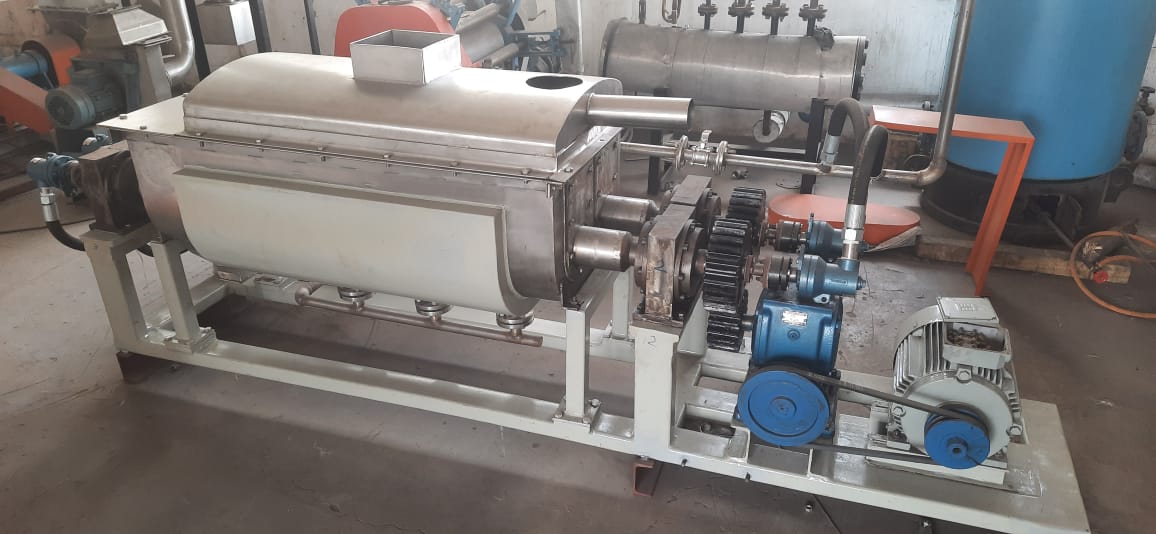
What is Paddle Drying?
Paddle drying is a highly efficient indirect contact drying technology used for removing moisture from wet solids, pastes, and slurries.
In this system, heat is transferred directly to the product through heated metal surfaces, including:
a jacketed drying trough
hollow rotating shafts
hollow paddles
The heating medium (typically steam or thermal oil) flows inside these components, allowing heat to pass through the metal surfaces and evaporate moisture from the material.
Because the product is not exposed to combustion gases or large volumes of drying air, paddle drying offers several advantages:
high heat transfer efficiency
minimal off-gas generation
excellent temperature control
safe enclosed drying environment
This makes paddle dryers particularly suitable for sticky materials, high-moisture filter cakes, and temperature-sensitive products.
Working Principle of a Paddle Dryer
At the core of a paddle dryer is the process of indirect conductive heat transfer combined with continuous mixing, where moisture is removed from wet solids through heated surfaces rather than direct hot air.
Wet material is introduced into a jacketed horizontal trough, where slowly rotating hollow shafts equipped with specially designed paddles continuously mix and transport the product.
Steam or thermal oil circulates inside the dryer jacket, hollow shafts, and paddles, transferring heat through the metal surfaces to the product.
As the material comes into contact with the heated surfaces, moisture evaporates and forms vapour. The paddles continuously agitate the material, ensuring uniform heating, effective mixing, and prevention of product buildup.
The generated vapour is removed through a controlled exhaust system, while the dried product gradually moves toward the discharge outlet.
This continuous mixing and indirect heating mechanism allows paddle dryers to achieve efficient drying with low energy consumption and stable product quality.

Advantages of Paddle Dryer Technology
Industrial paddle drying systems offer highly efficient drying for materials that are difficult to process using conventional dryers.
Key Benefits
High thermal efficiency through indirect contact heating with large heat transfer surfaces
Low exhaust gas volume since no large airflow is required for drying
Excellent mixing performance ensuring uniform heat distribution and moisture removal
Suitable for sticky and high-moisture materials such as filter cakes, sludges, and pastes
Enclosed drying system reducing dust emissions and odour release
Safe drying for combustible materials due to minimal oxygen exposure and controlled conditions
Stable product temperature control preventing overheating or degradation
Continuous processing capability enabling consistent product throughput
- Compact equipment footprint with high heat transfer area-to-volume ratio
- Low maintenance design with robust mechanical construction for industrial duty
Paddle Dryer Applications
Industrial paddle dryers are widely used for drying wet solids, filter cakes, pastes, and slurries across various industries.
Food & Agro Processing
flour and food powders
beverage ingredients
protein products
biomass materials
fibre-based agricultural residues
Chemical Industry
inorganic salts
catalysts
cellulose derivatives
pigments and intermediates
brominated organic compounds
Petrochemical Industry
refinery by-products
specialty petrochemical powders
process residues
Polymer & Plastics
polypropylene (PP)
polycarbonate (PC)
PET and PTA
polymer resins and granules
Mineral & Metallurgical
metal powders
metal carbonates
sulphates and hydroxides
mineral concentrates
Waste Management
industrial sludge
ETP sludge
hazardous slurry waste
odorous process residues
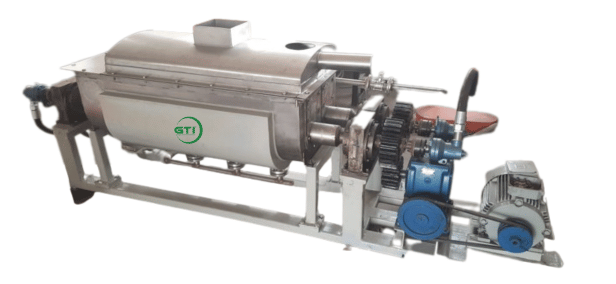
Main Components of a Paddle Dryer System
- Jacketed drying trough or shell
- Hollow rotating shafts with paddle elements
- Steam or thermal oil heating system
- Drive system with gearbox and motor
- Material feeding system
- Vapour outlet and exhaust ducting
- Product discharge system
- PLC control panel with temperature monitoring
Each component plays a critical role in achieving efficient heat transfer, stable material movement, and consistent drying performance.
Efficient paddle dryer operation depends on several key process variables.
Product Moisture Content
Initial moisture level directly affects required heat load and drying residence time.
Heating Medium Temperature
Steam or thermal oil temperature determines the available heat transfer rate.
Paddle Rotation Speed
Slow rotational speed ensures effective mixing without excessive product degradation.
Product Residence Time
Material must remain inside the dryer long enough to reach the target moisture level.
Heat Transfer Area
The total heated surface area determines dryer capacity and efficiency.
Vapour Removal Efficiency
Proper vapour removal prevents moisture saturation and improves drying performance.
For many materials, the drying stage influences the final particle structure and handling characteristics.
Key considerations include:
preventing agglomeration of sticky materials
maintaining product flowability
controlling particle density
preserving product composition and activity
The paddle mixing action ensures continuous material movement and surface renewal, improving heat transfer and product uniformity.
GTI paddle dryers can be engineered to match specific product properties and plant requirements.
Available configurations include:
Heating Options
steam heating
thermal oil heating
Cooling Option
water cooling
glycol cooling
Multi-Zone Temperature Control
Allows different sections of the dryer to operate at different temperatures.
Materials of Construction
carbon steel
SS304
SS316
special alloys
Surface Finish Options
mill finish
polished finish
electro-polished surfaces
Safety & Process Enhancements
nitrogen blanketing systems
explosion-safe design
vapour condensation systems
odour control integration
GTI Dryers specialises in the design and manufacturing of industrial drying equipment for demanding process applications.
Extensive Engineering Experience
Over 40 years of engineering expertise in industrial machinery manufacturing.
Custom-Built Equipment
Every paddle dryer is designed based on product characteristics and drying requirements.
High-Quality Industrial Construction
Heavy-duty design suitable for continuous operation in harsh environments.
Energy Efficient Technology
Optimised heat transfer surfaces for maximum thermal efficiency.
Reliable After-Sales Support
Dedicated support for installation, commissioning, and spare parts.
If you are planning a paddle drying system for wet cake, sludge, slurry, or paste materials, our engineering team can help determine the most suitable configuration.
We provide:
product drying evaluation
capacity calculation
heat load estimation
equipment selection
detailed technical quotation
For more information about industrial paddle dryers, contact our engineering team.
📩 Email: mktg@foodtechprojects.com
🌐 Website: www.gtidryers.com
Our team can assist with:
dryer selection and sizing
product testing and evaluation
process optimisation
turnkey drying system integration